Subscribe
Share
Share
Embed
Welcome to The Boardroom Path, the essential podcast for aspiring and newly appointed Non-Executive Directors navigating the journey from executive leadership to the boardroom. Hosted by Ralph Grayson, partner at Sainty Hird & Partners, each episode offers insightful conversations with industry leaders, seasoned board directors, and governance experts. Our guests share practical strategies, valuable perspectives, and actionable advice on how to effectively transition into board roles, maximise your impact, and build a rewarding NED career.
Ralph Grayson: Welcome to The Boardroom Path by Sainty Hird & Partners. I'm your host, Ralph Grayson, a partner in the board practice. In this series, we'll offer practical steps and useful perspectives for aspiring and newly appointed NEDs. Throughout its 30 year history, Sainty Hird has recruited senior board members across the City, Industry, the Public Sector and NGOs.
We're now also evaluating those boards, as well as coaching and mentoring those seeking to transition from an executive career into the boardroom. So we'll be speaking to some leading figures in the board advisory and NED world. Specifically, we'll seek their counsel about how and where to spend time and energy to make an effective transition into the boardroom. The goal is to equip recent and aspiring NEDs with tips, tactics and strategies to be most effective and build a successful career as a board director. In the process, we aim to help you to think more about who you are, how you operate and how you can make this work in the boardroom.
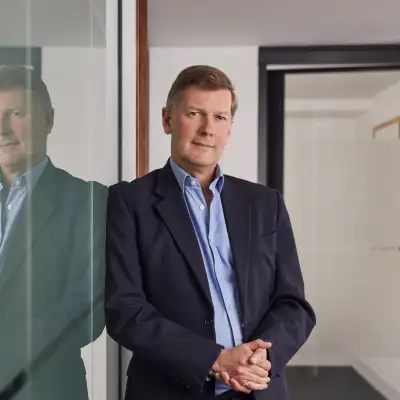
Today I'm at the London Business School where my guest is someone who has spent more than three decades studying what really happens when powerful, intelligent people walk into a boardroom and try to lead together. Professor Randall Peterson is Professor of Organisational Behaviour at London Business School and Academic Director of the Leadership Institute. His work sits at the intersection of psychology, leadership, and corporate governance and if you've ever wondered why smart boards sometimes make catastrophic decisions, Randall has likely studied it.
He's advised global organisations, regulators, and chairs across sectors, and his research has appeared in the Harvard Business Review, Forbes, and leading academic journals. His most recent book, "Disaster in the Boardroom", examines six predictable dysfunctions that undermine boards. Not because directors lack experience or intelligence, but because of deeply human dynamics, conformity, bystander behaviour, subordination to powerful executives, and cultures that quietly suppress dissent.
What makes Randall's work particularly compelling is that he doesn't approach governance as a legal or procedural problem. He approaches it as a behavioural one. He asks uncomfortable questions about collective leadership, about whether diversity is genuinely engaged or merely represented, and about whether compliance has become a substitute for curiosity and courage. So at a time when boards are navigating AI, cyber risk, stakeholder pressure, and unprecedented scrutiny, his work challenges directors to rethink what effective governance actually looks like.
So today, we're going to explore boardroom psychology, the evolving role of the chair, the difference between representation and engagement, and what executives need to unlearn when they move from running organisations to governing them.
Randall, welcome to the Boardroom Path.
Randall Peterson: Oh, thank you. It's a pleasure to be here.
Ralph Grayson: I'd love just to start with how you find yourself at this seat and what drove you to seek a career in academia and in particular board governance and board behaviours within that.
Randall Peterson: Yeah, you have to go back quite a ways. I was a master's degree student at the University of Minnesota and I was elected to sit on the board of the university and sitting in those first few meetings, I was completely confused by what's going on. And I thought, "Oh my gosh, am I just not smart enough to be in the room?" I just couldn't figure it out. And then a new person was elected, sat next to me, a guy who had enormous respect for his name is Alan Page. He was a player for the Minnesota Vikings, big guy, ultimately became the Chief Justice of Minnesota. He leaned over to me halfway through the first meeting and said, " Randall, can you tell me what's going on here?"
And that was the moment I'm like, "Okay, there's obviously other stuff happening here. So I just need to figure that out. And if I can figure that out, then I'd be able to actually contribute at this level." That literally was why I wanted to do a PhD, learn about how that board worked and why. It took me 30 years to writethe article that explained what was going on to me at the time, which is an article I did in HBR on side conversations. So the actual meetings were not where real decisions were being taken. It was being taken in separate discussions, right?
So what was happening at the table was performative, not substantive. Once I knew that, of course, then everything else makes sense and then you've got to figure out how to get in on those conversations and so on. All stuff I now understand now. So I went in just because I wanted to understand it. I was curious and somehow I came out the other side a few decades later being a kind of expert in understanding the space.
Ralph Grayson: Fascinating, and your book, which is the cause of me spending the next five years of my life writing my own DBA about the nature of leadership in the boardroom, just talk me through what inspired you to write such a great book about behaviours?
Randall Peterson: So the book was a product of my leading the Leadership Institute here at the school and one of our big donors, Jerry Brown, my co-author, he was just donating money to support this kind of research and he came to me after a year or so and said, " I really enjoyed getting to know you with the work you're doing, et cetera. I have a project that's been in my mind for the last 20 years. I've been collecting stories about outrageously stupid decisions boards have made and they're from all over the world and they're in all sectors and I want to write something making sense of it all." So I was like, "Oh, okay, that sounds pretty interesting."
And that's what we did. I started looking at what we know from research on what causes board failures and problems. We started looking at example cases and we figured out that there are some kind of consistent things that generally cause bad outcomes in the boardroom and that they're all, pretty much all, about the culture of the place as opposed to non-compliance with statutes.
I mean, these things happen, but actually even sometimes good boards are not always fully compliant. They should be, of course. But they're not always. So what we realised was the rules are necessary but not sufficient for understanding when boards do well and when boards make big mistakes.
Ralph Grayson: So we'll get into that in a bit more detail and bring us up to date with the Harvard Business Review paper that you've just published. But let's just step back a second. You've spent decades studying leadership, team dynamics and boards and your work, as I understand it, suggests boards don't fail because they lack intelligence, they fail because of predictable human dynamics.
So let's start here. Why do most boards misunderstand their own effectiveness?
Randall Peterson: Well, what boards don't do terribly well sometimes is understand the relationship between culture, how we work together, and the ultimate outcome. There's usually a kind of, "Well, if we've got really good people sitting around the room, of course we're going to make good decisions."
Yeah, the thing is if you are any one individual in a situation in which you are thoughtful, reflective, and everything we want a good director to be, but the culture and the system is one in which people don't really talk to each other, issues aren't really discussed, et cetera, like there's not much you can do, right?
This is a collective process and I think too many boards don't always appreciate then that really is about the culture. Culture's not a nice to have, it's an essential thing to be looking at all the time. They'll go to a strategy away day, no problem, right? Spend the whole day talking about company strategy, but they won't spend an hour talking about how we work together as people, right?
Good boards know that that is equally as important.
Ralph Grayson: So I've highlighted three Cs that you've written about, capability, culture, and collective psychology. Do you want to just draw that out a little bit?
Randall Peterson: So, capability. If you don't have good capable people, you're not in the game, right? I think that is a kind of point of entry, right? If you had a bunch of people who are not terribly knowledgeable or capable, like nothing else matters.
But that's not enough for a good outcome to happen. Here, things like culture really matter. Culture is the way we work together. That's it. It's not complicated and it's perfectly measurable, right? And there's things we know about what a good culture looks like. A good culture is curious, interested, it's focused on learning. Again, often, too often it's focused on compliance, which is good, okay, up to a point. It's focused on trying to find right decisions. But actually what really matters is are you asking the naive questions? Are you really open to, when somebody says something that's challenging, are you open to saying " Wait a minute, I don't understand that. Why is that happening that way? Could we do better?" So that's why culture matters.
Ralph Grayson: And then collective psychology.
Randall Peterson: Collective psychology, you and I have talked about this in the past, which is everything that happens is a group decision. When you walk out of that room, there are no individual opinions anymore. You're obligated to agree, and to support, what the collective group, i.e. Board, has decided. Unlike being a manager where there's individual accountability as well as collective accountability. Here there really is only collective accountability and too many managers have, when they come onto a board, aren't used to that idea and when you get onto a board, there's nothing you're going to put your own individual name on anymore, right? It is what we achieve together. So unless we are able to be collective and then, work with each other, support each other, what you end up happening is everybody's maybe in competition with each other and that's when really bad things emerge in a boardroom.
Ralph Grayson: So when I'm sitting with a lot of aspiring NEDs, want to be first-time NEDs, my fundamental question is, what do you think you would solve for? But that comes to the heart of what you've talked about in terms of that core capability. Now, a lot of the academic books will talk about skills, experience, knowledge. But what do you see that core capability? What's somebody got to have to be relevant in a boardroom?
Randall Peterson: Well, they've got to have relevant knowledge and experience. Again, that's the basic kind of, you have to have that or you're not in the game. What's the difference between somebody who's qualified to be in the room and somebody who's going to be great in the room? I always think the word is curious.
I'm curious. I want to understand why that works that way. What's happening there? I don't necessarily think it's wrong, don't get me, wrong. I'm not challenging you to saying it's wrong, I just want to understand that, right? And that's what the really great directors are doing. And then, they trip over something that's like, "Okay, that works that way. Oh, should it work that way? Let's have a conversation about that." Lots of things you ask about and you think, "Okay, there's nothing to write home about." But you go over it just enough so that those questions and curiosity end up revealing things that probably we didn't even know we should talk about, but we really should talk about.
Ralph Grayson: So before we dive deep into the six dysfunctions you talk about, let's just set the context for that. So boards are full of capable people who've joined with the right intentions and want to do well. What is it that makes boards be dysfunctional?
Randall Peterson: The directors, I have interviewed hundreds of them and by and large they are really first rate people who have incredible experience and who are trying to do the right thing and as many of them tell me, "Look, I could make more money doing other things. I do this because I'm really interested in this business and what they're doing." All the right motivations and yet you still see all the scandals that happen out there, right?
What's going on is I think a couple of primary things. One is forgetting who really matters or what really matters. So you develop loyalty, say to a CEO, rather than to a business, for example. Or to a chair rather than to the business. At the end of the day, you are there to look after the business. So that can oftentimes be a real challenge, I think, where boards kind of go off the rails that
Ralph Grayson: So there's pattern recognition to your mind, is there? You can see dysfunction coming?
Randall Peterson: Oh, yeah, for sure and you can see the boards that are struggling. They're focused on the wrong stuff, right? And sometimes, if it becomes about winning rather than doing what's right for the organisation, I want this vote to go this way because I want to be shown I was right. That is a huge flashing red light for me to say, "This is probably not going to end well, ultimately." So yeah, I think you can see it's coming and in the book we dedicate a whole chapter to good questions you should ask. Things that will help you uncover any of these potential dysfunctions that we talk about.
Ralph Grayson: So two of the things in particular you pick up on, subordination and group think. Maybe let's just pick on those two?
Randall Peterson: So, you know, subordination as in, loyalty to a CEO or a CEO essentially gets control and that can happen in a number of ways. One of which we talked about Fred Goodwin at RBS had such a reputation and if he was struggling to get somebody to agree with something, he would apparently say, "Well, look, basically if you don't go my way, I have the reputation to make sure you'll never be a director anywhere else in this country, right? So implied threat.
Now, another way of doing it is by playing games with how shares work. Mark Zuckerberg has done this. He sold the majority of the shares, but he still has the majority of voting shares. Or you can do the Elon Musk strategy, come into a business and start appointing your friends and your family so that they won't challenge. There are all kinds of ways in which you can stop the board from being an independent check on what the executive is doing. But the basic theme is we're no longer independent. We're now subordinate to the CEO.
So that's one big bucket of stuff and once you become CEO dependent, you're okay as long as the CEO doesn't make a mistake, but if they make a mistake, you're going to go hopelessly down the hole with them and probably take the business with you and a number of the examples we gave, that's exactly what happened.
The other one is group think, which is partially related. Group think is where I may have private doubts, but I don't want to raise them because if I raise them, the circle of distrust or the kind of criticism or critique, whatever you want to call it, starts to focus on me and I don't want to be in receipt of that.
So one of the things that surprised me most in my research is in this study with the FRC we asked every single director, "Tell us about your first meeting. How did it feel? What were you thinking about?" And what would surprise me is to a person, they all said they were stressed, worried about their reputation, feeling a bit intimidated. Now, I'm talking to people who had been CEOs of a big business. You're telling me that when you go on somebody else's board, you now feel intimidated, stressed, worried about your reputation? I just was shocked by that.
So I may have some private doubts, but I don't dare, raise any concerns unless I'm 100% sure. And to be honest in a boardroom, when are you ever 100% sure? That's almost never. Most of the things that get discussed in there are, "Well, it's probably this. There's some trade-offs between this and that. So what that means is people then just don't speak. Directors don't speak when they're experiencing group think. So the symptoms are high stress, very strong or opinionated leader anda desire to fit in.
Ralph Grayson: I love the fact that the FRC are coming out more and more stridently, if that's the right word, to say that boards are abrogating their leadership responsibility by tick box process of complying with the FRC and not explaining why they won't comply. Where do you stand on that?
Randall Peterson: Oh, I'm with them. I push them in that direction. Even they are, I think, come to our way of thinking about this, which is rules are necessary and important and compliance is important. But to really understand and for greatness to really happen, for great governance to happen, it needs to be some, that something else in the psychology of how we work together.
So what they're saying is, "Look, here's what we think good probably looks like, but there can be exceptions. If there is an exception, explain." I think it's perfectly reasonable thing to expect someone to explain if they're doing something a little bit in an unconventional manner. But they need to explain and the question is if they don't explain too, it's like, well, are they not explaining because they can't be bothered or are they not explaining because they don't know what they're doing really? If you go in it with your eyes open, you should be able to explain what you're doing. I think that's a reasonable request.
Ralph Grayson: I think what's really interesting at the moment is the focus we're having around what drives behaviour in a boardroom in terms of compensation and looking at the Anglo-Saxon model versus the US one. Nobody likes to talk about compensation. Nobody wants to chair REMCOM at the moment. Should boards here have stock like they do in the States to have real skin in the game or is that, as I understand, the regulators over here saying, "No, no, no, you can't possibly be independent if you're driven by compensation"?
Randall Peterson: There's, I guess, some merit on both sides. So I don't think there's a right answer here. But I would say those kind of incentives, those kind of real skin in the game can also create and in themselves create problems. So it doesn't come as a kind of free good. It can come asa nudge and not always in the best direction. Can nudge you in the direction of a particular CEO, even when it's not necessarily good for the business. Or a nudge for something that gives you shortish term return because you're only going to be there for three years as opposed to building a long-term business.
Again, I think it comes down again to the psychology of all this stuff. What does having that skin in the game really mean for you? And what it means to you and what it means to me might be different. That's why one size fits all I'm always a little dubious about.
Ralph Grayson: Yeah. So let's just come back to this compliance versus culture thing for a second. So do you think it's fair that some boards are being criticised for hiding behind compliance as a way to avoid exercising leadership?
Randall Peterson: Oh, 100%. I mean, we all know some and their whole industries of where compliance is basically it's compliance and actually they just are obfuscating a discussion of the kind of more difficult thing. Way too many boards don't want to talk about the fact that, " My friend over here, my colleague over here on the board next to me, I need to work with that person over the next three years in this appointment, but I think that she or he, the way they ask questions is quite rude." Do I want to say that? So you got to be a little brave to say, " Yes, but..." or "Can we talk about the way we're interacting here?" And we don't like to talk about that. It's really uncomfortable.
Ralph Grayson: It's a fascinating view on the difference between procedural governance and cultural governance in that respect. So here's the question, can you legislate for culture?
Randall Peterson: I think it's very difficult to legislate for culture and therein lies the problem. That's the FRC's problem. They would love to regulate for culture and be able to give us more direction on that topic. But I just struggle to see,how you can legislate in a way that it is one size fits all.
Also, because, of course, even if we just assume, different boards are in a different place of development. For a smaller business that's really growing, boards are sometimes even involved in operations. If we're talking about a giant listed company, that would be absolutely never. And at different times, you may have different ways of interacting and so I think it's difficult for to say, "Look, there's one perfect size."
We know a couple of features. We know regular performance review is important, i.e. bring in an outsider and have your board evaluated once every three years. They give us that instruction and this kind of learning culture, being curious, learning, understanding things, right? And so they've given us a little bit of encouragement along those lines. But beyond that, I think a lot of it depends on your business and where you are in terms of development right now.
Ralph Grayson: So I was with Kimberly Lewis who I had a podcast with recently who's Head of Stewardship at Schroders and she was adamant when she said, "I've never seen a bad external board appraisal."
Randall Peterson: And sometimes they'll charge you a lot of money. It's the Wild West out there. There are some shockingly bad practises and then there are still some wonderful practises. Of course, publicly, there's never going to be a negative one. And actually, I think it's also a little bit of a misunderstanding about what a good board evaluation should be. Because a good board evaluation should say, "Look, here are the things you're doing really well, don't lose that. Here are some suggestions about how you can take it forward to the next level," So it shouldn't come off as an OFSTED report, your school is failing, right?
Ralph Grayson: But OFSTED regulated, board appraisals aren't regulated. It comes to why aren't Ned certified, right? Which is one of my hobby horses.
Randall Peterson: You and me both, we've talked about that. It's the only profession in the world where you don't have to have a certification, the only qualification is don't be a felon.
Ralph Grayson: Or don't get caught.
Randall Peterson: Yeah, yeah, there you go. The regulator does it because they want to give boards maximum flexibility on who's useful. I kind of get that. But even ongoing education, how about that? That would be radical but wonderful.
Ralph Grayson: Well, we might come back to that if we've got time, but I think that's just as Kimberly's never seen a bad board appraisal. I think the number of CEOs and chairs who privately tell me they've done an online board appraisal, and it's worse than useless.
Randall Peterson: Yeah or even those who go to an outside interview process, you know a chair will sometimes they come and say, "Oh, by the way, here's the outcomes we expect you to report back on, right? And here's basically what we want you to say."
Well, I'm not going to take that on. I don't want to be a part of something like that, but they'll try it on and they'll pay you a lot of money to do it. On the other hand, I've done board evaluations that aren't entirely happy, where there are real issues raised and in each of those cases it provoked a serious conversation about how to move it forward and I think a better outcome for the board.
So if you're brave enough, have a real board evaluation and there are good people out there doing great work where they're interviewing everybody, they're facilitating a conversation, and they're focused on where we do well, don't lose it, and what we can do better going forward.
Ralph Grayson: So as somebody who's observed a lot of this ecosystem from the outside, for a NED listening or a chair listening, what's a sign of a good board appraisal? What should they be asking? What should they be expecting?
Randall Peterson: Well, the important thing is every individual needs to be interviewed privately. So that they can share any reservations they may have. That needs to be brought back together in a report of some kind that raises issues in a way that doesn't name names per se. The real important part of any of these evaluations for me, the two part, the must have parts, are individual interviews and a board conversation at the end because it's kind of, you know, goes nowhere if you don't talk about it.
Whatever comes out of those one-to-ones needs to be discussed collectively as a board. For me, if I'm going to really strip it down, those are the two kind of must haves in any decent board evaluation. I mean, lots of other things I might like to have, but those are the kind of real
Ralph Grayson: Cause and effect here as well. I've got a founder CEO I know well who had a board appraisal and the report came back to say that this founder CEO was blessed to have such an effective chair and, cause and effect, that changed the chair's behaviour quite a lot.
Randall Peterson: Okay.
Ralph Grayson: So careful what you wish for. Let's move on. The chair as chief listener as you've called it. All performance correlates strongly with whether the NEDs believe the chair is a good listener or not. Why is listening so important in this dynamic?
Randall Peterson: Yeah, there are two reasons why listening really matters. One is that you're going to learn something and the key skill for a chair these days is your ability to really understand what's going on and to be able to synthesise all that from the multiple stakeholders. So it's not just the NEDs, but everybody else too. And try to work out, or begin to think about, how can we facilitate a conversation to work out what are the right trade-offs between various stakeholders? And that's always when any manager, you should listen because you might learn.
And then the second reason to listen is that listen communicates respect. Even if I can't do anything about it, the fact I'll take a little time, sit down and listen to you says you matter. So the fact that the chair's a good listener encourages the directors, all of them, to really bring forth the real issues, and not just the pro forma stuff. But real questions. Feeling safe, psychologically safe to do so.
You might think, wow, really these people need to feel psychological safety? Yes. We've already talked a little bit about that, how easy it is to be concerned about your reputation and as a result, self-censor. And you really need that to not be happening.
Ralph Grayson: And the chair is first amongst equals, what does that mean?
Randall Peterson: Yeah, that's official practice. Of course, you know, as we all know, in reality they can be much more than that. And especially for those who are chair, CEO this and everything else, then that really empowers that person. But even when a chair is separate, they should be first among equals.
In practice, they can be more than that mainly because they have special access to the CEO and the business. So officially, according to FRC rules, as soon as you become chair, you're no longer a kind of fully independent director anymore, which does make sense. Your role is supporting the CEO, which probably means you're going to be supporting them and not be a kind of completely neutral evaluator of them.
Ralph Grayson: And for executives making that transition into governance and then into the chair seat, what behavioural rewiring is required to make those two steps?
Randall Peterson: Yeah, everybody always assumes that going from manager into the boardroom is somehow obvious. It's anything but obvious. When you get into a boardroom setting, the kind of tactics you've used to influence historically, if worse comes to worse, just tell them to do it. Don't work. I mean, literally don't work at all.
So how do I persuade people? And it's this kind of instinct that I need to have status. So then you get a status contest going on and I've heard some just incredible stories. One I heard just a couple weeks ago where, you know, brand new coming onto the board and this person takes you to the window and says, "Oh yes, that is our building. I built that. Oh, and we built that one too, and we built that one over there. We just sold it later because it wasn't terribly profitable, but we built that one. And we're working on that one over right over there." Status play, right? I'm a person who really matters here so you should listen to me and it's not a great basis on which to influence people. You have to really use persuasion and influence and help people understand that other point of view.
The other thing, of course, is that what research shows in groups always and always in a boardroom, truth alone never wins. True supported wins, meaning you can speak truth to power. If nobody else supports you, nothing happens. I say something, nobody in that boardroom responds to me, we're never going to talk about it again. I have to have somebody else say, actually, that's an interesting idea. We should talk about that in order to give it life.
So you've got to come in with a plan, hopefully make sure that somebody else will give you a lifeline, because if they don't, you'll have zero impact. That's very different from being a manager where your position gives you the authority to speak on a particular topic. So you can't use your expertise as a platform to say, "Listen to me, this is what we should do" because you have to be able to say, "Look, these are the important issues here, but I don't know how to evaluate these issues over here in comparison. So we need to talk about that in order to work out what the best decisions are and why they are that way."
Ralph Grayson: Makes sense. Segues nicely into diversity of voices around the boardroom. You've written there's a big difference between adding diverse voices and actually engaging those voices. So what does engagement require that quotas don't solve?
Randall Peterson: Yeah, quotas you know, it can be a useful way to make the picture change, the photograph, but they're oftentimes not great for understanding what it takes to make a change. So again, because truth alone doesn't win, if that's a solo voice, chances are highly likely they will not have any impact in the room.
So how do we help somebody with a different voice have an impact here? So for example, women coming onto the board when they were first coming on they tend to come on, they haven't been a CEO, so they tend to enter a boardroom in a relatively lower status role. They have relevant expertise, but because they weren't a CEO or a CFO because there's virtually none, there's still more, CEOs named Bob or Chris or Daniel than there are women CEOsin much of the world, including here. What that means is they come in with lower status role and the great board, the great chairs in particular will help them by saying if we want to be able to hear that voice, I'm going to help it find authority or it findsthe status that people will listen to it.
So what I'm going to do is I'm going to not fairly quickly put them in as chair of a committee. Whether it's audit, remuneration whatever committee it is, because of course that's a hype, that's a role where you come to the board and the rest of the board should largely say, "Oh, that sounds good. Yes." And if you do a good job chairing that committee that then gives you the voice in the room. So it's being proactive like that to say, "How do I get these voices that are different, the platform to be taken seriously?" So these days, the number of women on boards is really grown but at this point, there are other voices too that are not being heard.
Ralph Grayson: We just touch on neurodiversity there? Because that's a word that's coming up more and more in the boardroom and I think a lot of boards are struggling to think how they accommodate it, how they recognise it, how they accept it?
Randall Peterson: Well, the story is pretty similar. You know, if you've got somebody with a different way of thinking about things, they are likely to be perceived as a bit odd. So a perspective that the rest of us don't share. Again, if they're a solo voice, it's highly unlikely, unless we make the effort, that voice will be really heard.
I mean, the same thing for racial and ethnic diversity. There are very few of those voices at the table and the ones that are at the table need support in order to really be heard. So don't assume that because you speak, or that they speak, that they will truly be heard.
Ralph Grayson: Okay. So let's just step back from that for a second and just think about this whole safe space concept, positive conflict, and conflict as a diagnostic tool. And I want to bring us right up to date with your most recent Harvard Business study. So you've outlined four patterns of team conflict. How should boards think differently about conflict?
Randall Peterson: Well, I think you should think differently about conflict in the sense that we've always thought of it as relationship oriented, "I don't like you," kind of stuff. I think there's two things to keep in mind. One is there's stuff that we might call debate, which we wouldn't want to call conflict because conflict's bad, but it's still a type of conflict. I want to do things differently from the way you want to do them. And then we also need to look at how that is happening and within the board. Is this one person, and everybody else is ignoring?
Or is this, say, dyadic between two people? In which case it gets much more traction. Dyadic task-based conflict tends to be hugely positive for teams and boards. And what we think is happening is they're working out between them the different perspectives and if they can work it out with the rest of us listening to the arguments, we'll all be educated and be able to make the best decision.
If it gets to the whole board and we've got half on one side and half on the other, it tends to be really bad because then it becomes much more about winning. In part because you have social support around you to say, "Well, look, the five of us really think this is right, and the five of you really think you're going to support each other and think you're right." And it becomes a battle of who wins. Again, we've lost track of what's good for the business. And, again, the really good ones that I've seen are people who are able to mediate, in that situation, move people away from winning and towards what's right, which typically means you're going to have a little bit of this and a little bit of that and maybe something else as well in order for this decision to really hang together.
Ralph Grayson: So I think in the article you talked about voting being the worst way to resolve a conflict. Just draw that out a bit.
Randall Peterson: What we know is that voting is a really bad way to make decisions in a small group, any kind of a group, including and especially boards. What you learn fairly quickly is voting can be weaponised. In a sense that today we're voting you down, tomorrow we vote me down and we very quickly all figure out that no one is safe. If you stand out away from the group, they'll just vote you down. In which case, then there is no reason to raise anything controversial. Don't ask questions, don't be curious, because they're just going to smash you down. That's why.
Before anybody panics, right? We vote in a democracy, read democratic theory. What they talk about is tyranny of majority. Majority's willingness to impose itself on the rest of us, okay, is where you get instability. Where you get stability in a system is where the system accommodates the majority, but there's still something in it for the minority because literally in the political world where the minority has nothing to lose, that's when they pick up a gun and in a small group, that's when they just walk away. There's nothing here for me. So shutting you down very often will also encourage you to withdraw, but we'll also all figure out fairly quickly that no one's safe so we stop raising issues.
Ralph Grayson: So is that incumbent on the chair at the top or is that incumbent for the group, the board, to act as a group?
Randall Peterson: Everybody can play a role, but chair obviously is particularly important. Sometimes you're forced to vote, that's what the statutes say. So if you do have to vote, sometimes it happens, right? The sign of somebody good is when the chair or whomever, instead of going to party with the winners, you commiserate with the losers and make sure they don't disengage.
"Look, I'm really sorry that it didn't go your way. Let's make the best of it as good as we can." In order to ensure that that group doesn't feel ostracised, that group doesn't feel like raising issues doesn't matter, and so on.
Ralph Grayson: So are the social niceties the dinner before the board meeting or what are the protocols that keep the conflict minimised, keep it as healthy tension, not destructive dysfunction?
Randall Peterson: You want to be preemptive. You want to try to reduce conflict before it becomes a conflict. Once it breaks out people are typically emotional. When they're emotional, they're not terribly rational. So be preemptive and keep focusing on what's right for the group, the whole, the organisation, the business, not just what's right for individuals within them.
Trade offs between directors to accommodate something that's good for us as a director, as a board, not healthy, trade offs that do what's right for the best for the organisation, healthy.
Ralph Grayson: I've really tried to keep AI out of this, but I can't. Where does AI fit in that diversity of thought in that safe space? Where is it?
Randall Peterson: I will say a couple things. One is that AI does have a place in the boardroom. It can help us in all kinds of ways from creating board papers to doing some kind of initial background research and work and it can create alternatives we hadn't thought of before. So those are all, healthy things.
Will I ever be having an AI bot sitting in one of the board chairs? Not at this point. The most important criteria or thing that you can offer as a director is your judgement and at this point AI doesn't have a lot of judgement. It's very factual and sometimes even produces stuff that's wrong. So I don't think we're ready to replace any of our directors just yet. Maybe it will come, maybe it won't come, I don't know. But I do think AI has a role and of course AI has a role in understanding what's going to happen to all the jobs in our business.
And that's the thing I think people are most panicked about and I think if I was a director, that's the thing I would be kind of like, "Oh, what does that mean for all of our people and our employment? Now, I want AI because, of course, instead of hiring armies of researchers to do a task, AI can do it fairly quickly in a few minutes. So I don't need all of those." In the same way, we now have a team of researchers where we used to have a whole army of people doing data analysis and running data.
Back when I first started, I remember stories of my advisor talking about there was a groupwhere I was getting my degree at UC Berkeley that was a whole building full of people just doing calculations for analysing data for research. And he was like, "Wow, you can do it on a mainframe now. You don't need all those people." Of course, now I can then, very quickly, I can do it on a PC. So, we have whittled down those things already and I think that will continue. But that's what I would be most thinking most about as a director. But of course I would also use AI in my work.
The one thing I would be cautious about though directors being in a hurry and using AI to summarise their board papers. I know directors who are doing that. I'm a little bit worried about that.
Ralph Grayson: People should be very worried about that. Board papers going in ChatGPT, really? So let's try and pull all this together. So if a board listening to this wanted to pressure test itself tomorrow morning, what three questions should it ask itself?
Randall Peterson: Okay, three questions it should ask itself. Let me think here. Well, certainly one of the questions has to do with are we really talking about how we work together and whether we're actually worried about talking about culture.
I would also think about who are the people we're appointing? What are the things we're prioritising? I think we have to prioritise things like curiosity and interest. So of course they're going to have the technical skill. We've got lots of choices there. But who are the people who really can sit back, ask questions, engage and think?
And of course the third question I think is probably going to be, how do you know good is good? So it's not enough to ask, are we doing okay? We should also be asking, how do we know we're doing okay?
Ralph Grayson: Brilliant. One last question because I can't resist asking it. So you've been looking at this for decades. What gives you optimism and what keeps you awake at night and worries you?
Randall Peterson: What gives me optimism is that there's a lot of interest in governance right now and I think that as investors and employers and all kinds of people are interested in governance, that's really going to focus on improving governance.
I do a lot of work with private equity businesses. Historically, they've come to me to analyse the leaders, the CEOs, the CFOs. Like, are they going to work? They've never asked about governance, but they're starting to. I just think that's a great signal that this stuff is going to really continue to be important and I think the more heads we have together working on it, the better the outcomes will be and maybe we can stop some of these crazy bad decisions that actually happen.
Ralph Grayson: Yeah, I think what one bit of great evidence I see of that now is the number of term sheets from investors that say, "Yeah, we'll invest, but we want the CEO or the C-suite or indeed even the board to have coaching and development."
Randall Peterson: Yeah, I completely agree. There's an understanding that those matter and they're not minor. They are major issues in a business and that we're actually paying attention to it. What keeps me awake at night is, it's really hard to codify any of this. How easily it can be ignored and how easily I suppose the air can go out of it too at some point in the future.
It's on the up right now, but what happens if we start to slip back to the old days of don't ask questions, don't tell people things, come together for a nice lunch and not really engage?
Ralph Grayson: So for everybody listening to this, wake up and smell the coffee, read "Disaster in the Boardroom". It is a brilliant book. It sums all of this up fantastically. Randall, how else do people follow you? Where else do they keep track of your thought leadership?
Randall Peterson: Oh, great. I'm very active on LinkedIn and Instagram and I also have a YouTube channel and most importantly, I have my personal website, which is randallspeterson.com and if you're desperate at 2:00 AM for to talk to me, there's a Randall chatbot and it's trained on everything on the website and the answers it gives are pretty me when they do it. So lots of things there to support you in doing the good work we both like to see you do.
Ralph Grayson: Fantastic. Randall, thank you so much for your time. It was fascinating.
Randall Peterson: Thank you.
Ralph Grayson: I hope that you've enjoyed listening to this podcast and have found it helpful when thinking about how to approach your own path to the boardroom. If you would like to push this a little bit further, Sainty Hird runs a bespoke one to one programme designed specifically to this end. For more information, please visit our website saintyhird.com, follow us on LinkedIn, and subscribe to the Boardroom Path to receive new episodes. Thank you for listening.