Subscribe
Share
Share
Embed

How I Got Here with Dreena Whitfield goes beyond the highlight reel with Black women founders, executives, and leaders. Real conversations about the pivots, the setbacks, and the purpose behind the work. From bootstrapping a beauty brand with $500 to leading a professional sports franchise, each episode explores the moments that shaped who they became and the cost of building something meaningful.
For women navigating leadership, business ownership, career reinvention, and the cost of ambition.
New episodes biweekly on Wednesdays.
Host: Dreena Whitfield
Executive Producer, Writer & Creative Director: Keena Williams / Struxa
howigotherewdreenaw.substack.com
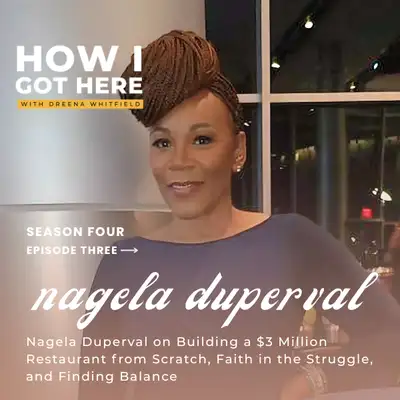
Today on How I Got Here, I'm sitting down with Najla Du Preval, a Haitian born entrepreneur, mother, and fearless builder who is creating something powerful here in Carteret, New Jersey. She is the owner of Oola, a stunning Caribbean restaurant that's more than a place to eat. It's a space filled with love, connection, and soul. She was navigating a full time job, raising a family, and teaching herself a brand new industry from the ground up. No playbook, no restaurant experience, just vision, grit, and a desire to bring a piece of her heritage to life.
Dreena Whitfield:In this conversation, we talk about where it all started, how she kept going when the path got hard, and the legacy she's building plate by plate, room by room.
Nagela Duperval:There were times when I'm building a $3,000,000 restaurant, my account is in a negative. I couldn't pay my bills, but I'm building something.
Dreena Whitfield:How do you say, okay, let me wake up, let me go do the things, let me still show up? Because that's hard.
Nagela Duperval:Every time I thought I was gonna crash, God sent somebody to bail me out. This
Dreena Whitfield:is Najla Dupervall, and this is how she got here. Naj, thank you so much for allowing us to come tape here, for opening up your space for us. I know you all are closed today. Everyone has been telling me to come to OOLA. I used to live out here, so to even see the change of downtown, quote unquote, Carterette has been amazing.
Dreena Whitfield:And for you to be a black woman in this space, in this dope restaurant, like, I want to applaud you. So thank you for opening up your doors for us today.
Nagela Duperval:Thank you for choosing me. I appreciate it. Of course.
Dreena Whitfield:So let's start with home. You were born in Port Au Prince, Haiti.
Nagela Duperval:I was.
Dreena Whitfield:And raised in New Jersey.
Nagela Duperval:Yes.
Dreena Whitfield:And so how old were you when you came to The States? And did you bring a piece of your culture with you here that, you know, resonates with you day to day?
Nagela Duperval:So I was eight years old when I came from Haiti, and I did. I did bring my culture with me because going to a new school, not speaking the language, a lot of my friends that I still am friends with now are Haitian. Right? So going to a school that had ESL class, English as a second language, so I had to, you know, still keep that little click because I didn't understand the language. So I kept the culture with me.
Nagela Duperval:My mom is Haitian. My dad, they didn't speak any English. So I still speak Creole to this day.
Dreena Whitfield:Really? Oh, can you teach me something? I only know, like, I only know a few things
Nagela Duperval:because The bad words?
Dreena Whitfield:Well, I don't even know those. I just know, like, the regular ones, like, sack, passe Right. And nabule.
Nagela Duperval:Nabule. Yep. You know, ula means are you're here. Oh. Yeah.
Nagela Duperval:That's what means. Okay. Okay. Yeah. Depends on how you're using it, but it could mean you're here.
Nagela Duperval:I'm here. Yeah.
Dreena Whitfield:No. I used to so back in the day, when I was a teenager, I worked at McDonald's, and I worked with a lot of Haitians from Elizabeth. And so they You're from Elizabeth? No, I'm I'm from Westfield, but, like, where we worked, a lot of folks from Elizabeth came.
Nagela Duperval:That's Little Haiti. I grew up in Elizabeth.
Dreena Whitfield:Oh, wow. Mhmm. Okay.
Nagela Duperval:Jefferson Park.
Dreena Whitfield:Oh, okay. I know Jefferson Park. Yep. Yep. And so what made you choose Carterette as a home for Ola?
Nagela Duperval:I'm an investor. Right? So I'm always looking for ways to make money. And this space was just available. It was introduced to me by a friend.
Nagela Duperval:And I'm like, oh, okay. And I have a perfect partner that is already a chef, that already has a restaurant. I think we could do a great collaboration. So that's how the opportunity came about.
Dreena Whitfield:So talk to me a little bit about that, because everybody has a cousin, a friend, auntie, uncle who can cook, right? And everybody's like putting a battery in their backs, like, Yo, you should open up a restaurant. You should open up a restaurant. You aren't the chef or the culinary
Nagela Duperval:girl. Just like to eat.
Dreena Whitfield:Talk to me about how that partnership came about.
Nagela Duperval:So I have been going to SMA Cafes in Colonia for years, and chef Duke, he's just a great, amazing chef. And he reminds me of my mom's cooking because even though it's not really Haitian food, but he still has a lot of Haitian dishes there. When this opportunity came about, I was just like, hey, chef. I know you have a place here, but what do you think about us creating, building a restaurant to introduce people to our food? A lot of people don't know Haitian food.
Nagela Duperval:They wouldn't even know where to go to get Haitian food because we don't have any any beautiful restaurant that looks like this. Right? And he was okay with it. He was like, Yeah, let's do it. And this is how Ola was born.
Dreena Whitfield:I was gonna ask, was there a specific moment, family dinner, holiday or something that sparked that interest for you to be like, You know what? I wanna create a restaurant that's dedicated to our culture.
Nagela Duperval:I think just over the years of me going to Duke's place and I saw how much it grew, like, place is small, right? Yeah. So it's small. And I was just like, you know what? Like, he needs a bigger place.
Nagela Duperval:I think he's such a great chef. A lot more people need to know about him and, you know, his cooking. So, again, when the opportunity just came, I was just like, yeah, I wanna do this. And I'm taking I wanna bring chef along with me for us to build this space.
Dreena Whitfield:Talk to me about the opportunity because, I mean, me and you were talking before this, and you were like, girl, there's a commercial space across the street, and you should look into something there because I you know? But I don't wouldn't even know how to even approach opening up a commercial space. So what was the opportunity that was presented to you for you to open up Ola?
Nagela Duperval:So a friend of mine knew the owner of the building, and the space was for rent was for lease for a while, I think a couple years. And I had mentioned to him, I would love to be able to do a restaurant with Duke, something bigger to introduce our food. And when he found out about it, he was like, hey, Naj. I'll introduce you to the owner. He introduced me to the owner.
Nagela Duperval:The terms were great. I was able to get a year of, free rent while I did yeah. Yeah. Commercial is different. Yeah.
Nagela Duperval:The the owners usually give you time to for the build out. And, also, I was under the impression I hear, you know, conversations about, oh, getting SBA loans, and it's easy because you're a black woman. You're a minority, so you're gonna be able to get an SBA loan. That didn't happen. It wasn't that easy.
Nagela Duperval:So I went into the space blind, right, not realizing it takes a lot more than what people, you know, were putting out for me to be able to open. This took three years. Really? Yes. It took three years.
Nagela Duperval:Just, you know, negotiating the lease was about eight months. Right? Because commercial is completely different from residential. So it it was a long, journey. Expensive.
Nagela Duperval:Very expensive.
Dreena Whitfield:So do you recommend, like I said, we know people that always are like, Oh, I want to open up a restaurant. What are the steps that you would suggest for people that would want to open up a space?
Nagela Duperval:Do not sign a lease until you have your financing in place. That was one of the biggest mistake that I made. I was just I'm I'm very impulsive even in real estate. Right? I'm always like, you know what?
Nagela Duperval:I got people that got my back. I'm just gonna make it happen. Let me just get in the space because it's a great opportunity. But just make sure your credit is right. Just make sure you have the financing in place.
Nagela Duperval:And this project took three years because I didn't have the financing in place. I took a lot of bad debt. Right? I went to a lot of people that I wanted to help me. People that I thought was just gonna lend me money because of who I was.
Nagela Duperval:Right? And that just was not the the case.
Dreena Whitfield:When you talk about credit
Nagela Duperval:Mhmm.
Dreena Whitfield:What I just want to know, like, I want to dig into, like, the financial aspects of, like, building out something that looks like this, even if it doesn't look like this. Just even just if I'm opening up a Kennedy Fried Chicken or a pizza place, like, what do I need to do to have in place before I'm even like, hey, let me let me open up this business or let me go and try to, you know, take over that space? What would you suggest?
Nagela Duperval:The best the first thing you need is an attorney, right, that that can handle those type of business transactions. You need a really good attorney. A lot of time people think because an attorney does practice real estate, they can use an attorney for business. No. You have to make sure they specialize in these in the industry that you wanna, you know, tap into.
Nagela Duperval:The credit. The credit needs to be on point.
Dreena Whitfield:Personal credit, business credit, like
Nagela Duperval:Personal. Your personal because your personal credit is what is going to help you get business funding. Right? So if you don't have the strong personal credit, no one is gonna give you business credit. So you wanna make sure the credit is right.
Nagela Duperval:When you're going for again, because this project was so big, this is a $3,000,000 project. It was never supposed to be that. Right? I thought I was gonna come in here and build a million dollar project or something under that. Mhmm.
Nagela Duperval:But it turned out to be way over budget and and, you know, the the the way that I envisioned it was just way more expensive. There were a lot of mistakes made while doing this. So it turned out to be way more than I anticipated.
Dreena Whitfield:I mean, did you ever I mean, you clearly didn't, but like a $3,000,000 project?
Nagela Duperval:Girl, I'm debt.
Dreena Whitfield:I I got I have anxiety for you because Anxiety of is real. I mean, I mean, but God's gonna make a way. Okay? We're just gonna claim that right He
Nagela Duperval:may I I every time I come in here, no lie, I I'm like, God, why did you choose me for this? Because I feel like I wasn't ready. Right? And it's still very emotional because so many people, strangers believed in me, where I had friends that I thought would have supported me because of who I am did not. There were times when I'm building a $3,000,000 restaurant, my account is in a negative.
Nagela Duperval:I couldn't pay my bills, but I'm building something.
Dreena Whitfield:How do you talk to me about that because how do you trust me, I've been there, but I'm not building a 3 It million dollar was a mistake. Not look at it. Okay? Come on. I know you don't drink, but drink.
Dreena Whitfield:Because I see it. You're about to
Nagela Duperval:Girl, I get emotional talking
Dreena Whitfield:You're about about be emotional. We're not gonna do that. But when your account's in a negative, you're building this $3,000,000 project. How do you say, Okay, let me wake up, let me go do the things, let me still show up? Because that's hard.
Dreena Whitfield:That's like a boulder on your chest, right, waking up knowing all of those expenses that you have, and you don't have it. Mm-mm.
Nagela Duperval:I was already in it. Every time I thought I was gonna crash, God sent somebody to bail me out every single time. I'm like, okay, God. Is this Right? Meant Like, what is going on?
Nagela Duperval:Is this meant to be? Because I'm not supposed to have I I don't have any background experience like, no experience in restaurant. I just love to eat. Right? So I'm like, wait a second.
Nagela Duperval:Like, every single time I'm like, god, okay. This is the day I'm gonna crash. I can't pay these contractors. Right? I can't pay the architect.
Nagela Duperval:What is going on? Somebody, like I go to them. I'm like, hey, listen. This is what I'm trying to do. This is my business plan.
Nagela Duperval:They're like, okay. I like this. Let's make something happen. That is how I was able to build this. I sold all my properties that I had, which was a huge mistake because what I didn't know is when you're going for an SBA, you need collateral.
Nagela Duperval:And the the collateral collateral that they look for is real estate, you know? So I didn't have any real estate properties. It it was just a it was a struggle. It was the last three years was really, really difficult. And what I find is people come in here and they look at this place and they think I've I've made it, and I haven't.
Nagela Duperval:The struggle is real. It's still real. You know? So yeah.
Dreena Whitfield:Before all this, you've built a whole real estate career. What did that teach you about ownership, about being a woman in business, a Black woman in business, and betting on yourself even when it's hard? Because you're going through that right now. Right? Yeah.
Nagela Duperval:I it it teaches me to just partner with the right individuals. Partnership is so important. The way I got started in real estate was because of a good friend of mine that introduced me to it. Right? I was a real estate agent.
Nagela Duperval:I worked a full time job, which I still do. You still do? Yeah. I still work a full time job.
Dreena Whitfield:You you still work a full time job, and you run this?
Nagela Duperval:I run this. Yep.
Dreena Whitfield:Yep. After the full time And you're a mom.
Nagela Duperval:And my kids are old. I started young. You're still a mom. Yes.
Dreena Whitfield:Okay. I'm able to talk about that later. But yeah. Okay.
Nagela Duperval:Yeah. So I think it's taught me how to find the right partnership because I had some deals that didn't go well because of partners. Right? And but I had some deals that went really well because I had strong partners. Right?
Nagela Duperval:And it it allowed me to not put everything on myself because I'm a person that is just take on so much, I don't know how to stop. Right? So I think for me, it's just making sure that I find the right partners when I'm going into any type of business that I'm doing because I don't want to do it by myself. It's hard. Yeah.
Dreena Whitfield:How long were you doing real estate development?
Nagela Duperval:Oh my god. I got my real estate license back in o five. Yeah. 2005. So and I got the license not really so much to to help people find properties, even though I was, but I got it because I wanted to understand the business before I jumped into being an investor.
Nagela Duperval:Mhmm. So I was an investor for over ten years. I loved it. Yeah. I love going into a property that is just destroyed, and I'm able to change it around.
Nagela Duperval:I I just enjoy that.
Dreena Whitfield:So talk to me about, like, your first investment property, because how do you even what are the steps to do that? Like, people get their real estate license, or you you see all these shows on HDTV where it's like, oh, you could flip, and you could make this crazy, wild profit. How do I, as a potential person that wants to go in and flip houses or invest in real estate, what are the steps I need to do to do so?
Nagela Duperval:Well, right now, the market is tough. Right. Right? Don't listen to Instagram on all these shows because it is not easy at all. Like, I have lost a lot of money.
Nagela Duperval:But finding the right prop it it's all about the numbers, making sure the numbers make sense. Right? My first project, I believe, was, actually, my own property. I bought a property during right after the crash happened in o eight. Mhmm.
Nagela Duperval:I bought it for, like, $1.30. Right? And then once my kids graduated high school, I invested money into fixing up the kitchen and the bathroom, and I was able to sell that property for 330,000.
Dreena Whitfield:Wow.
Nagela Duperval:So I was able to use that money to go and do a joint venture with my partner that brought me into the business. Mhmm. So in a joint venture is where we collaborate. We go in half and half. We use a hard money lender, which is high interest, but hard money lending is really for people that are investors because it seemed like it's cash, but really not cash.
Dreena Whitfield:Mhmm.
Nagela Duperval:Right? But you're paying an interest only loan, and they only allow you to use that loan for a year. So you have a year to make sure you're in and out that project.
Dreena Whitfield:That's quick.
Nagela Duperval:Mhmm.
Dreena Whitfield:Especially when things happen along that that timeline. I mean, that
Nagela Duperval:project went very well. I forgot how much we paid for that property, but we went in there, fixed it up. And with him already being experienced, he allowed me to take the lead Mhmm. And also kept me from making a lot of mistakes. The mistake I made was trying to go on my own so quickly.
Nagela Duperval:Mhmm. Right? I went in and bought one property, then I went and bought a second one because the numbers were so great. So I'm like, you know what? I got this.
Nagela Duperval:But we don't we don't realize there are so many things that can go wrong. That property I did on my own, there was a oil tank, underground oil tank. Right? I had and it was contaminated. I had to spend money.
Dreena Whitfield:How much was that?
Nagela Duperval:Girl, it was like $12,000 because it was on a hill. Girl, it was a mess. It was a mess. Then I ran out of money, and I was I had another project that I was waiting to start working on. Right?
Nagela Duperval:So I'm paying mortgage for two properties. It was crazy. Then when I finally listed the property because I was done with it, it was in Bloomfield. I'll never forget. The sewer line cracked.
Nagela Duperval:So these two properties well, it was the one property, the oil tank and the sewer line. So now I know going forward, any property that I do I buy, you wanna make sure you do a tank suite. You wanna make sure you do a sewer line inspection because I spent so much money not knowing.
Dreena Whitfield:I mean, I wouldn't even know to
Nagela Duperval:do that.
Dreena Whitfield:Like, I why would there be an oil tank in the back yard? Why would that have under underground? Why would that be there?
Nagela Duperval:People don't realize it. A lot of these old properties have these underground tanks. Right? And then if it's contaminated, that's
Dreena Whitfield:very It sounds like you thrive on risky situations, though.
Nagela Duperval:That's the problem because I'm so impulsive. It's bad. Even taking on this journey, like, it is bad. I'm really trying to change my ways because I'm like, girl, you gotta stop.
Dreena Whitfield:But I mean, look what you build here, though.
Nagela Duperval:I know, but it's hard. It really is.
Dreena Whitfield:It'll get better. It will. You mentioned you had to sell off all of your properties. How many was that in total?
Nagela Duperval:I had three properties
Dreena Whitfield:that I sold. How quickly were you able to sell them, though, especially in this market? Really?
Nagela Duperval:Yeah. This was three years ago. I sold them every
Dreena Whitfield:three Three years ago, people was, like, buying
Nagela Duperval:I sold my mother house. I bought my mother Girl, she's still mad. I bought my mother house in Hillside. I renovated the whole house. And, I'm like, Mom, sorry.
Nagela Duperval:I'm about to go into this restaurant. I'm selling this. I had a a townhouse that I, renovated, sold that. And then I had another property with, The Block. My girl Tasha allowed me to sell and use the proceeds for that.
Nagela Duperval:You know? Yeah. That's my girl. That's my ride or die. Yeah.
Dreena Whitfield:And all of that had to go into here?
Nagela Duperval:All of it. All of it. All of it went into here. I put everything that I had, pulled out money from my $4.00 1, all my savings.
Dreena Whitfield:Okay. So we just gotta make this pop. Yes. I mean, is already.
Nagela Duperval:Yeah. It is. It it is.
Dreena Whitfield:But it's hard when you're going through it It is. To see.
Nagela Duperval:You know, because you have I have, what, over 30 staff, you know? Yeah.
Dreena Whitfield:30 staff, wait staff.
Nagela Duperval:Bartenders, line cooks, dishwasher, runners, bus girl. Oh. The hostess.
Dreena Whitfield:I know that overhead monthly is crazy.
Nagela Duperval:Weekly. Weekly.
Dreena Whitfield:Do they get paid weekly?
Nagela Duperval:They get paid weekly. You know why? Because I work a nine to five, right? So I need my money
Dreena Whitfield:Right.
Nagela Duperval:Every Friday. Right. You know? So, yeah, I know what it's like. I know what it's like to to work hard and you want your money.
Dreena Whitfield:So your partner in this restaurant, he helped you, like, figure out, like, Nas, you need x, y, z amount of line cooks, runners, and all that. Because I'm like, did you even know any of that?
Nagela Duperval:No. That's the thing that I didn't know. I didn't know anything about restaurants. I just know, listen, I'm gonna build this space, right? Construction is my thing.
Nagela Duperval:I'm gonna find the right contractor to build this space, and you come in and help me with figuring out how many people do we need in the back of the house, how many people we need front of the house.
Dreena Whitfield:I mean, this place is such a vibe, right? So I think you're gonna do well. You already are. What's something that's on the menu? What's one piece of art in here that feels like a piece of your own story on display?
Nagela Duperval:The things we have on the menu, we have a couple dishes on the menu because we started having Haitian people come in here and they're like, wait a second, where's the Haitian food? Right? Because they think it's a Haitian restaurant and it's really not. Right? I just wanted to be able to introduce our food, some of our food to, people that are Haitian.
Nagela Duperval:Mhmm. So we have the griot, which is, fried pork. Mhmm. We have the, jonjon rice. And the jonjon rice, a lot of people know it as black rice.
Dreena Whitfield:Mhmm.
Nagela Duperval:And even myself, I used to call it black rice, and it's not that. So when I opened the restaurant, I was like, hold up. I'm like, why am I letting people call this black rice? That's not what it is. It's jonjon rice.
Nagela Duperval:Because just like African rice, they have what? Jollof rice, you know, and that's how people know it. So I started correcting people and letting them know it's jonjon rice, which is dried mushroom. That's what makes it black.
Dreena Whitfield:Ah, okay. Okay. We talked a little bit about being a mother. Your kids are older now. Right?
Dreena Whitfield:But how do you with everything you have going on, full time job, this restaurant, you still have real estate development projects. Right?
Nagela Duperval:No. So, you know, my partners from the block has been holding it down. I haven't really been able to invest the time Mhmm. To do any type of real estate development. Right now works.
Nagela Duperval:Yeah. This is a lot. Right now, we're not even doing any more flips, though, because my that was my role, handling the flip, dealing with the contractors. But we don't have any flips that we're doing because there's no there's no properties out here. The market is really high.
Nagela Duperval:So now we're tapping into new construction, which is not an area that I'm I'm familiar with. But once we do find some lots and we're building new construction, I have to get out there and and and handle that part of it and learn about it because that's my role with dealing with contractors.
Dreena Whitfield:But with everything you have going on, how do you find balance? Like, how do you refill your own cup day to day, especially with, like, just the weight of this project?
Nagela Duperval:Honestly, I haven't been able to. Right? And I That's real. It's tough. Right?
Nagela Duperval:Being in this space because I realized I didn't really have support.
Dreena Whitfield:Do you mean, like, support from, like
Nagela Duperval:The people that I put in place and position.
Dreena Whitfield:But you know what? That's what happens. It's unfortunate. Like
Nagela Duperval:I've always told myself, like, okay, Naj, be an expert at hiring experts. And that's what I was doing here because my goal for here was never to be working this restaurant. I wanna understand the business Yeah. Enough because it's it's mine. Right?
Nagela Duperval:But I never wanted to be the one here doing the work, and I just wanted to come here and chill. Didn't work out like that. First six months was just it it was it was a learning lesson for me. You know? There were a lot of people that were in position that weren't doing what they were paid to do.
Nagela Duperval:So
Dreena Whitfield:I Now were have these people that you have relationships with? And you're like, let me okay.
Nagela Duperval:Yeah. Just people that I hired.
Dreena Whitfield:Okay. You know?
Nagela Duperval:So now, you know, I had to bring other people in to to help change the whole platform, the whole structure of That's a lot. It is. And that's why I haven't even really been able to find the balance. And people say, Nas, you need sleep. You need sleep.
Nagela Duperval:And I do. Trust me, I wanna go to go to sleep. I wanna go on vacation. Right? Y'all think I don't wanna do that?
Nagela Duperval:Of course I do. I don't wanna be going from one job from 06:30 to 3PM, and then I have to come here, I get here, come down here by four, 04:30. And I'm here till ten, 11:00. Sometime I'm going home, and I'm, like, saying, you know what? Let me just go for a little break.
Nagela Duperval:Right? Just a little break. And I'm passing out. I'm waking up with the phone in my hand.
Dreena Whitfield:Because you're exhausted.
Nagela Duperval:I'm exhausted. I I wanna be able to find a balance, and I pray about that all the time, but I haven't been able to yet. Not yet.
Dreena Whitfield:This year, you you had a pretty big deal, with speaking at the Black Women in Food Summit. Right? I'm sure as a woman in this space, entering this new space, that was huge for you, right? It was. What was it like being in that room?
Dreena Whitfield:What did you want women listening to your talk to take away from your conversation? And then what did they pour into you?
Nagela Duperval:Oh my god. That was probably my escape because I wasn't gonna go. My girlfriend actually volunteered me to to be one of the speakers. And I wasn't gonna go because I was just like, I can't leave this place. Right?
Nagela Duperval:But I was like, you know what? I have to go. And it was just inspiring just to see all these beautiful black women and listening to their stories. And I'm like, oh my god. Yeah, Nas, you got this.
Nagela Duperval:I don't take time to pat myself on the back and tell myself how proud I am. Right? I forget because I have so many other things on my plate. But that weekend, I oh my god. It it was amazing.
Nagela Duperval:I I'm so glad that I went. I I was able to meet Brandi, who is now here helping me restructure the business. Brandi? Yes. Okay.
Nagela Duperval:That made our drinks. Yep. That's how I met her. Right? I made so many connections there.
Nagela Duperval:So I'm so glad I went.
Dreena Whitfield:I'm sure you learned, like, being at that space from some women that have been in the game for a minute. What was one piece of advice that you took away that really helped, like, reignite your excitement, your focus, your energy around this space? Because I know it's been hard.
Nagela Duperval:Them just telling me their story and just listening to what they went through and how hard it is and just realizing, yeah, there is light at the end of the tunnel. I haven't seen it yet. Right? Just being fully coming. Right?
Nagela Duperval:It is. But just hearing their story and them telling me, like, listen, Nas, you got this. Right? You got it. Don't worry.
Nagela Duperval:We're here for you. We're supporting you. And, you know, some of these women I do still reach out to for advice because I just feel, at times, I'm lost. Right? And when I feel lost, I do pick up the phone.
Nagela Duperval:And I feel like just giving up and just saying, you know what? I'm I'm done. You know, I'm able to still call them and and and talk to them. And they're like, listen, stop. Stop.
Nagela Duperval:Yeah. You did this, and you're gonna keep doing it.
Dreena Whitfield:Because if you quit, right? Like, let's just play the hypothetical. If you were to quit, what would you do?
Nagela Duperval:Man, I probably have to go back to Haiti, girl, because I owe all this money. Lord Jesus.
Dreena Whitfield:That's what I was gonna say. You poured so much into this personally, You can't quit?
Nagela Duperval:I can't you know, sometimes I say that, but I'm not a quitter. Yeah. I could never
Dreena Whitfield:I I feel you because I I say the same thing all the time, and I'm like, you're not gonna do that.
Nagela Duperval:You're just talking. Yeah. But I was looking for somebody to take this over and just come in and buy it or or operate it.
Dreena Whitfield:Yeah. I mean, you just told me how you're building out the patio. Like, Ola is becoming the go to spot. People come here to connect, celebrate, have a good time. Out of all of this, like, over the last three years, what's one moment that's happened here that made you stop and think, you know what?
Dreena Whitfield:This is exactly what I hope this would be.
Nagela Duperval:You know, I get those moments, honestly, at least twice a week when there's a woman that come in here, a Black woman, and they're like, who's the owner here? And I tell my staff, stop telling people I'm the owner. But they do anyway. And they're like, sis, this is amazing. We are so proud of you.
Nagela Duperval:See? Right.
Dreena Whitfield:But when you're having those moments of doubt, you have to replay those those It bright spots is hard. Is hard.
Nagela Duperval:It is. But I I do try to remember that. I do I I started telling myself, like, hey, Naj, listen, it's hard. And I've just been praying a lot more. I was praying before, right, but I've just been praying a lot more because I pray I ask God to just surround me with the right people to help me to make this a success.
Dreena Whitfield:And He is. He's lining them up for you. When people say your name years from now or they tell someone about Ola, what do you hope they say?
Nagela Duperval:I hope they say, like, OOLAH is a brand. It's a place where you're gonna get great food, really good service. Right? It's a vibe. I want it to be I want people to know that this is a vibe.
Dreena Whitfield:And what's the legacy that you're really building here?
Nagela Duperval:Oh, god. My first of my kids don't even want anything to do with this. Right?
Dreena Whitfield:Right now.
Nagela Duperval:Right now. They don't. My brother, you know and and I raised my brother also. Right? He's like a year older than my son.
Nagela Duperval:I'm hoping he could take this over. He's here. He's helped. He's one of my investors. He was in a really bad car accident.
Nagela Duperval:And this boy took all his money from his lawsuit and put it into You here for know? Yes. So I'm hoping that he is the one that come in and take over, and I'm able to build multiple locations so that you yeah. Can
Dreena Whitfield:I asked you about that earlier?
Nagela Duperval:Know. I was saying, know, I'm I'm hoping. Because I do know there's got there it's gonna turn around. It's just right now when I'm in it, I don't see
Dreena Whitfield:it. Yeah.
Nagela Duperval:I don't know how it's gonna happen, but I know it will.
Dreena Whitfield:Yeah, it will. Yep. So now I'm gonna ask you some quick fire questions. I want you to just tell me what's the first thing that comes to mind.
Nagela Duperval:Okay.
Dreena Whitfield:It's nothing crazy because I see you're looking up in the air, like, what what are we about to What is one dish you'll never take off the Oolah menu?
Nagela Duperval:Red snapper. I love you some snapper. I'm Haitian.
Dreena Whitfield:Morning person or late creative flow?
Nagela Duperval:Morning.
Dreena Whitfield:And what song instantly takes you back to Haiti?
Nagela Duperval:Then. Ola la. Ola
Dreena Whitfield:la is
Nagela Duperval:the name of the song. Yeah.
Dreena Whitfield:Ola la. Naj, thank you so much for your
Nagela Duperval:time today.
Dreena Whitfield:Thank you for opening up your doors. I wish you could eat.
Nagela Duperval:I want you guys to try the food. We cover that. Okay. Before
Dreena Whitfield:we go, I want you to tell people how to find you, connect with you, support Oola. Tell us all the things.
Nagela Duperval:Yes. So you can come to 29 Washington Avenue in Carteret, New Jersey. Our website is oulanj, 0ulanj.com. Our Instagram and Facebook and TikTok is also 0ulanj. Oulanj, New Jersey.
Nagela Duperval:I appreciate you. Thank you. Thank you so much. I appreciate you.