Subscribe
Share
Share
Embed
Since 1986, Convene has been delivering award-winning content that helps event professionals plan and execute innovative and successful events. Join the Convene editors as we dive into the latest topics of interest to — and some flying under the radar of — the business events community.
Convene Podcast Transcript
How ACLM Transformed Event Dining and Education
*Note: the transcript is AI generated, excuse typos and inaccuracies
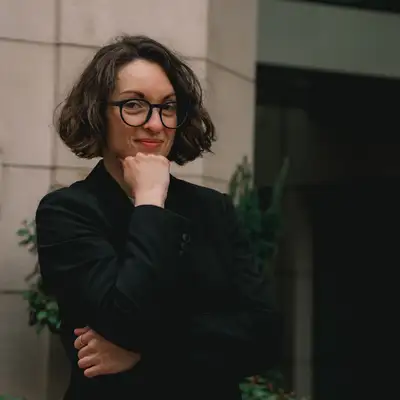
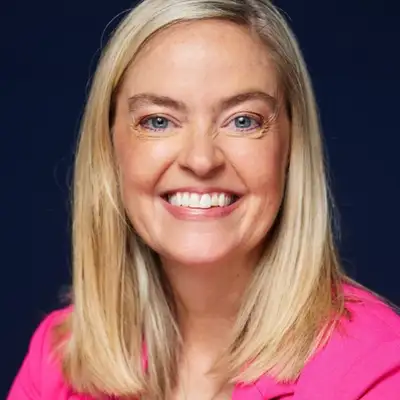
Magdalina Atanassova: This is Season 10 of the Convene Podcast brought to you by Louisville Tourism! Today, I’m joined by Julie Holtgrave, Chief Operations and Event Officer at the American College of Lifestyle Medicine. Julie brings over a decade of experience in event strategy and execution, and her work has been pivotal in advancing ACLM’s mission to promote healthier lifestyle through education and community.
In this episode, Julie shares how ACLM transformed its annual meeting by scaling hands-on culinary medicine classes into a dynamic general session experience for thousands of attendees. We talk about the challenges of creating interactive learning at scale, the power of plant-based menus, and practical tips for planners who want to design events that truly engage and inspire.
We start now.
Hi Julie and welcome to the Convene Podcast.
Julie Holtgrave: Thank you, I'm pleased to be here.
Magdalina Atanassova: Food is a core pillar of ACLM's annual conference, as is shared in our August issue. So for context, for those who have not read the article written by Michelle Russell, you shared that you wanted to find a way to bring the popular hands on cooking classes out of the kitchen and into the general session space.
Creating a two hour culinary edutainment session, scaling it for the hundreds of people interested.
Now that the 2025 event is behind you, can you tell us how it all went? What surprised you most about the execution or the attendee feedback?
Julie Holtgrave: It went well,
but as any planner would tell you, not without its challenges.
So from an attendee perspective,
the feedback that I received was overwhelming.
It was inspirational to those that are interested in trying to connect culinary education in their medical practice,
for those who are trying to start teaching kitchens in their clinics or in their communities to help educate folks.
So it was very inspiring and it was very experiential. It was very different.
We held it in the evening so it was an opportunity for folks to learn in a different way and to be able to be educated but have some laughs and have some fun as well.
Logistically,
the power in the hotel decided to go on and off about three or four times in the middle of the session.
It would only be off for maybe 15 seconds and then it would come back on.
But we are a hybrid event.
We are a live show in person.
And guess what that does to technology.
Everything has to reboot. Lights have to come, come back up, systems have to, you know, reconnect.
So our, our speakers did a great job of staying in the moment,
you know, knowing that it was out of their control. It was out of our control.
We had people running around, you know, checking plugs and making sure that, you know, somebody hadn't tripped on a cord type of thing. We, we had a speaker who Lit a candle on the stage.
Of course, the hotel is like, put that out.
But no, it. It went really, really well.
And it is something that we definitely will look to repeat in the future.
And also bring back to the conference the ability to have smaller,
more intimate sessions of 20 to 30 people.
Hands on cooking and learning with our culinary medicine education.
Magdalina Atanassova: Wow. I mean, I can imagine how you felt in those moments.
I was focused on asking about scaling these classes, but I would never imagine that actually losing power would be the big issue in the conversation. Wow.
Julie Holtgrave: Yes, I. I would not either. You know, the hotel responded well,
and apparently it was an issue with the actual power grid in the city, but at the same time,
something that the hotel really needs to solve for because,
you know, equipment gets damaged,
you know, all of the different challenges that you may have behind the scenes with that. But we survived. We rolled with it, we made some jokes about it, and everybody was happy in the end.
Magdalina Atanassova: I'm glad to hear. How did you approach creating an experience that's both interactive and personal? Even in the general session space?
Julie Holtgrave: We had to figure out how to connect with people.
We had to figure out how to meet people where they are.
So what we did is we made sure that we had a diverse group of speakers.
We had a doctor, we had two doctors who are actual chefs.
One is a creator of a free culinary medicine program for medical schools.
We had two local folks to the Dallas area. One was a pediatrician, another was a registered dietitian.
So again, different perspectives that they are bringing.
And then we also had another doctor who is the chef,
who is Japanese. And so he brought a different cultural perspective.
And through having all of those different speakers, we were able to,
you know, like I said, meet people where they are. Some of them more advanced, some of them just starting, some of them just learning about culinary medicine.
And so we were able to address all of those different learning abilities or learning situations, if you will,
and give them some hands on training how to do this.
A bit of feedback that we received after the conference or after the session is that the recipes and the things that we demonstrated were simple.
People felt empowered to go and try them at home.
It wasn't so complicated that they didn't know where to shop for the ingredients,
how to complete the recipes. They felt like they could get up and replicate them and go and do them.
So that was something that we talked about in advance, is, you know, really if this is going to be successful and people are going to learn and take this back, they need to be able to go back and do it themselves, much less teach a patient or someone else how to cook in this manner.
So that, that was our approach and it was received very well.
Magdalina Atanassova: They tasted them before that at dinner, correct?
Julie Holtgrave: That's correct.
So we had served a couple of lunches and dinners session taking place and the ingredients that we serve, or the recipes rather that we served,
we served to them earlier on in the conference.
So one of them was a TSC pudding dessert. And we said, hey, did, did you try the dessert at dinner tonight? That's what we're making right now.
And you could see the.
Oh, and you know, when they were able to see the recipes in front of them and learn how that was made,
you know, it's a little different to replicating a recipe for 2,000 people versus a recipe for two people.
So a little different process there. But we were able to matriculate those recipes so that they could experience it.
And yes, I think that helped to connect a lot of dots as well.
Because they were able to taste it.
We did lean into the idea of trying to serve that meal live in the room at the same time.
And unfortunately I wasn't able to too many moving pieces and parts and space requirements and such. So we weren't able to do that. So we did the next best thing, which is we did serve them separately and then we were able to talk about them during this session.
Magdalina Atanassova: That's wonderful. Did it change the reception of plant based cuisine?
Julie Holtgrave: I don't know how it couldn't change the perception of plant based cuisine.
We serve plant based throughout our entire conference.
That's all that we serve.
And our goal is, even if you are not a plant based eater,
when you attend our functions, our meal functions, we want you to walk away and not realize you just ate an entirely plant based meal. We want you to be satisfied, we want you to be full,
we want you to think, wow, that was very flavorful.
That was, that was a fantastic meal.
And oh, by the way, that was plant based. And for someone who doesn't eat that way to say,
are you kidding me? You know that that was fantastic.
And, and that is kind of the hook to get you to understand that plant based eating doesn't need to be bland. It, it isn't all salad, it isn't all just tofu.
There's a variety of foods that you can eat that are plant based,
that can be protein forward, that can be low carb,
that are very satisfied for you to have experience that opens your eyes to a healthier way to fuel your Body to be healthier overall,
not just while you're at the conference. So really the conference is just a jumpstart to show you how it's done and then when you go home to encourage you to try those things and implement them into your everyday routine.
Magdalina Atanassova: I really love that. And throughout this season we've focused a lot on plant based.
So I think that's just one more great example because I've heard throughout all these conversations in the season that sometimes people choose to or planners choose to leave the meat at the end of the buffet.
Still provide meat options, but you're eliminating those completely. So I think that's the next level.
Julie Holtgrave: Yes, I do think for a standard meeting in the United States,
you have to have the right attendee expectation.
Our attendees expect that we communicate to them. Advance. When you come to the conference, we will be serving plant based meals.
I would encourage other planners who are serving a standard American diet to take baby steps.
Have one meal that is plant based.
Offer plant based options with every meal, not just for special dietary requests.
Allow people to try isn't something I would encourage anyone to do,
you know, cold turkey and expect attendees to it. There'll be a little shock value there where they're like, hold on, what have you done to me?
But I do encourage you. The only way you're going to know is if you try.
So offering it on the buffet, encouraging people and telling people why you're offering it, hey, if you want to be fueled for the afternoon, you want to think clearly, you want to be energized, you want to be ready to.
For the second half of our meetings for today,
you know, here's this option and this is why even I still continue to do that. Our conference, we do that a couple of ways through electronic digital signage at the actual buffet lines so folks can see what they're eating.
And then I do a, a printed placemat that will go,
oh, I'll put three or four on a, on a table of 10. That explains the menu and the nutritional benefit of that menu. Where their protein is coming from, the antioxidants, all of the different nutritional values and how that's going to help sustain them through the rest of the day.
So again,
it's all about baby steps and behavior change. And encouraging people to take that first step is usually the biggest one.
AD: In Louisville, the most powerful moments don’t happen at a podium — they happen around the table. Louisville’s bourbon and culinary culture is built into the destination experience — helping planners create meetings with unforgettable moments guests actually talk about. From immersive tastings to chef-led storytelling, the F&B experience brings the city to life for attendees. Learn more at GoToLouisville.com/meet.
Magdalina Atanassova: Do you also offer the recipes or more information on the menu in the app?
Julie Holtgrave: Yes, we do. We offer specifically for that culinary session that we are speaking about. We offered all of those recipes through our meeting app. For anyone that wanted to, to have those.
And then I always receive requests about things that the hotel creates.
We work very hard with our hotel partners to create new and exciting plant based experiences and folks are always asking for those hotel recipes as well.
So we do keep that in mind. We try to have a couple of them ready to share and, and then the rest of them is like, well, you need to bring your meeting here and they'll be happy to recreate this for you.
Magdalina Atanassova: Tell us. So bringing something that's meant to be in a kitchen into a general session, how is transforming that stage and making it into a live cooking stage? What did it take?
Julie Holtgrave: This was an interesting process because you're exactly right. Creating a live cooking environment.
Our intention, full transparency,
our intention was to, to be cooking life in front of our individuals and having the smells and the sounds, the sizzles happening.
We quickly learned that recreating that in a general session environment requires a lot of permits,
requires a lot of expense,
requires a lot of time prior to session and post session for setup, connectivity,
so on and so forth. So we did have to pivot. We had to pivot and take more of an approach that we would prepare the foods in advance and then on stage live,
we assembled the food.
So everything was in small dishes. Things that needed to be roasted were roasted. Things that need to be sauteed or cooked through or done that way.
And then during the actual session, we talked and showed videos from our culinary medicine education program that showed our chefs sauteing that, that displayed our chefs, you know, chopping an onion.
I know that sounds very simple, but some people don't know how to appropriately chop an onion. So we, we showed those demonstrations and it really,
for our presenters,
it relieves some,
you know, stress of presenting live in the moment like that.
And yet we still had the,
I guess I will call him the roaming cameraman who had the shots from up above and were able to show the audience exactly what was happening from the stage.
We actually were able to show different ingredients as well.
From a regular sweet potato to a white sweet potato, why you would use one over the other.
And we were then able to show the final product of the recipe assembled and its completion.
And because we did that way, again from a planning perspective, productive, much less cost.
Expenses were really driven down.
In the end, it did not impact the experiential learning at all. No, everyone was still very engaged. Again, we could have done without the power going on and off, but it allowed our folks to see from start to finish how this recipe came together and then it also allowed us to highlight that culinary medicine curriculum.
We're encouraging everyone to go and enroll and to take this course. And so it allowed them to see bits and pieces of what they would experience that they took this course.
So it was a win win in the end.
Magdalina Atanassova: And just to clarify, the people in the audience are not actually cooking while they are observing everything presented on stage. Right. They don't have the ingredients in front of them. They're just seeing it.
I don't know if there is an interactive element, if they can ask questions during the process, you know, communicate with the chefs, but they're not actually cooking.
Julie Holtgrave: Hands on is correct. They are not cooking. Hands on.
It is more,
I guess you could call it more like a didactic session where they are sitting in the audience watching, listening to what is happening on the stage and then yes, absolutely, they are able to ask questions that our presenters respond to in real time.
And with the power going out, we had a few that were,
you know, just shouting out a question as we were waiting for the power to regenerate. Well, what about this?
Tell us about that and that, you know, again, everyone was making the best of an unfortunate situation and it just added a little levity to the room. People were, were laughing and relaxed and involved in what was going on.
A single person did not get up and walk out the door. So that's when you knew you were giving good content.
Magdalina Atanassova: So how did you measure the success of this initiative?
Julie Holtgrave: Our host event surveys are still coming in. I did pull them before our conversation today because I wanted to kind of get a feel for what some of the feedback was and it was a roaring success.
Pieces of feedback that I received from the attendees are all saying inspirational. I didn't know this was possible.
It was informative. I enjoyed kind of getting a sneak peek of what the culinary medicine education curriculum looks like to.
I'm trying to get my hospital system more involved in bringing plant based foods to our hospital now. Another step up.
Now I can,
I feel empowered to be able to go and say we can do this.
And I think too,
one of the things that was most meaningful to me, our attendee base are primarily physicians or clinicians in the healthcare space.
Many of them are looking for ways to connect with their patients.
Their job is to heal and, and to make people healthier.
We have chronic disease is an issue in our society today.
And so giving them the tools that they have to be able to sit down with their patients and to help them learn how to eat healthier, how to prepare healthier meals.
That's the end game here. And so for a physician to say in the post session, comments,
I now have the tools that I need to be able to speak one on one with my patient.
Thank you,
thank you for giving this to us.
And so that just tells me right there that we hit the bullseye on giving our attendees what they need.
Magdalina Atanassova: That sounds amazing. And really thinking of all the physicians that I've encountered in my personal life is so helpful to know that they're focused on food in general as a driver to better health.
So congratulations on that.
And how did this initiative reinforce ACLM's pillars of lifestyle medicines, particularly education, social connection,
within the event experience?
Julie Holtgrave: And of course, afterwards,
this session really reinforced the pillars,
our six pillars of lifestyle medicine.
We, we elevated our education, we built that social connection, as you mentioned,
all through shared experience.
So when you have this cooking experience going on,
you have people that are sitting in the audience watching and they're leaning over to the person next to them going,
did you see that?
I've done this at home. Try it this way.
I've purchased these ingredients. It works just the same. People are wanting to share or,
you know, lend a comment to their experience.
And we saw that happening a lot. We saw a lot of, you know, here's my card, call me, I'll tell you how I do it in my hospital system.
So the shared experience, which creates organically that social connection,
you know,
we elevated that education by having leading experts who are already doing this. I mean, how many people do you know are physicians and office chefs?
Who, who says, I want to be a physician and a chef? I'm going to go get these two certifications or these two levels of education.
In addition to that,
those experts delivered learning objectives that were very clear,
very direct. And our attendees, we set that expectation with them in advance. This wasn't a session that we just said, hey, this is Tuesday night, come and join us.
We really promoted and talked about what this was, why we were doing it, who needs to be in the room.
And that's the thing. This was on a Tuesday night at 7:30 at night.
Most people at the end of a conference day are like,
see you,
I'm going back to my room,
my learning sponge is full, I can take no more, I need a break.
And we had a packed house.
So I think communicating those education things in advance really helped draw the attendees there. Our presenters knocked it out of the park.
It really exemplifies what ACLM is when you merge the education with the social Connection.
You have healthcare professionals modeling and teaching healthy behaviors that's only gonna benefit the patient.
And overall, that's you, that's me,
learning how to live a healthier lifestyle and how to be healthier in our day to day lives.
And so that's what ACLM is really all about.
Magdalina Atanassova: I love it. I just want to mention here that you have representatives in your audience from more than 50 countries.
So this spreads. It doesn't stay in one country only,
which is very important.
Julie Holtgrave: Absolutely. The reach across the globe is spreading.
We have other lifestyle medicine organizations in other countries.
ACLM, the American College of Lifestyle Medicine was really the first,
the first time a small group of physicians came together and said we want to impact change, we want to influence change.
And they put their own personal money together to kind of form what was first known as the American College of Lifestyle Medicine.
Since then it has spread across the globe. We have folks that come to our conference and refer to it as the gold standard, if you will, to learn to grow and to learn to take back and to influence their communities, their countries and what is happening there.
So it really is,
we are going to change the world. We are going to change the way people approach health and healthy living.
And it's exciting to come to work every day and to see people say I was able to play with my grandkids over the weekend because I don't have to take my pre diabetes medication anymore.
And that's all through diet and lifestyle and how you manage all of that in your day to day lives.
It's quite a different experience coming to work every day and one that I do not take for granted.
Magdalina Atanassova: That's very inspiring.
So for planners who want to incorporate experiential learning into their events,
what key advice would you give them based on your experience with this large scale culinary activation?
Julie Holtgrave: I think one of the important things is design for engagement.
Not just entertainment, hooking stations,
mythology challenges.
You can get creative with what you're already doing in your space.
Doing things collaboratively that, that require problem solving brings people together.
People want to work together to solve the problem.
So think about what is already happening in your organization, a problem that you're trying to solve and use your attendees in a think tank situation to help them solve it.
Just organically brings people together because they want to work together.
And then the other thing I would say to that is don't forget to allow a time for reflection.
Talk about what you just did after the fact.
We had this great cooking demonstration and then afterwards, the following day in session from the main stage in general session, we talked about it a little bit.
What was your best takeaway? What did you learn? What did you like? What did you not like? What did you wish you had more of in smaller settings to get that real time feedback while people were, you know, it was fresh and they were still thinking about it.
Designing for engagement is a filter that I like to use across all of the content for our conference because you really want people on the edge of their seat looking for more,
expecting more, walking away, wanting more. And that's what's going to bring them back to your conference year after year after year.
Magdalina Atanassova: I love the fact that you stress that we need to reflect on what just happened, talk about it and then move forward. Because so often we just rushed to the next and that's how we view events.
Julie Holtgrave: Think about the learning that comes from the pause because we all process differently. Some people process in real time, they're on their toes. Other people, it takes time, they like to think through things or something will come to front of mind after the fact.
And there's a lot of learning that can happen with attendee to attendee, even for an attendee going back to their organization.
Hey, I learned this at this conference.
Can we talk more about it? I don't think we can do exactly this, but I think we can do a version of this and, and applying those skill sets and those mindsets are just crucial.
Otherwise, why are we going through all of these hoops to provide this great content when we can really, you know, learn from each other as well?
Magdalina Atanassova: What's next for the next annual meeting?
Julie Holtgrave: What's next is taking a deep breath and getting ready for, for Lifestyle Medicine 2026.
We are in the planning stages right now. Keynote speaker invitations are being sent out. Registration is being developed for 26. You know, that typical planning cycle.
But as I mentioned earlier in our conversation,
a renew on the culinary piece in the smaller group setting. We will be in Orlando in 2026 at Rosen shield Creek Hotel.
That particular hotel sits adjacent to the Rosen School of Hospitality.
And at the Rosen School of Hospitality they have two physical teaching kitchens and they are exactly that. They are fully built out kitchens to teach culinary skills to students.
The hotel is gracious enough to work with us and allow us in those kitchens during our time in Orlando. So we are creating new culinary sessions to be able to utilize those kitchens in such a unique space and to be able to have our attendees come in and learn hands on.
There's nothing like doing it yourself and really being immersed in the kitchen with a chef's apron on, crying because of the onions,
and, you know, really learning the skills that they are wanting to learn. So we'll have entry level courses, we'll have super advanced courses, and then we'll have what I like to call academic courses for individuals who are looking to bring a teaching kitchen into their hospital system, into their community,
into their YMCA and talking about the setup, how you do that, how you find funding and the benefits of that process. So, so my planning committee, no rest for the weary.
Magdalina Atanassova: We.
Julie Holtgrave: We put our, our planning hats right back on and, and we get started.
So I'm not going to give away too many secrets for what we're planning for 26, but the wheels are spinning, let me tell you. The wind is in our sails.
We have eclipsed 5,000 people. That's a combined in person and virtual attendance. So the wind is in our sails and we're excited about what's to come.
Magdalina Atanassova: That's all exciting. We'll keep an eye and we'll be informing our audience, so that's for sure.
Julie Holtgrave: Good. Thank you.
Magdalina Atanassova: Is there anything we didn't mention? We definitely should before we wrap up?
Julie Holtgrave: I think my, my only takeaway is don't be afraid to try new things.
Don't, don't be intimidated that people won't like this or won't like that. Even if it's an afternoon break. Start small.
You can serve a healthy afternoon break that consists of, you know, vegetable sticks and hummus or a protein bite that is a granola and a peanut butter type thing.
So don't be afraid to try new things. As we continue to be innovative in the world of meeting planning,
we had people that went before us that said, hey, let's try this. So don't be afraid to be that person.
Magdalina Atanassova: What a wonderful message to end our conversation. Thank you, Julie, so much for being on the podcast.
Julie Holtgrave: Absolutely. I'm happy to be here.
Magdalina Atanassova: Remember to subscribe to the Convene Podcast on your favorite listening platform to stay updated with our latest episodes. We want to thank our sponsor, Louisville Tourism. Learn more at GoToLouisville.com/meet. For further industry insights from the Convene team, head over to PCMA.org/convene. My name is Maggie. Stay inspired. Keep inspiring. And until next time.