Subscribe
Share
Share
Embed
The Leadership Sovereignty Podcast, hosted by Ralph E. Owens II and co-hosted by Terry Baylor, is a career acceleration platform
Leadership isn’t just a skill — it’s a career strategy for professionals seeking growth, influence, and promotion.
Hosted by Ralph Owens, Chief Information Officer, and Terry Baylor, CEO of a healthcare technology startup, the podcast delivers practical, real-world leadership strategies you can apply immediately. Each episode focuses on increasing visibility, navigating corporate dynamics, preparing for promotion, and leading beyond your title.
Expect short, high-impact conversations designed to help you think, act, and position yourself like a senior leader before you’re given the title.
You’re not just an employee. You’re the CEO of your career.
New episodes are released bi-weekly.
Would submit to you that we are operating in a culture where everything is urgent. We're reacting to everything, and I think that's the largest factor of why we feel overwhelmed. The only way we get from a reactive posture to a proactive posture is to think larger scale.
Ralph Owens:Welcome to the Leadership Sovereignty Podcast, where professionals learn to navigate challenges at work through the power of leadership principles. I'm Ralph Owens, Chief Information Officer in the financial services industry alongside my cohost, Terry Baylor, the CEO of a healthcare tech startup. Together, we've spent decades building teams, transforming organizations, and coaching individuals through the moments that define their careers. We unpack the mindset, strategies, and habits that help you lead with confidence, expand your influence, get promoted, and increase your income. Now let's dive into today's episode.
Ralph Owens:All right, welcome to another episode of Leadership Sovereignty. Very, very happy to be here, Terri. How are you feeling today?
Terry Baylor:Man, I'm feeling great. Spring is in the air, right? Yes, sir. So man, new beginnings. Honestly, feel with having Rob on the show today, it's kinda like a new beginning for us, man.
Terry Baylor:I'm super excited, and man, I'm ready to get at it. Rob, thanks for joining us.
Ralph Owens:Yeah, yeah, this is gonna be a fantastic, fantastic episode. Excited to introduce to everyone Mr. Rob Zelinka. Rob, I can't do you justice. You have to introduce yourself.
Ralph Owens:If I read off all your accolades, I'd be here for an hour, man. So introduce yourself to the people, and let them know a little bit about you.
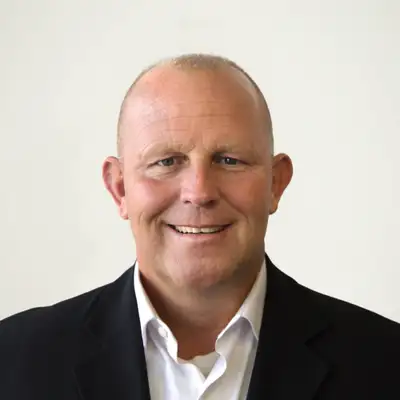
Rob Zelinka:Well, thank you, Ralph and Terry. It's really great to join you both today. I'm huge fans of what you're doing for our community. So at the basic form, I'm a husband and a father, and I try to be a good human. That's the most important accolade that I can share with you.
Rob Zelinka:I learned a valuable lesson years ago that the most important titles aren't on our business card, they're on our birthday card. I worked really hard to set the right example for people around me. Now, on the professional side, I found myself in technology by complete and utter accident. I was at the intersection of a human experience and technology, and how those two came together, and how they could support one another. Thirty plus years later, here I am on a C level executive navigating the complexities of life, the complexities associated with that human experience and technology, and how do you integrate the two?
Rob Zelinka:To your point, yeah, those accolades are great, Ralph, but at the end of the day, they're meaningless. And when I say they're meaningless, it's not about a single individual, but it's about a grouping of individuals that work together towards a common goal or objective, and to drive an outcome to serve others.
Ralph Owens:Absolutely, absolutely. Well said.
Terry Baylor:I love that.
Ralph Owens:Said, well said. Rob, we've had many conversations over the past few years, and one that comes up is, you know, how can we give back to help individuals, you know, further their careers? Which brings us to, you know, the topic of today. Right? We wanna focus on the focus crisis in the modern workplace.
Ralph Owens:You know, Rob, why do professionals feel constantly overwhelmed these days in the workplace?
Rob Zelinka:Yeah, know, Ralph, it's an exceptional question. I mean, at the end of the day, I would submit to you that we are operating in a culture where everything is urgent, and therefore we don't have clarity or a distinction around what is loud and actually important that drives an outcome for a business or a grouping of people. As such, if everything is urgent, then nothing is urgent, and the lines are blurred. The noise that's being created by tech modernization, digital transformation, you know, those buzzwords that we hear about, it prompts us into a posture of being reactive to the work. We're reacting to everything, and I think that's the largest factor of why we feel overwhelmed.
Ralph Owens:Yeah. That's good. That's good. That's good. That's good.
Ralph Owens:So what I'm hearing then is focused is strategic at this point in time. Is that right?
Rob Zelinka:Yeah, it must be strategic. The only way we get from a reactive posture to a proactive posture is to think larger scale. I was sharing with my team this week, we're so focused on putting fires out, but we're not thinking about how do we prevent the fire in the first place. And I know this sounds cliche, but it's so appropriate for the modern realm. We have to position ourselves differently.
Rob Zelinka:Our thought process has to be challenged. We have to actually get deep in the weeds and ask ourselves, why are the fires? Why is the urgency there in the first place?
Ralph Owens:That's good. That's good. And and, you know, just as a reminder, right, we always frame our conversations around career growth. Right? And and today, we're gonna really dive into, how to use focus as a strategic asset for your career growth.
Ralph Owens:So let's just jump into the first topic. So how to prioritize when everything feels urgent. I think we can all relate to that feeling of, know, man, there are so many things that are going on right now. How do I even know what to focus on? One of the questions that comes up is how do strong leaders separate the urgent from the important?
Ralph Owens:Because this was something that it took me a while to figure this out, right? Nobody teaches you this, right? You learn this over time, you know, bumping your head, making mistakes, and things of that nature. Rob, tell the people, how do leaders actually separate the urgent from the important?
Rob Zelinka:Yeah, it's really a thought provoking question, Ralph. I try to distill it down to the language of business. So oftentimes, think back years ago when you'd go to a cocktail party, a Christmas party, a dinner event, and someone would say, Hey, what do you do for a living? And someone would say, I'm a banker, I'm a lawyer. I would say, Yeah, I work in technology.
Rob Zelinka:Why don't say I work in technology anymore? In fact, I now tell people because I work in the financial services industry supporting credit unions, I work for a credit union. And so now that spawns an entirely different conversation. What we really fundamentally need to ask ourselves is the tasks that we're working on, that we are prioritizing. How does it directly impact a key performance indicator, a metric that our leadership team, that our clients, that our investment community cares about.
Rob Zelinka:At a high level, as you know, Ralph, an established and accomplished C level leader, it's usually around revenue recognition, risk reduction, or driving operational efficiencies.
Ralph Owens:Mhmm. Yeah, absolutely. Absolutely. I mean, Terry, any thoughts about that? I mean, because you and I both have served together in leadership roles, and you know, there's always an overwhelming sense of, you know, issues coming at Sure,
Terry Baylor:for sure.
Ralph Owens:You know, just being able to determine, you know, the difference between what's urgent, you know, versus what's So
Terry Baylor:so I think one of the big, As I'm hearing Rob talk through this, I remember going from an individual, I'm just doing my job to now I'm a manager to being a director, right? And so what I kind of recall during those phases, right, when I was just focused on my work, every little thing mattered because it was operational. It was make sure backups happen, make sure Whatever it was, right? Make sure that the NetScaler is online, whatever it is, all those little intricate things, right? And so we've been trained to count all the pennies, right?
Terry Baylor:So now you become a manager, right? Then you have to determine, okay, I gotta watch other people's pennies now. Along with my pennies, right? But I don't think really As I think through this, as a manager, everything was still reactive. Every little thing still really mattered because we really weren't, as a manager, I really wasn't focused on the economics of the job yet.
Terry Baylor:It was about the operational, how can we just minimize the amount of time it takes for this maintenance window? We had what, 200 line project plans, checking off All those are pennies. So I didn't really get to that scale level of thinking till I got to that director level where then you started really managing the budget yourself. Someone wasn't giving you the budget, right? So now when you start thinking monetarily, I believe that was one of the key areas.
Terry Baylor:Now around that became what things drove the biggest return.
Ralph Owens:Yes, yes.
Terry Baylor:And so now as an entrepreneur, man, I'm definitely thinking economics, right? Every single decision is impacting the bottom line, literally. Listen, entrepreneurs, you're gonna understand. All the entrepreneurs are going, Preach brother, preach. Every single decision impacts the bottom line, right, because you don't have as much margin when you are an entrepreneur, right?
Terry Baylor:So that wrong decision, it costs you $5,000 bro, that's gonna impact the next six months for you So in those kind of I think understanding, thinking at a larger scale, thinking the economic impact, and then also when you are at that director level, you start to think more about the human capital impact, right? Because a lot of times the economics is the things that people talk about, but the thing that keeps you up just as much as up at night is my team's looking worn. I'm promising my team we're never gonna do it that way again because when you start looking at the faces, and Rob, I can't wait to hear the stories around this, When you look at your team and you see the faces, you see the dreary eyes, you see the upside down smiles, right? Because you know it's been a tough period for whatever reason. How do we as leaders make that decision that is going to impact the human capital, right, in the most positive way and the bottom line in the most positive way?
Terry Baylor:And that balance, it's a continual pursuit for the right amount of value and right amount of attention that each needs. It's a pretty big job and responsibility that we have in that space.
Rob Zelinka:It is, Terri, and this is why I started my intro with saying I'm a husband and a father. Every person on this planet has roles outside of their professional sphere of influence. So that's why I work really diligently to understand the human behind the role, to the degree that the person will allow me to. Some people are very closed off. Some people are very compartmentalized in how they try to separate their personal life from their business life, and the two don't collide.
Rob Zelinka:I've come to learn over thirty years that they always collide, and they have to integrate So with one for example, I will spend enormous time on the front end learning what makes the person, what excites them, what are their passions, what causes them stress or frustration. And so when you're in the throes of a real challenging effort, be it a project effort, be it an incident response to what we call a P0 incident, and Terri, I know you know that from all the years that you've been leading efforts and people. Your goal in a P0 incident is you have a hard system down, you need to restore service as quickly as possible, and you'll figure all the other stuff out later, the hows and the whys. But when you know the dynamics of your people and you know what their strengths and weaknesses are, you'll know how to protect those people, and in many cases, from themselves because they'll become their own worst enemy, and that's where the art of leadership comes into play. Oftentimes, we see this a lot in professional sports.
Rob Zelinka:The best team seldom wins the big game. It's the one that plays better as a team together and executes as a team together that wins. Mean, you look I mean, time and time again, when the New England Patriots from years back won every game in the regular season, but lost the Super Bowl, and Tom Brady, who's an exceptional leader, probably one of the best quarterbacks in the history of the game, he basically owned it. He said, We didn't execute as a team. That's why we lost.
Ralph Owens:Yeah. That's good. Man, that's good.
Terry Baylor:That is really good.
Ralph Owens:That is really good. I'll I'll something in there too, you know, just talking about how to, you know, evaluate what's important versus urgent, I find myself on a daily basis having to reevaluate everything that's on my task list, right? I may have 200 tasks on this task list, and I can only get so much done in one day. So I go through a filtering process where I look at, you know, hey, what are the things that are gonna make the most impact today? Right?
Ralph Owens:And then I'll just focus on those, and then I'll make those the urgents and the other ones, you know, important, right? But it's so crucial, right, to understand your teams. Because again, if you're a leader of people, you're not getting anything done if they're not doing the work, right? You know, so you have to have that emotional intelligence around the capacity of your team members and how you can get them to move forward. So I think I think that's fantastic.
Ralph Owens:I think that's fantastic. Thank you for listening to the Leadership Sovereignty Podcast. If today's conversation helped you grow in your leadership, influence, or your career, take a moment to visit leadershipsobberty.com. There you'll find exclusive resources, free guides, and ways to stay connected to our community of leaders who are building purpose and success. Don't forget to rate, review, and share this episode with someone who's on the rise in their career.
Ralph Owens:Until next time, lead boldly, lead with purpose and continue to walk in sovereignty. Take care.