Subscribe
Share
Share
Embed
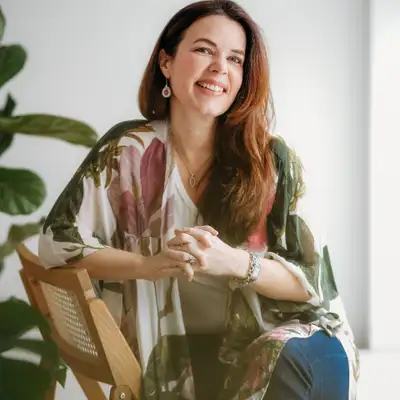
The Words in the Wilderness podcast is for those who have the conviction to make changes in their life as they drag their feet through the messy middle, crying into the void "it ends with me."
Led by Jacky Power - The Therapeutic Poet - these are conversations that look underneath the label, the diagnosis, the tidy explanation, at what's actually going on.
If you've made a decision to change your life and now you're in that wobbly, lonely bit where nobody quite gets what you're going through, I made this for you. Because I've been there. Many times.
Each episode starts with one of my own poems, using therapeutic poetry to set the scene. Sometimes it's just me, unpacking human tricky things. Sometimes it's a guest - a therapist, a coach, someone whose lived experience has taught them something worth passing on.
We talk about leaving what doesn't fit anymore, about breaking the patterns you inherited and don't want to leave as your legacy, about all your human tricky things that you've maybe been taught to hide.
I'm Jacky Power and I'm on a mission to rehumanise, one poem at a time. Reminding you that you have permission to feel and use those feelings as data to decode, not symptoms to squash.
Follow Jacky on Instagram: @the_therapeutic_poet
Find out more: www.jackypower.com
Listen to Jacky on Insight Timer: www.insighttimer.com/TheTherapeuticPoet
Join her on Substack`:www.jackypower.substack.com
Jacky (02:17)
Hello, welcome to Words in the Wilderness with me, Jacky Power. I don't know about you, but in the last, I don't know how long, I don't know how long, maybe since lockdown in 2020, life has just felt increasingly uncertain and volatile and really, you know, really challenging in lots of different ways. And I...
have felt more and more negative to be honest and I don't like feeling that way because what I find is that I see myself as being more and more under threat and really trying to protect myself and I don't think that's a way to flourish in life, it's not a way to flourish in life and I was thinking about when I did my masters and one of the things that we learnt about was positive psychology.
And I was talking about this at a group that I run, my poetry group that I run this morning, as soon as you start talking about hope, I think some people can even be in the position of, you know, there is no hope, there's nothing to hope for anymore, and we shouldn't even be talking about that, we should be talking about hopium, that we're numbing ourselves out on this idea of hope. And I come back to the idea that no matter what is going on in the world or what we think is going to happen or anything like that, we...
really do only have this moment to live in and if we are gifted with this amazing thing called life which is a really crazy experience that none of us have any instruction manual for and we're all trying to figure out as we go along isn't it a shame that we would then spend our time
living from that position of threat constantly. When, you know, today, life around me right now is a place where, you know, there is enough goodness for me to be very grateful for the life that I have. And I think it's a challenge to balance that, how do I be okay in my life with what I'm living right now, whilst also acknowledging what's going on in the world?
without getting pulled down and drowned into that, but also acknowledging kind of the privilege I have and things. And I think we're all trying to figure our own way through that. I do not sit here pretending to have any answer, but I am wanting to share with you what I am doing right now to navigate some of this in the best way that I know how.
As a therapist, often, you know, there's a lot of encouragement to look backwards and to look over or to like really work through, know, why do I feel lonely or why do I feel grief or, and I can very much be in that space, but you know, recently, I'm not sure how well that is serving me. I like writing poems about grief and loss because there's part of me that feels at home in those places. There's part of me that kind of
really loves to feel witnessed in that way. But what I really recently recognized is that I need something else. And so I went back to this idea of positive psychology, but specifically around the broaden and build theory, which is by a psychologist called Dr. Barbara Fredrickson. And she has a book called Positivity. And so I have started reading that again recently. And I wanted to talk to you about the positive psychology of poetry.
Because she says that in order for us to have heartfelt positivity, she calls it, there are different components and those components are interest, amusement, joy, hope, serenity, gratitude, pride, inspiration, awe and love. And the idea about the broaden and build theory is that as you start to
create or savor more positive or she calls them beneficial rather than getting to this idea of positive and negative. But when we're in those beneficial emotions, the ones that make us feel connected, that make us feel open and that broader sense of being human in a positive way, when we have those, that can then lead to building more of them.
And I shared this recently in a workshop that I did where I was sharing about body hangups. Like I have a body hangup around my legs and I have since I was little. I grew up in sort of heroin chic era where everyone was willowy and incredibly thin and I'm not either of those things. And I would use to really sort of hone in on my legs. And one day I got so fed up about this that I wrote a poem.
because I'd kept on hearing these lines, I love my legs, I love my thighs. And they had kind of risen in my sort of consciousness and they played around there for a few weeks. I love my legs, I love my thighs. So one day I sat down and I wrote this,
Jacky (08:07)
And what I shared about in that workshop
was that by writing that, it helped me not only have a different perspective, but then years later, actually recently, I went to do a video online and I noticed when I played it back, there's kind of the wobble on my face or it felt like, know, the jowls were there a bit and things, and I started to get quite critical about my appearance. And then I remembered that poem
the idea of just acceptance of the wonderful bodies we have because they're the only homes that we have for all of our lives. And so why on earth wouldn't we appreciate them?
But also that then reminded me of a time when my youngest son was small and he went to give me a cuddle and he loved patting the bit just above my bra strap, you know, on sort of on my back, which is a bit flabby, you know, it's bit cuddly. And how much comfort
that brought him as a little boy, to be able to hug his mum and have these sort of soft bits to kind of press on her and that that was comforting to him.
And that's really what I think, the broaden and build theory is in practice, is finding a way to be grateful for something, my lovely legs, my lovely thighs, but also that how that we can then build on that gratitude, because I have written that poem once about one aspect. It's then a seed that is planted that then grows along these different ways that actually when I then found myself being critical about my appearance in another way, I can remember
that and it kind of helps to move things along and make me feel more positive. And I think that poetry really, speaks to this idea of positive psychology. And so I wanted to discuss today about, I mean, not just gratitude, which I guess that poem was about, but about awe. When I was young,
one of my parents was really did not like spiders whatsoever. And so I grew up with this aversion and disgust to spiders. But then one day when I met many years later, I was walking our family dog after the school run. And I went out into the local footpath and there adorning the hedgerow during this autumn morning was spiderweb after spiderweb.
covered in frost and they looked so beautiful and delicate like lace that it was just a really beautiful sight to behold. And so I came home and I wrote this poem.
Jacky (10:51)
When you see a spider on your kitchen floor and shriek in disgust at its spindly scuttle before you reach to shove, brush, chuck, squish, it out of your life. Remember this: there is beauty within.
Jacky (11:07)
Awe is that feeling when you encounter something so vast that you can't wrap your mind around it completely in the moment?
It's a really strong experience and it has a self-transcendent, I can't say the word, self-transcendent, transcendent, transcendent effect, in that it shifts attention away from ourselves and makes us feel part of something much greater. It also leads us to reframe the way in which we see the world in some way, just like that spider, because it really challenges our normal understanding of the world.
And couldn't that be just a fabulous tool to have at your fingertips if you could create a sense of awe even in the trickiest times? For when we feel awe, we are totally present in that moment. And as Thich Nhat Hanh says, life is available only in the present moment.
Awe helps us to gain perspective, to be curious and improve our social well-being. And you know, it involves all the senses and encourages a playfulness and creates a sense that you have more available time.
Doing something to create awe in times of stress could just give you a bit of a breather. So I thought I would share with you possibly just some tips on how to bring awe into your life right now. Because I have found awe in the most extraordinary places, in a slug, in an ant's nest, when you see all those little ants going in and out in a spider's web, like I shared in my poem, in a nut broken by a squirrel on
a broken town tree, even in seeing a dead body. And the other thing which I particularly like is that unlike other emotions that seem to get labelled as positive or negative, awe is felt in both fantastic and gruesome situations. It's a real everyman emotion.
Awe can be a verb, it's a way to notice and to appreciate and to pay attention. We can actively bring it into our lives. So I wanted to, like I say, encourage you to possibly bring some awe into your life today. And I'm definitely going to be doing some of these exercises myself this week. So the first one is thinking about something that gives you awe. Maybe it's the mountains or a drop of rain on a leaf when it reflects you back at yourself when you look closely enough.
And then write about that. Write about how you feel when you look at it. And just let your pen move and write and write and write and just see what happens.
And it might just move you from feeling awful to awe full. Sorry about that, pun. It might look as if the situation is creating a suffering, but ultimately this is not so. Your resistance is. That's what Eckhart Tulle says. And so when we start to look at things with a different perspective, that poetry can bring us, it can help us with this sense of suffering that we might be experiencing.
A second option is to write a mindfulness poem. To take a few deep breaths and let your stomach go as you breathe in. And notice the rhythm of your breathing without changing anything. And becoming aware of your thoughts as an observer.
You know the score, right? Being present without judgment, even though, of course, you're feeling judgmental at some of those thoughts. But just allowing them to be and let whatever words come naturally and just let them come out and be mindful of your words as they appear on the page. And then can you treat those with some curiosity?
I wanted to share with you a poem that I wrote today, and it's not perfect, but I wrote this.
After doing the exercises we did today in positive psychology and using those as kind of poetry prompts, and I used the idea of interest, and I was speaking to somebody this morning, and they were talking about how their daughter was kind of delegating any decision making to her, and this was during the school run, and it was all really stressful. and that inspired me to write this. I don't have a coat to wear, mum.
Decisions, simple decisions, handed over to a school run mum, batted back. Don't you? What? Not the purple or pink? Let's have a think of how this conversation could be if there was time for curiosity. I'm not sure what to wear today, mum. Do I want to feel snugly or cool? Is my mood raspberry ripple or blueberry blue?
If I wear this coat, will those shoes do, do they need to match or contrast? Do I want them to feel tight or slip them off fast? Is it comfort I'm after or just fitting in? Mum, can you help me begin? I want to feel like home, mum, on my first day of school. if that's the case, then it's no choice.
I'll wear the pink that reminds me of you, because you have a pink coat. You bought one too. Immediately that to me brings up this sort of sense of love and nostalgia and
That idea of wanting to be like a parent, you know, because they just were so, you know, the that they were the figure in your life, possibly that was that ideal figure as you were growing up and you wanted to be like them in some way. You know, they're often for many people, not for all of course, but for many, that parent can be like that hero, the first hero for a child.
So, you know, that was written out of nothing. That was written just out of a prompt of of where can you find interest? and then thinking about conversations that I'd had today. So being mindful about some of those conversations.
The next and last option I'd like to give you is one that I learnt from Jacqueline Suskin's book, Every Day a Poem. And she invites you to close your eyes and point in any direction. And when you open your eyes, what's the first object you see? And then write as if you are in awe of it, to be so consumed by the presence of it. Start by asking like the who, the where, the when, the why, and the what.
So, for example, if your eyes rested on a glass, ask yourself, well, who made the glass? Where were they when they made it? How did they come up with the design for it? Where were they when they decided to make it? When did their thought actually become a physical thing?
Where did you buy it? Why did you choose it? Or was it chosen for you? Do you like it? How does it feel when you hold it? What's the first word that comes to mind when you look at it?
I did this exercise and the thing I saw was my aloe vera plant, so this is what I wrote. Proud prongs, pronounce your presence. I am here. Staccato spikes, secure your sanctity. Back off.
And yet, when you are cut to the defenseless flesh within, the truth oozes out. I'll heal. I mean, that's just about a silly old aloe vera plant. which is actually very cool, was very big. But my point is, is that whatever is going on, we all do have this one human experience.
When we are making a choice to not be dragged into certain narratives and we want to bring some more positivity in our life, not in that like I'll just plaster everything over and pretend I'm happy kind of way, but actually, how do I make a concerted effort to have more positivity in my life? . And I think that poetry can do that. So whether you decide to use poetry as a place to find some gratitude or to find some awe, I hope this encourages you to do so. As you can see from what I've shared, it's never about being perfect or getting the exact right poem. That's not what I want to bring to these episodes. What I want to bring is really looking at poetry as this technology.
for being human that we can use it to change our the perception of our experience which can enhance our lives. If you do write something, please like reply to me. You can get hold of me at jacky at jackypower.com and share what you write. I would love to hear. But that's it for now. Until next time, take care.