Subscribe
Share
Share
Embed

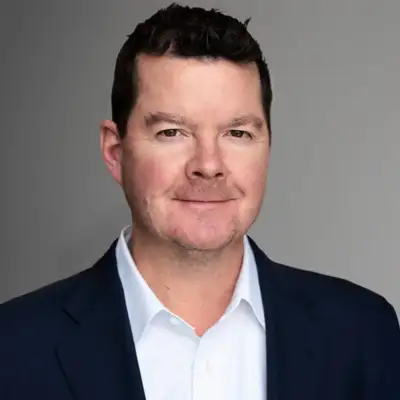
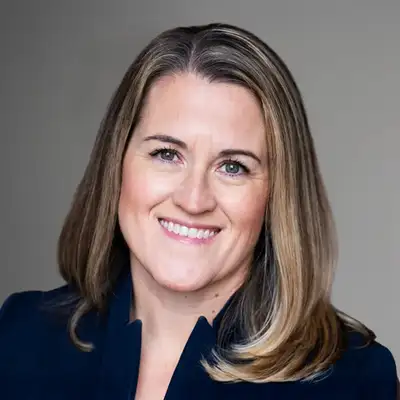
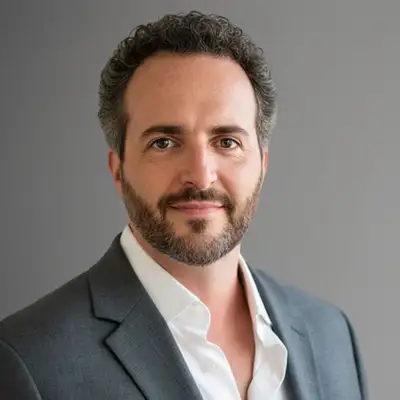
Meet the Insiders rewriting the rules of influence. Pulitzer Prize-winning journalist Brody Mullins and veteran DC strategist Lisa Camooso Miller interview the leaders who shape perception, move policy, and win when it matters. Not pundits or commentators – these are the operators driving some of the most critical strategies and outcomes in today's Washington.
Will: My instincts always tended in that direction, but they were always sharpened by my parents certainly around the dinner table debating politics, and I had to know why I believed what I believed. I couldn't just posit something. I had to be able to back it up.
ANNCR: Behind every major policy decision, every corporate strategy, every Washington power play are the insiders shaping the game and the new rules to win it. The Deciders, with Pulitzer Prize winning journalist Brody Mullins and veteran DC strategist, Lisa Camooso Miller.
Brody: Welcome to The Deciders where we speak to the insiders rewriting the rules for effective advocacy in Washington, DC. Today we're joined by Will Dunham, President CEO of the American Investment Council. Thanks for joining us.
Will: Great to be with you, Brody. Great to be with you, Lisa.
Lisa: Will, I think a lot of Washington would be surprised to hear that the head of the private equity organization was raised by two hippies on a farm in Ohio. I have to know more about this story. Will you tell us your origin story and how you got to Washington?
Will: That's right. We were crunchy and we were MAHA before it was cool. I was in fact raised by hippies on a small farm in Ohio. It was a great way to grow up, very grounded. Loved every minute of it. There was a lot of organic lentil beans and raw milk, believe it or not, the whole deal. And it was, like I said, a great way to grow up. I made my way eventually to Hillsdale College. I had a chance to read a lot of great authors. It kind of grounded my understanding of free markets and capitalism, Hayek, Von Mises. It was a great education. And I really, even there, didn't do much by way of politics. I didn't study politics until my senior year, actually. I took a class with Dr. Larry Arnn. It was a statesmanship class. We were studying Churchill, also studying Lincoln, and it really lit my brain up. I said, "This is some of the most interesting stuff I have ever studied." And so I said, "I really like this. I think I might want to go study this further. I might want to get an advanced degree." And of course, I'm a senior with an English major, and so I don't have a job lined up. So I'm thinking maybe more school is the right answer. But Dr. Arnn actually gave me the best career advice that I've ever gotten. If you really like this, you should go to Washington DC and try doing politics. You can always come back and get an advanced degree later. So I took that advice and I came to Washington DC. And after about a decade and a half on the Hill, that was my advanced degree. I never did end up going back and getting that master's, but learned an awful lot on the Hill.
Lisa: Well, there's something about being on the Hill I think that is an advanced degree in a certain way. Plenty of schooling and still a master's degree and understanding it every day. That's wrong. How
Will: Did you get your first job
Brody: On the Hill?
Will: My first job on the Hill, I applied Representative Tom McClintock from California, sort of a Western libertarian, still in office, great man, great boss, very principled, calls it like he sees it. Sometimes he was leadership's best friend if he agreed with them. Sometimes he was their worst enemy if he disagreed with them, but it was always on principle. He was a great first boss. And my first job on the Hill working for him was literally opening the mail and sorting it and helping him reply. He read every reply. He signed the letters and it was a lot of fun working for him. And that's where I started and sort of worked my way up through the House of Representatives and eventually was lucky enough to be the top policy staffer for Republicans working for Kevin McCarthy. And it was a really, really great ride. Looking back on it, kind of amazing to go from opening the mail to working in the Capitol. On the Hill, we tell each other, if you don't feel awe looking at the Capitol Dome, it's time to quit. And I think that's true. And I never really got to that point, by the way. I still felt awe every time I saw it. It's a temple of democracy. It's a living museum and it was a real privilege to get to work in that building every day for seven years.
Brody: Yeah, that really is true. I think all three of us have done that. I remember when you walk from the house to the Senate and you're going through the ropes under the rotunda and there's all these tourists and they're looking at you and you're like, "My God, this is a cool building." You're working in a museum. That's right.
Lisa: I absolutely agree. Talk a little bit though, because through the course of your career in Washington, inevitably you have had some tremendous counsel. Will you talk a little bit about mentors that perhaps have helped you along the way?
Will: Yeah. Thinking back to my time on Capitol Hill, one person that comes to mind is Mike Sommers. He's a friend of mine. He's a friend of the show as well. And when we were both on the Hill, he was John Boehner's chief of staff and he was very generous with his time and advice, which really meant a lot to me. And I don't think I'm unique in that. Mike spent a lot of time with a lot of people mentoring them and counseling them along the way. And I've really tried to model that myself and pay that forward. And I think that's actually part of the Capitol Hill ethos is helping the next generation of staffers come up. And yeah, Mike Sommers really modeled that for me.
Brody: You also worked for Kevin McCarthy for seven years.
Will: That's right.
Brody: What'd you learn from him?
Will: Kevin McCarthy is a people person and he cares sincerely about each and every member. And honestly, that extended to both sides of the aisle. He had a lot of bipartisan friendships and still does to this day, but he knew the members, he knew their districts, he knew what they had as challenges in their districts, the opportunities they had in their districts. He also knew their families. He knew their kids. That was really one of his great strengths remains one of his great strengths is sincerely caring about the people you're working with. They are not means to an end, they're ends in and of themselves. And he lived that.
Brody: You talked about McCarthy working with creating bipartisan friendships. When you were on the hill working for him, who were the Democrats who you liked working with the most?
Will: I was lucky enough for the last four years of my time on Capitol Hill to get to be part of those four corner discussions. So Pelosi, McCarthy, two Californians, Schumer and McConnell, and we worked on a lot of different bills together in that foursome. So debt limit bills, government funding bills. We worked through some government shutdowns as well. We worked through COVID, which that was an around the clock extraordinary effort to pull the US economy back from the brink during those shutdowns. And so some of the people that I liked working with the best were in those offices, in Schumer's office and Pelosi's office reaching across the aisle. Certainly those negotiations were adversarial at many points, but there's also a sense in which you're working together to get the bill done. And so there have to be compromises. There has to be a result. And so in that sense, the negotiations were collaborative. I remained very good friends with my counterparts in those offices and I think they would say the same. We didn't see eye to eye on a lot of policy, but we knew that we could trust each other.
Brody: I want to go back to something I should have asked about before. Raised by two hippies on a farm in Ohio, how'd you become a Republican?
Will: We had a lot of debates in my house. I debated in high schools, one of my favorite things to do. And actually one of the formative people in my life was my grandpa. We would go visit him in Massachusetts every year, and he was a dyed in the wool liberal. I mean, his representative was Barney Frank for a long time, and my grandpa thought Barney Frank was great, if only he could be a little more liberal. He wasn't quite left enough for my grandpa, to give you a sense. My grandpa was a great American. He lived to be 101. He was a World War II veteran. And from a very young age, he put me through my pieces. My inclinations were conservative, but they were always sharpened around the dinner table, those summer dinners in Massachusetts eating sweet corn and tomatoes and swordfish, debating politics. I had to know why I believed what I believed. I couldn't just posit something. I had to be able to back it up. And I actually think that that solidified my views about the world that tend to be more sort of free market Republican.
Lisa: Probably made you a fair arbiter in the discussions with Pelosi's office and Schumer's office though too, because you had been run through that exercise a few times in your own private life.
Will: Yeah, I think that's right. It's important to know where the other side's coming from. And I think understanding that the other side has a reasonable, rational position, even if you don't agree with it, that's sincerely held is important.
Brody: Speaking of the other side, when you left the Hill, you first went to work for Norm Brownstein. Norm Brownstein is one of the top Democratic lobbyists and fundraisers in DC. If Democrats get the House and Senate, he may be the most important unelected person in Washington. Tell us about Norm Brownstein.
Will: When I left Capitol Hill, I went to Brownstein and worked for Norm. And I remember my first day at Brownstein, I went to breakfast with Norm, just me and Norm. And from the moment I sat down, he was bending my ear about this museum that he was trying to get funded and built, and he's working on it with a friend out in Denver. Okay, let's get that friend on the phone. Okay, now we're in the middle of a restaurant and the friend is on speakerphone talking about the museum, and Norm is on his phone trying to pull up the slide deck for the museum while he is talking to me about which members we need to talk to about this museum, strategizing as we go. And that's Norm. He's an absolute force of nature in constant motion. One of the things I learned from him was that perpetual motion, never sit still, never take no for an answer, really be relentless.
Lisa: Well, when you make a decision to leave Capitol Hill, what is it that changes your mind about being there and making a decision to leave?
Will: So I left just before Kevin became speaker in 2022, and that was hard to do, but it was time for something new. I have three little kids, a fantastic, lovely wife. Hello, Anna. Shout out to you. And I was seeing a lot more of Kevin and the members of Congress than I was of Anna and the kids. And so yeah, it was time for something new, but I really grew up in the House of Representatives. And so in a sense, you never leave. When I go back, it's fun to visit the Capitol and there's that little wave of nostalgia and it feels a little bit like a homecoming. So eventually you do leave, but in a way you never do.
Lisa: We'll be right back.
Brody: Welcome back to The Deciders.
Lisa: Will, what can you tell us about the American Investment Council?
Will: Yeah, we're the private equity and private credit trade association in Washington DC. We have about a hundred members. We're about 20 years old. And at the very most fundamental level, our members raise and deploy capital, and they're really professional business builders. What they do is they go find businesses maybe that are struggling or even businesses that are doing just fine and they help them level up. They help them be great. That's really where the value is created.
Brody: We hear more and more in Washington about private capital. Can you speak broadly to what private capital is?
Will: Over the last 40 years, our industry has changed a lot. In the 1980s, it was about financial engineering. You fast-forward four decades and it's about value creation, but it's also about partnership. If you look back over the last five, 10 years, a lot of really wild things have happened in the US economy. There have been some black swans. You've got the COVID global pandemic, you have supply chain disruptions, you've got inflation, you've got high interest rates spiking pretty quickly. That's hard on a business. So yeah, it's also about helping those businesses get through not just the good times and grow, but also the tough times. And I think looking ahead, we've got an AI revolution that's really upon us. And I think that partnership, especially with small businesses, is going to be more important than ever to help them navigate really truly uncharted waters.
Lisa: When people think of private equity, they likely think of the wealthiest people. Does that present challenges for you? Tell us a little bit more about that story.
Will: Yeah. I would encourage folks to look at where do the investments go? 85% of private equity investment goes to small and medium-sized businesses, 500 employees or fewer. So the investments are really going to Main Street, and I think they're going all over the country, every state, every district. And we at AIC make it a point every time we sit down with a lawmaker to give them a sheet of paper that tells them the dollars, the businesses, the jobs that have been created in their district, thanks to private equity and private credit. And it's always an eye opener because of course, you walk down Main Street and you don't see signs that say backed by private equity, but that's the reality is there are Main Street businesses all across this country and we are relentless about communicating that local impact. It's a really big, I think, important piece of what we do.
Lisa: I think that's really smart too, because that's the one thing that we all know when we go to Capitol Hill is when you bring a story to them, if you can make it real, tangible and part of what they do every day, I'm sure that helps them understand how much of an impact it's making.
Will: Absolutely. Being able to think about an actual business as opposed to an abstract theoretical business model makes all the difference in the world.
Brody: The Trump administration has initiated a new Labor Department rule that would change how 401(k)s can invest or not invest in private capital. Can you tell us about that change?
Will: Yeah, we're really excited about what that rule means for 401(k) savers. And ultimately the rule is going to mean more choice. They're going to be able to choose whether they want to invest just in public markets or in public and private markets. And the reason that's really, really important is there are half as many publicly traded companies today as there were 20 years ago. So there are fewer choices. And so that's what the Department of Labor is doing is they're giving 401(k) savers more choices. Georgetown just put out a study that showed that the average retiree would have $2,500 more per year in retirement income if a slice of their retirement had been put along the way into private assets. So ultimately, we like this rule because it gives you the saver more choices and strong fiduciary guardrails and a financial advisor to help you navigate that process and we think that's critical.
Lisa: Well, one of the most persistent criticisms of private equity is that the return for investors can sometimes be at a cost to the workers. Will you talk a little bit about that criticism?
Will: This is another great example of how our industry is very well known, but not very well understood. Our members are professional business builders and a strong business is good for employees. And I think that's born out in the fact that the average private equity backed job has salary and benefits of $85,000 a year, which is actually more than the average job in America. And there's a growing trend of giving workers actual skin in the game, a piece of the company when a private equity firm buys it. There's an organization called Ownership Works that actually facilitates these transactions to make sure that the employees have a piece of that business and have a stake in its success. There was a great example of this in California recently. One of our members, KKR, bought a business in California, gave the employees a stake in that business and really built that business brick by brick with those employees. They exited that company recently and longtime employees got a payout of 30 months salary. Just think about the life changing event that that was for those employees. This is just one example of many. Now it's not going to make national headlines because it's not going to get clicks, but it's happening all over the country at an increasing rate and we think that's an extraordinary thing and we're really proud of what the industry is doing in that space.
Lisa: Well, when we talk about making examples clearer for members of Congress, Brody and I today are your audience and are curious, are there examples in the industry that you can point to that can help us understand the kind of impact that you're making?
Will: One such example is a company called Cordis. It's a medical device company. It's about 70 years old. And in its early days, it was very, very innovative with patent after patent. In its middle years, it kind of lost its way and it really got lost in a couple big conglomerates. And recently, one of our big members, Hellman & Friedman, based out in San Francisco, carved Cordis out of that big conglomerate and they did something really interesting. They gave them an infusion of capital specifically for innovation because they knew that innovation was in this company's DNA and the result has been really extraordinary. Last year, one of the biggest advances in cardiovascular health came out of Cordis. It's a new way of delivering drugs to patients in the cardiovascular space. And again, it was made possible because of that partnership between the private equity firm and the company itself to get back to its roots, to get back to its DNA and innovate.
Lisa: There must be a tremendous amount of research done for each one of these companies to identify opportunities like that.
Will: Yeah, it's a great point. There's a huge amount of research that goes into a business before a private equity firm invests in it. And as it turns out, the expertise needed to decide whether to invest in a company also is the expertise you need to partner with that company to make it great. And so you see that in these private equity firms, that expertise is important all the way through, but it's really deep, genuine sector expertise. That's why I say our members are truly business builders. They're not just investors, they're partners with these companies.
Brody: We'll be right back. Welcome back to The Deciders. We're here with Will Dunham.
Lisa: Public pension systems are known to invest heavily in private equity, but is there a disconnect between the political rhetoric and the impact that the industry itself is having on funding workers' retirement?
Will: 34 million Americans in public pensions rely on private equity to secure their retirement. So that's police officers, teachers, and other public sector workers rely on our industry to make sure they've got the retirement that's been promised to them. And if you look at the last 20 years, 10 years or five years, private equity has been the best performing asset class for those institutional investors across the board. So we play a really important role in securing those retirements.
Lisa: Will you talk a little bit about AIC and the role you play as a trade association for these organizations that you represent?
Will: The private equity industry is big. It's a multi-trillion dollar asset class, but the vast majority of private equity firms don't have a government relations point person. They don't have a communications point person. They really are putting the private in private equity. And so we really fill that role for a lot of them, telling the story of the industry, aggregating everything the industry's doing and putting that in front of lawmakers really is a counterpoint to the anecdotal headlines that are out there. We provide data that tells a story and that's what we do as their voice in Washington. It's a privilege to get to do that, and it's really important that we push back on public policy that would inhibit our members' ability to go build those businesses from the ground up. One of the businesses that we've put in front of lawmakers recently is Van Leeuwen Ice Cream. And now the first reason we've done that obviously is because it's ice cream and it's delicious. It's a great product. It's also a great story. Van Leeuwen Ice Cream started as a little food truck. Three friends in New York bought an old USPS truck and painted it yellow and sold ice cream. They partnered with private equity as part of their effort to scale up, and they're now 100 stores across the country employing thousands of people and serving a really great product. We think the public policy environment is actually part of the prescription for more stories like that.
Brody: Will, we ask every Decider the same three questions. And the first question is, what's the decision from the past year that you're especially proud of?
Will: One thing we've prioritized at AIC over the course of the last year is looking at the connections that our members are making with other sectors in the real economy. They've got partners across dozens of sectors and making sure we reflect those relationships here in Washington so that we're teaming up with folks in Washington on the government affairs side, education and advocacy. In fact, I was just talking with Matt Haller over at the International Franchise Association about some ways that we can collaborate in part because out in the real world, out in the real economy, our members are collaborating to grow businesses, and so we're working together on the public policy side there. It's something that I'm really proud of.
Lisa: What's one thing you wish you could do over?
Will: I've had a lot of fun on this podcast today, so if I could go back, I would've been on the deciders sooner. I waited too long. I would've liked to be one of your earlier guests. Missed the boat.
Lisa: We've worked out the kinks around here, so your timing is good.
Will: It's a good question. I think if I had one thing to do over again, I would do less doom scrolling and be outside more. Truly, that is a do-over I'd like to have, but I guess the good news is maybe I can do better over the course of the next year.
Brody: And what is something that people in Washington should be talking about but are not?
Will: Brody, I have three little kids and I think about their future all the time. And I know having been in Washington for a while that we really focus on what's right in front of us, the crisis of the moment. And I think something we could do a lot better in Washington is thinking about the next generation. What does it mean to secure the American dream for them? Maybe a little less tyranny of the current moment and a little more long-term thinking about securing the American dream for them. It's how we operate in our day-to-day lives, but maybe not as a collective here in Washington and we probably should.
Lisa: Will Dunham. Thank you for joining us on The Deciders.
Will: Lisa, great to be with you. Brody, nice to be with you.
Lisa: Welcome back to The Deciders. That was Will Dunham from the American Investment Council. Brody, what did you think?
Brody: Though it was fascinating. He talked in his last couple answers about the importance of focusing on the long term, and that's a mistake a lot of us make right now with so much media attention on Donald Trump and everyone focusing on the news story, not of the day, but of the hour, is to focus in our personal lives and our professional lives on the long-term. And what I liked about it is that that's really what the private equity industry does. They're investing for the long-term. So both those answers sort of go together. It's focusing on the long-term and not getting distracted by the short-term.
Lisa: It also requires a lot of discipline on when you're heading a trade association that does have a lot of news that's coming in rapid fire to be able to focus on that long-term in a way that is more thoughtful because it is, I think it's a trap you can easily fall into and it sounds like they're being very deliberate in the way that they make their strategic decisions.
Brody: Thanks for watching us on The Deciders.
ANNCR: The Deciders is hosted by Brody Mullins and Lisa Camooso Miller and produced by Dave Tobey. Subscribe wherever you get your podcasts. Find more online at deciders.show and follow The Deciders on YouTube, LinkedIn, and X.