Subscribe
Share
Share
Embed
Passionate about modern feminist issues? Want to learn more about how today's political, academic, and cultural leaders strive for a future of universal equality and justice?
Join NOW in a podcast dedicated to intersectional feminist discussions in American society with leaders in entertainment, sports, politics, and science. From conversations on constitutional equality, to economic justice and reproductive rights, listeners will find new ways to learn, engage, and get empowered.
Listen for new episodes released every other Wednesday.
Bethany Brookshire [00:00:06]:
And welcome to Feminism Now, a podcast from the National Organization for Women. I'm senior producer Bethany Brookshire. The United States imprisons a lot of people, and many of those people are women. In 2022, more than 180,000 women were in the criminal justice system, but not all are there. Justly, some women end up incarcerated due to human trafficking, defending themselves against an abusive partner, or committing crimes under duress. The U.S. department of justice estimates that 60% of incarcerated women are also abuse survivors, with more than one third experiencing abuse by an intimate partner. For our last episode of season three, Women Uplifting Women, NOW's national president, Christian F.
Bethany Brookshire [00:00:48]:
Nunes, will be speaking with Becki Kondkar, director of the Tulane Law School Domestic Violence Clinic and founding co director of the Tulane Law School Women's Prison Project. And while we're here, we would love to hear your thoughts. Do you know someone who has been in the criminal justice system? Have you experienced it yourself? Contact us@feminismnow.org and now let's get to the interview.
Christian F. Nunes [00:01:18]:
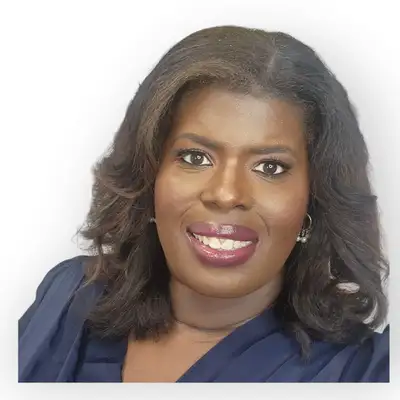
Hello, everyone. Thank you for joining us for the last episode of season three, Women Uplifting Women. I am so pleased today to be speaking with Becki Conar. She's the director of the Domestic Violence Clinic at Tulane Law School, and she's also the founding director of the Tulane Law School's Women's Prison Project, which provides legal representation to criminalized survivors of intimate partner violence, sexual assault, and trafficking. Becki, thank you so much for being here with us today.
Becki Kondkar [00:01:51]:
Thank you, Christian.
Christian F. Nunes [00:01:53]:
I think this is probably one of the most important conversations that we're going to be having on feminism now. One of now's core issues is ending violence against women. But oftentimes I think we forget to talk about the importance of how do we provide justice for those women who've been incarcerated. So I'm so excited for this conversation and the work that you're doing.
Becki Kondkar [00:02:15]:
Thank you.
Christian F. Nunes [00:02:17]:
So we know that in 2021, a report from the Sentencing Project showed that Louisiana has the fifth highest number of women serving life sentences in the nation. I think it's important to talk to us and tell people why we're seeing this happen in Louisiana and why we're seeing so many women also receive life sentences in this nation.
Becki Kondkar [00:02:40]:
I would say that there are two primary drivers to what's happening in Louisiana and in some places, other places around the country. But in terms of women in Louisiana serving life sentences, and specifically here, life without parole sentences, there are only two states in the country, Louisiana and Pennsylvania, that have mandatory life without parole sentences. For second degree murder. And so mandatory sentencing schemes are a major driver in the rise in women serving life sentences. Also here in particular, Louisiana has accomplice or sort of co defendant laws, is the way you might think about it, that don't make a distinction between primary and secondary actors in a crime. And so that is another big driver of how women end up serving life sentences here. One of the reasons we created the Women's Prison Project is because there's this really unrecognized nexus between women's experiences with trauma and abuse and their incarceration. And so what we see in particular for women who are serving life or long sentences, long sentences being, you know, 20 years or longer, is many cases involving the killing of an intimate partner, which under the vast majority of circumstances are self defense and crimes of survival that may or may not fit neatly with the way we define self defense in our current legal system.
Becki Kondkar [00:04:30]:
And then we see a significant category of women who are serving long and life sentences under this sort of co defendant situation where they have participated in a crime at the behest of or under the coercion of an abusive partner.
Christian F. Nunes [00:04:47]:
So let's explore this more because I think it's really important for listeners to understand. You mentioned killing their abusers, but you also just talked and named when they are coerced to commit crimes as well. So can we talk a little bit more about that for our listeners? Is like this interconnection between experiencing violence and committing violence?
Becki Kondkar [00:05:11]:
Yeah, I mean, what we know about incarcerated people in general is that they tend to have experience trauma. What we know about incarcerated women specifically is that they tend to enter prison having experienced multiple traumatic victimizations at multiple stages of their lives. So not just childhood abuse and childhood sexual abuse, but sexual assault during adolescence, intimidation, partner violence as an adult. And so for women in particular, that history of abuse more often than not has a pretty direct nexus to how they end up in prison in ways that are different from, for example, you end up sort of on the wrong path and down a difficult trajectory in life because of childhood abuse. Right. That's a very common phenomenon. But our legal system in general just does a very poor job of contextualizing the circumstances in which people act. Because we have this incident based approach to our criminal legal system.
Becki Kondkar [00:06:35]:
And in the context of intimate partner violence especially, you really can't evaluate a victim's behavior based upon a single moment in time or a very discreet act the way our legal system is designed, because very often they are sort of operating within a context of no Good choice because of constraints that have been deliberately created by an abusive partner.
Christian F. Nunes [00:07:08]:
I think one of the other things that brings up to me is oftentimes what we also see is this like criminalization of young girls, women of color. We also see hypersexualization that exists in the, in the systems. When you're pairing it with young girls and young adolescents and women who experience like this path of just chronic sexual violence and sometimes this physical violence throughout their lifetimes, we know that they are the ones that are, that are one ending up in the system. You know, I think about the fact that we know that four times more girls in the system than boys have experienced sexual abuse. Right. But we look at it differently for girls, right. We criminalize them. So we start almost like feeling like they have something to contribute or responsible for their abuse.
Christian F. Nunes [00:08:01]:
What do you think about that?
Becki Kondkar [00:08:03]:
I think that's absolutely true. We are criminalizing teenage girls, particularly teenage girls of color, at increasingly alarming rates. And I think the point you're making just gets back to that age old way that we blame the victim and judging them for not doing the things that people think they would do if they were in those circumstances. And one of the big problems in the legal system is we've taken this idea that it's the, the victim's fault and we've sort of turned that into a way of just generally pathologizing survivors of gender based violence and intimate partner violence. And you see that even when we talk about concepts and ideas that were originally designed to help domestic violence survivors, like battered women's syndrome. Right? So the early sort of iterations of battered women's syndrome that still sort of play out in the court system today, basically assert that the victim of intimate partner violence who killed her abusive partner, did so because the abuse created such a mental defect in her and made her so incapable of thinking clearly that she killed her abuser when in reality she was a completely rational actor who didn't want to die. And she defended herself. And so it changes her legal defense in the legal system from a justification.
Becki Kondkar [00:09:49]:
Right. She was defending her life and that's not a crime to an excuse, which is, you know, please forgive me for being so crazy.
Christian F. Nunes [00:09:57]:
Yeah, thank you so much for naming that. Because we think about what we're seeing happen in our country right now, where people can act on stand their ground laws. Right. Which a lot of times in their actions are always biased and racist and bigoted. Majority of these are men. Let's call it what it is. Right. But they'll get Away with that because no matter how biased it may be, they had the right to defend themselves.
Christian F. Nunes [00:10:21]:
But when it comes to women and girls, why don't women have the right to defend themselves when they are experiencing abuse? We, we just don't see it the same.
Becki Kondkar [00:10:32]:
Yeah. So of course under the law, women are supposed to be able to stand their ground exactly the same way. But we all see every day that that's not how it plays out. In reality, the self defense laws really benefit only a small group of people in society who are able to invoke them when they kill somebody. And women in general do not fall into that category. And part of it is because it defies really pervasive stereotypes that have existed for decades about who victims of intimate partner violence are and how they should behave. And this idea that they are passive, that they are dependent upon their abusive partner, that they cower in the corner in response to abuse, and that they don't fight back. Back.
Becki Kondkar [00:11:41]:
And so if she is standing her ground, by definition, she is behaving in a way that we do not define as the way a victim can and should behave. And women of color in particular are not seen as fitting into those stereotypes. And so when they behave in accordance with stand your ground laws, they are defined as something other than a victim.
Christian F. Nunes [00:12:14]:
Absolutely. And as you're mentioning about just the amount of, you know, women of color, particularly that we see who are overrepresented in the criminal justice system, we see that Black girls are 14% of the youth population, but 33% of girls being arrested. Native American girls are 1% of the youth population, but are 3.5% of girls being arrested. And Latina girls are combined at a rate of 47 per 100,000 compared to non Hispanic white girls who are combined at a 37 per hundred thousand rate. And we are also seeing that young girls, although we're supposed to see sex trafficking victims as victims, girls are routinely arrested for prostitution, and then they're not protected as victims. And, and even though they are legally incapable of consenting to sex, and even though federal laws define them as victims of human trafficking, they are still arrested. So can you tell us a bit more about why we're still seeing this?
Becki Kondkar [00:13:13]:
I mean, what we see in all of these cases really is that there have been so many opportunities within a system and within a community to intervene on behalf of that child or adult survivor and to provide services and resources that would have helped turn them off of that trajectory to prison and to further exploitation. Right. Because we know that one childhood Victimization makes you invulnerable to an additional victimization, and then that second victimization makes you yet more vulnerable to a third.
Christian F. Nunes [00:13:53]:
Right.
Becki Kondkar [00:13:53]:
And it's spiraling. Right. And so what we see with teenage girls and adolescents is those spiraling effects and what we've chosen to do as a society, instead of addressing the underlying issues of their abuse and exploitation, we are criminalizing the behaviors that they are engaging in to just survive, both emotionally and physically.
Christian F. Nunes [00:14:23]:
Yeah, that is so important that you name that, that they're exhibiting these behaviors to survive, Right?
Becki Kondkar [00:14:29]:
Yes.
Christian F. Nunes [00:14:29]:
And we're criminalizing them. So we're going to take a quick break and let us take some action now, listeners, we've come to the end of season three. Our theme was Women Uplifting Women. We've also had a season about the role of women in democracy, and we're in the planning for season four. And we love to hear from you what things you think would be helpful in the months to come. What voices do you think to be most heard. And our action now this week is just that we like to hear from you. Let us know what your interests are and what interests you the most on feminism Now.
Christian F. Nunes [00:15:11]:
You can contact us at Feminism now at N O W dot O R G. And now back to the show. The work that you're doing, as you mentioned, it's really focusing on the criminalized who are actually survivors of gender based violence. I think this is so important for everyone to understand why you co founded and started the Women's Prison Project at Tulane University and how you're addressing these issues.
Becki Kondkar [00:15:43]:
I mean, the very simple answer to the question about why we started the Women's Prison Project is that basically no one is doing this work. What we see is this incredible binary that's been created between what we call the domestic violence advocacy community and the criminal defense community. And we have created these legal silos. Right. You either care about victims and so you do victim oriented work, or you care about the criminal legal system and criminal defendants, and so you do that work. And the people who get most caught up and lost in that binary are criminalized survivors. Right. And so, having worked with survivors in the civil legal system for decades, one of the things that I could see over and over again is that my clients were interacting with the criminal legal system both as victims and defendants, and it was complicating their lives in a whole variety of ways.
Becki Kondkar [00:16:49]:
And then when you talk to women who are incarcerated, their stories are identical to the women that we're representing in civil cases, with the exception of A single moment in time. A moment in time when they didn't want to die. And so they did something, you know, in self defense. But yet the way we treat it in the legal system, one's a victim and one's a murderer, One's a victim and one's a defendant. Of course, there's some organizations who have been sort of shouting from the rooftops for decades about these issues, but the mainstream communities really have fallen into these silos and really have failed to look at who are the women in prison, why are they in prison, and is there something that that should be done about it?
Christian F. Nunes [00:17:39]:
And thank you for doing something right because it's so extremely important and it's so important that you all recognize, like that disconnect between the two populations. So I'm curious to know, how do people get involved with your service? How do you take on cases and how many cases are you seeing right.
Becki Kondkar [00:17:57]:
Now come through at this point, which we're slightly less than five years into our project, we have received more requests for representation than we will ever be able to address in my lifetime. And one of the real clear issues that we're seeing is that because women in prison have had so little access to legal representation for decades, that once they learned that we were doing this work and that we were looking at women's cases, we really just got inundated with requests for representation. And a majority of the cases that we have screened and reviewed and looked at would fall within the category of cases that we prioritize, which is to represent women serving life or long sentences that have some clear nexus to the abuse they experience. And you know, we started with the most obvious of those cases, which is women who killed their abusive partners and in self defense and were serving life without parole sentences in Louisiana. But we also do pretrial cases. So we also now represent women who are currently charged with killing abusive partners, are currently charged with crimes associated with the abuse they're subjected to. And we also have and do represent clients who have been convicted essentially as accomplices to an abusive partner.
Christian F. Nunes [00:19:43]:
Now, all these cases are just women incarcerated in Louisiana.
Becki Kondkar [00:19:47]:
These are all Louisiana cases. And you know, the need far, far exceeds our resources. I mean, there are so few resources in general for incarcerated people after their convictions are final, when they're on what we call post conviction. And when you look at who is doing that kind of post conviction work, it's in death penalty practice. So it's not really applying to women. And in the context of innocence projects and women also don't fit into that. Innocence laws are a very good example of how we craft laws that appear to be gender neutral, but they're not actually gender neutral. Because our innocence statutes that create sort of avenues for people to come back into court years after the fact and have their cases revisited are primarily limited to context where somebody is coming back into court with scientific evidence or DNA evidence.
Christian F. Nunes [00:20:46]:
Right.
Becki Kondkar [00:20:47]:
Women so seldom would be coming back into court with DNA evidence. Right. They would be coming back into court saying, I was defending myself. My lawyer never consulted an expert in intimate partner violence and didn't present evidence of the history of abuse. And all the things that come up in these cases over and over again. None of those things are going to fit into these, like, very narrow ways that we construct innocence in our legal system. And it also means that they tend not to be represented by projects that focus on those types of innocence cases.
Christian F. Nunes [00:21:26]:
That is something very important to name because when I look at Innocence Project, I can't see how easily they're gender biased. But we don't think that. Right. We think, oh, innocence projects are great because it's going to help people who were wrongly convicted. But when you're mentioning this and it's really those who are able to prove through DNA or some type of evidence, it really will become more gender biased because of the types of crimes.
Becki Kondkar [00:21:53]:
Yeah. And let me be clear, innocence projects are great and they do incredibly important, incredibly important work. And remedying those wrongful convictions is so important. But they are operating within a legal system that defines innocence in very specific ways that really exclude the types of claims that women have in order to establish their wrongful convictions. Because when a woman kills an abusive partner in self defense because she doesn't want to die, she is actually innocent. But it is not a case where she's coming back into court and trying to prove she was never there or mistaken identity or all the ways that we tend to think about innocence. So. So that's just one example of the many ways that, you know, even in very progressive criminal legal reform circles and conversations, women, and incarcerated women in particular, are simply not talked about.
Becki Kondkar [00:23:05]:
Yeah.
Christian F. Nunes [00:23:05]:
I mean, I think this is so important because I agree, you know, I love innocent projects personally.
Becki Kondkar [00:23:10]:
Yeah, yeah.
Christian F. Nunes [00:23:10]:
And I think they're so important. But I think it's also important for us to understand how we view and frame innocence and how that can be gender bias.
Becki Kondkar [00:23:19]:
Yeah. And it's actually really important with respect to how they experience freedom if they do come home. Most women who we are able to find a pathway to freedom for they don't come home exonerated under statutes that say they've been wrongfully convicted. Right. They come home often still subject to parole or with underlying convictions that may be less than the murder conviction that they had originally been convicted for. And it's for exactly this reason that there aren't these obvious mechanisms for exonerating people who don't have claims associated with scientific evidence or DNA proof.
Christian F. Nunes [00:24:17]:
So how does that impact their ability to successfully re enter?
Becki Kondkar [00:24:23]:
Well, being on parole is, you know, an incredibly burdensome experience I don't think most people realize. And it often means they're afraid to go out after dark. It means that they have to take the few limited financial resources they have and make monthly payments for to be on parole. It's far more onerous than the average person would imagine and creates really just so much fear and anxiety in people who have spent so many years in prison and just worry about very basic things like if somebody rear ends that their bumper and the police show up, is that going to escalate into something that endangers their freedom?
Christian F. Nunes [00:25:21]:
Right. I appreciate the work you're doing and I think it's so important, but how can we get more work like this out there? What do you think needs to happen for us to help decrease women being wrongfully incarcerated and seen as crim being criminalized for things when they actually are victims?
Becki Kondkar [00:25:41]:
There's two ways of thinking about how. How do you prevent this from happening in an ongoing way and then how do you remedy the wrongs that have already happened. And I think it's important to have a two pronged approach that addresses both. And some states have adopted what we call backend relief. Right. Where they have basically passed laws that allow survivors like the ones I've described to come back into court and to request a resentencing and to bring in all the evidence that was never introduced in their original trials. And so that is one way of thinking about it. But again, that's resentencing, that's not exoneration.
Becki Kondkar [00:26:27]:
And you know, it's important to do that. There, there are limits which we see play out in terms of effectiveness, but only a few states have adopted those kinds of statutes. And in terms of addressing what's happening now, the first important point is to spread the word that this is not a problem of the past. I think there is a lot of societal misconception that years ago we used to send domestic violence victims to prison when they killed their abusive partners and then we gave a bunch of them clemency and we fixed it and we came up with battered women syndrome. And it's not a problem anymore. But we receive calls every single week in Louisiana and from all over the country for women who are currently being charged, women who have recently been convicted. So it's not a problem of the past. And so the forward thinking front end remedies are going to have to involve looking very closely at why this is happening and why self defense laws aren't working for women.
Becki Kondkar [00:27:39]:
I mean, it's a little bit depressing because legal scholars and feminist scholars have been talking about this issue for decades and how our self defense laws aren't working and they don't fit the context in which women tend to have to engage in acts of survival against an abusive partner. Yeah.
Christian F. Nunes [00:28:00]:
Wow. So I know that you all trained law students, but you could train anyone else to help them get the workout, to really communicate the workout that you're doing and the importance of the work.
Becki Kondkar [00:28:13]:
Yeah. So a couple things to say about that. The clinical setting that we operate in is kind of this ideal space for this work to have sort of arisen organically. We have a domestic violence clinic with student attorneys representing survivors of intimate partner violence and a criminal justice clinic with student attorneys representing criminal defendants operating side by side. And so what we were able to do here that I think is really unique and probably a lot of the reason we've been so successful in winning freedom for our clients is we have been able to put together a team with such an interesting combination of expertise in trauma and intimate partner violence and trafficking and child sex abuse and, and criminal defense and post conviction and sentencing. Right. And those are the kinds of teams that it really takes to do this work really effectively. And there's just not enough of that.
Becki Kondkar [00:29:30]:
The other thing I would say about how do we do more of this work is it's really, really resource intensive and expensive. And that is the reason we have so few attorneys in general who do post conviction work at all. Right. Sometimes these cases can go on for years. We have an in house investigator who spends all her time investigating our cases and going out and interviewing witnesses, digging up records, doing public records requests, finding all the information that incarcerated people could never find for themselves from inside those prison walls. And so it takes money. And I think the question for everybody in the end is how much is a person's life worth?
Christian F. Nunes [00:30:25]:
Wow.
Becki Kondkar [00:30:26]:
How much are we willing to invest to bring one more, two more, three more, four more women home who should never have gone to prison in the first place? Place.
Christian F. Nunes [00:30:39]:
Now that is the question, right? How much value and worth is a person's life? Have to send them home when they shouldn't be in there in the first place? I do want to ask you two last questions as we wrap up. Can you just tell us, how do you see your work uplifting women?
Becki Kondkar [00:30:58]:
I think there are a couple of important ways, and one is the incredible work that our freed clients now do to support and advocate for other incarcerated survivors and other incarcerated women. And that has been so beautiful to see and so important. We have clients who spent 25 plus years in prison, who have been to the state legislature, testifying before lawmakers, who have advocated for other incarcerated women before our pardon parole boards, and who have engaged in all kinds of work in the state to uplift and bring home the women they left behind.
Christian F. Nunes [00:32:03]:
And that is beautiful. So how can anyone who's listening find out more about the work, a women's prison project and any way that they could possibly get involved? I know the name one is funding whatever ways they can get involved with your project or similar niches in their own communities.
Becki Kondkar [00:32:21]:
Well, you know, we are very much committed to supporting this vision outside of Louisiana. And so if there are people who are inspired by this message and who want to find a way to do this work in another state, call us, email us, let us know. And we want to find ways to support that work because our vision for this project is that we will find a way to do this work not just here in Louisiana, but all over the country. I mean, we want to partner, we want to collaborate, we want to work with other people who want to do this work and we want to help make it possible.
Christian F. Nunes [00:33:12]:
Well, thank you for everything you're doing. Thank you for having the vision for this project and we just thank you so much, Becki, for just coming on here and sharing this information with listeners.
Becki Kondkar [00:33:22]:
Thank you.
Bethany Brookshire [00:33:25]:
Thank you so much for joining us for season three of Feminism now as we talk to some of the many women who work to uplift women. If you like what you hear, please like and subscribe to the show and share it with your friends. You can also send us your thoughts and questions at Feminism now at no head to now.org to read up on NOW's core issues and our approach to advancing women's equality. Together, we can make a difference. Stay tuned. We'll be back in a few months with season four. I'm senior producer Bethany Brookshire.
Christian F. Nunes [00:33:57]:
We'll see you soon.