Subscribe
Share
Share
Embed
The World Pipelines podcast, with Elizabeth Corner, is a podcast that connects and unites pipeline professionals to learn about issues affecting the midstream oil and gas industry.
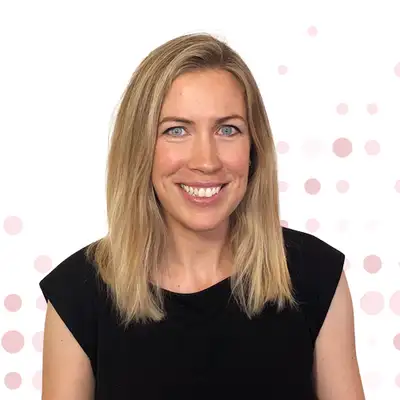
Hello, and welcome to the World Pipelines Podcast. My guest for this episode is Mark Mildon, CEO at X Robotics, developer of explosion proof autonomous inspection robots for use in high risk industrial sites such as oil, gas, and chemical plants.
Advert:World Pipelines helps oil and gas pipeline professionals stay informed about the midstream oil and gas sector, offering technical articles, regional briefings, project and contract news, and think pieces on pipelines all over the world. Register to receive a print or digital copy at worldpipelines.com, and search World Pipelines on LinkedIn to join our community.
Elizabeth Corner:Hello, Mark. Welcome.
Mark Mildon:Thank you, Elizabeth. Very happy to be with you.
Elizabeth Corner:X Robotics is a Dutch technology company and world leader in X certified autonomous inspection robots for hazardous industrial environments, including things like oil and gas, LNG, and chemical facilities. Its robots have completed more than 1,000 successful deployments for customers including Shell, BP, and Rexel. Mark has been the ex robotics CEO since 2023. He spent over twenty years working in the automotive industry, lastly, at Toyota Motor Group, helping internal and external startups to secure funding and growth. Mark's passion to drive innovation into the mainstream inspired him to join X Robotics.
Elizabeth Corner:The topic for this episode crosses over with several things we've been covering on the podcast recently, aging infrastructure, AI, workforce shortages, remote operations, and asset integrity. So, Mark, welcome to the podcast. Let's begin by talking about the the operational challenges that your customers typically are bringing to you today.
Mark Mildon:Th... Thanks very much for the introduction. I think the fundamental challenge that we're trying to solve is quite simple. Oil and gas operators have huge amounts of equipment that need inspecting, often in hazardous or difficult to reach environments. Despite all the advances in digital technology, it's surprising how much inspection still involves somebody physically walking around a facility, reading gauges, checking temperature, checking oil levels, listening to machinery, and looking for leaks or anomalies.
Mark Mildon:That's essentially the job job that we've designed our EXR 2.5 platform to perform. It's an autonomous inspection robot specifically designed for hazardous industrial environments. It can navigate around the facility on its own, follow a predetermined inspection route, and stop individual pieces of equipment. It can read analog gauges and convert that data with simple AI into digital information for the customer's IT systems. It can capture visual and thermal images, which again it uploads and sends directly to their systems, and it can monitor monitor equipment acoustically and detect gases and other environmental conditions.
Mark Mildon:It then sends all that information back to the operator remotely, and once it's finished its inspection round, it just returns to its charging station, and that charging station is also EXR... Is also EX certified and it can go around and do it again. Typically, what we see is the robot will do three missions every twenty four hours, seven days a week. Very efficient. So instead of sent...
Mark Mildon:Routinely sending a person to a hazardous area, what you can do is you can just send EXR 2.5, have it permanently based there during those rounds. So rather than a human going to the equipment, it's the robot that does it on a regular basis.
Elizabeth Corner:I love that you call it a mission. I like that a lot. So we often talk about aging infrastructure and shortage of personnel on the comcast, and those are the things that are driving demand for robot... Robotic inspection. Is it machine replacing man?
Mark Mildon:Yeah. Absolutely. I wouldn't say that it's machine replacing man. I would say it's supporting, but I'll come to that afterwards. But absolutely, this shortage of workers and the aging of the workforce is really driving demand.
Mark Mildon:I don't see machines replacing people. For me, it's really about using skilled people better. I spoke to Financial Times recently about the demographic challenges that I think the whole of society is facing, but specifically industries like oil and gas. Very experienced people are retiring, and what they're doing is they're taking decades of knowledge with them. At the same time, operators are struggling to recruit people into some of the roles.
Mark Mildon:A typical operator in a refinery can spend anywhere between ninety minutes and two hours simply walking around visually inspecting analog gauges. Now the EXR 2.5 can take on that routine. It can follow the same route, stop at the same gauges, take the same readings, and repeat the process consistently. What you do sometimes see is that data doesn't change if it's raining heavily for three days, and that might suggest that maybe not all the inspections are actually getting taken, for example. But the engineer is absolutely essential, and so rather than spending up to two hours collecting the information, they can just spend their time analyzing it and dealing with the things that actually require their expertise.
Mark Mildon:So we're really not trying to replace the inspector. We're trying to support them. We're automating repetitive and hazardous parts of their job. And like with all automation, what we're trying to do is free up the worker to have higher value added tasks. Mhmm.
Mark Mildon:Yes.
Elizabeth Corner:I wonder, Mark, when you go to a dinner party and you tell the person next to you that you work in robotics, what do they typically say? What are their kind of assumptions that they make about the industry?
Mark Mildon:I I think they're very surprised positively, very excited. I mean, there is always the are they coming for our jobs kind of thing. I think that's the knee jerk reaction. Yeah. But I think everybody does understand the aging workforce, the lack of talent, the lack of people that are available.
Mark Mildon:And then when I explain what our robots actually do, they really see that it makes a lot sense. And and this is really about taking away mundane tasks for people that are highly skilled and highly educated.
Elizabeth Corner:Now you recently said that robotic inspection has moved beyond pilot projects. We've moved beyond that stage. What evidence are you seeing of that?
Mark Mildon:I mean, there's... It's... There's plenty of evidence. I see it with all our main customers. We're no longer...
Mark Mildon:And when I say we're no longer, I mean, this is already several years now that we are not doing demonstrations of a few weeks and then removing the robot. They're really becoming operational assets. They're part of the operations of our clients. A good example would be the work that we've done with Shell. We put it on a normally unmanned installation, 175 kilometers offshore.
Mark Mildon:The EXR 2.5 was permanently based on the platform and carried out inspection rounds twice a day in this case. It navigated the platform autonomously. It stopped at 20 defined inspection points and collected pressure and temperature readings, vibration indicators, checked for gas and also liquid seepage, it captured, sorry, visual and thermal imagery. So when it completed the mission, went back to its EX certified charging dock as I mentioned. And after six months, it had already recorded almost 2,000 inspection points and traveled over nine kilometers.
Mark Mildon:80% of the missions were completed without remote intervention, and we didn't actually carry out any physical servicing offshore. You know, that's not a demonstration. That's an operational inspection asset. So we're definitely moving from... To your point about innovation projects, we're moving from innovation projects, I would say that's probably two or three years ago, and now we we view our robots as operational assets.
Mark Mildon:And that's exactly how our customers look at them as well.
Elizabeth Corner:When we're looking at oil and gas, which parts of the industry are the ones who are the forerunners in this, who are leading the adoption? And we we think, is it upstream, downstream, midstream staff?
Mark Mildon:I I think the the business case for upstream is very is very strong because you're essentially not only supporting people, you're eliminating the need for transport, potentially accommodation, and catering, and all these kind of things. We have initially started mostly downstream, and the reason for that is that as we started, we wanted to make sure that the quality of our robots was good enough. Enough. So, of course, by starting downstream, we were close to the robots. We could get to them easily.
Mark Mildon:And now that we are very confident in the quality, the reliability of our robots, we've been pushing more and more upstream and going offshore with our robots.
Elizabeth Corner:And can you be specific about the the types of problems that these companies are coming to you to try to solve?
Mark Mildon:Yeah. Again, this is about trying to get consistent data. I think what we see is that our lead customers, the customers that are really driving the scaling, have made big advances in digitalization. And that for us means two things that helps us scale. One means that they are very interested in automating data collection and making it consistent, and our robots do that very well.
Mark Mildon:The other thing is that because they're very far ahead on their digitalization journey, once we are connected to their IT systems, then actually we can connect to their IT systems anywhere in the world. So it's very easy once we've done deployment for one company in one place. It's very easy for us to deploy in multiple areas. So the the problems we're solving are are very much of that It's like how do we help them collect the data better? And of course, by doing that, what you then do, what we see is after three or four months of regular data, then you start seeing trends.
Mark Mildon:And from those trends, you can do prevent... Preventative or predictive maintenance. And that's what's really important for our clients because that's where the massive savings are coming. If you can make sure that the maintenance window is scheduled, that you have the people you need, you have the parts you need, you save a lot of time. Whereas if something just fails, you may scramble for a couple of days and lose a couple of days of production.
Mark Mildon:And production can often be in the millions of euros or dollars a day that you lose.
Elizabeth Corner:Thinking about the types of data that you're collecting, I think your robots combine several different types of sensing, if I'm correct.
Mark Mildon:Yes.
Elizabeth Corner:So visual, acoustic, and so on. Which of those senses has proven the most valuable for your customers?
Mark Mildon:Honestly, I think it's the combination that's valuable. I I would view our robot not so much as a robot itself. It's more of a platform, and it's a mobile sensor platform. And I think to give a bit of history of the robot, when we launched the EXR two, it weighed about a 120 kilograms. It now weighs more like a 140 kilograms.
Mark Mildon:And the reason for the increase in weight is because we've got more sophisticated cameras. We've got more sensors, and that's what driving the increase. Essentially, its cameras can visually inspect the equipment and re gauges, but we've also got thermal imaging, and this can identify temperature differences that aren't visible to the human eye. Of course, the acoustic monitoring can record how equipment sounds. Essentially, what you do is you drive up to a pump and take an acoustic profile, you make sure that's a correct profile and you can set a very simple AI skill.
Mark Mildon:We just say if it deviates by 3% or 6%, I want an alarm. That tells you that something is going wrong within the the pump before it actually fails. And then, of course, we've got the environmental sensors and gas sensors that detect gases. And the advantage we have is that we're bringing all of these capabilities together in one autonomous platform, and you can just keep returning to that equipment repeatedly. And like I said, it's really about building the trends rather than the specific information on that one day.
Mark Mildon:I would say it's not what you see today. It's really knowing what's changed since yesterday, which is the value that we bring.
Elizabeth Corner:Okay. So you're seeing patterns over time, and this... The robot is helping you to collect those patterns and understand them. Yep. So you describe the robot as autonomous.
Elizabeth Corner:It does its own job. It goes on its mission. What role is there for the human inspector alongside the robot? How does that relationship work?
Mark Mildon:Yeah. I mean, absolutely. Like I said previously, autonomous doesn't mean removing from the human the human from the process. I think we're really about freeing them up to do higher value added work. It navigates independently, it carries out its inspection mission, collects the information, and returns to its DOT.
Mark Mildon:But then the humans take over, and essentially, they're responsible for engineering judgment interaction. So there will be alarms that will be set at certain thresholds, and then the the humans will have to decide, is this actually something that needs an action, or is this something that we continue to monitor and see if the deterioration continues? The offshore example I gave, the information was being transmitted back to engineers onshore. The robot supervisor... So there is somebody...
Mark Mildon:For safety reasons, there's somebody supervising the robot. They're not... They can do other tasks at the time. They wait for an alarm to come if the robot stops because there's an obstacle that's come or something like that. And they can review the alerts and the operational conditions remotely from 1,000 kilometers away at the time.
Mark Mildon:Example I gave, they were they were based 1,000 kilometers from the platform. So we're separating the physical collection of information, which is very costly if you're gonna go offshore via helicopter or by boat, from the actual engineering judgment that can sit wherever those engineers are based. And, of course, it's much more comfortable for engineers to be based in central locations than to be sent offshore for weeks at a time. So I would say let the EXR 2.5 collect the information, and then let the engineer decide what it all means.
Elizabeth Corner:Okay. Now oil and gas as an industry is understandably rather cautious about new technology. You know, the stakes are high. How do you build confidence that a robot can be trusted in hazardous environments, for example?
Mark Mildon:Look, I think the industry is completely right to be cautious. I think the most important distinction I can make about the EXR 2.5 compared to potentially other solutions is that we've specifically engineered this for hazardous environments. So we have passive EX protection, intrinsic EX protection. This isn't a conventional industrial robot that we simply put onto an oil and gas facility. This is really about a robot that's been designed for its purpose.
Mark Mildon:Certification, I would say, is one of our key strategic advantages. It's fundamental for us because it's fundamental for our clients. So you're operating where there's explosive gases potentially present. And although certification gets us through the door, after that, what we have to demonstrate is its reliability in real world operating conditions. And that's why I mentioned to you previously that we started onshore so that we had access to the robot.
Mark Mildon:We built up confidence, and then we said, look. You know, you can deploy this robot without human intervention for initially six months, and now we're more looking like twelve months without human intervention. And if you're gonna go offshore, this is about getting confidence by preparing. You really have to prepare well. It had to navigate very narrow corridors.
Mark Mildon:It had to operate on sheet grid flooring and also in a in a zone one environment. It was exposed to salt spray and very heavy weather. So we actually replicated the flooring onshore to make sure that the tracks wouldn't get damaged or they wouldn't wear much faster than normal. We also use the platform's digital twin to simulate the routes that we would be doing. And most importantly, because this is typically where we have issues with deployment, is we check the wireless coverage because communications are absolutely key.
Mark Mildon:Typically, if we have problems on a deployment, it's gonna be network coverage or it's gonna be firewalls. And so we always really try and emphasize that before we actually do the deployment, and that's what we did. So I'd say that certification gives us permission, I would say, to operate, but our reliability is what is earning the operator's trust.
Elizabeth Corner:And that communication... The importance of communication there, is that where you think robotics still can fall short? Just the the network failing or something of that sort?
Mark Mildon:I... I'm not sure that that's where it falls short. I just think that that's one of the traps that a lot of people fall into. They they don't necessarily think about it. I mean, a big advantage we have is we've done well over a 100 successful deployments.
Mark Mildon:So we essentially have a customer success journey where we... Before we even deliver the robot, we check how is it gonna be used, are we putting the right sensors and specifications on the robot, and then after delivery, we'll typically send a service engineer to help them build the first missions, understand how the robot works, and how to maximize the productivity of the robot. But in a kind of a bigger picture, I think we've got to be honest about the fact that robot... Robots aren't perfect. They aren't good at everything, and we need to be open about that.
Mark Mildon:Honestly, for me, working with robots every day is just emphasized how extraordinarily adaptable and capable humans are. If something completely unexpected happens, equipment needs physically manipulating or you need to improvise, it's still gonna be an engineer, a very skilled engineer who's who's gonna be better than the robot. I think the EXR 2.5 is good at something much more defined. So autonomously following inspection routes, repeatedly collecting high quality information, and doing it in hazardous environments. So, again, I would say we shouldn't ask, can it replace a person?
Mark Mildon:We should be asking which tasks can it perform more safely and consistently than a human. And so we're not using the robot to replace everything a person can do. We're using it for things that a robot can do better than a human.
Advert:And looking back at your
Elizabeth Corner:time at X Robotics, has there ever been a moment where a robot did something or found something that would almost certainly have been missed by a human by... During a conventional inspection?
Mark Mildon:I probably put that slightly differently. I think the real advantage we have, like I mentioned, know, humans are fantastic in a lot of different ways. But the real advantage is having them permanently deployed at frequency. So if we're inspecting critical equipment once or twice every day instead of somebody traveling there periodically, then you're creating many more opportunities to identify trends and a developing problem. On on an unmanned offshore installation, it's just not practical to be sending people or affordable for that matter every day, particularly if you've got bad weather and things like that.
Mark Mildon:And it's... So it's not necessary that the human wouldn't see something. It's rather the robot can be there to see it sooner. The the robot in a sense does have better eyes than a human in the sense that it can see in very low light and actually even at night, but it's not intrinsically better than a human. It it can hear similarly to a human.
Mark Mildon:The big advantage of a robot is that it doesn't go deaf if it's, you know, very, very loud, and it can also smell like a human can smell gases. But honestly, it's toxic gases, you don't really want the human to be smelling it because it'll be fatal. So you can have the robot there with confidence that the robot won't die in inverted commas if it's exposed to hazardous gas. So that's the big advantage of of the of the robot. You essentially have the the eyes, the ears, and the nose, and you have it much more regularly than you have with a human.
Elizabeth Corner:I'm getting a picture of a robot that is used for its super senses. So we're picking out those things that it can it can perform without all of those human vulnerabilities.
Mark Mildon:Definitely. Absolutely. Yeah.
Elizabeth Corner:And and just to finish us up here, obviously, oil and gas has spent years talking about digital transformation, and you've mentioned that you see that that journey is well underway. Lots of people are making very clear steps towards being digitally transformed. Do you think that robotics is one of the technologies that is actually delivering some business value here, some clear measurable value?
Mark Mildon:Yes. Absolutely. Because essentially what robotics is doing is it's connecting the digital world to the physical asset. I mean, of the big kind of buzzwords at the moment within the robotics community is physical AI. Because essentially, we are the physical embodiment of AI and without the information, the data that we are collecting with robots, there is no AI because you have to train the AI on information.
Mark Mildon:As an industry, I think all the big players have invested massively in digital twins, AI, analytics, and fixed sensors, but there's still an enormous amount of information out in the plant that somebody or something has to physically collect. So ESR 2.5 is essentially a mobile data collection platform. It's taking our sensors to the equipment, and you can measure the benefits, inspection frequency, reducing human exposure, mobilization cost reduction, the consistency of the data, and ultimately, whether you're identifying developing problems much earlier. So robotics really takes the digital transformation out of the control room and puts it back into the plant.
Elizabeth Corner:Thank you so much, Mark. It's been a real pleasure to talk to you.
Mark Mildon:Thank you, Elizabeth, for your time. I really appreciate it.
Elizabeth Corner:My thanks to Mark Mildon for sharing his perspective on how robotics is changing inspection in hazardous industrial environments. It's clear that by combining different sensors and collecting data over time, autonomous robots can build up a much richer picture of an asset while taking on the routine, menial, or dangerous tasks that operators would rather not put people in harm's way to perform. Thanks for listening to the World Pipelines Podcast. Subscribe for free wherever you get your podcasts. And if you enjoyed this episode, please do rate and review it.
Elizabeth Corner:Until next time. Goodbye.
Advert:World Pipelines helps oil and gas pipeline professionals stay informed about the midstream oil and gas sector, offering technical articles, regional briefings, project and contract news, and think pieces on pipelines all over the world. Register to receive a print or digital copy at worldpipelines.com and search World Pipelines on LinkedIn to join our community.