Subscribe
Share
Share
Embed
How is the use of artificial intelligence (AI) shaping our human experience?
Kimberly Nevala ponders the reality of AI with a diverse group of innovators, advocates and data scientists. Ethics and uncertainty. Automation and art. Work, politics and culture. In real life and online. Contemplate AI’s impact, for better and worse.
All presentations represent the opinions of the presenter and do not represent the position or the opinion of SAS.
KIMBERLY NEVALA: Welcome to Pondering AI. I'm your host, Kimberly Nevala.
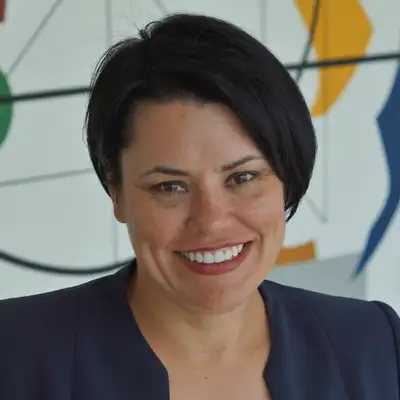
In this episode, it is a pleasure to bring you Masheika Allgood. Masheika is an AI ethicist and founder of AllAI Consulting which provides easily accessible AI educational resources to enable non-techies, both at work and in the community. She is also a prominent advocate for transparent and sustainable AI development. So it will come as no surprise then that we'll be talking about sustainability and incorporating ethics into AI product design. Welcome to the show, Masheika.
MASHEIKA ALLGOOD: Thank you for having me. You have such a calming voice. I feel like this is NPR.
[LAUGHTER]
KIMBERLY NEVALA: I'm going to get all these calls from my family that are going to say that is not true. Do not believe that. But I appreciate that.
Now, Masheika, you have a background actually in government and law. So tell us a little bit about the path that brought you from that to your current work in tech education and advocacy.
MASHEIKA ALLGOOD: Oh, that's a circuitous path.
KIMBERLY NEVALA: I love a good, circuitous path.
[LAUGHTER]
MASHEIKA ALLGOOD: So I grew up wanting to be a lawyer. It was the first thing I ever wanted, well, the second thing I ever wanted to be. I wanted to be a mechanic, which my parents immediately pooh-poohed. In the third grade, I saw To Kill a Mockingbird. And I was too young to understand the larger themes of it, but I did understand power dynamics. And the idea that someone who had the proper structure and was on the side of right could stand up to overwhelming power just appealed to me.
And so I knew from the third grade I wanted to be a lawyer. Took that path. Got a law degree. Went back, got a second law degree in litigation because I didn't know what lawyers did every day and they don't teach you that in law school. And then practiced a bit. But the business of law is very different than the profession of law. And I joined law for the profession, and my mental health couldn't handle the business. So I, just on moral grounds, realized it was not a career that I could maintain.
Then it was an issue trying to figure out what the next path was. There's no off-ramp in law. There's no easy transition. And I ultimately ended up teaching a course on white collar law for Strayer University in like 2016 or something and realized that the book wasn't written by lawyers. And I was like, what? It was written by sociologists.
I realized that there was this field between business and law that neither group really played in. And I was like, well, maybe I can find something in that intersection. Went back and got an international business degree, did an internship in Edinburgh at a hologram startup, and really got into tech as a career.
It wasn't a career when I was a kid. There was the War Games movie but that was about it. And so decided that I would come out to California. And it was a journey. I came and worked my way up from the bottom. I was a - what do you call it - ad reviewer, essentially, a content analyst at Google. And then went and did that at Yahoo. Then I went and was a knowledge base technical writer at Google.
And then, ultimately, ended up at NVIDIA as a licensing product manager. At first I was a licensing administrator as a contractor. Moved up to product manager as a full-time employee. Did that for a couple years and really just kind of got bored with my job at one point. And I learn stuff when I'm bored.
I read a book on Claude Shannon - it's in that bookshelf - called Mind at Play and it was talking about information theory. And immediately had some questions about things that you can't translate, you can't communicate over distance, because they're based on personal experience. So when you do something wrong and your mother calls your name with just that right tone and you feel that in your stomach. I can't translate that to someone who's not had that experience.
And so that kind of is where my AI ethics thinking started. Then I learned about the COMPAS algorithm and how AI was being used in the law to determine sentencing for people. I was at NVIDIA. So I had someone who I was trying to bounce ideas of how AI worked and get a mental model. Eventually I started having conversations inside of NVIDIA about how do we use our position as all of this happens because of our GPUs. How do we use our position to ensure that we are putting good AI out into the world and helping others put good AI out into the world.
So then when I left NVIDIA, I spent the next couple of years really trying to understand technically how AI worked because you can't argue against something if you don't understand how it works. But also arguing on LinkedIn a lot and really was, like every other ethicist you meet, talking about use cases, talking about applications.
And then I saw an article where the CEO of Microsoft just kind of let it slip that they used 20% of an aquifer, a city's aquifer in Iowa, to train ChatGPT. And it blew my mind. I was like, how could that be? Did you ask them? Is that allowed for like to train one product? And it started me on this path of trying to understand the environmental impacts of AI.
So I started with water. Water led to electricity. Electricity led to generators and air quality, led to noise. And then I became kind of - I'm a systems person. And so it became me trying to understand the system around the infrastructure for AI. I knew it was infrastructure in terms of data, but understanding the embodied, the physical, imprint it has on the world and trying to explain that in relatively normal human terms to the rest of the society. So that we can make real decisions and have input on these trade-offs that are being made without our knowledge or input that impact us in a real visceral way.
KIMBERLY NEVALA: And say what you will, certainly that background - the legal background - enables you to engage, I think, in a debate and engage productively in that debate. But I think even bringing that forward, from where I sit, makes you an optimist. Because you believe that there is potential if it's wielded correctly. So you haven't given up, which is fabulous.
MASHEIKA ALLGOOD: I don't think there's any benefit in generative AI. Let me be very clear. I think there has been benefit in AI as automating activities that humans have done. I believe there's benefit in that. And we've seen that in the last 30 or so years.
But generative AI, I don't think the cost-benefit analysis is there. I don't think there's any math that maths. I think if we are realistic about the natural restrictions on data center builds, then it'll be a natural outcropping that generative AI just isn't sustainable. And so we'll start to move back to AI that is beneficial to humanity without sucking up all of our breathable air and drinkable water.
KIMBERLY NEVALA: You had made a comment that was so striking on LinkedIn. You said every system in creation has constraints. And I've also had other conversations where when we talk about innovation, in fact, it is the presence of a constraint that drives innovation. Almost full stop. So without some constraint or problem to solve, there's really no reason to move forward.
So you said constraints are an unalterable fact of life. But for some reason, there's this deep and abiding belief in certain parts of the community that those constraints, natural or regulatory, don't apply to GenAI specifically. I'm wondering, from the work that you've done, what do you think underpins or animates that belief? And then how does that influence the broader narrative around GenAI?
MASHEIKA ALLGOOD: I think there's two real underpinnings. First is money. And second is religion.
So there's clearly a religious fervor around this concept of AI. It was always a technology since the '50s. No one lost themselves in it. It was a technology. But humans are the only species that we're aware of that can use language in a real way. There are some animals that can understand and maybe parrot back some things. But as far as a full conversation, we're the only people we know who can do that. We're the only species we know who can do that.
And so it is a trick of psychology that if you interact with something that speaks, it has to be sentient. We don't really have a framework for non-sentient things speaking. And that's where GenAI changed things because it is not sentient, but it speaks. And a lot of us are unable to make that distinction because we, as a species, have never encountered this. So it's not unreasonable for people to fall into this trap. But it is a trap and it's irresponsible for tech companies to play on it to make more money.
And there is a religious fervor behind a lot of people who are really excited about the idea of AI. And we need to let it do what it needs to do, and it'll fix everything. Because once you get into religion, faith is evidence in religion. I come from generations of religious people. I'm not that myself, but I grew up in it. I have a lot of the teachings in my head. But there's a scripture in the Bible that says, faith is the substance of things hoped for, the evidence of things not seen. It was one of my father's favorite Bible verses. But it's essentially that faith is evidence in and of itself. If you believe it, it is true. That's the essence of faith.
And so when you inject a religious mind state into a technological system, then you're doing the same thing. I have faith that the system will correct. I have faith that it will fix the things that it is breaking.
And no, it's not logical because it's faith. That's why we separate science and religion because they operate on two different principles.
But right now, because of this psychological issue with this thing can speak but it's not human, we're in this situation where people have conflated them. And so they believe that their faith is evidence. So I believe that AI will be able to fix all the things that is broken and we should just give it space to do that. And that's a legitimate faith-based thinking, but it has no real realm, no real place, in this scientific engineering realm. So that's number one. There's a good faith belief that actually should not exist.
Number two, there is just too much money. It's crazy amounts of money. Let's just be realistic. I have lived a life where I've made some really poor financial decisions that were great moral decisions. I have left jobs - when I left NVIDIA, I cannot tell you how much money I left on the table, the thousands of stocks that would be worth millions at this point. And you continue to get them as you go. So this is five years worth of stocks that I've missed out on. So a really poor financial decision but the absolute right moral decision. But that's me.
Everyone, first, is not in a position to make that decision. So a lot of people working at tech companies are not in a position to walk away from a six-figure salary. They've got responsibilities. They have families. We live in the most expensive city almost in the world when it comes to housing prices. So it's not realistic to expect techies to just lay down their laptops and walk away for the benefit of society. That's not reasonable. So that's on the day-to-day people level. And so you have to respect and understand that.
But at the top, it's just greed. There's no reason. You have got to be a little bit more innovative. You can't just keep iterating. But even that is too much of a slowdown when your focus is on money and money alone.
And so we've gotten past tech is a force for good in the world. Tech is a business now. So just like I was disillusioned with the law when it became a business as opposed to a profession - a profession is a higher calling. Yeah, you got to make money, and you're going to make good money. But you don't have to make all the money. A business is, let's make all the money. It's the American version of instate capitalism. Just go until it all burns out. And unfortunately, that's what we're seeing at the top of these tech companies. I built a bunker. We'll be all right. But as for the rest of y'all, I don't know how you manage that.
So those are the two things driving it. I think from the populist’s perspective, it's the religion that's driving more so. But from the actual people and position of power perspective, it's money as an addiction.
KIMBERLY NEVALA: Yeah. And there is some demand that's generated here. And it is interesting – I think - that ability to speak to these systems. And their answers come out very confidently. They're often confidently incorrect. They're just confidently confident, which are design decisions as well at the end of the day.
But it's also, I think, not necessarily clear to folks how the systems work and then what the other ramifications and implications of the systems are. So this is where I think a lot of your work in trying to make this information accessible and available comes in - as there is obviously the demand and where do we use it?
So as you then have been doing the research and work, what are some of the most common fallacies or factual misrepresentations that you have really uncovered and seen that help people think differently or just arm them with more information that allows them to make decisions that are right for them relative to this technology?
MASHEIKA ALLGOOD: So I'm clapping and excited because there is one fallacy, oh my God, I want to kill dead: closed-loop systems. It is a misnomer. It is a lie. It is not the truth. I hear every single day, well, don't they use closed-loop systems? Can't they use closed-loop systems?
There's this belief that if I build a data center, I can cool it with a system that just has water running through a single loop, and it never uses any other water, and that's that. That's what tech companies have been putting out as marketing. Oh, we use a closed-loop system. Once you fill it with water, it never needs water again.
I have a paper that I've written about the fallacy of closed-loop systems. A closed-loop system is a two-loop system. It is not a single loop. It is a double loop. There is a single loop that does exactly what they say it does. It pulls heat out of the system. It goes through a heat exchange and gets cooled. And then a cool liquid goes back, pulls the heat out of the system, and it just rides that circle.
What they don't tell you about is the second circle, which is the heat exchange circle. That's the circle that actually pulls the heat completely out of the system. So it cools out that loop. That system is evaporative cooling. That system has water coolers or water towers on the top of the data center. And you see the big plumes of evaporation. It's because they are shooting water, cold water, onto that closed loop. And that's how they're basically pulling liquid out.
Because it's just like if you cook in your pan, and then you go put it in the sink and you run water over it and you get that plume of evaporative, like smoke, essentially. It's the same process. I'm taking that heat out of that closed loop. I'm running it up onto the roof of the building, and I'm shooting water on it.
And it's water. It's not some other liquid. It is water. And I'm either shooting it on a big sponge of water, or I'm shooting water directly on this new pipe. And as it steams, it pulls the heat out. That is an evap, it's a massively water-intensive process. That's where all the water goes in these closed-loop systems.
So we did a report on Google's water metrics last year. They put out an environmental report, 113 pages. On page 110 and 111 are the tables that have facility-level water metrics. Google withdrew 10 billion gallons of water across the world last year globally. They consumed, meaning evaporated, 8 billion gallons of that water. 80% of that water they consumed because it's evaporated. And we don't have a process to take that evaporated water and cool it, put it back in the system in somewhere. That water is gone.
So this idea of oh, can't we close loop? No, because the closed loop has a hole in it, and the hole is on the roof, and it's evaporating water, millions of gallons of water a day. And so if I do nothing else on this podcast, please, God, let me kill that process, that fallacy. It is not reasonable. So that's number one.
The second fallacy is also… because I get a lot of water fallacies. So the second one is, well, can't we just put the water back? Can't we just replenish the water? They call it replenishment. You drill down into the aquifer, and you fill it up with water. That is a massively complicated geology-based scientific process. It is based on the plants, the type of soil, the type of aquifer, how it's situated. Has the aquifer gone down in terms of when you pull a certain amount of water out, the ground recedes. It drops. So if the ground
drops, you can't pump the ground back up. And so that's less water you can fill back in.
So there's a whole big process, a very scientific process, for replenishing water. So when you read these water reports, they often talk about oh, well, we replenish in scarce areas. But did you replenish where you took it from? And the answer is no. They are doing water replenishment in places where they can do water replenishment. That's not necessarily where you took the water from. So are they replenishing the Great Lakes? I haven't heard any replenishment of the Great Lakes.
Until you start seeing that a part of their permitting process for the data center build is also a water treatment plant and a water replenishment process or system or plant, then that's not what's happening. And so when that water is lost to your community, that water is lost to your community. So yeah, those are –
KIMBERLY NEVALA: These sources are municipal sources of water that are being plumbed?
MASHEIKA ALLGOOD: Yeah, that's it. They're taking it from your aquifer, your groundwater because they have to use, they need, water to be of a certain purity or it corrodes the sensitive equipment. So the biggest source of pretty pure water is drinking water.
Yes, some of them do use recycled water. Some of them do use salt water. But all of that requires very expensive equipment in order to treat it. So it's not like the norm. And so that's another thing is you'll hear, oh, but we use recycled water. Yes, but how much? And for this plant or this facility? Or just use it within your showpiece somewhere.
And so I think having real conversations about what's happening locally because water is a local issue. No matter what you do, water is always local.
When it comes to electricity, there's always this discussion of, well, the data center ultimately will pay. The data center operators will pay for this new electricity they're bringing onto the grid. And that's true. Once they get operating, they'll pay for their electricity, just like you pay for yours.
But the problem is, in order to build all that extra electricity, you have to charge ratepayers who are on the grid now. So as I am building out 200 megawatts of energy or new energy for my grid, I can't charge the data center operators. They haven't even built yet. They're still going through zoning. They're not going to build until I get this extra electricity.
So who's paying for it until it gets built? Well, the ratepayers have to pay for any kind of improvements to the grid. So the people who are currently paying electricity prices are now paying for this buildout. Which, OK, we may have needed to improve our grid to some degree, but did we need to improve 200 megawatts? I don't think so. The scale of how much additional capacity is being built is not in line with what would be needed for normal growth for these cities and these communities. But you're paying for it.
And if that data center operator decides, you know what, I don't want to build here, they're never going to pay. Or if they're online for 10 years, and then there's a new innovation in AI, and they no longer need that data center and they shut it down, you're still on the hook to pay for it because these were capital improvements. Someone has to pay for them.
The electricity or the utilities department is not going to pay for all this on their own. And so it becomes the ratepayers. So you're saddled with the cost to start. And then you may be saddled with the cost on the end. But right now, there aren't any states, I think there might be one who's looking to pass, but California, ours died. There aren't any states that I'm aware of that currently have some sort of regulation or legislation that requires data centers to pay some sort of bond or have some sort of absolute payment into what's being required for them to build these data centers. They're just coming in and saying, hey, I need another 100 megawatts of power, or I'm not going to build my data center. And the electricity company is saying oh, OK, and building it on the backs of the current ratepayers.
So the fact that data centers are often saying oh, it won't affect your electricity bill. Absolute fallacy. It will definitely affect your electricity bill because they're not going to pay a dime until they are completely up and running. And they're not going to be up and running until all that electricity is already built.
KIMBERLY NEVALA: And is it at all a reasonable expectation for them or the community to then think that there's upgrades, improvements to the grids. Maybe they're bringing on board more types of sustainable energy, or just the reliability of a grid, they'll ultimately get some benefits on the backside of that that will offset this? Or is that wishful thinking?
MASHEIKA ALLGOOD: The question is the offset. You're going to get some benefits. But say you're a community that uses 80 megawatts of energy a year, at peak, 80 megawatts of energy a year. Data center comes in and says we need another 200 megawatts. Whatever grid improvements you were going to get could have gotten with an extra 20 megawatts, maybe. But to add that scale of extra energy, that's where it's not evening out. So it's not that you get nothing out of it. But would you pay $100 for a stick of gum? It's like that. Well, you got some gum. It was tasty. You really enjoyed it. But you paid $100. That's not evening out.
So when you see how people's bills are going up, just like this the first year. And these grid buildouts are four or five years. This is going to be my bill for the next four or five years, 10, 15 years? That doesn't even out with I've got a little bit of extra reliability.
KIMBERLY NEVALA: And you also mentioned, I think, a bit of a triad. We've talked about water and energy. But I've also pointed to the need to be really thoughtful and concerns around air and noise pollution. Is that correct?
MASHEIKA ALLGOOD: Yeah. So whenever you build a data center, there's this: it can't ever go down. It has absolutely no tolerance for going down. Because if you go down and a major service goes down, people may lose millions of dollars. And so that's the argument.
So we have absolutely no-fault tolerance for the grid, which means that I have to build a backup power generation that's off-grid that is the same size capacity as on-grid. So if my data center is a 99-megawatt data center, then I need 99 megawatts of off-grid capacity on site. If I can't have any fault tolerance, then it has to be something that's plug and play. It has to be tried and true. It has to be easy, like no issues.
What is the one plug and play, easy, tried and true backup technology we have in the world? Gas generators. So they have been buying gas generators like hotcakes - massive industrial scale, 32 megawatt each - gas generators and stacking them up in installations on data center property. Those have to run every month just for maintenance purposes.
So I've been at a little street fair. And you walk around the back, and someone has a 5-megawatt generator, and you can catch all that gas. I can't breathe. Imagine a 200-megawatt gas generator installation. That's thousands of times more CO2 pollution, fine particle diesel pollution.
So besides what it's doing to the planet in terms of global warming, you're breathing fine particle pollution. This 2.5 PM pollution is small enough that it actually gets into your bloodstream and attaches itself to your red blood cells, and then hitches a ride to your organs and causes problems. So in the human body, it's problematic. If you've got asthma or any kind of heart condition or predisposition to something, this stuff can literally kill you. And the American Lung Association says 20 hours worth of exposure is enough to cause significant damage. But data centers have at least 50 hours worth of operating time just for maintenance under the Federal law. And so if it actually goes down for a couple of days, you add.
So basically, if you're near a data center, you're already at 20 hours just from it being there. And it's likely going to be more every year. That's real health impacts for people.
And then when you think of there's a push now to build these data centers on old farmland. And so looking at the EPA site, they have a whole list of negative effects of fine particle pollution. At a river, acidification. It makes your rivers more acidic. It causes all kinds of issues to natural landscapes. It's just as bad for plants and animals and natural water as it is for humans. And so you're putting it out in these ecologically sensitive areas, and it has a massive impact on those areas. So you're not only impacting your personal air quality as in terms of people and breathing, but the air quality of the surrounding environment. And it has real effects on the plants and animals and health of that actual ecosystem.
So air quality is a massive concern that we hear very little about. Except for when something like Memphis happens and then it's just the worst possible actor. But everyone who lives near a data center is dealing with this, whether they recognize it or not.
In terms of noise pollution, the things that cause noise in data centers largely, or cause outside noise, are generators when they run and the cooling equipment. So generators can't be located inside of a building. It's a diesel generator, everyone would die. Either diesel or methane. So those are necessarily outside and large installations. And when they run, you all hear it.
And then the cooling equipment also has to be located on the roof because you're venting heat out into the atmosphere. And so when they run, you all hear it. Cooling runs 24/7. Generators run on and off, but cooling runs 24/7. And so apparently the systems run at a frequency that is very close to human speaking. So it's hard to ignore. And in the middle of the night, it's just one of those things that constantly wakes you. You can't not hear it.
And so it's very difficult for people who live near these data centers to manage living with that sound. It's also health effects. You can't sleep. You're anxious. You're frustrated. So it impacts your day to day. So these are real impacts on real people. And I think More Perfect Union has put out a couple of different videos where they've interviewed people who have lived near these data centers, and it's pretty horrific. So yeah, real impacts for living near these hyperscale data centers.
KIMBERLY NEVALA: We talked earlier about how the nature of these systems, and here we're talking about generative AI explicitly, sort of confounds our natural intuitions. So some of that is by design. And some of it is just the phenomenon of language and just how easy it is to use.
But again, I think that the general population, and whether they're within companies or not, just using this for personal use, can't be condemned for finding them useful, finding them easy to use. And a lot of times we'll see this sort of calculation that says, well, me, as an individual user…
And they might not actually have access to any of this information at all because it is all, to some extent, dealt with as infrastructure, and it's therefore hidden. So we're not thinking about the facts and figures that you're talking about here because we just don't see it.
Then there's this propensity, perhaps, just in general to think, well… I was talking to someone the other day, and he said - we were talking about just, I don't even know what - recycling or something of that sort. And he said, it doesn't matter if I use a plastic straw. Me, as an individual, me not using plastic straws isn't going to move the needle.
So how do you think about, and help to educate or help people think about, individual use versus collective impact? Because we certainly see those narratives as well. Well, if you do a ChatGPT query, it's as much as running your microwave for ten seconds. And as someone who doesn't cook, I'm like, well, I guess I hadn't thought about that. Maybe I should think about this differently. But my microwave going down is an actual kitchen emergency. But that aside - now that I've shared too much information with everybody - how do you think about this idea of individual versus collective impact and… yeah, I'll just leave it there.
MASHEIKA ALLGOOD: So I think we're talking about plastic straws and whatnot. It's not like they're going to paper the country with plastic straws if no one uses them. So I don't think my one use of a plastic straw is going to drive the plastic straw industry forward. I think there's a fundamental difference in supply chain dynamics.
The thing about using an LLM is in order for one person to use it, they had to drain all of these communities of water to make it work. So you may be using one Claude instance. But there are data centers all over the world that are powering Claude for you to use that one instance. So there is no individualized use because every use is based on this collective infrastructure build. It's not like your Claude instance can be tied to your specific compute or your computer. It comes from this hodgepodge of data centers that are all invading people's communities and sucking up all their resources and polluting the air. You can't distinguish one from the other. You can't. They're tied in a way that can't be severed.
So no one's really using this tech in a way that makes it financially viable. That's why the economics are different because it's not economically viable, and they're still building it. So it's not like you can vote with your wallet and say, oh, well, if I use it, they'll do more of it. If I don't use it, they won't. And so my one little use, it's not really going to move the needle. That's not actually true. If you're using it at all, you're moving the needle. Because all they want is to say someone used it.
Because it's not actually valuable in a business sense. There is no business who's actually making money off of generative AI. The ones that are showing profit on their statements, that profit comes from investments. Largely from NVIDIA and other generative AI companies. So they're feeding each other the same money over and over, but they're not making money from clients and people.
So basically, as long as we allow them to continue to make the case that this machine is useful, then they're going to continue to ride this wave of self-propagation and say that we all want it. And so I get that in a lot of ways, the world is so big. My one little part doesn't make a difference. But I don't think we can continue to say that. Because if you look at the state of the world as it is now, it's because a lot of us were saying that. And we've allowed ourselves to get pulled along into a situation that's wholly unsustainable across all fronts.
And so I think at some point we have to choose. I don't want to be part of this one. Honestly, what am I using GenAI for that I can't just sit for 15 minutes and really figure it out on my own? And do I want to be part of this process?
So for me, it's not so much of how much water. It's not a trade-off analysis of that. It's how many communities are going to be lost because I didn't want to create my own marketing campaign. Or because I wanted a cool recipe for something. Or because I didn't feel like doing a Google search instead. It's that kind of impact. That's the trade-off we're making.
So I understand the math and why people are saying this query requires this amount of water, this amount of electricity. I get it. But I think it fundamentally misses the point that it doesn't just cost that. That query didn't just cost a half a gallon of water or half a glass, 8 ounces of water. It costs all the water it took to train it, all the water it takes to operationalize and maintain it. And then this is your little piece on top of that.
So there's a sunk cost in all of these systems that we miss when we pare it down to those individual per query things. And I think you have to add the big sunk cost on top and then that trade-off doesn't look quite as innocuous.
KIMBERLY NEVALA: And correct me if I'm wrong, but you've created a toolkit for, I believe it's for, communities. Can you talk about the toolkit that you have created, why you created it, and how you see that helping us create a path forward that is more fundamentally workable in your mind.
MASHEIKA ALLGOOD: Yeah. So I sit in a space where everyone is looking for international, national, state-level directives, and everything's moving while we're waiting. So clearly, that process isn't working. It's too slow. It's too unwieldy. It's not getting the job done.
And I realized very early on that the federal government doesn't build data centers. States don't build data centers. Cities build data centers. Counties build data centers. All of this stuff is hyper local. It happens at the zoning and planning commission. That happens in tax breaks at the city level. It happens in water permits at the city level. All of this happens at a very local level. When you build, you build in a physical place. And that physical place is governed by cities, counties, and special districts.
So the idea of the data center toolkit is, I kind of woke up with all these questions about what would I ask? What do we need to ask to get real answers around some of these issues: water, noise, governance? What kind of questions would we need to ask. And I just kind of woke up one day, and I had all these questions.
And I was like, oh, this could be a thing because I have been reading toolkits. And they're cool because they provide a lot of well-researched information. They're basically case studies. They tell you what's going on. They're really in depth. But I was thinking that if I wasn't in this process, how the hell would I use that? Am I going to take these 60 pages and summarize it myself and try to figure out how this relates to my… it's too much work.
So I was like, what do people need? They need something they can use right now in its current form. Give them a list of questions. Give them something they can take to their community leaders, take it to City Hall and say, hey, have you asked these questions? And have them start a real dialogue.
Because what I realized is your local leaders don't know much more about this than you do. No one's a data center expert. And you can't be required to become a data center expert to have an opinion on this.
And so how do we break that barrier to entry is to start with a small list of questions that are specific and legitimate, and you require answers for them. So you give them to your city council, and you say, hey, do you have answers to these questions? What happens if all the data centers drop off the grid at once, and there's 70% of our grid? Do we go into a rolling blackout? Can you stop them from doing that? That's a governance question. Have you asked that? Have you created rules around it?
So give your government an opportunity to do what they need to do in terms of due diligence. Help them help you. And if they're not going to help you, then here's your information to go to other advocates, to go to other experts that you can bring into the process, to go to lawyers, to go to someone to have real conversations.
Because the real problem with the data center build-out is it's all privatized. People are signing NDAs at the government level, cities and counties, saying, I can't talk about what we're building in this city that impacts everyone in this city because I signed an NDA. That's insane to me.
And so there's just such a dearth of information. And so I wanted to provide something that had real actionability, and that's not a word, but I'm saying it. But like the real ability to take something and do a thing with it. And so I put out the toolkit, put it on LinkedIn. It got some traction. And then I got tagged in a post. There was a high school student in Texas who had printed out the question pages, and went to his city council, and they were discussing zoning and permitting. And he's waving. And he's got a picture now on his LinkedIn page of him waving these papers, saying, look at this before you decide the permitting. And they asked him for it, and they took it, and they're considering it.
I feel like most city councils don't understand the trade-offs that are being made. And so these questions are meant to probe that for them. So OK, they're going to give you all the sales and use tax. That's why you wanted all this money. But have they gotten exemptions at the county level and the state level and the city level? How much of that money is actually going to come to you? Have you done that math? Like, those kinds of questions.
Well, they're going to put some money into some services and build some things out in the community. But what is your county health bill going to be with the air quality issues? And so does that even out? You're going to get money here, but it's going to cost you way, way more to deal with county health issues. Is it evening out?
So I think our local government has not been given the information they need to properly assess these trade-offs. And so my goal was to put both them and advocates in a position to ask the right kind of questions to make a real informed decision about do you really want a data center in your community? And if you do, have you set up the structures that will protect your community so that it continues to thrive for the long run?
KIMBERLY NEVALA: Yeah, that sounds great and I would love to see those kinds of toolkits for whatever your position is - whether it's Gen AI or any other kind of AI. I think we often talk about the royal AI, where we use this term, and it means a myriad of different things. We just talk about it as if it's sort of, as you said earlier - I call it the royal AI - the one AI to rule them all. But those toolkits or simple questions would be awesome just as a literacy mechanism outside of any of these issues or data centers.
You also work as an AI ethicist within organizations. And you have said, listen, you can be for AI-based technological innovation, in fact, it's been happening for decades, and not be supportive of generative AI. So we should put that out there. We're not talking about the royal AI here. We're talking specifically about generative AI.
So how do you work with organizations? Because I know you've done training and work with organizations on incorporating ethics in AI product design. Are there - if we step away from the GenAI piece for a minute - are there specific steps or tips or techniques you give to businesses who say, I want to start incorporating some of these types of questions or toolkits?
Again, not data center-specific, but more broadly about ethics in our product design process, given the ramifications of many, many kinds of AI and automation. How do you orientate organizations for that? And are there a few key things organizations should be doing with their royal AI implementations?
MASHEIKA ALLGOOD: I tend to start with, what are you trying to solve and why?
You would be surprised how many people are just implementing AI because they're told to implement AI. And so they're trying to find a problem to fit it into. And that backwards compatibility, it never works. It's just a path to failure and career ruin.
So the first thing is, what is the problem you're trying to solve and why? And then once you figure that out, then you can start looking at, well, what are the best tools to fit that problem? Sometimes it's a basic Python script. You don't really need AI at all. It's just straight automation. And so having that conversation around what you really want is automation. And there are a lot of different ways to automate a process, but you want to go with the least stressful first. The least amount of friction process first.
And then have that conversation about, OK, this is what we're trying to do. This is the least friction process that we have available. These are our tools. This is our data. And how do we build up from there? And so I think a lot of the conversation, that is already 70% of it. What am I actually trying to do? What does success look like? And how do I get there with the least amount of process possible?
I was a data engineering product manager. And I think there's a real lack of understanding of the role data plays with AI. People know the term garbage in, garbage out. But AI is an infrastructure play. It's not really about the AI technology. At the end of the day, that's like the tip of the spear. It is the data and your data infrastructure that will determine if you're successful or not.
And so when you're talking to organizations, they're like, oh, we want to implement AI. And it's like, OK. So what is your analytics platform? They're like, well, we use spreadsheets. OK. And so, what's your data pipeline? Oh, yeah, we use spreadsheets. No. [LAUGHS] Just no.
First off, because you're not mature enough as an organization if you're still using Excel for all your stuff. Second, you probably don't have the people internally who can really help you build a real end-to-end pipeline system. Because if you're just ingesting spreadsheets, that's not real data engineering. Who's going to help you actually set up a process that's robust enough to manage an AI system.
And third, do you even have enough data? I think people don't realize, especially if you're doing a base-level AI, you're doing a decision tree or something like that, then yeah, you can do that with a relatively small amount of data. But as soon as you're trying to build a recommender system or something, a classification system or something, anything that deals with generative AI, you need troves of data.
And oh, but can't we just make data? No, not really. Synthetic data has to be specific to your actual use case and how you format information. It has to be very close to the real thing, and that costs money to do that. And are you prepared to pay all of that for synthetic data on top of what you have to pay to create your whole ML pipeline and hire your new engineers and, and, and.
So once you start getting into the cost prohibitiveness of starting from the ground up when you don't actually have a foundation, then it becomes clear to a lot of folks that this ain't the way to go. Other folks will do it anyway, but then they end up sinking their company. And I can't help people - my sister told me, you can't make someone's company better than they want it to be. So if that's the path they want to go on, then you just got to let them do what they have to do.
But when you get to larger, more established companies that actually have that pipeline, then it really comes down to, why are you using it? What are you attempting to solve? Is this the right tool for what you're trying to solve? And then it becomes a whole bunch of different kind of technical issues around, how do you sequester data? How do you do your access? I mean, 90% of the issues you're going to run into with governance around AI comes down to data and using data in the wrong way and having the wrong data included or not the right data. Making decisions based off of metrics that were pulled from incorrect kind of data. A lot of the things that you hear about these horrible use cases come down to oh, I used a proxy because I didn't have the data, and the proxy was somehow unfair or wrong or something of that nature.
So it always comes down to data. The AI is a technical implementation, basically a layer on top of what needs to be a solid data foundation. And I don't know that there are a whole lot of companies that will raise their hand and say they really think they have a very solid data foundation. Maybe the CEO would, but no one in the data org is going to say that.
Data is an estate in corporate America. It's heavily underfunded. It's considered a cost center. No one really wants to put in the effort to make it what it needs to be. But then you want to layer a decision-making system on top of it. Your analytics were already causing problems because your data was bad. So how are you now going to put on a decision-making process that's even less transparent and think that it's somehow going to perform better?
So I find that a lot of times we focus on, oh, governance is like the sexy part. And oh, I need to have the lawyers create this policy and that policy. And all of that does need to happen. No doubt. But all of that happening cannot overcome poor data background. And so I tend to focus on let's get this part done first. Because without this, you can have as many processes and checkpoints and humans in the loop and whatever you want to do. But if the AI is fundamentally going to be flawed, then none of that other stuff matters.
But people like that part because it's easy to understand. I can understand processes and groups, and let's write this structure. And people can understand that everyone can have an opinion. Oh, it's great. But when it comes to the data, nobody wants to touch it. They just want to assume it's OK. And that's where these projects tend to fail.
KIMBERLY NEVALA: Yeah. And I think that GenAI, in some ways, just exasperates that because it looks so easy and it will always give you an answer. So we are having a lot of conversations about why even with well-founded corporate data sets - or the enterprise information, which as you said, is never as clean as we would like it to be – that just because generative AI will process that and will always come out with an answer it doesn't actually fix this.
And so we have this POC pilot gap. And it's really substantial to get over it. But it's also folks perhaps not going all the way back to that start. Which is understanding what the problem is and then understanding how these different bits solve or don't solve for pieces of it. So there's kind of no, there's no one easy answer here. And it will, as you said, always come back to the data at the end of the day.
So as we wrap up here, I could ask you questions for hours and hours and I guess almost have for an hour here. But any final words or thoughts you'd like to leave with the audience before we wrap up?
MASHEIKA ALLGOOD: I think we're in a timeline where it's very easy to feel overwhelmed. It's hard not to feel overwhelmed. There's just so much that is not ideal right now in society. But I think we all have to find the thing that we can do.
So, like, I can't solve America right now, and I'm not even going to try. But I have this knowledge about data centers that I can share with the world that may make some parts of America exist a little bit longer. That is a fight that I can fight. And I think it's incumbent upon all of us to try to find a fight that we can fight.
And I'm not saying that data centers is going to be yours. But keep an eye on it because you probably do like breathing and drinking water. So it is going to be applicable to you.
But I just, as a general statement because I'm on this platform, find a thing that you can do. And my grandfather was a pastor. And whenever he was welcoming people to the church, he would always say, find whatever your hands can do, and do it heartily unto the Lord. And as I said, I didn't keep a whole lot of my religious background, but that sentiment I held on to.
Find your thing that you can do and do it to the best of your ability. And if all of us do a thing to the best of our ability. None of us can save all of this, but if we all do a thing, I think we might be able to collectively get a little closer to a world that's a little easier to live in.
KIMBERLY NEVALA: Excellent. Wise, wise words, and a great - I wanted to say challenge, but I don't even know what words I'm looking for there. Yeah, wise words and a great call to action for all of us. There we go.
So thank you so much, Masheika. I really appreciate your work and the insights you've shared with us today.
MASHEIKA ALLGOOD: Thank you for having me. This was fun and completely different conversation than other ones I've had. So I appreciate that.
KIMBERLY NEVALA: Oh, excellent. Now, if you'd like to continue learning from thinkers, doers, and advocates such as Masheika, you can find Pondering AI wherever you listen to podcasts and we're also available on YouTube.