Subscribe
Share
Share
Embed
Investing in self storage gives you the fundamentals and growth you need to grow your portfolio. But skip the opportunities from golf buddies and gurus—invest in a real track record. Started by John Muhich in 1993, AAA Storage has delivered 19% IRR across 90 deals, totaling $450M in exits. Listen to our expert insights on investing from the AAA Storage team. See more at aaastorageinvestments.com.
Welcome to the AAA storage podcast,
your integrated real estate and
development partner, exploring all
things, self storage investing to
bring you diversified success.
Let's dive in.
Brandon Giella: Hello, and
welcome back to a special episode
of the AAA Storage Podcast.
We have a special guest
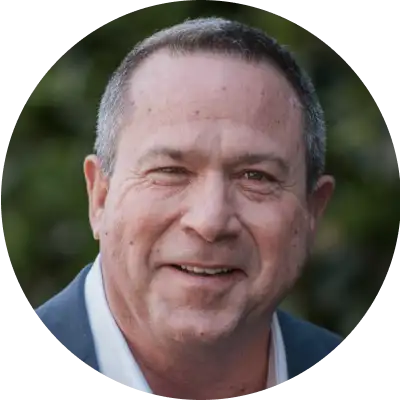
today in Brannen Edge.
Brannen, you are the president
and CEO of Flagship Healthcare.
We are so delighted
that you're on the show.
We wanna hear all about your background
and your story with flagship.
Thank you for.
Brannen Edge: Thank you for having me.
I'm excited about it.
Been looking forward to this.
Brandon Giella: And of course, as always,
we have the inimitable, the beautiful.
Paul Bennett, thank you
for joining as well.
Paul will be leading this discussion,
talking with Brannen about all the
things, uh, that are in healthcare,
real estate, private REITs, and so on.
So we're excited to jump in.
And for as always, you can jump
into aaa storage investments.com
to find a lot more information, including
the podcast and all the resources
associated with this conversation.
So if you have any questions.
Please go to aaa storage investments.com
and get in touch with Paul.
He's amazing.
Just give him a shout.
Paul, what do you have for us today?
Take it
Paul Bennett: Yeah.
I, I'm super excited.
This is a little bit of a departure,
Brannen, um, because we often
are real self-serving and we talk
about self storage and, and small
bay industrial a a lot and a lot
of different aspects of that.
But I thought it would be really fun to
have, uh, Brannen Edge, who, as you've
already said, is the president and CEO of.
Flagship Healthcare Trust,
which is a private REIT based
in Charlotte, North Carolina.
Brannen actually is the, the president
and CEO of Flagship Healthcare Properties,
which is the manager of the reit.
Um, has been a, a friend and, uh, and a
business associate for a number of years.
And, um, I think the world of
Brannen, I think the world.
Of what they're doing.
By the way, flagship Healthcare Trust
is over a billion dollars, uh, in net
asset value and, and owns over 3 million
square feet of medical real estate.
So we're gonna get a real education today
about private REITs and how they function
as well as medical real estate and why
it's a great way, a great place to invest.
But I wanna start off, Brannen,
give us your background.
How did you wind up?
In the position you're in, what did
your journey look like to get to this
point, uh, as the president and CEO
of flagship healthcare properties?
Brannen Edge: Sure.
Thanks Paul and, and thanks for.
And again, for having me, uh, my, my
path here has been a, a winding one.
Um, I describe myself
as a recovering banker.
So first job out of college was,
uh, working for, uh, bb and t in
the commercial banking group, and
spent about six years there, um, uh,
on the commercial side of the bank.
And about a third of my clients at
the bank were invested, involved in
real estate to some degree, either.
Um, they were developers or they were,
um, you know, o owner occupied buildings.
And, um, and I thought, you know, that
sounds like a lot more fun, um, than,
than what I'm doing in the banking world.
And so I used, uh, that opportunity
to go back and get my MBA from, uh,
UNC Chapel Hill and, uh, studied,
Paul Bennett: have my
condolences for that.
Brannen Edge: It was, it was great.
Blue Heaven was a, a
great two year experience.
Uh, and, uh, while there, I, uh, I
reached out to, uh, predecessor company
to flagship, uh, because, uh, in between
your first and second year of business
school, you gotta find a, an internship.
And, uh, so I came and, and worked for
the predecessor to flagship for a summer.
And, uh, really enjoyed all of
the differences, uh, from what
my, my previous career had been.
Whereas I was working for a
public company before I wanted
to work for a private company.
I was working for a company that had
been around for a century and a half.
I wanted to work for,
um, a, a younger company.
Um, you know, before I was working
for a, a company with 20,000
employees and, and at flagship or
the predecessor, I think I was.
Employee number six or
something like that.
So, um, that was, uh, that was 2006 and
you blink and, and, uh, here we are today.
Paul Bennett: Wow.
Brandon Giella: Amazing.
Paul Bennett: Talk a real quickly, and
I don't want to get too detailed here
'cause I want to, a lot of ground to
cover today, but, but flagship, like,
um, AAA storage at one point, your
primary structure to raise capital.
Was a fund structure,
which is what we do today.
And you made a decision at one point
to transition that to a private reit.
Talk for just a minute about that
transition, why you did it and what it
looked like, just so everybody can kind
of have a, a little bit of a, an idea
of that transition in your business.
Brannen Edge: Sure.
We had, uh, really a couple of, of
key transitions in our structure
on the investment side at flagship.
When we first started, we were doing.
One-off deals that we would
separately capitalize with one
family office or with a group of
high net worth individual investors.
And that worked for the first
25 investments of our, you
know, of our company's history.
But it wasn't providing the,
uh, the diversification.
We didn't have the scale, we didn't
have, um, we, we didn't have some of
the size, um, uh, to, to be able to.
Um, provide what, what
our investors wanted.
And so we moved to that fund
structure in, in about 2012.
Uh, that gave us more
discretionary capital.
We were able to move faster.
Um, and so it was a, it
was a great step for us.
Um, in 2016 and into 2017, we
were looking at exiting, uh,
one of our, our, our first fund.
And we went to our investor base who
was predominantly family offices and
high net worth individual investors,
and said, look, the portfolio's
doing well, it's performing well.
It's throwing off good cash.
I think it's a good time to monetize this.
And instead of receiving a round of
applause from our investors, instead
what we got was, are you crazy?
For all the reasons you said why we should
look to monetize this portfolio, we don't
want to, we wanna continue owning it.
Uh, if you, if you sell it, you're
gonna cause me a tax issue and you're
gonna cause me a reinvestment issue.
And, and neither of those things,
uh, were, were what the majority of
our investors wanted to deal with.
And so I remember saying to, to a
number of our investors, well, this is
how a closed in fund structure works.
Um, and they said, we'll fix it.
We don't want it to work that way.
And so we engaged at the end of 2016
and, and in into 2017, all manner of
consultants and advisors and bankers and,
uh, lawyers and, and accountants to say,
how can we create a better alignment?
In our world for our three main
constituencies, our investors who give
us, uh, entrust us with their capital to
be good stewards of, of their capital.
Uh, our tenants who are mostly
healthcare providers, whether that's
hospitals or healthcare systems or
physician groups, and increasingly our,
our employee base, uh, we've got 130
employees at the operating company.
Um, and that wasn't in.
Great alignment with a closed-end
fund structure from, from my
perspective, um, where we would be
selling off a, a big chunk of our
portfolio every couple of years.
And frankly, we had been buying assets
to own them for the long term, but
we weren't in a long-term structure.
And so, um, the, the private reach
structure is what, uh, one of
the options that was suggested.
And it really did create an
alignment for, uh, for our investors,
our employees, and our tenants.
So we went to our, our,
our investor base and said.
This is what we're proposing
we do and why we want to do it.
But admittedly, we're kind of
changing the rules of the game.
And if you don't wanna to do this, we
completely understand and we'll we'll
buy you out at at fair market value.
And we had about 94% of our
investors by capital say.
This is the structure, um,
that makes sense for, for us.
And so we converted our, rolled
in, uh, rolled up our, our legacy
fund structures and launched the
reit, uh, in January of 2018.
And it's been, uh, it's been a,
a great move for, for all of us.
Paul Bennett: Yeah, it would.
It's a great story.
And it did create alignment, right?
It your investors, predominantly the
family offices and ultra high net
worth individuals really didn't want.
For you to give them money for them to
pay taxes on it and turn around and give
it right back to you to invest again.
'cause they wanted to stay
invested in medical real estate.
And your tenants really prefer a
long-term landlord, somebody that
understands the healthcare space that
they can work with, um, that tenant
to landlord re uh, relationship.
So it made perfect sense.
Talk for a minute about maybe the
difference or the similarities,
um, between a pri, a private
REIT and a public reit.
And I don't want to go too long here
'cause I want to dig into, I want to
give you a chance to talk about the
kind of medical real estate you invest
in the mix between Core, core plus,
you know, value add and development.
I want you to dig a little bit here in
terms of what you guys are actually doing.
So I don't wanna get too hung up
on public versus private reit, but
people, when you say REIT are familiar
with the public publicly traded REITs
that they, you know, that they're,
that's what they're familiar with.
This audience will be, not
so much the private reit, so.
Brannen Edge: Got it.
Okay.
So when, when the REIT structure,
the private REIT structure was,
uh, proposed as one option for
us to consider, I, I admittedly
didn't know anything about REITs.
Um, I knew there were public listed
REITs, but that was about the extent of my
knowledge, uh, back in, in 2016 and 2017.
And really REITs are just
a corporate structure.
There are public listed REITs
that you can go find on the
NASDAQ or New York Stock Exchange.
There are public non-traded
REITs, which typically are sold
through a broker dealer network.
And then there are private REITs, which
is what flagship is structured, um, as.
And private REITs look and feel like
an open-ended fund, but they have the
benefits, uh, especially the tax benefits.
Of being structured as a
real estate investment trust.
And so that's, uh, what led us to that
structure, um, as opposed to, to being
public or a a, a public non-traded.
Paul Bennett: And another important
difference, particularly between public
reach and private reach is they're
not correlated to the public market.
So when you see the market down, you
know, in, in, in a significant drop,
you'll see the value of, in our industry,
the, the, the storage REITs, public
storage, extra space, those guys.
We'll see their share values
decline when we know good and well.
The value of the assets
they own didn't decline.
It was simply correlation to the market.
So.
Brannen Edge: Yeah, that's
a great point, Paul.
We, we had, you know, that
was one of the options that,
uh, that was presented to us.
We really didn't have any interest in
being a, a publicly traded vehicle.
Most of our investors have plenty of
exposure to, uh, the public equity market.
That correlation, the high correlation
with, uh, the, the public equity
market overall and public REITs
as well as the volatility were
things that we weren't really
interested in, in structuring around,
Paul Bennett: Yeah.
Makes, makes perfect sense.
So let's dig a little deeper, talk
about, um, talk about a couple things.
Start with the return objectives and
the type of assets that, that, uh,
flagship Healthcare Trust, invest.
Brannen Edge: Sure.
So we are, uh, proud to, to be, um,
uh, you know, focused on the baseball
analogy as singles and doubles.
You know, we, we are
not a home run hitter.
Uh, we want to provide our investors with.
Um, uh, a, a safe harbor, a place to,
to allocate to commercial real estate
where the highs don't get quite so
high as some real estate investments,
but the lows really don't get nearly
as low, and that's one of the appeals.
Of the healthcare real estate space.
Um, so our return objectives are,
uh, over the long term to generate
10 to 14% net returns to our
investors on an, on an annual basis.
And roughly half of that return, um, is
anticipated to come from current income.
And roughly half of that return is, is
intended to come from long-term, uh,
capital appreciation of our assets.
And that's about how it's worked
out over the last six years.
About 60% of our return to investors
has been income, um, and about
40% has been capital appreciation.
Paul Bennett: That's super What.
Tell.
Talk about the types of assets that
you invest in maybe at two levels.
First of all, literally
the type of assets.
Do you own hospitals?
Um, do you own, what kind of
medical real estate do you own?
Uh, and then secondly, allocation
across core, core plus value add and
development, which are the four sort of
major divisions within a market segment.
What's your strategy around asset
type and asset classification?
Brannen Edge: So investing in the
healthcare real estate space is a pretty
broad continuum and, and we're very
focused on a, uh, a narrow and deep.
Segment of that healthcare real estate.
So in that continuum of care, um, as you
move from, you know, home healthcare,
um, into the outpatient setting, uh,
which would be medical office buildings
and ambulatory surgery centers, that's
really the place where flagship focuses
a hundred percent of our investment on.
When you go past that outpatient
and you move towards inpatient
care like hospitals, um, or
rehabilitation hospitals.
To that post-acute care, um, whether
that's senior living or skilled
nursing, um, uh, senior housing
of, of all different flavors.
We're not invested in
that, uh, in that sector.
And, and that's for multiple reasons.
Um, it's not that they're not the same.
Patient base that we're treating or
seeing in our medical office buildings,
but it's really, the delivery of care
in this country has been shifting
for decades from an inpatient, an
on-campus care to an outpatient model.
Um, so that's one of the
reasons that we're focused on,
on the outpatient only sector.
Um, and also there's a, a lot
less operational risk, legislative
risk, and insurance risk.
In the outpatient sector, which
is where we, which is one of
the reasons we focus there.
So in terms of our, uh, where on the
risk spectrum we invest historically
over the, the long term, uh, we're
about 60 to 70% in the core plus space.
So we, these are assets.
If they're single tenant assets,
you know, maybe it's leased by
a healthcare system or a, a, um,
a medical specialist specialist
that's owned by a healthcare system.
Um, a single tenant with a long-term
lease, um, or a multi-tenant building
where we may have five or 10 or 15
different medical users, um, with
multiple leases that represents
60 to 70% of what we invest into.
Um, and the remaining 30 to 35%, um,
is divided amongst value add, uh,
opportunities and ground up development.
Ground up development is a core
competency of ours, so we'll work
with physician groups, whether they're
independent or part of a, a health system.
We'll work with health systems who may
have a mandate to say, we wanna deliver
this type of care, whether it's or
orthopedic or primary care or uh, uh,
urgent care in a certain submarket.
So they'll tap flagship to identify
the land, make sure it gets entitled,
um, go through the process of
selecting a general contractor, an
architect leading the development.
And then that, uh, end user is leasing
that building, um, generally under a
10 or 15 year, uh, triple net lease.
Flagship owns that building.
Uh, on the value add side, we're
seeing, uh, opportunities because of
our, our, uh, structure where we've got
property managers and leasing brokers,
uh, and maintenance engineers where we
can find, we can see a building that
is not performing to its potential,
and we believe that we've got.
Um, the, the right skillset and personnel
to improve that, that could be buying
an asset from an out of town owner who
doesn't know who the, who the, the local
healthcare users are in that space.
It could be buying it from, uh, a
physician group who, uh, maybe is
managing and leasing that building
themselves and realized they really
wanna focus on healthcare and delivering
healthcare rather than real estate.
And so we may be able to
lower operating expenses.
Or improve the leasing of the building.
So it's historically been about 60
to 70% core plus in the balance, a
little more higher yielding, overall
higher return type investments.
And we like having that blend.
I.
Paul Bennett: Yeah, it is a good blend.
And we're gonna come back to that in
just a minute 'cause I, I wanna sort of
bring out a point that we've discussed
on some prior episodes of our podcast.
But before we circle back to that,
um, talk for a minute, two things.
Talk about flagship healthcare
properties and all the different
services that you provide to the
REIT as the manager of the reit.
'cause you're.
Really vertically integrated.
You just kind of ran across that a
minute ago, but it'd be easy to miss it.
And then the other thing is, talk for
a minute about the current environment.
What's it, what's the
current environment like?
What are the biggest risks you see
and what are the lessons that you've
picked up from the last cycle?
Uh, in the medical, in the real estate,
commercial real estate market in general,
but the medical space in particular.
Brannen Edge: in addition to our specific
focus on the outpatient healthcare space,
really the secret to, to Flagship's
success, what makes us different?
Is our vertical integration.
We made the decision, uh, back in,
in 2010 uh, that we were going to
compete by being vertically integrated.
And so we have approximately 130
employees that do everything, um,
that's involved in, in running an
outpatient, uh, real estate program.
So we've got maintenance engineers,
we've got property managers,
we've got leasing and brokerage,
we've got ground up development.
Um, anything that a healthcare user
needs with respect to their real
estate, we want to be able to solve for.
Um, and so that's really what sets
us apart, is that we're providing
services not just to the 3 million
square feet of real estate that's
in the reit, but another five
and a half million square feet.
Um, third party owners engage flagship
healthcare properties to lease or manage
or maintain those buildings for them.
So these are large public REITs,
these are large investment firms.
These are, um, healthcare systems,
um, who say, wow, we really want
somebody that's got the relationship
and the understanding of these local
markets, of the users in those markets.
And that's really what,
what sets us apart.
Paul Bennett: Yeah, and, and we
haven't talked about this, but is
there a specific market focused
geographically where you guys have
tended to concentrate your investment?
Brannen Edge: You know, we're based in
Charlotte, North Carolina, and, and,
uh, perhaps more so than, than a number
of other, uh, real estate sectors.
Um, healthcare real estate
seems to be regional.
Um, you will have some national, uh,
hospital change that have, uh, uh.
Market share all across the country.
But generally speaking, um, delivering
healthcare is a, is a local, um,
uh, you know, is something that's
happens locally, not nationally.
And so we've grown from Charlotte,
which, uh, and, and throughout North
Carolina, which represents about 45%.
Of our investment.
Um, and we have been focused
historically on the Southeast
and southern Mid-Atlantic.
So, uh, the majority of our assets in
our investments are in the 12 states that
make up sort of that part of, uh, of, of
the Southeast and southern Mid-Atlantic.
As we've grown with our clients,
with our tenants, um, we're now in
22 different states doing leasing
management, maintenance, ambulatory
surgery center compliance work, um, and
we've also, uh, uh, are investing in
the ambulatory surgery center world.
And we will go nationwide with
our clients there that, that, uh,
that, that wanna work with us.
Paul Bennett: Yeah.
That kind of refers back to you
were talking about the types
of real estate you invest in.
I remember you saying at one point the
medical real estate that you invest
in is, is real estate That does not
involve or include an overnight stay.
So that's really the medical o
office buildings and the surgical
centers, which I know a bit of.
A big focus for flagship over the
last four or five years, and it's
where healthcare's migrated to, right?
They're, they used to, if you had a
knee replacement or hip replacement,
you were in the hospital and you're
there for at least a day or two.
Today, you go in the morning to
an outpatient surgical center
and you're home that afternoon.
So you're invested in the real estate
that is positioned in strategically
the way me, the medical services are
being provided in today's market.
Brannen Edge: It, it's where
the growth has been and it is
only going to accelerate, uh,
care, cost, and convenience.
The three Cs of healthcare are all
higher in an outpatient setting.
Even the hospitals don't want you to
be in the hospital, so they're moving
into outpatient, um, in a big way
and, and they can have better results.
Uh, for their patients, for
their bottom line, um, and for
the user or patient experience.
Paul Bennett: Okay.
Um, the, the second piece of the question
I asked you, I really was unfair.
I asked you like 18 questions at one
time, so I don't, I, I didn't expect
you to keep up with 'em, but talk
about for a minute, the current sort
of current environment, the risk that
you see in the current environment,
and any lessons that you learn from the
last cycle, uh, in the medical world.
Brannen Edge: We are in the, uh,
early stages of a recovery, um, uh,
in, in the commercial real estate,
uh, sector where, um, a, a tightening
cycle of interest rates, um, that was
unprecedented in the last 20 years.
You know, we saw rates move up 500 plus
basis points, put pressure on cap rates.
Um, and so that has over the
last several quarters, has eased.
Um, there've been, uh, several,
uh, federal Reserve interest
rate cuts that has helped things.
And the gap that we experienced
over the past few years between
buyer expectations and seller
expectations has really narrowed.
And so we're seeing a resurgence
in investment activity, uh, really
in the past few quarters that
we forecast will continue, um,
into 20 26, 20 27 and beyond.
So we're excited about,
uh, how we're positioned.
What's interesting is that even
when valuations have, have moved
up and down, the healthcare
outpatient sector fundamentally
has remained extremely resilient.
And that was something that was true
during the great financial crisis during,
uh, the period of COVID, uh, uncertainty.
And, and that sort of,
um, paradigm shift is.
We don't see wild shifts in
occupancy or credit loss and
defaults in the medical space, uh,
because really healthcare is not.
Uh, an an optional
expense for most people.
In good times in recessionary times
when people, uh, you know, have a
cavity, they're gonna go get it filled.
If somebody's got an ACL injury and
they need a same day surgery on it,
they're gonna have that surgery.
If your child needs, uh, you
know, a chickenpox vaccine.
They're not gonna put it off because,
uh, the economic environment isn't, uh,
you know, isn't hitting on all cylinders.
So, um, that, that's the biggest
lesson that we've learned.
Uh, really dating back to the great
financial crisis when we went all
in on outpatient real estate, is
that we had bankers and investors
that would come to us saying.
You know, my credit officer says I
can't make any loans to anybody that's
not government backed or healthcare
or, you know, student housing.
You know, what have you got for me?
And we really were left alone because our
portfolio was performing and we, and we
didn't have a whole lot of problems on
the, on the outpatient healthcare side.
Paul Bennett: It's, it is one of
the attributes or characteristics
that what I do, um, you know,
intersects with what you do.
The self storage space in particular for
different reasons, is very resilient and
has really outperformed other sectors
in the commercial real estate market,
in economic downturns, much like, uh,
healthcare real estate has, although,
like I said, for, for different reasons.
Um.
Uh, we talked a minute ago about
how you allocate capital within the
REIT between core plus value add and
development opportunities, and you,
you mentioned that that allocation
was really meant to a preserve.
You know, your primary investment
objective is to preserve
capital and provide income.
Um, but at the same time,
you want a growth component.
Um, you wanna be able to offer, offer real
growth in, in, in your investors' equity.
And so you've included.
Value add and and development, um,
in, in the overall portfolio mix.
We did a podcast, what Brandon, probably
two, three episodes ago about the
strategic allocation within a real estate,
um, portfolio, um, between income-oriented
investment and growth oriented investment.
And, uh, full disclosure, this is the
part of our conversation today that's a
little self-serving, but you're a personal
investor, uh, with us in Growth Fund One.
Um, talk for a minute about the parallels
between what you're doing strategically
within the REAP portfolio, sort of
mixing the two with a heavy balance
towards income producing real estate.
And development with what you do
personally by, by mixing those two
in a portfolio to create a blended
overall return that's higher, but
still includes some current income.
Brannen Edge: Yeah, sure.
So, um, one thing I've realized I
is that, uh, try trying to time the
market, whether that's the stock
market, the real estate market, um,
anything is, is not often very easy to.
Do and, and, uh, you even, you look at
your 4 0 1 count, 401k statement and say,
man, I, I underperformed because I was in
a value fund and growth was outperforming,
or I was in a, uh, in, in a value in, in a
growth fund when value was outperforming.
And so with flagship, uh, you know,
we're trying to accomplish both.
We want to have the stability.
Um, of the value, the core plus
side of the portfolio, but, but
don't wanna lag behind returns.
And so we add, uh, the, the value
add and development components there.
Um, I, I think Paul, you, you mentioned
that there's some si similarities
between the storage sector and, and,
uh, the, the medical office sector.
And I think that's
exactly right, that, that.
When I describe the, the medical
office or outpatient healthcare world,
I say it is much more similar to
the storage world than it is to the
general office, uh, real estate market.
The, the, they share similarities
in kind of the size of assets,
um, in the, you know, how, how
recession resistant they are.
Um, and so when, you know, when the
opportunity came, uh, to, to, uh,
to have a chance to invest in, in,
uh, uh, in, in your company, um, you
know, number one, what I, you know,
my advice for all investors is, number
one, know who the sponsor is, um, with
whatever you're considering investing.
Um, that, that having a, a,
um, a, a family like the mu
hitches having you, Paul.
Um, you say, all right, this gives
me a, a good sense of comfort.
That there's experience, there's
integrity, there's knowledge there.
And so number one, that was, that was, uh,
something that was critically important.
Uh, number two is making sure
that you're comfortable with the
sector and, um, I don't know much
about the self storage spec space.
But I knew do know that, uh, America
continues to grow and Americans
continue to hold onto a whole bunch of
junk, um, and, and important things.
It's not just junk, but, um, the, the, you
know, getting rid of stuff is not, uh, is
not a strong suit for, for most Americans.
And so, you know, uh.
I wouldn't wanna invest in the best buggy
whip maker, uh, out there, um, uh, uh,
no matter how, you know, how, uh, um,
you know, how much integrity they had.
Um, but finding a sector that's got
got a lot of growth opportunities
makes a whole lot of sense.
Um, and then lastly, you know,
the vast majority of my, uh, my
net worth is tied up in flagship.
And so to have the opportunity
to diversify a little bit,
uh, with folks that I, I trust
makes, uh, makes a ton of sense.
Paul Bennett: I, I think it's a great
illustration of why funds exist,
whether it's the flagship reit, which
is not a fund, obviously, or, or our
growth fund too, because you're a real
estate professional that spent the
last 15 years or more of your career,
uh, in the real estate business.
And I don't know many people that
know more particularly about medical
real estate than you do, and yet.
When you wanted to invest in a, in
a sector that wasn't you, within
your expertise, you leveraged a
sponsor, which is the whole purpose.
It's why funds exist, is to aggregate
capital, to let people do something
beyond what they could do on their own.
And it's to gain the expertise that
increases the probability of success.
Like I wouldn't go out and invest
in medical real estate, I'd call
you, um, and, and thank I'm,
we're thankful that when, when the
situation was reversed, you called us.
So we're.
Super glad to have you as an investor.
We're, we're sort of heading towards the
end here, but I wanna do two more things.
Number one, give me your
outlook for 26 and 27.
Where are the best opportunities gonna be?
What are the direction of cap rates
p pricing and transaction volume look
like in the next year and a half or so?
You mentioned that a minute ago.
And then where are you bullish, uh, in
the commercial real estate space, but
particularly in medical real estate?
Brannen Edge: Yeah.
Um, we're extremely bullish for what,
2026 and 2027 looks like we saw.
Cap rates, uh, uh, peak.
Um, um, so values were, were the most
depressed over the last 12 months.
That is now, uh, we're starting to see
cap rates start to inch back down again.
Um, and again, some of that
is supported by, all of that
is supported by fundamentals.
Some of that's caused by.
Uh, continuing strong fundamentals helped
by some interest rate cuts of late.
Um, and so I really think that
bid ass spread that we've been
experiencing in the past few years
has really started to disappear.
So transaction volume after being
historically low in the medical
field for the last two or three
years, we're starting to see that,
uh, that that increase again.
Um, we're very bullish on, on
outpatient real estate in general,
obviously, but especially on the
ambulatory surgery center side.
So state laws, uh, uh, governing
certificates of need, which is what,
uh, governs the, uh, uh, the, the
surgery center space and hospital
space and delivery, you know, beds.
Um, those restrictions are starting
to get relaxed in a number of states,
which is leading to an increase, uh,
in the development, uh, and expansion
of ambulatory surgery centers.
We think we're really, really well
positioned with our relationships with
those larger, um, a SC operators to
continue to grow and invest in that space.
And a word of caution that as more folks
move into that ambulatory surgery center
world, doing your due diligence or
partnering with a, a sponsor that knows
the business becomes critically important
because these all won't be a success.
Um, so we're very bullish on that and we
remain bullish on, uh, geographically.
Uh, the southeast Southern Mid-Atlantic
into the Sunbelt, where we're seeing
population growth, but especially
senior population growth, which is
the most important, biggest user of
healthcare services in our space.
So we're really optimistic
about, uh, what, what the next
two years have in store for us.
Paul Bennett: That's super.
You know, it is always amazing to me
the parallels in commercial real estate.
Um, we live in very different worlds in
terms of the real estate that we, you
know, that we own, invest in and develop.
But we, we've been through a very
similar experience over the last,
you know, ours was a, a lot of
overbuilding coming out of COVID
that caused some, some rate pressure.
Um, we haven't sold a property
out of our portfolio since 2022
because of the bid as spread.
We've had four closings.
We sold four properties
in the last 45 days.
O obviously those negotiations
started, you know, 90, 120 days
ago, but we've actually closed
on the sale of four properties.
Uh, in the last 45 days.
The money's come off the sideline.
That bid as spread has genuinely
narrowed and, and transactions
are beginning to happen again.
A as we wrap up.
Uh, give us a couple of
key takeaways, Brannen.
Um, what do investors often
fail to understand about medical
real estate, or REITs or both?
Um, and, and just talk, talk
about that for a second.
And I've got one other thing, um,
for you and, and we'll wrap this up.
Brannen Edge: one misperception is that
medical office buildings, uh, equal
office buildings, and that really couldn't
be farther than from, from the truth.
Uh, medical office buildings.
Um, while they may look like a,
a general office building, the
characteristics are very, very different.
So, um, take the, the, the COVID-19,
uh, work from home phenomena that's
existed for the last five years.
Um, you don't have many
physicians and nurses and, uh,
PAs that are working remotely.
Um, it just doesn't really work.
So number one, the.
Major difference between the office
sector and the medical office or
medical outpatient sector, um, is
that face-to-face delivery of care
is really hard to outsource or
to do remotely three days a week.
Number two is, you know, when you
have an office tenant go into a
building, you have desks and computers.
Um, but those can all relatively
easily be packed up and moved down the
street when the, in, you know, when
a, when a lease rate is, is cheaper or
somebody wants different amenities on
the healthcare side, there is a massive
investment by the tenants into the space.
So you think plumbing, you think, uh,
medical imaging, machinery, you think.
Um, all of the, the, uh, the, the exam
tables and the, and the medical equipment,
that's not easy to, to, to move.
Number one, um, the cost of
rent for a, a, a medical user.
Is generally less than 10%
of their total expenses.
So it's, while it's certainly a a, an
important line item, they're generally
not moving down the street to save
50 cents a square foot or a dollar a
square foot, especially if you've got.
You know, a senior population that is
your, your client base, that's your
patient base, that doesn't want to go
track down their physician or their
dentist or their surgeon, um, because
they're having, they're choosing
to move locations every so often.
So, um, number one, medical office
does not equal office is, is one
of the big, um, misperceptions,
I think that's out there.
Um, sec.
Secondly, on, on REITs, um, and some,
some, maybe some misperceptions on REITs.
Um, all REITs aren't created
the same as we talked about
earlier in, in this segment.
Public listed REITs, you can buy and
sell them on, on a public exchange.
Um, that makes for great liquidity.
Um, but the correlations with the overall
market are significantly higher than with
private real estate or private REITs.
Um.
And another misperception is that some
folks think, well, if it's a think of
if it's a private reit, then I don't
have any opportunities for liquidity.
I'm just stuck forever.
Um, and that's not the case.
We designed flagship.
Uh, to, to have, uh, long-term
investors be attracted to us,
but it's the investor's capital.
And so subject to windows, you know,
quarterly windows of liquidity and,
and holding periods, investors can
redeem their shares, add to their
shares, um, change between reinvesting
dividends or taking cash dividends
depending on what's going on, um,
in their individual circumstances.
So, um, we think we've got a great
alignment now with our investors,
with our tenants, and with our
employees as a private reit.
And we're excited about what the future
has in store for, for all three groups.
Paul Bennett: Well, you guys
have done a great job over a
really long period of time.
Very solid returns, and, um, you have
sticky tenants and the right structure.
So that's a, that's a great combination.
Brannen Edge: Flagship hP
is our website flagship, hp.
Paul Bennett: You've given us a
ton of information, so hard to,
to kind of single something out.
Um, I, I think the overall message
is that medical real estate is a very
attractive space to invest in, uh,
particularly if you're looking for income.
One of the things that we recommend, I
did an example of this Brannen, which
is we did a whole conversation on,
um, on the difference between buying
existing assets and, and developing
in terms of the return profiles and.
That type of thing.
And we created an example out
of that where we, we, we took.
A block of capital, let's say a half
a million dollars and put half a
million of it in a vehicle like your
reit, where it's producing a 5 5.5
dividend income on a regular basis, and
the other half of that $500,000 in one
of our growth funds where we're getting
a 19, 20% internal rate of return.
And when you combine them, what
you wind up with is a blended 2.5
3% current income and an overall
return, you know, over 17%.
Um, and, and.
I think the message we were trying to
give people is, we're not saying just
invest in, in high growth opportunities
like our development funds, but
be smart about your allocation.
It's what the institutional investors do?
They, they diversify that allocation
to create a blended risk adjusted
return that includes both income
and ca capital appreciation.
And, um, and I, I think you did a great
job of, of speaking to that today.
Really appreciate you
taking the time to join us.
I know you're a super busy
guy and, uh, really appreciate
your time and your friendship.
Brannen Edge: Paul, likewise, uh, uh,
really enjoyed being with you and Brandon.
Thank you for, uh, for including
me on this and, um, excited about
what the future has to hold.
And, and thanks for everything.