Subscribe
Share
Share
Embed
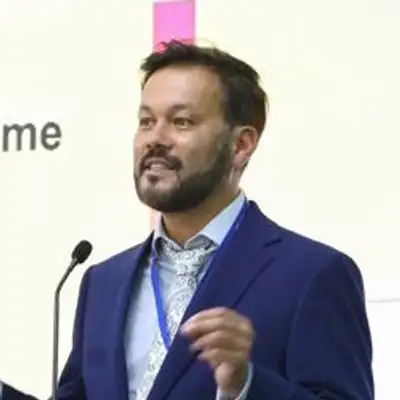
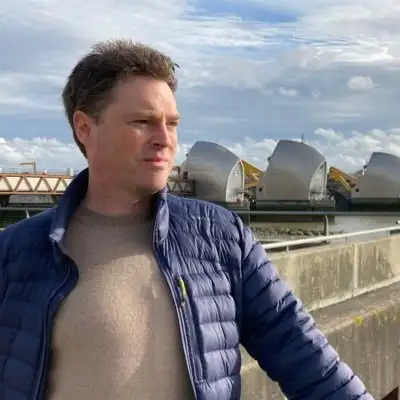
Generation One is the flagship climate podcast from University College London. Join our collective of passionate individuals dedicated to climate action and a fairer, more positive future – for us, and for the generations to come.
Our hosts Professor Mark Maslin and Dr. Simon Chin-Yee dive into the biggest challenges and solutions shaping the fight against climate change.
Joined by expert guests, they’ll be bringing you cutting-edge initiatives and inspiring climate action stories – from reimagining global energy systems to protecting our oceans, from using AI to decolonising climate solutions.
Tune in monthly to discover how we can turn climate science and ideas into real-world action.
Learn more about UCL’s Generation One climate campaign and access episode transcripts at ucl.ac.uk/climate-change.
We’d love to hear your thoughts and feedback. To get involved, email us at podcasts@ucl.ac.uk or find us on X using #UCLGenerationOne.
Language: English
Presenters: Professor Mark Maslin, Dr. Simon Chin-Yee
Producers: Adam Batstone, Caitlin Mullin, Jane Yelloly
We are the first generation to feel the impact of climate change and the last generation that can do something about it.
William Moor:People aren't interested unless it can essentially make them money, and there are ways to generate money from being a part of a circular economy.
Simon Chaudhuri:Listen. At at large, I am a big fan of capitalism. You know, capital ism has helped millions and billions of people get out of poverty.
Alexandra Ranft:The visibility of these kind of startups can be such a limiting factor. Right? You can have the best idea in the world, but if no one knows about it, you're not getting that funding that you need to keep operating.
Mark Maslin:This is generation one from University College London, turning climate science and ideas into action. Welcome back to UCL's generation one podcast. I'm your host, Mark Mazin, professor of Earth System Science here at UCL, which, of course, means that I study climate change in the past, the present, and the future.
Simon Chen Yee:And I'm Simon Chen Yee, lecturer in development studies, and my work focuses on the geopolitics and international affairs and how climate knowledge and politics are intertwined.
Mark Maslin:So, Simon, this one is exciting. It's about how we get start up companies and entrepreneurs to drive the green agenda. How do we actually tackle the climate crisis? But this is our usual catch up. Anything exciting happen in your life?
Mark Maslin:And at this point, I'm looking at Simon, and his face has fallen.
Simon Chen Yee:Yeah. It's possibly the most depressing week that I've ever had in twenty years of working with UN organizations, Mark. And for those who don't know, the Marine Environmental Protection Committee at the International Maritime Organization failed to adopt their net zero framework two weeks ago. And it was not adopted because of The US Saudi Arabia blocking it basically calling a vote which at the IMO very very rarely do they come to a vote. In the past fifteen years it's only been four times and twice has been in 2025.
Simon Chen Yee:They didn't kill it. I want to make that really clear. They pushed it twelve months. But the problem with that is that all of the time scales now are completely skewed. Everything that we need to hit by 2030 cannot be hit.
Simon Chen Yee:It's impossible.
Mark Maslin:I mean, does mean that we are looking at at least a five to ten year delay in any real meaningful climate action. And the thing is I've recently had that sort of backlash. So this week, we put up a preprint of a fantastic paper by UCL whereby we've shown that over the last fifteen years, The UK has saved a £104,000,000,000 in its energy costs because of the massive expansion of wind power. And you can just imagine the backlash. You know?
Mark Maslin:It's like, no. This is not true. It's all green subsidies. It's like, no. I've done this with real economists who've done real modeling and showed that, yeah, you take off the subsidies, and you still have made a profit of 104 billion.
Mark Maslin:That's how much renewables saved us. But people just don't want to believe it.
Simon Chen Yee:Let's end on a a hopeful note here. So even though it's been pushed for twelve months, the thing is we have to strategize now to figure out what we can do to make sure that in twelve months time this doesn't just happen again. And the positive side is the strategies have begun. Countries have begun to talk to each other. Both industry and energy producers are waiting.
Simon Chen Yee:They just need to be told this uncertainty about not having regulation. They don't like that. They they won't move on that. They need the certainty. That's why this net zero framework was so important to be adopted.
Simon Chen Yee:So cross fingers crossed, in 12 month's time, we'll have a different podcast where I'll be much happier.
Mark Maslin:But I also think picking up on it, this is why we're doing this episode. Because guess what? This is about startups. This is about new ideas. This is about entrepreneurs coming in and saying, we can do something different.
Mark Maslin:We can do something better, and we can do it with lesser missions. And for me, that's the exciting bit. Everything is going in the right direction. It's just not going quick enough.
Simon Chen Yee:And I think that's also something really key and important to understand is that looking and what gives me more hope actually are these entrepreneurs, are these different businesses, these startup companies that are going to be part of our life now and that are doing major things even in small incremental ways that are really important for any action moving forward. Are part of the process. So whether you're a climate conscious consumer, a budding entrepreneur, or just curious about the future of our planet, we've got a great lineup of guests in this episode.
Mark Maslin:First up is Alexandra Ramft, senior project manager from the UN Global Compact Network UK to hear about what is being done at the international and UK level to promote climate entrepreneurship. Welcome, Alexandra.
Alexandra Ranft:Thank you. Thanks for having me.
Simon Chen Yee:And I am delighted to be able to welcome William Moore from Consys Energy. William is a cofounder of Consys Energy, having graduated from UCL in geography in 2025. Consys Energy was selected to join UCL's hatchery incubator program, which provides coworking space and business support to UCL startups. Welcome, William.
William Moor:Good afternoon.
Mark Maslin:So, Alexandra, can I ask, what is the UN Global Compact Network, and what does it do as an organization?
Alexandra Ranft:So the UN Global Compact is the world's largest corporate sustainability initiative run under the umbrella of the UN. So it basically calls on companies to align their strategies and operations through UN derived principles across human rights, environment, labor, and anti corruption. So I work for The UK network, one of, I think, 60 country networks or so. And we basically connect and support around 900 UK based businesses, sort of all of all sizes and sectors in a global movement to really drive sustainable business. So our network has three main work streams across ESG.
Alexandra Ranft:So I am on our environmental sustainability team, and we host a wide range of programming to inspire ambition and enable action in these areas through events and workshops, webinars, working groups, accelerator programs, you name it. And then another key pillar of our mission is to play an active role in shaping the business environment. So that's where our advocacy and partnership activities come into play and actually how we got connected with UCL and the hatchery in hosting one of our programs for us.
Simon Chen Yee:That's so interesting. Okay. Can you actually explain a little bit about that? What are these some give us some examples of these initiatives that the Global Impact works on.
Alexandra Ranft:Yeah. Definitely. So, I mean, specifically one that I work on and is focused around innovation is the SDG Innovation Accelerator for Young Professionals. I know it's a very long title, but it's basically a six month program to empower young talent within companies to collaborate and accelerate business innovation towards the sustainable development goals or the SDGs. So the program really aims to sort of give creative young people the time and space to actually come up with innovative products and services and solutions through new technologies, initiatives, business models that really deliver on their company's sustainability objectives.
Alexandra Ranft:So the company or the program itself is actually more focused on intrapreneurship. So that idea that you can still be an entrepreneur within your company. And it's actually sort of the perfect pairing because companies need people with big ideas who really wanna drive progress and they have the resources to support these big ideas as well.
Simon Chen Yee:If we come on to these big ideas you're talking about, Alexandra, William, Consist Energy. Yes. Explain.
William Moor:So so Conscess Energy is a platform to turn landlords and property owners into their own green energy suppliers. So effectively creating a new energy layer to generate an additional sort of stream of revenue. And how we do this is so if you have a flat, for example, install a battery into your home with an inverter. But the most important thing on our side, a small edge controller. So a small little computer which communicates with the battery and the inverter.
William Moor:That optimizes the schedule so we can charge as part of a big cohesive unit. So we have one or one one property communicating with sort of the thousands of others in the portfolio, allowing us to buy energy directly from the wholesale market, which then allows us to get it for as cheap as possible. We store that locally and then resell it to tenants at 20% below market rates. Essentially, buy the energy in bulk for sort of during the dirt cheap sort of off peak periods, which allows us to then resell the energy during the more expensive sort of peak times. So with the system, we're able to generate about an additional thousand pounds a year of extra revenue for the landlords while also sort of aiding in their compliance, cutting their carbon by about 90.8% sort of on average while also making sure that tenants are getting a cheaper and more efficient stream of energy.
Mark Maslin:Well, can I jump in here and say, know what? I always love the fact to find out where my students end up. You know? Sort of like, yeah. Go geography.
Mark Maslin:Sorry. Simon's gonna kill me for that. But I I wanted to ask you, why did you set up the company, and what's the core mission? Why why did you do it?
William Moor:So it all started when I was actually working as an intern. And it was we're having a big conversation sort of within our sort of team about how the grid, about how energy consumption will evolve. And everyone was heralding EV charging, solar is the future because you'll be able to charge your car up during the off peak times, then power your house during the peak times locally. That only really works if, one, you know how to drive, if you have off street parking, and if you have an EV car. I live in London.
William Moor:I don't know how to drive, and I live in a flat. That's not necessarily it doesn't it doesn't work for the masses. And then started to explore other options. So looking at so for example, I mentioned solar. The similar problems also arise.
William Moor:For example, there's not enough agency over roof space. For example, you can't generate enough solar locally in major cities. So batteries then seem to be sort of the only possible sort of solution in my mind at that specific time. Bear in mind, this was in 2023. So explored it then while sort of was meant to be working and filling around filling around with the idea.
William Moor:But it at that time, it didn't quite work. Battery technology wasn't safe. It wasn't efficient efficient enough. As of right now, lots of these energy energy efficient products such as sort of solar, batteries, for example, they're not revenue generating. So these big landlords, big institutional investors, they're not wanting to chuck loads and loads and loads of money into cost savings with a how can we make this a revenue generating tool?
William Moor:If we're able to make it truly profitable and manage that manage the way in which people perceive it through profitability, we can create make it immune from these social and political trends. And that's sort of the core mission of concerts, have meaningful and truly sustainable by the fact that it's everlasting profitable climate action.
Mark Maslin:So, William, that's fascinating how you've developed your company. But tell me, so are there actually batteries in flats? Are is it up and running? Are people actually making money?
William Moor:Yes. So we have batteries in flats right now, and they are operating. We will go monitor them sort of later today because we're using all this data which we're gathering right now to basically prove to these even larger companies. We've got big pitches to large institutional sort of property owners and property investors to boost their yields and boost their asset value. And we take this data, we suppose, starting at a small scale and growing that and using this as proof to develop further.
Simon Chen Yee:I mean, is so key to what we're trying to do here at UCL actually is understand how these different small startups or different ideas actually contribute in spite of all of the geopolitics that Mark and I are always talking about that are going around the world. And I also love when little pub ideas or conversations turn into big ideas. So, Alexandra, is this part of the what the global contact is compact is looking for? Does this the innovation that you're seeing?
Alexandra Ranft:Yeah. Definitely. I mean, I think from our point of view, visibility of these kind of startups can be such a limiting factor. Right? You can have the best idea in the world, but if no one knows about it, you're not getting that funding that you need to keep operating.
Alexandra Ranft:What what are you gonna do? So I think one role that we try to play as a business organization is really highlighting where people are doing amazing things that need that scaling, need that funding. And secondarily, we are a network. Connecting small businesses and startups with other people who have the funds, who want to invest, who want to innovate, that's such a key factor for us in making sure that these businesses get off the ground.
Mark Maslin:I I mean, I have to say, for me, because I tried to run a business for ten years, the funding is critical because it doesn't matter how good your idea. If you don't have that capital and many companies don't make a profit for the first ten years. You know? Sort of but how how does the UN, step in to actually bridge that gap? How do they make that marriage?
Mark Maslin:Money doesn't like to spend money, if that makes sense. And these are so many good ideas, and we need to take some more risks.
Alexandra Ranft:Yeah. Definitely. But it's something that we struggle with because there has to be that will to do it. And especially in, I think, the time that we're seeing right now where there's bit of a down market for sustainability, that can be really hard.
Simon Chen Yee:So I I'm really intrigued at this this how this started, actually. William, maybe or or Alexandra, which one of you wants to go first? How do you get in touch? How do how does a small idea turn into a big idea that gets your attention that can turn into something that William is doing? Who wants to take that?
William Moor:I mean, on our on our side, how sort of the process went, we then went was a £5 deal at lunch deal at Franco Manker. The next day, we went and talked initial ideas how this actually worked. But the biggest thing is you can have all of these ideas, but it's actually fundamentally all about execution. It's about working back. Oh, we have this grand idea at the first that we can fully fund all these batteries, but that would require us raising sort of multiple millions of pounds.
William Moor:We're not going to be able to do that right now. You have to put it break it down into really, really small steps. And then right now, we're using sort of existing retail tariffs and sleeving those through our systems to then build the data for Ofgem sort of licenses, etcetera. You have to work backwards and find what you can do because every little thing is a success. And if you're able to map out what you're doing right now, where that's going to get you to, that's been I mean, that is and has been crucial in basically unlocking funding, unlocking sort of extra revenue streams, proving to clients that this is going somewhere.
William Moor:So and proving to ourselves that this is going somewhere so we can invest our every single sort of living and breathing moment into this.
Alexandra Ranft:In some ways, agree. In some ways, I disagree. I think it's for us, I think one thing we see with startups or small businesses that fail is they haven't got a grasp on what the actual problem is. They have an idea or they have a problem they'd like to solve, but getting into the weeds of what the real problem is and what you actually need to solve for somebody else to want to buy it or want to invest in it is another question. And I think we're seeing that a lot with AI.
Alexandra Ranft:Like, how can AI make sustainability more efficient and better? And I think there's a lot of, you know, sort of people jump to obvious conclusions about it. Oh, maybe it can help simplify this or simplify that. But you have to then go ask, if if we did this, is that actually going to be helpful for you? Is this going to be something that you would want to spend time using?
Alexandra Ranft:So
Mark Maslin:So I'm I'm gonna switch back to William and say, okay. You're doing really well, but what has been your biggest challenge up to now? Because then I'm gonna see how Alexandra would solve it for you.
William Moor:I think there are so many challenges, and every sing every single day generates a new challenge. But it's not necessarily a bad thing. But big challenges we've had, especially in the early stage, was sort of the unlocking of funding, and that was really, really tough. Because I think in The UK, especially, we have a quite a weird type of sort of risk aversion, And there is risk aversion all across the world, for example, in The states of if you're in if you're in San Francisco or in California. They have the same type of risk aversion where their their risk is risk commission.
William Moor:They don't want to be missing out, so they're willing to chuck money at things. But on a UK specific thing, there's a lot of regulation, especially dealing with sort of energy and with people. There's a lot of hoops to jump through. We've had to change a lot to make sure we can fit. And because we don't have this circles back to the same things.
William Moor:We don't have the money to basically just chuck lawyers at things to make it work. It's you have to sort of bend yourself around a bit.
Alexandra Ranft:I wish I could solve the regulation problem. Unfortunately, I don't think we can do that, but I think that is one one area that we try our best to advocate for what we think and what our members say they need from the government. So in terms of what the startups and small businesses need versus what our multinational members need, yeah, those are gonna be different.
Simon Chen Yee:So your role then, Alexandra, in in environment and sustainability, I'm interested to know what what you're looking for. If you in 2025 moving forward, what are the new business ventures that you and the Global Compact seem to be advocating for?
Alexandra Ranft:Yeah. I mean, I think we're we're in a we're in a good spot. We're a bit of a tricky spot where a lot of our businesses at this point have set targets. They know they wanna move to net zero. They're now stuck.
Alexandra Ranft:They're trying their best to create these transition plans in terms of how they're going to get there. But the actual infrastructure and and funding required for decarbonization is a lot I think a lot more than they were expecting. Reporting continues to be a challenge for companies despite how long they've been doing it. Like, I think it's it continues to be just a burden on time and resources. But I think one of the things that we're now seeing more with out sort of coming out of the maturity of the climate sphere is the climate nature nexus and bringing that together in terms of how companies are actually thinking about their impacts on both climate and nature and how those can't be treated separately.
Alexandra Ranft:So looking forward into products and services that are actually helpful to bring that together, I think is gonna be really important because more and more, they've kind of lots companies think they have an understanding of their climate impacts, but are still a ways back when it comes to nature and biodiversity.
Simon Chen Yee:It's like a dagger to my heart. Honestly, when you're you before you two arrived, Nark and I are having this conversation on on my work at the the UN IMO, the International Maritime Organization, who just refused to adopt a net zero framework. And it's just that that's the UN. Right? But industry needs certainty.
Simon Chen Yee:Mhmm. And if you're not moving forward with that certainty, they don't know what to do. And so how do you how do you turn that into a big idea?
Mark Maslin:Again, I think there is this myth that companies aren't doing stuff. And I I've seen this when you have companies in a room. They all assume that they're the only ones doing it. And And when you actually get them to talk to each other, oh, you're still doing ESG. Oh, okay.
Mark Maslin:Oh, I thought it was just us. And and it's that whole myth that's been there. I I have to say, I'm gonna cheat now. I'm gonna turn this back to UCL, because this is a UCL podcast. So I I'm really interested interested now, William.
Mark Maslin:What was the role of the hatchery at UCL? Was that supportive? Was it helpful?
William Moor:I mean, it it was in it's incredibly supportive, and it's amazing to be part of a network. But they're there. It's to support you, give you the space, give you the community, which is probably the most important thing. Having all these people doing solving similar problems in the idea of both in their personal and sort of business lives. They've both got the same problems that, oh, wow.
William Moor:I'm I'm now a founder. Oh, wow. I don't know if money's gonna come in next month. I've got work really, really hard. Oh, wow.
William Moor:Okay. How do how have I solved this problem beforehand? How can we transfer these ways of thinking? That's the most important part, that sense of community, but also having the fact that there's actually a physical space makes such a big difference and the space to blossom.
Mark Maslin:I assume also it it gives you a little bit of credibility when you're knocking on doors, which is you've got UCL behind you. Does that help?
William Moor:It it it really helps. We've used it we've used it a couple of times. And especially because both me and my cofounders, we're I mean, I'm 22. We're quite long. We especially when we first reach out to people, we don't necessarily always send the photos of our faces sort of right away.
William Moor:Because we can say, oh, we're a sort of venture capital and UCL backed startup that they're like, wow. This is quite this is quite a big deal now. And then when we jump on a call, it's, oh, okay. Well, you guys are doing something quite cool. I've gone so far.
William Moor:We might as well hear we might as well hear you out. And then that's hopefully, well touch words, successful.
Mark Maslin:So, Alexandra, last last question. Where do you want to see the landscape of all these companies in, say, five years' time? You've got a magic wand. How is your organization gonna create a better community?
Alexandra Ranft:Man, that's that's the golden question, I think. I think in terms of climate, we would hope that in five years, companies are seeing the benefits from having set science based targets for net zero. They're on their way there. They, you know, know what they're doing in terms of decarbonizing, and there's the infrastructure and support in place to achieve that. I think I would be hoping that they're, you know, investing in innovation internally as well and and really pushing that forward.
Alexandra Ranft:But I think more and more, I'm we're looking at how do they tackle those other aspects like water and nature and the circular economy and all these other big topics that sort of factor into climate, but they haven't necessarily got that integrated approach yet. So I think if we was if we're seeing companies having a really holistic view of climate and environment in five years, that would be a big success.
William Moor:What we've seen, people aren't interested unless it can essentially make them money. And there are ways, and that's the whole point of innovation. There will be ways to generate money from and revenue from sort of being part of a circular economy, being sort of, as you're saying, into sort of nature and sort of more more holistic aspects. But I think the bottom line is that there has to be a way to generate revenue because right now, we're competing with sort of the big fossil fuels companies who have a lot of money because they're still profiting off of all the infrastructure they built two hundred years ago. It's essential that we're able to prove that sustainability can be profitable, and that's through innovation.
William Moor:And it will happen, but it just takes time. We have to be able to prove this so we can build this infrastructure now so we can start profiting off of the renewable and green economy for the next two hundred years to come.
Mark Maslin:So make money, save money, save the planet.
Simon Chaudhuri:Easy.
Simon Chen Yee:That's our plan for the next
Mark Maslin:ten years. And the thing is with entrepreneurs like yourself, William, and wonderful organizations like yours, Alexandra, again, I'm gonna look at Simon here. There is hope. Okay? I know it's been a bad two weeks, but everything is going in the right direction.
Mark Maslin:It's just not going quick enough.
Simon Chen Yee:Right. So I think it's important. And on that note, like, literally but because if if you are out there, if one of our listeners is out there and has one of these big ideas or has an idea, is there a way for them to get in touch or make themselves known to the UN Global Contact? How do they how does that process work?
Alexandra Ranft:Yeah. I mean, you can definitely get in touch with with the network. If you wanna contact us on LinkedIn, we have the UN Global Compact Network UK. If you look me up, you'll probably find me on LinkedIn. Feel free to get in touch, and I'm happy to put whoever in touch with the best person.
Alexandra Ranft:We do have quite direct links to all of our country networks. So even if you're, you know, you're looking to do a project in a different country, we've set that up before, where you can get in contact with sort of, you know, yeah, people across the world. So do get in touch. Happy to chat.
Mark Maslin:And I'm gonna add to that because, if you happen to be a UCL student or researcher or an academic or professional services staff and you have a great idea and you wanna know how to, take it into the business sector, look. Look on our website. There will be the links to The UK, to the UCL hatchery. We, as a university, want to support all those brilliant ideas. And, again, we want many, many Williams.
Mark Maslin:We want to clone him with you to basically make the world a better place. So this has been a fantastic conversation. I have to say thank you, Alexandra, for being part of the UN and actually bringing people together. And, William, thank you. You're so inspiring that you basically did a geography degree and started a major business all at the same time.
Mark Maslin:So thank you so much for being on the show.
Alexandra Ranft:Thank you so much for having me.
William Moor:Well, thank you very much. And if you are, interested and you're a rental, property owner, please do get in contact, with us. You can find us online at Conscious Energy or email me at william@consisenergy.com because do remember, it's not just green, it's gold.
Simon Chen Yee:Brilliant. Now both of your inboxes will be flying. Exactly. Brilliant.
Alexandra Ranft:You're listening to UCL generation one, turning science and ideas into climate action.
Mark Maslin:In addition to our studio guests, we wanted to hear from Simon Chowdhury on how entrepreneurship is driving a greener future. Simon was a strategic adviser to the US Department of Commerce during the Obama administration, and he founded CivLab, a nonprofit developing and funding place based innovation programs across New York, Detroit, and Los Angeles. Simon is also a founding fellow at the UCL Center for Sustainable Business. Welcome, Simon.
Simon Chaudhuri:Thanks, Mark. Great to be here.
Mark Maslin:Simon, you are part of founding the UCL Center for Sustainable Business. Please tell us about the purpose of this organization, what they do, and how it is helping entrepreneurship.
Simon Chaudhuri:You know, UCL Center for Sustainable Business is really this flagship program coming out of the school of management where, yes, a large focus and the expertise is to look at how we can make large corporations and industry at large more sustainable, but I'm very appreciative that they're also including folks like me who are working really on the front lines of climate innovation with startups, with technologists, and looking at how we can create successful entrepreneurs out of the students, but also learning from all that research of what problems to actually solve. And so the center is really meant to be a launch pad of of ideas for students and faculty to solve tomorrow's next big climate and sustainability problems.
Simon Chen Yee:So then why is entrepreneurship such a critical tool in the fight against climate change?
Simon Chaudhuri:So my organization, CivLab, where I spend most of my time, is a is a nonprofit based in New York, where we work with various different ecosystems to bring in all the various players that have a role in not just solving climate problems, not just creating the solutions, but deploying and scaling those solutions at large, not just within cities, but between cities as well. And so over the last few years, we've we've actually started to deploy capital for climate innovation in education, workforce development, and technology, looking at various projects ranging from bike paths in cities to training crips and bloods who used to be in gangs in in Los Angeles to work in climate, to deploying air quality sensors to the neighborhoods that need them most in Detroit. And so, you know, when we look at at solving climate issues, yes, businesses are a large part of it and leveraging the resources that large corporations have to make a better society, but we look at every piece from a kind of more holistic level and how they play a role in the bigger picture.
Mark Maslin:Well, can I ask, how do startups complement or challenge traditional approaches to climate policy and, of course, corporate sustainability?
Simon Chaudhuri:Listen. At large, I you know, I'm a I'm a big fan of capitalism. You know, capitalism has helped millions and billions of people get out of poverty. It's it's it's done a lot of great for the world. Obviously, it it it sometimes has a reputation of of being destructive.
Simon Chaudhuri:However, you know, when when you build a successful startup, nondilutive capital is really, really helpful and important. However, it's it almost takes me back to to the teach a fish metaphor. Teach somebody how to fish metaphor, which is if you just give them all the fish all day long for free, they're never gonna learn how to do it themselves. And so when you have investors and the responsibility to return a profit and grow sustainability as a startup, you're learning how to fish. And so, you know, the thing about start ups is, yeah, successful business models make sustainable business models.
Simon Chaudhuri:Now at large, you know, I'm also I've worked with a number of large corporations. One of them, one of the largest corporations in the world who have hundreds of thousands of employees, and this corporation was
Mark Maslin:trying
Simon Chaudhuri:to figure out how to be sustainable and grow at the same time and trying to convince their board, we can still get larger. We can still return profits to our shareholders, but be sustainable at the same time. And, you know, my my answer there is that if companies want to continue to make money, there has to be a planet to make money on. And so there is a responsibility that these corporations and businesses also have back to the planet because the planet is the thing that's offering them the opportunity of wealth.
Simon Chen Yee:So, Simon, what trends are you seeing in climate focused ventures coming out of business schools, and what kinds of innovations are you most excited about in the climate startup space?
Simon Chaudhuri:You know, the the big trend, though, I've seen, which I think is it's smart, and it's progressive in terms of how humanity is dealing with the problems, but it's also depressing in the sense of we're not talking about just clean energy anymore. We're talking about resilience, and now we're not even talking about resilience. We're talking about climate adaptation. Right? And so from a high level, a lot of the work I've been doing and looking at is about climate adaptation, which is saying the problem is here, so what are we gonna do about it?
Simon Chaudhuri:Because we can't do anything about it. Right? Then the second layer of that is this, you know, revolution of artificial intelligence. And, you know, just like everything else, we're thinking and talking about how can we leverage AI to become effective, better, more efficient at the things we're already trying to do. And so, you know, four different areas that, you know, we we really think are are big trends are a x AI accelerated construction, AI powered infrastructure, AI and grid resilience, and then AI and community mobilization.
Simon Chaudhuri:So looking at how do you advance inclusive adaptation within our communities themselves. You know? And there there are lots of different companies. There's one called Atomic Canyon that's doing some really cool stuff with nuclear and AI. There's a group called Nine Dot Energy that, you know, is scaling energy storage solutions.
Simon Chaudhuri:You know? And I and I know there are some some entrepreneurs at UCL and some folks that have been on this podcast working on energy storage solutions, and, you know, for years that we've called that the holy grail of climate innovation. And so, you know, I I continue to look at the optimization of the grid and the optimization of of energy storage as well as as major advancements that we'll see over the next five to ten years.
Mark Maslin:I'm always curious. Are there unique challenges for climate startups when it comes to both funding and scaling? And, also, can you just give us some of your top pieces of advice how to actually start a startup?
Simon Chaudhuri:The thing I love about startups is, you know, they're responsive and agile in ways that large governments and corporations can't be. You know, my job is to support those start ups and the great entrepreneurs in solving those problems and being supportive and and responsive and agile. You know, there there are things that are are outside of my control. They're outside of your control and a lot of our listeners' control, but there are things that we can do really at a local level. And that and that's where I see the world also shifting is, you know, I think we've seen it over the past five to ten years, which is people are becoming more local, and they're more patriotic and responsive to things that are happening within a fifteen minute radius at a very hyper local level within their boroughs, within their local communities rather than, you know, at a national and and international level.
Simon Chaudhuri:And but I do think that, you know, startups are in a special and unique position to identify the problems happening in their backyard and then solve them. It's the question is, as, you know, academic institutions, as governments, as investors, can we give them the right tools to do that? And and, again, part of that is investing in them and making them fiscally responsible to create sustainable businesses so that we're not constantly having to to prop them up. But the advice that I often give startups, you know, it's it's hard not to be cliche and do the, oh, fail faster or start up is a a lonely journey, but it is. Start you know, being an entrepreneur is incredibly lonely, but note that there are are many of of you are out there.
Simon Chaudhuri:And if it's hard, it's because it's supposed to be hard. It was never meant to be easy. As I said before, I'm a I'm an ecosystem person, and part of my job is to be is to be like a gardener. I'll provide the the soil. I'll provide the sun.
Simon Chaudhuri:I'll provide the rain, but we just need the flowers to flourish, and the startups are those flowers. And so what I would say is there are there's a lot of places to find rain. There are a lot of places to find good soil, and there are lot of places to to find sun. UCL Center for Sustainable Business is one of those places. There are lots of people out there to help you despite what you read in the news, despite administration or policy changes.
Simon Chaudhuri:There are people that that will help you create a successful business.
Mark Maslin:Thank you, Simon. Those are incredible answers, and I'm glad you're here at UCL.
Simon Chaudhuri:It's been a pleasure.
Mark Maslin:That was Simon Chowdhury from the UCL Center for Sustainable Business. That's it for this episode of generation one from UCL, turning climate science and ideas into action.
Simon Chen Yee:Thanks to all our guests, Alexandra, William, and Simon for coming on. And if you enjoyed this episode on entrepreneurship, you may also like to catch up on our other episode in season four entitled AI and the Business of Climate Action.
Mark Maslin:If you'd like to ask a question or suggest a guest that you would like to hear on generation one, you can email us on podcasts, with an s, ucl. Ac. Uk.
Simon Chen Yee:Otherwise, for more information about UCL's work in the climate space, head to UCL's climate website or follow us on social media UCLGeneration1.