Subscribe
Share
Share
Embed
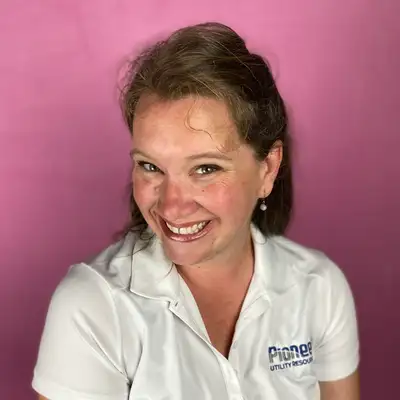
StoryConnect features interviews with marketers, communicators, CEOs and other leaders at cooperative and independent broadband companies, electric cooperatives and municipal power providers. The goal of the podcast is to help listeners discover ideas to shape their stories and connect with their customers. It is produced by Pioneer Utility Resources.
Intro:
A production of Pioneer Utility Resources.
StoryConnect, helping communicators discover ideas to shape their
stories and connect with their customers.
Megan McKoy-Noe:
How can a plan improve your writing style?
That's what we'll be talking about on this episode of The
StoryConnect Podcast.
Hi, I'm your host, Megan McKoy-Noe,
one of the storytellers at Pioneer Utility Resources,
and I am joined by the delightful Christina Sawyer.
She's the internal communication specialist at Mount Wheeler
Power in Nevada,
and someone that I have been friends with for,
oh, just a few decades now.
We go way back, and I have always loved the way that you approach
stories,
and we had a great conversation yesterday.
We are here in Whitefish, Montana,
at the NWPPA Northwest Innovations and Communications Conference,
and we had a conversation that I wanted to share here.
So thank you so much for joining me today.
Christina Sawyer:
Absolutely. Thank you for inviting me.
Megan McKoy-Noe:
Now, Christina, you've been using Ruralite Magazine to help tell
stories for a long time.
Christina Sawyer:
About 20 years now.
Megan McKoy-Noe:
Yes, and this year, you did something a little different.
Talk to me about how you decided to use the new tool everyone's
talking about,
not so new anymore, artificial intelligence to help make your
writing better.
Christina Sawyer:
So for decades now, my original editor was Mike Teegarden.
Megan McKoy-Noe:
Oh, we love Mike.
Christina Sawyer:
I loved Mike, and he tried diligently to convince me to come up
with a plan every single
year to start developing stories very early on.
And of course, as a co-op communicator,
I wear many, many hats, and finding the time
to schedule out my years worth of stories was completely
impossible,
and I would tell him that year after year,
I was very much a fly by the seat of my pants story writer.
And so, I had been introduced to AI,
the previous year.
I'm way behind.
Megan McKoy-Noe:
No, no, we're all behind when it comes to artificial
intelligence.
Christina Sawyer:
And so I was trying to figure out how I could use this tool,
and I was just kind of playing around with it and thought,
let's throw out a prompt asking about story ideas and what
industry topics are up and coming
or interesting. And so, I threw that prompt in and –
Megan McKoy-Noe:
Were you using ChatGPT?
Christina Sawyer:
I chose ChatGPT for that process.
Previous to that, I was using Jasper,
just kind of personally using that.
But I threw it into ChatGPT, and it came up with 12 topic ideas.
And of course, instantly I threw out a few,
Megan McKoy-Noe:
Of course.
Christina Sawyer:
But as I was reading them, they kind of started,
you know, the light bulbs started going off for me,
and I was like, "Oh, yeah, okay,
I could do that."
Megan McKoy-Noe:
What were some of the ideas that it was suggesting?
Christina Sawyer:
Well, of course one of them that came up was EV integration,
right?
And I was like.
Megan McKoy-Noe:
Electric vehicle integrations for those – I'm all about getting
rid of acronyms,
you know.
Christina Sawyer:
There are so many acronyms in our industry.
Megan McKoy-Noe:
There's too many. Okay.
Christina Sawyer:
So I was like, okay, we are very,
very rural Nevada, and we do not have a lot of charging stations.
We do not have a great deal of EV cars even in our service
territory.
I was like, how can I write a story about that?
But that seed had been planted. So I became very aware of what
cars were in our
area, who was driving them, and started having conversations
about their challenges.
And that story started to develop for me ahead of time,
which was something that I hadn't,
you know, really ever had that opportunity to do before.
And I will say that I feel like I have written some of my best
stories this year because of inspiration that allowed me the
opportunity to think ahead about those stories.
Megan McKoy-Noe:
Isn't that funny, though? And that's what we were talking about
yesterday. It's just taking a minute.
And if you know kind of an idea,
and you're not going to take all 12 ideas from ChatGPT,
but if you know kind of where you're going and a few ideas,
then you can take the time to think about
them, to research them and not be as stressed.
Christina Sawyer:
Exactly.
Megan McKoy-Noe:
When deadlines come.
Christina Sawyer:
Exactly. And, you know, for that particular story during that
thought process,
I learned that the reason that those long stretches through,
you know,
rural Nevada did not have charging stations was because most of
that land was owned by BLM and the
permitting process.
Megan McKoy-Noe:
The Bureau of Land Management?
Christina Sawyer:
Yes. And in order to even introduce a solar charging station on
their land
is decades of bureaucracy and paperwork.
And so, that had never occurred to me.
It was just like we're underserved. Well,
we're underserved for a reason.
And so that was a deep part of that story that no one had ever
talked about before,
so I was really pleased with having that aspect.
Megan McKoy-Noe:
I love that.
Christina Sawyer:
Yes. And a second story idea that it threw out was about legacy,
right.
The legacy of your co-op. And I thought to myself,
and I have for years,
I'm like, all of those people, those founding fathers are long
gone.
Megan McKoy-Noe:
You remember them fondly.
Christina Sawyer:
Exactly. But their families have bits and pieces of their story.
But it's really difficult to write a feature story about bits and
pieces that a family may or may not remember correctly.
So normally I would have completely dismissed that story idea.
And ironically, we had selected four students to attend our youth
leadership camp that
year. And the last name of one of our students was Baker,
which we have a substation named after
a founding member of Mount Wheeler Power,
the Baker substation.
And so I started putting the dots together and talking to this
young man early,
gosh, at least 15, maybe 20 years ago,
Ruralite helped me reproduce a book that was
written called "Let There Be Light," and it was written by
Jeanette Griggs.
She wrote our history, our story.
And during a conversation traveling to and from these youth
events,
I'm talking to Matthew Baker. It was his great grandmother.
And so that conversation led to a fantastic story,
and it wasn't so much the legacy of Mount
Wheeler Power, but their legacy,
his legacy.
Absolutely. And so he was able to share with me stories.
His actual grandfather was one of the founding members sitting
around the dining room table sharing those stories.
And he wants to become he's off to college now,
and he wants to become an electrical engineer and bring nuclear
energy to space, right. The story became full circle,
and it was talking.
And we provided a scholarship to him.
And he is now the Nevada representative for NREA Youth
Conference.
It just really developed into a beautiful story that I had every
other year,
just completely dismissed as an option.
So I was glad that agai, seed was planted,
look at it a little bit differently.
Megan McKoy-Noe:
I love that so much, Christina. It's just so cool.
So one of the things that we talked about is you're thinking
ahead,
you're doing more research, and you were talking,
you mentioned electric vehicle charging,
which in the infrastructure, which is something a lot of folks
talk about. We all approach legacy storytelling in our own ways
because we have different roots in our communities.
But some of the other story ideas that you had have become
stories you have researched and written and then
been able to share.
Christina Sawyer:
Absolutely.
Megan McKoy-Noe:
And I thought that was really interesting.
You said, and I doubt you a little bit,
because I have known you and have seen your writing for a while,
but you said you saw your writing shift.
So not just the types of stories that you're finding,
but your writing started to become stronger and more people are
asking to use your stories, which is something that Pioneer does
through Ruralite Magazine,
where we have so many different editions,
and we choose writing to spotlight that we think other folks
might enjoy and might be able to use.
We call it our share package, and that goes out to folks that use
Ruralite,
our members. And you said something interesting yesterday,
you said,
"I started seeing my work in the share package."
Christina Sawyer:
It's funny because when the share package,
when I first was introduced to the share package, I was always
looking for people I knew. I was looking for you.
I was looking for Theresa Phillips.
I was looking for Nikki Dunn.
Megan McKoy-Noe:
In Florida.
Christina Sawyer:
Yes, in Florida, I was looking for their names because I had met
them at conferences previously,
and they were, you know, I'd met them through networking and
great colleagues and mentors for me.
So I was looking for their work,
and I was getting inspired by their work.
And all of a sudden I would, you know,
I'm very eager to see the share package and get it.
I open it up, and I'm like, "Oh,
oh, it's me."
Megan McKoy-Noe:
"It's me. Yay!"
Christina Sawyer:
And those same colleagues. You know,
Theresa was sending me text messages,
"Hey, I saw you in the share package!" And that was that was such
a thrill for me.
It's such a acknowledgment of my work and an acknowledgment of
success for me.
And it's very personal. You know,
there's a very small circle that see that share package and that
see that. So it's not like it's a,
you know, a recognition outside of my peers.
But it is very meaningful to me.
And when I started seeing that,
I stopped doubting myself as much as I had previously.
I started having those moments where,
okay, maybe I do know what I'm doing.
Megan McKoy-Noe:
Well, you gave yourself time.
Christina Sawyer:
Yes.
Megan McKoy-Noe:
And I think that's the big thing that I wanted to encourage folks
to do. You know, we've got the 2026 content planner that's coming
out in November, and the entire focus of that is to give yourself
time,
whether you're using a tool like AI,
or you're just getting the calendar out and looking and charting
out what key messages you want to get out next year and when you
can kind of share that.
Just taking that step to take the guesswork out of your
storytelling and to have an idea
of where you're going instead of sitting in neutral on the
highway wondering.
Christina Sawyer:
And then going, "Oh, the light's been green for 20 minutes,
right?
I need to get this story in. My editors are looking at me."
Megan McKoy-Noe:
You put the gas down, and then you run into a tree.
Christina Sawyer:
Exactly, exactly. So, you know,
little few little key things, right?
There was a prompt or a suggestion from AI that said,
you know, what about summer activities?
And so that prompted me clear back in February to create some
social media posts asking people,
what does the end of summer look like for you?
And gave them plenty of time to respond to those questions.
Rather than me, "I got a deadline in,
you know, two days.
Who can tell me what's going on this summer?" Right.
Instead, I had those those months leading up to that.
Again, a story about space heater safety.
We all write them. We write them,
you know, every single year.
Megan McKoy-Noe:
It's such a joy to write.
Christina Sawyer:
But one of the AI, you know, prompts that popped up for me was
February is Burn Awareness month.
Megan McKoy-Noe:
Oh.
Christina Sawyer:
And so, "Hey, let's put this safety,
let's combine those two, and let's write it for February."
Instead of, you know, any other time during the year.
It's a perfect opportunity to tie it into something else.
Megan McKoy-Noe:
I love that.
Christina Sawyer:
Things like that I had never had the opportunity to do before
because again,
like I said, I am a one man show.
Everything was deadline driven.
Megan McKoy-Noe:
One woman show.
Christina Sawyer:
Sorry.
Megan McKoy-Noe:
No, no.
Christina Sawyer:
Absolutely, you know, driven by deadline.
And it's been very relaxing for me.
Megan McKoy-Noe:
I like that.
Christina Sawyer:
To be able to share those stories in a calm and planned
scenario. And I keep thinking back,
I'm like, "Oh, Mike was right," and I hope he doesn't hear me say
that because he –
Megan McKoy-Noe:
Now see, I was going to send him this episode.
Christina Sawyer:
Because exactly what he had always said.
He knew he was forecasting that for me.
You know, plan plan, plan.
Megan McKoy-Noe:
Plan. It's a simple thing, but giving yourself time and using
tools as they're developing now.
Christina Sawyer:
Yes.
Megan McKoy-Noe:
To plan more effectively.
Christina Sawyer:
Right.
Megan McKoy-Noe:
It's a game changer.
Christina Sawyer:
And I found AI to be really useful as far as an outline,
because a lot of times those story ideas are planted,
and then you're like, okay, where do I begin? Where do I end? Who
do I want to interview?
And putting that prompt into an AI program,
I was able to kind of get an
outline. Oh, yes, I should do some interviews.
And these are the people I should interview. Great idea.
Oh, I didn't think about that angle.
That was very interesting. Let's go that direction.
So all of those, that new tool that everybody's either afraid of
or doesn't want to
overuse because I think it's a really slippery slope when you're
talking about writing stories using AI,
you know,
Megan McKoy-Noe:
And that's not what you're talking about.
Christina Sawyer:
That's not what I'm talking about. I'm talking about inspiration,
ideas, outlines. I'm talking about opportunities to open up my
mind to the things that are important
in the industry, because keeping track of all of the new
technologies and the new,
you know, everything that's going on in our industry is a lot.
Megan McKoy-Noe:
It's a lot. Yeah. So getting a little help where you can.
Christina Sawyer:
Absolutely.
Megan McKoy-Noe:
It's a beautiful thing.
Christina Sawyer:
Absolutely.
Megan McKoy-Noe:
I love it. Well, I could talk to you,
and we did yesterday we talked for a long time about this,
all day. But let's just wrap this up with a little inspiration
for folks.
If another communicator wants to kind of ease their blank page
stress if they are stuck on the highway in neutral,
not sure where to go, right? And they want to strengthen their
writing and allow themselves time to strengthen their writing and
not be rushed. How should they start?
Christina Sawyer:
You know, I think right now September is an awesome month to
start prepping for next year.
Obviously, our deadlines are all coming up on the end of the
year.
Megan McKoy-Noe:
Yeah, we are.
Christina Sawyer:
So right now is an ideal time, and it's all about a really strong
prompt.
You need to ask the right questions.
Megan McKoy-Noe:
Okay.
Christina Sawyer:
Without being leading.
Megan McKoy-Noe:
Yeah.
Christina Sawyer:
So, my prompts were "I write feature stories of
800 plus words that really promote our community."
Megan McKoy-Noe:
So did you give it examples of feature stories that you've
already published in Ruralite?
Christina Sawyer:
I did not, but I did – I was more vague there just because I
wanted a broad selection of ideas,
and I didn't want to guide it too much.
So I left it pretty broad. I want a feature story.
This is how long I'm thinking that I want.
Can you share with me 12 ideas?
Megan McKoy-Noe:
Did you specify the audience?
Christina Sawyer:
Yes, I did, I did. I specified my audience,
my reading level, my length of the
story that I wanted to write. And because I have a relationship
with my chatbot,
you know, they know I'm from a very rural community that serves
rural Nevada,
eastern rural Nevada and Utah. And so it knew that kind of
information.
And I said, give me 12 prompts. I got those 12 prompts.
I read through them quickly. I dismissed some.
I went back to chat and said, "Hey,
these aren't relevant to our area.
Let's take those out."
Megan McKoy-Noe:
Do better.
Christina Sawyer:
Do better. And then give me three more to replace them.
So I built that list, and I did that for feature stories,
and I did that for industry stories because I tried to use one of
each for Mike.
Megan McKoy-Noe:
That makes sense, yeah.
Christina Sawyer:
And that created my list. And once I had my list,
I moved it, you know,
to paper and pencil, which is my favorite medium.
Megan McKoy-Noe:
Me too.
Christina Sawyer:
And I started brainstorming. And then that gave me an opportunity
to start developing stories.
Now, I often went back to chat after that list was created,
and I'd go back and say,
"Okay, I'm really liking this topic.
Let's create an outline together,
you know?
And where do I start? What are suggestions?
Who should I be interviewing for this type of story?
And got some ideas there that led me,
you know, on my second attempt to to get those stories.
But that kickstart, that kickstart was everything for me this
year,
and I've just been so much more relaxed.
I think my editor, Nina, who is awesome and never yells at me,
but I think she –.
Megan McKoy-Noe:
The yelling was with love.
Christina Sawyer:
Always with love and passion. Yes.
Get that story to me. But I think that,
you know, I know she appreciates,
my early submissions, and I say that now,
but I do not have November's in yet.
They're written, but don't panic,
Nina.
Megan McKoy-Noe:
It's okay. It's going to be fun.
Christina Sawyer:
But they are, you know, everybody's feeling more relaxed,
I think,
because of this process.
Megan McKoy-Noe:
Planning does that. Planning is a beautiful,
beautiful thing. Well,
thank you for sharing your planning process and your prompts with
utility Pioneers.
She is Christina Sawyer at Mount Wheeler Power,
and I'm your host,
Megan McKoy-Noe at Pioneer Utility Resources.
And until we talk again, keep telling your story.
Outro:
StoryConnect is produced by Pioneer Utility Resources,
a communications cooperative that is built to share your story.