Subscribe
Share
Share
Embed
What happens when your voice no longer matches your gender identity? Join host Jess Lupini as she explores the strange and tangled relationship between gender and voice. Through interviews with linguists, trans people, voice training experts, doctors, surgeons, storytellers, and much more, The Words Don't Fit The Picture will take you on a journey through what we know — and what we've still yet to fully understand — about how our voices and gender identities affect one another.
Ivan Podcast Cut
===
Show Intro
---
[00:00:00] Hey everybody. Jess here. I'm a science communicator, musician, comedian, and filmmaker living in Vancouver on the unceded territory of the Musqueam, Squamish, and Sleight Tooth Nations.
[00:00:11] I decided to make this show because I'm also a trans woman. When I came out, I knew transitioning would be hard, but I, I don't think I quite realized just how complicated the relationship between voice and gender really is. Part of how I process my own thoughts and feelings is by learning as much as I possibly can.
[00:00:29] So I decided to bring you along on the journey with me as I searched for answers to some big questions about how we speak and the way it's tangled up in our identities. If you like moving pictures along with your words, you can find the video version of this episode on YouTube. Let's jump in.
[00:00:46] Hey everybody. This is the words don't fit the picture. The show where we untangle the strange and fascinating relationship between gender, voice, and identity. When it comes to the topic of voice and gender, it can be easy to get lost in the weeds of the gender binary. Talking about what makes a voice sound more masculine or more feminine to our ears, we tend to think in extremes, but that thinking often overlooks everything in the middle.
[00:01:21] In this case. That includes non-binary, two-spirit people and other gender expressions that just don't fall into one of those nodes on either end. Um, and they all have voices too.
Introduction to Ivan Coyote
---
[00:01:30] So I'm here today with Ivan Coyote, who is an incredible writer, storyteller, and performer. They've written novels, made films, produced live shows, and albums of music and storytelling.
[00:01:40] I read their book of letters, care of around the time that I came out myself. Um, it was a period of time when the world felt really scary to me and my future, very uncertain. But knowing that there were kind, empathetic queer people out there and reading about the breadth of their experiences, both good and bad, helped me take those first steps.
[00:01:59] Um, at the time, I wondered what Ivan might've written back to me had I sent them an email in those early scary months. So I'm really excited to get to speak with them today. Welcome, Ivan.
[00:02:09] Hey, Jess. How's it going? Thanks for having me on.
[00:02:12] It is going great. I'm so glad we finally got to be here to talk.
[00:02:15] I know it's been a little bit of a, it's been a while.
[00:02:18] It's been a long time coming and there's like so much I wanna talk to you about. Um,
[00:02:21] okay, let's do
[00:02:22] it. I'm, I'm really excited. Okay.
Favorite Voices and Icons
---
[00:02:23] So, uh, a question that I wanna ask off the top, um, there's obviously no such thing as like a voice that's good or bad, but I'm wondering, do you have a favorite voice? So like a, a singer or a public speaker, like anybody out there whose voice you just really love the sound of
[00:02:39] Oh, many.
[00:02:40] Yeah, many. Um, oh, Chantel, she's, uh, sometimes a C, B, C. She's like a, I would say like, I don't know. I have never had that conversation with her, but she's like, she reads to me as kind of butch. She might be heterosexual. I don't, I've never, like I said on CBC news, Chantel, uh, I like her voice. Um. Like singer Wise?
[00:03:07] Oh, there's so many. But, um, uh, Farin, it um, was one of my like early, like I found a lot of comfort in her. Quite deep voice. Mm-hmm. Um. Yeah, I'm not sure, like just speaking voice or singing voice. Right. Because, you know, I love Chrissy Hines. Oh God, man. If I could sing like Chrissy Hines be No, it would be, yeah.
[00:03:35] Um, uh, there's so many, like one of the things I love about the seven, the music of the seventies and the, well, Joni Mitchell, I love her voice, but Oh yeah. For very different reasons. Right. I'm trying to think of male voices that I love. I love some of those like old school, like super uber deep, like radio, you know this, you're coming to, you know, um, a couple of movie announcers, although there's one guy who's just like, dude, you've done enough movie trailers, like.
[00:04:04] Step aside,
[00:04:05] the inner a world guy, right?
[00:04:07] Yeah, yeah, yeah,
[00:04:09] yeah. In a world.
[00:04:10] In a world. Well, true, true. Yeah. So there's so many, like I love Prince's voice. I love the vocal range of him. Uh, you know, Aretha Franklin, I remember her getting somewhere, hearing an interview, and the interviewer was like. It's very earnest and I was like, so I've heard, tell that you, your vocal range is four octaves Ms.
[00:04:29] Franklin. Like, is that, is that true? And um, I think it might've been even on video. 'cause I remember her face, although I could've invented that 'cause she was like five. She has a VCA range of five octaves. That's wild. She's so baller how she said it too, like yeah. Four. That's pretty good. Five. No big
[00:04:52] deal.
[00:04:52] Yeah. And uh. Yeah, I love her voice.
[00:04:55] That's so great. I, you know, I, I've asked everyone I've interviewed so far this question, and you have by far, like the most answers, which I just love, like, so many different people were like, I love this and I love this. Let's talk a little bit about like, I guess voices and, and how they make us feel.
[00:05:09] So maybe just start off, what is your relationship with your voice like?
[00:05:15] Oh, well, I use it for work. I use it for living. Um, you know, it's a big part of my. Tools for, I'm a storyteller and a, like a li a live performer. And I sing sometimes and, um, talk a lot. I see I've already probably noticed it's pretty important to me, uh, for work-wise.
[00:05:38] It's also like, I don't know where I actually sit in the range of it all. Like I think I have a alto ish voice. I don't love those. Those categories 'cause they're very gendered unto themselves. I don't know if you've seen that, uh, video going around on Instagram of the like soprano soloist who's like super obviously non-binary.
[00:06:04] Wearing like rocking like a hot butch floral button down shirt and like, like the brand new fade and, and then just killing it like high soprano with a big orchestra. It's like. Really cool. Um, and right now I'm singing in a choir that I helped to start, um, up at Yukon University. It's like a drop-in choir for faculty and staff and students.
[00:06:31] So it's very range, it's very, um, it's very drop-ins, pretty casual. Um, but the choir conductor's awesome. Erica Ma. Erika d ma, uh, MAH. DEE if you wanna check out her work. She's a great musician too, and she's got killer pitch, but she doesn't gender any of it. She's like lows, mids, highs, and people kind of self-select and, and it's amazing because we've got a guy who's, to my knowledge, very cisgender male.
[00:07:04] Uh, father of three kids, uh, you know, uh, David. And, uh, he's got a very natural, beautiful, supremely intune falsetto. And, um, so he sings with the highs when we are, when we're low on highs, if you know what I mean. Low on high. Absolutely. But I really like, I really like that, you know, and I can sing, uh, a little bit.
[00:07:27] I can s if I'm not. I'm not as good at it, like pitch wise and it's not my natural range, but I, you know, if I practice the tracks, I can sing the high parts often. And it's really interesting 'cause there's like people who visually you would go, oh, well they're, they're, you know, uh, female presenting feminine, presenting F folks and they're over singing in the, with the lows and they're doing a great job.
[00:07:54] So just even like expanding the language that we use. I think enables everybody, regardless of their gender identity, to find a better place for them to sing. What a great thing is that, like, just to find a comfortable place to sing. 'cause often the low parts are a little bit simpler too, and they're like, they're, they function as base notes, right?
[00:08:15] So, mm-hmm. So they'll, they're just sometimes drones. So for somebody who'd, you know. Is just getting into singing might be really easy, easier for them or more comfort comfortable for them to, you know.
Voice as a Tell
---
[00:08:28] So anyway, um, and then I also wanted to say, I'm having a thing right now in my throat. Uh, I have a, it's called a parathyroid.
[00:08:38] Adenoma. Um, it's a, it's a tumor, but it's not cancer, but it's on my parathyroid gland. And so. Um, it's, it's affecting my, I have to clear my throat a lot. I feel like it's making my range a bit, uh, smaller, but I have to have an operation and they have to cut my, I have to cut my throat. They said maximum two inches.
[00:09:06] Oh my gosh.
[00:09:06] Then, then he also said, you'll have a scar, but we'll, we'll, it, we'll hide it in the. Already existing wrinkle in your neck, which I think is supposed to be comforting. I dunno. Anyway, so, and uh, and there's a slim chance, although I've got a very skilled surgeon, there's a slim chance because it, the parathyroid, uh, um, glance, uh, are very close to and are sometimes entwined in your vocal cord nerve.
[00:09:38] Mm-hmm. So I could have my voice changed. Or stretched, which I think would make it lower. By my physics and um, or I could lose my voice, but I, I have to get rid of this thing 'cause it can have long-term health effects on multiple things like bone density and kidney health and all kinds of stuff. So, yeah.
[00:09:59] So I've been pondering, it's funny that we should do this right now 'cause I'm literally, the phone could ring from the endocrinologist referring me right now. He's got all my blood work and stuff like that and my last round of tests and, uh, yeah. So. What else did I wanna say? 'cause I've been thinking about this.
[00:10:17] Yeah.
[00:10:17] Um, my voice is often not so much anymore 'cause I think aging is making me look less like a teenage boy and more like an old woman. And, uh, just things like hips and stuff like that, you know, and maybe visibility of queer people. A little bit so people might be able to easy, more easily spot kind of a trans masculine or um, uh, mask of center, uh, female assigned person a little easier.
[00:10:52] Maybe it's the gray hair. Maybe it's that I just don't give a fuck anymore and I wear pink all the time 'cause I've always liked it. Um, I don't know what it is, but, um, I feel like I get clocked less as a, as a. As a, just passing as a man, although a, you know, very pretty man, but, uh, just kidding. I get, I, I don't pass like I used to and I don't, and I know that's problematic language, but, um, or can be problematic for some.
[00:11:22] But I get, people often see me as different than they used to, maybe 15, even 15 years ago. And, uh, but my experience growing up pretty much being a. Masculine of center presenting person my entire life since I was a, from what I can tell, like one or two years old, you know, I always like, I. The pictures of me when I was a kid are wearing my dad's boots, you know, buck naked from the waist up.
[00:11:52] Um, you know, just like all the little girls in their street, all dressed in their dresses. I'm wearing like, um, red and black, red and black rubber boots and bell bottoms and like my. Davey Crockett friend, buckskin leather jacket, and they all have like their little backpacks. And I have a briefcase, like I'm five years old and I won't stand with the girls, and I'm very angry about having to get my picture taken at all.
[00:12:17] Like it's, this has been my life, right? But my voice has always been my tell, like in my most, in my, in the period of my life, which I would say be maybe 20 to 40 years old. When I was most often, just would sort of be able to just look like a white dude, just look like a kind of a shaven, close shaven white dude wearing a shirt and tie.
[00:12:45] Um, you know, when I would get, and I would get the most hassles if I went into women's spaces and uh, and I would often go into men's spaces and be completely like nobody would give me a second look. Mm-hmm. Unless I talked. Mm-hmm.
[00:13:02] Right.
[00:13:02] The voice was always my tell. Um, so yeah. Um, I learned to drop my voice like outta safety reasons when I needed to, you know, or just hardly talk at all.
[00:13:17] Just be like. You know, I'm just a dude who has to, for some reason sit down to pee in the men's washroom and just don't make eye contact and don't talk and or just be like, yo, sorry. Yeah, hey, you know, or do whatever, like affect whatever, kinda, I don't know if this is making any sense at all, but
[00:13:35] No, it makes, it makes total sense and I mean, in so many ways that's the inverse of like what I experience a lot of the time.
[00:13:41] Right. Which is. I mean, I'm, I'm tall and that often makes me stick out a little bit in a crowd. But, um, much of the time it's not until I speak that I, I get kind of a, a like a look of, oh, that's not what I expected necessarily from people. And washrooms can have that effect as well. And so it's, it's interesting to hear you talk about that other side of things.
[00:14:02] You described how your voice used to feel like a tell. Um, do you feel like you experienced dysphoria around your voice? Um, or did it feel more like a frustration that your voice was in some way revealing something you didn't want people to know?
[00:14:18] Not neither, actually, in a way, like it was my tell, so I had to be, if I was in a place where I felt unsafe, I would be conscious of it being a tell.
[00:14:29] But like, that's on them, right?
[00:14:33] Mm-hmm.
[00:14:33] Like, I feel like I've worked really hard in my life too. To try to make space for bodies like mine, for people like me for voice. You know, I just remember one time, uh, like my friend was running some, she's like an agent, like a talent agent. We're like, for film and television and stuff like that.
[00:14:56] We started talking about whether or not I could, um, um, audition for this. Like BC local fruit, ironically like, like eat local fruit or something like that. And she was like, but you have kind of a trans voice. And I was like, I don't think I have a trans, I don't think I have a trans voice. She's cisgender, butch woman, I think.
[00:15:24] Mm-hmm. If I, I'm not sure how she would identify right now, but I mean, the last time I checked and, um. And I'd never been really told that I had a trans voice before. But, um, but I don't know like how, I don't know how people hear or what they see or how it affects. 'cause in a way, your voice is your tell and my voice was, is my tell.
[00:15:47] So it's sort of opposite, but sort of not when you really think about it. I don't know.
[00:15:53] I guess that makes me think. The, the idea of a trans voice in and of itself, like voices are, voices like where there's a huge variety of voices.
[00:16:02] Yeah.
[00:16:02] And pitch and volume and sound and accent and all these other things and vocabulary, um, and speech patterns.
[00:16:09] But until you pair that voice with an image, I feel like it's just a voice. And so. I, I guess I'm, I'm wondering what you think, like, do you think that there is a such thing as like a non-binary voice or a trans voice when, when you divorce the sound from the picture?
[00:16:26] I don't know. I know that, I know that they're very like, intrinsically connected.
[00:16:30] I also know that, um, misogyny and homophobia and transphobia run so deep in us. That I know lots of gay men who have affected that there are cisgendered gay men, but they, or not even gay, like cisgender, more feminine presenting. Like, I love that. We're getting into these nuances now, right? Mm-hmm. Because we, we equate a man, a cisgender man with a high voice.
[00:16:57] We, everybody will call the first thing, you know, the first thing that they're, that they're gonna call him, right? Mm-hmm. And, uh, on the school yard. And so the. Like how do we separate from us being, and I use this word intentionally, violently forced into gender boxes and every kind of gender presentation from, sorry, I'm not looking at the camera, I'm looking at you.
[00:17:19] Oh, it's okay. Um, how do we differentiate between how we developed our natural speaking, natural speaking voices versus, you know, those of us who didn't present as gender conforming? Literally having like in assigned male like, uh, folks, um, but more feminine presenting or whatever. Like I know lots of men who grew up deepening their voice, you know, so that they wouldn't get the shit kicked out of them on a, on a, on a kindergarten or a grade two playground.
[00:17:59] Like, so it's hard to know, like, um. Although I just heard my voice crack there. Uh, well, you know, it's a, it's stressful times to ponder all this heading into what's surely gonna be another four years. And, you know, Trump, Trump shot in everyone's pool in 2016. And mm-hmm. And even going back to a Democratic government for four years, um, for whatever the, you know, we could get into that, but we're, let's not.
[00:18:32] And, uh, yeah. Um, for four years, didn't we, we didn't magically step back to 2016 in terms of mm-hmm. Trans rights or like vis tra like, you know, hatred and transphobia. So, and like, you know, even, even cisgendered feminine presenting women, if they have a very high vocal range, they receive a kind of misogyny.
[00:18:55] Like I have a friend, I'm not gonna say her name, but I have a friend who has, she's super smart and she's, she's ki uh, she's ki she has killer technical skills. She designs websites, she's got a, a math brain. She's, she does a lot of financial stuff for in, uh, in her work. Um, but she's got a very, very high, almost childlike quality to her voice.
[00:19:19] Mm-hmm. And I see the way people talk to her and it's so misogynist and, um, you know, so I think this, I don't know, I think this affects all of us, this genderizing of voices. Um, or, or attaching like, uh. Expectations of behavior on people based on, you know, how all this goes together. I'm not sure if I answered your question.
[00:19:48] No, I think you did. I mean, I, I. I, I do think you're onto something there, in that we're becoming certainly more aware as a society of the ways that we make assumptions about people based on how they look and trying to unlearn some of those things that we've been taught.
[00:20:04] Mm-hmm.
[00:20:05] Culturally and familially and all of these ways throughout the years.
[00:20:09] But I, I do think that the conversations around voice are, are a little bit different and a little bit newer. Um, and maybe people are a little bit less aware of the ways that. They treat people differently based on the sounds of their voice.
[00:20:22] Yeah, I know that. Um, like whenever I have to like call the, so I've had several times, um, um, there's just a raven right outside doing a Raven thing.
[00:20:34] If you hear already walking, it's, they're very vocal. What's he doing? I
[00:20:39] love Ravens.
[00:20:40] Yeah. He might be trying to get at some. Stew that I have freezing on the, anyway, um, I know that I've several times been clocked by like the bank when I call because I don't sound like an Ivan to them.
[00:20:58] Mm.
[00:20:58] But that's my legal name.
[00:21:00] I know lots of trans women who have been like, uh, I'm just thinking of a friend of mine who was traveling in Egypt and her credit card got flagged. Um. Right by, uh, because she wasn't, she doesn't, it was an unusual spending pattern for her. Mm-hmm. And so she had to call, I don't know, I think it was, I don't remember which bank it was in Canada, and they decided that she didn't sound like her name and locked her right out.
[00:21:29] And, uh, oh my
[00:21:30] gosh.
[00:21:30] Uh, and so she was stuck in, in Egypt, like waiting. She had to, I think she had to get someone to send her some, you know, while they sorted this out. I, I know the banks have done a little bit of work around this, and you can do the voice recognition thing and, and have that as your, as your, uh, security pattern, as part of your security profile pattern.
[00:21:50] So there's been some work done on this, but I know that I must have a more. So-called feminine sounding voice than I think that I do because mm-hmm. Often people will be like, can I speak to Mr. Ivan Coyote please? And they've just made an assumption based on my name. And then I'll say, yeah, speaking, and they're like, oh, sorry, ma'am.
[00:22:12] And, uh, I get that all the time too, like getting on planes and everything like that. They, they take the extra double take looking at me and you'd like to get all haughty with them and go like, you're not allowed to, but they actually are allowed to discriminate against you if they don't think that your ID matches your name or that.
[00:22:29] Like they, so I just, you know, when it comes to, I just try to tone down the attitude at any time in an airport. 'cause I just wanna get, I'm usually going to talk about trans issues, you know, so ironically, yeah, I had this guy one time in Calgary airport, uh, Kazagar. Um, you know, there's pink button, blue button.
[00:22:53] They look at it. And they just make a, they don't check your id, they just like make a, you know, and then they press the button, you walk through the thing and there's all these, the, it's a form of a CAT scan, I believe, or an MRI? No, it's an MRI And uh, um. And it does this kind of complicated series of algorithms on you.
[00:23:11] And it always tells me that I'm missing a dangling partal. And, uh, I don't have enough fatty deposits up here for the pink button. And, uh, and I got a little too much junk in the trunk for the blue button and my, like, my thighs are not the right length for. Like, there's all these different co-factors, eh, and so I just light those things up, like a pink and blue Christmas tree, and I always get patted down.
[00:23:33] So this dude Pat, this is before I changed my name and, uh, I legally, and so he's, I, I flag all the things and he's pa and then he's, then he's forced with like, oh God, you know. Boarding pass. They don't look at your id, but he's like, who do I get to pat this person down? Because you technically, you're allowed to have a
[00:23:53] Yep.
[00:23:54] A person of your gender, right? And so good luck. That's what I always say, like, good luck. You're in Calgary and it's four 30 in the morning. Like, I dare you to find somebody of my same gender. Like would that I could. And uh, and so, uh, he said, um. I said, uh, I'm trance. So, uh, um, you know, you pick, I don't like, you know, just pick somebody who's respectful.
[00:24:23] I don't mm-hmm. Need to be patted down by somebody of my, like, you know, whatever. And he goes, yeah. I was just at the Calgary International Writers' Festival and there was, there was one of the artists, one of the writers there was like that Ivan Coyote ever heard of them, and I was like. Or I think he probably said ever heard him back then.
[00:24:42] And I said, um, because I changed my name about 10 year, 10 years ago. But, uh, I said, yeah, that, that's me. Right? And then I see that guy, he's a volunteer at every time time I go to Calgary International. Uh. Writer's festival, he's always like working the bar or like in the hospitality room or driving the shuttle or whatever.
[00:25:03] He's like a long-term dedicated and he always, and he loves to tell that story too, about the time he patted me down because he had looked at my boarding pass, but it was in my dead name. Right. So,
[00:25:14] oh my gosh.
[00:25:15] Anyway,
[00:25:15] yeah,
[00:25:16] I don't know what this has to do with voice, but
[00:25:18] No, it's, it's so fascinating and, and I mean, I do have to ask, was it a respectful patdown?
[00:25:24] Oh yeah, he was, yeah, he's an, I can't, I wish I could remember his name. That's the other thing too, is try to go through menopause. I, I went on a, I went on a, can I swear on this?
[00:25:36] Uh, no unfor, unfortunately.
[00:25:38] I went on a stupid bleepy bleep, bleep, bleep Facebook support group for menopause. 'cause I was having like acute insomnia and they kicked me out.
[00:25:50] Based on my, what, what I walk is my name and my little tiny round picture, they were like, get out here. You know, we're, we're trying to have one space, not, you know, where men aren't coming in to tell us to mansplain things. And so I was like, okay, I'll leave. But,
[00:26:11] but where are you supposed to go?
[00:26:14] Yeah, you just gotta find other masculine presenting, uh, you know.
[00:26:20] Uh, ovary still having non-binary and or trans people that are not taking, uh, testosterone, um, that are the same age as you in the same place. In their menopausal journey. I mean, how hard could that be? Right, Jess?
[00:26:41] Yeah. Bit of a small Venn diagram by the end of the day,
[00:26:44] although I have found some, so
[00:26:47] that's good.
[00:26:47] I'm glad.
[00:26:47] Yeah.
[00:26:48] Coming back to, I guess, voice a little bit like,
[00:26:50] yeah.
[00:26:51] Uh, how often do you think about how other people perceive your speaking voice these days?
[00:27:00] Well, back to menopause for a second. You get a certain age in your life where you just don't give. You just don't, um, in the same way that you might. So I would say I spend a lot of time thinking about my own voice heading into this surgical kind of procedure and stuff like that. I hope that the surgeon will spend some time thinking about my voice, um, and then pretty much everybody else, uh, they can sort their own things out.
[00:27:30] I, they could sort their own things out and, uh. You know, I get recognized for my voice. I've had people like on the road, uh, stopping for gas in Saskatchewan and going into like the, you know, the little kiosk thing to get like a bottle of water or whatever I was buying and get my receipt. 'cause the receipt, 'cause the machine was out a, you know, paper to give you a gas receipt to write off your tax for your taxes.
[00:28:00] And somebody like some. Like some woman in her eighties in the middle of nowhere in Saskatchewan going, excuse me. But you know, I, I overheard you talking. And Are you Ivan Coyote? So, you know, that's cool. And yeah, I am. Oh, oh, I heard you on CBC or I heard I Oh, audio books. I'm doing audio books now. Hmm.
[00:28:21] Care of and ENT center. And I did a tomboy survival guide. And of course, I'm not gonna let anyone else, you know, narrate my books for me. And, um. Because they're so, like, my writing is in my voice. My voice is in my writing. My stories are in my voice. My, my voice affects my sentence structure, my pacing, you know, it's pretty important to me to, as to like what, how much time I spend thinking about what someone else thinks about
[00:28:52] my voice,
[00:28:53] unless I'm singing.
[00:28:54] Then I care. My singer friends, I like, you know, when I do playlists, I'm like very aware that, you know, some of my like heavy duty singer friends are in the audience and I'm like, Erica, the choir can, you know, that'll make me nervous. I care about that. I'm singing in tune, but like as to my identity in my voice.
[00:29:12] I would say I spend little to no time wondering about that these days. Yeah.
[00:29:17] Interesting.
[00:29:18] It's just a, it's a luxury except for safety considerations.
[00:29:22] Right.
[00:29:23] Bathrooms, you know. Then I'll be like, you know, I'm, I'm still not above, like making my friend go in and pretending I need to borrow a tampon in the highest voice I can.
[00:29:33] Like, hi, Jennifer. You know, just wondering, can I borrow a, and I don't need a tampon. I haven't needed a tampon for a while, so, sorry. Are we allowed to say tampon? Yeah,
[00:29:44] yeah, yeah.
[00:29:45] It's, is that a swear word? Just kidding.
[00:29:46] No.
Misgendering and the Cabin Question
---
[00:29:47] If, if, if that's a swear word, I don't want to be on this planet anymore around, so that, you know, that, that makes me think about a, a conversation that I had with my dad, um, while we were having lunch, um, about a month and a half ago.
[00:29:59] And he asked me, 'cause I was talking to him about doing this podcast and that I was working on it and he asked me like, you know, are you, are you gonna try and change how your voice sounds beyond. You know how it sounds now, um, and like, do you experience dysphoria around it? And I, I kind of realized as I answered him that there really were three different situations for me that felt really different and that I had different opinions towards in each one.
[00:30:22] And so I, I, I would, I'll say what those are and then I'm kind of curious whether you have a similar perspective or, or, or different, um. On one hand I have, there's the one you've already spoken to, which is the safety one, where I'm like, I wish I was able to be in situations where safety was a concern based on how my gender was perceived and be safe.
[00:30:42] So that's, that's like the obvious one I'd love to be able to do. That feels really important for so many reasons. Mm-hmm. And then there's number two, which is how others perceive my gender, purely from like a. An an identity and validation point of view where like it's frustrating to move through the world and get misgendered constantly.
[00:30:59] Um, it can, it can have a really negative effect on your, on your psyche, uh, and, and sometimes on the actual things you're experiencing. And so it would be nice to be gendered correctly when I was speaking. And then the, this third one is like if I lived in a cabin in the woods alone for the entire rest of my life, and the only other person there was my cat, how would I want my voice to sound and.
[00:31:22] I, that one I almost find the hardest to answer because it so much of identity is tied into others' perceptions of, of me. So I'm curious for you, we, you've talked about safety, um, we've talked a little bit about you not caring as much about how other people perceive you these days, which I think is really cool and really freeing, and I'm a little envious of, to be perfectly honest.
[00:31:45] Um, but I'm curious about that third one, if you lived in a cabin alone. With just an animal of your choice for the rest of your life. Um, and you could sing, you could speak, you could do whatever you wanted, but there was no one, no human ear around to hear you. How would you like your voice to sound?
[00:32:00] Okay.
[00:32:00] So first of all, if I might just speak to one thing, uh, for point number two.
[00:32:06] Yeah.
[00:32:07] Which is, um, I think there's an obvious difference that we need to speak to more. Uh, about the consequences of being misgendered as a transfeminine person versus the consequences of being misgendered. Often, not always. And like, and of course there are exceptions, but I think safety wise, back to point number one, um, I know that there's a lot more physical violence that happens to transfeminine presenting people.
[00:32:41] Um. Uh, because of, like we talked about, misogyny, transphobia, consequences for which gender box you're experimenting with, broadening all these reasons. Right? Um, so given that and looking at you, um, I find it even more disturbing and abhorrent that somebody. Would misgender you like, it's, um, I don't think it takes a rocket science scientist to, like, when we began the conversation, I, I, I, I asked, you know, which pronoun I said she and they, because.
[00:33:33] And I guess I should have said, I, I guess I should have said maybe he too, because I, like, I don't wanna make assumptions about somebody based on how they're looking, but I don't know, I'm not sure what I'm trying to say here. I people just that sometimes cis people suck so hard, you know? And we're supposed to just con, continually just what, step up and be polite and be patient, like really re really do.
[00:34:01] Mm-hmm. Uh,
[00:34:04] they're gonna override every other visual and like emotional and whatever clue to how you might identify. And, and I, I find that very, I'm sorry for that. I'm sorry for that because I, because I know that. The dangers are different for, for, and again, not exclusively, it's so hard to talk about this stuff because somebody's always gonna pipe in and say, you know, um, but I'm, I'm trying to navigate a, uh, a hard to talk about question, I think.
[00:34:39] Mm-hmm. Or hard to talk about topic and like really offer us just out of compassion for each other, like the kindness of trying to see each other. Yeah. Truly as who we are somehow, you know, like how to talk about those things. I'm not sure if I'm being very eloquent back to the cabin in the woods. So I've been in a cabin in the woods.
[00:35:02] I live in the Yukon. I've been a lot. And I was, I was in Atland for, I bought that place in, uh, little chunk of property in Atland. I bought it in 2018 and I was building a little cabin and, uh, and, um. I, I bought it anyways. It doesn't matter. But, uh, I spent a lot of time 200 kilometers away from a decent se cell signal.
[00:35:26] And uh, so I had a lot of time to ponder my own voice. Let's just say that if anything with my voice, I wish I had better pitch, pitch, but that's my ears. And that's back to singing. You know, I really am jealous of people who have perfect pitch and, uh, I don't think I would really. If anything, I wish I had more range.
[00:35:50] I wish I could speak lower than I can and, and sing higher than I can and sing lower. So I guess I just wanna be a, I just wanna have a five range, a five, five octave range like Aretha Franklin, you know, rather than, rather than change my voice as it is. I don't know. It's, it's just a, it's just a part of me.
[00:36:12] And, um, and I hate that we have to change something or feel pressure to, to conform to again, to other people's things in any way. What? So that we can take a piss and go to the swimming pool or try on a pair of pants at the bay, you know?
[00:36:28] Yeah.
[00:36:28] Sorry. And, and rant.
[00:36:30] No, it's a, it's a great ran. And I do think you handled a difficult topic eloquently, and it, it's, it's so.
[00:36:37] What you're saying resonates with me so strongly because I do feel honestly really similar about my voice in a lot of ways. Like I have been using this instrument my whole life and I've been using this voice as long as I have had it and, and it's changed a little bit over the years, but I'm really good at using it and I know how to use it and I know how other people perceive it most of the time.
[00:36:57] But when I came out, a lot of that got thrown out of whack. And people's perceptions of it when accompanied by what they were seeing did change a little bit. And so I also, I do feel this frustration of like, why do I have to recalibrate my instrument? My instrument hasn't changed. The things I'm trying to say haven't fundamentally changed.
[00:37:17] Um, but you know. It, it just, it doesn't look like a tuba anymore. So you're surprised when a, a tuba sound comes out of a trumpet? I don't know. That's a terrible analogy. I'm sorry.
[00:37:30] I think you look more like a clarinet, which I love clarinets. I've always loved clarinets. What, what instrument do I look like?
[00:37:38] What instrument do you look like?
[00:37:39] Yeah,
[00:37:40] you look like a saxophone.
[00:37:42] Perfect.
[00:37:43] Absolutely. Like
[00:37:45] a tennis
[00:37:45] sax.
[00:37:46] Which one? A tennis s sax. Sax. Okay, I'll, I'll accept
[00:37:47] versatile.
[00:37:48] Maybe if I was standing up, you'd, you'd see, you'd see a berry, which is what my instrument that I actually play. Did you know that
[00:37:54] I used to play Berry as well?
[00:37:57] What?
[00:37:57] Yeah, I played, I played a little bit of tenor and berry in, in, uh, my high school jazz band.
[00:38:01] Wow. Yeah. Started off on the alto. Then I, then I found my true, true love the berry and then, uh, tenor as well. I've literally left the alto behind in storage in Vancouver, and I've got a tenor in two berries in the basement.
[00:38:15] A low A and a low B flat. I'm rich with saxophones.
[00:38:19] What was it like coming out as a baritone saxophone player?
[00:38:22] Oh, I mean, come on. It's the best instrument in the world. Next it in the bass guitar. Like I like the low ante, like
[00:38:30] Yep.
[00:38:30] That's where I, that's where I sit in the grand scheme of the band. Yeah.
[00:38:36] That's so fun. Do you, do you think that ties is, is there any connection between your, your gender identity and that, do you think?
[00:38:43] Or
[00:38:43] are those
[00:38:43] just, I mean, you just, you just said I was a saxophone. I just said I felt that you were a B flat clarinet. So I don't know, you decide.
[00:38:51] I appreciate that. Uh, clarinet is one of the few instruments I don't have in my apartment right now, but maybe I'll have you
[00:38:55] one.
[00:38:55] Oh, really? Played poorly. Clarinets one of my least favorite instruments. Maybe it in the violin played, played perfectly. Played beautifully. It's one of the most gorgeous voices in, uh, in. You know, I mean, there's so many, like, I mean, you can't, nothing kind of touches a French horn. Actually. Nothing sort of touches a tuba, you know, in a way, I have to say, I don't think that you were ever a tuba, my friend.
[00:39:21] I don't. I just don't buy that.
[00:39:23] I appreciate it. I, uh, there was, I did, if, if we go back far enough, I did sing the super high soprano solo from Lock Lomond in my, my elementary school choir. And then I did find myself singing the sort of ba bass parts in my vocal jazz group. So I've definitely run the gamut, but,
[00:39:41] okay.
[00:39:42] So was that your, like trans moment of awareness when you sang the super high parts?
[00:39:47] I mean,
[00:39:48] partly
[00:39:48] my voi. Yeah. My voice changing was something that was really difficult for me.
[00:39:54] Ah, interesting.
[00:39:55] Yeah, I had such a hard time with it. All of the, my favorite voices growing up were, um, very like feminine sounding.
[00:40:02] Vocalists. I, I also listened to a lot of Joni Mitchell growing up. Um, I do like a lot of male vocalists, um, but they tend to be, they tend to sing higher up in their range. I grew up listening to Paul Simon and James Taylor, um, who are both, you know, they have those like,
[00:40:16] hold on.
[00:40:17] How
[00:40:17] old are you? You must have been at your parents' records.
[00:40:20] Not,
[00:40:20] yeah, I mean, I, yeah. I'm 33. And
[00:40:24] it was your parents, James Taylor, right? Or like
[00:40:26] they shared that music with me, but like, I grew to love it. I've seen Paul Simon, I, I, I think I've seen, you know, his three farewell tours or whatever, um, which was,
[00:40:35] oh, I've always wanted to,
[00:40:36] such a joy.
[00:40:37] I should have said him too.
[00:40:38] Oh. What's your favorite Paul Simon song? I know this favorite. Nothing to do with our podcast.
[00:40:44] I, okay. Favorite song is so, so, so Hard. I come back to Hearts and Bones all the time, which I know is controversial 'cause it's off his objectively, probably least commercially successful album. But it's a beautiful song.
[00:40:56] No, his least commercially successful album was, uh, songs of the Cape Cape Cape Man.
[00:41:01] Okay. That's fair.
[00:41:04] Do you know that one? I
[00:41:04] love Caman. Yeah.
[00:41:06] Oh, do you?
[00:41:06] I love Cayman.
[00:41:07] Oh my God. I
[00:41:08] do.
[00:41:08] Are we, are we cousins? What's happening here,
[00:41:14] Caman? The reason I like Caman is I discovered it late 'cause we didn't have the record growing up and so there were a couple songs from it that were on the greatest hits albums.
[00:41:21] Yeah. But
[00:41:22] yeah,
[00:41:22] because we, because I didn't really know about it. It was a surprise when I found it, like later in my life and I was like, oh my God. Bonus knew, like, knew old Paul Simon songs and so it was like an exciting thing. So,
[00:41:33] but. That whole album is a story.
[00:41:36] Yes.
[00:41:36] It's the whole story. Like right from the beginning, I learned so much about like, 'cause I went and read about the character and I read mm-hmm.
[00:41:44] About Puerto Rico and I read about like Puerto Rican immigrants to New York. Like there were so many rabbit holes.
Inside "Playlist" Stories
---
[00:41:50] Well, I mean, let's, let's talk about music because we're on music. I feel like we could talk about music in general forever, and maybe that just needs to be another call for another time. But
[00:41:57] yeah, maybe we have to do a part two because.
[00:41:59] Okay, so you must have liked playlists then if you were, if you were listening to all your parents' records.
[00:42:04] I loved playlist. It was so, it was so cool. Like, and, and so this is actually a perfect segue into talking about that. 'cause I did want to ask you about playlist. Like, okay. I, I, I, for people who are watching this, um, Ivan has put together this amazing show playlist where they go through the, the songs that I, how, you know, I shouldn't describe it.
[00:42:22] You should describe.
[00:42:23] Well, they're stories. There are 11 interlinked stories. Yeah. But they're at their core is a mention, or the story is, you know how when you hear a song, one of the things I love about songs is that like, take for instance, slip sliding Away. Okay. That's gonna, that's gonna take me back to a certain bunch of now stories 'cause it's been a song that I've listened to.
[00:42:44] Ferret Shadows on a Dime. Um, Veda Hilly. Oh, another one of my favorite voices. Veda Hilly. Um. There's so many, like, I've listened to those songs, they've been on my playlist for so many decades now that now I have, like, now I have like a whole, uh, folding, like, what do you call those folders that, uh, like they expand expandable folder of stories that belong to that song.
[00:43:11] They're all stories that are connected to a song that was on my playlist when I was a kid that if I had the better words for it, I would've called like queer coded. I would've called like any sign of trans life in my, in the seventies and eighties growing up. Right. And, um, you know, so, uh, yeah, so there's stories that I found some kind of like representation in.
[00:43:40] For good or bad, right? Because not all of them are like politically unproblematic songs. I mean, I've heard the kids take down, take a walk on the wild side and, um, uh, but for me that song was like a sign of life, a sign of a potential future. And, um, and Lou Reed, you know, he had a trans lover and, and he was out about that in the seventies.
[00:44:06] And, um. And identified still as a straight man. So to me, he was trans-affirming in his own way. He might not have, it might not be politically dissectable, you know, in 2024, um, in the same way, but. You know, when I was a kid, when I was 10 years old, when I first heard that song, you know, in 1979, it was a big deal For me.
[00:44:30] It was a big deal because Jackie was just speeding away. She thought she was James Dean for a day. Like I was like, hold the phone, cut back it up. Tell me more about just Jackie, not to mention, you know, the other queer coded characters in that song, right?
Queer Discovery in Music
---
[00:44:51] It's such a common story that queer people discover themselves in music. Like what? Why do you think that is? Is it just the lyrics? Is there more to it? Is it the voices?
[00:45:01] I don't know. I've thought about that a lot because like there's so many videos out there of the, like Super Faye, you know, grandson or somebody's nephew and that kid's probably, you know, catching shit all over the place for being.
[00:45:21] You know, not conforming to hi to his assigned gender box until he really busts it out at, at Aunt Sophia's wedding or whatever. And then there's this space made for it because it's creative or you know, and I think. I think artists, we've always been allowed, I mean, I talk about this in playlist. Why was nobody talking about boy George's hair extensions or his eyeshadow, like the, the boys I was going to school with, you know?
[00:45:49] Uh, there was a uniform, there was a certain way of being, and like there was no space outside of that except for, unless you're George Michaels. Unless you're David Bowie. You know?
[00:46:00] Mm-hmm.
[00:46:01] Unless you were a Ka lang, they were calling a dyke back then. Big time. And she, the, like, she was, she was not allowed the same freedom as say, uh, George Michaels was, or, you know, uh, and then you think about Liberace, like you think about, um, Freddie Mercury.
[00:46:23] Uh, there's something about music that expands that a little bit, that might be somewhat part of it.
[00:46:30] Mm-hmm.
[00:46:31] Um, I don't know. I secretly think that I'm gonna get in trouble. I won't say it.
[00:46:40] I secretly think that queer people and trans people have special superpowers. I'm just gonna leave it at that.
[00:46:49] I wanna know what they are.
[00:46:50] We could talk about that when we're not being recorded.
[00:46:53] Okay, sounds good.
[00:46:55] I don't want, I forward to it. I don't want them to know. Yeah,
[00:46:59] we can't let them find out.
[00:47:00] They're gonna tell the church
[00:47:02] no.
[00:47:04] We'll, uh, we'll, we'll break that down when we, like, we can compare record collections at some point and see what we've got.
[00:47:09] There's probably reasons why it's hardcore evangelical Christians don't like their kids listening to rock and roll or any kind of music, except for like, but even then it's like good luck.
[00:47:19] Like good luck. He's gonna sing. He's gonna sing like an angel. He's gonna sing like an angel to your Christian, Christian contemporary. Like there's just nothing you can do about it. Yeah, he has superpowers. So there,
[00:47:33] there it is. Cool. Like it, music, music also, I feel like has the superpower where it, it affords us this, this safety blanket around being able to express ourselves in ways that are just like not okay in society otherwise.
[00:47:46] And then, you know, you, you, you go up on a stage and you can kind of do anything. You can kind of wear anything. You can be anyone. It's really cool,
Rocky Horror and Role Models
---
[00:47:53] Frank and Ferer. The original Rocky Horror Picture Show We, yes, I think about that a lot actually. That should be a playlist. There should be a playlist song in there too.
[00:48:02] If I,
[00:48:03] yeah,
[00:48:03] there, I should pull something from Rocky Horror Picture Show, because there we all were in grade 10 at the Midnight Show in Whitehorse Yukon, you know, in 19 what? 85? You know, peak homophobia, man.
[00:48:19] Mm-hmm.
[00:48:19] Well, not peak. I mean, who wants to win that contest? But you know, like in 1985, a Whitehorse, right?
[00:48:26] Like everybody's, like, you could, you could go as Franken Ferer as for Halloween. You could be a dude in my school and go as Franken Ferer, and everybody would just tell you if it was Halloween. Everyone would just tell you like, wow, like way to walk in high heels, dude. Like fucking, you know? And there we are at the theater, like celebrating what essentially is a very queer coded movie in so many ways, but.
[00:48:55] I don't know. Uh, it was permitted somehow. I don't know. I don't know. There was space for us. There was more space for us.
[00:49:02] I mean, was there space because they were literally from space. Like there was this idea of like, oh, they don't have to conform to because
[00:49:07] they're aliens
[00:49:08] to what we're doing. 'cause they're literally aliens
[00:49:11] back to possibly a higher life form.
[00:49:14] Yeah. Okay. Yeah. We can't, we can't, can't let the church find out. I I, I do. It's funny you bring up Rocky Horror as well. 'cause that's, I, I have so few. Um. Breadcrumbs of being aware of trans women in my life in any way. Mm-hmm. And when I do try and connect the dots, which are very, very far apart in my childhood, they ki the dots kind of go, frank infer her and then Eddie Isard before she was even,
[00:49:41] yeah.
[00:49:41] Talking, talking about it in that way. I love her, but who I
[00:49:45] love
[00:49:45] her who I was just like, gosh, so cool. What a cool thing to be able to do. And then. Laverne Cox in Orange is the New Black. And it was like, those were my three big dots that I was able to catch. I know there were other small ones along the way, but Frank Andf, fruiter is such a a, a classic, perfect example of that.
[00:50:03] Also, a clarinet, I have to say. I mean, in terms of role models, you should have had more, but those are three pretty great ones. You know,
[00:50:15] totally. I, I, I do wish there was more, but I'm so grateful now looking at the media landscape. Mm-hmm. Like, there's so many role, more role models for people now. It's, it's like, it's, yeah.
[00:50:24] It's just wild what's happened in 20 years in media.
[00:50:27] Yeah.
[00:50:28] Did you have characters who were role models or, or people that you were like, wow, like that's the person I identify with, um, that were explicitly or implied to be? Non-binary,
[00:50:38] or No, I didn't really, I mean, there wasn't much non Katie Lang musically.
[00:50:42] Yeah.
[00:50:43] But, um, I, she always, I think, has identified kind of straight ahead lesbian.
[00:50:49] Mm-hmm.
[00:50:50] I never got a real non-binary hit from her. Uh, oh geez. Like I talk about in playlist, it was, you know, I, I, my pippi long stalking, uh, because back then it was just like. Like fighting the, like the gen the girl gender box was so, it felt so rigid, right?
[00:51:14] Mm-hmm. In terms of like, you know, what a la like a proper little lady should do. Like, all you had to do is just, I mean, in the seventies, wear pants, right? And, uh, and then it was like, oh, I, I played hockey. Well, that was a big no-no, right? Mm-hmm. Like looking back, I'm like, come on. My family acted surprised when I came out of the closet.
[00:51:36] And, and then anyone was shocked that I was also that, like when I came out as trans I was like, um, you know, but I mean, because there was so, so little trans visibility back then. And I think in a way I like being a trans man felt. And there was not enough representation for anyone. And it's not a contest I would wanna lose or win really.
[00:52:01] I'm just talking about like who I felt like I could identify with. There was Joe on Facts of Life, which might be a little bit, um, I'm dating myself and might be a little bit before your time, but you could check.
[00:52:11] Yeah, I've never watched that.
[00:52:12] Yeah. Joe on Facts of Life was definitely like butch, but in terms of non-binary or.
[00:52:21] Like trans masculine or masculine of center. We were like, your mother wears army boots like we were.
[00:52:29] Mm-hmm. Yeah.
[00:52:30] There was no, any depictions were always negative and it was all, we were just a laughing point really. Mm-hmm. You know, it was just like all about failed femininity and how sort of tragic and pathetic that was.
[00:52:44] And, uh, um. You know, I guess the similar, similar story to what all trans people are told about ourselves by non-trans media sources. You know, we're just the crying game, you know? Um, although she, her, her character in that film was so beautiful. Um, and it could have been a love story, you know, but it, I don't know if you've, did you watch that movie?
[00:53:13] No. Okay. Do, maybe don't.
[00:53:16] Oh God. Okay.
[00:53:16] Yeah. Content co. I don't like the term trigger warning, but content summary, I would say, yeah. You know this, the typical, uh. Uh, you know, we're allowed to be a character as long as we're not an empowered one, right? As long as we're not a happy one or a truly love for who we are, one, you know, uh, we have to be tragic.
[00:53:35] We have to be, you know, um, contemplating suicide. We have to be saved by a cisgendered person just in the fact of being seen that just makes them the,
[00:53:45] yeah,
[00:53:46] all of a sudden they're the hero. Right? So, did I have any real role models? For me growing up, they were just, they were mostly cisgender women who challenged the very oppressive gender binary back then.
[00:54:01] Mm-hmm. Like my, my hockey coach, Linda Gould, but she was actually originally my ringette coach 'cause girls weren't allowed to play hockey. And then I went and played in the boys league and then I eventually got kicked outta the boys league for being a insurance. Uh, hazard. Um, long story. And then I went and played women's hockey and she taught me how to do a slap shot.
[00:54:24] And, uh, um, yeah, so they were mostly cisgendered women who just, but like in terms of seeing a po. A p what? Leah LaMi Za calls a possibility model. I'd have to be the big. The big zero back then growing up. And unless I bent the edges, unless I squeezed them into a different shape and kind of folded myself into them, um, I think it was why when I read Stone Butch Blues, even though it was set in the fifties, it was very much an urban story from a big American city.
[00:55:00] I was like. That still, that book will still be epic for me because, because Leslie Feinberg, you know, even experimented with, uh, um, not they, them pronouns, but, uh, here, like HIR Um hmm. And, and was a. You know, but even then, like they're a stone butch. Like they didn't wanna be touched. And there was this assumption that to be a butch meant that you were stone, that you were physically mm-hmm.
[00:55:32] It was a one-sided, um, that I, I, I, I struggle with that element of it. So I would even say the person that I most, most resonated with, there was a big part of who I am that, um. That we didn't share that, uh, vibe, if that makes sense.
[00:55:53] When you talk about bending the edges like that does make me think that that's one of the big advantages that music has over TV and movies is that you, those edges are naturally way softer and you can fill in the blanks and you can fill in the gaps.
[00:56:05] You know, you hear a name and a little thing about this person in the lyrics. You can go, I, I know what they do in between verses. You know what I mean?
[00:56:12] Like when you think about actors
[00:56:15] mm-hmm.
[00:56:16] Somebody can look a certain way. They can speak a certain way, but they're still largely being directed by probably a cisgender person, sometimes a queer person.
[00:56:29] Mm-hmm.
[00:56:30] But they're often reading lines or or performing a based on a script that you know. Whereas with a song, I think there's a more. I think there's somehow, like there's less room for it to be interpret, interpreted by someone else in like mm-hmm. And I'm talking about mainstream media here, which is why I am so excited by, how do you know this band?
[00:56:56] Under the rug?
[00:56:57] Under the rug now?
[00:56:59] Oh my God. I gift her to you.
[00:57:02] Okay. I'm,
[00:57:03] I'm ready. Go right now. You gotta go. You gotta check her out. She's. An exceptional musician with an incredible voice, um, that I think is she's using her trans superpowers vocally, like to every advantage. Uh, she's a gorgeous singer.
[00:57:21] She's a gorgeous, uh, soul, and, um, and she is, her band are, they're great. I love seeing this explosion of trans musicians because. It's not, and, and trans movies and, and, uh, you know, like we are, we're, we're coming into our own, but they're so still so far to go, I think. Mm-hmm. Um, to, for mainstream people.
[00:57:45] Like, you know, the first movie that ever spoke really to my existence in the world was, boys Don't Cry. And first of all it's called Boys Don't Cry, which boys absolutely cry and should cry more. And also. Brandon Tina dies in the end, like a super violent death. So it's not like an uplifting film. It did change my life when it came out because people would, I remember I was working in on it ironically, on a movie set, and I remember like actors or people, other crew members and stuff, you know, a lot of moving around to different, like you're often working with a different crew or a different, uh, you know, whatever.
[00:58:26] And I remember people trying to tell me that they were cool. It was me, Ivan, on set.
[00:58:33] Yeah.
[00:58:33] Back when I had like, you know, more biceps too. 'cause I was lifting things or whatever anyways, um, by saying like, I watched boys don't cry. And I'd go, oh yeah, okay. Yeah. Yeah. I really liked it. And like that was their way of saying, but still, the story that they're saying is me as a tragic figure, me as a murdered figure.
[00:58:53] Right.
[00:58:53] Me, you know, so, yeah. Representation. Well, we could and have, go on about this.
[00:59:01] Yes. Well, okay. So let me, let me, uh,
[00:59:04] okay.
Backlash and Survival
---
[00:59:05] Drag us off into another, uh, another angle and another question. Okay. I mean, you, you've talked a little bit about how, um. Things have changed so much over the last 20, 30, 40 years. Um, I know you've been like performing for I think around 20 years, maybe more than that now.
[00:59:22] Um, and obviously like queer people of all kinds have been fighting for their rights back in the nineties, earlier than that, ever since then. Um. Uh, some of those fights feel like they're no longer as dire as they were 10, 20 years ago, but some of them feel more scary than ever and more important than ever to pay attention to.
[00:59:42] And, and so I'm wondering, as somebody who's been touring and storytelling and talking to people, uh, for their job, do you feel like we're stuck as a society in this like loop of these fights? Do you feel like there's progress being made? Are we in a cycle?
[01:00:01] I've, I sincerely hope we're in a cycle. I don't, I, like, for instance, I started doing school shows, an anti-bullying school show as a, as an out trans person that didn't, I didn't really, like, I've never been in my work like I'm trans, therefore I'm trans.
[01:00:20] And here's my transy, trans, trans, trans story. Um, I've always tried to, to I, that's just a, that's just where I'm situated. And I'm interested in all kinds of people and I love all kinds of stories and I write a lot about my family and I write a lot about this place and I write and I use humor in my work.
[01:00:38] And, and, um, it's not, the, being trans is not the first thing about me. Like, there's many, many other things that are just as important. Not that trans is down the line, but there's many other aspects of who I am that are just as important to me and situate me and my voice in, in it all in just equally profound ways.
[01:01:04] So I've been doing school shows from that per, from that place for, since I started in 2000. I wanna say. I don't do school shows anymore. I've performed for on five continents to over 750,000 middle and high school students, and I don't do it anymore because it's literally not safe anymore for me to go into a high school by myself in this current political climate.
[01:01:29] That's how I feel. I might be wrong. I still think there's lots of good work. Do. I'm not saying that another artist couldn't go do it, I'm saying for me, right before the pandemic, it was getting more and more sketchy. I, uh, for me, and then the pandemic happened and I realized how much stress I was packing around and how much P-T-S-D-I was packing around from three.
[01:01:54] Years of continuing to do that work while the rising tide of hatred was being focused on us. So sometimes I think, I don't wanna make a blanket statement because they're coming after queers just as hardcore, but maybe not just as hardcore. Like
[01:02:18] I think it's open genocide on us at this point, to be honest with you, not to be heavy.
[01:02:22] Mm-hmm.
[01:02:24] If you, if you, the more I do, the more I listen to the elders, the more I decolonize my own brain, the more I learn about residential school history in Canada, the more mm-hmm. I, uh, the more indigenous authors I read, the more I see what's happening right now in the world, specifically the us, the uk, you know.
[01:02:53] JK Rowling, um, responsible for like, platforming, a lot of it, like not solely responsible. There's all kinds of people ready to pick that torch up and run with it for her, but, and increasingly in Canada, um, and other parts of the world for sure. Um. It's hard not to call it like organized genocide anymore.
[01:03:20] And um, and that's not to take away from Yeah. They're not dropping bombs on us like our in Gaza. But if you look at the people, if you look at the people who are, there's a lot of crossover there because it's about dehumanizing us. It's about taking mm-hmm. Out away our right to, to change our names and to, to access medical care and to like, um.
[01:03:46] Remove our history and our stories from school. Uh, remove our ability to go to school or to exist in public places, right? Like it's pretty serious. It's hard to keep up with it all.
[01:03:57] There's so much, it's, it comes so hard and fast now. I, I, I've had to like, I, I used to follow politics so closely and American politics too, and I've really had to disconnect the last like month or so.
[01:04:09] 'cause it's just been. Honestly, the, the Sarah McBride stuff, I, there's, there's no way this is gonna make it into the thing. But the Sarah McBride stuff that's been happening where she get, she got, you know, told she couldn't use the women's washrooms and change rooms and stuff in Congress in the States like that.
[01:04:24] Has that really messed me up.
[01:04:26] Well, it's so anti. Democracy. Yeah. Like they're not even trying to hide, hide it at all. It's terrifying.
[01:04:35] We're, we're talking about a lot of heavy stuff. Um,
[01:04:37] yeah. Let's pick it back up a little bit.
[01:04:39] Well, let me ask something kind of connected to that, I guess, that maybe might have a bit more of a positive note to it.
[01:04:45] We'll find out. Um, I, I do really feel like. My bubble right now is full of people talking about trans issues in the political space. Um, and there's especially so much focus on misinformation and fact checking and the spin of everything. Mm-hmm. Um, and it feels really confrontational, like so confrontational both between.
[01:05:05] Like, obviously trans people are not a monolith, queer people are not a monolith, but between queer people and the people who are trying to oppress or do not like what queer people are doing, like there's conflict there. And then there's also so much conflict within queer spaces and within trans spaces, and it can feel really impossible sometimes that these groups are ever gonna understand each other.
[01:05:24] But I, I know you've spoken a bunch in the past about how. Uh, personal stories can be such powerful tools to bridge divides and bring people together. Um, I'm wondering if you have any moments you can think of where a story did something that, like an argument never could.
[01:05:43] Oh, hundreds, hundreds of times in my life.
[01:05:46] Uh, uh, I see evidence of it often in the work that I do, and I think as I look out at this world on so many levels, environmental. Climate change war in Gaza War in general. Um, war amongst ourselves and, uh, amongst ourselves, I mean trans people
[01:06:15] mm-hmm.
[01:06:16] And the broader queer community.
[01:06:22] I think what I can do is.
[01:06:30] Be gentle with myself and help myself seek help in dealing with my own trauma so that I come into queer space and trans space healthy with my sh with good coping skills, um, with more self-regulation. Because we're under so much pressure right now, like we really are under attack. Like that's not hyperbole at all.
[01:07:01] And now even the broader mainstream, 'cause it's so, it's so pervasive and brutal and like, you know, they've said we want to destroy transgender. Ism they always say that, which cracks me up. 'cause I'm like, well, it's not really a word. So, but, um, the, the gender ideologists or whatever they're calling us these days, like, uh, we are under, we are really under attack.
[01:07:29] So it's easy to, it's easy to turn on one another. So I really think in my limited world. My limited ability to impact, um, on, on the world is. What I'm choosing to do because I've got, you know, my father that I'm taking care of, like, you know, I was talking about, um, my sister is disabled, my mom is, uh, 70, gonna be 76, and you know, like I've got familial responsibilities.
[01:08:03] I've got a job job, so I can. Not do school shows anymore, so I can stay off the road a little bit as an act of self-care. A lot of things. So anyway, I've got a job, job and then I've got my work. And so how do I do my work? 'cause I think this is the time for artists. We've always, it's our time to step up.
[01:08:21] If you look at the most famous, best orators and political minds, they all say the same thing. Maya Angelou says the same thing, you know, um, James Baldwin. Uh, Leslie Feinberg, like I could go on and on and on. Every artist says that I listen to and that I look upon as my leaders in that way. My creative leaders, they say like, this is the, this is not a time to.
[01:08:53] It is not a time to descend into, to let despair take over. It is the time where artists need to step up. We have to step up, but we also have to step up and we also have to work on healing our communities. Mm-hmm. So we need to be thinking about, we need to be thinking about. Reconciliation, not just truth and reconciliation in Canada in terms like of, uh, settlers coming to terms with and making repairs to, you know, uh, um, the Canadian history.
[01:09:24] Uh. Of oppression and genocide against indigenous people, that kind of reconciliation, but reconciliation among ourselves. How do we, how do we build repair? How do we learn to deal with conflict? How do we, you know, love each other's imp? Like even if we're imperfect, how do we allow people to get better?
[01:09:45] How do we allow ourselves to get better? How do we address the real concerns of lateral violence so that we can make stronger communities so that we have a hope of fighting, you know, all of everything that's happening to us and, and I keep coming back to the best tool I know is story. The best tool I know, the best tools I know are art and music and dance.
[01:10:12] It's always been our space. It's always been a place where trans and non-binary people have have been able to access our secret superpowers. Um, we all know the power of art and music and poetry and dance to affect change. It's, I think we might've just had a little power. A power, a little power flicker.
[01:10:35] Yeah,
[01:10:36] I
[01:10:36] saw a flicker.
[01:10:37] Yeah. It always can happen in the Yukon.
[01:10:44] That, that, that was really sweet. I, I, I, I feel so strongly that there's so much power in art and that it can reach people in such. Like in a way that kind of goes around a lot of the defense mechanisms that we've built up. And I think it's so clear to me that art circumvents preconceived notions, things that we've learned often incorrectly from society and.
[01:11:09] I, I think storytelling is such a cool, like, pure way of doing that. 'cause it's just, it's person to person. There's no like, oh, they chose a bad camera angle, or there's a, uh, you know, I don't like this song or this instrument, or how this thing's being played. Um, and so I, I appreciate what you're doing as a storyteller for all of us.
[01:11:25] Ivan.
[01:11:26] I, uh, think this is a really interesting conversation that we could probably have for another, you know. 10 years, hopefully.
[01:11:33] Yeah.
[01:11:33] It's a, it's an ongoing conversation and I love that we're having, as trans people, we're having more nuanced conversations and we're having, we're having, um, yeah. I, I, I feel, uh, heartened by this conversation, even though we talked on some, some, uh, some pretty tough topics and some pretty, uh, harsh realities that we're facing.
[01:11:56] And, uh, it's been a real pleasure. I don't know. I, I thank
[01:11:59] you. Yeah,
[01:11:59] I'm sorry it took a year for us to get the schedules together, but
[01:12:03] No, we are, this is great. And next time, I mean, we clearly could talk about this stuff like ad nauseum, I'm sure. Um, a conversation about our Desert Island albums would be maybe a little more.
[01:12:14] A little more light.
[01:12:15] Okay. Tell me a song I have to listen to.
[01:12:18] Oh,
[01:12:19] trans artists.
[01:12:20] Do you know Moona?
[01:12:22] No,
[01:12:22] it's a, it's a trio. Um, queer, trans, um, they're absolutely wonderful. They're, they're like one of my favorite bands, the lead singer, um, Katie Gavin. I actually just saw her solo show 'cause she just put it a solo record, which is very influenced by Joni Mitchell and Sean Colvin.
[01:12:40] So, worth checking out for sure. It's called what a Relief.
[01:12:43] Okay.
[01:12:43] A beautiful solo record by an, an incredible vocalist and lyricist, but, um, oh, God. I, I, I recommending a single song is so hard.
[01:12:52] Okay.
[01:12:53] I know. But I would say, um, the, the song I recommend, which I'm just gonna say the one off that Katie Gavin record, um, because it, it is a really unique song, um, is, I'll say inconsolable, the song Inconsolable.
[01:13:07] Okay. It's very influenced by, influenced by, I would say, like Irish folk music.
[01:13:11] Okay.
[01:13:12] A lyric that jumped out at me as we were talking this previous conversation, um, not a, not a trans artist, but a band that I've noticed strangely enough attracts a, a very large trans, um, fan base. Um, is a British, uh, rock group called Everything.
[01:13:27] Everything. And they're one of my favorite bands.
[01:13:29] Okay.
[01:13:29] Uh, and they have a song from their second most recent album called Raw Data Feel, and the song's called Born Under a Meteor And. I think about it all the time because it describes better than any other lyric or phrase I've heard what coming out felt like for me.
[01:13:47] Three, four years ago, I, I was like, I feel like I'm born into this beautiful world. I'm looking up, there's this incredible thing in the sky, but that thing might just kill us. Um, it's so scary.
[01:13:59] Okay, I'll check it out.
[01:14:00] It's so beautiful to be alive,
[01:14:01] so I've really loved this conversation. I hope it's not our last, I'll just say that.
[01:14:05] Me too.
[01:14:06] Okay, great. Um,
Advice and Farewell
---
[01:14:07] I, I wanna ask you one last question really quickly. Which is, um, do you have any advice for younger trans people, uh, people who are just coming out now, um, who might be listening to or watching this, especially if they want to tell stories and make art like yours?
[01:14:24] I have many things. It's not an easy question right off the top of my head. I would say you connect with, we need, we need intergenerational knowledge exchange.
[01:14:38] Yes,
[01:14:39] but for that to truly happen,
[01:14:44] queer and trans youth need to
[01:14:52] approach their elders, not like a library. We have to approach community as part service and part services. So you can't just go, 'cause I get this and it's. It can be really overwhelming and you want to help out the youth, you want to speak to, you want to empower trans, trans and non-binary, especially artists and creators.
[01:15:18] But I'm not a library book. You can't just take me out, take what you want, learn from me, and then put me back on the shelf. It, it's this unsustainable model, right? Uh, I can't just be taken from. And, uh, so we have to all learn that queer and trans community. For it to function, it has to be reciprocal. You have to come to the table and go be conscious about what you need and what you're looking for.
[01:15:53] And also. Be introspective. And I know that's hard for youth to do sometimes because you know, you need, you need this, you need it, and you're 17, so you need it right away. And you don't know that things sometimes take a while or you don't understand what 30 years of experience looks like because you haven't had 30 years of breathing yet.
[01:16:13] So how could you Possibly, but, but maybe just, I just ask humbly to approach community like it's reciprocal. And there's lots that you can bring to the table. You know, you don't have to come just o with your hands out to receive. There's many things that you can do, and I think we would see instantly stronger communities, because when I was working on care of, and I was going through 11, 12, 15 years of correspondence, there was two major themes and have you read that Carav, the book?
[01:16:49] There we go. Okay. So you know, you've read it. Yeah, there's both queer youth and trans youth especially. I was making special space for in that, in that book. It's why mm-hmm. It's literally in the trans flag colors. I don't know if you picked up on that, but anyway,
[01:17:03] yes,
[01:17:04] of
[01:17:04] course.
[01:17:05] We had to work really hard to find that blue.
[01:17:07] That's a hard cover too, eh, so you got that beautiful.
[01:17:09] Yes,
[01:17:09] baby blue.
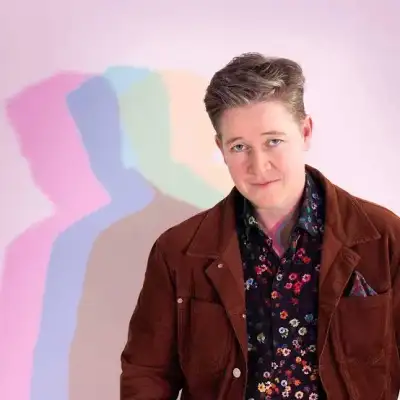
[01:17:10] Well, and your, your photo with the, with the, like in the. If I may Yeah. But this, I love this shot.
[01:17:16] Yeah, me too.
[01:17:17] Ah,
[01:17:17] yeah.
[01:17:18] It's so cool with the, with the different colored shadows in the background.
[01:17:20] Yeah. Yeah. Very intentional. Um, so I, I, you know, I was, that book is full of trans and non-binary youth reaching out desperately for mentors.
[01:17:31] Mm-hmm. And then there's also a lot of elders, queer and trans elders and lesbian elders saying mm-hmm. I would, I would love to. To B of more use to queer youth, but
[01:17:45] mm-hmm.
[01:17:45] A I'm scared of them. I'm scared. I'm gonna use their own pronoun. I'm scared I'm gonna do it, then I'm gonna get canceled and they're gonna do it on, they're gonna slander me on the, on the Twitter or, you know, or, or, or, you know, uh, or I'm invisible to them.
[01:18:00] I don't, I don't fit the, I'm not wearing the uniform anymore because I'm 80 years old and, you know, I can't. I can't, I have to wear Crocs or whatever, God forbid, God forbid, that I have to wear Crocs one day.
[01:18:15] I'm struggling with that one too. To be honest.
[01:18:17] I'm str, I'm just struggling along with my sore feet and my, and my, uh.
[01:18:23] Um, yeah, on my constantly sore feet in my, in my blunt stones, like I'm determined. Yeah. I'm, no, no. I have accepted finally Birkenstocks for summer, but that was hard because that was such a lesbian thing and I, I wasn't the lesbian in the eighties. You know, I was, I was a, I was a dike or I was a. You know, a butch and or I was, uh, you know, as a trans person, a non-binary trans person, I was like, I will not wear the Birkenstocks.
[01:18:50] But now I will, now I will wear the Birkenstocks anyway, unparalleled support. So we, we need to come together. We need intergenerational, uh, knowledge exchange, but we need to do that reciprocally and respectfully, and we need to. Let our walls down a little bit, which is really hard to do in, in when, in, in when they're at, when they're coming for us.
[01:19:14] But we just, I don't even know how much I can stress it. I'll, I'll, I'll, I'll, I'll start to cry honestly. Yeah.
[01:19:19] I, I came close a couple times in this conversation. I, something else that I, I want to add from, um, which was, it's something that you said in care of that. I wanna add that to what you just said, which I think is so important.
[01:19:31] Um. There's a story you, you talk about where you were listening to a trans woman speak who was, um, I think in her seventies and how she was talking about her experience and, and what she suggested for other people in a way that didn't necessarily reflect how things were today. It was very much about her experience at the time, which was so different, obviously growing up in a different time.
[01:19:53] Yeah. Yeah. And so I think what I want to add, as you talk about the importance of reaching out across generations. You know, we're so lucky to have queer elders thinking about, we all know why there are so few like queer elders a lot of the time. Now I'm gonna cry. Um,
[01:20:08] yeah.
[01:20:08] But, um, the importance of understanding that like people who grew up, who came up in a different time, went through very different experiences from you, and they're gonna use different language.
[01:20:21] They're going to talk about things in different ways. They're gonna self-identify with different words that might mean something different to you now. And. That being curious about that and interested in that. Um, can, I think also bridge divides and help us understand not just where we are now and where we're going, but like where we came from.
[01:20:40] 'cause I do think that there's a blueprint in that for where we need to go, which is to a place where we can all use the bathroom without worrying.
[01:20:50] Yeah. Yeah. That, like I said, we need to do, there's a lot of. There's a lot of internal work that we need to do to bring our best selves to this very crucial table for all of us.
[01:21:06] Well, I, I, I feel like we should call it there. Um,
[01:21:10] okay.
[01:21:12] Thanks so much, Ivan. This has been such a, like, difficult and wonderful and great conversation. I feel so alive after talking to you.
[01:21:20] Me too. I, I, I feel inspired actually, because I feel like a lot of what I just said. I, if I may say you're a younger trans, uh, woman, um, I feel like a lot of what I, you have, you already are embodying, you know, and so that's really heartening to see.
[01:21:39] So, yeah.
[01:21:40] Well, I didn't have a lot of role models as a kid, and the truth is. I have a lot more now, and I, I, I feel lucky to kind of count you as one of them in a lot of ways. So thanks so much, Evan.
[01:21:52] Well, if, uh, if we had more young trans folks like, like you do in this, this great work, you know, that would Yeah.
[01:22:02] Any, anything I could do, you know, it's, uh. It's a good, it's, it's a, makes me feel good to, to imagine passing down like my knowledge to, in a place where it will be respected and heard and reciprocated. It's awesome. Yeah.
[01:22:20] Thanks. Well, um, thanks so much, um, everybody watching this, listening to this. Please, uh, look up Ivan.
[01:22:29] They, they've got lots of great stuff online. Um, read their books. Uh, they have a bunch of fantastic books. Care of is a great one. Um, there, there's, I don't dunno what your like go-to book of yours that you recommend to people is gender failure, um, tomboy survival guide. Uh, and go check out, um, their show playlist if you can.
[01:22:48] I hope you get to keep touring it. I hope you can make it out to Vancouver.
[01:22:51] Oh yeah, it's on the list.
[01:22:52] Thanks so much, Ivan.
[01:22:54] Thanks Jess.
[01:22:55] It's been wonderful. See you soon.
Credits
---
[01:22:57] The words don't fit the picture is created by Jess Lupini. This episode is edited by Koby Michaels and produced by Jess Lupini and Lucas Kavanagh. Production funding was provided through Telus Storyhive. Special thanks to Nicole Doucette and Alexa Landon.
[01:23:15] See you next time.