Subscribe
Share
Share
Embed
In Episode 049 I continued the conversation with Stephanie Jordan from Episode 048. She is the Co-Founder of B-Corp Avallen Calvados. She brings fantastic insights as he runs her Sales & Marketing Consultancy, Drinking Out Loud. Before that, she ran Sales & Global Advocacy for la Hechicera Rum and was the Global Brand Ambassador for Tanqueray Gin after starting her career in drinks on the Global Diageo graduate scheme. I hope you will enjoy our chat.Time Stamps0:00 Intro0:14 Sustainable Packaging9:36 Selecting Sustainable Outlets?13:18 Role Of An Importer16:10 Ensuring Wholesaler Rotation20:00 Big Fish Small Pond, Small Fish Big Pond?23:19 Biggest Professional Change Becoming A Founder?31:38 Wrap-Up33:12 OutroAbout The Host: Chris MaffeoAbout The Guest: Stephanie Jordan
In Episode 049 I continued the conversation with Stephanie Jordan from Episode 048.
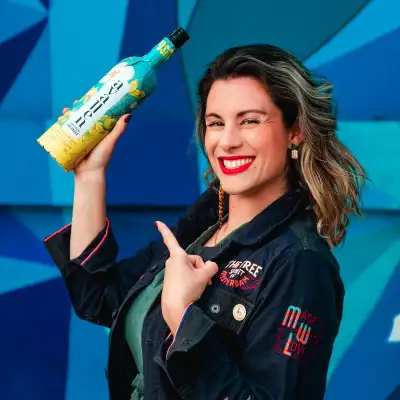
She is the Co-Founder of B-Corp Avallen Calvados. She brings fantastic insights as he runs her Sales & Marketing Consultancy, Drinking Out Loud.
Before that, she ran Sales & Global Advocacy for la Hechicera Rum and was the Global Brand Ambassador for Tanqueray Gin after starting her career in drinks on the Global Diageo graduate scheme. I hope you will enjoy our chat.
Time Stamps
0:00 Intro
0:14 Sustainable Packaging
9:36 Selecting Sustainable Outlets?
13:18 Role Of An Importer
16:10 Ensuring Wholesaler Rotation
20:00 Big Fish Small Pond, Small Fish Big Pond?
23:19 Biggest Professional Change Becoming A Founder?
31:38 Wrap-Up
33:12 Outro
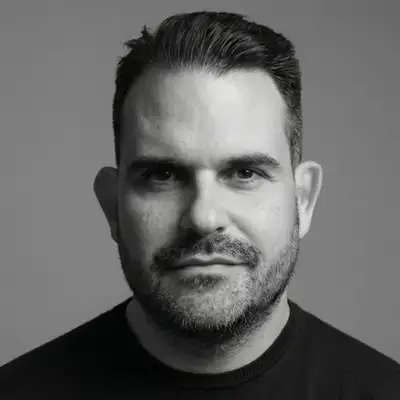
About The Host: Chris Maffeo
About The Guest: Stephanie Jordan
The MAFFEO DRINKS Podcast is a leading drinks business podcast delivering actionable insights for drinks leadership.
For founders, directors, distributor MDs, and hospitality leaders navigating the tension between bottom-up reality and top-down expectations.
20+ years building brands across 30+ markets. Each episode features drinks builders: founders, distributors, commercial directors, sharing how the drinks industry actually works. Not the conference version. Honest conversations.
Insights come from sitting at the bar.
Beyond episodes: advisory for leadership teams, subscription with episode deep dives and principles to navigate your own reality.
Beer, wine, spirits, Low and non-alcoholic.
Bottom-up Insights & Episode Deep Dives at https://maffeodrinks.com
Welcome to the Maffeiro Drinks Podcast. I'm your host, Chris Maffeiro. In episode 49, I continued the conversation with Stephanie Jordan from episode 48. So feel free to listen to that as well. I hope you will enjoy our chat.
Chris Maffeo:Let's not forget about the sustainability, which I know you don't forget because I want to give some space to this on, on the podcast because you are one of the big pusher of sustainability in that, in that terms. What did you do in the, in the, in the, in the last years in terms of, you know, you did some innovations on packaging, on bringing, you know, less glass to the entree, like tell us more because I I'm I'm sure that many people know, but not everyone. So let's let's talk about that a little bit.
Stephanie Jordan:So if we start at the beginning, when we had a blank piece of paper and challenged ourselves to create what we want to be and has sort of won enough awards and accolades to suggest that we're definitely on the top shelf, one of the most sustainable positive impact spirits brands in the market today. The blank piece of paper said, well, where do you look? Where is impact? Is it at the distillery? Is it energy?
Stephanie Jordan:Is it waste? Is it packaging? Is it the marketing and activation? Is it the lemon plastic straw? What is real impact?
Stephanie Jordan:Where is it happening? And where do you need to go and fix it? And it didn't take long for a bit of Gary Google research to take us back to the fields and say, okay, well, every spirit starts as an agricultural produce. Right? Whether it be grain or cane, or in our case, apples, but obviously fruit for wine and grape and cognac and brandy, or we could go into a whole world of agave, but essentially, it's an agricultural produce.
Stephanie Jordan:And so once we understood that that was the most important thing for the environment, we quickly did that research, compared all the raw materials, and that's the research that said apples, apples, apples grown on traditional orchards. So very quickly we resolved the liquid problem in terms of ensuring that the distillate would be as carbon neutral or in our case, climate positive as possible. So we were able to do life cycle analysis that showcase this. So the things that we looked at most was carbon impact and again, water usage. So we only use about a liter of water for an entire bottle of 70 cl Avalon, which is the entire production process from blossom to bottle.
Stephanie Jordan:And I can't tell you how much whiskey distilleries use because they don't know. Unfortunately, they're not able to account for what happens in the fields because we are an industry of commodities and marketing, not of agriculture. And so the accountability and responsibility to what's happening in the fields has not been the best. Now that is changing, thankfully. And the big companies are starting to really pay attention.
Stephanie Jordan:So once we had apples, that was step one, and then it was about pack. So, yeah, pack is really important because you can work out that you've got this amazing planet positive liquid, but if you're gonna ship it around the world in really heavy single use glass bottles, you're basically, brushing away with your left hand everything you did with your right hand. So from the get go, Tim, if I would've met him, would've sold Avalon exclusively in bulk because, you know, the least amount of packaging is the best. However, I very much had a commercial hat on and thought, no, we, we need to first build, you know, a, a brand and, and we had no bulk solution that was being used by the industry at any scale. So it would have been an extra logistical nightmare that probably would have just put sticks in our wheels.
Stephanie Jordan:So we opted to launch at the time with the lightest glass weight bottle we could source and the most minimal additional packaging. Very simple label made with recycled apple pole, vegan dyes, no foils, no additional embossing, simple, simple, simple, no plastic embellishments, really less is more and just really smart design. And that won us a heap of awards actually. And then quickly, it's, well, how do we keep innovating? Right?
Stephanie Jordan:Like, how do we stay ahead of the pack and transforming the industry? And so what you come to realize is that This industry is so super duper connected, whether it be manufacturing into working with distributors, working with wholesales, consequently with bars, retail outlets, it's very, very complex. And so around year two of Avalon eco spirits being this circular end of single use glass, 4.5 liter bulk refillable format solution comes to Europe after doing several trials in Singapore and in Asia. And so with the expansion of eco spirits, we were able to start selling in a bulk format in The UK. We're now available as well in Hong Kong, soon to be The Netherlands, Spain and Singapore.
Stephanie Jordan:And that resolves a problem around packaging. We have the bottle, which allows for us to continue to build the brand and the brand story, but we have this bulk solution for the on prem. That was year three. Now it's coming into year five, and we're just not comfortable with a single use glass. So we've tried to make alterations.
Stephanie Jordan:We now work with a 65% recycled mezzo bianco glass, which means it's less refined, which is why it has this beautiful turquoise to it. And the biggest hardest thing to get out onto the market was this frugal paper bottle, which is essentially a bag in bottle. It is a 95% cardboard with a food grade plastic pouch and an aluminum cap and requires much less water and a lot less energy, not only to produce, but consequently to ship. And the frugal bottle is currently something we're driving in off prem and e commerce for us innovation around sustainability now is how do we improve our mix and do less glass and do more bulk and more paper bottle and continue to look to what the next solution might be. What we know single use glass doesn't make sense.
Stephanie Jordan:And what is going to be the perfect long term sustainable solution for all? We don't know yet. It might not be the frugal paper bottle. This might be a stepping stone. It's had some great acceptance from the industry as much as it has had the opposite effect.
Stephanie Jordan:Very hard to convince anyone in France to stock this format. So again, I think what we're learning is that you have to understand that perfect is the enemy of good. You need to just try new things. And that's something that small brands like Avaland can and will do with the aim that the bigger groups catch on because we need them to do it at scale. If we are to get the mass transformation that we all need, which takes me to a final point around packaging innovation.
Stephanie Jordan:Believe that it should be open pattern And we find it very frustrating when large brands innovate packaging solutions, which they then keep as unique selling points and a commercial advantage where what we need is for a global solution for every brand to access so that we can have this transformation. That's why we love eco spirits because it is an open platform. It is a sustainability motorway for spirits, any spirits. That's why Diageo and Pernod and Bacardi and Remy are involved as long as, you know, we still have the small independent brands such as ourselves. That's why I love the frugal pack.
Stephanie Jordan:Anyone could purchase it. Anyone can work with it. So, yeah, that would be my open patterns, please.
Chris Maffeo:Wow. That's that has been a bit of a journey. Yeah? Like this, and I've I've been I've been following my rant.
Stephanie Jordan:You said no rant, but I did it. I'm sorry.
Chris Maffeo:No. No. No. But it's very interesting because it's exactly what you said. No?
Chris Maffeo:It takes small players to actually be lean and agile and challenge the status quo so that then it becomes more of a big brands kind of thing because I've been following the journey of Eco Spirits with Z and and everyone. And I remember in the beginning, there were no big brands, many big brands involved. Know, I remember all these press announcement. Okay. Like Pernod Ricard joins, Diageo joins, Baccarat, you know, like I remembered the journey from that and it was smaller brands that were early on in the journey, but then all of a sudden it wouldn't have made sense if the bigger player had not joined the party of Ego Spirits, know, because otherwise it would have been like, okay, what, what do we do with a few bottles here and there?
Chris Maffeo:You know, we need big, big players that can, that can play the role. You touched upon logistics, which is basically the other side of the coin of, you know, innovation
Stephanie Jordan:and behind the curtains behind the curtains.
Chris Maffeo:Yeah. It it's it's it's logistics now. And if I remember right, I mean, you started in London now to work in, you know, like with with Avalon, like as, you know, that was the first city, can I say that that you started? Yes.
Stephanie Jordan:No. It absolutely was. And, and it was very much because we had lots of goodwill from Nick Gillett, who is the MD and co owner of Mangrove Distribution in The UK who took a bet.
Chris Maffeo:What, what I'm interested in knowing from your end is like, you know, you know, I'm a big fan of, you know, the brands are built bottom up. You choose the outlets before the distributors. In some cases, not that choosing the distributor, if you know already that this is the right distributor is, is wrong, but I'm interested in knowing if we go back to the early days now where sustainability was 95% of your messaging, Yeah. Let's Did that play a role in how you selected the outlets where to whom you were selling to? Was it more like I focus on this outlet because it's a sustainable outlet or I focus on that bartender that I know cares about sustainability within an outlet that may or may not care about sustainability.
Stephanie Jordan:We were incredibly strategic from the get go and we identified these 20 key accounts that all had sustainability value that we targeted them directly and yeah, and wish, like I wish. And now of course, it's some of the some of the thinking where we're like, okay, we really need to go and like talk to some really targeted accounts. It's such a whirlwind launching a brand and you have to do everything. Right? You're So doing your accounting and your operations and your logistics, but you're also building your value chains and working with your distributors and trying to get your Brandex and have like commercial tools and all of these things.
Stephanie Jordan:I think in reality, five years ago, there was fair spirits that, that were talking quite a lot about sort of organic and, and pure ingredients, but sustainability was 100% what we led with. And it was 100% what was interesting to bartenders. No one had really approached them talking about the things we were talking about. And so there was a lot of love for the brand. Very, very easy and from the get go, because we were talking about, you know, bees and pollinators and we launched on world bee day and we were giving revenues.
Stephanie Jordan:And again, this wasn't really something that the drinks world had seen. Looking back, mangrove did so much of the heavy lifting and they only probably got the product in market six months before COVID. And in those first six months, of course, only targeted the on prem. We got a few beautiful retailers like Fortnum and Masons again, of friendships and connections that we'd had through the years of our career, but bartenders are curious and we didn't need to target sustainability driven outlets. To be honest, there weren't that many, like maybe the occasional vegan restaurant, but even today I can name very few venues that are specialized in sustainability.
Stephanie Jordan:In fact, more and more of them have sustainability programs, which, which is fantastic because if you ask us, we would say every single venue should be sustainable. Right? So I think it was really, yeah, bartenders curiosity and the deliciousness of the liquids. And it's something that we probably didn't lean in enough on then to really understand that our secret power was always going to be how beautiful our liquid is. Cause it's just delicious.
Stephanie Jordan:It smells incredible. It tastes incredible. We're used to great liquids came from Diageo from the reserve portfolio. All the liquids were stellar 10 out of 10. So for us, it was obvious that the liquid was perfect.
Stephanie Jordan:Otherwise we never would have done it. And yet that still is the selling point and it still is today. And I think retrospect, sorority, a wonderful thing, but there was just a lot of goodwill, a lot of goodwill in The UK. And again, I can't thank Mangrove enough for the work that they've done for us over the years because, you know, they've really announced for us to to have a company, which is fantastic.
Chris Maffeo:And how does that change in in I mean, you mentioned in mangrove for example is in in, you know, as a distributor in in in London, but then when you go to another city in The UK or you go to, I don't know, another country and another city in another country, How does that play? You know, like what do you think? Because I'm a big fan of seeing the industry as an ecosystem now as you rightfully said. What is that role? Like what is the role of an importer and a distributor in really building the success of a brand, you know, like being your eyes and ears in in the market and knowing where to go?
Stephanie Jordan:I would say it depends on the size of the brand. But for us, in our case, with Mangroves, it was building bridges. We were able to make, make the produce right. Get the, get the bottles ready, have the brand, but they then are able to import it and then distribute it consequently into the wholesale systems for us then to go the other end and actually create the demand. And so this is where actually working with the one percent best bars in the world is important because if you can convince three or four of the best bars in Edinburgh to work with you, then you can unlock a wholesale in Scotland.
Stephanie Jordan:You do the same in Manchester. You do the same in Nottingham and it's through the key bars and operators that you're able to then unlock and trickle in that whole wholesale system. So that was what we actually did really, really well by year one. And despite COVID, we had national reach in The UK. And so actually one of our best performing areas for Avalon remains Scotland today.
Stephanie Jordan:And it was because of those early, early on outlets that continue to work with us and having a really strong wholesale partnership there.
Chris Maffeo:Wow. So so those those bars unlocked that chance for you to get listed with
Stephanie Jordan:your group? Unlock the full route to market. Yeah. You have to they they'll ask you to come with the list and and prove that, you know, at least 10 bars will order. It can be difficult, but that's a lot of the work.
Stephanie Jordan:Yeah. A lot of the work is connecting the route to market points and connecting the dots. And then you find the perfect outlet that really wants to work with you, but they just they have this wholesale that they're in a contract with and this wholesale, and then it becomes a whole, you know, different commercial and logistic conversation. And that's that's what Mangrove do for us. Right?
Stephanie Jordan:They build the bridges. They build the bridges. We'll go and have the conversations, and then they'll pick up the conversation and they'll do that hard work of connecting that last mile delivery, which is again, why eco spirits is so hard and so important and transformational because people like Diageo and Perneau and Avalyn may agree that it's the right thing to do. And we may convince 10 amazing bars to do it. But if we can't get the wholesales to do the job because they have to do the hard work of dropping off the eco tone and picking it up, it doesn't work.
Chris Maffeo:That's the key thing. And building on what you are saying, you know, like the, you know, we know that, you know, to build the brand that, you know, you need to widen the distribution and to build their rotation in the outlet. And also it's not only the first bottle that you sell to the outlet, but, know, you want them to get to reorder now and to buy the second and the third and the fourth and so how did you how did you play on that or how do you think is the right way of playing unnecessarily that you have done it or like what you have learned on the journey, you know, on making sure that those handful of, let's say, first contacts that you may have had in, you know, mentioning Edinburgh or Manchester or Liverpool or whatever, that they actually want to reorder it, and it doesn't become just, okay. We tick the box. Now you got a deal with the wholesaler.
Chris Maffeo:And now, you know, sorry, but we don't want to order it anymore. And then they leave you with a match, you know, like in in in your hands. In in Italian, we say with a you just stay with a lighted match in in your hand. It's like, oh, where's everyone now?
Stephanie Jordan:No. Thankfully, that isn't what's happened, but it's not rocket science. It's it's cocktails. You need, you need a listing. You need to be more than back bar.
Stephanie Jordan:You need to be more than on menu because again, Calvados isn't a thing. People are not going in and going, oh, I wonder what this is Steve from Calvados. They have, they have Avalyn. Let me have one of those. That's not happening.
Stephanie Jordan:So it has to be in a drink. It has to be in a cocktail. And here's the trick. It can't be too weird because all our wonderful 50 best bars and top bartenders and bar ladies, they're great and they're getting crazier and crazier. And so we currently have a cocktail in Paris, which is made of aubergines and black garlic.
Stephanie Jordan:And I'm like, like it's delicious. It really is. And it's a top end bar and I get it. But like, again, if we're talking about average Joe, like it's not with these sort of drinks that we're going to convince people. So again, Cavitas isn't a thing.
Stephanie Jordan:So when you're reading a menu, a cocktail menu, you're looking for flavors that you love and maybe a brand or a category that you recognize. Oh yeah, I like gin and I like rhubarb. Okay. I'll try that. So when some of my lovely friends in Amsterdam put an avalanche cocktail on menu made of red cabbage, because in The Netherlands, red cabbage and apple is a thing.
Stephanie Jordan:Well, they didn't sell so many of that cocktail because people don't want to drink cabbage. Yes. So it has to be in a menu, has to be in a cocktail and the cocktail has to sound like something people wanna drink. So a lovely example, I'll use pander and sons in Edinburgh because they work with eco spirits. They work with Avalon, and they have this cocktail on menu at the moment called core values.
Stephanie Jordan:And it's an aptly delicious refreshing drink. And the pun, of course, around core and after core, but core values and purpose, you know, and tells a little story about Avalon and and the impact that we have. And so I think those are the kind of perfect, perfect menu listings where you just wanna replicate them all over It the
Chris Maffeo:brings me back to a conversation I was having with Alex Fritza from Lantiguari in Napoli like in one of their earlier episode this summer. And he was saying like, you know, you also have to be able to enter as a side choice first, you know, and then walk your way up to the best selling drink. No. But again, like another option could also be being a small size, like a modifier only. You had the one CL top up in a in a drink and it doesn't really matter at the beginning as long as it lets me put the foot in the door so to say, you know.
Chris Maffeo:I know that there's no right or wrong. It's not, you know, you love mom or dad more, but like what what do you what would you say or what would you advise is most fruitful? You know, would you rather be a smaller poor in a very well selling drink or would you rather have your own proper game in a quite nice size cocktail but that's not in the first page of the menu so to say?
Stephanie Jordan:It's it's a tricky question. I think again it depends on what sort of life cycle you're at with your brand. We're a startup, but we really need to become a scale up. Right? So, we can't just survive.
Stephanie Jordan:We need to thrive. So, early doors, I don't care in what we were in. We just needed to be in. And the thing is, Avalyn is a great modifier as well. So that that was a really nice way to actually be on menu and not get in the way of any contracts because we can be in a Pernod or a D'Agio or a Bacardi or a Campari drink.
Stephanie Jordan:Doesn't matter. So always grateful for those drinks, and I'm sure that we improved every drink we were in. Now we really, really want and need to be the main course. Hence, this whole thing around appletinis and getting them trending and how do we get this drink to trend like a Negroni Spaghetti. But, yeah, right now, we're very much looking forward to being the main course.
Stephanie Jordan:I think we're worthy. I think we're good enough. We think we deliver enough value. We've relooked to our commercials as well and understanding that we're able to deliver the right margin for our customers and sort of understand what it what it takes to be the main course and not maybe just the amusement.
Chris Maffeo:Mhmm. It was a very, very interesting answer to the question because I would say the same. You know, if it was for me, like, I would always advise, you know, just whatever, you know, to
Stephanie Jordan:put in
Chris Maffeo:the door, get in. It's also like a bit of a learning and, you know, like trial and error, know? And that's what I liked about the conversation with Paul Thomas when talking about insights, you know, that sometimes you you may think you need a big insights budget, but actually you need three, five to 10 bars to actually do some experiments and see, you know, get visibility and get transparency from them on sales and say, okay, let's try this drink in two bars. Let's start this other drink in two bars. Let's see how it works.
Chris Maffeo:Let's see what happens. And then you can recycle and repurpose that information to it to the next batch of 10 bars in which you want to to get in.
Stephanie Jordan:And I'd apply that same thinking to, like, export and opening up new markets because you never know where your brand might just hit. Right? The category might be just right. The flavor might be just right. The price might be just right.
Stephanie Jordan:And as much as him and I have had global careers, we clearly don't know anything or everything. And so right now The Us for us is so exciting and we end up on shelf at $40 which is cheaper than most in market apple brandies locally produced. And yet we've got this whole beautiful B Corp and certification and, and the branding is so different. And on top of it, you know, we've got some great partners that talk about the female founded aspect, etcetera. So it flies, it flies off shelf.
Stephanie Jordan:You gotta just go for it and see what happens and find out from the market what's going on. Right? Which is the thing that we can all agree. You gotta just get out there and talk to people.
Chris Maffeo:Yes. And what would you say was the biggest change for you? Not not much from a personal perspective and more from a trade perspective, you know, when you were walking into bars, you know, before you used to represent the brands, you know, and now you were representing your own brands. What was the biggest difference in going into bars and, you know, having a totally different type of conversation?
Stephanie Jordan:I'm scratching my brain because we were paid to go into bars and we were paid to be walking, talking bottles and to incarnate the values of that brand. Right. And so how much of it was us? How much was it was a role? It, it got a bit confusing at one point, you know, we didn't really know what our favorite color was anymore.
Stephanie Jordan:Mine apparently was green. It isn't. My favorite color is purple, but people thought it was green and that that's so it's silly things, but you get a little bit confused about your own identity. So it takes a real minute to reset and reestablish what you really care about. And so I think now when we walk into bars, a of course, we're ourselves and fully ourselves, which isn't always a good thing.
Stephanie Jordan:You know, Tim Tim's now sometimes a grumpy old grandpa. I, myself can be completely offbeat and wacky and talk to people about moon cycles and witches and crystals and crazy things. So again, it there's pros and cons. I think we need to remind ourselves that we are still ambassadors and that when we walk into bars, we need to incarnate Avalon's values. And so we may have created Avalon, but Avalon is entirely its own thing.
Stephanie Jordan:It has its own energy. It has its own identity. It has its own copy, its own language, its own tone of voice, its own personality. And so we need to and this is, again, I'm saying it out loud so that Tim and I remind ourselves we need to represent Avalyn's values, not necessarily our own. So we can both get, you know, quite political and dah, dah, dah, dah.
Stephanie Jordan:And there are things that you would never do under your corporate disguise. Right? Yeah. So I think that's the new one. Maybe we're too much of ourselves now.
Stephanie Jordan:We need to tone it back.
Chris Maffeo:When you were talking, I was thinking about myself and my fair drinks. I mean, I'm you know, the company bears my name even, even, even worse, you know, like in this interconnection. But technically, I mean, you need to think, you need to see almost as the tax man, no assets are different, you know, like the risk
Stephanie Jordan:of
Chris Maffeo:it is a difference, you know, that's your bank account, that's your company bank account. There is always an overlap, but at the same time when when thinking, it makes me think listening to you that is not that different in the end. You know, of course, it differs from a budget perspective and from a big No. Brand
Stephanie Jordan:But we will
Chris Maffeo:you and so on. But in terms of
Stephanie Jordan:Hugely Yeah. Responsible. There's many, many amazing things about Diageo and my career and I, you know, loved every second of it. But act like an owner. We would talk from the beginning, treat it like your own company, and we did.
Stephanie Jordan:And I suppose that's just a value that sits with you throughout your career. So you always have to act like an owner. I would say I'm much naughtier at the T and E now than I probably was at the Ashio. Tim's like, wait. Can I go to this Michelin restaurant?
Stephanie Jordan:I'm like, why not? They list us. He's like, but in in a in a dessert. I'm like, great. Let's go.
Chris Maffeo:That's the beauty of it. Like, it there is one thing which is, of course, the budget and the possibilities, but then on the other end, you are still embodying a brand which is, you know, walking with its own fit now. No? It's a living body. Even social media, you it's like, this is the company page.
Chris Maffeo:That's not me. You know? Of course, it's me. But and and sometimes they even think, like, okay. Shall I speak in you or, you know, I or we
Stephanie Jordan:or Especially if you hire people or as you grow and more people are involved with your business, whether the business has your name or not, you see you need to let let go of it and it has to be its own thing. And I think now we are very much a purpose led slash founder led spirits brand, but there has to be a world whereby it's not about Tim nor me, and it is entirely about Avalyn. Right? And so I think that's also part of growing up as as entrepreneurs and and putting systems and processes and messaging in place, which takes us away from it a bit. Yeah.
Stephanie Jordan:And I think that's healthy because otherwise it can be all consuming.
Chris Maffeo:I agree. And and and that's that also goes back to what we were discussing before about the the the messaging, the clarity on the message because it's you and team. And then there's the, let's say the closer team, you know, from the founder onwards. And then there's the importers, the distributors, the wholesalers, the bars, and you know, like in ensuring that there is consistency in that messaging that the wholesaler salesperson is speaking the same language as you speak, you know, whether you do a training, whether you do a presentation, whether you do a webinar or whatever, that is part of the old game about building a coherent messaging that can survive you as a as a founder. No?
Chris Maffeo:Because, you know, I was discussing with Paul Letko from Few Spirits, know, and and he was saying, you know, you need to fire yourself as soon as possible from what you're not the best at, whether it is, you know, being an ambassador where it is going to bars, you know, is it the best thing or you can actually, you know, bring in the next generation into the game. And I mean, it's always a very fascinating topic, like generational continuity of of a business and of a brand because ultimately many of these brands that are big now, they they started as a as a founder led brand, you know, hundreds of years ago. You know, they were not big companies back then.
Stephanie Jordan:What I what I remind myself is every day that, you know, what Tim and I have been very good at is working through others and is sort of inspiring and engaging this bigger, broader, mycelium network that is the drinks industry. And, you know, Avalyn is already a success. It's, you know, you define what success is. You can put the KPIs in yourselves. If I looked at, you know, volumes and NSV probably isn't what what it could be.
Stephanie Jordan:Yeah. Of course, it's still it's still small. But, in terms of having this this impact and this positive impact and transformation of the industry, it is already a success and we're very proud of that. But we do have to be very, very humble because we are really just a duo. And yet, all that we've achieved is because of how powerful the rest of the Mycidium network has been.
Stephanie Jordan:You know, it's their belief in the product, the liquid, its values, what we're trying to do, and their ability to sell it. And that's gonna be the tipping point for us. Right? How we get messaging so simple and so on point that anyone can sell it and how we can actually eventually get out of the room and get out of the way of it.
Chris Maffeo:And that is also like another very fascinating topic, which is it takes someone to be the engine of this change, you know, that you're trying to drive. And then it also, we need to thank the people that are with us on the journey because they believe in us in the early days or they are supporting us or they enable to open some doors that otherwise would be closed and so on. But ultimately you need to be consistent and, you know, really onto that, you know, driving that purpose down, down the road and down the line from the brand to the distillery, to all the players that are involved in the ecosystem down to the glass at the at the bar.
Stephanie Jordan:Agreed. And that is the simplest in such a perfect time of year as well to sort of say thank you. And so a lot of December, we've done either sampling because the only thing you can do and the easiest time to sell Calvados, if there was one time that's easy to sell Calvados is Christmas. So we've basically been doing a lot of sampling and, writing cards and saying thank you and sending little presents and little chocolates and little books to all our distributors and all the people that contribute every single day to making, making this work. Really important.
Chris Maffeo:I agree. I agree. So let's wrap it up and let us know how can we find you and Tim and Avalynn and all the beautiful things we discussed today.
Stephanie Jordan:All the beautiful things. Yes. So Avalin, very easy, avalinspirits.com. We have a very nice new shiny website, which is all about, well, without product. We've got a bit more commercial in our in our old years, but also a lot more blogging and vlogging from from Tim and I.
Stephanie Jordan:We really wanna bring to life some of the stories when we're out and about in the world because that's where we think the magic is happening. So you can also sign up to our newsletter, which are called the Beemails. You can find us on Instagram. You can find us on LinkedIn, again, at avalenespirits. I myself am at drinking out loud, and Timothy Etherington Noel, judge, Joie Noel, but he is at ginger bitters.
Chris Maffeo:So thanks a lot, Stephanie, for for today's chat and Merry Christmas. Happy New Year. We'll we'll be back. We'll finally, we'll manage to have a drink soon somewhere around Europe or around the world.
Stephanie Jordan:It will happen. And I look forward to doing a podcast in ten years where Calvados is the new tequila and everyone's, like, crazy for it. K. Maybe in five years. Five years.
Chris Maffeo:I wish that to you.
Stephanie Jordan:It's happening. I'm convinced I have to be. But, yeah, thank you for the time and keep up the good work. We appreciate it.
Chris Maffeo:Thank you, Steph. Ciao. That's all for today. Remember that this is a two part episode forty eight and forty nine. If you enjoyed it, please rate it, comment, and share it with friends.
Chris Maffeo:And come back next week for more insights about building brands from the bottom up.