Subscribe
Share
Share
Embed
Ducks Unlimited Podcast is a constant discussion of all things waterfowl; from in-depth hunting tips and tactics, to waterfowl biology, research, science, and habitat updates. The DU Podcast is the go-to resource for waterfowl hunters and conservationists. Ducks Unlimited is the world's leader in wetlands conservation.
Welcome to the Ducks Unlimited Podcast, RELOADED, where we bring you the best of our past episodes. Whether you're a seasoned waterfowler or curious about conservation, this series is for you. Over the years, we've had incredible guests and discussions about everything from wetland conservation to the latest waterfowl research and hunting strategies. In RELOADED, we're revisiting those conversations to keep the passion alive and the mission strong. So sit back, relax, and enjoy this RELOADED.
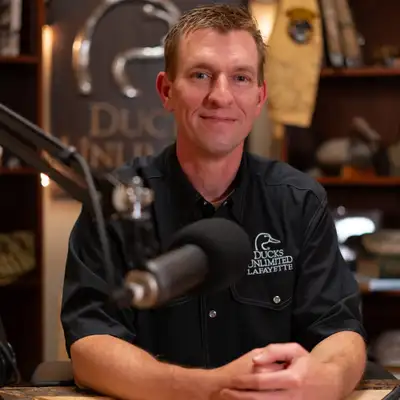
Chris Jennings:Today, I've got my cohost with me, doctor Mike Brasher. Mike, how are you?
Mike Brasher:I'm doing well, Chris. How are you?
Chris Jennings:Doing well. Doing well. You know, we've had this conversation offline many times, and it involves being able to properly and effectively identify waterfowl. Now whether it's in hand or on the fly, we've talked about this as far as the hunter's perspective, but I've talked with you about it even as far as, like, the biologist perspective. And you have even brought up, you know, along the lines of, you know, birders being able to identify different species of birds in the marsh or, you know, even raptors or whatever.
Chris Jennings:But you kinda had a couple tips and a couple things that you wanted to talk about as far as waterfowl identification and how to improve. So kind of expand on that, and let's tell our audience how they can become better waterfowl identification specialists.
Mike Brasher:This topic came about in in terms of something we might wanna talk about on the podcast in response to a couple of publications we saw. Well, actually, I guess it was just one publication we saw last year, then that reminded me of a publication from the early nineties in which in both of these studies they interviewed in one way or another waterfowl hunters and gauged them on their ability to identify ducks. In one study, they had some mounts, some skins as they're called, of male and female ducks of different species, and the researcher, who actually was my former supervisor down the Gulf Coast, went to check stations or boat launches, check stations, actually where hunters were leaving the marsh and presented them with asked them if they wanted to participate and brought them over to a table and asked them to identify these different study skins that he had. So he was able to kinda ask them some questions individually and then as a group of hunters to identify the these these birds and then recorded the data. And then there was another study here more recently where the researchers actually showed hunters might have even been conducted at a Ducks Unlimited banquet.
Mike Brasher:I'm not it was at some fundraising event of duck hunters and showed duck hunters pictures of four or five different species of waterfowl, both male and female. And in both cases, I was kind of surprised at the quite frankly, how poor waterfowl hunters did in identifying some of these species. Now fortunately, in one of the studies, I can't remember which one, but 100% of the people that were asked correctly identified the Drake Mallard. But that was I think the I think that was the only species for which hunters were able to identify it with 100% of the time or 100% of the respondents. Some of the others, especially once you get into the females, correct identification rates were probably 40% in some cases.
Mike Brasher:And of course, this is all along the spectrum when you're talking about species. Fairly consistently, males were identified correctly more often than females, that's to be expected. But nevertheless, that's kind of what brought this up as how can I mean, is a topic worth talking about because it's interesting and fun and rewarding to be able to correctly identify ducks and geese and swans and other birds on the wing, you know, if you're just a fan of birds? But if you're a waterfowl hunter, it becomes really important from a regulatory standpoint, from the standpoint of your ability to comply with species specific bag limits that sometimes
Chris Jennings:Absolutely.
Mike Brasher:You know, that often vary based on well, they vary based on species and for some species vary within based on, you know, by sex, you know, for Mallards is the best example where there's you can harvest more males than females. So your ability to differentiate these birds before you pull the trigger is paramount for confident harvest and being able to do so without running afoul of the law. So that's kind of what brought this up in terms of what kind of advice can we give. And I've, you know, I've been studying ducks and been bird watching for a couple of decades now, and I still am blown away occasionally whenever I go out with people that are way more skilled at this than I am, that they can see a pair of ducks flying about half a mile away across the sky and they can tell based on wing beat, shape, whatever the case may be, what kind of duck it is. The same case with bird watchers, they can tell if it's a woodpecker, you can tell if it's and tell what kind of woodpecker based on flight pattern or size and shape and all this.
Mike Brasher:And so some of the that's what we'll talk about here today. Some of the most basic aspects that you want to look for when trying to identify, and we'll we'll talk about ducks, geese, and swans here, include things such as and some of these are gonna be obvious, so, you know, so but we'll try to get into some little tricks somewhere along the way. Size of the bird, obviously, it's gonna be important. Know, geese and swans are larger than ducks, no big surprise there. The color of the bird, if you're able to get good good sunlight on that bird, you you can see some of the color patterns.
Mike Brasher:We've talked on previous episodes about about color patterns on the wing. When you see those wings flash, you can certainly get some of those key distinguishing characteristics, and so that's a good key. The shape of the bird. You might think of the silhouette, the slope of the forehead, certainly from below. One of the things that I find really powerful is the shape of the tail on some duck species.
Mike Brasher:It really differs. You think about a wood duck being a great example and contrast it to a gadwall, the shape of that tail when they're in flight is a really good key. So that's something that that you can pick up on. Now I'll back up. I have a few quite a few other kind of characteristics here, but the one thing that I do need to say early on is that to get good at this, just like anything else, it takes practice practice practice.
Mike Brasher:You don't get to be a good football, baseball, basketball player, soccer, whatever the case may be without practice, practice, practice, the same applies here.
Chris Jennings:I'm a I'm a pretty good waterfowl, you know, identifier even on the wing, but that's something that I still feel like, you know, I can can do better in. And I've hunted, And and kind of just to go back where you're talking about the studies, the guys who were or the hunters who were surveyed in those studies who didn't really do that well, a lot of them were novice hunters as well. So, you know, you kind of have to take that into account, and that's something that we have to talk about when you do. You know, we talk about mentoring new hunters and taking people out. And when you take people out hunting, you want to get them as involved in the hunt as possible.
Chris Jennings:So you want them to be interested in what kind of duck is that. You know? It's just you know, is it it's not just a duck, you know, especially when it comes, like you said, to regulations and things. And, you know, being being able to look up and say, oh, there's two pintails. You know, with young hunters and new hunters, that's pretty impressive.
Chris Jennings:You know? People are all I've I've taken a lot of new hunters out. They're like, how did you even know that? And, you know, it's like, well, I've I've done it for twenty years for one. And and, you know, that's something that people just have to and I also tell them, well, you don't know the difference anyway, so I could just be lying.
Chris Jennings:Right?
Mike Brasher:There is that. There is that.
Chris Jennings:But, no, I wasn't really lying to
Mike Brasher:Not that I would have ever done that, you know. Said with greater confidence that I know what that is based on who was with me. No, I would have never done that.
Chris Jennings:But but no, I think this is a great conversation to have and I think a lot of people are gonna, you know, should really, you know, tune in and and really take note of some of the some of the different characteristics that that you're getting ready to explain on on how to identify these birds.
VO:Stay tuned to the Ducks Unlimited Podcast sponsored by Bird Dog Whiskey after these messages.
Mike Brasher:Other things that you can look for, and again, of this is like process of elimination because you've got we've got 40 plus species of waterfowl in North America. And so some of this is gonna be a process of elimination. You're gonna be able to kind of compartmentalize things. You'll be able to tell if it's a goose versus a duck. Right?
Mike Brasher:And so and the other thing, once you get in the ducks, you can look at differences in things such as the pattern and pace of their wingbeat. Divers and sea ducks, your megantars and birds, golden eyes, birds of that nature, are going to have a faster wingbeat pattern as opposed to your dabbling ducks. Now you get into the teal and some of these smaller birds and they can be a bit deceptive in how fast they're they're beating their wings. So again, some of this is really nuanced and again, it can only be you can only get good at it through practice. The other thing with respect to practice that I'll mention here and it's just a little it's not really a trick, it's just some advice for people.
Mike Brasher:Take some binoculars with you into the blind. If you have access to a wetland during the off season, especially if you're in a northern latitude where you have a lot of breeding ducks, take some binoculars out to a wetland and just watch ducks. It's a great thing to do. But if you're hunting, take some binoculars with you. A lot of times, you see birds off in the distance that are nowhere near to decoy and they're not gonna decoy, and you've got plenty of downtime where you can look at take those binoculars and look at the birds off in the distance.
Mike Brasher:Study their wingbeat patterns, study their shape, birds that are flying high overhead or maybe after you've you've gotten your limit, stay out there for a little bit longer. We've talked about wanting to get out of there as soon as possible to avoid additional disturbance. But, you know, you could spend a few extra time a bit extra time just watching the birds using your radoncula. It's a great thing to do. Other things that we can't really get into all the specifics of and like what does this duck species' tail look like compared to this duck species' tail, you know, we can't these are just sort of broad categories of things that you will want to look for and try to take note of when you're looking at different species.
Mike Brasher:The shape of the tail, I've kind of already mentioned that movement of these of these birds. If you're a hunter, you will know that mallards come into the decoys at a typically at a different sort of pace and manner as opposed to teal or canvas bags. You can use some of those things to kind of help you before you pull the trigger, figure out what kind of bird it is you're going to be shooting. Another great one that I'm sure everyone is gonna will know about is the your sound, your ability to listen for these birds. Now, we probably all know someone who said they can tell what species of bird it is just based on the way the wind cuts through the wings of these birds.
Mike Brasher:I don't know that anyone is that good to identify every single species based on that. But it's not much of a stretch to say that if you hear some if you hear the wind ripping through some wings over the behind you that sounds like a formation of fighter jets, it might be some species of diver that's ripping down through the through the sky and diving into your decoys. The same thing with teal. They come in with with certain reckless abandon sometimes it seems. So just kind of pay attention to that.
Mike Brasher:You pick up on a lot of these things just subliminally. The more you're out there, you begin to associate these movements, patterns, sounds. Obviously, the calls of ducks, wood ducks, which who among us as duck hunters haven't been in the blind early early in the morning and heard a wood duck whistling, female wood duck whistling as it comes through the through the timber or through the through the brush. Other good examples of trying to identify what it is based on sound would be a drake mallard, a drake wigeon, drake pintail. They each have their distinctive whistles and you can hear those, in many cases, those birds long before you even see them.
Mike Brasher:So kind of keep that in mind as well. And then some other things that I guess you might say are where you are, where you are on the continent, and what type of habitat you're in. You can begin to kinda compartmentalize the duck species that you're most likely to see depending on where you are, and that helps you hone down the number of birds that you're trying to identify as you're kinda rolling going through your mental Rolodex of all the different species that it could possibly be, you know, if you can eliminate some of those from likely occurrence, then that's going to be good thing. So let me see here, Chris. I'm just looking at my list.
Mike Brasher:I'm trying to see if there's anything else. I think those are some of the biggest ones. A lot of this, again, practice, practice, practice, and you will pick up on these things subliminally. I learned how to identify ducks, and I guess I should say this, all of these other traits that I've talked about here give you hints as to what duck it might be farther off in a farther off in a distance. As those birds get closer, there is no replacement for the ability to identify based on their plumage characteristics.
Mike Brasher:And that information, for a Ducks Unlimited member, there's really no excuse for not being able to identify the majority of waterfowl species, both drakes and hens, because there are hundreds of pictures, I don't know if hundreds, but certainly dozens of pictures of waterfowl in every single Ducks Unlimited magazine. That's actually how I learned, one of the ways that I learned to identify ducks early on is through the Ducks Unlimited magazine. I don't know if we still do, but we would at one time, we had the species identified on most of the pictures. I think we probably still do, don't we?
Chris Jennings:Most of them. And then we also have, you know, in the marsh watch section, you have the the kind of the quiz, the the waterfowl ID where you you you basically, you know, try and pick out the species in the in the image, and then we provide the answers. And as well as, you know, ducks.org. There's a just a robust resource. And they and even on ducks.org and in the DU app, you know, we include sounds, videos, images of every species, you know, every North American species.
Chris Jennings:So like you said, there's not really a a great excuse to not be able to identify these birds.
Mike Brasher:That's right. There are tons of resources out there. And, you know, quite frankly, we as waterfowl hunters, I don't I don't wanna really sound like I'm getting on a soapbox, but this is just my personal feeling on this is that we as waterfowl hunters should really be the best at identifying the ducks that we're harvesting. That's kind of a fundamental responsibility of ours to be able to identify these birds before we pull the trigger. I get that in many cases for some species, it's really difficult and that difficulty can be amplified if you're in poor light conditions and under certain situations, but you know, it is a very important responsibility of ours to be among the best in the entire conservation and birding community at identifying waterfowl.
Mike Brasher:That would be my goal for our waterfowl hunting community is to be among the best at identifying them. Some of our scientific studies right now tell us that that's probably not the case. There's room for improvement and it takes time, it takes practice, but it's really cool once you develop those skills.
Chris Jennings:Yeah. No. And it gives people, you know, a real sense of, you know, community to be able to being able to identify. I've been around people and and hunt guys who have hunted for decades, and, you know, you're at a marsh or something, and you can, oh, there's a there's a widget right there. Oh, I didn't see the widget.
Chris Jennings:Oh, you know, there's a pintail. You know? It really gives people, you know, a sense of identity as a as a waterfowler, as a conservationist, to be able to identify birds like that. And I I used to get a bunch of the emails, even some of the social media stuff where, you know, we'd get messages coming in. Even on Instagram, people will, you know, message, hey.
Chris Jennings:We shot this duck. We don't know what it is. And I would say that roughly 70% of them that we get were golden eye hens. And so, you know, I would kinda reach out to our audience, just say, hey. You know, take a take a real good look at some of the the diving duck species that are probably more misidentified than just about anything.
Chris Jennings:I mean, I think most people Yeah. Very few people are gonna miss on the pintail, especially when it's sitting right in front of you. You know? Yeah. Some of a redhead hen and a ring neck hen gets a little close, you know, sometimes.
Chris Jennings:I've seen a lot of people misidentify those, but, you know, I see the diving ducks get a little more misidentified than others. So focus on that.
Mike Brasher:And that's a great point. I can't believe that I omitted one of the key features that we can look at on Ducks to identify to help identify what it is, and that's bill shape, bill structure. Golden Eye is a perfect example. It's sort of a shorter stubbier bill compared to some compared to a merganser to kind of take it to the extreme. A sawbill as as they're sometimes called.
Mike Brasher:Shovelers is the same same way, you know. So there are some of those birds, scoters, you can kinda go down the line. Some of those birds have very distinctive bills, and so that's another trait that you use. And you also made a good point about relying on your hunting partners. And this is one of the other things that the studies demonstrated is that the identification rate whenever the hunters got together as a group was higher than for each of those hunters individually on average.
Mike Brasher:Man, just it makes sense. Right? The wisdom of crowds type thing in in some some application of that. But, yeah, don't be afraid. Don't be embarrassed.
Mike Brasher:Ask your hunting partner that may be better than you at identifying ducks for assistance in identifying them. When they say, oh yeah, look at a pair of pintails over there flying, don't be afraid to ask them, how did what tipped you off that those were pintails? How did you know? And chances are they will be able to tell you, oh, well, you know, their neck's a little bit longer, a little maybe a bit more sleeker and you see how they're doing this. And chances are, those people that have that skill are going to enjoy sharing it with you.
Mike Brasher:They most people kind of take pride in being able to share that knowledge. And so if you're one of those people, the other side of this, if you are one of those people that has that knowledge and are willing to share it, thank you for doing so. And I would encourage all everyone that has that knowledge to really look for opportunities to do so. We can educate ourselves as a collective community and I think it's a great thing.
Chris Jennings:Yeah. Absolutely. Waterfowl ID is extremely important. Like you said, it's a a great thing for Ducks Unlimited members, supporters to know for waterfowl hunters, for conservationists, even birders to learn more about these spectacular birds and and all these various different species throughout North America. Mike, I appreciate this has been, you know, eye opening for me.
Chris Jennings:I know I I even even as someone who's hunted for twenty years, you know, I I still you know, I'm not afraid to ask or even look up on the DU app like, oh, you know, what was that? Or especially, you know, I was in Canada, we were shooting, you know, SCOTRS, and I was lost. So, you know, it's one of those deals where, you know, even if you've done it for twenty years, it's still a good idea to have a have a handy guide and and a pair of binoculars on hand.
Mike Brasher:That's right. And do a little refresher course before the hunting season every year. Just have your your bird identification guide. If it's Sibley's guide, if it's National Geographic, if it's just something online, just, you know, make it just be one of the things that you do to prepare for the waterfowl hunting season. But hey, look at it this way, it's another day that you can another thing that you can fill your hours or days leading up to the hunting season doing.
Mike Brasher:You know? It just kinda helps to bridge that gap of those summer doldrums in between the closing and opening of the of hunting season. So, yeah, to to look at it that way.
Chris Jennings:Absolutely. Thanks a lot, Mike. And I'd like to thank our producer, Clay Baird, for producing the Ducks Unlimited Podcast. And I'd like to thank you, the listener, for definitely for touching up on your waterfowl ID before the season and also for listening to the podcast and supporting Wetlands Conservation.
VO:Thank you for listening to the DU Podcast proudly sponsored by Bird Dog Whiskey and Cocktails. Whether you're winding down with your best friend or celebrating with your favorite crew, Bird Dog brings award winning flavor to every moment. Enjoy responsibly. Be sure to rate, review, and subscribe to the show and visit ducks.org/dupodcast. Opinions expressed by guests do not necessarily reflect those of Ducks Unlimited.
VO:Until next time, stay tuned to the Ducks.