Subscribe
Share
Share
Embed
The Nuclear Leadership Network was established to fill a gap in leadership development. By the time leaders hit a certain level in their path, it becomes more and more difficult to know what development steps to take to ready yourself for a shot at the top executive leadership roles in the Nuclear Industry. As you climb the ladder the number of people available to help you on your path become fewer and fewer, and your journey becomes a much more personal one. There will always be a need to collaborate with others, seek advice and guidance from those around you and take feedback from others seriously, but when you get to a certain point, you realise the more you are on your own. It’s up to you to develop yourself, through conversations, self reflection, making mistakes and being brave enough to learn from them. Not having all the answers, but being bold enough to seek the answers, is where much of that later growth in leadership occurs.
Matt Gavin (00:29)
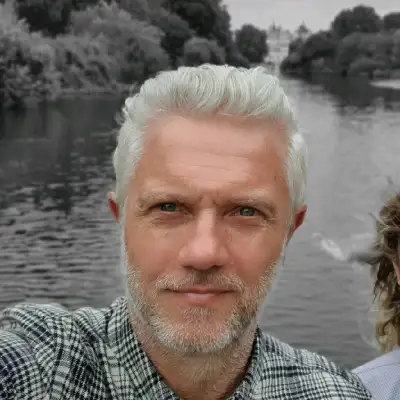
Hello and welcome to the Nuclear Leadership Network podcast. I'm Matt Gavin, your host. And today I'm delighted to be joined by Andy Storer, who is the founder of a company called Nuclear Collaboration and is the former chief executive of the Nuclear MRC and the current director at the NIA. So Andy, nice to meet you. How are you doing?
Andrew Storer (00:49)
Thank
you. Very good. Thank you. Very good.
Matt Gavin (00:51)
Excellent. Today we're going to talk about your career and your career journey. And to start us off, it'd be really cool just to tell us a little bit about your background. us how you've got to where you've got to. That'd be great.
Andrew Storer (01:01)
All right, thanks, Matt. Well, it's a bit of a strange journey maybe, but I wasn't the best student as a youngster. I was quite immature. So I left school at 16 with very few qualifications. I was going to be an apprentice at a company called NEI, International Combustion. Unfortunately, I didn't pass my O levels as they were at my age. But luckily the training instructor, who I will never forget.
Ken Tomlinson, when I went in to tell him I'd failed and I wouldn't be coming, he said come on young man let's see what we can do with you. So I did three nights at night school to reset everything pretty much maths, etc, physics, managed to do that the long way and started my career as an apprentice. That company then got acquired by Rolls-Royce, it was in Derby and so I moved into Rolls-Royce on test rigs for the submarine program.
And then I worked on site on and off for 10 years or more, Ross Scythe and Davenport working on all the British Naval submarines during refits. Really enjoyed it, but all things had to come to an end and I met my wife and couldn't keep traveling with child on the way. decided to get into more office-based jobs. So became an assistant engineer and then I worked my way through the Rolls-Royce career system.
to become a senior principal engineer and then a manager. I then became a leader of a business unit, as they call it in Rolls-Royce, before I then took a massive leap for me at the time to leave one part of Rolls-Royce and join another part of Rolls-Royce, which was civil nuclear from the defence nuclear. Looking back, it was no big leap at all, but it felt a massive leap to me at the time. So I was the program director of Rolls-Royce civil nuclear and had the great job of travelling the world trying to drum up business, represent the company.
for about six years. And then I decided to leave Rolls-Royce, which was a big step, and join the Nuclear AMRC. And I was at Nuclear AMRC for, I think it was eight years, until a year ago, when we decided, myself, the university, and the catapults, that we would create a spin out, or I would create a spin out, and try and keep doing some of the good work that we were doing on helping the supply chain. Whilst the university focused more on
Matt Gavin (02:57)
Okay.
Andrew Storer (03:06)
⁓ some of the high-end research in manufacturing. So that's a very quick canter through. Along the way, I have to say, I did get a degree in engineering and I did study at Open University to get a Masters in Business. So I guess I kept my qualifications going as I progressed through my career, but I didn't probably have what you might call a typical start in a journey. It got me to where am.
Matt Gavin (03:29)
Yeah, it's interesting. So was there an interest in sort of in the nuclear industry? Or was that a bit of a happy accident that you ended up there was?
Andrew Storer (03:36)
No, I mean, I was always quite interested in defence and the military, mainly Royal Air Force, if I'm honest. I love jets. But just by total chance, I flunked at school and luckily got my apprenticeship and then Rolls-Royce acquired the business. That's what got me into submarines. Very quickly, though, I was so proud to be part of that programme. Managed to go on to comment to the Ministry of Defence for a couple of years.
started with colleagues in the Navy, the US UK program, which has now become a dreadnought program in 2003. So I've been so fortunate to have some phenomenal experiences and what a great business to work as part. What a great business to be part of, you know, and I look back fondly at it. But it was total chance that I got into nuclear and that civil, that defence nuclear and then got me into civil nuclear, which then
has taken me into what I do today.
Matt Gavin (04:26)
Yeah, over your career you've probably seen, I guess, the industry change a lot. Obviously being part of the naval nuclear and the civil nuclear programme in the UK. What biggest changes do you think have you seen and what influence have they had on the industry as a whole, do think?
Andrew Storer (04:34)
Okay.
Blimey. I think the biggest change I've seen, I hope to see more of, if honest, it's a good start and it's recent, but the collaboration, or least the acceptance and knowledge across the sector from decommissioning. mean, if we consider naval to civil, that's difficult because of what the naval programme is, right, and it's secure. But to be honest, we're not very good at collaborating between decommissioning
and new building civil and fusion and civil. know, and so looking now at naval as well and the skills across the whole sector and the demands across the sector for the supply chain. Much more now I'm involved in conversations and have been, guess, for the last three, four years, maybe four or five years actually, in more pan-sector conversations. And that to me is a huge improvement.
We need a lot more of it, real collaboration, not just the conversations and maybe I'll come on to that later, but we do need a lot more of that collaboration if we're going to succeed. That's been the main thing. And I think also the government, not to blame at anybody's door, but I've tried to come up with what the plural of Renaissance is. It's either a renaissi or renaissances. But anyway, whatever it is, we've had five of them, six of them maybe during my sort of civil nuclear time.
Matt Gavin (05:55)
you
Andrew Storer (05:59)
I do feel now we are actually about to have one, really. And I think there's been some stop starts, too many stop starts. Some of my career changes, why I've changed is because of some stops. And I have to say those stops have been because of lack of decisions in the government and the sector has paused because of lack of confidence often. So I think we've moved beyond that as well now. I think we've gone from lobbying
governments, if I can call it lobbying. We've got decisions, we've got programmes now, we've got to get on and deliver. So think we've moved to a different phase of delivery which requires collaboration.
Matt Gavin (06:34)
Hmm.
Yeah, and I guess we've heard a few leaders on this podcast talk about, you know, the Renaissance and using that language. I suppose, how do we make sure where we are today is not another stop, you know, another stop point and we actually as an industry and I guess as leaders in the industry, what do think we can do to actually make sure we push this over? What's the sort of key, the key things we've got to lead on, do you think?
Andrew Storer (06:59)
Well, this is a really tough one, I think, because everybody who considers themselves a leader, whatever their position might be, and I do think that's an interesting topic. You know, can have somebody call a director or a chief executive, call somebody what you like, it doesn't mean you're a leader. That's a title that's been given to you. think leadership is something that's a little different personally. And I think what, in order to answer your question, I think we need leadership.
We need people to probably sometimes do things that may not be directly beneficial to their business, but it's the right thing for the sector to succeed. It might require some companies to collaborate with companies where they don't necessarily need to, but it means that one on one can equal three or four. We can join things together. We spend a lot of time in the sector competing for work. spend a goodness knows how much money.
Matt Gavin (07:44)
Great.
Andrew Storer (07:47)
in commercial conversation when actually why not just do what some other nations do, award the contract, go deliver and save the time and effort for the delivery phase, not the commercial winning phase. And I think if we can start to think differently about that and working together, we might just find that the skills challenge that we all like to talk about isn't so big and there's more people than we think available to do work. So I think, you know, as leaders, we've got to do
We've got to deliver. We've got to do what we said we'd do. We've now got a framework with GBE-N, with some of the other announcements from X-Energy, from Holtech and EDA, UKSMR. We've now got to deliver. And so it's time to step up really. And the sector can deliver, in my opinion, but it will have a far better chance of delivery if we work together. And I think cost is important as well. You know, we get compared often to...
Matt Gavin (08:20)
you
you
Okay.
Andrew Storer (08:39)
others in the clean energy sector, wind, solar, other renewables. And I think we get compared unfairly. Again, a totally different subject. But I do think there are times when we need to have a good look at ourselves for how much we do spend and what the costs are. And we have a lot of consultancies and we all know that the costs in some of those just spiral upwards because they compete often.
Matt Gavin (08:57)
Thank you.
Andrew Storer (09:06)
So think there's enough work here, that's my view. There's enough work. If we just work together to deliver it, we might just make sure UK has a really big portion of the work and we actually deliver. I think that requires significant leadership to overcome some of the today commercial angles.
Matt Gavin (09:23)
Yeah, interesting stuff. Just covering your early career a little bit longer, I'm just interested in how you made the transition. Obviously, it sounds like you started out fairly hands-on, fairly practical and getting involved in that sort technical side of it. What experiences have you had that's transitioned you from that point to senior leadership through that sort of management, I guess, into that senior leadership position? What experiences have shaped you the most?
Andrew Storer (09:38)
Hmm.
Well, I suppose I'm naturally quite a competitive person. If anybody watching this, sorry, if anybody that watches this knows me, will probably laugh at that because I'm probably very competitive on the leg. But I think when I see something that's not very good, I just think I can do better than that. And so I think from an early age, I never thought I'll be a leader of anything. I just thought the team leader I had was crap and I can do that. So I just said, I'll have a go at that.
And Rolls Royce let me have a go at that. I did okay at that. So I then thought, well, actually the manager is pretty poor as well. And I wasn't thinking of, I want to be a leader. just thought they're pretty crap. We can do better than that. So I think I've always looked around me and thought, Jesus, I can do that. Or I can do better. And, you know, I'm the sort of person that if the door's open and somebody says, a go, I'll have a go. Stop me kind of thing. So I think, I think I'm...
I think I've always been a bit competitive. I've always been bit inquisitive as well. I'm always interested in things and how things work. Not necessarily as a engineer, but as a company, as a business. How do things work? And there must be waste somewhere, you know. How can we smarten this up a bit? I'm not saying cut corners, but I've always as well tried to get from A to B, A to C very quickly. I don't always have to go via B, I'll just jump straight there. can we do that? So I've always...
been a bit challenging in that respect. So I think it was maybe something in me that drove me a little bit and that drive for some reason sometimes takes you up a ladder or up a career path. It was never an aspiration to be a leader really, it was just something in me to try and do the best I can and if somebody around me, it's on a football pitch or squash court, is pretty crap, I'll have a go.
That's it really. There have been a few occasions where I've worked for some really inspirational people as well, and it's really made me step back and think, that's amazing, to be able to think differently, respond to things when the muck and bullets are all around you, to be able to be calm in a situation. And I won't mention any names, but there's about three or four people who I could think of that have really stood out to me.
So also I like to emulate good, if I can, and try and pick examples. So I think those things really have stood out that's made me try and go for it. If that sort of answers your question really, Matt.
Matt Gavin (12:10)
Yeah, that's great. That's great. That's exactly exactly what we're after. I think in terms of it's interesting how you talk about a lot of leaders do talk about this almost accidental transition from, you know, I guess, I guess work and do it up through the leadership ranks by taking opportunities as they appear rather than any any set plan. I guess it was there a moment when.
Andrew Storer (12:20)
Thank
Matt Gavin (12:32)
you the signs that you spotted in yourself to sort of say, you know, I am developing here, I will probably make it up to, you know, executive CEO type level or was that another sort of, I guess, happy accident, happy coincidence that you just got offered a role and decided to have a go at it?
Andrew Storer (12:48)
There was, yeah, I suppose there's a few. But Rolls Royce, you may know this, there's a system called high potential groups. There used to be anyway, I don't know if there is now, because it seems decades ago that I left, but there to be a high potential group and I was nominated for that. And so you become part of another sort of group of people who are not there, but they've shown some potential to kind of be a little bit more leadership.
That doesn't mean they're better. I don't mean that at all. just means they, know, engineers get pulled out and taken this way. High potential leaders get pulled and go a different way. And so that made me think maybe somebody's seen something in me. And then that gave me some confidence actually. So I started my MBA, Masters in Business, really about the same time, because it made me think, well, maybe there's something here. Maybe leadership is something that's something I'm not bad at.
and I need to have some skill that can learn. So again, going back to my other point, I've always been quite inquisitive, so I always want to learn, you can always learn new things. So I think that formalised some of my, let's say, more practical leadership tendencies with doing my certificate and diploma and then Masters in Business. That really helped and was a bit of a jolt, I suppose. But then...
It was my first real senior position, I suppose. I didn't expect to get it. It was in Rolls-Royce submarines. At the time, there were structured around five business units and I applied and was interviewed a number of times and managed to be successful to run one of the business units. And I think it was that really that made me think this is probably a career thing now. And I then moved away from engineering totally and decided that maybe...
leading a group of people is more what I tend to like to do, if that makes sense.
Matt Gavin (14:30)
Yeah, I understand that. In terms of the learning aspects, what skills do you think you've improved the most to enable you to be that leader? Obviously, you had a technical grounding, but what were the skills that you think you needed to hone at that time to become that leader? how did you go about doing that?
Andrew Storer (14:32)
Good answer? Good answer.
yeah, well, I'm not there by any stretch, but patience, think, you know, empathy, everybody's different and everybody has a different way of working. And just because it's not my, the way I would work doesn't mean it's wrong. In fact, it's probably far better in reality. So I think just understanding people's styles, you know, where they're coming from, why that style is different to mine.
How am I different to them? So you've got some empathy for people on where they're coming from. I also struggle with reading and writing. I'm not bad at reading and writing, but it's not a natural thing for me. I've had more pictures and drawings. I also learned to, and again, people might laugh if they watch this, but I'm quite notorious now for whiteboard scribbles and pictures in my book. And they mean things to me. So I've...
I've learned that they don't mean anything to other people. So I have to kind of explain myself a little slower rather than just getting impatient and frustrated. I suppose nowadays there'd be a name for that. I'm a bit old for bothering about that, but I've managed to kind of work, I suppose, with myself and then understand how that can be better linked to the individuals, if that makes sense. So I think I'm not there and I'm still...
sort of constant thought in my mind, but I'm trying hard to slow down, be more patient with people and more understanding of their style really. That's the main thing.
Matt Gavin (16:13)
Yeah, that's a really, really, really good insight. think I'm similar. I think I'm probably a bit of a pictures person. Yeah, thanks for that. Just a few more following questions here because something's just fascinating. But so in your view, do you think the role of the leader in the nuclear industry has changed since, you know, the leader that you needed back in, you know, when you started in the industry?
Andrew Storer (16:23)
Yeah.
Yeah, I think it has. I don't think... I'm probably wrong in this because nuclear industry is a bit different. I don't like to special because we like to say it's special, don't we? But in reality, it's good engineering, pharmaceutical, aerospace, you know, it's all good engineering. So I don't think there's anything particularly special.
about the leadership in nuclear, but I do think it's changed and I think it's changed in other industries as well. know, the social media aspect, amount of information people can get access to now is totally different to what it was 10, 20 years ago. So whatever you might say as an engineering leader or a people
you know, human resources leader or whatever, finance, you can guarantee somebody's going to go home and Google something and find something and challenge you about it. And you've got to be prepared for that challenge. Then you've got AI and all the other cyber security challenges that are now on the list of everybody's risk registers, you know. So I think, leadership's changed. I think the expectations of employees is different as well. You know,
running a very small company as I am now, it's become more more apparent to me what people's expectations are versus what mine were, you know, when I first started my career. And they're very different. I'm not saying they work better or worse, it's just they're different. So I think the leader has to adapt to that. And the pace of working is different. You know, people...
Matt Gavin (17:58)
Okay.
Andrew Storer (18:00)
People really demand agile working, you know, it's become norm for people to have flexy time, work from home. COVID obviously changed a lot of that for people as well. So the expectations of people's working environments different, just doing this sort of thing, you know, that we're doing now. It wasn't, you didn't do that, you know, it wasn't there. You sent, literally, you might laugh at this, but you wrote a memo, you know, and when you put CC, was carbon copy.
Matt Gavin (18:15)
Thank
Andrew Storer (18:26)
You literally had a carbon copy piece of paper and you gave one to somebody and you gave another to somebody else and you filed it. know, so I can't explain how much data has changed and systems and ways of working have changed. So therefore the leadership has to change. But I still think fundamentally some of the requirements are still there in terms of the fundamentals of leadership.
and transparency, et cetera. But I think leaders have had to adapt. I actually think it's probably slightly more difficult today, if I'm honest.
Matt Gavin (18:57)
I'm interested in taking that bit further then. So what challenge in the nuclear industry today and what we're trying to do over the next sort of 10 years and I suppose advice for aspiring leaders, the leaders that listening to this that may be in your seat in 15, 20 years, what do you think the biggest challenges are gonna be for the leaders in the industry over that period?
Andrew Storer (19:18)
Well, we're now in a totally global delivery market. you think of submarines, Rosary submarines and the defense submarine program, BAE, Babcock, AWE, that's different. Although, you know, we're working very collaboratively now in the US, right? So that's still there. But if you look at where we are in civil nuclear, we've got technology from all over the world.
deployed in different parts of the world. So there's much more global movement of technology and therefore people. I think that's only going to increase in the next decade. Data sharing, security of data, I think it's going to be challenge for leaders.
I do think though, and it's a little bit negative, but I do think there's something around an acceptance that people are more mobile, that people are gonna move. I think I take my hat off to those large companies who have large groups of people who are loyal to them, you know, and they've been there for decades. I take my hat off to those people. But I don't think, I might be wrong, but I don't think that would be the case in a decade. You know, I think people are much more mobile.
I think leaders have to accept that people will come, they'll go. Will they even have many staff? know, there'll probably be pools of people that will be called upon to form project teams and then released and back and forth. Which we do today, of course, but it's through certain consultancies, but there's generally a large pool of expertise within a company. I think that will change. So I think, again, the agility of the leader to cope with that is going to be something that will be a challenge for...
for leaders for the future. And I think also we've got to look at where engineers are today, the engineers at school today. And hopefully, hopefully a much more diverse group of people coming from schools into engineering and manufacturing because engineering manufacturing has changed. I think the, well, the methods have definitely changed, but I think that the perception of it as well.
is change it. You know, I think in Germany, I'm not sure today, but in Germany, the careers, know, one or two was engineer, doctor was three or four, something like that, you know. So in this country, engineers always been kind of down the list, you know. I do think it's going further up the list. I think it's more appealing to younger people and I hope therefore it's more appealing to a diverse group of young people. So I think as well, we should expect to have
different people joining the engineering community and manufacturing community. I also think that we should also expect that younger people will expect to have a faster route up a system, whether that's to senior manager, senior engineering leader, or chief engineer. I think people expect it to be slicker. If they're good, they should be, they'd expect to be up there. I think the days of having to have hair like mine, you know,
Matt Gavin (21:45)
you
Andrew Storer (22:01)
and be a certain age, that's something of the past, think. That's something, again, that think leadership and organisations have to work out. I think it's going to be quite a challenging... Well, you younger people, I've got four children, right? They demand certain things and they expect things. If they're not right, they'll walk out of a restaurant or if it doesn't turn up at the door by a time, they'll moan that it's late, you know, on Amazon or whatever it might be. Well, that's a different attitude.
Matt Gavin (22:22)
you
Andrew Storer (22:29)
expectation. think that's the same now going into companies I expect.
Matt Gavin (22:33)
Yeah, interesting how that plays out in the long term, that's for sure. We talked about some of the challenges there. I guess there's lots of opportunities as well. what if for aspiring leaders, what opportunities would you sort of encourage people to embrace here to help them on the journey? What is the industry giving them now that potentially, you know, didn't give yourself?
Andrew Storer (22:48)
Yeah.
Yeah, well I think the diversity opportunity, I mean I'm so envious that I suppose younger people now have got the opportunity just in civil nuclear to work on large reactors whether it's Hinkley, Sizewall, hopefully another large reactor maybe will come through. Small reactors whether it's a UK SMR with Rolls Royce and partners or it's X-Energy or it's Holtech.
You know, already there you've got a variety, then you've got fusion. Then you've got some of the challenges for decommissioning, which are huge engineering challenges in clean up decommissioning. Some of the plants that's going to be decommissioned in the next decade. Then we've got the Dreadnought program and Orcas, the Australian, UK, US submarine program. And, you know, when I was younger, we never had that variety. We never had that volume, first point, you know, we didn't have the variety. So,
I'm really envious of the opportunities. think as people that might aspire to be leaders or anybody actually, whether you're an engineer or a manager, team leader, I would just say stay inquisitive, know, learn, challenge politely, but challenge people. Why do you do it this way? Can we do it a different way? Try and find improvement, but not in a way that's...
pain in the backside, know, like a constant, but ⁓ do it in considered way. But stay curious because I think when people aren't curious, they become quite boring and that translates through the leader to the team, whichever team it might be. think people can tell if there's passion and if somebody cares, I certainly can.
Matt Gavin (24:08)
you ⁓
Andrew Storer (24:28)
And so I assume other people can. And I think as a leader, people need to know that you're and that you're curious and you're interested in what you're doing and why you're doing it. Whatever level you're at, you know, if I look at people like Richard Branson as an example, you know, he's so curious in everything and what he does. He knows his brand, he knows his product, but he knows others. And he knows things that's happening and what might happen in the next decade.
Matt Gavin (24:46)
you
Andrew Storer (24:54)
I think that's a great example of somebody that doesn't need to be curious at all, but is really, really bothered about what's happening. And that, think, makes for good leader for me. I do think, I said earlier, some of the challenges, there are so many opportunities, they totally outweigh the challenge. I think there'll be opportunities for more people to go into leadership positions. If you think about...
Matt Gavin (25:04)
Yeah.
Andrew Storer (25:17)
just some of the examples I've given there and there'll be more. Each one of those is a huge program. If think of Hinkley Point, I think at its height, you 15,000 people on site through the construction phase. Well, let's float that into size. We'll see, you know, while we're still doing some of Hinkley, and let's just get some UK SMRs built at the same time that we're going to develop Cottom site, hopefully for Holtec and Hartley pool for.
X energy and not far from here, know, West Burton fusion, hopefully pushing forwards. And we're developing, sorry, the nuclear site in Dalby, it rains ways being developed. So is BAE, you know, for the submarine program. How much more do you How many more opportunities do want to go? So there's going to be more opportunities for project leaders, for engineering leadership and for leadership. So I think.
Matt Gavin (26:00)
you
Andrew Storer (26:10)
So many opportunities out there for people to test themselves and get involved in large leadership programs.
Matt Gavin (26:15)
Yeah, Just follow up on something you said there. It just intrigued me around. talked about Richard Branson knowing his own brand, but also knowing other brands. I guess as a leader, how much effort and time should leaders look to put into? Obviously, they've got their day job, they've got their work to do, they've got their company to lead. But what about looking at externally? And how do leaders sort of do that in terms of, A, make the time to do that, but also,
how do you create those sort of opportunities to be able to explore the industry a little bit more broadly.
Andrew Storer (26:43)
Yeah, I think that's a really good point because to me that's part of the job. A lot of people have probably been critical of me. don't know. I've certainly had a few people that have commented that if I've gone somewhere, I don't know, trip to Paris or wherever it might be, but that's representing the organisation. But it's also learning about what's going on, what are others doing. You know, we're hosting an event soon. So I go to other events and just see what people are doing. What's the latest thing?
Can we at least achieve what's happening in other events or other places? What are the companies offering? How do they market themselves? So I think it's part of the job. You're interested in what you said, which is how do you find the time for that? Well, that's the day job as a leader for me. That's representing the organisation. That's understanding what's happening. So I think the way to find the time is to make sure you've got people that's running the organisation so that you've got that time.
Matt Gavin (27:29)
Thanks.
Andrew Storer (27:35)
I've always tried, it's difficult, but to get a good team of people that you can trust to get on and do and literally trust to get on and do. I don't interfere. I desperately want to at times, but I don't interfere with my team today. And I didn't particularly interfere too much at the New Clare Marseille, my last job, because they're good people and they know what they're doing. So get on and do it.
Matt Gavin (27:56)
you
Andrew Storer (27:58)
and I'll try and do my job, my job being different to their job. It's still a job. We're all in the team. But if I don't do my job, they'll struggle to do theirs and it has a negative consequence. you know, whether you're the manager on the side of the pitch, the chairman in the stand, or you're taking the throw-ins, everyone's got job to do in that organisation. So I believe in that. So the way I make the time is to make sure that the team have got what they need, that they don't need me.
for day to day items. Okay, sometimes they'll need me to sign things or to bounce things off, because I've probably got some more experience in some areas than others. But generally, they're free to go and do. That gives me the time to do my job, is like we just said, sniff around, see what's happening, test against others, see if we're competitive, how's the market developing, what I might think is happening, is it actually happening?
Matt Gavin (28:47)
Hmm.
Andrew Storer (28:47)
And that does take a bit of time to set that up, have to say, but I think it's well worth the effort if you can get that sort of team around you.
Matt Gavin (28:53)
Yeah, yeah. I guess you talked a bit about, you know, getting out in the world and seeing what's out there. And obviously, I find that meeting people is just massively beneficial for my development. Part of the reason I started this podcast is to get to talk to people. How important in your leadership development, your career, have relationships, networks been? What part have they played?
Andrew Storer (29:15)
Massive, I didn't realise it was something I was doing actually when I was in Rolls-Royce. Submarines, it's something I've always reflected now, something I've always done. And I'm not bad at it. Forming relationships and networks. In Rolls-Royce, submarines, it was difficult because you had the security, you didn't often go off-site.
I was on secondment in Abery Wood in Bristol for a couple of years and that's when I first started to realise those relationships are so important. When I went back into the company I could put the phone up to people who others couldn't put the phone up to because I'd played five a side with them the night before in Bristol or whatever I'd done. So I then realised it's worth the investment of time. That sounds like it's deceitful something. It's not.
Matt Gavin (29:43)
you
Thank
Andrew Storer (30:04)
if you enjoy formulations and if you can, then go and do it. Some people don't like doing it, but unfortunately that's part of the job. If you're going to be in that job, you've got to be able to socialise. I don't mean that on an evening, I mean get on with people, be able to understand people, again, converse with them. And I realised it's something that I was okay at. So when I moved into the civil part of Rolls-Royce, that was what I was doing.
I don't speak fluent Chinese, but I was trying to go over to China, Japan and France and US, Canada to try and represent the company. But some of the people I met, I then I didn't realize at the time, but I quickly realized afterwards. They will move on and they were fairly senior at the time and people tend to move either across or up. So before I knew it, somebody I'd met over here was now the leader of another organization over there.
And that was a really valuable relationship. And so today, know, I've a year in almost November the first will be a year of running a new cult existing nuclear collaboration. In my opinion, although the team are brilliant, it wouldn't exist if we hadn't got some relationships that we could fall back on. I don't mean that in any way other than people to talk to.
friends, colleagues, people that can advise, know, help me. It's quite a lonely place sometimes as a person in charge of an organization and people to talk to, have a moment to have a cry, you know, just have a chat. But people that can also help you from an experience point of view to maybe advise you. And I think those relationships are so, so important to me now. I realized that developing them
way back then with something that just happened, but it's a real skill. And I'm sure, I know there are lots of courses you can go on. My best advice to anybody is invest some time to go to some of these networking events, nuclear Institute, nuclear industry association, IMECE, Institute of whoever, they'll all run events. It doesn't matter what it is, get amongst it and just test yourself. Just test yourself remembering names, where they came from, you know, and then go back around and see if you can.
converse and find a common denominator. I think that if you can do that and learn that skill it will stay with you through your career. bit like you're doing Matt with these things, know, these podcasts, it's a way of you forming that relationship with people, not just the people you're interviewing but the people that are following you. It's a network. Networks are what makes everything happen in my opinion.
Matt Gavin (32:20)
you
All right.
Yeah, I'd agree. Part of the reason that I see value in this, what we're doing right now, it's that network, it's that advice. It's the little nuggets that you don't even think you need to hear that you hear and take on board and something will change as a result. So yeah, brilliant. I'll wrap this up in a minute, but I've just got a couple more questions. It's really, really interesting talking to you, Andy. I guess for any aspiring executive leader, know, somebody who wants to...
you know, be in your shoes or in simpler shoes. What advice would you give them? What can they do? What would you say is advice that they can follow that helps them to get on that journey?
Andrew Storer (33:08)
Well, one thing I said earlier really, which is stay curious, inquisitive, know, what's happening around you. If you're in the nuclear industry, get to know the nuclear industry. know, when I was in the naval part of the sector, I didn't know anything about the rest of the sector. I didn't realize how big a sector it was actually. is. Likewise, if you're in decommissioning, get to know the sector.
That's something I think is really important because you can move across quite easily. And I think also it's not always about going up, it can be about going across or backwards sometimes to get to where you want to get to. I never had a career plan. I'm not knocking them. I think some people have and they probably worked. didn't. I think the main thing I would say is you need to keep your convictions.
Matt Gavin (33:46)
Thank
Andrew Storer (33:51)
Leaders often have to stand alone and I don't really consider myself a great leader or an experienced leader. I'm finding my way every day is a new day of learning for me. But one thing I do realise is that it can be very lonely and if you don't stand by your convictions then people won't look to you going forwards. So I do think you've got to make decisions, you've got to stand by your convictions.
And if that means you stand alone sometimes, well, that's tough. need to stand alone sometimes and you'll fail sometimes and you still got to your chin up and you'll have people slag you off and you still got to hold your chin up. And it's tough. It's tough. You know, if that's why you need that, relationships with your network, because I'll guarantee you there'll be other people in my position that I can put the phone up to and they'll have days where they need help in just a chat. And so I don't feel embarrassed at all at picking the phone up to one of my friends.
and saying have you got time for a chat and they probably know what I mean and it's just a moan and then it's fine but you do need somebody to talk to so I think forming that other group of people that you can rely on and trust but stick by your convictions, stay curious and energy be determined, keep your energy levels up because it's a long career and you need to be awake you need to be listening, listen well
and don't make stories up in your head. Listen, listen to things and then triangulate these things together. Lots of, there's lots of demons in people's heads, especially mine. I believe everything I told myself and I put my head in air every day. You got to get up, you got to get at it and energy. So I think curious, energy, also sticking to your convictions and build that network of people you can talk to. Talking's good I think.
Matt Gavin (35:31)
Yeah, brilliant advice. Thanks, Andy. Thanks, Andy. We'll finish on a bit of a lighter quick fire round if you don't mind. So I've got some leadership flavoured quick fire. So whatever comes into your head, it would be great to hear it. So what's the habit or a routine that helps you be an effective leader?
Andrew Storer (35:36)
like that.
Love me.
Just quick fire. ⁓ Laughing. Keep laughing. myself. Laughing at myself more than anybody else.
Matt Gavin (35:48)
Yeah
Yeah, don't take his house too seriously. Yeah, I think that's probably true. Absolutely. What's your one word that describes a great leader?
Andrew Storer (36:04)
passion.
Matt Gavin (36:04)
Love that, love that, love that. And what's the best piece of advice you ever got?
Andrew Storer (36:10)
Well, it's actually a lyric to a song that a friend of mine stuck on my phone at a company and it's an Adamant song. If you've heard of Adamant, Adam and the Ants.
Matt Gavin (36:21)
I have heard of Adamant, yes.
Andrew Storer (36:23)
And the line is, ridicule is nothing to be scared of.
The next line is Prince Charming, which I'm not associating with me at all. But Ridicule is nothing to be scared of. And it's something that I think, it was just a laugh at the time, but I've still got the post that he wrote it on.
Matt Gavin (36:37)
stuck with you, it stuck with you. Brilliant. That's a great point to end, think. So Andy, it's been fascinating. Thank you very much for joining us. It's been an absolute pleasure. Thank you very much.
Andrew Storer (36:38)
We're sorry.
Thanks Matt, thanks for inviting me.
Matt Gavin (36:51)
Thank you so much for joining us on this insightful journey with Adli Stora, where we explored the evolving landscape of nuclear leadership and the importance of collaboration and personal growth in this We hope you found valuable takeaways that will inspire and guide you in your own leadership journey. Remember, staying curious, building networks.
and standing by your convictions are key to making an impact. Until next time, keep leading with purpose and passion. And we hope to see you again in the Leadership Nuclear Network. Please like and subscribe to podcast to the word on what we're doing here. See you next time.