Subscribe
Share
Share
Embed
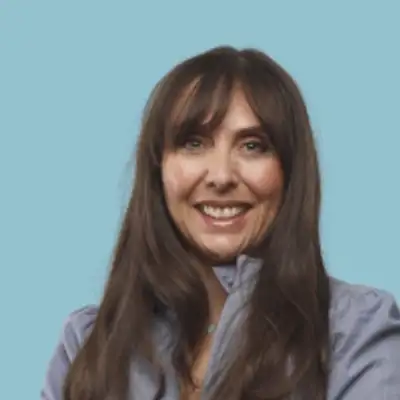
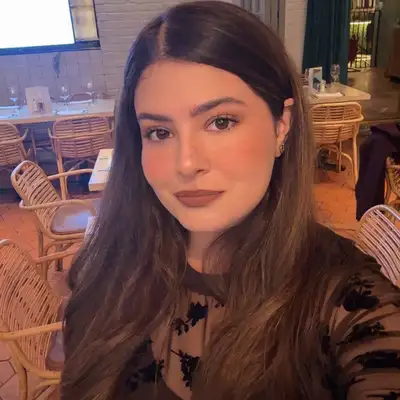
The Bridge: a Disagreeing Well podcast from University College London and Students' Union UCL tackles some of the most hotly debated issues of our time and provides practical techniques to bridge the divide between conflicting views. Each episode, our student hosts Marva Khalid and Diego Lacheze-Beer, along with expert UCL mediator Dr Melanie Garson, dive into a polarising question with informed and passionate guests with contrasting views. Tune in to better understand these critical debates, and equip yourself with the skills to have more meaningful conversations.
Find out more at https://www.ucl.ac.uk/about/the-bridge
Marva Khalid 00:02
Hello, and welcome to the second series of The Bridge: A Disagreeing Well Podcast from University College London and Students' Union UCL, that tackles hotly debated issues and provides us with tools and techniques to help us disagree about them better. I'm Marva Khalid, UCL student and co-producer of The Bridge. I believe conversation is the catalyst for change, because the hardest conversations are the ones that matter most. So, our question today, when it comes to climate responsibility, does net zero go far enough? Growing up in Pakistan, a country that produces less than 1% of global emissions, yet holds over 13,000 glaciers, I saw firsthand what it means to be on the front lines of the climate crisis. Rising temperatures are melting these glaciers rapidly, the floods that follow wipe out entire communities overnight, their homes, their land, their livelihoods. When you watch that happen, you realise that slow corporate climate pledges just don't cut it. This is an immediate existential threat. At the heart of this debate is a deep tension. One side says we must be practical, that progress, however imperfect, is still progress. The other side warns that practicality has become an excuse for doing the bare minimum. So, are we engineering our survival or just buying time? Joining us to discuss this are Professor James Dyke, Assistant Director of the Global Systems Institute, and the Director of the Environmental Intelligence Centre for Doctoral Training at the University of Exeter.
James Dyke 02:07
The hotter it gets, more people are going to die, more people are going to be displaced, and that's going to threaten both food systems and political systems. I do fear we are just going to continue to kick the can down the road, and things are going to get much worse.
Marva Khalid 02:19
And Dr. Emma Fieldhouse, Director of Future We Want, an organisation that works to support learning about climate change and sustainability.
Emma Fieldhouse 02:30
I had a young person in my training, and he was angry at the start, and he was still angry at the end, and I said, "Why are you still angry? He said, "You older people, you've known about this for such a long time, and you've not done anything.
Marva Khalid 02:44
We're also joined by our resident UCL mediator, Dr. Melanie Garson. Melanie, you've mediated difficult conversations, particularly as we caught this in London in May, and it's 34 degrees outside. What's your read on this one?
Melanie Garson 03:03
Well, at the heart of many difficult conversations, climate is one of the most difficult. We see it where there's protests, and we see it where there's denial. So, it's also, as you've set out, an area where it has very tangible impacts for people personally that they feel very passionate about, and often misunderstood. So, I will be really interesting to see where our experts today sit on this issue, and how we can come together to look at navigating these tensions through these conversations as they've experienced it, and their advice for experiencing it going forward. What about you? What you interested in today?
Marva Khalid 03:44
Honestly, I walked in today, and London is 33 degrees.
Melanie Garson 03:47
Oh, so hot.
Marva Khalid 03:49
And I found myself thinking, are we going to spend the next decade debating the framework while the temperature keeps climbing? That's really what I want to explore today, not just whether net zero is the right target, but whether it's changing anything on the ground, and I keep coming back to one question: is the problem net zero itself or how it is being implemented? Okay, let's get into the discussion. James, you've written and spoken extensively on this. Does net zero go far enough? Can you briefly outline your position on that?
James Dyke 04:23
Okay. Well, thank you. And I want to start with something that Emma and I strongly agree about, which is we are trying to avoid dangerous climate change, and in that respect net zero has failed. The first reason is because of the physics. When the process of exceeding 1.5 degrees Celsius of long-term warming. There's simply no carbon budget left. Now when he promises to recover back into safety, increasingly rely on large-scale carbon removal, the ability to take billions of tons of carbon dioxide out the atmosphere, and we currently can't do that. And then, as you mentioned, we also need to go beyond mitigation, we need adaptation. Yesterday, the UK temperature record was broken, not just for May, but for June, and today is probably going to be broken again. We need to work out how to live in a much hotter, much more dangerous world. And then, finally, net zero was almost set up to fail, because it didn't really engage with the substantive politics. Back in 2015 when the international community agreed that it would do what it was required to limit warming to well below two degrees celsius, it could have accelerated the phase out of fossil fuels, stopping the burning of coal, oil, and gas, and of course it didn't, and it didn't for a whole bunch of reasons I'm sure we were going to talk about now. And what that meant is that we've kicked the can down the road, emissions have increased even more, temperatures have increased even more, and we are now currently facing a situation which is becoming increasingly dangerous.
Marva Khalid 05:49
Thank you, James. That's a sharp and challenging position. And Emma, you come at this from a very different angle. What's your position?
Emma Fieldhouse 05:57
My view with net zero, is was really the first instrument that was actually created that we globally agreed on, so it's kind of instrumental to the 2015 Paris agreement. It's the first time that we had that degree of acceptance at the high level, high governmental level, that we needed to actually bring our emissions down. It's not a perfect thing, but in terms of it conceptually it actually made sense, because it's the first time that we could level out bringing emissions down, but also balancing some areas of society where it's going to be difficult to bring those emissions down quickly. I don't think was ever intended to be the final outcome, so in terms of it being far enough, I would probably also argue that it doesn't go far enough, because we need negative. But in terms of a good starting point, and something that pragmatically is actually really instigated a lot of change globally, then I think it is far enough at this point.
Marva Khalid 06:58
Thank you, Emma. Brilliant. I find striking that both of you shared the same concern. Melanie, over to you to lead us through the discussion.
Melanie Garson 07:08
Thank you so much, Marva, and thank you, James and Emma, for your opening thoughts, and really exciting to have the free-flowing sense of ideas at the moment. I just want to rewind for one second, we've thrown out the term net zero, and for some of our listeners, they may not be entirely clear what the definition is, or what that definition may be from your perspective, so I'd like to go to Emma first and ask you, what would you say your definition of net zero is?
Emma Fieldhouse 07:43
Ultimately net zero is asking that we reduce the amount of carbon emissions and greenhouse gasses in the atmosphere to bring them down in line with what we were producing back in 1990 and get us to a point where we're not overloading the atmosphere with more greenhouse gasses than we can cope with, so net zero to me, unlike carbon neutrality, gives us the incentive to actually reduce or mitigate and reduce those emissions first, as far as we can, before we would potentially offset any emissions that we're going to find difficult to get rid of, so for things like aviation shipping at the moment, etc, certain sectors, So carbon neutrality, we could say, okay, if we want to be carbon neutral, then we will just balance our emissions immediately, and a large part of that would be through offsetting, and there are obvious problems with offsetting that I'm sure James is going to be talking about. So net zero, in a sense, is already going further, in a sense, because it is assuming that we will bring down our missions as much as we can first before we apply the offsetting kind of rule to it. That's my understanding of it. I'm sure James probably has a different point.
Melanie Garson 08:29
Thank you. James, let's give you your understanding, not your reactive understanding, but just how you would have walked in before you heard Emma say what her position is on your understanding of net zero.
James Dyke 09:15
Sure, so the atmosphere is a very complicated thing, but there is some quite remarkable science, which is now quite robustly concluded that the amount of warming that we're going to get, the amount of how hot we make it, is almost entirely dependent on how much extra carbon dioxide we put into the atmosphere. If you imagine the Co2 in the atmosphere is like in a bucket, and we pour carbon into that bucket through the burning of fossil fuels, also how we grow our food, and there's lots of non Co2 greenhouse gasses like methane, and there's a natural outflow of that bucket, the natural carbon cycle process, which has been going on for millions of years, and the problem we've got is the rate of which you've been adding the carbon is much, much faster than the natural rate at which it's been removed, and therefore the water level in that bucket is going up and up and up, and the higher. Of the level, the warmer it gets. If we stop pouring carbon in, then the system essentially stabilises. What net zero did, and it was a tremendous achievement in terms of international climate negotiations. It said, look, we will offer you the promise that you can limit warming to, let's say, no more than two degrees, and of course, one way to do that is we've got to stop pouring it in, but the energy majors, the United States, United Kingdom, would never have agreed back in 2015 to rapidly phase out fossil fuels, they're just not going to do it, right? So, what they did, they offered them the promise that if we could remove the same amount of carbon that you actually flow in, then the water level won't rise, and that was the kind of the genius twist, and net zero, and of course, what that meant is that it was fundamentally compromised from the beginning, because all you need to do to demonstrate progress is promise an ever larger amount of carbon outflow, whether it's through offsetting or today we talk about engineered carbon removal, things like direct air capture, and so in some respects it's completely understandable, and it was a tremendous success in getting the international community to agree, but what they agreed was like the lowest common denominator, which has kind of not really done what we needed it to do, which is the rapid phase out.
Melanie Garson 11:15
Thank you for that, James. Emma I've seen a lot of nodding there. What elements of what James has said resonate with you the most?
Emma Fieldhouse 11:25
He's right, and we do all use the bucket analogy quite a lot as well, with regards to how much budget we have left with regards to the amount of greenhouse gasses that we can put into the atmosphere. I can't disagree with that, you know. At the basic level, the two of us agree, because this is physics, we're talking about. A more colloquial way of thinking about this would be if we're going to put that jacket on a tank of water to keep the heat in, that is what we're doing. It's almost like we're adding another layer, another jacket onto it with all of the emissions that we are continuing to push out. I think for me the key thing is, and James has said this himself. We had no agreement before Paris, we had nothing like this, and we have to have some kind of starting point. What I would probably say to James is, you know, if net zero is not going far enough, then what specific endpoint would he suggest we use instead to actually achieve where we need to be, because ultimately, as much as I'm sure James and I would both like to just switch the tap off into the bucket, being realistic that has not happened up to this point and is not something that we could both agree we could literally just do tomorrow. So I'd really like to hear from James, you know, if net zero isn't that starting point on the journey towards net negative, then what is?
James Dyke 12:44
So, I think we can see some indications of what would be required, which is the bilateral multilateral agreement to phase out fossil fuel demand. So there is, in parallel to the United Nations Framework Convention on Climate Change, an assemblage of about 50 to 60 countries, which are now unilaterally working together to phase out the demand, right, because the problem with the United Nations Framework Convention on Climate Change is that you need consensus, you need all the nations in the United Nations to agree, and lots of those nations are the producers of fossil fuels, you know, Saudi Arabia, United States, they were never going to agree to stop producing fossil fuels at the rate of which we would need to avoid dangerous climate change, because of all the inherent political economic drivers for them to continue to do that. So, every single stage in the UNFCCC, they would always try to derail those kinds of negotiations. Sometimes it was Saudi Arabia, often it was the United States. They wanted to keep us hooked to coal, oil, and gas. It's only been relatively recently that a whole bunch of nations have decided to get real, I suppose, and realise that the only way we're going to rapidly phase out fossil fuels is to stop using them, right? And then that's about the acceleration of the green economy, but then also the transformation of our transport systems and our food systems, which I absolutely understand is politically difficult. I think what net zero has done is something of a disservice, because it's presented a really, really challenging situation as something which seems to be quite simple, and the simplicity comes from the proposed technological solutions. We just need to remove the carbon, right? But what that has done, that's replaced a really difficult political problem with an equally intractable scientific and engineering problem, which is where I got quite exercised, because when you look at the proposals, we can't just take out billions of tons of carbon dioxide from the atmosphere, we need to be thinking about maybe some of the difficult political decisions, and it could be that societies do conclude, well, we didn't want to limit warming to no more than two degrees, anyway, we might be okay with two and a half or three degrees, but sometimes I do worry that that's not the kind of discussion that we've been having with our societies, we've been offering them a much rosier picture in which their future isn't going to be imperilled, because we'll figure out when we need to.
Melanie Garson 15:01
Um, thank you for that, James. When you're talking about these topics, both of you from your respective positions, what do you hear from others about this conversation that you feel is the most misunderstood and stopping the conversation moving forward from your perspective? And I'll say that out to Emma first.
Emma Fieldhouse 15:22
Net zero is very, very misunderstood, and right now in the UK is also being used as a political ball to kick around. We've got to try and find a way of inspiring, engaging, and informing enough people, and I won't say everybody is necessary, because for those of us working in this space, we also know that we only need 25% of society to shift to create this change, but we're not actually necessarily going to get them to shift whilst we've got this backdrop of conversation going on in the media that is really taking apart net zero, I mean, my difficulty with James taking the position of it's not enough is that it's essentially sitting with some of the populist scary political parts of the discussion out there at the moment, and so by saying it's not right, you know, are people going to take a sound bite from something you say today, James? Look, even scientists don't agree with this. This is where it's difficult, because if you're talking to a regular person about net zero, they don't really understand what it means, and I don't blame them. We've sort of made a rod for our own back by having these bits of terminology, you know. James and I, we're fine talking about mitigation, adaptation, you know, we talk about the Paris Agreement, COPS, we know what all this stuff is. Regular people just know it's getting warmer, and the scientists are only saying by a couple of degrees is what we need to limit it by. Now, their everyday experience of that is weather, and weather varies in temperature by many degrees every single day. However, we know that if we then take the trends of that and apply it globally, that a couple of degrees is really going to have a very big impact. If we can't stop or enlighten some of the chatter that's going on out there, so that we can actually bring regular people along enough, and the 25% in society that absolutely need to shift, we're going to lose anyway okay. So net zero in that sense possibly wouldn't be enough, but I think it comes back to the concept for me, what more do you want, and I'm not entirely sure James answered this when I asked him the question, because it's like I know as well that in Colombia there was the recent meeting of a number of countries who were actually saying yes, let's turn the tap off, and that's the, that's the approach. Have you got a way of describing that? Have you got another suggestion for how that could be implemented? What is going to replace net zero if net zero isn't enough?
Melanie Garson 17:52
Well, James, I think Emma has flagged one of the areas of your discussion that she feels is misunderstood, but also the same question in mind is what Emma feels is misunderstood universal?
James Dyke 18:05
So, I'm very mindful of the of the context in which we have these discussions. Some of my earliest research on the climate was used by some quite infamous climates deny websites, they can misconstrue, they'll mangle your words and they'll do whatever they want with you, right. So, there is also, at the same time, a resurgent climate-denying right that's only going to get worse. More warming means more loss and damages. The way in which I would describe it is, the hotter it gets, more people are going to die, more people are going to be displaced, and that's going to, you know, threaten by food systems and political systems. So, in some respects, the summer that we've got now, this is going to be looked back at as the, you know, the most mild kind of summer, not just climatically, but also in terms of our political climate. One thing that I don't think gets talked about enough is there's lots of science that suggest about 25% maybe even less, of a population is what you need to flip norms and values. If you've got about a quarter of a population, we've got examples of, you know, like smoking tobacco, hitting children, seat belts in cars, but really, the challenge with climate is not that, it's not the 25% it's the 0.001%. It's the extraordinarily wealthy and politically powerful individuals who do not want us to succeed with net zero or any kind of climate policy, because doing that would be a threat to their vested political economic power, and obviously you've got the fossil fuel producers, but you've got essentially petrostates, such as the United States, in which their entire political system has been built around the continual production of coal, and then increasingly oil and gas. And so, what do we need to do? Well, if we don't substantially engage with those kind of economic and political structures and systems, then I do fear we are just going to continue to kick the can down the road, and things are going to get much worse. And in my conversations with colleagues, Paris was never going to work, right? Paris is over, right? 1.5 is over, and so is 2, and probably 2.5. There's going to be some very, very difficult decisions that we need to make with regards to mitigation, adaptation in a way that does everything that we can to avoid any kind of lurch towards right-wing populism, isolationism, or even xenophobia, because that's my assessment of just how dangerous this situation is.
Melanie Garson 20:22
Thank you for that, James. And thank you for sharing the dangers of misunderstanding. Both of you flagged that part of the issue is the terminology, so I'm going to throw something out to you as a collective exercise. If you're going to rename net zero, what would you call it? Throw out anything.
James Dyke 20:46
Okay, net zero, it was useful, but I don't need to come up with new ideas. There's, you know, climate justice, safe climate, planetary boundaries. I quite like the term rebalanced economics, the idea that we need to bring our economies back into balance, both between the global north, global south, and then also to deal with the spiralling inequality between. There's lots of opportunities has been demonstrated, let's say, by the surge in popularity for the UK Green Party to associate environmental issues with social justice issues. People are experiencing a cost-of-living crisis. We can't afford to feed our families. We also can't afford to keep warm in the winter or cool in the summer, all those kinds of issues you could address at the same time through effective insulation, through accelerating heat pumps, though, you know, the rapid phase out of fossil fuels. Climate is obviously the most important component with respect to our conversation right now, but how it lands and to gain some kind of political traction, I think we've already got abundant ideas.
Melanie Garson 21:46
Thank you for that. Emma?
Emma Fieldhouse 21:48
Yeah, I think for me, I try to go to the kind of lowest common denominator with explanations wherever it's possible, just to simplify it, but I honestly think just saying we need to achieve a liveable planet just makes it very clear, you know, we need somewhere we can continue to live. We know there are planetary boundaries, as James says, climate is anyone, but achieving a liveable planet, whether that's maintaining water resources, whether that's making sure that we can still produce enough food for ourselves, whether that's stopping any kind of political escalation, these are all elements of making sure that the liveable planet is what it is that we are achieving. I think part of the difficulty with something more woolly, I guess, in that sense, is that with net zero there was an element of precision that we wouldn't have with just saying we need to reduce our emissions, and so because net zero is saying okay, this is the limit, this is the bucket, this is how much we can actually essentially pollute into the atmosphere. There's been more precision around that as a piece of terminology, but I would agree that how we've sold it, whether we've brought people on board or not, and James is right about the smaller number of people we need to actually get on board with this, but I would say they're part of the 25% and it's social movement theory that tells us about the 25%, but there's another percentage that's key in this, which is that you only necessarily need about 3.5% to be involved in direct action to move the dial. There are also various movements that are already in place, so there's the Climate Majority Project, they are saying we already have these numbers of people who are operating in this space, but we don't have a recognised movement name under which we all are sort of walking forwards. So there are many, many people proven through global surveys of populations that between 80 to 89% of people care about this, it's assumed that people don't care, so there's various elements of this that I think we need to lay open to people, net zero potentially a bit too stuffy a term, and obviously potentially gate kept by the sustainability professionals, so I think the job for us is to actually find that way of translating to people in a meaningful way, and as James said, talking to people about equity is a good way to do it, talking to them about the realities, I mean, Marva has also explained about Pakistan and the situation there, so you know this is killing people every day, and again, unfortunately, I'm not going to disagree with James on that, but we needed a starting point, and net zero has provided that. It has gone as far as I think perhaps it can, what comes next? Net negativity, but how are we then going to sell that in any better way, I don't know.
Melanie Garson 24:42
Emma's raised a really interesting point here about having a name or having a sense of a target or a goal tends to create more of a flag around the concept effect. Would you agree with that? And what would you then think that goal should be?
James Dyke 24:59
Well, I can tell you what I think the goal is going to be. I would suggest it's going to be called overshoot. So, we've gone from a period of climate policy characterised as net zero, we need to bend the curve, we need to slow the flow in. And now we've gone beyond that, so now we're into overshoot. Now, the way in which overshoot is currently being framed is it implies it's recoverable. It's a bit like when Wile E Coyote runs off the side of a cliff in a cartoon, there's a period of time when he realises he's actually in mid-air, and if he's quick enough, he can run back. And I think that's what's being proposed for keeping us safe from climate change. Now, of course, the problem is we don't actually have a plan to recover ourselves back into safety. At the time of the Paris Agreement, Beccs bioenergy carbon capture and storage emerged as the kind of climate saviour technology, and it was just literally used as a term, a tuneable term in the models to just make sure that we can limit warming to no more than two degrees, right. So it was kind of invented as a kind of an economic exercise, and in the 10-11 years since has been realised it's never going to work. Burning biomass to generate electricity is a catastrophically bad idea, right? And now it's direct air capture, now it's engineered removals. And when that doesn't work, then we're going to be talking about solar geoengineering, the injection of sulphurous elements into the atmosphere to cool the planet. And there's already now some serious amount of money and research going into that, so that's the next development of overshoot, overshoot plus, if you will, and we're going to continue to do that until something breaks. That's my most pessimistic diagnosis. We always have agency every single step of this way, we have had, and we will continue to have agency, we can decide to do otherwise. I think in order for us to make the right decisions, we need to be having the right kind of discussions, which is technology's not going to save us. We need to make some difficult political and economic decisions. Those decisions will probably benefit the vast majority of humanity. Most people's lives should improve, I'm not asking for everybody to live in a yurt or to wear hair shirts, I think your material conditions will improve. But what that means is we're probably going to have to redistribute the goods and services of our economies, and if that makes us think about what's the point of economic growth, what's the point of our societies, what's the point of all this AI automation, then that can only be a good thing.
Melanie Garson 27:11
Thank you very much for that, James. So, really, a vision of where this sits within a much wider question that has relevance for the individual. Emma, we have a lot of young people listening to this conversation, people with vision, people with potential for innovation, people hopefully our future policy makers and change makers. What would be the one thing you would want them to take away from this conversation?
Emma Fieldhouse 27:38
Hope, hope, absolutely, hope, because without hope we have nothing without that. I ask people at the start of all of my learning experiences how they feel about climate change, and I get anxious, worried, concerned as the three primary words we get from every single audience. And I've asked this to 1000s of people now. And by the time I get to the end of any of the sessions that I've done, I asked them the same question, and up till now I've not had a single audience that hasn't shifted and actually felt that they have some degree of agency, you could call it hopium, perhaps, if you're coming from the from James's perspective, that has been levelled at what I call the sort of solution easters who were saying we have to focus on how we get out of this, but you know, at some point we have to stop arguing about the aesthetic of the bucket and actually just switch the tap off. Yep, debating the terminology is not necessarily going to inspire some of your young people. I think telling them that they are the leaders of tomorrow, that they have choices, that if they want to dedicate their life to making the world a better place, then they can absolutely do that, and that there's lots and lots of ways in which they could help to impact our climate and our world in ways that would just be very meaningful for them, but also meaningful for future humans. I had a young person in my training, and he was angry at the start, and he was still angry at the end. And I said, "Why are you still angry? He said, "Because you lot, you older people, you've known about this for such a long time, and you've not done anything. And I said, "You know, I think there's a difference between people who work in this knowing about this and other people. I do think there's a background level now that everybody knows that some dangerous stuff is happening in the planet, and we need to address it, because actually we're observing a change at the window. Okay, and we feel it in our skin and our bodies. However, I wouldn't say that your average person knows what all of this stuff means, and certainly doesn't know what they should be doing about it, and how they can actually make a difference. So, I'd say, lean in, lean into whatever is the area you are most fascinated or interested in, or the thing that gives you hope or joy, and just do as big an impact in that area, as you can, knowing that there's a ridiculous amount of nonsense going on outside,
James Dyke 30:06
You can certainly derive joy, I mean, I have derived a tremendous sense of joy by doing the work you generate the purpose and meaning to do the work, and one of the reasons for that is because you have to work with other people. So, there are already communities, so you know, jump in the water's lovely, you know, wherever you are, wherever you live, whatever kind of profession you're engaged with, there will be some people, there'll be organisations already working this space, and they would be desperate for you to help. So, don't underestimate the importance you have for others, and for you to be an effective part of the solution. At the same time, I think you've got to have this kind of steely determination. The thing that we must, of course, avoid is any kind of political violence, right? But it's going to be a political struggle. They're not going to want to do the things that we all desperately want them to do. Individually, we will all fail, but collectively, I do think we are going to have a good chance of not just phasing out, not just achieving net zero, but doing something really quite transformative.
Melanie Garson 31:04
Where have you seen the best practice that has helped move this conversation forward James?
James Dyke 31:10
I'm very energized by the developments in community energy, and that's been made in part possible through decentralized renewables. So, Germany, there was a craze for balcony solar, and it's coming to the UK. This idea that you can just install your own solar panels, but at a larger scale, we've had community-owned and managed and run wind farms and solar farms in the UK for quite some time now, and it's been something to see communities assemble around the idea that you can generate your own electricity, but also you can directly benefit from joining with other people to produce that energy, and there's some smart ideas about micro grids, but just the principle of being able to work with other people to generate the energy that you desperately need at a time of potential energy and security has been quite something to behold, and I do think that the distributed community level energy generation, given how cheap solar panels are becoming, is probably one of the most quickest ways that we're going to accelerate that phase out of fossil fuels.
Melanie Garson 32:14
And to you, Emma, in absence of getting stuck around a definition, where have you seen really good progress when people are able to set aside definitions and actually implement practice.
Emma Fieldhouse 32:27
I think it's where you see that what we call the co-benefits of taking climate action, where they all sort of collide together, and there's a stunning example of this in Pakistan. So, Marva, you know, your own experience of what's happened in Pakistan, it's a wonderful example. We've seen this confluence of farmers in rural Pakistan who would normally use diesel generators, I believe, to actually pump water out of fields, have realised that solar is actually a hell of a lot cheaper, and they've popped over into China for their cheap solar panels, and at the same time, we've also got culturally relevant TikTok influences with the right music and everything, encouraging those farmers and showing them how to DIY their own solar kit to help support what they're doing in their fields. There’s benefits to the farmer, they're saving money, there's less air pollution, there's less noise pollution. You don't hear that hum of generators, diesel generators, that's been there for so long. This is the best example of a country that consequently is actually lowered the amount of fuel that is needed to use, and that really hasn't happened in a developed nation, where we would get flickers of negative climate impacts, we're getting flickers of positive social impacts and social change that's actually generating the kind of new future and the new revolution, green revolution that we need. So it's not just about the blah and it's not about the terminology and the governments, it's about people doing it because it makes sense for so many reasons.
Melanie Garson 33:57
Thank you for that. That's really useful example of perhaps when we step away from a rigid frame around a particular term and shift thinking towards a wider concept of liveable planet where people are able to take action that's meaningful for them. Thank you so much for really sharing your insights. I'm filled with hopium today. Marva, over to you.
Marva Khalid 34:22
Thank you very much, Melanie. I do feel very hopeful, and I love how optimistic this conversation was in the end. What I'll take away from today is that net zero is a step in the right direction, and as James said, a genius twist, and as Emma said, a good starting point, but we need to make difficult decisions to achieve a liveable planet, and we need to take the politics out and work collectively to achieve the same goal that all of us have together. I would like to thank both Emma and James for their time today. Thank you very much. James, what will you take away about disagreeing well around the issue?
James Dyke 35:09
I will say that it's nice to disagree, but that's when you have the opportunity to disagree with nice people. So, it's been a, it's been a really nice opportunity to meet Emma, and someone who works a lot in trying to translate the science into action. As an academic, I am academic, most of what I do is completely pointless. To understand better how widely society can get engaged with, whether that's from a, you know, grassroots community to a large multinational app to, you know, policy makers, that's where the change needs to happen, and so it's always an opportunity and a privilege for me to talk to people in that space.
Marva Khalid 35:46
Thank you very much James, Emma, same question to you.
Emma Fieldhouse 35:51
James is right, it is important that we have this conversation between academics and people who are doing kind of practical work. I'm hopeful that I bring a bit of both of those to the arena, we do have to keep having the conversations, because if we don't challenge where we're going, then we will have an even bigger problem in the future. So, we do have to keep having the debate, even if some of us think just making change happen is more important.
Marva Khalid 36:17
Emma, James, thank you very much for your time today.
James Dyke 36:21
Well, thank you.
Marva Khalid 36:28
So, Melanie, we've taken a moment to reflect on the discussion we've just had. How do you feel the disagreeing went, and how did your techniques play out?
Melanie Garson 36:38
Thank you, Marva. Well, I really enjoyed this discussion, and there were two things that I really take away from it. This podcast we called The Bridge, and often where we have gaps and disagreement is when we have people that come from two different spheres of practice, from academia and sometimes from the practical element. Part of this conversation was bridging between those two spheres and finding the areas of commonality and finding the areas where they can actually interplay together, because so much disagreement often comes from being quite rooted in your particular element. The second thing that was important for me was the power of reframing and where we get stuck into a particular frame that's driven by a definition, and how that can actually impact policy, or sometimes really restrict how we can think creatively about solutions. And once we began to step away from the frame, step away from how do we just term it net zero, or what has been the impact of the term net zero, where that can take us to next. How about you, Marva, what did you find about today's discussion impactful?
Marva Khalid 37:49
What I found really interesting was when you drilled down and asked them to define net zero and what it means to them. We were able to see the areas of disagreement, and it led us to have conversations about change, which was very important, and as a young person, I feel very hopeful after the discussion we've just had, because it gives me an idea of what we need to do, what we need to talk about, what comes next, what we need to be doing, and also sharing that example about Pakistan really helped me feel like change is possible, even back home, where I have seen some damages being done. And then Emma telling me that this change has been done in nine months, so if Pakistan can do that in nine months, what else can we do? And as James said, individually we might not be able to bring about the change, but collectively there's hope. So, I'll be taking that message today.
Melanie Garson 38:48
And that's so important what Emma said, that so much of disagreement is driven by anxiety and fear, and the minute that can be flipped to having some level of hope, we have a lot more elements that we can find agreement on.
Marva Khalid 39:03
That's right, and also when they talk about having agency, we all almost think about these topics as like debate topics, but we need to realise that we, the common people, do have agency, and if we keep having the drive, we will be able to have change.
Melanie Garson 39:20
And hopium.
Marva Khalid 39:21
Yes. Thank you to our guests, Professor James Dyke and Dr. Emma Fieldhouse, and to you for listening. We hope you enjoyed the discussion and picked up some tips for disagreeing well. If you have, please let us know how you use them. You can drop us a line at podcast@ucl.ac.uk. You can find out more about the UCL Disagreeing Well campaign on the UCL website, or follow UCL on LinkedIn, Facebook, and BlueSky using hashtag #UCLDisagreeingWell. Please do subscribe wherever you receive your podcasts to access earlier and forthcoming episodes. And a final thanks to Students' Union UCL and the UCL Podcast Team, and to Research Podcasts for their production support.