Subscribe
Share
Share
Embed
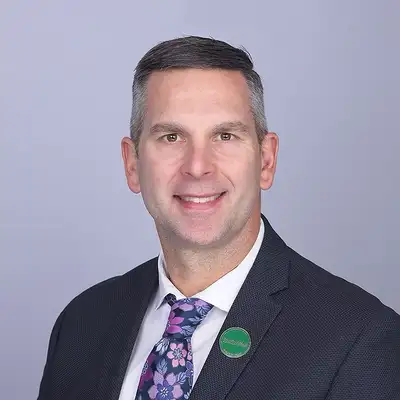
Eric Feeney talks with #friends! Eric is the founder of the nonprofit organization Friends of Feeney. Their mission is to help children and families who need assistance after heartbreak and tragedy. www.friendsoffeeney.com
All right, all right.
Feeny talks with friends.
Episode 158. I'm with a great friend.
How you doing, Mike? I'm doing great.
Thank you.
Retired Colonel
Mike Cadbury is in the house.
This is an amazing thing.
This is our highest ranked podcast guest.
Your bar is low.
Your colonel, retired colonel, 30 years.
The, active military. All army
and I counted
looking through your,
resume and looking you up 30
rolls. Yeah, right.
I can start with.
You are a pleb. You are a cadet.
But most importantly,
you are a husband to Kathy
and a dad to Connor, Rebecca and my kids.
That is the most important role.
I work the hardest for those. Yeah, a lot.
But when I was home,
I think my wife and I counted up.
It was seven and a half years of time
while I was in the army
that I was not home.
Really.
And so when I came home,
I wanted to be that person.
And so my uniform came on,
and I was dad as much as possible
and husband as much as possible.
Wow. Yeah.
Out of the 37.5 away from family.
That's amazing.
That's amazing.
So kudos to your wife, Kathy.
Absolutely. Yeah.
She held it.
Held it down. She did everything. Yes.
Wow. Wow.
And, interesting story too.
So, where'd you meet her?
I met Kathy in Germany.
I was lieutenant
and was coming home from the gym one night
and walking past
one of my friend's apartments,
and he leaned out the window
and said, my dear American girls,
cooking dinner tonight.
You want to come over?
And I'm like, yes,
let me go grab a shower.
So I ran back to my bar
and grabbed a shower with
at his place, and two women were there.
One happened to be in the kitchen cooking
and the other one was
a friend of one of my other friends there,
and that's how they both ended up.
They were just touring around
Europe and visiting Lou and my friends.
And so I walked in the kitchen
to see who was cooking.
And this beautiful
woman doing chicken parm.
Man, that smells amazing.
And then we went on two dates
and she had to go back to work.
She worked as a chef on a, on a converted
green barge in the canals of France.
And so she had to go back to work.
So I met her like in
let's say August, late August.
And then she went back to work
until October.
And then we kept in touch, calling,
writing letters.
Yeah. Like 1989.
So we were,
just came back to what she said.
Hey, my parents are going to be in France.
Paris.
You want to come join us? Absolutely.
Jump on a train and win over there
and then.
So this was probably our fourth date.
Wow. I planned on marrying her
in front of Notre Dame, and she said I.
No, no, I've got a year old Eurail pass.
I may not make that one.
As it turned out,
we, got engaged in November
of the same year.
Of the same year. Wow. Yeah.
So we had literally six days.
I think that's a beautiful story.
That's so cool.
And three children.
Three kids? Yeah. Military family.
Yeah. Very much so.
Yeah.
And your kids bounced around
to different schools and stuff to to do
the whole military thing.
Our kids went to at least eight different
schools before they went to college.
So, they
I think my oldest daughter,
she was the one that actually
got four years of one high school.
So it was great for her.
Where was that?
That was in Leavenworth, Kansas.
Beautiful. Leavenworth, Kansas.
Prison capital.
Yeah. Fort Leavenworth.
Oh, wow. Yeah. Fun.
Oh, wow.
So, yeah,
that's so considered Army brats, right?
They are Army brat. Army brats.
Did they have any.
Did they appreciate it?
Did they? Did they have regrets?
Did they want to stay?
How were the feelings?
Did you talk it over as a family?
Were these family meetings
when you had to move or.
We talked it over.
But I think they understood.
Always in front of my wife
was the best to explain to her that,
you know, the Army asked you what
your desires are, where you want to go.
But the number one thing
is, what are the needs of the army?
What's your skill set?
And where's there going to be
an empty slot that you have to go to?
And usually you had a couple choices,
and I, I like to think I voted for
my family and for all the times where
I had the opportunity to have a couple
what would be considered great jobs, but
instead, you know, good example.
After I finished as a battalion operations
officer,
brigade operations officer at Fort Drum,
New York, they offered me a job
as the fire support chain
or the Joint Readiness training Center.
Louisiana. Okay.
Not a great place.
I mean, I I'm sure people from there
know that there's good things to do
and there's good things you can find.
But everyplace you go,
I don't want to demean any place.
But it wasn't at the top of our list.
Basically the school system.
But we did a tremendous job for me.
It was that
or go to a NATO assignment in Europe.
And how did family come with me
and kind of time with them and life
would be a little bit more relaxed.
And so I thought it was an opportunity.
The kids were the right age.
They were elementary,
like fifth grade, sixth grade to.
So they appreciated.
And to this day,
they all still will travel.
They think traveling is a great. Yeah.
And then who lives in England right now?
It's a great learning opportunity.
Get to see another place and learn.
Learn culture and food and traditions.
So your daughter's currently in it.
Is she the nurse or.
No, no, the nurse practitioner.
My oldest daughter is in West Hartford
here.
Okay. Her grandkids. Okay.
And then my youngest daughter, Rebecca,
she was the one who did.
She graduated from Annapolis,
did five years in the Navy.
Retired, went to grad school,
started working for GE.
And now she works wind energy.
Wow. In England for GE.
Very cool.
And then my son,
he graduated from West Point.
He did six years and going to grad school
now manages a bunch of data scientists
for one of the boutique
defense contractors down in DC.
Very cool, very cool.
So you have another important role.
Grandpa.
Grandpa? Yup.
Which one?
You know, I was going to say,
what do they call you?
Pop pop pop pop pop.
And I like it.
Yeah.
So are my.
Yeah. My grandkids or. No, my grandkids.
Well, my daughters
call my wife's dad pop pop.
And his dad was pop pop.
So it was like a cool thing.
Pop up is an a military thing
because he was a Navy I don't know
are the kids pick that where
if there's an area of the world where
certain grandparent
names step and my my,
my grandfather was a German.
Now he was an American
whose family's from Germany originally.
Yeah.
You know, he was in the U.S.
Army in World War two,
but we always call him pop up.
Yeah, yeah.
German roots, German ancestry.
Pop up seems to come up.
Okay.
I've noticed that too,
man. So
now, what are the four years
of West Point?
The nicknames.
I know the first years pleb for sure.
And then they call it the year
if you're sophomore year.
Oh yup.
Yup, it is the third year.
And then your first, your senior year.
Very good.
Yeah. Yucks yucks are yearling.
Well, yucks. Yeah.
You call them yucks. Yeah. Short.
But you hit it on the head. Okay.
But please, I remember I went to a Notre
Dame game, Notre Dame versus Army.
Yeah.
And when the guys were walking
by, we'd lo.
Please, please, please.
And I thought that was always funny.
And some schools, they're knobs
I think is that Navy Citadel.
Oh, Citadel. Citadel.
My buddy.
Yeah. One of my friends went to Citadel.
And why are you a first
if you're a senior in college?
First, it's your first class.
Yea yea yea,
your first class being an officer. Yea.
Official. Okay.
We will first class. Their class.
Fourth class
is the other designation of the class.
Fourth class is the lowest level.
And you graduate in 1986.
How was West Point?
Beautiful campus I love it.
My daughter shoots the rifle
and goes there twice a year.
Okay.
It's amazing and I always wanted to go.
I think my eighth grade,
they took a field trip.
For some reason
my behavior didn't allow me to go,
but my daughter got
and I like I put in the headphones,
I jogged, I was like
wanted to like really take it in.
So it was really cool.
On the roof of one place,
it said sink Navy.
Yeah, go army them home. Yeah. Call.
Oh, yeah. Is that still any.
I don't know if they still do it.
I mean, how crazy they get there, but,
it used to be that they would take,
like, plates.
The police would take the plates
out of the mess hall and spell stuff out
on the big marching plane,
in front of, like, Washington Hall.
Yup. Spill things out
with all with thousands of plates.
You know, the trouble for that?
We hanging sheets off clock towers
and things like that for the Navy beat.
Navy week is a big week.
Oh, yeah. Oh, yeah.
But West Point itself, I mean, I,
I, I would say I struggled there
academically.
I worked hard,
and I was not a top student,
you know, I'd end up
going to summer school twice. Wow.
We call them staff stores.
So summer term academic program.
And we would put them on the inside
of our jackets, like letter jackets.
And it was kind of a secret society,
these guys that are just struggling.
Why? But, but the thing is you graduating
everybody that graduates
as a lieutenant, so long as you graduate,
when you graduate.
Yeah.
Like,
a degree is a C or a C for a degree
or so on.
And so 20120, there you go, there you go.
Two one go.
No, that was great.
I had a, that year, in 1986.
Nice.
And then your son was, what year
he was, 15, 2015.
Yeah. That is awesome.
That's legacy.
That's really cool.
Father son. Both went to West Point.
I had another podcast guest,
Captain Paul Buca.
You know, I've heard of him.
1965 Medal of Honor.
He was podcast guest number 43.
Go back and check it out. He outranks me.
No, I thought he's a captain.
I would salute.
And then a little there.
So what?
I got to go back.
So you're not the highest ranking
podcast guest?
Probably not. But he's a captain.
But you're a colonel.
But the Medal of Honor medal?
What on earth automatically.
No, no.
Does it really not
honestly. Honestly, it does it.
It is considered I mean, I mean,
most of them are given posthumously. So,
there was only when I interviewed him,
there was only like 60 living
out of the 170 that there ever were.
There were only 60 living.
He was one of 60. Yeah.
So I interviewed him in March 20, 22, 22.
Yeah.
Oh. He's amazing.
He's in the swimming Hall of Fame.
He Vietnam ran down in.
Yeah. Risked his life. Yeah.
You know, losing troops, carrying troops.
Had a whole story, amazing story.
Amazing human being.
Have you interacted with him?
I've met him, before, but not
in a prolonged engagement thing like that.
Yeah.
Somewhere where he was a speaker.
Yeah, he did our back to school.
Rah rah. Like convocation.
One year at West Hartford at Conard
High School is amazing.
He's a great guy.
And then he recently passed, July 2024.
His grandchildren were at my school.
His I taught his granddaughter and
his grandson, Matilda, was first older.
She's like in middle school now and then
Fletcher's currently in fifth grade. So.
And the what's the hotel?
Everyone stays at the Thayer Fair.
He has, like, a, a suite
dedicated to him, all his plaques
and everything.
Or maybe.
And then he has a
he has something in the in the pool
is our first boom pick.
Stephanie, are you ready?
Ready at the pool.
Boom. Oh, that's at Thayer Hall.
Thayer hotel. Yeah.
And that's a he has, like, a corner
black Army night remembered.
Medal of honor, Paul Buca. Yeah.
He's like a hero. Legend. Yeah, yeah.
But I, I had to, like,
sneak into the swim area
because it's for authorized personnel
only.
I had I told him it was my grandfather
and I had to see Paul Buca.
It's close enough.
I tell both of his grandkids.
Get kicked out for that. Really? Oh,
you want to?
So. Okay, good.
But I was trying to, not dance.
I got I had to get the pick
because he told me he.
That picture was
in there. I hunted it down,
I lied, cheat and steal that.
But it was a wonderful photo,
and I thought it was worth it.
No one was armed.
He's a hero.
I was going to say.
So how often have you gone up?
Do you go to football games?
Go to a few football games there?
Not in the last couple years.
Just timing hasn't worked out for some.
We've gone to a couple of wrestling
matches,
trimmed down to go
watch a couple wrestling matches.
When we lived in D.C..
I go to the Army-Navy games.
Oh, yeah. Baltimore. Yeah. Area.
Especially when the kids were going there.
In fact, one of the pictures
I think I sent you had.
Oh, yeah, whole family at halftime
and won the Army-Navy game with my son
and daughter.
Let's put on their uniforms,
my other daughter wearing like,
and, someone's had scarfs, scarves on.
And my daughter,
I think my oldest daughter we're.
But underneath the scarf
my ready for the next boom boom.
Those are Navy's.
Oh gosh.
She went to Annapolis Navy.
My youngest on the one with the white hat.
Oh. Oh. Yep.
Okay. And my son to call guy.
They're that's
also where they currently serving
at the same time they were in school
the same.
They were a year apart. Nice.
The funny thing is Becker
got accepted to West Point, but she said,
there's
no way I'm going to go to that place
and be Connor's little sister
one more time.
Yeah. Yeah, yeah, yeah.
Okay, that makes sense.
Look how young you are.
You're looking good over here.
You guys are like 14.
That's like. That's about 11 years ago.
That's so cool. What?
Yeah, I like it.
That was so cool. That's amazing
man. Wonderful story.
When are you gonna write a book?
This is great. This is so cool.
And then back to just.
I'm really amazed I learned something
new that you would salute Paul
because he's a medal of honor.
That's like. Yeah, tops.
What if it if he earned it as a private,
you would still some them
he would render respect to that. Yeah.
That individual.
Yeah.
That's the number one.
It is the highest award. Yeah. Yep.
Okay.
And then you've earned, the brave star.
Bronze star.
Yeah. Sorry. Bronze star.
There are a couple in between
the Bronze Star and the okay.
And Silver Star in between there.
Okay. Each one requiring a little more.
Sacrifice, if you will. Gotcha.
Firefighter.
Yeah. Injury.
Yeah.
That's the like
the injury is the Purple Heart.
So if you get wounded, you get.
Oh that's right, that's right.
You, Yep. Yep.
But the
the higher level of
those awards
are you think of awards of valor.
Yep. And, you know, total disregard
for your own health and safety. Yep.
And you are engaging with the enemy
and you were taking care of those
around you.
You're putting others safety at risk
for something. Yep.
To accomplish the mission
while saving offers.
Yeah. That's amazing.
Well,
let's go over the things that I know.
I didn't say that. I think I'm a podcast.
I was like, oh, yeah,
because I'm so embarrassed.
You won the Medal of Honor.
And I was like, oh, what an idiot. No.
That's earned. Right? Yeah.
You know, it's, are the medal.
Most of them are given posthumously. So.
We got another boom.
We're a lot of booms today.
These are beautiful medals right here.
This is air assault.
Yes. Aerosol wings.
So you parachute it.
This is your parachutist badge? No.
Oh, was it airborne?
Okay. Oops.
That one's airborne. Was.
That's jumping out of a plane.
How many times?
Well, you got to jump
five times to get the badge.
And then, Ranger school,
I think I had, like, five more jumps.
This is your Ranger tab.
I still see your Ranger tab.
Yeah, it is one of the.
It is the only tattoo I have.
What made you.
What year was that?
What was the inspiration?
Okay.
Funny story.
Never had a tattoo.
And my wife is not a big fan of tattoos.
It's like I want you to tattoo.
I'm, like, on top of that one.
But then a couple of my friends
have Ranger Tab,
so they got on their shoulders,
and I was like, that would be cool.
Yeah, that's that's
what the tab is worn on uniform. Yep.
And you know, this may be a part
you have to edit out.
Like I said,
if you ever got
high, I'd like to get a tattoo
and so, now
this is like 2018, 2019,
2020, 2020 I think is what it was.
So I've been out of the Army
for four years,
no longer
working for Department of Defense.
You know, I'm free and clear.
I'm retired, retired and
in the role
I had in, Colonial Beach, Virginia,
I helped get a guy, permission zone
to put a tattoo place in
county.
Never had one, but we got it in as well.
It was exactly how your municipal
government should work, folks.
The board, the town, the town
council, town council.
Guess the planning commission, planning
commission looks at it,
does some work on the zoning and laws
and then brings
it back up to the county council says,
yes, this guy opened his business.
And I told him, I said
I want to be one of your first customers.
But again, you don't have a reason
to get a tattoo other than about that
same time good friend of ours,
gave me a little bit of a brownie,
and, my wife said, yes, you've
you've achieved the state of mind
in, where you can have your tattoo
because she thought it was
I was hilarious.
That's an awesome story.
Because, yeah,
your whole life, you never know.
Had that feeling is the military service.
Yeah.
So you're you're analysis tests.
Yep yep yep yep yep.
There's no reason to, you know.
So I have a friend like that too.
He's a he's
a cop and he's, he said when he retires
that's going to be his next move.
He's like I'm going to do something. Yeah.
Oh that's funny.
No, the Ranger tab tat Mike has it.
I noticed it right
away. It's a great talking point.
You're like and he's chiseled.
So he's chiseled with the Ranger tat.
And I'm like I'm not messing with Mike.
And we start to talk and here we are.
So you're just I'm very excited
to talk with you again.
This is retired Colonel Mike Carberry.
You are? Yeah.
So in that role in you were got the guy,
the tattoo, you were a deputy mayor,
or were you on the volunteer of a board
planning zoning commission?
Okay.
And then I ran for town
council, after a year and,
then got,
I guess more nominated to be, the vice
mayor of the town.
Yeah.
I had the most votes
at a town council race that year. Yep.
It's kind of a thing.
They will get the most votes.
They will, unless there's great big
objections from the rest of the council.
We'll let this person be.
Did you campaign
and give speeches and stuff?
Yeah, I went out and, Did you. Dornoch.
Oh. Or not?
Got Colonial Beach is a town of like 20.
It was 2000 people, maybe 3000.
Summertime.
It might jump off that lot.
45, 100 because of.
Yeah, right on the water.
But it's a golf cart town.
So I was driving to Colonial Beach,
my golf cart and my bags of goodies and,
like, my fliers and pamphlets and stuff
and going door to door and campaigning.
And that's when you had the awesome house
with the, deck that went out a pair.
Yeah. Oh, yeah. That was nice.
And that was that.
Also when you were a substitute teacher?
Yes, ma'am.
This guy that's.
We're knocking on all these rolls.
He's a 35.
After I retired, retired and said, right,
I'm really bored now.
I gotta do something.
So I go to the high school and said, hey,
you guys need a tutor to help out?
And then they were like, can you sub?
I said, do I need a certificate?
Like, do you have a bachelor's degree?
Yeah, I got that in a little bit more.
And they're like,
you're good, you're good to stuff.
So yeah.
Now all you need is a pulse to sub.
Back then you needed college degree.
You had you had two masters.
You had your master.
You mean you taught at, the academy, the,
school events?
Well, first got to see him. Yeah.
Sam's.
It's an acronym
we're going to talk about later.
No, it's it's great.
So you worked at the Pentagon? Yes.
You were chief of staff.
When I hear that, like, that's,
like the biggest role ever.
But you did that.
You were chief of staff to the provost.
Provost
and chief of staff to the director.
Yeah.
So after the Pentagon,
when I first got to the Pentagon in 2012,
I was the chief of staff for the G7.
So one of the joint directors,
the Joint Staff, and we had the largest
director for a huge military
civilian defense contractor.
So we had,
the G7 was in charge of training.
Is that Jag G7?
What's a G7 stand for?
Seven is just the number.
The distance of J one is personnel,
J two is intelligence, G
three is operations, J four is logistics.
Gotcha is plan
G six is communication, J seven
is doctor and training and education.
Thank you.
Is the, acquisition.
So so the eight joint directorates.
Gotcha. And so we had the biggest one in,
that was made the J.
The chief of staff.
So two years I did my penance
going in really early, spin the wheels
on the, on the door lock to go in
and turn the lights out at night.
And then after two years where you open,
you open and shut down the Pentagon.
No, no. Just our, Yeah. Yeah.
Well, the Pentagon doesn't shut down, so.
Yeah. Okay.
True.
Parking lots,
at least half full almost all the time.
Yeah.
Now, how many people go in in
and out of that on a daily basis.
So I think I when I was there
I think they said the Pentagon
has like 22,000 employees in that one
building.
Yeah.
And,
you know, get a lot of membership workers,
you know, guys that are coming
in the evenings to work. The Colonel and
I've been to DC so many times,
and I've never do.
They do they do tours
or can you go in and visit tours?
I know they again, I don't know.
It's been a couple of years. Yeah.
But yeah, you could sign up for tours
and they
I mean, the cool thing about the tours
is they have, these young soldiers,
sailors, airmen, Marines,
that are assigned to the honor guards
there in DC, you know, like the place
in the tomb of the Unknown Soldier.
Oh, yeah.
Yep. See a group of guys,
and they have to train
to become tour guides for the Pentagon.
And what they do
is they walk the entire backwards.
And so they're
they got a crowd in front of them,
and they're just talking
to crown their point stuff as they go.
And they're just walking backwards
hoping that the crowds is it.
What is it?
Very structured and military
like how they march into two men
than the unknown star? No, no.
Like they're not taking 21 steps.
Pause. Go now. Okay.
But they walk backwards. Yeah.
They walk backwards and it's funny to
watch and do the training because they're
senior and CEOs are with it
with clipboards and they're like,
oh no, you missed one.
You know kind of thing is like it's okay.
But also it's an honorable position
tour guy.
Oh that's so cool. All right.
They know that you got to work
hard to get to you.
I parked at a mall once,
and I saw it really close, a DC, I forgot
where and when, but I was like, oh, that's
depending on in, like, Crystal city.
Yeah, yeah. There you go. There you go.
I teach shapes in third grade,
so I always pull up,
you know, when we're talking
triangles. Pentagon.
We talk about the Pentagon.
What goes on on the inside of the Pentagon
like the.
Is that a atrium, like, outside
hangout spot, like for lunch,
or what are we doing in there?
There's actually a little sandwich place.
There you go.
And, rumor
has it that the height of the Cold War,
you know, the Russians had Soviet
satellites flying over,
and these people really needed
this one central building.
So that was going to be
the number one target,
because they figured
that was like a command center.
So they were going to bomb the burger
joint first. Yes.
That was going places.
That was a target.
But yeah.
So it's just it's funny like
this is a hot spot.
It's a cut through the best of the best
go here every day.
It's a burger place. It's a perfect. Wow.
Very cool.
Oh, let's do this game.
Okay.
You've been a lot of places
in your 30 years.
Well, maybe we could do, like,
it could either be like a rank or a job
or a location.
Your best rank or job location,
your worst rank or job location.
Your first rank or last.
So it's best. Worst first, last.
Any order you want, best rank.
We'll say location
because you travel a can.
I guess it was a Germany.
Yeah.
Is Germany known to have the best bass
Olympic swimming pool workout?
It's true.
No. Oh, you were on.
And this is when I was working for. Yeah.
So I was in Germany as a lieutenant,
and we lived.
And we were the only American combat unit.
It was in the very northern part of,
like Raymond in Bremerhaven.
So we're in the very moving water
we were in. Only Americans.
We're not. The Brits
had the biggest footprint up there.
If you go back to D-Day
invasion, Normandy,
if you follow the maps where we came
ashore, the Brits came
ashore as we went across France
and then started settling in Germany.
The Brits stayed in the north.
We went down into Bavaria.
So Frankfurt on south
is where most of the American units are.
Okay.
And to this day, that's kind of how
the footprint still plans out, plays out.
It was all based on where
where those beaches were in Normandy,
where we kept moving across wow.
And over.
But so as a lieutenant, it was just
I mean, it was a small army base,
you know, we had a gym on the base.
There wasn't too much.
I belong to a gym downtown.
I got with the German people and,
you know, they they let about 5 or 6 of us
lieutenants joined their gym,
and they were like our tour guides,
you know, that's so cool.
Had good friends with them.
But the second assignment in Germany,
when I had the kids with me,
that was just, I mean, we
we had more opportunities for me
than I could have truly in the Army.
So they did the two weeks of Christmas,
two weeks in the summer,
two weeks in the spring.
Oh, yeah. That's living.
Take that time to go travel Europe and
take the kids around to see things. And,
so they saw stuff at a young age, like,
that's why
they're still traveling to this day.
They just, we went to Italy one year,
right around Easter time.
It was, the Leaning Tower of Pisa
had just opened up after having
been closed for decades.
And so we were one of the
first groups of people we got to go down.
And my daughter, I remember she was
leaning over the edge and I was joking.
She whispered,
at the top of this tower, the leaning and,
she, you know, fast forward a few years,
she was doing her
com in an essay for college. Yep.
And the title of her
essay was To Spit or Not to Spit.
kind of brought in the whole
how she got to travel all over the world
and got to see so many things
and adjust and adapt.
And how she thought
growing up in that environment
would make her a good student for UConn.
So it's awesome.
Yeah, she get in, she did it.
So we got first, last, best, worst.
That was your best base? Germany.
Oh no, Germany was your first
or where was Germany was my first.
Gotcha. Yes.
And Germany was also my best assignment.
Nice. Okay, so first and best,
but different times. Okay.
Many years apart.
What's going to be what is,
Worst.
It's kind of hard to distinguish
what the worst is, because worst can be.
I was away from my family, which was bad.
Yeah, a couple times.
But both of them
were extremely rewarding
and developmental.
A year in Korea was incredibly rewarding.
Good on my family. All they did was work.
I'm just okay. I'm here without my family.
I'm going to put my heart
and soul into this and I work.
What was your role there in Korea?
I was the, division chief of operations.
So the crisis action planner,
North Korean shore subs come ashore,
North Koreans incursion
along the, the DMZ.
The instructions were,
call my cable and satellite,
come up and fire up the operation center.
Get things to whatever status boards
we need, make communications
with, Republic,
the Korean special operations forces.
So it was just like
it was a really heady job.
You're, like, just going through things
happening all the time, but stressful
and sounds like high top security and,
like,
lives on the line, and, like,
this is real deal.
Yeah.
And then but then on the same token,
deployed to Iraq in 2003
as a battalion carrier.
So I was I was a major in Korea
and a lieutenant colonel
in Iraq in 2003.
And then I had some moments
of being frightening,
being rewarding,
being just angry, like, you know, and,
did you just mentioned Iraq?
Yeah.
Now confirm or deny.
Did you have a severe injury in Iraq?
Technically, yes.
I was injured in Iraq,
was not wounded, but injured.
Do you want to talk about that?
Yeah.
I mean, I think I'll
I'll start out with the, the Army as
a young man's game or young person's game,
because there are definitely women
that are just absolutely tough as nails
and as good as every man is out there.
You know, I've got pleasure to serve with.
Watching
what I'll say, it's a young person's game.
We're in a lot of body armor.
The extra body armor plates
and your Kevlar and day
packs and weapons and magazines
and what you're carrying around
a few extra pounds on
you as you run around. And,
at the time, we were
in an operation,
and I happened to be out with the unit
that was conducting it, just kind of
with the lieutenant seeing how they do.
And we got involved in the chase
and jumping over walls,
and I was not as nimble with my body
armor stuff as I used to be.
That could be 70 pounds.
Yeah, right. He was.
He was probably not 70,
probably not 70, probably 35 pounds.
Okay.
But just, you know, it's hot, you know,
41, 42 at the time.
And kind of land
rolling the back up a little bit.
That happened several more times.
And you go to the doctor,
give me some Motrin, vitamin D,
well, they just go and, by the time
we're getting ready to leave Iraq,
my back is really starting to get bad.
But, we hit a bomb crater
before we got out of Iraq into Kuwait,
and just the jolt of that ended up
rupturing a disc in my back.
It had been
pinched, I guess.
Yeah.
It was bulging already,
and this just ruptured, and it went out to
attach to your body in the end of medevac
to one school for, emergency surgery.
Yeah, because you have compressed
discs in your back,
but none of the bomb
strap metal affected you.
Not yet.
I do have one piece of shrapnel
that I didn't know about until,
probably about six years
after I got back from Iraq.
As an IED event,
that a little piece of shrapnel sliver of,
metal went right through the vehicle
and into my pant leg, into my cap.
In the time
I just thought it was just something stung
because it's just hot and sharp and goes.
It went.
Just put your needle. Yeah. Yeah.
And didn't see it until all the docs were
doing X-rays of my knee and,
and there
would be an MRI, and they're like, hey,
you've got a metal in your leg where
you shouldn't have metal in your leg.
And that was the only it was like,
yeah, I remember that one time
when you didn't know that the whole time,
though, there's metal in your leg.
Yeah, it's still in there.
Did you save it?
Yes, it's still in there.
The guy said.
Doc said like it's not worth if it doesn't
bother you, don't worry about it.
Yeah, well, I get the beep beep on the,
no metal detector.
It's literally like a
it's a little thicker than a needle.
Yeah, maybe an inch long.
Yeah,
maybe an eighth or 16th of an inch wide.
It's not a big piece like I said, it went
into, like, it's so fast that I never.
Yeah, I got scratch and that was it.
So your back took a beating back.
Yeah, but you're still in great shape.
Try me. Yeah.
Is that preventative like,
is that working out to help the back?
It is.
I mean I've always looked at fitness
as being something.
That was what it was.
It's always important in the military.
It was important to me.
I wrestled in high school
and college and, So.
So you wrestled for West Point? Yes.
Wow. I'm.
What weight?
You're now in the Hall of Fame.
Come on.
Paul is in the Hall of Fame. No.
He is. Yeah. That, like, just didn't do
enough.
You know what? Weight class.
What was your record?
I was 150, 150.
So I think that's 149 is the actual weight
class now.
Yes. 150
and I will say I batted about 500 there.
You go.
Held your own respectable,
can't win them all.
No. And I did Russell my senior year
because I went to the coach and said,
if I don't stop wrestling,
I'm not going to graduate.
I know that for a fact.
For the studies and stuff. Yeah.
Yes. There's no
let up for your varsity athlete.
You have the same, you know, 22 hours.
Put it on a schedule that,
anybody else does.
So it's it's grueling.
For me.
It was really good. Yeah.
So go back to worst assignment, you know,
and I felt like when our unit left Iraq,
we had accomplished a lot, like.
Yeah. What year was Iraq?
That?
My first trip over
there was 2003, like August 2003.
September 2004.
Wow. Whole year. Yeah.
Like 13 months,
actually, almost 13 months.
And then I went back
a couple more times in staff roles.
I was part of a team that,
we would go over
to conduct exercises with units
that were getting ready to go over,
and then we would go over
like three months after they got there
and just kind of shadow them and watch
and then sit down with their commander,
provide feedback on, hey,
we think you got a good process here.
Or here's
something you might want to consider.
The timing of having this meeting
so that you could do this kind of
so is that a R.
And after review hey, we would do the
after action reviews after the operation.
This was this.
Oh this is during our role.
Our mission was to with them
in collaboration at the same.
Oh okay. So you're like modeling
what to do.
Yeah.
Modeling and consulting
if you really will.
You know, it's like, yeah, we're kind of
an extra set of eyes and ears
for the commander and the staff and,
help them
kind of implement best practices
that we've seen in other units.
So that was a job that,
I mean, even though I was home,
I was gone 270 days of the year.
You know, that job?
Just one trip.
I flew around the world.
Yeah.
Literally went from Fort Kansas
to Fort Hood, Texas for about four weeks,
then to Norfolk, Virginia
for a couple of weeks,
then to Iraq for like three weeks,
and then to, Thailand
for an exercise for like four weeks
and then circle back around the globe.
And so we used to joke with Magellan
patch.
Wow. Yeah.
I circumnavigate one temporary duty trip.
Jeez. That's amazing.
That's a great story.
Like,
that's all worth it, right, then. Yeah.
Wow. So first, best last.
Did we do them all? Yeah.
So I mean, it's it's kind of a tossup.
Like I said, it was
it was hard and tough and
and Korea was the same way
Korea was a a grueling assignment.
But I always look back at Korea as like
I learned more in that one year
of being immersed in
kind of crisis operations,
crisis plan, crisis action.
And I came out of there.
I thought, I'm prepared
to kind of do a lot of jobs.
I think, yeah.
Thank you for
that was great, great storytelling.
I learned so much.
Let's go back to the way beginning.
What did actually originally inspired you
to join the military?
I, my grandfather on
my mom's side was a retired army officer.
But when I was born,
he'd been out. Right?
And he never talked about it.
You just had a box of medals that he kept,
and once a while, you pull him out.
Like if I helped him, like,
clean the yard, he could hear it.
You can have a medal.
Some ribbon and a piece of metal.
I kept a bunch of them.
But I thought it was cool.
He did it, but it didn't.
You know, I was, like, six years old.
That wasn't really my motivation.
And then as I got older, in high school,
we lived next to an Air Force base,
and I saw,
I see an F-16 fly off and be cool to do.
Yeah. I wonder how you get to do that.
You know, kind of like, you know,
I did some research and asked around and,
as much as a 14, 15 year old could
and oh, there's a place called Air Force
Academy where you can go
and and learn how to
and maybe get to become a pilot.
Yeah.
No, I there's these other schools too,
you know, Annapolis and at West Point.
Yeah. And it was my sophomore
year in high school when,
we were wrestling universal practice
over the Christmas holidays.
And one of the guys on the team,
his brother, was a wrestler
at West Point, and his brother
came back to work out with us.
This guy walks in the room, captain
America just joined the crowd here.
I mean, this guy talking about chiseled
granite jaw, you know, just
in the most polite and kind person
and just just a classy guy.
And I thought, man,
I want to be like him when I grow up.
And so I started looking more and more
in the West Wing as a place to go.
Nice. That's kind of how I. That's.
Well, yeah.
Pat collector and Dan collector.
That's so for that. Yeah.
And the conditions for me to say
this is what I think I want to do.
Yeah. It just takes a couple like that.
When he walked in the room,
you're like, whoa, I want to be like that.
And then
and then to have that positive manner.
Like, he's just like a positive influence.
Yeah. I met him later on in life, too.
I mean, after he left the West Point,
I, I graduated from West Point.
You saw him in the Army
and I told him one day I said, you don't
remember me from the wrestling room
and late high school.
I said,
but you're the reason I went to West.
He's like, really? Yeah. That's so cool.
We're going to take a pause
because we have some more special guests
here.
We're here at oh, let's
thank some sponsors.
Let's thank Direct Line Media,
Stephania and Dave from Direct Line Media.
Nothing, not none of
this would be possible without them.
Let's thank our wonderful hosts.
Maximum beverage.
They've been hosting us ever since.
And we've been collaborating
on a lot of events.
We've hosted our whiskey event.
They have hosted their whiskey event
and have been gracious
enough to have friends of Fini
be the beneficiary.
So we have some special guests,
and we have a nice, beautiful
check check time.
You want to come around, All right.
So fast.
Yes. Let's talk.
We have Whiskey Festival 2000.
And actually now it's the
we have Whiskey and Spirits Festival
2000. 25.
We happened in,
late September or was it early October?
I don't know, one of the two dates,
September 24th, was
that one was number 24.
So we had our best event in a long time.
Yeah, man, you a lot more.
Lot a lot of people.
All right.
I think our best attendance
in, like 2 or 3 years,
and, live music was great.
Live music was excellent.
We had panga world beat.
Check those guys out.
Check them out.
And, yeah, it was an awesome event.
We're so happy that we can,
you know, we have a local charity that
you know, provides for,
families not only in West Hartford
but in the greater Hartford community.
Yep. And,
you know, we're obviously pleased
to present you
with the check for $7,000 for this year's.
So we have whiskey.
Yeah. Thank you so much.
This collaboration
goes back, I think six years.
This might have been.
Yeah, okay.
At least.
So we're looking forward to it.
And we can't thank you enough.
You are extremely thoughtful
and generous.
We love maximum beverage.
We love the whiskey event.
Do we have a date for the next
save the date.
Similar.
How similar?
Similar. Be right around that weekend.
The last Saturday in September.
September. Works well because.
Still pretty warm.
A lot of people were outside.
Yeah, it's going to be a toll country
club, which was it was a great venue.
Very happy with how that all turned out.
You know, at the end of the day,
we want to create a great experience
for the people that go to the event.
Yeah.
And, if, if, if we can raise money
for charity,
that's obviously a massive bonus.
And all that seem to work out
over the last, 1011,
I think it was our 11th year,
maybe our 12th year.
Yeah. I also want to thank you.
And add in that we also sold over
$1,000 worth of raffle tickets
because we had a great location.
As soon as people walked in,
they grabbed their program, their cigar,
and they hit the raffle or swag.
So, so merch sold some merch, a hat.
Got a hat?
Yeah.
You know, be a good friend.
He's a good friend. Matt's a good friend.
Oh. And then that's another thing too.
So September 12th, it's official.
It's going to be at Tonks, but
maximum beverage host the whiskey hole.
Juicy hole. 1114.
That's what I said. Whole 14.
So I I've never gotten a bottle back
with whiskey in it.
I always get empty bottles.
Yeah I'm fine.
Everyone golfs great until 14.
But golfing goes down 15, 16,
17 for some reason.
But no, that's it's
a great collaboration.
You're you're really, a pillar
in the community, and we can't
thank you enough here at Maximum Beverage.
Thank you, Brian.
Thank you, Matt Conaway, over there
and the whole Whitney crew.
We really appreciate you.
And your, support means the world.
What about for for the.
My girls got into Fordham. If.
And this guy could get into Fordham.
Anybody should be
able to get into Fordham. But
anyway, they going, I don't know.
Yeah, it's a lot. It's a lot of money.
Yeah. So but they got it.
So we're very,
very good. We're happy about that.
Right. Yep.
So we'll see.
So, thank you for that.
Thank you for hopping in the pick, too.
You know, that was cool.
We're here at Maximum Beverage.
We just got a check for $7,000
for their whiskey You event.
You like whiskey?
You're going to come to our next event?
Oh, yeah. I'll be there.
All right, all right.
You want to volunteer?
I know you love volunteering. Frequent?
Yeah, I heard you're their best customer.
You got customer of the week?
No. I'm kidding.
Well, Connor knew you, so Connor was like,
I know.
Make what?
Your whiskey of choice.
You know, I like High West.
Oh, that double rye. Okay.
And I don't know if I have a
liking to it because
it's, distilled in Park City, Utah.
Okay.
Which,
So that's where I was going to get that.
I was going to ask you
where you wrestled in high school.
Utah.
And now you like High West
because of Utah?
Yeah.
Wait, more Mormon state.
They get to make whiskey? Yeah, yeah.
When I was growing up there,
I thought it was dry at some point.
No, no, I think they have the three
two beer, though.
Only beer you get there.
But, even when I was growing up, like
10% of the state was,
I was not LDS,
and people used to call Park City
the City of Sin because it was like
the fun place to go skiing.
And everybody out there, I think it was
it was just kind of a cool place to be.
Park city has always been kind
of the whole place, and it's just awesome.
It's nice you you still have family there?
My brothers still
live in Utah. Yeah. Nice.
Nice.
Now, who
could win in a fight in wrestling?
Which brother?
Who being up? Which brother?
I'm seven years older
than my next closest brother,
so there really wasn't that much.
And then my youngest brother, he's
a state champion
wrestler, but he was it the, like,
the 98 pound weight class?
He was really strong. 90 pounds.
Yeah.
They have that class
that's in high school.
They do okay.
It's like college. It starts
I think 125 is the latest.
I was going to say that's featherweight.
Yeah.
Extra feather.
What what were some of your core values
and the military or what?
Yeah. Good.
I mean, yeah, yeah.
Integrity.
And just honesty.
Loyalty.
I think I,
I'd like to say I had
most of that instilled in me growing up,
even though my dad was in the military,
and he taught me that the importance
of doing a job and doing it right.
Sticking to your word,
pushing yourself to be better,
treating people with dignity and respect
regardless.
Yeah.
I'd like to think at West Point,
reaffirmed that or just kind of validated
that this is a,
this is a way you should be.
And so I've kind of
I've always wanted to
hopefully that I model that.
Yeah.
Who I interact with with my family.
You you reminded me when I first met you
of the guy
that came into the wrestling gym.
You know, I looked at you like, wow,
that's kind of like who I want to be
when I grow up. No.
Dead serious.
I don't know if you want to take it
as a compliment or.
But, I saw you physically fit.
You had the Ranger tat, you know, good.
Had a hair.
You were very, polite.
And like I said, hey.
And you were like, talked.
And we had a nice conversation.
So I walked away going, man, that guy's.
And ever since I'm like,
I got to get him on the podcast.
I got to get him on the podcast.
So I'll thank you again.
I'm having a wonderful
time chatting with you.
Yeah, yeah.
And your
locker is like two down by choice, right?
We just I kind of just like that
one by the mirror.
Why do you choose that one?
Or is your little one down there
little ones right underneath there.
Yeah, yeah, yeah, I just started that one,
my little ones around the corner.
But I still just like that
tall one for some reason.
But her shoes are tough.
Yes. See, I want to be like you.
You put your boots on top of the locker.
I put my boots on top of the locker.
You do kettlebell workouts.
Now I want to do kettlebell workouts.
How is that?
Speaking of which,
how is anything else of the military
before we move on to civilian life?
I think so, yes.
Yeah, it was a long time I liked it.
Yeah, I'm glad I did it.
I have zero regrets
of any of the assignments I have.
I've had.
And, what I did, I'm glad I got to stay,
and I got to serve as long as I did.
Yeah, 30 years is remarkable.
A lot of people do 20 and out.
The goal is 20, obviously. Right.
And then you just felt
I just felt like it
was I enjoyed doing what I was doing. And
I kind of, I
always when I was a lieutenant,
I said I want to be a battalion commander.
That was that was a
if I could become a battalion,
I had a great battalion commanders.
Lieutenant, the guy that again,
you look up to, you like
that would be so cool to be like,
you know, Colonel Burns, you know,
and I got that opportunity,
and so it was successful.
My tank man was successful.
I didn't get fired.
So successful in just long enough.
And then the next promotion
and then more competition, right.
The next, you know, command.
So it was like
it just made sense to stay in.
Things were going well.
Yeah. Very cool. So how was that?
How was your Army career
help you transition to your civilian
life that you're doing now
or how was that transition.
So transition is can be a very difficult
time for the people,
for anybody in the military.
It is it just. Yeah.
Because you're, not all, entities
and civilian world
employees or run the same way military,
people probably get out.
Right.
But for me, my transition was pretty easy
because I was working
as the chief of staff for the provost,
the National Defense University.
As I was getting ready to retire,
they basically said,
hey, we're not going to get a backfill
for you.
If you competed for this job
as a civilian,
would you be interested
in applying for it, competing for it?
Like, absolutely.
It turned out the job was basically made
as this before you got out.
This is all right
as you're getting out right as I was.
Oh, so they almost create a position
for you.
You think, wow, that's amazing.
Well,
that's shows the job that you did, right.
They know that you would be a good fit.
It was a unique thing because.
We got really enjoyable.
We had a. Yeah.
What is that the provost.
Yeah.
Out of all the deans
in the colleges. Gotcha.
So he's the head academic at every college
or just had military colleges?
I think, Provost,
I mean, they may call him something.
Yeah. Okay.
Different colleges.
I was just unfamiliar with that.
Yeah. Okay.
So this was,
the head of the head of the academic.
It's all academic departments. Gotcha.
So we had a president
of the National Defense University.
You had the provost
and you had the chief operating officer.
So the provost and the chief
operating officer were kind of co-equal
but running different things.
Chief operating officer is like, how much
does it cost to give people an education?
Or are we giving them what we're saying?
We're giving them
and you know, yeah, okay.
And so my job and I kind of took it.
I was like, hey, how to help the provost
describe to the chief
operating officer what we're doing
and what the costs are.
One university and so in that role,
I had for two years as a military
and civilian, that was my transition.
I was doing what I was doing already
just to get different clothes right?
Yeah. It's a suit now was it?
And then I competed to be,
a dean of administration
for one of the colleges there.
It was kind of
I went from working for the provost
to working directly for the CEO,
as the dean of administration.
So every college had a dean
of administration and a dean of faculty.
Nice.
So I was that. That's a nice transition.
It was good. Yeah.
So it was like almost staying
in the military path and lane
department offense job. Yeah.
The language is very similar.
Although you were exposed
to a lot more from, the interagency.
So we had a lot of
energy, transportation
security folks that were students
enrolled in National Defense University
and, faculty
that was civilian faculty, PhD.
Yeah.
And you have two masters.
Yeah. So you were hanging with them.
Hanging with them
academically anyway, right?
Right, right.
So and then so your civilian life now
volunteering,
being a grandfather and being a trainer,
being a personal trainer,
that's a brand new one.
That's a that's a role
I'm just trying on right now.
Because I'm a gym rat by heart,
and, it's a place where I go and relax.
I actually, I get it's
a cathartic experience for me to go.
Yeah.
And I never keep track
of what my exercise is.
I don't just go stats.
I think I just.
What do I feel like doing today?
It's kind of how I didn't
want it to be a job.
I wanted to be kind of like,
this is just for the body part time.
And then when I first got
here to Hartford,
I started going to go to Wilson Gray YMCA.
It was the gym that I saw it in that close
by where I live.
And when I walked in there one day,
I said, hey, do you guys do
afterschool programs for kids?
Do you need somebody to come tutor?
Almost kind of.
How I got to be a substitute teacher.
Right.
Nice.
And they kind of said, well, yeah,
we had these school programs
and we had these
teen programs on the weekends.
Would you be willing to help out
with that, like. Absolutely.
And then they asked me to
I was on the board of their board of like,
Wilson Gray for a while.
That's awesome.
And then joined and then,
another board I'm on is the Connecticut
Veterans Legal Center out of,
basically headquartered out of New Haven.
But they have offices in West Haven, VA,
Newington, VA, and they, they're,
helping veterans a little bit older.
Yeah, yeah.
Oh, with that being said, I want to I
the VA is and Newington is great suggests
any veteran should or maybe you will
you do agree or disagree with me.
Suggest veterans reach out to the VA
and to go over their past like,
health wise.
Like maybe injuries or health
or just talk it over.
The first thing you do
is you go to a veterans service
office or VSO and that's either through,
American Legion.
Yeah. The VFW,
organizations
like Wounded Warrior Project,
we have vsos that will work with you
and review your medical history and help
you prepare the paperwork to submit
to the VA for a disability rating or a.
Yeah, yeah. Or something.
If you if you need an upgrade,
you're not really going to go to the VSO.
It's me.
And you were already in the VA system.
And you, your doctor says, hey,
you've gotten worse at this.
Okay? It may be worth going back. Yeah.
Hey, I want to resubmit, my rating for the
my elbow or whatever it might be.
Yeah.
But, yeah, definitely with,
a veteran service officer
for VSO first
and then and then through the V.A.
system, because.
And then I served eight years in the Army
National Guard
as a medic out of New Britain.
But I drilled at West
Haven as a nurse, like a doctor.
So I know that, facility as well.
I remember seeing blood in the hallway,
and I was like, I almost like, attempted
to, like someone got, like, ripped
an IV out while walking down the hallway.
So it wasn't
that crazy, was like droplets.
But then I was like, going to go
wipe it up.
And they're like,
no, no, no, stay away, that's HIV.
And I was like,
oh my God, if I touched like, who knows?
Like but that was like a stain memory.
And then like talking like a lot of
veterans are patients just like to talk.
They needed someone to talk with.
So I sat bedside and talked a lot.
Gave a catheter that
was maybe we don't talk about that,
but that was interesting.
Sticks with me like the tube
that for stuck with that person's stuck.
He remembers that just like I do.
But no great facilities.
Yeah. I would suggest the VA
for veteran, actually.
And then I was walking at a Hartford
athletic game and a table for the VA
was there, got a number, shot
him an email called, went
and got my hearing tested.
It was good, but just like
got got involved and never thought
to do that.
But I was thankful for that table there
and I was very
welcomed at the Newington, VA.
So veterans out there, please,
like I would suggest reaching out
to your VSO first
and then possibly seeing, yeah.
And seeking help and care, whether it be
physical medicine, mental mental health.
Yeah. Someone to talk to. Yeah.
So I'm totally for that.
And I totally suggest it.
Do you do you want to talk personally?
How was your VA experience?
Did you talk with someone?
Did you have physical needs or did you?
I mean, I've definitely got my money's
worth of the VA goes down in, in Richmond,
Virginia
when I got out of the military and,
we moved down to Colonial Beach, Virginia.
The Richmond was closest VA center.
So I had some, some surgeries done there.
And I've had surgeries done up here,
the West Haven War
Hawk and, and I've gone through,
some PTSD behavioral health
counseling,
working with a psychiatrist up here.
When we first moved up here,
I was having a hard time.
And, again, I'm not
the stigma attached to mental health,
and I think there still is.
Yeah, yeah, I've talked about it,
but I'm a big proponent of.
Hey, there are people in ways
that they can help you, you know, fix it.
It's not it's not something
that's going to be able to be turned off.
But they help
you learn ways to deal with it better.
My family
basically an intervention with me.
Dad, you're becoming a jerk.
You need some help?
Yeah, I was I was being a jerk. And so
it's good to talk about it.
And strategies. Coping strategies.
Working out
I'm sure is very helpful for you.
So. No, it's great.
I wore my tags today where? Your dogs.
Now, do you call these dog tags? ID tags?
What do you call them? Dog tags. Yeah.
I wear them on Veteran's Day.
And then I wore hung up on the shadowbox.
Oh, yeah.
Let's describe the shadow box
and what's in there?
My white one is like,
everything the the medals, badges,
ranks,
unit press, you know, kind of the shiny
one, the big one.
And, in the background of it is,
she took one of my whole,
sets of dress blue trousers.
So it's blue with the gold stripe.
Oh, nice.
That's the background for all the medals,
ribbons and shiny stuff.
And then she did one. It was,
we call it a color field.
Shadow box with a combat shadow box.
It's got,
name tapes.
The from the subdued, you know, like,
I what I wore in Iraq
and my uniforms there and, the black pins,
like the aerosol wings.
Oh, yeah. Airborne wings. Next up.
What else is in there?
Oh, there's a set of spurs,
my or my combat spurs.
So for riding a horse, spurs are new.
There is a
cavalry units. Yep.
We still have armored cavalry regiment now
and you can.
So we had a brigade reconnaissance troops
or a Cav troop,
which is a company size
element, was attached
to our battalion in Iraq
and they were escort.
I went with them
to go to one of the other bases
where we had some more soldiers,
and I was going to go do a motion ceremony
for a couple lieutenants that were down
there, and brigade reconnaissance trip.
The BRT was my escort.
And while we were going,
I'm going to call him an IED.
Another convoy that come under attack.
So we got there, tried to security area
and actually found
the guys that set it off.
And so we were on the chase with them.
And so it was one of the few opportunities
where I, got on the radio and called
in artillery, my own artillery on the bad
guys down in the field down there. So,
the troop commander as captain,
it worked for me.
He's like, sir, you have your combat spur,
so you're going to get combat.
So working with the BRT and. Gotcha.
It was just.
Do they look like spurs on a boot?
I'm thinking
so kind of sprinkle points on them.
So it's the horseshoe thing
with one single stud coming out of it.
Gotcha gotcha gotcha.
Oh, cool. You can wear them on boots.
Very cool.
But that's what that that's awesome.
The tactical channel, maybe.
Can you get a picture of that to me?
Yeah, I'll send you a picture.
I guess we're going to put the picture
right here.
Stefan. Your shadow box. Boom.
So the cool thing about shadow box,
the shadow box
is there are a couple ribbons in there,
that I medals that I'd earned,
my time in the Army, and my grandfather
happened to hear of those two.
And remember those who gave me one
as a kid raking leaves and stuff.
Yeah, yeah.
So I have his Bronze Star
and Bronze Star in there.
And I have one of his campaign medals
is that my campaign was a safe.
It's a little more shriveled,
a little more faded.
Wow. Is the medal the same?
But the ribbons worn?
Yeah. Wow. That's awesome.
What are you going to do with yours?
So we give them to your son or.
I don't think you don't know. Yeah, he's.
You know, he's he. Time will tell.
He earned his own stuff. Yeah. He's,
Geez, I
had a flag that was flown
over there in 2004.
I brought it back with me.
I gave it to my son
when he deployed to Iraq
in 2017.
And. No, he took, like 20, I'm sorry, 20
took the same flag over in Iraq.
So 17 years later,
the same flag has been there twice.
Yeah, it's kind of surreal. Wow.
So he brought it back and he gave it back.
And that's a special flag.
That's a keeper.
We're still on the military stuff.
It seems like
I know we always go back after 30 years.
All right. Kettlebell workout
kettlebell workout.
Give everyone a kettlebell workout.
Because we got to wrap this up I had
we usually go for 50 minutes with Feeny.
I think we're at an hour.
Plus, we did take a break for the, check.
But again, you're a wonderful guest.
I could talk to you forever.
I'm learning so much, and I love hearing
all the wonderful things that you did.
And I can't thank you for your service.
Truly means the world. Well,
thank you for your service.
I know I did.
I was a boy scout in the National
Guard. No, I'm kidding.
Compared to, you know, not compared.
I mean, different time, different place,
different set of circumstances.
People serve, serve.
And they make that decision to serve.
And that should be recognized
no matter what.
It's reserves.
Guard active.
All right.
That makes me that decision to serve.
You know
you know the consequences of serving
and what that will kind of entail.
So hats off to anybody that has served.
Hey, man,
I really appreciate that kind words
because sometimes I do knock myself.
But I did do eight years.
I didn't see any combat.
I trained combat.
Wow. 17 years before I was gone.
Yeah.
So amazing
way to look at it that way.
But it it helped me so much in my path
and my it allowed me to go to school.
The GI Bill, the tuition waiver. Yeah.
It gave me some discipline.
It gave me some physical fitness.
It let me travel.
First time ever on a plane.
I met people from all over the world.
The first time
I, you know, I from a diverse
community in Waterbury, Connecticut,
I met a guy.
He was from West Virginia.
He never saw a black person before.
I went on, approached my friend and said,
what's up?
He was looked at me like,
you're the first white person
to ever approach me to say, what's up?
Because he was like, from Kansas.
I still remember that.
And he was like, so I'm like,
such Tennessee guy was really religious
and telling me about,
I need to start going to church
and believing in God.
And one dude told me about plucking
my eyebrows because I had like a unibrow.
So all these memories and basic training
I made, I got an awesome video.
Oh, we got to pull that video up.
Me in the gas chamber at Basic training.
Yes, we're going to put it right here.
My buddy
spanks hitting me on the back of the head
because we turn and you got to walk out.
But the person's the person in front
not walking out, and we're yelling move!
Because,
that gas chamber experience,
you know, unforgettable,
unforgettable and unforgettable.
But the snaps.
But I don't know how.
It was a VHS tape for the graduation.
I didn't even buy it, that is,
I don't know, but I got it put on DVD
and I put it on the computer,
but I have it.
And then we'll show that last
kettlebell pick
one more kettlebell
pic of me lifting with with Mike.
And I was sore for like three days
because of that.
We're going to give us a kettlebell
workout, tell us the benefits of that.
And then,
we're going to do some closing remarks.
This is great. It's been fun.
Yeah. Start with the swing.
The swing.
What do you think is that
is that is that the swing is
one of the most basic moves to be able to.
Yeah.
Engage
your core, your hips, the lumbar hip,
all this complex, legs, shoulders.
It is.
And it's a basic move to get to certain
different ones when you're.
Yeah, snatching. Whatever.
But yeah, the swing is by far away.
One of the first things you need to learn,
but you needed to learn to do it, right?
Yep, yep.
Otherwise you have that lower back.
Got to reach out like you're hiking a foot
like a football up.
And then don't put the kettlebell doesn't
go below your knees or you're covered.
Your hands can't go below. That's right.
But the more the kettlebell stays
right up tight there. Yep.
And it's your hips that move it out.
And then just a little squeeze them
and snap them in.
Yeah. And that actually
has been helping my knee pain.
Because if you strengthen your your glutes
and your hips and your hammies.
Yeah that does alleviates takes away
some knee pain.
So swings.
Deadlifts
just a basic move again.
And your, your hips, your upper shoulder,
your trapezius muscles.
Now getting engaged with the deadlift
with the kettlebell.
I really like the pulls.
Now to where I feel it. Right here.
Oh yeah.
Get that to get them lats pulls
and then the press presses.
Yeah.
And very important that you draw
the line down the middle. Yep.
My stay on your thunder
because you're, you're
you know you're you're doing a great job.
You're the the trainer.
So I must have trained you well.
Yeah. You it was great.
It was a wonderful.
Yes, it was a wonderful, workout.
20 minutes, dripping wet. Yeah.
What else can you ask for?
In and out after cardio.
Intense burn, a lot of calories
doing that.
So check them out.
Go to the JCC.
I'm doing it.
As for coach or Mike or. Yeah.
Upcoming events. Share them.
Thursday at 4:00 at the JCC.
I'm doing a kettlebell
pump up this Thursday.
Yeah. What time for clock
o'clock in the afternoon?
I won't air by then.
But you got any future ones after that?
No, not not planned right now.
This is just see how it goes.
All right.
4:00 Thursday. I think I can make that.
I gotta check my skin.
Like demonstrating. Yes. Okay.
Oh, yeah.
I used to basically teach
a couple basic moves
and then put together a couple flows
and just let people go through it.
Maybe 30 minute
it's going to be 30 minutes.
It'll make sure he does it safely.
Yeah. Yeah.
Just kind of explain it and get people
interested in it.
Love it, love it.
I got an upcoming event. Hopefully.
Maybe you're free. Bring the grandkids.
But we're doing friends.
A Feeny night at the, Wolfpack game.
Saturday, February 21st.
It's a hockey.
You ever been to Wolfpack hockey?
I'm not going to walk back.
Come on. Sonar is going to come by.
We're getting swag from Pink Flamingo.
It's Ninety's night,
so we're going to get some neon headbands.
It's going to be a great night.
We'll share the link.
30 bucks.
Saturday, February 25th.
21st. Oh, boy.
1930 1930, military time.
Maybe you got somewhere to put that.
That's for you.
Again, it was an honor. Oh.
Our models. Be a good friend.
Pick up trash, hold the door,
give compliments and be charitable.
You know, don't be a Blue Falcon.
Yeah. Don't want to do that.
So our motto
today is just be a good friend.
Don't be a blue falcon.
You know what a blue falcon is?
Did you ever encounter blue falcons?
How did you treat blue falcons
like Paradise?
Yeah.
No that's you I mean, when you see
somebody treat somebody like that,
I mean you always did to to to
make themselves be better or look better.
Yeah. That's that's unconscionable.
I mean, I don't I have very little.
Oh, yeah. He's getting serious.
It's my intense look.
Yeah. No, it's.
So all you listeners out there
don't ever, ever be a Blue Falcon.
Go ahead and look that up.
Any closing remarks?
I had a wonderful time chatting with you.
I really appreciate this. This is fun.
Thank you.
Thank you. Doing a podcast.
But you have made it so easy. First one.
Yeah. First one ever. Nice.
Who's a better interview?
Me or Dennis? House.
You know, I'm going to go on a limb
and say you are.
Let's go here.
You know, this is this has been a
Dennis had like five minutes for me.
You know, that was it.
Yeah.
He's got to do a lot of people,
a lot of things.
Yeah. He's an amazing person I love him.
Yeah. Podcast guest number 25.
Go back quite some time
and then he hosted our trivia on episode
50 for our celebration 38 year 138.
No, 158 158 158 Colonel Mike Carberry.
Awesome.
I think we hit him on the head.
We'll say be a good friend on three, one,
two, three.
Be a good friend.
friends.
A free
day. Hey!