Subscribe
Share
Share
Embed
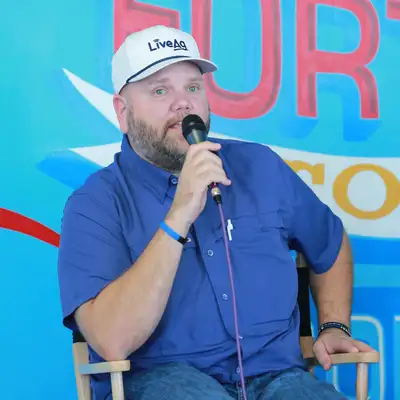
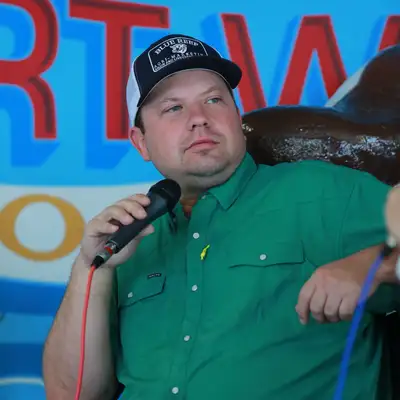
Welcome to the "We Live It" ranch and livestock marketing podcast, where cattle market intelligence meets ranch-ready wisdom. Join hosts Ty deCordova with LiveAg and Casey Mabry with Blue Reef Agri-marketing as they bring you straight-talk market analysis, proven strategies, and insights from industry leaders who understand ranching isn't just a business - it's a way of life.
From livestock market trends to cattle management practices, each episode delivers actionable knowledge to help take your ranching operation to the next level. Whether you're in the saddle or in the truck, tune in for conversations that matter to modern cattlemen. Because we don't just talk about the cattle business...we live it.
Welcome back to the We Live It podcast. We're live here at Cooper's Barbecue in historic stockyards of Fort Worth. Joined today by the cohost Casey Mabry and, Elite Livestock Representative Beaver Yoder out of the Panhandle Of Florida. I was trying to say the name of the town, but I would mess it all up. But, I wanna thank everybody for joining us today.
Ty deCordova:And Casey, it's been a little bit, since we've sat down and visited. Looks like y'all had a pretty good show here the other day. The girls, y'all weren't, where was y'all at? San Antonio or somewhere?
Casey Mabry:Yeah. They were down. There's a little prospect show down around New Braunfels. Our friend Jay Dudley puts it on. He was actually my meat judging coach in college.
Casey Mabry:And so we go down there and support it. He all the money that he gets from that, he gives back to the kids at the at the major stock shows and in like their district show at the sale. But it's always good to get down there. Yeah, it was a fun time there.
Ty deCordova:What was the deal with the pinatas? I mean, how did all that work out?
Casey Mabry:So Jay, he's from that area and I don't he's got I mean, he's just like he speaks fluent Spanish. He's, you know, he's just super involved in that, like that culture. And he he bought a couple pinatas. They were actually made in Mexico and he sent one of his guys down to Laredo to pick him up. And then he said, hey, if you're mad at the judge, we're gonna have a pinata at the end and I guess you can just take all your anger out on that pinata.
Casey Mabry:So it was actually a pretty neat deal.
Ty deCordova:It was a life-sized pinata, like big as big as the Hereford bull behind you. Was big. It was it was
Casey Mabry:pretty good. It was actually it got a little violent because you stuck a bunch of little kids around there. Whenever that pinata busted, they jumped in and like all the 18 year old kids because all of them were chasing the little kids were chasing Starburst and the bigger kids were chasing $20 bills.
Ty deCordova:Cash. Yeah. The cash. So well, that's good. That's good.
Casey Mabry:Yeah. But lot of stuff's changed since then, man. Like the last time we were here, know, the market was a little bit set back and then there's a lot more optimism out there today that we've got. But, it's been good.
Ty deCordova:Yeah. It looks like this deal's trying to do it again today. So I mean, we got we got a little over 9,000 head on there today. So if you wanna tune in at 11:00, we start 11:00 sharp. Got a lot of good yearlings.
Ty deCordova:Got lot of supplemental lots that weren't on our original catalog that we posted yesterday on supplemental lots. So be sure to get in there and look at those while you're at it on the searchable catalog or the or the bidding platform. It's it's on either one of them. So, Beaver, we'll kinda get right into you. Kinda tell us your backstory, your family, your wife, your kids, where you grew up, kinda what you grew up doing.
Beaver Yoder:Thank you, Ty. I, town is Alpha Florida. It's not necessarily a place that everybody knows about, but it's in the Florida Panhandle, just right below Alabama. Matter of fact, we live close enough that our four daughters, the closest hospital is Alabama. They're native Floridians, all born in Alabama.
Beaver Yoder:So that's how close we are. 30 miles the other way is Georgia. So at times I graze cattle in Georgia, Alabama, Florida, but it's all within forty, fifty miles of home. And so it's right there in that really, really unique, part of the Florida Panhandle. Three miles from the time zone change, so we live in two time zones constantly.
Beaver Yoder:And, and I was born and raised in agriculture my whole life and so it's been a big transition for her. She's jumped into it and we've got four wonderful daughters and they've all been involved in agriculture. Three have graduated from college with ag degrees in ag communications, ag economics, and the fourth one's in school now. So it's been a blessing to be able to raise them at home, on the farm. They've been a part of the operation, have a love for the cattle industry, a love for agriculture and advocating for those things within the industry.
Beaver Yoder:It's just been a great opportunity to raise my kids in in this environment.
Ty deCordova:We might just to change this whole track trajectory of this conversation because you have four girls. He has three girls. I have two girls. There's nine girls between all of us. So what we probably ought to talk about is you need to give us advice.
Casey Mabry:Yeah. Well well, the first thing, I was sitting there and I'm listening to him. He said I have four wonderful daughters. I was like, man, I'm he's still alive.
Beaver Yoder:It it it it it is survivable. Will tell you. It is survivable.
Ty deCordova:Well, I'm in the mode right now where it's either fight or flight, and I'm I'm not sure I wanna do either one. Yeah. So Yeah. You peek in the
Casey Mabry:door whenever you will come home.
Beaver Yoder:You know what's really interesting? My brother I have two brothers and, and and two sisters that that don't live don't live there on the farm, but I had two brothers that that that are not part of the operation, but they live on the farm. One has three daughters and the other one half a mile away has four daughters. There was 11 Yoder girls all all within one mile right there. It was really fun raising them.
Beaver Yoder:Traditionally I grew up on a dairy and row crop operation. So that part of the country, South Alabama, South Georgia, has big peanut and cotton country. It's really high productive irrigated farm ground and we're kind of on the edge of that where I grew up. I'm very fortunate, born and raised right there, lived there my whole life and when I was 19 I lost my dad and I took over the operation. I've been there my whole life and so from there we after we lost my dad and the family, my brothers and sisters grew and we changed and we sold the dairy operation.
Beaver Yoder:I row crop pretty big for a while, cotton and peanuts and corn, soybeans there, and really, really enjoyed that. And so I have a very unique perspective from, in the cattle business from the dairy when we had cow herd, just being raised in the dairy industry, understanding the nutritional aspects and the breed back of cattle so I could carry all that into the beef herd deal. For a while there I had a bunch of cows but I just kept learning as I was younger. I just wanted to be a grazer. I wanted to learn how to graze these stocker cattle and see the opportunities putting some cattle together and grazing cattle, marketing cattle.
Beaver Yoder:And so through the years, less farming, ended up less cows, and now all I am is grazing cattle we put together. We put together stockyard calves, precondition them, background them, graze them out on contract grazing with some other farmers to graze for me and then market them through live ag. So it's a really neat circle.
Ty deCordova:That's a good deal. Good deal. So in your area, somebody wants to get a hold of you to market their cattle through Elite and through yourself, through live ag, how is the best way to look you up?
Beaver Yoder:Obviously, live ag has got website with contact and does a great job with being able to easily find reps in your local area. So obviously through that platform there. As we've learned before at other podcasts here, Elite Livestock is our southeastern group of live ag and I was fortunate enough to be able to join that group four years ago and I've learned a ton about the marketing side of cattle through that process there and have really appreciated the opportunity to market cattle. It's really fun for me. That has become my new passion is going into a set of cattle and just really making a nice set of cattle to load for a producer for for for a customer on the other end.
Beaver Yoder:That's really become a fun part of what I do.
Ty deCordova:It's it's neat when these guys see like for your for yourself, for instance, you you was a seller for a long time. And that's what you did. You sold cattle. Somebody else marketed them for you. Now you're on this side.
Ty deCordova:You're marketing cattle for other sellers. And now you see both sides of it. And that's what makes it so good to to use somebody like yourself that, okay. Now I've been on both sides of it. So I know in turn what these buyers are gonna need, what they're gonna want, the fair slide, the fair shrink, and and other than just being a seller where you want it all one-sided.
Ty deCordova:And and not that's not saying nothing bad about them, but that's just the nature of the beast. When you have done both, you can kinda
Beaver Yoder:It's truly it's truly which side of fence you're on, but and I've been fortunate to be on both sides of the fence. But for many years, I was. I was just a seller. And I would push a rep. I would push a rep.
Beaver Yoder:That's all on you. It's not me. When you get on this side of the fence, you understand both sides of both the seller and the customer where we're sending cattle to and it's made me a better producer and it's made me a better marketer of the type of cattle we're marketing, even selling my own cattle or selling for another farmer producer in the area as a seller. It's really opened my eyes to some new ways of looking at things. Yeah, I really appreciate the opportunity to get on this side of the fence and kinda ties the whole circle together.
Casey Mabry:Beaver, what are you seeing in your area? I mean, I think, like, as far as, you know, people getting into the business, what are numbers looking like, what's your I mean, from where you're at, it's totally foreign to Taina. I mean, we're right here in our backyard, you know? So what's going on in your in your specific area?
Beaver Yoder:Yeah. So our area of of the of the country there can grow forages at times of the year when the rest of the country can't. So there's a huge opportunity to graze calves stocker cattle in our area and make feeders and then bring them on west. But like Florida, it's a cow calf state. There's a lot of calves that come out of Florida.
Beaver Yoder:And so many times those calves have a long haul. So there's a lot of opportunity that we could utilize winter forages in South Georgia, South Alabama, South Mississippi. Those calves don't have quite as far as transition to the Western part or Panhandle, Texas or such a place as that where we can keep those cattle there stop them off create value for those producers both the calf producer and a farmer so there's ton of value there. It is a challenge though. We are in a we are in a area of high growth.
Beaver Yoder:From from. And. And we're the state of Florida. Has a governor that's promoting growth within the state and so it's really becoming a challenge to be able to keep producers profitable in a high growth area and so we need to continue to seek ways to keep those folks in that business and keep profitable and
Ty deCordova:healthy.
Casey Mabry:We're experiencing the same thing in this area right here. Probably a very similar situation from a political standpoint where a lot of people wanna come here. And it's definitely changed the dynamics for sure. So the guys that own the land benefit from it. The guys that are grazing the land or renting the ground or whatever, they're the ones that don't necessarily do that.
Casey Mabry:But I did spend some time in Florida, like when I was working for Cargill and buying, you know, we were getting cattle out of that Florida area. One thing that I was very surprised with is, because in my mind, I'm like, we grow grass in that area, there's plenty of rain, but that grass, it just much kind of maintains the cows and you really can't grow cattle on it but it's and and so we used to take a lot of those Florida calves into the feedyards in the Texas Panhandle whenever I was working for Cargill and then we would experience like high death loss and you know, bad deals. So, it's interesting you guys pick that opportunity up because you can make that animal actually better and then perform there and then it's kind of a win win on that side. It's interesting to kinda think through that and where your location is and how
Ty deCordova:all fits. Make a harder animal is what they can do. They can stop them calves off and make a hard true yearling and not have those health issues.
Beaver Yoder:Folks like myself and other producers that do what I do, And it's a small group of folks. It's not a large industry across South Georgia, South Alabama, Florida Panhandle. It's kind of a small minority of us that do this, but there's a lot of cattle that are grazed in that manner. But because of some past issues or potential issues, we can keep those cattle closer to home. We can grow them there and in turn it creates value for that original cow calf producer to be able know that they can stay closer to home, they can get hardened up, make a good hard true yearling, and then they can go on to the next phase.
Ty deCordova:You also are big involved in the Florida Cattlemen's, so tell us what your role is there. You're part of the leadership role there.
Beaver Yoder:Yeah, thank you. Few years I'll be incoming president. We have a very unique method in the Florida Cattlemen Association and, it's it's not a hard and fast rule, but there's a method that we all come along in succession over six years time and in part of the leadership and you work your way up to the president of the of the association. The unique part of that is afterwards we we rely on our past leadership for guidance almost like a grandfather figure and so there's a very big leadership camaraderie within the state of those that are coming up and then those that have have been out of the leadership. And we constantly are continuing to stay abreast of the issues within the state.
Beaver Yoder:So it's been a really unique opportunity for me. I'm up in the Panhandle. The larger operations are down in Central Florida, South Florida. And a few years ago, a couple of past presidents came to me and said, would you consider doing this? And so, a farm kid from North Florida, that's kind of out of the norm.
Beaver Yoder:And so it's I'm very appreciative of the association and the membership that would put that kind of faith in what I what I could bring.
Ty deCordova:Well, that's pretty cool, man. That's neat to to have people that that are that are involved with us, are involved in in different industry affairs and stuff like that because we have got to stay we gotta stay involved and if we want to mold or shape the future of this industry we have to stay involved and have our inputs there.
Beaver Yoder:You know those of us that are in production side of this, we're so busy. We're so busy. But it's really important political from standpoint. Once a year we have what we call boots on the hill and we go to Tallahassee and we just have the big gathering of all of us from Florida just producers and we meet with every individual senator and and state representative across the entire legislature in the state of Florida and we send a group and we send a package and it's just amazing what what that involvement does for the state. If not, it will be a dying industry really quick.
Ty deCordova:Well, thank you for that. Thank you for all you do. Just to start wrapping things up here, thank you for being on with us. Thank you for being involved with LiveAg and for everything you do in Florida for us. In case you wanna kinda give a little market update before we get going here?
Casey Mabry:Yeah, mean if you think back to a couple of weeks ago, there's been a lot of things that have changed. We had an announcement that we were gonna lose a packing plant a couple weeks ago and it looked pretty rough. There's lots of different things that are looming out there that are trying to knock this market down. But you know what, man? This thing's resilient.
Casey Mabry:It's fighting back. It's good. It's strong. Market's up big again today. Cash markets in the North, as we're talking, you know, last night into this morning, 02:25 up to 02:28 up in the, like pushing maybe even $2.30 in the North.
Casey Mabry:Southern markets probably gonna be higher than that in my mind. Northern markets, there's a handful more bigger cattle laying around there. And so that's why you're seeing this premium to the South. As far as anything else, anybody's guess is on this Mexican border deal. I mean, think everybody's eyes are on that.
Casey Mabry:And I think any kind of rumor or whatever you get out there starts to have some impact on that. And it's anybody's guess, like I said. So we're not trying to speculate on any kind of rumors or what's gonna happen there. But things are good, I'll tell you this, this rally that we've seen in the last two weeks has been the strongest rally we've seen in cattle. Does surprise you?
Casey Mabry:I mean, I know where we were a month ago, where we were sitting here and man, these things are, know, there's a lot of uncertainties. But it's strong. It's firing on all cylinders right now for sure.
Ty deCordova:Cool. Well, appreciate you. Casey, thanks for coming in today. I know you hit a little traffic jam out there today, but appreciate you coming in today. Beaver, thanks for being on with us.
Ty deCordova:Thank you. We're gonna start about 11:00 here today. We got a little over 9,000 cattle, so tune in on liveag.com and click click on there to watch the sale live. I do want to let you know that next Tuesday we have an equipment auction that's December 16. It starts goes live at ten a.
Ty deCordova:M. You can get on there right now and browse and bid, but we will do a virtual live closeout at ten a. M. On December 16 for our equipment equipment people. So thank you everybody for joining us in social media land.
Ty deCordova:Don't forget to hit subscribe and like if you would like to join or or market with us and do kind of some marketing packages, it's katielive ag dot com. Just reach out to her and she'll fix you right up. God bless and we live it.