Subscribe
Share
Share
Embed
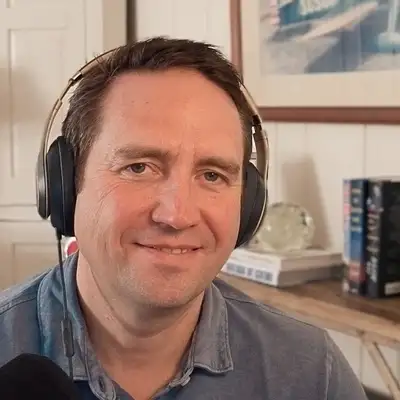
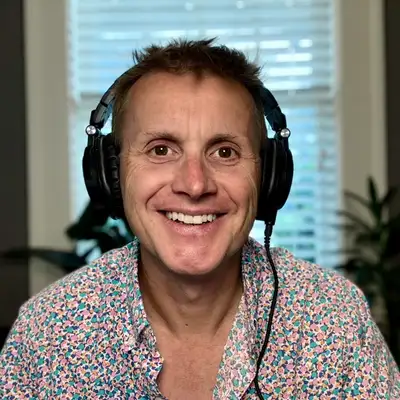
Space Insiders is your bi-weekly deep dive into the intersection of space, cloud technologies, and entrepreneurship. Hosted by Tony Sewell and Rob Ruyak, both seasoned space-tech executives, this podcast features candid conversations with founders, investors, and entrepreneurs shaping the future beyond Earth. Whether you're launching a startup, investing in innovation, or just space-curious, Space Insiders gives you the behind-the-scenes insights you won’t hear anywhere else.
New episodes drop every two weeks. Subscribe now and join the orbit!
Disclaimer: The views and opinions expressed in this podcast are those of the hosts and guests and do not necessarily reflect the official policy or position of any organization or employer.
Welcome to Space Insiders. My name is Tony Sewell, and as usual here with my partner in crime, Rob Roojak. How you going, Rob?
Rob Ruyak:Great, Tony. Good to see you again, as always.
Tony Sewell:Yeah, you too. You've had a busy week. We both had a busy couple of weeks. What's been going on?
Rob Ruyak:Well, I'm not sure what I
Tony Sewell:can share. You don't have to go into the full details.
Rob Ruyak:Yeah, but, you know, it's all good stuff. You know, a lot of activity in the market. You know, lots to do, I think, with the defense industry and everything that's going on. You know, there's a heightened awareness that we need to be, we need to think big and and and figure out how to how to be more strategic in everything that we do, especially as things change so quickly. So it's just yeah.
Rob Ruyak:It's been a busy but good week.
Tony Sewell:We had, some fabulous interest in the episode with Erica last week. We've seen a spike in downloads, we're up to three twenty followers on LinkedIn. It doesn't sound like a lot, but it's good. Starting We're to see some more interest in what we're doing, which is really exciting. One of my little side projects is of building, partnering with another guy locally here in Atlanta to kind of build an industry sort of social group here in Atlanta.
Tony Sewell:We had our second happy hour last week. Met some really interesting folks, actually. I got someone for our next episode after this one. Met the executive director of the Space Research Institute from Georgia Tech, which is awesome. Like, this guy, he's he's like a twenty year veteran of of Georgia Tech.
Tony Sewell:And so it'll be really good. I'm really looking forward to that episode too when we get to talk about sort of building industry within a region like Georgia. And I learnt that there has been a push to build a spaceport in Savannah, so we might have to ask him about that.
Rob Ruyak:That's interesting. Tell us a little bit more, Tony, about the get together. Like, how are you guys doing it?
Tony Sewell:Yeah, so really just me and another guy, Colin Ake. He works for one of the local state colleges here, runs a space accelerator, or an accelerator, sorry, a startup accelerator, but he has a space industry background and we both had a network and we sort of got together about six months ago and just like, we know there's all this space industry here. I mean, ViaSat and Hermes and there's a lot of deep aerospace here in Georgia as well. Lockheed Martin has a big presence here. They do a lot of work for the US government, a lot of research.
Tony Sewell:But there's no forum to get people together in industries. We've had a couple of happy hours now and had some really good interest. Yeah, we'll see where it goes.
Rob Ruyak:Great. Well, invite us. Yes. I'd to come down.
Tony Sewell:Yeah. I'd love to have Alright. You So we've got a a special guest today. I think we probably should be doing this in the bar. Phil Cooper, welcome to the show.
Phil Cooper:Thanks guys. Really, really good to be here. I'm sure there's a joke about an Aussie, a US guy in The UK on a call in a bar, but maybe we can do that later.
Tony Sewell:Yeah. I love it.
Phil Cooper:No, really, really pleased to be joining you. I've been watching the podcasts, doing space launch satellite comms. It's about time we did a bit of geospatial and earth observation. So thanks for for having Absolutely. Me
Tony Sewell:Yeah, so Rob, we've all worked together and know you really wanted to bring Phil onto the show. Can you tell us a little bit about why Phil's here today?
Rob Ruyak:Yeah. Well, first of all, I think, you know, one of the things that you and I love to do, Tony, is bring people that we really truly care about onto this podcast. Phil, I consider Phil to be a really close personal friend of mine, so I've been dying to have him on here. He's just a really good person. But, you know, most importantly, he is a true visionary, in the field of geospatial geospatial analytics.
Rob Ruyak:You know, he's a geographer by trade and looking forward to hearing more about that, Phil. And I think the thing that I love about this topic area, and he and I spent a lot of time together in the past thinking about this, but he really is the one with the vision, is how do companies and other verticals truly use geospatial data and the analysis to make really important decisions, business decisions? And then some of the things we've also talked about, which I'm excited to dive into is, you know, once you have a lot of this data, how much of it really will be visualization for decision making? How much could it be to automate and inject some of that insight into automated processes without even a human in the loop? So there's a lot of super interesting things about this topic.
Rob Ruyak:We could probably talk, I don't know, a week about it. And I know Phil can. True. So, yeah. So I'm just so excited to talk to Phil.
Rob Ruyak:Phil, good friend, excited to talk to you and really thanks for joining us.
Phil Cooper:No, good to be here.
Tony Sewell:So Phil, let's start at the start. So you're a geography student. You've been in the industry over twenty five years. What does it mean to be a geographer today? And I'm also interested to learn how has the skill set for geographers changed since when you studied today?
Phil Cooper:Yeah, no, it's good. I think that's a great question, Tony. I always label myself as a geographer for two or three reasons. The first of all is I I was influenced with my education. I think we go right back.
Phil Cooper:It was the most fun. Geography was the opportunity to get out in the field and, you know, stand in rivers with poles and measure activities. So getting out was really important. And I go all the back to how I was taught at school and a geography teacher was great and then I looked at universities. So I really enjoyed that.
Phil Cooper:I was going to do law, you wouldn't believe this, I was going to be a lawyer. I decided I was going to be a lawyer, I was going to make lots of money And then six weeks before I applied to university, I decided actually I didn't want to do law. So my entire university decision was based on field trips. Sat down. Yeah.
Rob Ruyak:Wait, hold one second. I I need to understand this because we all have this story in some way of shape or
Tony Sewell:I wanted to do lore as well. Thank Exactly. God I
Rob Ruyak:Why not law for you, Phil?
Phil Cooper:Yeah.
Rob Ruyak:That that should be a whole section down.
Phil Cooper:Do you know?
Rob Ruyak:Why not law for you?
Phil Cooper:It it a big part of it was down to, you know, my my dad. My dad has had a big influence on me in terms of do something you enjoy. He would always say please do something you enjoy. I mean, he worked in insurance for forty years and I think he said this advanced he was technically very thing. Was like do something you enjoy because otherwise you can get stuck.
Phil Cooper:The second thing was I was just sitting there going, why do I really want to do three years of legal exams? No, I just didn't want to do it. I just stopped. I got all the university prospectus docs, this is true story to all the perspectives of that and I started looking all the universities I was looking at and I went how do I make a decision on geography? So I just started looking at the field trip.
Phil Cooper:So where do they go? And I ended up choosing Leicester because they went to South Spain, which was great for one field trip. They're The Canaries.
Tony Sewell:Awesome when you're in your late teens.
Phil Cooper:Yeah, I just decided that's what I wanted to do. And that made the decision and if I'm honest didn't look back. Being out so being able to look at the world around you has always been a fascination of mine. Once again everything from glaciers to hanging out in Loworth Cove, a very very famous place in The United Kingdom, a place called Loworth Cove. It's a classic location on the South Coast where you can see an arch but it's been perfectly formed and I just sat there was utterly fascinated by this.
Phil Cooper:So wanted to enjoy it, stuck with it ever since and keep telling my kids although as yet I'm I'm not winning with the kids so far. I've got four kids. My fourth one is likes maps. So I'm hopeful for the next generation but it's to be outside, it's to look around you, it's to understand how the landscape changes, what impacts those changes and that really drove me over the years to join geography and eventually into remote sensing. And it was going through geography university to doing a master's degree in remote sensing that started to look at, you can look at the world around you from so many perspectives, look at change detection and the most impactful image to me and we'll get on to what really drives me now was, I remember during the nineties, they were monitoring as an area in the Amazonian Rainforest called Rondonia and it's very, very famous because Landsat which was the satellite image that was launched in 1972 and then there were these two images I saw one from 1972, one from about '98 and it showed the deforestation of the Amazonian rainforest from Rondonia that really impact me because I could see change evidence in front of me.
Phil Cooper:And I went, I wanna know more about that. That's thirty years ago looking at that and I sort of look back again, what you did then and then what we're doing now. So that looking at the world around me, getting outside, I mean, guys know I'm always out running and getting lost and we'll talk about Strava in a bit. Other apps are available and I've never lost that. So yeah, as being outside, just watching the world and trying to make sense of it.
Phil Cooper:I think make sense of why is the world changing? What are the impacts to that change? I got much more involved in monitoring sea surface temperature, which is a hugely impactful way of monitoring as a barometer of the world. And people often miss that. Anyway, geography teacher.
Tony Sewell:It's interesting because I saw on one of my social feeds yesterday, actually, there was a really interesting picture from two years ago of the main thoroughfare in the Gaza Strip and what it looks like today. I don't think, and you talk about sea surface temperatures, think a lot of people probably don't necessarily connect that discipline of geography, which kind of seems like in today's world, when you hear the word geography, it kind of seems like an old fashioned sort of idea. But observation and remote sensing, it impacts people's lives in a way that I think most people just don't realise. And if it wasn't there, how different life would be. Yeah,
Phil Cooper:definitely. And then you've the data and then things like, you know, GPS has changed all our lives from the letter you get for utility bill that lands on your doorstep in the morning through to the timing that takes place with the energy delivery. You know, GPS has changed everything as well. And the volume of geospatial data that gets used that impacts you daily is massive and it just keeps growing. And those sources keep growing.
Phil Cooper:And that's the thing that we're in obviously, know well, we're heavily involved in a daily basis, whether it's watching the news, you know, whether it's imagery of events around the world, whether it's the research community that relies on that data, right the way through to, you know, go running on our apps and where are we? You know, we've got a phone, we've got an IP address. It's all just geospatial data. I mean, did a piece of work with a colleague of mine called Doctor. Andy Wells, which is if you took geography out of the world, what would it look like?
Phil Cooper:And it was a really fascinating experience because you suddenly realized nothing worked.
Rob Ruyak:I could totally see 12 year old Phil on a field trip somewhere.
Tony Sewell:His backpack, his floppy hat.
Rob Ruyak:That's exactly it. I can also see Rob being a chaperone on that trip, a dad, looking for that kid the entire time. Lost. Because he's lost somewhere in the forest or on a cliff somewhere. Totally.
Phil Cooper:Yep. But very, very close. I'm very good at getting lost. I was always convinced in the direction I was going and I'd always get turned around. So I was always, you know, even even back then is like, I don't need a compass.
Phil Cooper:I know where I'm going. I'm just going to follow-
Tony Sewell:Tearing was a great I used to love doing that at school. I don't know if they do it over here, Rob, but it was a big thing in Australia.
Rob Ruyak:Yeah, did. I remember that in summer camp and other types of, you know, in school field trips. But it's interesting you bring that up because the question I was going to ask you, Phil, was, well, how do you define geospatial? And I think it's important because I remember when I first got introduced to this or started getting interested in it, for some reason my mind just would always go to a satellite image. And I think a lot of people, when I talk to them, when you say geospatial, they kind of think about Google Maps.
Rob Ruyak:But that's not just what it is. How do you break down this whole area? Like what are the categories?
Phil Cooper:So the two things, mean, EO remote sensing probably makes up about five to 10% of the entire market. We call about space economy. It's about 5% and a lot of the rest of it is everything from survey the world. You know, if you look around you and if you were driving along, you'll see little tripods if they're designing new roads, that's surveying, that's geospatial, that's planning the world around you. It's location.
Phil Cooper:There was a really work with a guy at The Middle East once and he said, I said to him same question, how do you find geospatial? And he said, well, whenever I get off a plane and turn my mobile phone on, the first thing my wife asks me is, where am I? And it's where, and how do you define where you are, where the asset is? That On my way home usually. Yes, exactly.
Phil Cooper:Running late.
Rob Ruyak:No matter where I am.
Phil Cooper:I always say as well geospatial is both made and wrecked my life and there's what will wreck your life? Well, we're always late. We're always stuck in traffic It's street works. It's where's the utility network. It is location and how do you define that location?
Phil Cooper:There's some really interesting new GPS and latitude and longitude and coordinate systems have always been the way we define location. There's some interesting approaches. There's an organization called What3Words for example, who have tried to subdivide the entire globe into three meters squared because they were the guy who ran it was fed up of being of going to gigs and not knowing which, where to go. Where's the door of the stage to get into. So he tried to redefine location.
Phil Cooper:So it's where it's and why is where important? You know, there's some really interesting approaches now with safe walks and cities, know, there's some phenomenal development about how do I safely walk home that's location, you know, women walking home late at night, there's a safety aspect to it. There's the classic where does mapping came from in the first place. If you remember John Snow's map of the cholera outbreak in London, which is the foot you could say was the first GIS. It's always been there.
Phil Cooper:What it is now is how do you define where and how do you put datasets together? I always use the final example, which is the only way that a tree knows where a power line is, is its location in any database, you know, and in databases you have to define the location of the tree and the location of the power line. Why is that important? Because if you tree falls in the power line, you're gonna get, you know, cut off electricity. These are all ways that geospatial impacts life every single day.
Phil Cooper:And as we all have IP addresses now, so the average person has three IP addresses. Okay, may not realize it globally and those IP addresses can tell you where you are. So whether it's your phone, whether it's your watch, whether it's your laptop and that's located somewhere. So you're defining where you are. That's a data point.
Phil Cooper:If you aggregate those data, so if I know my laptop is in a location in Washington DC, I can aggregate these two things together. Somebody may want to say well, since you're in DC, do you want to buy a cup of coffee at this location nearby you or do you want to go and visit that? Now there's concert on tonight just from my IP address from my location. That is how things are changing. And as we get more IP addresses and more sensors, it's only gonna get more granular.
Phil Cooper:So yeah, that's a big, big part of what I'm seeing. And that's that vast area of the geospatial industry that sometimes people even don't think about. But if you take it away, you know, what would happen? Mean, how often, how recently have you actually put a paper map up and started thinking, right, how do I get from here to here? And if you remember the forty years ago plus when I was sitting in the back of the car with the parents, they're arguing about well I know where I'm going and I've got the map up.
Phil Cooper:You don't have that anymore.
Tony Sewell:It was always dad driving and yelling at mom because she can't navigate.
Rob Ruyak:Exactly.
Phil Cooper:But that continues to change. And then also I'm seeing a huge growth in things like the global South as well. We got 3,000,000,000 people who are using location services for address delivery. Know, if you go to Tanzania for example, have their entire businesses that say, well we drop parcels at the service station. How do you locate that?
Phil Cooper:That's a really interesting growth development to area going forward. And they're just embracing these technology changes, embracing IP addresses, embracing location. So there's a lot there and all of it has an impact and it all bases on where you are, where the asset is and how you aggregate the two together.
Rob Ruyak:Yeah. And there's the, so there's all the geospatial data, but I think in all the possibilities around it, what I think is really interesting is, especially with with, the advancements of cloud computing, and artificial intelligence and all the kind of the derivatives of artificial artificial intelligence, it looks like you can start to model, do modeling simulations, you know, that you can enable more digital twin type environments. And to me, I think that's super, super interesting for commercial enterprise and other verticals like energy or in financial services. I think pretty much probably every vertical. Are there certain like, where do you see that?
Rob Ruyak:Where do you see the biggest impact currently where geospatial is helping companies make interesting decisions, like really important decisions? And is there an industry, Phil, that you feel is kind of out in front of the others as it relates to the use of geospatial data and insights?
Phil Cooper:The traditional thought about use of geospatial has always been the defense and security industry, always. I like to look at the history of geography. So back from 1959 when the corona satellite reconnaissance, the Bay Of Pigs activity was always defense and security. That was always the driver. A) autonomous vehicles, car industry.
Phil Cooper:That's the really interesting industry and that's driving a huge amount of use of geointelligence.
Tony Sewell:Is it explicitly just sort of thinking about the roles that people have in these companies or with these use cases? Is it becoming more of a data science discipline or is it still explicit that they're like different disciplines within geography that people are sort of specialising in?
Phil Cooper:I think the world of data science is definitely accelerating because of the tools that we have available. The challenges that are in front of us now is two or three. The first thing is that sheer volume that's coming off these autonomous vehicles and those data scientists are what tools can we actually use to consume that data analyzer. I've got a very, very good friend of mine who is a very, very senior. She's actually the chief technical architect in a large automotive company.
Phil Cooper:And he said that their challenges are not so much the ideas of what to do with the data, which is coping with the volume of data that's coming off these autonomous vehicles today. How do you make that efficient? How do you bring the data off? How do we get intelligent about what data you take off the vehicles versus what do you leave on it? And we've seen it in space.
Phil Cooper:We talk about, you know, in orbit operations, you talk about autonomous vehicles out in the field. It's exactly the same challenge, which is onboard these autonomous vehicles today. There are so many sensors creating so many data, their problem, they can't actually get it off. They can't get that volume of data off. So it's getting clever and smart about the data you take from the vehicle you transmit.
Phil Cooper:And then when it's in a cloud environment or a technological platform, how do you handle it? What do you do with it? There are new roles emerging like profile engineers who are defining, look, assume that the data is growing and storing fine. What do you do with it? And there's a term of geo AI that keeps rumbling around at the moment.
Phil Cooper:And AI has a big part to play, but in our industry, like in many industries at the moment, I think that there's this kind of this is racing to catch up. Well, we know we can do all these things. We know we can move data off of cars and we can autonomous vehicles and the idea about driverless cars. And if you remember Johnny Cab from there, Total Recall. That's all perfectly feasible, but it's what do you do with it?
Phil Cooper:And I think data scientists will be part of it, but I think there's going to be engineers who decide what does the car of the future look like? Do we need cars anymore? There's a big question. I mean, will our kids not own cars?
Tony Sewell:They're just Driver's licenses. Yeah. What's the point
Phil Cooper:if it's a transportation system? So I see that as being a massive, massive area of growth in our sector. Sorry, I've gone on quite a bit, but I see that as massive.
Rob Ruyak:On the Gen AI topic, Phil, you know, we have ChatGPT. We have all these large language models that I think a lot of us are all using on a daily basis for various types of, you know, kind of the copilot concept, right? You know, help me get my job done. I think those have been very useful because a lot of them, unless I'm missing something, have been trained on the open Internet, right? And I there's some proprietary data too that trends these models.
Rob Ruyak:But I think when we think about using AI and agentic AI for like intelligent workflows, getting the human out of the loop in some of these examples, I think geospatial data would be really useful for some of that. It seems to me that a lot of this information is still very proprietary. So, you know, how do we move from using AI and geospatial data to really improve a business process or deliver something that improves public safety or some public good? What do you think needs to happen to actually train these models to be effective to do those types of things, where maybe a lot of the training does require some of those proprietary data that's not necessarily open yet?
Phil Cooper:One of the things that we've seen is with the big AI organizations, let's say Anthropic at the moment, with the stuff we're doing with Claude obviously is the interface with OpenAI is they're now looking very interestedly at geospatial data as another source of intelligence that feeds into the models. The work we've done with people like Made with Clay is a really good example of where we're making progress and the model building is not known necessarily the issue anymore. It's the agents that tap into it.
Rob Ruyak:And
Phil Cooper:that's just a little plug we're doing. We're doing a challenge in London in October 8 at the Royal Geographic Society to start to dive into it. Because what we want organizations to think about is what does the agent, what does the interface look like to those models? What are the challenges? Just because you can go into Anthropic and say make me a map or something like that.
Phil Cooper:The challenge it's had is it doesn't understand location. So I did some work some time ago with an organization called Element eighty four. Really, really, really great customer organization to work with and we were looking at the challenge of swimming pools in, I think it was Massachusetts. That was the chat. Well, show me the swimming pools in Massachusetts.
Phil Cooper:The model understood what a swimming pool was. It didn't understand what Massachusetts was. It didn't know how to define a Massachusetts. So we have to teach, We have to teach. It's like teaching, you know, you've got to teach what geography means and that teaching process is where we're going at the moment.
Phil Cooper:When we when it understands geospatial and we ask it how many swimming pools are in Massachusetts and it understands the defined boundary of what Massachusetts is, it'll be better. And these are the things that are getting better. We're asking lots and lots of questions, but if it doesn't understand the context of spatial, like show me all the vegetation within a meter of a power line. Okay, well, I can tell you what a power line is. I can tell what vegetation is, but what are the parameters I'm working?
Phil Cooper:These are the things we're gonna start training the models to do. And I think that's where I'm starting to see the geospatial industry, which by the way, I think GIS professionals days are numbered, but I think geospatial professional days are about to get very, very busy because they're going to be needed to teach the models. What does that mean? And then what services are we going get from the back of that? Like we do with
Tony Sewell:That's the a insight how the role is changing. So what do you see the role of the geographer in the future? What are going to be some of those key specialties or functions that geographies will play in some of these organisations?
Phil Cooper:I think we're going to have to be ambassadors for geography. I think we're going have to be advocates. I think we have to be innovators. I think we're going to have to bring on or train the next generation of geographers, not to just use GIS, not to see somehow. I think what happened with, you know, the rise of Esri and MapInfo and CADCORE and the GIS tools of both say of the eighties and the nineties, so my date dating me now.
Phil Cooper:That was the traditional way in which people with the geospatial background went into technology. I think those GIS tools are dramatically changing now. And I think we need to start pointing out to people that it's not the specialty of the cartographic GIS person and the people in the corner of the office that used to be in local authorities. Now it's directly impacting commodity training. It's impacting the financial markets depend on location.
Phil Cooper:I think supply chain logistics, Robert topic I know that you and I've talked about. The people within these organizations need to have geospatial people explaining why it's important and therefore how to take advantage of the data sources that exist. I think we need to, there's a lot of education that needs to take place and a lot of considering that was that great turn that profile, who is going to be consuming that information in the future? What's important to them? Disaster response now a huge area of geospatial that keeps this impacting.
Phil Cooper:I think there are tooling that comes out how to best use it with the geospatial data. That's training, that's advocacy, that's opportunities like this to talk about the importance and then how do we link these things together? And I think that joining of technology and data and IoT and mean IoT geospatial is back on the rise again. And I think that clarification to markets and sectors is gonna be a big part of what geographers do going forward, not just GIS tools. Ed Parsons, the head, ex head of geography at Google and myself talk about this quite a bit, which is we think the GIS professional is perhaps days are numbered, but the geospatial professionals days are about to get very, very busy and we need more of them.
Phil Cooper:So there we go.
Tony Sewell:So what's the, I mean, we spend a lot of time on the podcast talking about sort of from a startup angle and entrepreneurship angle. I mean, you can see how this discipline is really is being employed in defence and intelligence and in the big financial companies or insurance companies and whatnot. But from an entrepreneur, like a start up perspective, what are applications some of or businesses that you see really excite you about sort of where this is going and where the opportunity is?
Phil Cooper:So I think the organizations who embrace multiple data sources, so there's a company called Danti ai in The US and they're taking social media feeds and geospatial data to rapidly deliver intelligence to the defense and the disaster responses sector. So really, really, really smart company, very thoughtful about the sources of data and then they're packaging that up so that somebody can actually easily interpret it. So they're a really good example. Liveeo company I work with very well a lot in Germany. They've looked at trade awareness and supply chain and efficiency and EUDR regulations.
Phil Cooper:So organizations who are now understanding that geospatial data is just part of the mix and they're looking to respond to legal regulations and supply chain challenges and efficiencies. I think the other big area that we're seeing with geospatial companies who are seeing using the narrative sustainability, not just about the environment is being impacted and there's been perhaps, I think there's some big challenges around climate change, but businesses who are turning to industry and saying, how do you become sustainable? So the work we're doing for Hexagon, for example, in Brazil with Vale mining, which is all about the mining company is having to remediate the mines and hand them back to do that. It needs data, needs biodiversity intelligence, it needs satellite imagery, needs digital twins. They are looking at the business problems and they're doing a lot of great work with them.
Phil Cooper:So our evolution, which is part of Hexagon. So these are companies that are sort of emerging. I'm always saying that the best company that's going to succeed is the one we haven't heard of yet.
Tony Sewell:Investment Is dollars there for capital?
Phil Cooper:So I think if we talk about the space economy, which is definitely seeing a rise and maybe a drop off at the moment, that was one area that geospatial companies look for investment. I think a lot of them now looking for AI investment pots as well. So one of the things I've learned about geospatial companies over these, they're very adaptable. They can be very sharp with the messaging to the investment organization. So if investment companies looking for AI opportunities, can turn to geospatial, but the industry is always just steadily in the background.
Phil Cooper:And I think there are some interesting companies emerging now like Luxcarta for example, they're focusing on mapping projects or I'm trying to think of some other organizations I've seen recently who have used to go geospatial funding and now are going AI and data science funding. Aspia Space, for example, a company we work with in The United Kingdom. They are really going down on the biodiversity BNG front. So I said, right, this is an important problem. There's investment funds.
Phil Cooper:There's a lot. There's always been environmental and sustainability funds. That's always been there, but now it's more government specific projects that they want to get funded. I think there's a huge investment in the European region at the moment. I don't know if you're aware there's €165,000,000,000 being planned for the next six year programme in Europe.
Phil Cooper:I think that's where a lot of startups are going to get funded. And I think the leadership in geospatial potentially is shifting to the European region now. That's a very different conversation to have, but these are big funds is being recognized at the government level. Therefore, the startups are being smart about how they present their offering. And I say, I think there's going to be dozens of new startups that emerge in the next couple of years to take advantage of that.
Rob Ruyak:Yeah, and I think it's very exciting to what I think we'll start to see companies that aren't necessarily purely geospatial, but they might be companies that focus on a particular industry that takes geospatial data, meshes it with other things. Could be ERP data. Right? It could be or location data that a company doesn't even know they really have, and then injects some of that into a business process under the covers that is just enhancing a decision to be made. For example, you know, automating a work order process for sending a crew out to cut the, you know, the trimming trees around the power lines.
Rob Ruyak:Right. I mean, that's probably a simple example, but I think there's going to be a lot more of that. And, you know, we didn't even touch on like the financial industry. They've been using geospatial, right, for quite a long time too Phil, we've loved having you and talking to you. I I really feel like we could talk for hours, on this topic.
Rob Ruyak:You know, we Tony and I like to end this conversation typically with a fun question that, like, maybe helps people understand a little bit more about who you are as a person. So, the one that we came up with, is this one. So I don't know about how Tony feels, but I feel like using GPS makes me absolutely dumber, you know, like dumber. And whenever I someone asks me for directions anywhere anymore, I I it's really hard for me to even remember the streets of my neighborhood, let alone, you know, getting to work. So, here's the question.
Rob Ruyak:Based on the fact that you're a geographer and and you do what you do, do you actually use GPS? And and when you do, when you feel yourself kind of forgetting where you're going or those streets of the names of streets, do you revert back to the old map in your own brain to figure out where you're going?
Phil Cooper:Well, I think I said at the start, sometimes have an overinflated capability where I think I'm going and I always regularly ignore them. A lot of my friends always know whenever we go for nights out in various cities. The adage now is never ask Phil which direction to go because you'll probably get it wrong. I have genuinely been on stag news where I've got lost. My approach now in most cities and this is top tip, top tip for anybody listening in location.
Phil Cooper:And I used to do is generally speaking, go downhill until you hit a river or water and the chance and then you make the decision left or right. And the chances are you'll probably find something like a bridge or a central other thing. So I used to always do this with rowing clubs, do all the rowing. That was our just go downhill, keep going downhill, eventually you're going to get to a river and then the chances are Reference points. Yes.
Phil Cooper:So I've always done that. I had a recent one actually. I mentioned Strava. I go running quite regularly with some friends of mine and I decided on this occasion that I was going to do a longer run. Was like, it's fine guys.
Phil Cooper:I'll be fine. I'll see you later. No problem at all. So off I trotted and I thought, oh, I won't worry. I leave my phone behind.
Phil Cooper:I don't need it. It's fine. I know where I'm going. Two hours later two hours later, I finally arrived back at the car park. There was a junior park run going.
Phil Cooper:I had to beg a lift from this poor couple to say, can you please take me home? Because I wasn't hadn't I didn't have my GPS. I didn't have my phone. My wife was pulling her hair out. My running colleagues were basically apparently driving around all over the place.
Phil Cooper:And though, therefore, ever since, my my wife has insisted that I don't go running alone around certain parts of The United Kingdom, so I get lost. So, yes, I am.
Rob Ruyak:It it all goes back to that middle school feel interested in a rock in the forest, and you get lost, like, staring at each
Tony Sewell:It is a lost it it's a lost art, though, reading a map. Like, I I feel lucky that it was it was such a big part of army being in the army and and learning how to how to navigate. I wasn't necessarily great with it. I just I do remember this being, like, in awe of this guy. I did I tried out for SAS.
Tony Sewell:I didn't make it. Didn't make the grade. But one of the guys in in my section who went on to be to to get through and was quite successful, just being in awe of this guy running and running with a map and a compass and lit like, it's such a great skill. It is. And you do, like when I go, I hunt and you go, you look for, you sort of remember those things, you're looking like at creek lines and you think about contours and stuff.
Tony Sewell:It is a a really good skill.
Phil Cooper:No. I've gotta tell you.
Rob Ruyak:The thing the thing that amazes me the most is I love watching some of those shows, you know, those historical shows or historical fiction or whatever it might be. What like Band of Brothers, you know, about World War two.
Phil Cooper:Yeah.
Rob Ruyak:And just thinking about these guys in the middle of nowhere, literally with a map. Yep. And not only just trying to figure out where they are, but how to strategically position themselves literally using a map and compass. It's it's incredible. It's incredible.
Rob Ruyak:I can't even imagine what, you know, how that was done back then.
Phil Cooper:It's funny you mentioned the special forces actually, Tony. So I've got a good friend who did go in there and he always told me this really interesting story, which is that when you go for selection in Hereford, they do not tell you where to go. As he said, if you don't know where you're going, you're not going to get in. And he was a medical support officer, very, very good friend of mine and he used to support him and he'd say, yeah, same thing which is that you don't know where you're going, you know you're not and it is an art and I think that it can be honed it's you know in the desert where they obviously they trade up. I've done a lot of research about special forces and how they developed in the desert landscape, which has got no features at all.
Phil Cooper:Yeah. I 100% agree with you on that one. It's an art and I need to get back to it. I need to teach my kids to do better. So there we go.
Phil Cooper:Yes.
Tony Sewell:Yeah. Very good. Well, Phil, thanks so much for joining us. Mean, Rob and I talked about before that, like, there was a chance that I was gonna be in DC and it's like, mate, we should do this together and have a couple of drinks and but gosh, we could have talked for hours and maybe we'll have you come back and we could bring in someone from one of these businesses, like Element eighty four that would actually be really good.
Phil Cooper:And baloney would be good. Yeah, yeah. Alright,
Tony Sewell:Well, Phil, thanks again. This has been really great. If people want to find you or learn more about what you're up to, where can they do that?
Phil Cooper:So they can look me up on LinkedIn. My LinkedIn profile is Kinder Row. Short story behind that is that my nickname when I was at university was Kinder because I was the youngest person in the boat by three years and I've always been a rower. So there you go. A little secret that not a lot of people knew.
Phil Cooper:Now everybody who sees this podcast. Now
Tony Sewell:three twenty five people on LinkedIn will know.
Phil Cooper:Kidder Road. So look, let me off. That's why that is. But yeah, let me up on LinkedIn. Happy.
Tony Sewell:What's the big, big event you're going be at?
Phil Cooper:So we've got a generative AI geospatial challenge at the October 8. We're doing that with women in geospatial. I'm big advocate for women in geospatial. I think it's part of that, next generation that's coming through. So look that one up.
Rob Ruyak:Where is that Phil?
Phil Cooper:And that's gonna be the Royal Geographical Society in London.
Tony Sewell:Send me the details on that and
Phil Cooper:I'll put that in the show notes
Tony Sewell:and we'll give it a plug.
Phil Cooper:Fabulous. So yes, we're going be doing that and always happy to talk about the ways in which we are geography and obviously a beer at some point. Always happy to do that, guys.
Tony Sewell:Absolutely. Well, Phil, hopefully we can catch up again soon and thanks for joining us. Thank you to listeners. If you like what you're hearing please write us a review or give us a rating it would really help us get the word out on the show. And with that, thank you and look forward to seeing you next time.
Phil Cooper:Cheers.