Subscribe
Share
Share
Embed
Welcome to Defining Hospitality, the podcast focused on highlighting the most influential figures in the hospitality industry. In each episode we provide 1 on 1, in depth interviews with experts in the industry to learn what hospitality means to them. We feature expert advice on working in the industry, behind the scenes looks at some of your favorite brands, and in depth explorations of unique hospitality projects.
Defining Hospitality is hosted by Founder and CEO of Agency 967, Dan Ryan. With over 30 years of experience in hospitality, Dan brings his expertise and passion to each episode as he delves into the latest trends and challenges facing the industry.
Episodes are released every week on Wednesday mornings.
To listen to episodes, visit https://www.defininghospitality.live/ or subscribe to Defining Hospitality wherever you get your podcasts.
DH - Alex Kuby
===
Alex Kuby: [00:00:00] You know, I think, I think I went to school with the kind of standard, "I'm gonna change the skylines. I'm gonna make these incredible, structures." And then immediately in my experience, I realized, oh, the interior environments are where I actually have influence.
And I-- that only do- that only works well when I understand the people that are in there, and I'm, seeing them for what their needs are and for who they are, and acknowledging that by the way the space is supporting them
What I do is inconsequential. Why I do what I do is I get to shorten people's journeys every day. What I love about our hospitality industry is that it's our mission to make people feel cared for while on their journeys. Together, we'll explore what hospitality means in the built environment, in business, and in our daily lives.
I'm Dan Ryan, and this is Defining Hospitality.
This podcast is sponsored by Berman Falk Hospitality Group, a design-driven furniture manufacturer who [00:01:00] specializes in custom case goods and seating for hotel guest rooms
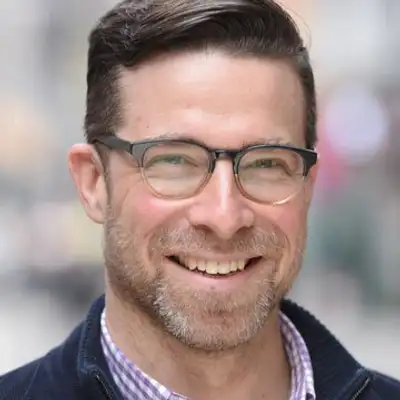
Dan Ryan: Today's guest is a forward-thinking advocate for integrating brand identity into built environments.
He's a major contributor to an award-winning design portfolio, and spends time authoring his company's blog. He's a member of the American Institute of Architects and a well-accredited professional. He's an associate principal at Dylot. Ladies and gentlemen, Alex Kuby. Welcome, Alex
Alex Kuby: Thank you, Dan. Excited to be here with you
Dan Ryan: I'm happy to be here with you as well.
It's taken us a long time to get here, but you know, sometime- I, I know I say I love shortening people's journeys, but sometimes you just have to love the journey you're on. So, I wanna share with our listeners, number one, Alex is wearing a cardinal colored, which is burgundy if you don't know, ish, but we call it cardinal s- uh, sweater because-- I'm not sure if it's because, but we both went to the University of Southern California, so fight on Trojans.
Gotta give a shout-out there. And also, we both got our career [00:02:00] starts at Hersh Bedner & Associates in Santa Monica. Um, I was just an intern. You were a arc- you were a architect or you graduated with a degree in architecture, so
Alex Kuby: Yeah, it
Dan Ryan: you, got paid more than I did.
Alex Kuby: Uh, well, we'll have to compare notes on that.
Dan Ryan: Great. I don't even know if-- I think maybe Michael Bednar paid me with beer, if I remember correctly, but I'm not sure. I, I think it was probably illegal how I got paid there, so,
Alex Kuby: Well, now he's called out, so.
Dan Ryan: exactly. Goat. I'm coming after you, Bear. so one other thing, after starting my first company in 2001, I lived up in San Francisco, and then I moved back down to LA.
I was calling on customers all over, and DILOT was formerly known as RDC, which was predominantly, I think, architecture. But I, I, I remember trying to do some stuff with you guys and, I don't know, maybe it was more architecture, not FF&E. And then I just-- Well, I guess I moved to the East Coast, lost track of everything.
But [00:03:00] then out of nowhere, about a year and a half or two years ago, from like eight different areas of my life, I started hearing about DILOT. DILOT, DILOT, DILOT, DILOT. It was unbelievable, like shot out of a cannon. So I know you're not a new company, but I do wanna dig into like the transformation. That being said, but before we get there, what's kept you in hospitality?
How do you define it? Like, what, what does hospitality mean to you?
Alex Kuby: I, I, um, I found a real passion in hospitality working at HBA. Um, and over my career, that question has evolved. But where we land now and the kind of design ethos that we've built this studio around is that hospitality is the humanity in the built environment, and that is the way in which we express care and facilitate all of those great high touch point, high emotional engagements that the best hospitality spaces are known for
Dan Ryan: Love it. Now w- in our w- w- [00:04:00] before we spoke, there's this idea of making hospitality more approachable. Um, because I know, like we read about all the luxury and lifestyle that's just taken off and I, and, and then there, there's this K-shaped recovery. But what is approachable hospitality from the built environment with your architecture hat on?
Like, what does that mean to you?
Alex Kuby: Well, I think it's a fundamental acknowledgement of needs, and that no matter what price point you're engaging in a hotel experience or even outside of that typology, a multifamily experience or retail experience, are, there are fundamental human qualities that when we see those in people and we acknowledge those needs and validate and provide a supportive environment that hosts those interactions, that is outside of any caliber of luxury.
It is just fundamental to the best ways we interact with each other. So when you think of it in [00:05:00] that way, the sky's the limit, and you are able to engage with all kinds of different projects, all kinds of different clients, all kinds of different communities that want representation, and to facilitate interactions in all kinds of new and interesting ways. that is what keeps the job exciting and keeps all of these industries moving in a positive direction where we don't lose that humanity that kinda connects us all together.
Dan Ryan: is there any origin in that idea of affordability, or not affordability, approachability, um, in hospitality from RDC transforming into DILOT and growing as DILOT?
Like is there a story, a connection, a brand pillar into that?
Alex Kuby: Sure. Yeah. So when I joined RDC, I guess I'll take a step back. You know, when I joined, this, this firm was approaching its 50-year anniversary, it really started as a big box retail architecture firm, a lot of work with Walmart and similar [00:06:00] type stores. And had just been evolving in an interesting way, and of that kind of backbone, new studios were starting to come into existence built on the shared resources the mid-sized architecture firm had ha- had, had in place. And 10 years ago, one of the new trajectories was to go into a more intentional hospitality direction. So was the beginning of what now is Dylot, and for the first seven or eight years was just known as the Hospitality and Interiors Studio of RDC. And we got to a point where despite the difficulties of selling a hospitality design service from a retail architecture firm, uh, standpoint, had built up a portfolio of work that was very community-driven and [00:07:00] value-aligned, and that momentum carried us into an o- an internal branding exploration where we came out the other end as Dylot, um, which is again, a focus on hospitality interiors, but bolstered by branding, procurement, and supportive architectural services to really be completely inclusive of everything that needs to go into making spaces the best they can possibly be.
Dan Ryan: And I have a question.
Alex Kuby: Mm-hmm.
Dan Ryan: Chris from your team
Alex Kuby: Yes
Dan Ryan: lives in Bentonville, and you have a Bentonville office.
Alex Kuby: We do
Dan Ryan: Does that have anything to do with the start, uh, uh, like doing a lot of work with Walmart through their meteoric expansion over the years?
Alex Kuby: Yes, we had kind of a legacy office, uh, in that region, um, had kind of separated from that type of work, you know, the Walmart-specific And so the timing was just right for repositioning and being so centrally located. Chris, at the time, was up [00:08:00] our procurement offering,
and so being kind of centrally located was a huge advantage for that part of what then became Dylot's services to allow for logistics and travel to in kind of the continental US, and, um, that was part of the, the repositioning of that, that location.
Dan Ryan: But he al- but he, was he in Southern California first before go- moving to Bentonville?
Alex Kuby: Yes.
Dan Ryan: And also, okay, so I understand the origin and the importance of Bentonville, but how much for him, we can have a little fun here, did it have to do with all the amazing mountain biking that they have there?
Alex Kuby: You know, I think that that is far more a reason why him and his family have stayed. It's an amazing place. I don't know if you've visited,
but I've been there.
In--
Dan Ryan: Yeah
Alex Kuby: yeah, it's an incredible... You know, the Walton family have just invested so much in making it a executive utopia for families.
Dan Ryan: Totally
Alex Kuby: Um, lots of free museums, lots of great education, amazing bike rides, [00:09:00] which Chris is an avid biker, and so is, uh, Jackson. um, yeah, there's a lot of reasons to, to visit and to stay there
Dan Ryan: yeah, Bentonville is a real jewel and a really special place. And I've not gone b- I'm just newly getting back into cycling, but I would like to go there, so hopefully he'll invite me and I-- we can go for a bike ride somewhere. But I have a feeling he'll just destroy me and leave me in the dust
Alex Kuby: I know he would love that. Um,
Dan Ryan: No
Alex Kuby: and he is a very good guide. You know, he, he slowed
Dan Ryan: Be patient.
Alex Kuby: I visit
Dan Ryan: Okay
Alex Kuby: I think, I think you, I think you got me covered on that.
Dan Ryan: Perfect. Perfect. Perfect. Um, another question I have. So I became a LEED Accredited Professional in 2008, and one of the things I was disheartened about, because my whole world is FF&E, right? And there, there, there is this mode of thinking that I, I read an article, it was, it was handed to me by, um, someone who's been on the podcast twice, Joanna from, uh, Mindclick.
But there's [00:10:00] this notion that building a new building, even if it's a LEED whatever, gold, silver, platinum, that's great. It's a building, it's a, a corn shell, it's operating. But the-- Something about the embodied carbon of all the renovations over 100 years of that building is actually more than what it took to build that building and operate it.
I have done a little bit of research into WELL. I mean, I know a little bit, maybe more than a little bit, but can you just tell me how WELL fits into the overall place of sustainabil- uh, sustainability from the built environment?
Alex Kuby: Yeah, they kind of get paired together. WELL is definitely more a focus on the actual wellbeing of the inhabitants of the space, and so it touches things like water quality, air quality. So, when you're trying to create a WELL space, there are also a lot of programs that need to be supported to get that accreditation. So it's far less the [00:11:00] construction process and far more operations and some, some key decisions around systems. but you really are looking at like the qualitative space in terms of its impact on human health and wellbeing. Um, our office is a WELL-certified location, and that is something that, uh, we experience with, um, fitness programs, uh, and, um, healthy food options and those type of programs layered in on top of the systems that keep the air to a certain level of standard and the water purification and all those, um,
Dan Ryan: Got it.
Alex Kuby: that kind of go unseen.
Dan Ryan: What was interesting is even though from a lead perspective, the FF&E didn't really check any boxes, uh, unless you were doing built-in things. But through that, we were able to s- change all of our supply chains, I'm not just saying just for me, but like for everyone out there, so that you can get...
Before that 2008, it was h- you had to pay extra for indoor air quality as it pertains to manufacturing. So it was [00:12:00] hard to find MDF or plywood or other panels without added urea and formaldehyde, so from an indoor air quality perspective. And then just from polyurethane finishes and everything else, uh, the technology from, you know, the likes of Sherman Williams and Benjamin Moore and you name all the other, all the other ones, they changed their chemistry so that the off-gassing wouldn't happen when it was in its final resting place.
Um, so it is exciting to see all this. I just wish it would take-- What do you think is-- Why do you think FF&E is... Oh, actually I'll tell, my theory is 'cause FF&E is the last line item on the, on the budget, so people don't care. But I think in hospitality and office, and you can argue other silos of, of commercial real estate, that's the part that the people connect with the most.
Like that's the built, that's the lived experience. But what, why do you think that there hasn't been more attention paid to it?
Alex Kuby: I mean, the money drives the focus, I think is the short answer. And I think you hit the [00:13:00] nail on the head. By the time groups are really looking at building out the case goods and the FF&E, I think they rely a lot on the experts they've hired to kind of carry those things forward. Um, and that's one of the things that we spend a lot of time on.
You know, we care a lot about FF&E obviously. Um, and we have to kind of step aside from and, and WELL and kind of like the formal accreditation and remember that we have a responsibility in our work, and those values need to inform how we are designing and how we're specifying and,
and the partnerships that we make and just finding alignment those values are carried forward to the end product. so that was another really big piece of building the Dialout brand, was really understanding what do these kind of catch-all terms like sustainability and wellness and, you know, other values that we are aligned with, what does that mean in actual practice? And one [00:14:00] example, a huge contributor to carbon, which is-- this is a polarizing subject, but is just animal products in general.
And so, you know, we're not gonna control what people eat or what they consume, but we won't specify unless there's like a really specific reason to. And, you know, even when it comes down to lunch and learns and things like that, if it's on, if it's on our tab, just don't purchase an- animal products because we just carry forward that commitment to sustainability and carbon footprint to all of the ways we eng- engage with our work, even in kind of the ripple effect.
Dan Ryan: That's actually quite a commitment. That's remarkable. I never actually considered that. I
Alex Kuby: Yeah,
Dan Ryan: considered that the animal product is a tremendous contributor to off gas or to carbon emissions, but I'd never considered a policy to kind of put your, put your money where your mouth is, so to speak.
In that...
Alex Kuby: of,
Dan Ryan: Yeah
Alex Kuby: building a new thing. You know, you can really leverage what you've built up to kind of move the needle [00:15:00] forward. You know, another piece of that is we are privileged to be in the room when big decisions are being made, and if we can kind of just move the needle in a positive direction, whether it's that or accessibility or other kind of things that maybe are viewed as nice to have, but maybe costs or extra effort that otherwise would go overlooked, it's kind of our opportunity to kind of really lean into where the value is in doing that. And especially in hospitality, but across all typologies now, alignment of values is what drives the market. And so if you're spending $2,500 a wellness, you know, a night in a wellness hotel, I think you're the type of person that really does care about the sourcing and the impact at kind of a larger scale. Um, although, not always, but, um, I think if you, if you survey those, the guests of those properties, you would overwhelmingly see that do appreciate that [00:16:00] mindfulness is,
Dan Ryan: But,
Alex Kuby: is something they're contributing to.
Dan Ryan: but I'll-- I, I had an epiphany earlier this week, and, and the point is, I love saying this, so if... Sorry, listeners, if you've heard me say this 100 times, but, or maybe 200 times. But I, I really feel strongly from the p- book, "The Power of One," and the movie, "The Power of One," a waterfall starts with just one drop of water, right?
And all of-- Even something as simple as saying, "You're not, on your own dime, gonna pay for animal products on, in a lunch and learn or meet if it's on your ticket."
Alex Kuby: Mm-hmm.
Dan Ryan: Um, at Berman Falk, w- one of-- we're always trying to, like, do things that are good, like being in alignment with our values, just internally with, with people, but also with the environment.
And so we're embarking on mission to plant 22,000-something trees in Asia and in North America. I forget exactly where the number 22,388 comes from, but it's a specific number, and I should know that better. But someone, uh, in [00:17:00] social media said, "Oh," like, "why are you doing that? You need to plant a trillion trees."
And I was like, "Okay." But then I was like, I'm not-- We d- I didn't respond, but I'm like, okay, look, you... I asked the internet how many companies are out there in the world, and it's 200 to 350 million companies. And then I was like, okay, well, if, if we could somehow recruit 44.6 million companies to plant 22,000 trees, that's either 22.3% of all companies in the world or 12.7% of all companies in the world to plant 22.
It b- makes everything way more manageable. And I'm li-- What I wanted to say to that troll was, "Well, why don't you, why don't you just b- embark on an initiative to get 12.7% of all other companies in the world to plant 22,000 trees?" And I think that sometimes the problem can s- feel so big that we don't know how to take that first bite.
So thank [00:18:00] you, troll, for trolling, but also screw you because, like, think bigger and see how you can enlist everyone else to make small change 'cause they add up.
Alex Kuby: You're absolutely right. I mean, if you continue to zoom out and, and the scale, it's, to a point where you would, you would be reasonable to be kind of paralyzed and not take action. And I think that that's just something that, we, we can lean into the impact wherever that is and, know, in the rooms we find ourselves in, try to move the needle forward and be happy that that makes us feel good and that the time we're spending, the work we're doing, you know, us more holistically as people in that we're pursuing our values through our work.
Dan Ryan: Yeah. And it's progress, not perfection, people. Like, let's all make a little-- A lot of little changes make a huge difference. So, I wanna go back to that notion of approachable hospitality, right? So can you think of a project or a part of a project in your [00:19:00] Dylot experience that kinda highlights a, a, a challenge or a constraint in the, in the hospitality space of, or built environment of the hospitality world?
And then how did you address that challenge or constraint and make it more approachable? And w- and approachable in what way?
Alex Kuby: Yeah, there's a lot of ways to kind of take that. I think approachability is maybe a, a subcategory of, like, accessibility that I like to kind of keep in, in my frame of, of, perspective. And accessibility is more about equity of experience and inclusivity of, um, the levels of hospitality that we're going for. And so that gets us back on track with those values that we were talking about before, about kind of making sure that we're mindful of the human experience and the, the qualities and the validation that go into an environment that is supportive. So when it comes to maybe less than, you know, luxury brand [00:20:00] properties that are still bringing in tons of people that are equally in need of support and validation and all the great things that go into making life wonderful to live, um, going as far as pulling our understanding of brand standards from luxury properties and even kind of back-of-house requirements of how they operate and applying those to select service or even boutique, small-scale boutique properties, just leveraging that knowledge base and experience to enhance the operations, um, really give the property the opportunity to elevate their service above the expectations of the guest.
And whenever you do that, it's a huge victory. So that's an example of providing a foundation in the planning and the design of the space that allows for the operations to really lean in and make those meaningful connections.
Dan Ryan: Thank you. And then [00:21:00] looking forward into the next five years as far as from that making full service experiences more accessible or just hospitality experiences more accessible, what do you s- what are, what are the changes that you're seeing or, or the challenges that you're seeing or the constraints that are being put on you from, it could be from municipalities, it could be from larger brands or ownership groups.
Like, w- where do you think those challenges are coming from over the next five years, and h- how do you win? Who's gonna win at those challenges?
Alex Kuby: Fundamentally, the, the biggest challenges coming to us are, are around capital making sure that we're deploying resources Um, so when I, when I think about your question, I think about how we direct funding. We do a lot of repositioning work, and we do a lot of up-branding or, um, you know, [00:22:00] ownership kind of personalization of projects. there's, there's kind of a whole myriad of, of conditions that you're just kind of
Dan Ryan: Did you say Marriott or Myriad?
Alex Kuby: Myriad. I might have, I might have slipped, but I, uh, I, uh,
Dan Ryan: you said Myriad. I just, it, I just heard, I heard M- Myriad. Just bringing us back to Earth. No, but keep going
Alex Kuby: Yeah, so when you're, when you're really responsible or stewarding the, the assignment of capital to repositioning projects, a lot of trust is put into you, and a lot of those challenges that our developer partners are experiencing kind of land on your plate. So you get a lot of exposure to, you know, the finance side of the industry.
And, um, and that I think has given us a lot of clarity around why pressure seems to be in places where you wouldn't otherwise expect it. the, the way in which we are reporting, especially on the [00:23:00] procurement side, you know, spending and allocating funds and separating services from costs, and there's a lot more, I think, leaning on the design services for accounting and accountability,
that's something that we've really leaned into.
We've built out the whole procurement branch here because we're the type of group that when there is a challenge, we want to have the opportunity to lean into it and be part of the solution. But that only happens when you completely understand the, the, the big picture of what we're trying to solve for.
So, those challenges and, and others are why we're really leaning into the integration of services. Um, I mentioned earlier that, you know, it's a, a interior design house that is bolstered by a branding agency that's integrated, a procurement agency that's integrated, and a supportive architecture team.
And what that allows for is whether the challenge is municipal-based
Dan Ryan: Huh?
Alex Kuby: Or it's [00:24:00] or it's design-based or it's, you know, any kind of combination of those, we have the right experts in place to build the appropriate team for the project navigate those, those challenges.
Dan Ryan: I appreciate that and it's very resonant with me. I know that we've spoken about these fast track projects that we've been doing where saving even two months of time on a project can return 7X of faster revenue to an ownership group. And that to me, I could get my head around if there's a real value proposition.
One of the things that I've always struggled with, and I'm starting to see the light but I still wanna understand the sausage making behind it, is I've been to a couple of host, um, hotels and resorts general managers conferences and also, what's that other one? Preferred par- preferred vendor or preferred partner, strategic partner conferences.
And they spend so much time talking about ROI of where they allocate their capital on either development or renovations or [00:25:00] anything expending capital. And what I find fascinating is whenever they do a project, they establish a targeted ROI and they're blowing them out of the water, right? So, um, I've also been finding myself reading their quarterly reports, and if anyone wants to know about what I'm trying to talk about inelegantly, go on and look at their quarterly reports and like in the middle of it they, they'll start talking about ROI on their transformational capital programs, et cetera, et cetera.
But I always thought it was so difficult, especially if you take a renovation, to how do you know what's gonna really drive the ROI, right? In that allocation of capital. Now, as an architect, you're building a core and shell but you're al- and you're also doing the interiors. But Sometimes it's just a wild ass guess of where, of how you're gonna get that.
But they've done it in a scientific way, and I really want to get to the bottom of the sausage making. So maybe that's a different conversation with them. But when [00:26:00] you're looking at repositioning a hotel and there are goals of ROI, how do you know or where to ad- direct that capital and direct your, your thinking to get the most bang for your buck or the, the most outsize or overweight return?
Alex Kuby: It's a super valuable metric to know because really gives you the best look at the level of luxury the property's going to be, um, when you really know the money that's going to go into the, the renovation or the repositioning. So having, having the, the goal kind of the investment number allows you to kind of understand where there's-- how much room there is for improvement, and then you have the foundation of applying your knowledge base to how you're going to strategically deploy it into, into the improvements. You know, there
might be a really tight investment and kind of an aspirational return expectation, and then you [00:27:00] really need to lean into those high touch point moments, you know, circulation spaces, public areas, and maybe the, the guest rooms. You know, you pull out some, some places in there. maybe the brand is in opposition of that, and it really is reducing program in the public spaces and, and punching above your weight on the, the interior of the, of the guest rooms. And so to kind of take those data points and bring them all together with the brand requirements or if it's an independent, you know, if, if you're creating brand identity, maybe you're bringing that information into the branding work upfront so that you can kind of position the property appropriately for those goals. branding is probably the most valuable tool to engage as early as possible because you can really get a good understanding of the property identity, and when you have that, you can understand the opportunities for expression throughout, and that being the foundation of your design work just really inherently targets the [00:28:00] effort where it's most meaningful.
Dan Ryan: Okay. So now let's do a hypothetical, or you can draw on this from a past project. new project, or maybe it's an existing building. They're bringing you on with your purchasing, your design, and your branding. They have certain aspirational goals in their pro forma of w- targets they need to hit. They're-- You win the project.
How do you get down to brass tacks and say, "Okay, I, I hear what you're trying to do, and hey, I think you're either-- you're sandbagging here, or this is way too aspirational." How, how do you create alignment between all the different stakeholders for the work that you're about to embark on, number one? And then number two, when the project closes out and it's been stabilized or open for a year, making it through their high season, do you ever go back and, like, check, "Hey, did we do it or not?"
Or, or are you ki- or do you just kind of move on to the next [00:29:00] one and hear what you hear?
Alex Kuby: That's-- Well, I'll answer the first question first. So we start every project with a visioning workshop. Sometimes we sell that as an independent service, and what that does is it gets all the stakeholders and information in the room with us. And depending on the size of the project, it can be half-day, full-day, multi-day endeavor. We have all these kind of custom, uh, tasks and tools that we use to kind of pull conversation to destinations that are informative for us to create a hierarchy of goals and values for the project. And then after that, we have a deliverable that comes out creates-- It's basically the foundational document for the whole project to come,
and that Is to get alignment with all the stakeholders, to make sure the direction that we see and the opportunities that we've explored have a-- they're anchored in the context of the overall project parameters. And we sell that as something that, [00:30:00] you can take this and bring it to anybody as like, kind of like, know, what you want to do with the project. But most often, it just leans itself into a concept phase then where we go more into identity work and narrative crafting with that all kind of in mind.
And so when our clients come to us and they have great visibility in finances and other goals that they have, those workshops just have much more value because we can really tune the service. It's actually beneficial for us to craft our full-service agreement after that happens, because a lot of times you just get a PIP or some sort of kind of high-level explanation of what they're trying to do with the project, and there's a lot of room for that project to go in many different directions.
So that really focuses into a trajectory that you can
then carry into the, the next stages of work and make sure that you're not leaving anybody behind. It's a way of getting alignment at the start.
Dan Ryan: So, and that's interesting. So [00:31:00] your visioning workshop can be standalone or it can be you win a project and it's part of your overall scope of services. But let's just pretend you win the project. You're-- Are you always doing the visioning workshop first?
Alex Kuby: Always.
Dan Ryan: Okay, that makes sense.
Alex Kuby: it's-- it can be a more minor thing if it's like a client coming to us with a very clear understanding of what they do, and they do this all the time, and this is something that we're just kind of plugging into an established workflow, and then we kind of, we pull the pieces out of that workshop, and maybe it's more a kickoff meeting, kind of a couple subjects that we, we kind of fill in the blanks on, on that. but we do always like to deliver that trajectory package
Dan Ryan: I don't know
Alex Kuby: for the project on not a, a super finite path, but like a, a general trajectory that then we can make sure that our conceptual studies and branding, uh, and narrative crafting, they all are in alignment with those goals.
A lot of times we're [00:32:00] brought in years after people have been thinking about these projects, so we really do ourselves a disservice by not trying to extract all of the thoughts and knowledge base existing on the client side that has gone into this to inform how we start and how we shape the project deliverable.
Hey everybody. We've been doing this podcast for over three years now, and one of the themes that consistently comes up is sustainability. And I'm just really proud to announce that our sponsor, BermanFalk Hospitality Group, is the first within our hospitality industry to switch to sustainable and recyclable packaging, eliminating the use of styrofoam.
Please check out their impact page in the show notes for more info.
Dan Ryan: One of the things that I find interesting about your model, I know you do architecture, interiors, and purchasing and branding, right?
Alex Kuby: Mm-hmm.
Dan Ryan: But in the hospitality space, typically it's designing.
Alex Kuby: Mm-hmm.
Dan Ryan: Sometimes you'll see-- Well, you have purchasing companies, you have design companies, you have branding [00:33:00] companies.
Every once in a while you'll see a company that does all three, but that's rarer than sometimes, uh, infrequently you'll see a company that does design and purchase in the same house, like a Gettys group or you guys, or I don't know who else does that. leaving people out.
Alex Kuby: a procurement arm also.
Dan Ryan: There's not many. But
Alex Kuby: yeah
Dan Ryan: why do you think the market has set itself up like that so that there's so few that do design and purchase together? 'Cause in my mind, I understand keeping a, the wall between the two and it like, it makes sure that the owner is getting the best value and there's no potential or perceived conflict of interest.
But I have to think, and I've actually, not just think, I know, that when design firms have design and purchase under the same thing, they save so much time. So
Alex Kuby: sure
Dan Ryan: why do you think the market has created where there's so few players doing both?
Alex Kuby: Well, I think that this is just a [00:34:00] re-correction from, you know, where a lot of industries went in terms of specialization and processes and formality you know, I think there's probably the right project where those specific houses for those sp-specialties is the right fit. We only procure what we design.
It's not like we're a procurement agency trying to procure stuff for other people. The reason why we do procurement is because we want our designers to be the most informed designers when they're designing about the cost consequences of their designs, and we also want our procurement agents to be the most informed procurement agents around preserving the design integrity that we've worked so hard to craft. Um, and the in- the efficiencies in the workflow are almost kind of secondary to that, although that's where there is a financial benefit. So we s- we kind of say that first. But it really came from a place of there's-- people want a single source of responsibility, and I think that we have a track record of leaning into the responsibility of our [00:35:00] services. when you are relying on third-party resources, you just really need to build up great relationships over time, and there are some things that really impact your design and procurem- procuring your custom case goods or manufacturing your specialty items and those type of parts of the work. They just have a lot of opportunities for misalignment, miscommunication, extra time, extra cost, logistics getting in the way.
So f- the more of that we have insight into and the more of that we can control on behalf of our clients, better product I think we can deliver
Dan Ryan: in
a shorter timeline.
Alex Kuby: Yeah. And it's the same on the branding side. You know, a lot of interior designers, I think they see themselves as branding agencies as well because you are narrative crafting, you're storytelling, you're building these amazing experiences, and I think some of the best branding minds actually live design studios that are creating these environments.
And that was another efficiency that we saw we can really deepen [00:36:00] the quality of our narrative crafting and the application of that narrative, not just into our design, but into our signage and wayfinding and all these other kind of touch points, the kind of, um, operational OS and E type of elements that come in after the fact.
It can be so much more intertwined if the, if the group mind holistically is involved in the execution of all those assets
Dan Ryan: This has been coming up a lot over the past couple years on this pod- well, I've only been doing the podcast for four or five years, but maybe in the industry is what I meant to say. I've been noticing most projects now have a branding agency, whether it's in the design firm or a third party come up and set the tone first.
It helps with their investors decks, everything, but it lays that story out much better. And I, what I've seen is since development companies and ownership groups have been in more kind of front-loading that branding work, projects have actually gotten much easier to produce product for [00:37:00] because a lot of the decision-making w- with respect to approvals and finishes or all the nuanced stuff, it's pretty clearly laid out with a, when there's a good brand book or a good storybook or narrative at the beginning of a project.
Have you noticed that over your career as well?
Alex Kuby: 100%.
Dan Ryan: Tell me what you see from, from your perspective, because I'm seeing it from, like, that last line item on the, on the, on the budget of FF&E, but, like, where are you seeing it from architecture design
Alex Kuby: that's the whole reason why we, we focused on branding as a, as a core offering because it is the fundamental alignment of all the other creative services. You know, if you, if you can get a, an incredible brand identity established upfront, then your architecture team can craft environments or at least spaces that can host in the way that that identity wants.
Your interiors team can fill those in with rich touch points and, and opportunities for connection and service, aligned with that identity. All of [00:38:00] your consultants are serving the of the space in the, in the spirit of that personality. And, and then even towards the end of the project when you're doing case goods and, and furniture, like the cast of characters that those elements represent in the space, they play a role in that overall narrative.
And that is, to your point earlier, a very high touch point, a very high level of interaction for the guest experience. And so having a real continuity of that, that identity expressed at all of that kind of different level of scale and in all of those different touch points from how you view the building when you're approaching it in your, your Uber or your rideshare or whatever you're taking, to entering the lobby, to entering your room, to touching the, the, you know, putting your key down on the table.
You know, all those kind of touch points at all those different scales, having that through line and that personality kind of hosting that [00:39:00] experience that is the environment's personality is a really powerful thing
Dan Ryan: I don't know if I've shared this with a lot of people, but it has come up. In the intro, I said that you help-- you spend time authoring or Dylot's blog, and it's a beautiful blog. I hope everyone takes a look at it. But oftentimes people will ask me, "Oh, what-- why did I start a podcast?" And typically I say, "Oh, it's because it was COVID.
I couldn't meet with anyone, and I was starting another company, and I just had to keep myself busy," which is true. But also in that, I was doing-- writing a blog for Misha and I on our nine-- on our 967 website,
Alex Kuby: Mm-hmm.
Dan Ryan: After a while it's like, it's hard. It's really hard. And this was before AI could help, but I was like, "Oh my God, I could just...
I love listening to podcasts. I could start a podcast and just talk to people and then plagiarize myself." So it was almost born out of laziness, but I have not gotten to the plagiarizing of myself yet. But there's enough content out there that it is. But, um, so the [00:40:00] do- the blog is beautiful. Thank you for doing it.
Everyone should check it out. But in doing the blog, you s- you started that after the transition from RDC to Dylot, correct?
Alex Kuby: Yeah, I think before I didn't have a great avenue for that content. I was just kind of posting LinkedIn articles because there wasn't like a, a branded space for those thoughts
Dan Ryan: Yeah
Alex Kuby: to live in. And so yeah, it's been motivating to have that kind of now to carry forward those, those thoughts and those conversations.
Dan Ryan: Right. And this is my long way around of getting to this question, which is like From your experience, go-- being there from RDC to Dialog in that transition, and then being able to author a branded blog, right? You s- you were there when it was RDC, I just want to confirm.
Alex Kuby: Yes.
Dan Ryan: Okay, great
Alex Kuby: there when it was Retail Design Collaborative, then RDC, and
Dan Ryan: Okay, got it. Okay, good. So this makes sense
Alex Kuby: still is a studio that does retail work, and they do incredible grocery projects and all kinds of other [00:41:00] things. So,
Dan Ryan: CRO
Alex Kuby: um, we're just kind of a separate studio now in
Dan Ryan: Okay.
Alex Kuby: House
Dan Ryan: Perfect. S- apologies for any confusion to everyone out there. But my question is, and this is from your experience, it oftentimes firms get to a certain size and they might spin out things, they might like the, the Dylot experience, or they might wanna do a complete brand reposition because, oh, like what you saw, all, everything you said earlier with Dylot, "Oh, this is why we need to be called Dylot and this is our, how we're attacking the hospitality market."
What i- if other people are considering that or in the middle of that, what mindset shift did you find harder than you expected in doing that? And I, I think your b- and I see the end result in your blog, right? But like, what's the, what's the hardest mindset shift?
Alex Kuby: I still struggle with this. I think that when you're in a space full of opportunity, was like the privilege of joining an established thing and [00:42:00] having kind of a foundation to build on, you have a tendency to want to be everything to everybody. And I think that niching down is something that you hear a lot in all of these-- the books that you read and all of the, know, little clips that you see about kind of business leaders. But it really has proven true, and I think Dialight has given us the opportunity to really define specifically who we are, specifically the service and the reasons the services exist. And even still, I struggle turning down projects that seem really interesting but aren't really aligned with that goal. Um, you know, every now and then you just get some really interesting, um, airport terminal or something that just isn't really in your wheelhouse, but would be such an awesome opportunity to deploy your design ethos in a new environment. And, and so when it's appropriate, we do try to take those chances and, and try out new things because what we've learned in our experience both supporting retail efforts big and [00:43:00] small and multifamily and grocery, is that hospitality belongs in all built environments. And what we know on the hospitality side of things just improves everything because it's about your guests or, or your residents feeling seen and feeling supportive, and that's a great endeavor to pursue
Dan Ryan: Give me an example of some grocery work that you've done
Alex Kuby: Yeah. We just opened a store, um, in Utah City, which is an enormous development, which is super cool, and there's a lot of really interesting things around how they're sharing resources on this literally brand new city that they're creating just south of Salt Lake. Um, but they started with a grocery store, and we have an amazing grocery team.
They do a lot of the Erewhon work
Dan Ryan: Okay. I was hoping you were gonna say Erewhon. That, that place is amazing, and I, I don't, I, I didn't mean to cut you off, but I will share. For those of you who don't know Erewhon, I think it's like nowhere backwards maybe, but I don't know. Maybe it's not. It's its own word. But they [00:44:00] were in LA, and I was, I was there a coup- two years ago.
It started as this little place, and now they're growing. But I went in there with my son, and I was like, "Oh, Vivian," my daughter, "said that there's a $22 smoothie here. Like, what the heck is that all..." He's like, "Oh, I wanna get one." I was like, "No way." He got one. It was a strawberry smoo- it was the greatest smoothie I've ever had in my life.
Did I like paying $23 for it? They're probably, like, $40 now. No. But it was awesome. It was an incredible experience. But anyway, keep going on your
Alex Kuby: Well, yeah. So, so that's a, that's a, a good example of just how the grocery space has evolved. Um, and so anyway, you know, this, this city being developed in Utah started with a grocery store because that was going to be the communal hub. And our grocery team brought us in as kind of a partnership because it really was a hospitality endeavor that they wanted to basically treat as an amenity to this new community.
Dan Ryan: Hmm
Alex Kuby: so those are the partnerships that are really interesting. [00:45:00] That is-- It's called, um, Bella's, and it opened, I believe, November last year. And, um, and it's just wonderful to, to work with like-minded people on the development side that see that these spaces, like the, the, the grocery store is kind of the last public square.
Dan Ryan: Yeah
Alex Kuby: it's like one of very few places that you go out and you're kind of around your community and reliably so, um, if you're not just getting delivery at this point. so, there's a, there's a lot of value in that. And lo- partnering with local, you know, florists and other kind of complements to kind of infuse more life, you-- it really did give is still a largely under construction city, a heartbeat and a soul as
a starting point. And, um, and so that's what makes like a grocery project really interesting to us. Um, you know, we wouldn't probably be involved in the Ralph's work or Aldi or the kind of things that are just kind of, you know, really awesome [00:46:00] spaces in their own right, but not particularly individualized.
so yeah, that's where, that's where hospitality works in that grocery sector.
Dan Ryan: So funny you say Ralph's. I remember when I was at SC, I think my sophomore, junior year I moved to Hollywood, like La- uh, what street was that? Sycamore between Beverly and First. So basically La Brea between Beverly and First. And just a couple blocks down there was this place it was Rock 'N Roll Ralphs, and you would- I would go there.
This was, like, before phones. Like, I think maybe I had a pager. But you would go there and you would meet people. You'd, like, find dates and, like, go... Like, people were there shopping, but also I guess it was like the original Tinder or dating app. Like, you went to just Rock 'N Roll Ralphs, and you met people, and you, you, you, you, you got their digits, and you went on dates.
It was awesome.
I... We do
Alex Kuby: I'm really lucky to have an awesome wife and, and two little girls, but, you know, I just know [00:47:00] that it's hard to meet people in general, and I think that's because we've been eroded, eroding these public spaces
Dan Ryan: Yeah. Or you can go to Erewhon in Pacific Palisades and be like, and you're standing in the, in the meat section, you just talk to the person next to you. You're like, "I cannot believe that this bacon is $73 a pound. It's crazy." But at least it's an icebreaker. You get to talk about it
Alex Kuby: That's right. It's a unifying, experience
Dan Ryan: Yeah. You said something a couple minutes ago about niching down, and
Alex Kuby: Yeah
Dan Ryan: I find the most successful brands niche down and they, they create a real specific target at something at the expense of all else. And I'm gonna be interviewing someone soon. I s- I went up to their lodge up in, uh, British Columbia, and it's like a, a ski lodge, but it's small.
And, uh, they have a very specific way of doing things, and there was a sticker on the wall or a framed thing, and I just wrote it down here, but I, I can't wait to talk to them about that. [00:48:00] He-- it says, "We're not for everyone, but the people who like us, like us a lot."
Alex Kuby: I love that.
Dan Ryan: so in, in creating all these channels from grocery to hospitality to education to, everything that you guys do, how do you niche down and how do you find those people who are the-- who are your clients at Dylot that like you a lot?
Alex Kuby: project managers love us. those, those kind of, um, in between ownership and the project role, I think we do a lot in our service
Dan Ryan: Hmm
Alex Kuby: makes us, you know, great to work with. I th- I think we-- You know, we tell our team this all the time, the level we compete at, everyone applying for the job can do a great design, and I think we do excellent design. We're, really talented in that regard. But you're kind of competing-- Your numbers are basically similar. Your, you know, your capabilities are basically similar. You-- We have an edge on [00:49:00] integration if that's a goal. But where you really win these projects and where people really value it is, is you're trying to sell yourself, like your personality, your, your, your lean into responsibility.
Like this-- It is a service industry design, you have to remember that these people are just, are choosing who they're gonna spend the next five years or 10 years, depending on the size of the project, working with, and, and the people that they wanna spend time solving hard problems with. So it's something that we take really seriously, and we're working into our training on kind of the next level of, of leaders in our group is allowing your professionalism to be enhanced by your own personality, I think is super important because you, you do want to be working with someone who's authentic, especially if you're creating a, you know, a, a, space that's trying to be authentic to what it is.
You want people that are comfortable with who [00:50:00] they are and bring their, their expertise, but their personality into the work. And, and that is where I think we kind of edge, edge out some of the competition, and we build really great relationships by doing that.
Dan Ryan: okay, let's go back in time. It's 2008, '07, '09, whenever you finished, whenever you got your diploma. You're walking up Truesdell Boulevard, Tommy Trojans over your left shoulder, uh, Doheny Library's over your right. You're going-- Bouvard's there. You parked your car up at the shrine. You're getting in your car, but the Alex I'm talking to right now stops you on the way to Jefferson Boulevard.
What advice do you have for your younger self?
Alex Kuby: That's a really good question. Um, there is a seriousness that I had at that time, in wanting to really be a established professional who knew everything and was reliable and could be trusted with the [00:51:00] hardest stuff, and that was just totally unreasonable considering the zero years of experience I had. so I think that there was, uh, a lot of wanting to prove myself that I needed to learn about at that time just to make space for the journey, like you kinda say, to lean into the not knowing and to ask the questions and to not try to f- not try to fake it till you make it, but really try to lean into the people that you can sense are great educators and work really closely with those people along the way.
I was really lucky to find those people and, um, and, you know, there were some wonderful people, uh, that would, like, kinda sit and draw with you and talk out loud how visualize the space and, and the experiences and, um, you know, I think, I think everyone in some degree kinda sees themself as an educator on our team, and that's one of the pieces of our culture I really love because we have an amazing pipeline [00:52:00] of internships into designer roles that has been established for the past five or six years now.
We're really benefiting from building people up from that point in time in their pre-career, uh, into the amazing design team that, that we have now that's really kind of turning out all this great work. And so the, the emphasis on, of course you don't know it all. I don't know it all still. Like, there's-- you have to know so much about so much in this industry, even just in one of the services we provide, that it will always be a team endeavor
and you will always be encountering new challenges.
So just being okay with not knowing and just being genuine about learning
Dan Ryan: Now, um, when you said seri- I'm picturing this stern, serious, young aspiring architect walking up to Jefferson Boulevard. But that's also, like, the architect kind of archetype. right?
Alex Kuby: I had to, I had to grow out of that.
Dan Ryan: Yeah.
Alex Kuby: You know, I think, [00:53:00] I think I went to school with the kind of standard, "I'm gonna change the skylines. I'm gonna make these incredible, structures." And then immediately in my experience, I realized, oh, the interior environments are where I actually have influence.
And I-- that only do- that only works well when I understand the people that are in there, and I'm, seeing them for what their needs are and for who they are, and acknowledging that by the way the space is supporting them
Dan Ryan: So then fast-forward a little bit more. I, I think I still remember the address, 3817A Nebraska Avenue.
Alex Kuby: Yep, you got it.
Dan Ryan: Is that it? Holy shit. Okay. Hirsch Bedner or HBA, whatever it was at that point. So there's this serious you, and I know that first impressions make lasting impressions. I want you to paint a picture of the first moment you met Misha Bedner, and did that h- did he help you chill out?
Alex Kuby: Misha was working on the marketing team at the time, and [00:54:00] think I met him for a few weeks after I started working.
Dan Ryan: Hmm
Alex Kuby: But remember immediately being like, "Oh, this is like a real person." Um, which, you know, when you're new in your career, you're, you're just trying to, again, play this professional when you don't know what a professional even is.
Dan Ryan: Hmm
Alex Kuby: Um, and I think there was just an openness to Misha and a comfort that he, he had that made me really kind of a full breath for the first time and, and just, you know, not, not be so serious and just kind of allow myself to open up a little bit, which
is a great thing. I don't think I've ever told him that, so hopefully he listens to your podcast. Oh, I'm gonna ma- I'm gonna make him. We're gonna send him the clip. We're gonna clip it, send it to him. Um, my first meeting with Misha, I don't know why I'm going on this Misha tangent, but Misha, love you. Um, I'd heard about Misha since I was 12 years old, like every Friday night at a f- at Mikey's family dinners, like when I was up there for Shabbat.
Dan Ryan: And then, uh, c- you know, Misha would c- [00:55:00] like, they do this family circle that's amazing, and I wish I did that in my family. I don't know what's holding me back. But anyway, they would express appreciation for Michael and Misha and Ilya, and Lenny Parker, and Doug Parker, and Mitch Par- all the Parkers. There's so many Parkers.
and when I came to USC, I was living in Fluor Tower, which is no longer there anymore. So I met all my, like, USC people, and then Misha's cousin, who I met a couple years ago, she was out east looking at colleges, she picked me up and took me to the Firehouse in Santa Monica. Remember? On Rose and, like,
Alex Kuby: yeah, yeah
Dan Ryan: Main or something like that.
And he was working there as a waiter, and he had, like, dyed hair. He was, had a apron, and he was, like, serving bodybuilders bodybuilders' breakfasts. Like, I don't know if Arnold Schwarzenegger was there, but, like, Flex Wheeler and all these huge dudes. And then there was, like, skinny Misha with, like, a chain [00:56:00] wallet in kind of his maybe post-punk stage, and then we became fast friends from there.
Oh my God, now I have to call Misha. I'm, like, getting this, I'm getting nostalgic for Misha. But yeah, it, it was his smiley and his beat to shit, um, 1983 Toyota Celica maybe. Wow, I don't know how I'm remembering this. um, it's good to walk down memory lane
Alex Kuby: Yeah, we were just talking about this before we started recording, but, you know, it's so rare that you get the opportunity to reflect, I feel like, you know, life just drives us forward, know. And when you have these, these kind of longer form conversations and you can just kind of picture the road you've been on and, and how it shapes the way you make decisions and the way that you're, you're building your team or building your family life or whatever it is, you know. That's a super important endeavor to do and reflect and, and find that gratitude and all those moments you didn't realize were so impactful along the [00:57:00] way.
Dan Ryan: Totally. Um, this has been wonderful. I'm glad I got to teleport back to USC, so thank you for that. Um, but if people wanted to learn more about you and Dylot, what's a good way for them to connect? Besides your blog, which everyone needs to go check out
Alex Kuby: Sure. Yeah, dialot.com is the website. It's pretty straightforward. Um, I'm just alex@dialot.com, so you know, that's the easiest way to get ahold of me. We have an Instagram and LinkedIn and all that stuff, which is easy enough to find on the website. But, um, Instagram's great. We have, uh, a lot of people that are throughout the studio involved in it, so you get a lot of different glimpses of everything going on all the time. So check it out.
Dan Ryan: Thank you. And, um, I appreciate it. Thank you for your time. Thank you for the walk down memory lane and, um, it's been great to get to know you over these past meteoric two years or year and a half or whatever it's been. So I wish you continued success.
Alex Kuby: Thank you, likewise. It's a rocket ship. We're both riding it.
Dan Ryan: Yes, and [00:58:00] thank you to all of our listeners. Without you, I wouldn't be here speaking to Alex and Dylot and learning about all of their strengths and their rise and sharing experience of going through a brand change and niching down. I think that's my takeaway, niching down and the memory of Misha. So thank you.
I appreciate you all, and we'll catch you next time