Subscribe
Share
Share
Embed
The World of Higher Education is dedicated to exploring developments in higher education from a global perspective. Join host, Alex Usher of Higher Education Strategy Associates, as he speaks with new guests each week from different countries discussing developments in their regions.
Produced by Tiffany MacLennan and Samantha Pufek.
Alex Usher: Hi everyone. I'm Alex Usher, and this is The World of Higher Education Podcast.
It seems hard to believe sometimes, but after 110 or so episodes of this show, there's still a few countries who we haven't been to. One of them is today's destination of Bulgaria. It's not a place which is often top of mind as far as higher education goes, but maybe it should be.
Among European countries, Bulgaria has been one of the leaders in dealing with a question of sharply declining youth populations. In recent months, it's had an interesting showdown with students over tuition fees and, unrelatedly, a major youth backed movement succeeded in forcing an elected government to resign.
And to round it all off the country has one of the world's most interesting systems of national rankings. One which takes a balanced use of student surveys and administrative data, the latter of which includes uniquely data taken directly from the national tax system that falls graduates for up to seven years.
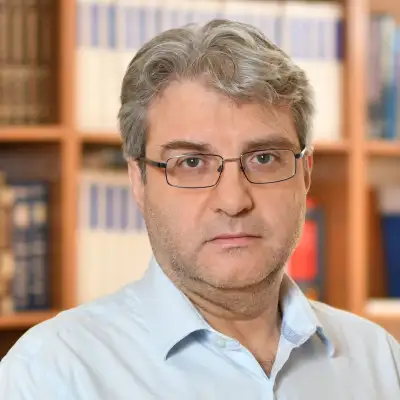
Today my guest is Georgi Stoytchev. He's the Executive Director of the Open Society Institute in Bulgaria, an organization which is a major presence in Bulgarian higher education, including among other things, organizing that very intriguing set of rankings. He and I range over a wide number of issues in this discussion, including the structure of Bulgarian higher education, the politics of population decline, and of course, how universities in Bulgaria came, to some extent at least, to love rankings.
All in all, an excellent conversation about an often unjustly overlooked country. And so without further ado, here's Georgi.
Georgi, welcome. We've never had a Bulgarian guest on our show. And when we come to a country for the first time, we like to sort of set the stage and, and ask people about the system of higher education in that country. So, you know, tell us about higher education in Bulgaria. Is it just universities or are there other institutions like Polytechnics or Fachhochschule? You know, is it a particularly research focused or teaching focused system? Are there lots of specialized universities? What does a newcomer need to know about higher education in Bulgaria?
Georgi Stoytchev: Well look Bulgaria is a small country with a population of 6.5 million people and we have 51 higher education institutions. All kinds of them, universities, specialized universities specialized higher education schools, colleges, and all of them are recognized and all of them are degree awarding institutions established with the decision of the Parliament.
In terms of research we have 12 research universities recognized by the state and all these universities have to meet certain criteria in order to be recognized. And once uh, you are recognized as a research university, you receive additional funding from the state for your research activities.
One thing that is specific for Bulgarian terms of research is that the biggest research hub in the country is the Bulgarian Academy of Science, which is not a university which is not a higher education institution, which to a certain extent explains the other performance of Bulgarian institutions in global rankings. Because almost half of all research papers produced in Bulgaria are produced outside of the higher education institutions.
Alex Usher: And what about specialized universities? And I, I think you have sort of police universities and things like that. That's a, yeah.
Georgi Stoytchev: Yes, they exist. We have technical universities, medical universities, we have police academy, we have agricultural universities. And also we have these specialized higher education schools which provide the degree called professional bachelor in. Which is a shorter degree than the typical bachelor. In Bulgaria, you have to study four years to get a bachelor's degree while professional bachelor you have to study only three uh, years, and it's directly linked to the labor market needs.
needs
Alex Usher: Interesting. Okay. So what's the evolution been of Bulgarian higher education since the end of the socialist period 35 years ago? I mean, obviously you've retained a big Academy of Sciences, right? You know, so you're a little different from some neighboring countries that way.
Did Bulgaria get a big private, higher education influx after 1989 the way Poland did? What were the, you know, main strategies for building up the system again after the economic crises of the early 1990s?
Georgi Stoytchev: Look what happened after the fall of the Berlin wall was liberalization of the system on the one hand, and expansion of the system on the other hand, and system expanded in two ways. On the one hand, private universities were established. And on the other hand, the existing state universities expanded their portfolios in terms of the number of fields they provide education in.
So as a result, the whole system expanded. And today we have a system with a total capacity to enroll 400,000 students while the actual number of students is under 200,000. So it's too big considering the demographics in Bulgaria. Only 13 out of 51 universities in the countries are private and only around 11% of the students are enrolled in private institutions. So, private sector do exist in Bulgaria's higher education, but it's smaller than I guess in Poland.
Alex Usher: Right. Okay. So one of the things where, one of the places where Bulgaria's become a little bit famous in the last couple of decades is its system of university rankings, which is quite unique. It's, it's not really a commercial undertaking uh, the way you see in the, you know, in the US or the global rankings because there's significant government involvement. And uniquely, it actually uses graduate tax data to provide evidence of student outcomes.
How did this ranking system come about and what was the role of your organization, the Open Society Institute in creating and maintaining it?
Georgi Stoytchev: Well, there was a tender 15 years ago, and the Ministry of Education commissioned the system. So, we offered our services as part of a larger consortium and uh, developed the concept of the system and then we developed the system. The ministry liked it. The universities started to trust it.
So the system has been existing for 15 years now. It's quite trusted, it's widely used not only by prospective students, but also by the institutions. The system is integrated in the funding formula for the state university. So in Bulgaria we have a system of performance based state funding for the state owned universities. If you perform better in the ranking system you'll get more money per student and you'll be your quota for state subsidized places will be bigger. So the system is integrated very well in the policymaking in Bulgaria.
And it's not only. Rankings, it's a kind of a information hub for the higher education in Bulgaria providing relevant information beyond the rankings.
Alex Usher: I mean. that's fascinating, right? I mean, there's nowhere else in the world where a set of rankings are used both as a consumer choice tool and as a policy instrument, as you say, if it's integrated into the, the, performance-based funding system. And that does require a fair bit of trust, right? Like, you have to have policy actors who think this is useful. And I'm, I'm really interested to hear you say that the, you know, the universities themselves trust it. May I, I heard some hesitation in your voice, maybe not a hundred percent, but how did you get the universities to, to trust it? Because generally speaking, they're the most anti ranking typically in, in most countries.
Georgi Stoytchev: Well in the predefined rankings, we avoid using surveys. We use third party data, and we use administrative data. So it's so-called objective indicators. It's quite transparent about the use methodology and uh, it could not be influenced by subjective factors. So, universities started to trust it.
This trust was not present at the beginning, but gradually they showed that the system is sort of fair and also we try to consult the methodology with the universities a lot. So, most of the universities are involved in the development of the methodology, so they have a certain level of ownership of the methodology itself.
Alex Usher: But you do use surveys. It's just that you only use the surveys in the uh, the what, what do you call? So the multidimensional rankings, the choose your own rankings for students to,
Georgi Stoytchev: Indeed, we, we, we do surveys. We, we do surveys among students, among employers and among academic staff. And with exception of the, the indicators related to prestige, others are not included in the predefined rankings.
Alex Usher: Got it. Got it. Fantastic. We're gonna take a short break. We'll be right back.
And we're back. So Georgie, I wanna bring us up to the present date here. There were some really interesting things that were happening in Bulgarian higher education last year. The first thing was a fracas about tuition fees.
And maybe before I ask you about those events, can you explain something about tuition and affordability in Bulgaria? Are fees very expensive? Do they play a significant part in university financing? And I guess is, there a set of student loans and grants to help students offset fees?
Georgi Stoytchev: Well look, in Bulgaria, part of the students are enrolled within the state funded quota. And these students pay a small fee in a hundred, couple of hundred euros per year. For example, my daughter study English philology, and she pays less than 200 euros per year as an additional fee.
Above the quota, the universities could admit and enroll students that are not part of the quota. So in order to avoid cross-subsidizing, the law requires the fees paid by these students enrolled above the state quota, outside the state quota, their fees should be equal or should be linked to the, the money the state pay per student within the state funded quota.
Alex Usher: Just before you go any further, how many of the 200,000 students are under the quota? Like how many, how many rec pay that 200 euros. And how many pay uh, more than that?
Georgi Stoytchev: And the majority of students are part of the state funded. So the, the majority of students, so a very small fraction of students, less than 10% of students are enrolled above the quota.
Alex Usher: Okay. And so, and, and are there, do they benefit from any student loans or grants to, to help them with that?
Georgi Stoytchev: Yes, so student loan schemes are available, but not, but they're not widely used.
Alex Usher: Right. Okay. So what happened last September, as you said, it was a, an issue about they, their fees are linked to the amount of money that government pays. Government, as I understand it, is spending significantly more per student, maybe because the number of students are going down, and so fees suddenly jumped quite quickly. Is that right?
Georgi Stoytchev: Exactly, this is what happened. The government increased the funding for state universities and they increased the funding they provide per student. And because of the linkage between the government funding and the fees that should be paid by, let's say private students the fees skyrocketed for the private student.
So what happened was that the parliament adjusted the law and they dealt with the, with the situation. But at, at some point there was quite a noise about it. And it was unintended consequence of actually increasing the state funding for the state universities.
Alex Usher: That's an interesting, I don't think I've ever heard of a tuition crisis caused by increasing state funding. So this, this also may be a first in Bulgaria. Lemme bring you something a little closer here. So, last December, the national government had to resign because of mass demonstrations in Sophia. And as I understand it, students were quite important in the organization of those protests.
What happened, like, and, and how much were students actually involved in the planning? Was this a situation like Serbia where it was mostly student planned or were students attracted to a movement that was started by someone else?
Georgi Stoytchev: Like Serbia, these were. Anti-corruption, protests, protests against state capture. And like Serbia students and people from Gen Z played an important role. They probably were the most visible and most attractive part of the protests.
But these were not students led protests. These protests were led and organized by the opposition, and as a result the government, as you mentioned resigned. So, we are, we are going to have snap elections in Bulgaria in two months, actually the eighth snap general elections in the country in the last five years. So we are setting correct this respect.
Alex Usher: And why did the protests attract young people particularly? I mean, you said it was a, an anti-corruption movement. I mean, how does that affect young people specifically? What's the driver there?
Georgi Stoytchev: Look, it's a million dollar question and it, there are studies now to, to figure it out. But basically since the protests were organized mostly through social media, TikTok, Instagram, they naturally involved a lot of young people, Gen Z, and some of the faces of the protests were young people. So I think this also played an important role.
Alex Usher: And was it, was it actually Gen Z or was it students? 'Cause this is an interesting thing that we're seeing around the world now in Nepal and Morocco, and then a lot of places where we talk about Gen Z protests rather than student protests. I mean, I, were the student unions involved, like, was that part of it? The, the organized student body?
Georgi Stoytchev: Uh, No student unions directly were not involved. It was paint rather as Gen Z protests not so much as student protests, but there were students organizations actively involved in and, and visible during the protests.
Alex Usher: Got it. So, where do you think Bulgarian higher education is heading right now? I mean, is it on an upswing, as you said this, you know, there's more government money coming in, so maybe is it you know, do things look good for the near future or is it on a downswing? I mean, I infer from something you said that you've got a bit of a demographic issue that, that you're struggling against.
I mean, if we come back and do this interview again in 2036, what do you think will have changed in Bulgarian higher education?
Georgi Stoytchev: There will be fewer institutions. Higher share of foreign students. Higher share of first generation students, maybe improved quality. But the key word in the next 10 years will be consolidation because uh, we expect a significant drop in the number of Bulgarian students due to demographics.
So the birth rates are not good in Bulgaria. Bulgaria, by the way is among the countries with the fastest shrinking population. 35 years ago there were close to 9 million people in, living in Bulgaria. Currently there are 6.5 million. And, and the picture is not improving.
Alex Usher: And, and is there a process for consolidation? I'm just thinking, you know, so a country that's in a similar situation would be South Korea, and they've just passed a law to make it easier to close universities, both public and private. Has the debate started in Bulgaria about how to do that?
Georgi Stoytchev: Yeah, there is number of policies in place including a policy called Map of Higher Education, in which my institution is also involved, which is trying to regulate the opening of new, of new structures within the higher education. So, practically, in Bulgaria, if you want to open a new university or new, new unit, or you want to expand the number of fields in which your university provides training you have to meet certain criteria and you have to prove that there is demand for establishment of this uh, new structure.
And basically nowadays, it's quite difficult to open any new structure in Bulgaria because of this policy which aim is to consolidate the system, which is quite fragmented at moment.
Alex Usher: Georgie, thank you so much for being with us.
Georgi Stoytchev: Thank you for having me.
Alex Usher: It just remains for me to thank our excellent producers, Tiffany MacLennan and Sam Pufek, and you, our readers and listeners for joining in. If you have any questions or comments about today's episode or suggestions for future ones, please don't hesitate to get in touch with us at podcast@higheredstrategy.com.
Join us next week when our guest will be Saeid Golkar. He's the Professor of Political Science at the University of Tennessee Chattanooga, and he'll be joining us to talk about the role of students in recent protests in Iran. Bye for now.