Subscribe
Share
Share
Embed
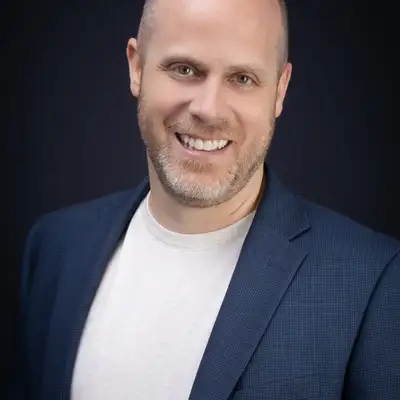
Welcome to Inside Marketing with MarketSurge — your front-row seat to the boldest business insights, marketing breakthroughs, and entrepreneurial real talk.
Hosted by Reed Hansen, Chief Growth Officer at MarketSurge and a digital marketing veteran who's helped scale everything from scrappy startups to Fortune 500 giants, this podcast dives deep into what’s really moving the needle in today’s marketing world. Find us at Marketsurge.io
Each week, we’ll break down the latest marketing and business news (minus the fluff), explore tech trends you actually need to know, and feature unfiltered conversations with the most interesting minds in entrepreneurship and marketing.
Whether you're a founder, a marketer, or just a curious hustler looking to level up, this is where growth happens—loudly, smartly, and with just the right amount of sass.
Subscribe, tune in, and let’s scale something legendary. 🚀
Speaker: Welcome to Inside
Marketing With Market Surge.
Your front row seat to the
boldest ideas and smartest
strategies in the marketing game.
Your host is Reed Hansen, chief
Growth Officer at Market Surge.
Reed Hansen, MarketSurge: Hello
and welcome back to Inside
Marketing with Market Surge.
Today's guest is someone helping
marketers navigate one of the
biggest shifts in digital discovery
since the birth of Google.
Leon Urich is the founder and CEO
of Brandy ai, a platform focused
on AI visibility and generative
engine optimization, or GEO helping
brands understand how they appear
inside AI generated answers from
tools like Chat, GPT Gemini, and
other generative search engines.
Before launching Brandy Leah built an
incredible career at the intersection
of technology, pr, and growth marketing.
Founding Gabriel Marketing
Group, an award-winning agency.
And earlier in her career, she led
go-to market strategy for Motorola's
enterprise device business and helped
scale their field mobility applications.
Unit from 25 million to 250 million.
In revenue in under five years.
With over 25 years in B2B tech, marketing,
PR, and SaaS growth, Leah has seen
multiple waves of marketing disruption.
We're really excited to hear from you.
Thanks for joining the show, Leah.
Leah Nurik: Thanks.
That was quite the introduction.
Thanks for having me read.
Reed Hansen, MarketSurge: You bet.
Well, you know, I find it really pays
to just start on a good note, you
know, and I like tremendous experience
and we're all feeling good and we're
gonna have a great conversation, so.
Leah Nurik: Sounds good.
Reed Hansen, MarketSurge: So, at what
point did you realize that AI was
going to disrupt the online visibility
part of the, the marketing process?
What, what caught your eye and,
and made you think that that was
a real opportunity or threat?
Leah Nurik: So before I founded
you, you mentioned before I
founded co-founded Brandy.
I ran an agency for 14
years, and so probably about.
About a year and a half, two years
ago, two years ago, we started getting
questions in the sales cycle from some of
our savvy prospects about, okay, if I do
this, if I hire you for PR or for digital
or content optimization and that kind
of thing, how is this actually going to
impact the way I come back in AI search?
And I was like, literally I
don't know, better figure it out.
So we started trying to figure
it out and I think we, we started
cracking the code and we're like, ah.
And it started to just see that,
it wasn't about trying to trick
the AI or trying to get the.
Get the AI to do something
that I didn't wanna do.
But it actually fit so much into our
philosophy and my personal philosophy
around marketing, around really telling
authentic, credible stories and producing
really meaningful content that really
connected with the pain points of
users and really being aligning with.
With product companies and services
companies that were mission driven
and that, so I just started to
realize that if you could tell those
authentic and credible stories and
really come at it from a place of
authenticity you would win the rush
for you'd win the game against your
competitors in coming up in AI search.
And so that's how it started.
And then we made the product.
Reed Hansen, MarketSurge: Awesome.
Well, you know, we've got all levels of
technical expertise among our audience.
So maybe for those that aren't
super familiar or, or immersed
in, in this world, what would you
say exactly is generative engine
optimization and how does it differ
fundamentally from traditional SEO?
Leah Nurik: Okay.
Yeah, so generative engine
optimization are the actions
that you can take, as well as the
process of measuring and monitoring.
How your brand, whether it's a
personal brand or a product actually
shows up and is represented within
generative AI search results.
So that's fundamentally what it is.
So how do I measure, monitor it, and then
what actions do I take through either.
or targeting in order to improve how often
that I come back in those recommendations
or those answers, as well as how do
I influence the answer through my own
activities, so that's what, how I would
define generative engine optimization.
And so how, I would say it's different
than traditional SEO where just
fundamentally SEO or traditional
search was really focused on.
Showing up as one of those top 10
blue links and requiring a click.
Now the searcher gets that response
and potentially has your product
or recommendation in the response.
Reed Hansen, MarketSurge: Okay.
So now given that, and obviously we
know that AI is becoming a bigger
and bigger part of our lives.
It's more, you know, we're seeing it
more places, we're using it more often.
Do you think that we are starting
to see the end of traditional
search engines and the traditional.
Search engine approach, you know, the
blue links you refer to, or do you
think they will continue to coexist?
Leah Nurik: So that's the million dollar
question, but I think I would parse
it up a little bit and then I'd love
to hear what you think about it too.
So if you take the search results
the algorithms have changed.
So they're not about matching to
words, they're about deciphering
intent of the searcher.
So that's fundamentally.
shift.
So even if you have a blue link that
comes back, the blue link is not driven
by keyword matching it's by the LLM
or the algorithm trying to decipher
what it was that I wanted to find out.
that's fundamentally different.
So even if I do have that blue
link is coming up based upon
different things than it came up.
That it was picked by years ago, or
three, even 18 months, two years ago.
Okay.
So that's one thing.
So I think that's.
That's a huge shift.
That being said, around that were
so important around SEO in general
that led the algorithm to be able
to return you in the beginning, like
technical SEO foundations, site speed.
Are you using your JavaScript?
Do is it, do you have authority
or do you have category
alignment in either messaging?
That kind of thing.
Those things are still.
Are so important and will continue to
be, because if you can't be indexed
or found, if you're not using the
right structure of H ones or H twos or
whatever, none of it matters for intent.
So I think that there.
They're the best bed fellows.
I think that go and writing and thinking
about writing for and thinking about
intent and question tax question task
alignment and like prompt site ability and
understanding how search is different by
providing more directional guidance versus
it being keyword matching is crucial.
And so it's just an, it's an evolution.
It's a very dramatic shift.
And that is all true, but one
doesn't make the other one obsolete.
do you think?
Reed Hansen, MarketSurge: Well, you
know, of course I'm a little sheepish.
I, I feel like I'm not quite as
well versed into this as you, but
I, I would say just at, at a high
level in the, the decades I've
worked in tech, I with like massive.
Technology shifts.
There's such a long tail of adoption
or like this adoption of a big
technology for a variety of reasons.
You know, anecdotally like enterprise
tech users and like older generations
still, like, you know, people I
talk to don't want to touch ai.
They, you know, they're a
little nervous around it.
And so I think that it.
You know, if it is replaced.
I think it's, it's still a long,
long way before before it is.
But I, I think that the ai
intelligence is going to need to
rely on some of the sophistication
that SEO has in, in ranking.
You know, that's still very valuable
data for them to to process answers.
Anyway, that's my 2 cents.
But I, I mean, I wanna
hear from the experts.
Leah Nurik: No, to your
point though, right?
So like even if I don't adapt or I
don't adopt, Chachi PT or perplexity,
even if I go to Google today.
Algorithms change.
So when I get a response 80% of the
time, I'm gonna get a Google AI overview.
my 80 plus year old father has spinal
stenosis and he was searching for The
best sneakers for his spinal stenosis.
And I was trying to just explain kind of
what Brandy does and that kind of thing.
And so we were, I was juxtaposing
the Google search environment
with what I got from chat gt.
And the answers and the recommendations
were quite similar because it was
trying to decipher what is my intent.
In searching for this.
And so I was still getting an AI summary,
which is motivated or driven or comes
about because of a revised algorithm.
Yeah, it's just, if you don't
wanna use it, it's still there.
You escape.
Reed Hansen, MarketSurge: Can't,
well, you know, it's such a behemoth
and there's so much inertia on it,
you know, hard to just completely
swap out as fast as AI is moving.
Now you, you have a, a platform here and
I'd, I'd love to hear about it, you know,
what, what is your approach and, and
then I've got some follow up questions.
So maybe could you give us a
little overview of, you know,
what is Brandy ai and, and you
know, what, what is it used for?
Leah Nurik: Yeah, sure.
So Brandy is what we call a generative
engine optimization platform.
Customers can take a look and see
where it is that their brand is coming
back and what answers not only if it's
coming back, but why is it coming back?
Then what different sources
are influencing the answer.
So it may be your website,
your competitor's website or
earned media customer review
programs, anything influencers.
But it gives you that ability to see at a
global level where it, your brand appears.
driving that?
Who and what is driving that mention?
And then beyond that, it, there's
two other components of the product.
One is, how are you positioned?
Are you positioned positively, negatively?
How are you positioned
against your competitors?
Is there misinformation in there?
Is it accurate, is it not?
So you can really see if
you are being positioned the
way you wanna be positioned.
And then the third component is a
complete suite, very robust suite
of optimization tools that enable
you to optimize your web content
as well as your third party content
performance, marketing pages, et cetera.
Anything you could possibly publish for
being read interpreted and summarized,
and then returned in an AI search engine.
And then it allows you to
track your progress over time.
So giving you those little micro moments
of delight where there's a marketer,
you go out and you do something and
you write this blog post and you try
to target a specific buyer persona or
prompt or whatever it is, and then you
get to see when it comes back and start
seeing that progress that you're making.
Reed Hansen, MarketSurge: So Is this
tool primarily for enterprise users
that have a massive volume or can it
be also effectively used by like small
and medium sized businesses that like,
have a local reach that might, they're
trying to be found for you know,
home service near me type searches.
what what would you say to that?
Leah Nurik: It can be
used across the board.
We have Fortune 500 companies that
are using it at enterprise level
for multiple different brands and
different industry segments and
multiple different languages across.
Geographies that stretch across the globe.
But then we also have users that have,
three logins or two logins that are
monitoring a hundred prompts across.
To AI models.
So we really have the ability for any
type of organization and honestly in
any vertical, really any industries.
We have companies that, large
pharma companies that are using
the product, large makeup brands.
And then we have small smaller type
SMBs that are really looking to focus
like locally and geographically on a
few geographies for, beard grooming.
Reed Hansen, MarketSurge:
That sounds awesome.
The so.
What now?
in SEO, you know, we're often trying
to get to page one, to the map pack
to the number one overall RA ranking.
What is the equivalent of that in A GEO?
Like where do you, where do
you hit the success point for
a certain kind of inquiry?
Leah Nurik: Yeah, so I would say
that for, if you think about it, like
information discovery, what are, what's
the best hair clip for people with.
Thin hair.
Okay.
That's a problem that the user has.
It's not Hey, claral
versus L'Oreal hair clips.
So it, so you, would you look at that,
like the funnel or the search, type
progression like the buyer journey.
And the question is, you would
have multiple KPIs, like, how
often do I come back in prompts?
information discovery.
So how often am I recommended in there?
And then how often is what I'm
producing actually influencing the
narrative of that conversation?
I might have created this hair
clip, and this hair clip has
redefined what a hair clip is.
It's made from sustainable materials.
It never falls out.
It doesn't crack.
It's not hard to.
Maybe if I had arthritis or
something, it's easy to open.
So I've re, I've come up with what I
believe to be the platonic form of the
hair clip, very disruptive and exciting.
It could be that, or new ERP software.
Very different but similar concept, right?
So I wanna be found and problem
statements like problem or questions
that are looking to solve a problem.
So I would say, how often is my company
coming back and being recommended when
somebody's asking this information
discovery question in which they're
trying to solve their problem?
I may also say, how often is my
website or my own, or the marketing
activities that I'm doing influencing
that conversation to redefine the.
of what a hair clip is according
to my view of the world.
And then I might also look at
what's my share of voice compared
with competitors in AI search.
So am I winning the conversation?
Am I dominating it over my competitor?
and then also how is
it that I'm positioned?
Is it positive and negative?
And then am I able to influence that?
Reed Hansen, MarketSurge: Awesome.
So now given that, is
there low hanging fruit?
Say a company just, you know, like
where, where do I start if I want
to increase my AI visibility today?
Like maybe are there common things you're
seeing over and over again that they're
doing well in other areas of marketing,
but just not ranking in AI search at all?
What, what are some of those,
those low hanging fruits so
they could take advantage of?
Leah Nurik: so earned media is huge.
So earned media pull gets cited
a ton in AI search results.
But that can take time getting.
Getting on your show or getting,
and on the front page of the
Wall Street Journal, right?
It takes time, but earned media makes
can really move the needle for GEO.
The other thing is that if you have
good SEO bones and you fundamentally,
you invested in traditional digital and
you've got good domain authority, and
you have all those things, one of the
things and core things you can do is start
producing more content, but not just.
Not crap, like not ai, slop,
real good, meaningful content.
So Brandy has, is built on a very
deep intelligence layer that actually
identifies what people within
your market are struggling with.
What are their triggers,
emotional triggers, why do
they buy, why don't they buy?
What are the most common complaints?
And it does this through a
sophisticated listening engine.
what it does is also recommends like
what are the right types of content
for you to produce, like whether it's
blog or social posts and 'cause AI
tends to like certain types of content.
So if you follow the prescriptions within
Brandy by producing your own content,
your own owned content, then most
likely you'll start to see a big needle.
But there are a couple of hacks.
And when I say hacks, I
don't mean any trickery.
We're definitely not
promoting any trickery.
But, one of the things you can do is.
You can put out press releases that
tell your authentic, credible story.
But it does it in a way that
it goes out over the wire.
For example, some of the
wires tend to pro, tend to get
picked up by AI very quickly.
So if you structure a press release in
the right way and you start doing like
kind of non-traditional press releases,
things that are more like trend oriented
or point of views or things like that.
And you put them out on the wire
and you structure them in a very
specific way which you could use
Brandy to do because Brandy does
optimization or press releases then.
You'll start to see a Moodle
the needle move very quickly.
I I ran a couple tests myself
on our brandy product and,
or like on the, as a test.
And I saw that based upon the wire
services that we were using, we saw that.
We started getting cited for some of
those questions, like almost like within
a day or two for those specific prompts.
So that's a nice low hanging
fruit thing that you can do, but
it has to be optimized correctly
with the right structure.
Reed Hansen, MarketSurge: Okay.
Fantastic.
Overall, what kinds of skills do marketers
need to I mean, are there different
skills that marketers are going to need
to emphasize in the next few years?
Kind of based on your, your experience
you know, going deep into GEO would
you say marketers need to emphasize
something else, need to retool?
What do you think about
that for the next few years?
Leah Nurik: I think AI in general is
just across the entire work environment
is shifting things in the sense of the
people who will do the best are the ones.
Who can straddle multiple different roles.
if I even just take it outta
marketing and I look let's keep it
in marketing, product marketing.
Okay.
The product marketer who can,
instead of trying to just.
put the button over here
because this is important.
Goes to lovable and can figure out how
to talk to lovable, to mock up their
dream of what they want the product,
new product features to look like.
That's not something product
marketing used to do.
Product marketing would focus
on messaging, it would focus on
driving, trying to drive consensus
with product management, but now
they can walk into a product meeting
and say, this is what I mean.
And that's a very, and that's an
I came from product marketing, so
to me that's just, mind blowing.
But and what, so when it comes
to more traditional marketers
I think it's the same thing.
The tactical digital strategist
who now needs to think about, okay,
content isn't just about putting
the key word in there five times.
The content really has to connect with
intent, the problems that person has.
How do they, so now is that person
straddling more of like the content
studio that used to be in the organization
the content strategist person who might
have been focused on just on, on writing
content solely now is looking at okay, now
I might have to go across and start really
looking at the impact of pr, not just.
Approving the press releases or helping to
restructure the press releases, but I need
to really understand what earned media is.
So I think it's really about, one of the
things that's cool about generative engine
optimization is that it brings together.
All of these different disciplines,
and it allows a marketing leader and
strategist to bring together everybody
in one platform to see the impact.
So pro we have users in our product,
marketing, content people, digital
people, PR people, and then agencies
that are logging into the same platform
and utilizing it all for unique
work functions underneath marketing.
And that to me is.
'cause it takes traditionally siloed
disciplines, brings them together and then
gives leadership the ability to report out
of all of that and see the impact across.
And we all know that when it
comes to collaboration, one
plus one doesn't equal two.
It is usually exponentially higher.
Reed Hansen, MarketSurge: Yeah.
Absolutely.
Well, Leah, this is really
great to hear your perspective.
I, I think it's a, a frontier that
excites and frightens and, you know, it
raises a lot of questions and you know,
I appreciate all that, that you shared.
If people would like to work with
you you know, work with, use brandy
or, I mean, who knows even have
you as a future podcast guest,
where, where can you be found or
what links would you like to share?
Leah Nurik: Cool.
Yeah, no thanks Reid.
You can find us@mybrandy.ai
and you can find me on
LinkedIn at Leah Gabriel Nric.
Or you can navigate to me from
our Brandy AI LinkedIn page.
Reed Hansen, MarketSurge: Fantastic.
Well, thank you so much
for coming on the show.
Leah Nurik: Yeah, thanks
for having me, Reid.
I really appreciate it.
Have a great day.
Speaker 2: Want to stay ahead of what's
actually working in marketing right now.
Head over to Market surge.io
and see how we're helping businesses
grow smarter, faster, and louder.
That's market surge.io
because your next breakthrough
shouldn't be a guess.