Subscribe
Share
Share
Embed
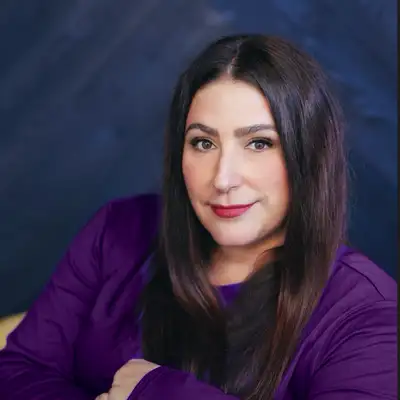
Fix SLP is an SLP Podcast by Jeanette Benigas, PhD, about advocacy, autonomy, and reform in Speech-Language Pathology. This show exposes credentialing gatekeeping, dismantles CCC requirements, and helps SLPs advocate for change. Each episode equips SLPs with tools to reclaim their profession. Subscribe now and join the movement transforming speech-language pathology. Follow @fix.slp on Instagram and TikTok. Visit fixslp.com.
Welcome to FixSLP, the podcast shaking up the field of speech language pathology. We're calling out the barriers that hold clinicians back, fixing broken systems that limit our care, and giving the power of our profession back to the people who live it every day. This is where fearless clinicians come together. It's time to change the field with our voices, leadership, and advocacy leading the way. So let's fix loving where they're at.
Jeanette Benigas:I see that all the time on social media. There's been whole groups dedicated to it on Facebook. So I'm really glad that Metro EHS decided to sponsor us. I've gotten to know some of their staff and they actually support their clinicians and they use a really collaborative, integrative therapy model. As an SLP, you are working alongside OTs, PTs, ABAs and it feels more like a team and less like you are on your own.
Jeanette Benigas:They're hiring right now and they're expanding into several states, so there's openings across the organization. If you want to look into it, head over to metroehs.com and thank you again to them for sponsoring this episode today. Hey, everybody. Welcome back. It's Jeanette.
Jeanette Benigas:We have been working so hard behind the scenes on ninety two thousand five hundred seven that I have not had a moment to edit podcasts. So with that being said, I am going to be hiring someone to edit podcasts. If you know someone or you are someone who has that skill, please send me an email teamfixslp dot com. I can't do it all. And that's something that I've been doing from the beginning but need to get off my plate.
Jeanette Benigas:It would be helpful. I have some in the can, just need help. Today, we are going to be talking about option B for ninety two thousand five hundred seven. I have asked my friend Mary Billings to come on. She and I have connected through this process via social media.
Jeanette Benigas:She always has some amazing things to say when people comment in groups. So I thought maybe she could come on, share some of her thoughts, and then kind of be the person who doesn't know anything about option B to ask some questions because it's hard for me to pinpoint what I know that you don't know that might be helpful. So she'll be that person for us. So I'll let her introduce herself. Thanks for coming on, Mary.
Jeanette Benigas:You want to tell us about who you are and what you do?
Mary Billings:Well, thanks for inviting me. Believe it or not, I'm going to start this because I never really expected to be speaking on this platform. I am a lifetime ASHA member.
Jeanette Benigas:We still love you.
Mary Billings:And I pay my dues every year. This is my forty fourth year in practice. And I have a breadth of history through all those decades where I've seen many, many changes. I am primarily a private practice owner in the greater metropolitan Kansas City area. I have 12 speech language pathologists that work for me in a dedicated speech pathology practice.
Mary Billings:So this has a lot of bearing on us. I also am a continuing education instructor and I belong to a lot of different professional organizations and in fact, I ran my own membership nonprofit organization. I ran a nonprofit organization and helped it restructure to become compliant with federal law. So I have some sort of broader experience. I think that when CMS put out this call, it captured captured my attention because I lived in my early years, I lived through all of the Medicare changes.
Mary Billings:That was when we were considered auxiliary personnel. After years and years of lobbying, we were finally recognized as an autonomous profession in 2009, which is when we were given CPT's and the untimed code format that Medicare set up. They were the ones who did away with that. And so when all of these changes came about, I was one of the few people that I've been able to ascertain in actual business, who runs a business in private practice, who received a copy of the survey that ASHA sent out. While originally when I was hearing about new CPTs, I was like everybody else, pretty excited because for my specialty in the areas that I've worked with, and I've worked with everything.
Mary Billings:I started in SNF and long term care and home health. I've worked at cataclysmic end stage life facilities. I've worked in rehabilitative medicine. I've worked outpatient hospitals. I did all of that along the time that I was starting my private practice.
Mary Billings:So I've kind of been privy in working within that Medicare area for decades and what shocked me, what I saw was how our units were not really being attributed to units. So I spent the full hour it took me because of the type of survey that it was, I had to clock out and come back in and re answer and re answer because it wasn't very forgiving. It was very, very repetitive about our concerns. It was not long afterward that I realized that I think that the survey was put out for legal purposes. They just could not have had enough time to really go back and read the responses that were provided to them in the amount of time before they presented to AMA.
Mary Billings:And I don't know because I'm not the person doing the data, but when I heard that they had less than 94 responses, I can tell you that in my personal circle I knew 12 of them who responded. So I became involved in putting this out on social media that people need to be aware of how proposed ASHA proposed 92,507 CPT changes that the AMA has technically approved but not finalized how important it is and how it's going to change their practice. We want to practice because we want to change people's lives, but the reality is that we can't do that without some kind of economic support in place. Just like there isn't a Medicaid system in the country that's going to work without the economic support to make it continue. And so, this proposal had me extremely concerned, and the first group I took it to was my own staff.
Mary Billings:And I'm gonna repeat for you and your listeners exactly what I told them. It might surprise you. I told them this isn't about me. I own this practice, but my door is closing. You heard me say I've been practicing for forty four years and I'm fighting for you because I have seen a predilection of our younger generations to shut out informational processes that may be stressful for them, right?
Mary Billings:Or they just don't participate. And in one of the social media platforms that you mentioned at the top of this, I was shocked by the number of people who said, Well, I never read anything that I get from ASHA. I just push delete. Delete, delete, delete, delete. That's on them.
Mary Billings:That's not on ASHA. That is on them. But it was through your efforts and the groups that you were working with that all of this came to my attention and I became involved. This is a battle worth fighting. Yeah.
Mary Billings:And if it escorts me out the door in my final years of practice, then I'm willing to stand with that, but I'm fighting for the future of all the other clinicians because it will affect them no matter where they practice.
Jeanette Benigas:That's right.
Mary Billings:No matter where. If it's in a school, it will affect them. If it's in a hospital, it will affect them. If it isn't through early childhood, it will affect them because those are state supported programs. If you are a private practitioner, it will affect you.
Mary Billings:If you work for a multidisciplinary clinic, it will affect you. It's a trickle down that concerns me.
Jeanette Benigas:Yeah. I am so thankful that I was in the position. You said you hadn't heard about it until started posting, FixSLP started posting. And I think this whole thing is the perfect example of what I always hoped this platform could do. I founded this platform with the goal of funneling advocacy out to the entire profession, because there were multiple events leading up to this where I noticed there were some issues.
Jeanette Benigas:Typically, ASHA was involved, and there was no way to advocate outside of that organization. And I recognized that there was a need. And it started out with us doing a lot of the work. And then, you know, as more people found us, we very quickly realized we can't do it all. And then I have had to shift over the last year or so to being that funnel that I always thought it could be.
Jeanette Benigas:You do the work, you approach us with the problem, the solution and what you need, and then we stand by you and get it out to the masses. And that's exactly what happened. There were people, we made a very specific decision that they would stay anonymous, but we're now ready to let everybody know who those people are. So I'll be putting their faces and information out in a carousel. But they approached me and said, We have this problem.
Jeanette Benigas:Do you know about it? My answer was no. And I said, What can I do? This sounds like this is why I'm here. And they said, Here's the things.
Jeanette Benigas:And imagine if you don't know about this, think about how many others don't know about this. So I'm really thankful to have been in the position to help get their information out and then come on board as an applicant later because I had the skill level to contribute in that way. So, it just so happened that it worked out like that. I do want to ask though, the survey that you filled out, was that survey in October or was that a survey before October? Okay.
Jeanette Benigas:Okay. So, survey might have been different than the survey that we often refer to because there was a survey sent out in October for valuation where No. Okay. This was a different survey. Got it.
Jeanette Benigas:Okay.
Mary Billings:This was just Tell us what you think about all these codes and how we've lined them up and what we're going to propose. So this was probably closer to the summer last year.
Jeanette Benigas:Okay. You're the first person I've talked to about that survey. I didn't even know there was that survey until just now. Wow.
Mary Billings:In hindsight, after hearing this, I'm very, very grateful because one of the things that concerned me, I really, after all of this came about, I pretty much thought it was a done deal. The reason I'm here today is because through your grassroots effort and those of the other parties that did the work to file a counter proposal with the AMA who are basically doing all that's been asked of them. CMS, Medicare is the one who came to them and said, oh, by the way, we want to bring everybody in line now, which not so subtly coded word for we need to make cuts. Exactly. All right, after working with Medicare and experiencing the massive amount of cuts that they did in the 1980s that resulted in twenty five percent of the SLPs in my area leaving the profession entirely.
Mary Billings:That's why when I heard there was an appeal from CMS, my little ears perked up and said, Uh-oh, what is this gonna mean? And so I really thought it was a done deal too, because one of the things that bothers me is when we fill out our membership for ASHA, and I know that's not a big fix SLP thing because one of your advocates is that it isn't often necessary to retain membership, but you have to specify what area you practice in. Are you in the schools? Are you in private practice? Are you in rehabilitative?
Mary Billings:Where are you within the field? And so they clearly have information. If in fact that's the case, why weren't more of these surveys of the 10,000 that they claim went out, why weren't they directed to the people who actually do billing?
Jeanette Benigas:Yeah, it's a great question.
Mary Billings:I don't have an answer. I know you don't either, but it is sort of a rhetorical question that people who are just coming to this conversation need to know. Who made the decision and what was their education and background in actually doing billing to see not just about what we're doing, how we're doing, but the long term effects because these codes do not allow you to include any kind of documentation. Every new hire that I've read or mentored because I do business coaching as well, they expect to be paid for every moment of what they're doing and they don't really understand that a lot of this is considered not reimbursable.
Jeanette Benigas:I made a joke online the other day that I can't wait until this is all over so I can write my tell all because it might be in a series of posts or blog entries, but I have so much to say that I am not allowed to say at the moment because of the confidentiality agreement. But if I have asked our AMA advisors so many times, like, I allowed to say this online to my followers? And the answer is often no. But sometimes it's yes. But all of those knows.
Jeanette Benigas:There are just so many that I think if I could just I've said this to our team, if we could just tell people this information, it would fix a lot of problems. But we can't do that. And I think that is why the AMA is under so much scrutiny with the government if people aren't following. There's a senator, I believe Senator Bill Cassidy maybe-
Mary Billings:Yeah, from Louisiana.
Jeanette Benigas:Really has his finger on the AMA because they control so much of the medical field and any billing, anywhere, any way people make money for services, they own those codes. You have to pay to use them, you have to license them for use, and everything they do is pretty much in secret. Now, are things that people like you can be privy to, but it's not all of it.
Mary Billings:That's right, and Senator Cassidy is a physician, like we have a number of legislators who are physicians, who have further insight, and once we became active on this, I contacted both of my state senators and both of my federal state senators along with some other representatives that could be in touch or serve on committees, especially the Health Advisory Committee to recognize that in my opinion, I think it's going to happen no matter what we do. I'm not privy to what the application says. I'm not privy to what the AMA. I think it's an inevitability now that CMS has raised their antennas and we're on their laser, but I think that it is incredibly naive to presume that businesses will be able to turn on a dime and make all of this implemented and effective in less than six months. I don't see ASHA putting out courses on how to do documentation because we have to change all of how we document now.
Mary Billings:I don't see ASHA putting out information on which codes would be appropriate and how I'm supposed to, more importantly, this was my appeal that I will share with people to the AMA, I asked them distinctly, how do I dissect the brain? Because that's what the codes are asking me to do. I have a little girl with prater willing, so am I supposed to be, she has breathing problems, so I have to isolate the brainstem, she has vocal resonance problems, she has cerebral cortex issues, she has cognitive issues. So how do I segment my documentation that first I worked on the cerebral cortex and then I worked on the cerebellum and then I worked on the brainstem and integrate in her occipital visual field. There are just so many different parts that is so different.
Mary Billings:A PT, and I have several that are very good friends, can often isolate one part of the body which is what we are hoping they're doing. In my brother's case right now, it's his right hip. But I'm not quite certain how SLPs are supposed to be able to do that based on each patient and their needs. I think it's extremely shortsighted in the way that this has been managed.
Jeanette Benigas:Yeah, and I think there's a lot of long term implications too. So they want coding granularity. That's what they want. They want to see exactly what we're doing and when we're doing Here's what I see as a medical SLP knowing how all of the questionable practices happen is if these codes change the way that they've been defined and laid out, we're going to treat within our half hour or now it'll have to become thirty two minutes and we might be limited to two or three areas. Three, I say three because there is a receptive expressive sound combo code.
Jeanette Benigas:And so maybe you could add on something else, sixteen minutes and sixteen minutes. But maybe in your case with your client with Prader Willi, you're doing much more than those three things. But now you can only bill for two of them. So you're going to pick the highest paying codes to be the primary code that you bill for. We don't have the edits yet, but the add on codes may or may not be reimbursed at the same or less money.
Jeanette Benigas:And then in ten years from now, when they go to look at all this data that they have collected through the coding granularity that they're trying to collect, they're missing information. And then reimbursement's going to go down or the ability to treat those things is going to go down because they're going to say, well, you weren't doing that or it wasn't taking as much time as you said it was because you only billed 16 Well, that's what we were limited to within the structure that has been set up. And so I think there are very immediate implications, but long term, we are giving them a flawed dataset that they're going to use for future decision making. And I think that's a big problem.
Mary Billings:And the reality is it's not going to be accurate. The data that they're getting is not going to be accurate because it's nearly impossible to work on a single modality. One of the arguments that I heard the most from online forums and professional organizations is that medical SLPs, of which I consider myself an ex medical SLP have been screaming for additional CPTs. And I will not argue that. I absolutely believe it.
Mary Billings:You know what I work on? Breathing. Where's the CPT for breathing? Well, it now it's been lumped in with resonance. So let's talk about an SOP in a SNF who's working with a Parkinson's patient who has vocal resonance problem, but what's the bigger issue?
Mary Billings:Is it here or is it diaphragmatic? And if it is diaphragmatic, now we've set ourselves up to, well I'm not allowed to treat it, so now I need to refer him for PT. So now we've increased the number of referrals and the number of services that this patient is getting because we have been held or constrained to only practice in a certain area, right? Where are the additional codes? I didn't see us take any additional coding.
Mary Billings:I only saw 92507 and breathing is a fundamental. So it is absolutely part of 92,507, right? Yeah. 92,526 is swallowing. You do that every day in your work.
Mary Billings:Every day. Right, and would you not consider that a primary function of the human body? Yes. Well see, I'm kind of on the opposite side, I kind of believe in breathing is the primary. At least my CPR classes they say, so why isn't that descriptor or any of that included?
Mary Billings:And we could do that with diagnoses after diagnoses after diagnoses. It's one of my primary concerns I have for my colleagues, the young women who work for me, a lot of them that are newer to the field, is they have tunnel vision. I work on speech, I work on language, I work on speech, I work on language, and they've pigeonholed themselves, and then they all want a niche, right? Yeah. So in private practice, or people that will work for themselves, they all want a niche, because that's gonna make it stand out.
Mary Billings:No, it's not because there isn't gonna be anything such as niche practice anymore with these proposals. So I don't have as many clues about B.
Jeanette Benigas:Yeah, it's a great time to talk about it.
Mary Billings:I just want anybody who listens to this podcast to sign in with AMA and become an interested party. Become an interested party and become informed.
Jeanette Benigas:Yeah.
Mary Billings:If Ron was going to drop a bomb on us this week, you guys would be listening to the news. You would be listening. This is your professional livelihood, which hopefully will take you four decades the way that mine has, and that you have the chance to hear it and weigh in.
Jeanette Benigas:I can give some information on option B. That's why we are squeezing this in and I thank you for coming on because it's always better with a guest. We had some decisions to make. At the top of the episode, I said we've been meeting, there's been phone calls, this has been nonstop work. And one of the things that really gets me is when people say, well, ASHA does a lot that you don't know about.
Jeanette Benigas:I have been very cognizant that we cannot do a lot of things that people don't know about because then we're just as bad. This whole time I've been asking, can I tell our audience this? So from the beginning, we have been as transparent as possible. You heard me say I came on to get the word out, and that's because the folks behind this who you will meet soon knew this was a problem. They got meetings with the AMA, they got a meeting with CMS, and they knew we have to get this out.
Jeanette Benigas:And so I have been cognizant the whole time. What can we say? So here's what we can say. We have been meeting with the AMA regularly, almost weekly on the application that we put forward. If you have not read that application, you can go to fixslp.com.
Jeanette Benigas:Right now there is a link to sign up for some things that'll just take you there. You can sign up to be an interested party still. You can download the application that we put forward, And now you can download option B. The AMA has been wonderful, and they are actually the ones that suggested they just one day they were like, Oh, you know, we we can put forward another option for the panel to consider. In case they don't want to do your application.
Jeanette Benigas:And after a lot of discussion. And reading all 950 plus comments that came in, It was clear there are priorities and a lot of people care about a lot of things. And option A would take us back to the table and force the whole thing to be redone. But what if the panel doesn't want that? Because this has hardly ever been done before.
Jeanette Benigas:We only have one example. So what is the best compromise we can come up with if they won't do the original application? I can't tell you what we did, but what you're going to see is the definition like that'll precede the codes in the AMA handbook. And then you'll see all of ASH's codes that were approved for implementation on January 1, and you can see what we did with that. And that's probably as much as I can say without getting into trouble.
Jeanette Benigas:But we've made modifications, and unfortunately, there's there isn't an open comment for this option. But the AMA, the editorial panel will have this before the meeting coming up in less than a week. And it's something that they will consider. When this meeting starts, myself and a co applicant will go before the panel and we will be there to answer questions. My guess is that there will be a lot of questions about option B because the panel has not had the opportunity to see comments from the public.
Jeanette Benigas:So you can, as an interested party, watch the meeting. You can also make comments or ask questions yourself during the meeting. So we had a lot of confusion about the open comment period closing sooner than we all thought. If you didn't get a comment in and you want to say something, that will be your opportunity. If you have questions about option A or option B, that will be your opportunity.
Jeanette Benigas:Thankfully, again, the AMA has been wonderful, and they are going to work with me on educating our audience on how to ask questions and what is allowed and not allowed. I will not be putting that content together until I am with them in Boston and I have had a chance to observe some of these question and answer sessions because then I will know, okay, this is what SLPs need, and they will work with me on what I'm allowed to say and not allowed to say, and they will approve it. And I am so thankful for that because our advisor is also maybe a little nervous that if it gets out, not out of control where people are going to get angry, but if it goes off the rails where people continuously are asking things that have already been said, she said they will shut it down. They will shut questions and comments down, and they will move straight to a vote. And that is not what we want.
Jeanette Benigas:We want this to go on for as long as possible with all comments and questions being heard. And it is that reason that we don't have a specific time because they let it go on as long as it needs. So anyone who scheduled before us, it could take five minutes or it could take two hours. And that's why the schedule is constantly changing. So if you go and sign up as an interested party, you can download both A and B, you just can't make a comment at this point.
Jeanette Benigas:If you've already seen what we submitted, you can now go back. I did it before Mary and I met. If you look all the way to the right of tab 29, there's a little icon that you can click and it's a new download and you can see what we did there. And then start taking notes about your questions or comments. And then on our accounts, I just a couple hours ago, this is the best worst problem to have, realized that we maxed out the SMS package that I paid for.
Jeanette Benigas:So we're going to send live texts. And I got permission from our advisor to do this. I said, Am I allowed to have a computer and a cell phone in like when we have our time, because there's different sessions. So they have a session and then they take a break and then they have a session and they have lunch. So we will know generally what session we will be in.
Jeanette Benigas:And so I said, I allowed to have a computer or a cell phone? She said, as long as you're not recording or taking pictures, you're fine. And I told her I would like to send out live messages about when we will be going and she said that's a great idea, that's fine. And so as we get closer, I will send out a text. So thinking, how many people are really going to sign up for this?
Jeanette Benigas:I really do try to be a good steward of the donated money by our sustaining partners. So I signed up for the lowest package thinking that was sufficient. No. So if you try to sign up, pay an extra $15 a month for the bigger package because that was the next option. If we exceed this number, which is twelve fifty people, my mind will be blown, but if we do it, I'll let you know.
Mary Billings:And so will the AMAs because that's right. And that brings me to another point. I want to remind people that to get to tab 29 and you are registered on the AMA, you do have to sign the confidentiality agreement, so you can't be putting it out on breaking all of this down on social media. That being said and done, I'm wondering what your opinion is Jeanette on for instance, the ladies who work for me. I told them all make sure you register and that you get text updates but to avoid people from asking the same question would it be advisable to elect one person from your group of 12 to ask the question and know that your question is going to be representative?
Mary Billings:So that would take some planning because I'm kind of concerned based on what I see on social media that the same question, people are not good about paying attention or they're going to come in late and they're going to say, well, I didn't hear it, so therefore it didn't get answered. And I'm afraid that that could backfire. Do you have any suggestions?
Jeanette Benigas:I do. And actually, I don't know if this is allowed, but I don't see how they could say no to this. I think if you have all signed the confidentiality agreement, you could have a watch party on Zoom or on something where Mary, your whole staff could get together and watch if we go on Saturday and Saturday is an overflow day. They don't want to be meeting from what I've heard on Saturday. So you can expect we're going Thursday and Friday Because they want to give me a chance to watch, and I don't know this for sure, they could put us in session two, my guess is we would go later on Thursday or sometime on Friday.
Jeanette Benigas:I need a chance to at least watch one or two of these to get the information out. So thinking critically, you might have some time, but this is during business hours. So it's not like you're all going to be at 9PM watching this.
Mary Billings:Which is why having one person at least centralize your question, and then you only need one person to watch what's going on to present their question.
Jeanette Benigas:I would have a list of the questions that you want, and if you're all watching separately, then you should be paying attention. Or if you're not doing a watch party, have a little text thread. And I don't know how people are called upon. I know in Zoom or Teams, you can raise your hand. I'm assuming it's something like that.
Jeanette Benigas:Who knows what order they will be called on? So it's I would actually suggest if there's five of you, all five of you having the questions in front of you and raising your hand, and then when that question is asked, cross it off and then go to the next one. Or you have to pay attention because if somebody else makes that comment or question, you can't ask it again, so you're going to have to cross it off and then go down to the next one. So I would have your questions and comments prioritized in order, And then you really do have to pay attention because if it's asked or if it's already been said, we're going to get in trouble. Again, if that happens too many times, they're going to shut it down.
Jeanette Benigas:So we have to be very cognizant of what's going on while myself and co applicant are standing up there answering questions. So that would be my suggestion if you can do a watch party and you've all signed the confidentiality agreement. So you are allowed to talk about it amongst yourselves. You know, it's like I can talk to Mary about what she's read because she signed it and obviously I have signed it. I can't put it all out on this podcast because I can't be assured that every single person listening has signed it.
Jeanette Benigas:So that's where the limitation is. Once you've signed it, you can talk about it together about what you're seeing hearing. You just can't share it again. Like Mary said, you can't go online and analyze it completely. I've had a lot of questions about what the definitions actually are.
Jeanette Benigas:I think people are expecting full paragraphs of the codes for definitions. It's just the one or two lines following the code. So when you're reading the application or the option B, it is not this big definition. It's just a line or two after. So that is I've answered that a lot.
Jeanette Benigas:If you are an interested party and you're looking for the code definitions, that's where it's at. It's right after those numbers. You don't have to be an interested party to see that. The RUC stuff was made public. So anything that's been published by the AMA is free game.
Jeanette Benigas:And so that RUC stuff all went out, that packet, which you can find at fixslp.com, I linked up the full packet. There's a 92507 code, but if I remember it was like thousands of pages. I got it down to like the 147 pages that apply to us. You can see the codes and the definitions in there. So you are allowed to talk about those.
Jeanette Benigas:And so if you're interested, that's where you can find it. That's what we're looking at. So option B was a compromise, but we felt like it was a solid compromise based on the comments. Is it everything we wanted? No.
Jeanette Benigas:But if they're going to say no to option A, then it's our best chance to get some changes. And then at that point, that's where lobbyists would come in from some bigger companies to try to make the rest of the changes that we might want to see if there's some problematic points left over.
Mary Billings:Now, when this all started, one of the things that you and your team were saying was that the commentary needed to be specific to the descriptors of the CPT. So while there are certain RUC values etc that have been published that's not really part of this discussion and people need to avoid asking questions about what's this going to cost
Jeanette Benigas:100%
Mary Billings:or how that's going to be it's truly only about how have we broken down this descriptor for fluency, how have we broken down this descriptor for resonance, How have we broken down this descriptor for what is considered? Why on why oh why did we leave out auditory processing? Because we already know Medicare deals with the geriatric population and clinical studies have already shown that in the advent of hearing loss, which naturally leads to an auditory processing problem, that we have higher numbers of dementia and Alzheimer's. So think it's super, no matter what spectrum within practice you're working important to really go back and really think about all of the modalities. Just as I gave my example with my little girl with Prader Willi, I'm pretty sure I'm constantly working with auditory processing with her and yet the response that Asha gave was that it was inferred.
Mary Billings:It's inferred. Let me tell you something, friend. I'm four decades in, Medicare doesn't infer anything and this is how I watch the profession be decimated in the early 80s. It is one of the reasons why I slowly excised myself from working with the geriatric population and relying on Medicare because of the impact. And at that point, we were considered auxiliary personnel, right?
Mary Billings:Just like an RN or the intern who scrubs the floors or the music therapists that they used to have or the play therapists that they used to be able to, We were just auxiliary personnel. They didn't know where to put us, and we finally got autonomy. We finally got it just under twenty years ago. We need to fight to retain it because we're paying for the education and how many of us have spent half of our professional lives educating our doctors about who we are and what we do? We don't just fix R, right?
Mary Billings:And we don't just work on rehab trying to, help people post stroke. We are so much broader than that and how it's defined in those little pieces of paper makes all the difference in the world. It's going to put us in a box that we don't want to get into and once there's the box it can take another twenty years to get out of the box which is why we're here right now.
Jeanette Benigas:Yep, I was practicing when we became autonomous. I remember what it was like before when we were auxiliary. I mean, I am that old, I joke. I know I look young and fresh and beautiful, but I am that old. I have been practicing that long and it was a big deal, especially in home health.
Jeanette Benigas:I was doing some home health back then. And I remember when I could not see a patient in the home unless physical therapy was also in the home. And then when that changed, I could stand alone. And that was a big deal because we all also know that oftentimes speech is an afterthought. And I had a really ethical boss back then too, who told me all speech cut into his margins and that he would prefer the patient go into a third certification period for speech to become more intense.
Jeanette Benigas:That's a podcast for another day. But it was a big deal. And here's another thing you might find interesting, Mary. I was talking to an orthopedic surgeon the other day who was a member of the AMA, familiar with this process. I was telling him what I'm involved in and what I'm doing.
Jeanette Benigas:And he's like, this sounds like it could be a really good thing for you guys. There was a disconnect. I couldn't figure out why he thought this was all good. And then we got to the root of it. And it's because when he is operating on someone's spine, if let's say that that is a four hour surgery and he does, I don't know, 20 different things that have CPT codes, he can bill all of those regardless So of he can stack those codes.
Jeanette Benigas:What I was explaining to him is that we are not allowed to code stack. That if we do voice and we do fluency, that is not billed in the same fifteen minutes, it has to be fifteen minutes and fifteen minutes. And he was flabbergasted. And he said, well, why is that? Why can't you?
Jeanette Benigas:And my answer was because we do not have the type of advocacy that we need to make that happen. That there are organizations that to this point should have been doing that advocacy and they're not. Now we're facing this, which is not only are we not allowed to code stack, but now our coding granularity is going to mess up our data for the future. He was just beyond
Mary Billings:he I was like that's the have an ear, nose and throat physician that I've collaborated with for over thirty years, but very, very intensely in about the past fifteen. And the last time I saw him, he called me on the phone, he said, Mary, I need you to sign up and credential with Medicare. Please credential with Medicare. And I said, Oh, please don't do this to me. I'm really the only person in my practice who can treat your level of patients who have swallow dysfunction, right?
Mary Billings:And pain that goes along with it. And he said, The hospitals are not treating my patients. When my patients come to you, they show progress, right? And I just told him, I said, I can't. And he was one of the first doctors that I contacted about these new revisions to say, if you ever wanted my practice to consider signing up to continue this working relationship, you need to go to the AMA website and weigh in because it's tying my hands.
Mary Billings:We're not looking organically. We're not looking at the broader picture. They keep trying to tie us into a smaller and smaller box. And if it happens, what I want people to know is every third party paying agency will follow behind. It's just that simple.
Mary Billings:People talk about well I've always had to bill Medicaid in terms of units and I appreciate that I did too but you know the reality is that 69¢ of every dollar that goes to every Medicaid program in the state is a federal dollar and see the Center for Medicare Services controls that. And so it will trickle down. It will trickle down to third party commercial payers, and I'm not talking about how much they pay us, I'm talking about how many visits would be presupposed to be appropriate and how we treat our patients on what we can or cannot do, and if you're working with Medicaid a lot of these kids are highly involved. They're highly involved like my little girl with Prady Willy. So being informed, this is the week for SLPs to become informed and stand up for themselves instead of waiting for someone like Jeanette Benigas to be the voice.
Mary Billings:We all have to be a voice. We all have to advocate for all of us. And that is why when you called me and asked me if I would chat with you, that was one of the reasons that I agreed to do it. I will finish by saying, I'm not fighting for me. My time and my reward for the work that I do is rapidly closing its window on me.
Mary Billings:But I would like to think that like you, through your teaching and everything else, that I've left a legacy behind from my work and I want people to feel empowered to advocate for themselves instead of terrified that a third party agency is going to lower the hammer on them and take away their ability, their license to practice or file something on them. They just simply do not have the power. They're not an overseeing body. Federal law is what controls that, not academics who like to threaten their students or anything else. People get up, sign up, go to the AMA and advocate for yourself.
Mary Billings:This is your time. You probably will not get another one, not for a very, very long time.
Jeanette Benigas:That's right. So that's where we'll wrap up, Mary. I am so thankful that you came on to share all of your infinite wisdom. There is a lifetime member or not, everybody is welcome here. Have such a reputation that, no, everybody's choice is their own choice, and that is the point.
Jeanette Benigas:I want people to have the choice. And so everybody's welcome. That includes you with your lifetime membership.
Mary Billings:Well, I appreciate that because you're an advocate. I've been advocating for changes and advocating for my patients and for my staff members for years and years. You are advocating for your stance, and I'm that a platform was in place where we could take this grassroots effort and really get it out to the people who matter logistically so that we can all stand together. We may be in many, many, many, many different places geographically, but we should all be in the same room philosophically on how this is gonna proceed. So thank you for inviting me.
Jeanette Benigas:Sure thing.
Mary Billings:And I look forward to hearing your text message next weekend. I'm going to be in Charlotte next weekend, so I will have my text messages going.
Jeanette Benigas:Okay? Perfect. Before we head out, I'd like to thank Metro EHS one last time. So go check them out at metroehs dot com or in the show notes. Look out for our text this week.
Jeanette Benigas:Thanks for fixing it, everybody. Thanks for listening to the FixSLP podcast, the podcast shaking up the field of speech language pathology. Don't forget to check out our social media or fixslp.com for our latest promo codes for continuing education, therapy materials, merch, and more. Supporting our sponsors also supports our PhDSLP team. Don't just listen, be a part of the change.
Jeanette Benigas:Share this episode and our social media content, and let's keep fixing the field one bite at a time.