Subscribe
Share
Share
Embed
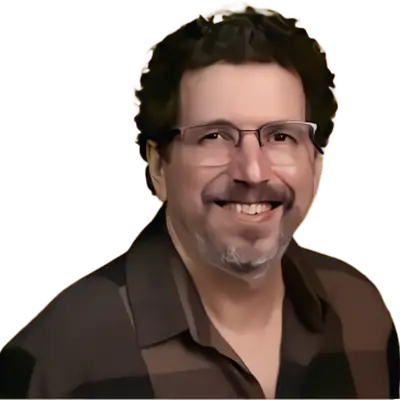

FastForward is a featured digital broadcast series hosted by tech journalist and editor Ron Miller. Airing on the Playaz Productions Network (PPN), the show explores macroeconomic technology trends, enterprise architecture, and emerging digital innovations.
The show is structured around high-level executive interviews, bringing on prominent industry leaders—such as Box CEO and founder Aaron Levie, Pegasystems CTO Don Schuerman and Cisco CPO Jeetu Patel—to unpack the practical realities behind tech market evolution, software development strategy, and the shift from tech hype to operational business value.
Key Elements of the Show
Host: Ron Miller (Founder and Editor at FastForward).
Core Focus: Enterprise technology architecture, generative AI scaling strategies, software engineering evolution, and changing corporate technology models.
Network Ecosystem: The show integrates tightly with a companion newsletter/blog (FastForward.blog) and benefits from PPN's broader digital syndication and video infrastructure.
Whether you're an entrepreneur, tech professional, investor, or simply curious about where technology is heading next, *FastForward on PPN* provides the thoughtful analysis and expert viewpoints you need to understand the big picture and stay ahead.
Subscribe now and join us on this journey to explore the innovations that are defining tomorrow. *FastForward on PPN* is a proud production of Playaz Productions Network.
Here is the full, clean transcript of the video interview between Ron Miller and Pega CTO Don Schuerman:
---
**00:00 - Ron Miller:** Hey everyone. Today's guest has spent almost three decades in enterprise tech, all at one company. And that company itself has been building automation tools for over 40 years. That kind of loyalty on either side is rare. He also holds an unusual dual title: CTO and Head of Marketing at the same company by the same person. We're going to talk about that company's AI strategy—because it's the law—and dig into something the company just announced: a move to outcome-based pricing that ditches the per-token and per-seat model most software vendors are still running. I'm Ron Miller, and this is *FastForward* on PPN.
*[Music / Intro Video Segment]*
**01:11 - Ron Miller:** Yeah, love that opening. Don Schuerman is CTO and Head of Marketing at Pega, a role he’s held since 2014, but he’s been with the company since 1997. Pega itself has been in the automation and workflow business since 1983. Don, welcome.
**01:31 - Don Schuerman:** Hey, Ron. It is good to be here.
**01:34 - Ron Miller:** So, you know, I want to start with a longevity question. You know, in an industry built on job-hopping, frequent layoffs, and reinvention, what’s kept you at one company this long?
**01:46 - Don Schuerman:** Uh, well, three things. One, the tech, right? We get to sort of be at the cutting edge of everything. You know, that was mobile when mobile was the thing. That was what we used to call AI—machine learning, predictive analytics, the kind of statistical models—going back about 10 years ago. And today, that's large language models. So, sort of being at the front for of what's going on in technology.
Uh, second is the problems. We work for really big clients, and we solve, as I like to say, we do the decisions and workflows that they can't afford to screw up, right? So, like, it means we're dealing with high volume, high stakes, things that really impact real businesses, but also real people. And, you know, I think it's nice to sort of be in that space where you're getting pragmatic use out of the tech.
And then finally, the people. I get to work with really cool people from, you know, our—as he calls himself—founder and still CEO, Alan, you know, down to the members of the team that I work with on marketing. And they're people that I really respect, and frankly, I'm just happy to see every day when I come to work. And that also keeps you around.
**02:53 - Ron Miller:** So, you know, that kind of tenure means that you've watched a lot of "next big things" coming blow—you know, and seen them up close. You mentioned some of them, you know, in your answer, but what's different about AI, in your view, in this generation of AI? Because, as you said, we've been kind of moving evolutionarily in this direction.
**03:15 - Don Schuerman:** So, so, I think, you know, I think it's one of those cases where there is a lot about AI that is very similar to a lot of technology shifts we've been through before in the way that we adopt it, in the way that potentially its changes aren't immediate apparent—immediately apparent—and show up in different places, maybe, than early prognosticators expected them. Uh, and in the way that, you know, I think the actual end solution ends up sort of taking and merging AI with the previous technologies that sort of had existed and come before it.
Um, but I also think there's a lot different. Um, I think the speed of adoption, and I think in the way in which AI has been much more of a hands-on, uh, technology, right? You know, when, when cloud became the thing, it wasn't like your board members were going home for the weekend and playing with AWS cloud services coming in and saying, "Hey, I think, I think we should be using this everywhere." But with AI, like everybody is an expert. Everybody has used GPT, everybody is now using Claude. So, so I think there is—there is much more of sort of this pressure from the top and from the bottom to actually figure out how this fits into the ways that we work and really changes the ways that we work.
**04:30 - Ron Miller:** So, um, you, you hold two jobs, which is, is, you know, an interesting pair of jobs: Chief Technology Officer and Head of Marketing. Um, most companies keep those two buckets separate. How did you end up running both?
**04:47 - Don Schuerman:** So, so when I—so, so I started out in Pega in, um, support. And support quickly became delivery. Delivery moved me into engineering. From engineering, I spent time in, you know, pre-sales consulting, what today I think we—we now more excitingly call a forward-deployed engineer. But, you know, as much as I ask people, I can't quite tell the difference between a forward-deployed engineer and a solutions engineer who's actually doing their job correctly. Um, but, uh, the, when I moved into the CTO role, it was really to take on the product strategy, product marketing, right? And sort of tie that into what our engineering team was doing and be that conduit.
And I've always said that, that, that, um, CTO is as much about being a Chief Translation Officer these days as it is about being a Chief Technology Officer. It's how do we translate what our technology is doing out to the market, and how do we translate what our clients actually need back into our technology so that we keep that sort of bidirectional flow. And from there, once you have product marketing, just kind of over time, I naturally picked up different pieces of the marketing organization. Um, and I think it—I think it's actually been pretty timely because I just actually posted today about how I think in many ways, CMOs are becoming brand coders. Your job as a CMO is to both, you know, really understand the strategy and drive the right kinds of, uh, go-to-market behaviors that then become reflected into a brand and into a brand strategy. But you equally now have to actually be able to code that brand into an architecture, and frankly, quite literally code it into markdown and into, uh, vector embeddings, and into a marketing architecture and technology stack that operates both with your existing teams of marketers, but also with the agents that are increasingly automating various steps of the process. So, so I find it a really interesting space to kind of sit with one foot in the creative side of brand, what we call the sculpture world, and one set in more of the technology side, which is really kind of the watchmaker who has to make sure all the gears fit together and run smoothly.
**07:02 - Ron Miller:** So, you know, from the—we're going to get to the external-facing use of AI in a few minutes, but I want to talk a little bit about, in your CTO role, how you're using AI internally at Pega and how that's, you know, kind of helping drive what you do, you know, with your customers.
**07:23 - Don Schuerman:** Yeah, well, so, so I mean, I think you would—some of the stuff that I will say will not be surprising, right? Our, our engineers have been using AI to drive, um, a lot of sort of their—their development work. Um, we've got a capability we call Pega Blueprint, which is an AI engine for designing business processes. And that is basically on a continuous release cycle now. Like, we are putting changes out to that every week, sometimes multiple times a week. And the ability of the team to both move at that pace and continuously innovate has certainly been helped by AI. So, the fact that we're now able to, like, deliver more rapid innovations...
The interesting thing is, it actually makes the judgment part of product management so much more important because when you can kind of almost literally build anything, you have to spend a lot more time thinking about, like, well, what's the stuff I actually need to build that's going to give real value to clients?
**08:20 - Ron Miller:** I think that's a really good point. But, you know, it opens up a world of possibilities, and sometimes that—that's harder than having a narrow kind of focus.
**08:29 - Don Schuerman:** Well, well, the same thing is true—like, the same thing is true on the marketing side, right? Like, you can—content generation is not the problem now. Like, I can create—I can create more content than we would ever possibly need or want. Um, the question is actually, one, how do we bring the judgment to the content that's going to actually be valuable to our clients sort of as they go across that buyer journey? And two, do we have the taste to actually create content that people truly want to engage with and isn't just more of the kind of meaningless, you know, slop that frankly is starting to show up a lot on places like LinkedIn and—and, and other streams that I'm in.
**09:09 - Ron Miller:** So, I mean, that's a—that's an interesting question in itself, right? You know, the velocity does come with a series of its own problems. It solves some problems—you can move faster—but it creates problems in that you have to be able to pick and choose. How do you kind of control that velocity so that you're not, from a marketing side, creating stuff that, yeah, you're creating a lot of stuff but nobody wants to read it? Because, you know, I saw something on LinkedIn today by an old friend of mine, Scott Leora, and he was talking about, you know, you still need to produce quality stuff, people. That doesn't go away, you know.
**09:47 - Don Schuerman:** Well, well, and I think one of the things that—that we're thinking about, and this is true for both marketing but it's actually even true for some of the stuff that we do with our clients with Blueprint. I think people—people have mistaken velocity for a differentiator when velocity is really table stakes. Like, at this point, being able to move fast, whether it's build marketing content fast or, in our case, help a client quickly redesign and deploy a new business process that has more automation and more capability baked into it—the velocity, yes, we want to do it, but it's a table stake, right?
To me, the more interesting question is, can I help you with AI not just design a process faster, but can I help you design a *better* process? Can I actually get you so that the end product that you will deliver is of higher quality, has more automation, is a better customer experience, works more effectively across all your channels? Can I actually get you to a better *quality* outcome with the help of AI, not just a *faster* outcome? Right? Because I think—I think all of us now are learning how to move fast. The differentiation is going to be, both in terms of the marketing content, but frankly, in terms of the software we deliver, which is, is it *better*? Am I actually getting you better quality?
**11:08 - Ron Miller:** And I think as a workflow company, you—you bring up something really, really, um, important, and that's that, you know, trying to slap on AI on a bad process is not going to make that process better. It's going to make it maybe it a little faster, but it's not going to make it better because you're going to be incorporating all of the same problems that you had in that process before, right?
**11:32 - Don Schuerman:** Well, and, and in the spirit of everything old is somewhat new again, it—you know, I want to remind people, didn't we learn that lesson with RPA? That going around and slapping a bunch of bots on broken processes, like, can maybe feel like we're doing stuff, right? You know, I—I kind of view it as like the equivalent of patching potholes, right? You, we—we both live up here in New England. You can go around and patch a pothole, but you know what? I guarantee you go through one winter and you come back and that patch is going to be gone, and the pothole is probably going to be worse than it was before. And eventually, if you want to make things better for people, you need to think about where does the road really need to go, and are you actually paving and building the right road for people to run on?
**12:11 - Ron Miller:** Yeah, that's a—that's a great analogy. You should see my neighborhood. It's just a series of patches that break down. Um, you know, I think that sort of brings us to the human element. And you recently did a video on—on LinkedIn where you talked about Satya’s recent memo and the importance of human capital to the quality of AI. And I think it's an important distinction given some of the hype around AI replacing jobs and, you know, certainly Microsoft has been involved in that hype. But um, where do you see us as humans fitting into the equation of an AI-fueled future, you know, given all that?
**12:51 - Don Schuerman:** Well, so, so I—I think I am not one of the people who stresses out about AI developing a consciousness next, right? Like, like—like, I—it is a powerful tool. It is a tool that probably has more power than any tool I've seen emerge in my lifetime, anyway. You know, I wasn't around for the Industrial Revolution, right? So, I don't know how people felt when they suddenly started seeing steam engines everywhere, but—but like, it definitely feels very earth-shaking. But it is a tool. Like—like, AI is a tool for humans to use.
And I think, you know, one of the obligations that we have as leaders is to think about how we are maturing our people and helping our people grow the skills to use those tools, how we are helping our people through the transition of new tools make old skills less important and new skills more important, and so we have to help people kind of go through what that shift and what that mindset is. But ultimately, you know, AI only knows stuff cuz we created it first. And, um—and, and we need as humans, I think, to keep a lot of that—that in mind. I think it's great—it's great marketing for AI companies to tell you that every knowledge worker job on the planet is their total addressable market. Right? Like, that—that—that's great—that's great...
**14:18 - Ron Miller:** Sort of—sort of a terrible marketing message, though, at least...
**14:21 - Don Schuerman:** It's also—but, but you know, like—like, my cynical view is, man, that certainly helps drive up valuations when you want to IPO, right?
**14:28 - Ron Miller:** Totally.
**14:30 - Don Schuerman:** But—but at the same time, like, people are still going to be the ones who run companies, who make decisions, who drive judgment, who create marketing campaigns, and who are the customers that we sell to. So, like, we cannot, I think, we—we disintermediate humans completely from the conversation at our own risk.
**14:51 - Ron Miller:** So, you know, when you look at your job and you have an engineering team and, you know, what the AI does is it kind of pushes out some of those entry-level engineering jobs because, frankly, you know, one thing that AI is really good at is coding. And, you know, the question becomes—and it's a—something that I've written about a fair bit—like, how do you create, you know, those—those entry-level positions? Because, you know, your experienced people are going to move on. I've—I've likened it to a sports team, you know. You need those young players to—to be coming along because sooner or later, your veterans are going to age out, right? And so you have to think about how do I create a new generation of workers, whether it's marketing, whether it's engineering, whether it's finance. And I'm wondering how you guys are thinking about that at Pega.
**15:48 - Don Schuerman:** Yeah, I—I am... So, so, you know, I think one of the—the things that I've noticed is the people who are most effective with using these tools are the people who actually have already built the craft, right? They've spent 10 years writing code, they've spent 10 years writing marketing copy, they've spent—they've spent 10 years building financial statements or doing data analysis. So, when they go into the tool, they bring 10, 15 years of judgment, right, into that experience. And the tool makes them that much more impactful. And I think—I do have a real worry of, you know, if we disintermediate people from building up that judgment, right, from doing some of that entry-level work, like of just like, man, hammering through 15 different options for copy lines, or banging out, you know, a whole bunch of scripts to automate um, your overnight build, right? Like, like those—if we take some of those—those roles away, how are we building that foundational and understood knowledge?
And I don't think, by the way, I don't think I'm saying anything profound. I think like, people in the legal profession have been saying the same thing, right? You know, you work—you work forever as an associate and, yeah, it's—it's, you know, sometimes really tough work of just grinding through case histories. But boy, that brings you a lot of knowledge and experience when you actually become an associate and a partner. And so, um... I think we need to be continuously creating moments for people to lean in and put their own judgment into work, right? You know, I personally am very protective about when I use AI to write. Um, you know, I, you know, for stuff that I think is critical, like white papers or big announcements inside the company, or, you know, presentations I want to give, I want the first draft to always—I want it to be mine, and I want it to be my idea. And then I may use AI like a sparring partner to, like, poke holes in this thing or give me... but—but I need—I need to be the one starting with the idea, or else I feel like that skill of mine is going to dull. And I don't believe, even in an AI world, that I can let some of those skills dull.
**18:08 - Ron Miller:** But that sort of, like, doesn't address the problem, which is how do you get to that level of experience when, you know, that—that—that job is going away? How are—how are you addressing that as a company? Because, are you hiring entry-level people to kind of have that bench?
**18:25 - Don Schuerman:** Yeah, we—we—we're still bringing in both junior developers, we're bringing in junior people on the delivery side. I'm actually hiring more, um, you know, in the marketer on the junior side, right? Because I'm also looking... I think the interesting opportunity is, I need people who early on in their career start developing interdisciplinary skills. And I think one of the—the interesting things that I think may happen—and by the way, I—I worry that anybody who tells you definitely what's going on to happen, like, is lying to themselves cuz none of us really know. But I think one of the things that may happen is we will see less and less career ladders that look like more and more specialization. Cuz a lot of career ladders are traditionally geared towards specialization, right? I get into an area and then I get more and more specialized. Like, I come in and I get into marketing, and then I become a—then I become a copywriter, and I get then I manage a team of copywriters and I become really expert sort of in this area.
Whereas I actually think over time, AI is going to reward more broadness. It's going to reward people who come in and actually build depth of like, yes, I worked in marketing, but I was a product marketer, and then I did competitive analysis, and then—then I did brand work, and then I wrote some copy, and by the way, I also picked up some coding skills and I understand how agent architectures work. And now I can put all that together to build a system. And I think—I think the opportunities for people coming in is bringing some of that interdisciplinary skill of like, yes, I'm natively savvy in the technology, but I'm also going to dig in and actually learn the craft that I want the technology to do.
**20:01 - Ron Miller:** So, I, I want to shift gears for a second here, Don, and talk about your new, um, pricing model. You moved away from a token and seat-based pricing approach to charging what you call "per case." Yeah. And why is your company taking this approach when the cost of tokens are taking center stage and somebody has to pay for this?
**20:24 - Don Schuerman:** So, so, yeah, and I just want to be clear: in some cases, this isn't a change for us. So, we—we started doing per-case pricing almost a decade ago because we kind of realized that, in our world, if our job is to automate more and more of the work, if we're doing our job, you should actually need fewer seats of our software over time, right? And so we wanted to make sure that both the value we were getting and the value the customer getting was getting was tied to a shared metric. And to us, the best metric for that was, well, how much work are you asking the system to do? And so we measure that by case, right? So, you know, roughly, if you process insurance claims, an insurance claim is a case, or if you manage customer service requests, every customer service request is a case that needs to get resolved. And that's been core to our pricing model for, you know, 5, 10 years now.
Um, but what we realized is with tokens coming on, and people increasingly wanting to add AI agents into that case, we realized clients aren't going to want to pay an unpredictable counter based on how much AI you use. They still want to actually pay something that is tied closer to the outcome, the work that's actually being done. And we also realized that we had an architecture where, for a lot of the work that we do inside our clients, right—which is, again, as I like to describe it, workflows that they can't afford to get wrong, like they just have to do them right—um, you actually don't want AI doing massive amounts of that reasoning at runtime because, one, it's unpredictable, and two, the cost isn't predictable, and it doesn't scale when you have to do hundreds of thousands or tens of millions of those cases, right?
So instead, if you use the AI reasoning at design time—which is what we do with Pega Blueprint—to figure out what the workflow *should* be, and actually get it right, get it approved, get it locked in, then at runtime, the end-to-end execution and context is managed by the workflow. And the agents are just doing small tasks inside the workflow. What that means is, the context window that I have to pass to the agent is very, very small. I don't need to pass the agent the full context of the workflow. I don't need to carry—need the agent to carry every step of the workflow at every subsequent step. So, that smaller context window then leads to less, um, drift, so less risk of the agent getting it wrong, but it also means the agent isn't looping through reasoning tokens again and again and again at every step. So, when we ran the numbers, we realized that we could actually charge people a simple uplift based on the number of cases that they do and felt pretty confident that they could deploy as many agents as they want inside that workflow, and we would keep the token cost in check. So, that's what we've done.
**23:21 - Ron Miller:** So, I mean, I've talked to other, uh, you know, software company executives who have talked about the cost of tokens and they—they can't absorb them forever, so somebody has to pay for them. Often people are talking about outcome-based pricing. You seem to have a system where the outcome is maybe a little bit better defined. But agents in themselves, by their nature, seem to create a little bit of chaos in that, and I'm wondering how do you ensure that, you know, you're not going to be undercutting yourself by going to the set price?
**23:58 - Don Schuerman:** Well, again, what I want to do... agents become more unpredictable the bigger context window you feed them. And so if—and I'm going to get a little technical here, but—if I've got a workflow, and that workflow has like 30 steps, right? And step one, I have to feed that agent—for an agent to reason through that workflow, it needs 2,000 tokens at the first step. Well, at the second step, it needs 2,000 tokens plus the 2,000 it had at the first step. At the third step, it needs those 4,000 tokens plus 6,000, right? So now, my—the total number of tokens the agent is processing grows quadratically if I have the agent reasoning through the whole workflow at runtime. That's where I get high costs, that's also where I get high unpredictability.
But if instead, I use the agent at design time and I design that workflow, then every step in which I call an agent, I'm only passing it the context information for that step. I'm just handing it 2,000 things here, and I'm giving it a very specific thing to process: go—go find data in this document, or go summarize the previous 10 interactions we had with this client. I'm giving it a very, very specific instruction. So, small window, specific instruction, less chance of the agent spinning off and doing a bunch of stuff I don't want it to do, less chance of it leading to an outcome I don't want, and less chance of it leading to a cost I don't want. And that's the mechanism, again, that we did some mathematical modeling—you can actually see it, we showed our math, it's on pega.com, there's like a token cost calculator. Like, when we do that modeling, we see very much of the distinction, and we feel pretty confident of our ability to maintain margins even while offering this to our clients.
**25:46 - Ron Miller:** So, I mean, that sounds more to me like, you know, a smart version—a smarter version of robotic process automation, uh, you know, where you're—where you're actually, uh, you know, making a less brittle kind of workflow that—that can get completed as opposed to breaking in the middle, which RPA has done a lot.
**26:11 - Don Schuerman:** Exactly. Well, because I think, you know, as exciting as agents are—and I like—we love agents, we use them all over the place—it doesn't change the fact that lots of work that a business does is still pretty darn deterministic, and we want to keep it that way. Like, so there's no point in trying to engineer determinism into something that is inherently probabilistic, where I can just run it in a deterministic technology.
**27:36 - Ron Miller:** So, you know, we only have like—like three minutes left, so I'm going to ask you a question that I asked um, Aaron Levie on—on my prior episode, which is you spent your whole career—Aaron spent his whole career at Box, right? He—he founded his company in a dorm room, he—he spent the next uh, 20 years uh, building his company and taking it public and doing everything he did. You've spent your whole career at one company through multiple technology shifts. Do you ever see yourself doing something else?
**28:07 - Don Schuerman:** Someday I'd love to, like, go teach. Like, you know, I was a—I was a physics and philosophy major in college. There was a path in my life where I thought maybe someday I was just going to end up a philosophy professor. Um, uh, but tech was really exciting in the '90s and I got into it and never looked back. But there's part of me that someday would like to actually go back into that world, and especially given how interesting AI is going to be in terms of how we communicate, how we build, how we market, you know, I'd love to eventually be able to sort of take some of the stuff I've learned in the business world and turn that into some real-life—real-life kind of teaching. So, if I ever did something different, that might—that would be really interesting to me.
**28:53 - Ron Miller:** So, so I'm curious, you know, going back to your philosophy background, if that comes into play in—in your current job and how that's kind of influenced your career, especially with AI, which, you know, you can look at it from an ethical standpoint, you can look at it from a lot of different philosophical kinds of approaches. And I know Anthropic even has a philosopher on staff.
**29:12 - Don Schuerman:** Yeah, yeah, yeah, yeah, a philosopher and an ethicist. To be quite honest, and this may be—I don't mean to cop out, but I think I'm more interested in what I call the real questions about AI than the big questions. And the real questions to me are like, how do enterprises actually even use this stuff, versus, you know, is AI going to become conscious and are we being nice enough to our AI models? I don't know, they're pattern—they're pattern generation engines, I don't—I don't think we need to be polite to them, although it's just good to be polite in general.
But the thing I do bring from philosophy is an approach to problem-solving. Like, so much of what you learn in a philosophy degree is how to break down a problem, how to separate it into component parts, how to then diagnose different parts of an argument, how to communicate that argument, how to stack up proof points behind an argument so the argument holds up, right? And whether you're writing code or building a marketing campaign, I find like that—that problem-solving and argument-making, that was the invaluable part of my education coming into this.
**30:15 - Ron Miller:** Well, Don Schuerman, thank you so much for being a guest on *FastForward* on PPN, and thank you all for tuning in. If you like what you heard, please subscribe to the *FastForward* newsletter. You'll see a QR code in the outro. Just a heads up that I'm taking July off for a much-needed break, but I'll be back in August with Jeetu Patel, Cisco's President and Chief Product Officer. Thanks again, everyone. You've been listening to *FastForward* on PPN.
*[Music / Outro Video Segment]*