Subscribe
Share
Share
Embed
Welcome to the Sound On Sound People & Music Industry podcast channel. Listen to experts in the field, company founders, equipment designers, engineers, producers and educators.
More information and content can be found at https://www.soundonsound.com/podcasts | Facebook, Twitter and Instagram - @soundonsoundmag | YouTube - https://www.youtube.com/user/soundonsoundvideo
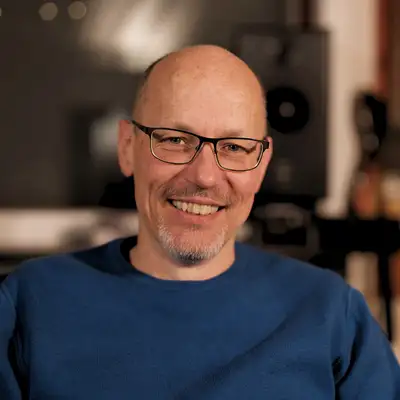
Hello and welcome to the sound on sound people and music industry podcast with me Sam Ingalls. My guest today is Bernd Malmqvist. Now there are not very many people remaining who have linked to the golden age of microphone design from the 1950s and 1960s, but Bernd joined the Swedish microphone manufacturers Pearl In 1954 and spent his entire working life there.
So I'm very, very pleased to be joined by Bernd today to find out more about the history of microphone design in Sweden and his thoughts on their sometimes rather unusual technologies.
Welcome Bernd. Thank you. Thank you very much. It's a pleasure. Now, you joined the Pearl Company, as I understand, in 1954. Did you know anything about microphones at that time? No, nothing. I didn't understand. I know what the microphone was. I can see people talking some instrument, which, um, changes the sound to electrical signals, but I don't understand how.
So what was your first job at Pearl? I work exclusively with mechanical manufacturing of different parts. In that time, a long time ago, we were mostly producing crystal microphones in the beginning. And dynamic microphones. And, um, and those models are more or less just mechanical parts. So what sort of machinery did you have available to make these microphones?
Were you doing things mostly by hand or did you have any production line equipment? Standard machinery. You can find it everywhere. Uh, not, not those special machiners.
And for many years you worked closely with Rune Rosander, who was the founder of Pearl. Um, can you tell us a little bit about Mr. Rosander and your working relationship with him? The first years I worked at Pearl Microphones, uh, I was one of other employees. So I don't have any special relation to Mr.
Rosander, who was chief. Ha! But later, when I was a production manager, we discussed daily, um, about planning and material requisitions. So in, in, uh, at that time, I close more near Mr. Rosander. Mr. Rosander was, um, He, he was in the old, from the old school . He, he was a manager of the company and you have to look up to him,
Uh, but I have no problem with that. But, so it was in the fifties. . But he was also a very, uh, original designer. Yes. He, uh, Mr. Lexander was the designer of. Most microphones, uh, at that time when I began to work at Pearl and for a couple of decades forward. My relation to Mr. Sander changes a bit when I get more involved in R& D.
It was not so, it's not so easy to get his ear for an idea. Mr. Sander was a person who, who wanted to be the man who come up with solutions. Um, but if I told him, can this be an idea? to solve the problem, he got the chance to think of it, and then he suggested his own idea. I have no problem with that. But at that time, of course, in the 1950s and 1960s, a lot of this information that was needed to design microphones was not easily available.
How much were you aware of what other companies like Neumann and AKG and Schoeps were doing and how much did you have to work out for yourselves? In the first decades. I didn't know, know more or less nothing about other, uh, manufacturer. And I'm not sure, but Mr. Rosander don't care so much about the competitors.
So all the, uh, technical knowledge and the developments that you and Rune Rosander brought into microphone design, they came from your own research? Yes, it was for our own, own research. Um, I think I can say about Mr. Rosander, he, he don't, um, he never booked any ideas from others. He, he find our microphones must be the best.
Because a lot of the major European microphone manufacturers worked in collaboration with national broadcasters or universities, for example. Was that not the case with Perl? Not, not myself, but Mr. Sander, he has some contact with, you know, KTH, which means the Royal Institute of Technology in Stockholm.
Uh, and um, but also some contacts with Swedish radio. They sometimes, sometimes they ask for some solutions and we had possibility to make it. And who were the main customers for Pearl microphones at this time in the fifties and sixties? In the fifties, we producing a lot of crystal microphone captures, and which we delivered to, um, to company who manufacture communication systems.
But, um, we also producing microphones for, um, tape recording companies, such as, um, Tandberg, don't know, right? Radionet in Denmark and the Swedish company Luxor. In that time, uh, there was no built in microphone in a tape recorder. You had to connect it with the cable. But we, uh, we also producing a lot for the Swedish defense, which was a special made, uh, of the military descriptions.
For example, we make a microphone, a closed talk microphone, who must resist water, using on, on some kind of chips. What sort of test facilities did you have at Perl in those days? Was your development guided by measurement and testing, or was it mainly guided by listening? Of course, I listen a lot of the microphones, but the test instruments is much, much important.
I can't trust my ears. I must trust the instruments. So what sort of instruments did you have? Traditionally, we measure in an undecoded chamber the frequency response and the noise level. I can also check the THD. We don't use any kind of, uh, let's say, uh, to drop the microphone in the floor. Sometimes it happened and we just had to mess here again.
So during your time at Pearl, Rune Rosander invented the rectangular capsule, which has been a hallmark of Pearl and MyLab microphones ever since. How did he come up with this idea? This idea was Probably to make a large capacitor capsule in a dimension which was demanded to be inside, not in a big microphone.
He always wanted the microphone to be as small as possible. But when the capsule was long and narrow, it was possible to get a large membrane area in a small cover. Mr. Rosander don't like Norman's large microphone housing. Why was size so important to Mr. Rosander then? Why did he need the microphones to be small?
I don't know. He told me sometimes, if you stand in front of the microphone, in TV for example, if you have a very big microphone, you can't see the face of the people. The microphone has to be recording a very good sound, but it's not necessary to see it. But the rectangular capsule turns out to have some different properties from the usual circular capsule as well.
Can you describe how it's different? A round capsule has resonances, only one resonance, because there is one measure, the diameters of the capsules, but the rectangular capsules have more smaller resonances. Depends on the, the, the wide and the length and diagonals and so on. It mean, uh, it was more easy to make a flat frequency response.
I guess, uh, you can calculate in, uh, square millimeters or over one inch capsule to, to, to get the, the area you need. You just have make the length as possible, important. People often describe the sound of the rectangular capsule as being similar to that of a ribbon microphone. Is that just a false association because they look sort of similar or is there actually any substance to it?
I don't think our usual rectangular capsule have much similar with the ribbon microphone. I don't think so. But, uh, but our very long ELM capsules have some similarities with the ribbon microphone, especially the ELMB, which are a figure of eight pattern. So the ELM microphones were developed, um, in the early years of this century, and they have a much more elongated capsule than the traditional rectangular, uh, Pearl MyLab capsule.
So what are the qualities, what, what, what is different about this longer capsule? First of all, we, we, a large area of the membrane, which give us a large, um, capacity and. which results in lower noise. I got the idea from Kavya Alexander at Vortelina Acoustic. The idea is that the micron capsule with that dimensions reducing reflection from floor and ceiling.
The capsule get this effect when the half wave length corresponds to the membrane length. So, so the capsule get the figure eight pattern in the vertical plane, but in the horizontal plane, still it's a good cardioid that forward 70. by 10 millimeters gives both advantages of small microphones and a large microphone large membrane microphones.
So the ELM is of that reason also very used in many concert halls and opera houses. My very first prototypes of the ELM was in figure of eight and was used by Carl Alexander when I make a recording in St. Petersburg, St. Petersburg Philharmonic Orchestra. He took the microphones for hot recording in, in St.
Petersburg, that record, which got much praise. So the main benefit of this very elongated capsule is you get an asymmetric pickup pattern and that from the end of the microphone you get it you almost always get a very deep null like you would on a figure eight microphone but the rest of the microphone can exhibit a standard pattern like cardioid or omni even.
You still have the effect of reducing Reflections from noise from, from, um, ceiling and floor. But, um, the advantage we have for the very narrow membrane, but really long, it gives us a large membrane capsule, but the microphone will. Producing you sound very high up in high frequencies and a very, very flat frequency response.
In the 1960s, Pearl, along with most microphone manufacturers, moved away from valve products to solid state microphones. Did you ever think at the time that the valve models would be too expensive? collectible and desirable one day or did you think that this was a dead technology? I think, um, we made the microphones very, very much in the same way as from the very beginning.
Electronic components become better and better. We can lower noise and, um, but it certainly can new models Especially for some occasions and new designs as well. But, um, the old models with, um, valve microphones. There are people who, who like that kind of microphones. Uh, they, they don't, they are not so many.
But there is a market for it. Many modern microphone manufacturers do still have valve microphones in their catalogues. Neumann do, Audio Technica do, for example. Were you tempted to reintroduce a valve microphone? We just do it. Oh yes, tell us about this. Yeah, yes, we have, we have, um, we have a very, very new, um, valve microphones.
There has only been, uh, some, uh, prototypes yet, um, which are out for, for testing. And, um, we have got very good, good response. And, um, it's a, what shall I say, a real, a real van microphones, no, no FETs, uh, so a classical, uh, schematics. Uh, but we are using the ELM capsules, the microphone moodles, we call it E-L-M-T-T in tube
So although we're using a classic valve circuit, the capsule itself has never before been used in a valve microphone. So in a sense, it's a, it's a new. valve microphone that is offering something different. Yes, yes, you're right. And, um, I guess there's one reason to, to, um, people who have tested my new microphone, uh, like it so much.
Uh, I think it depends very much about, um, that we use the ELM capsule. The ELM capsule also has a big area. On the membrane, which, like in the other microphones we use, give us a lower noise. The valve microphones mostly have a little bit more noise than others, but this one is, um, quite low noise level. I look forward to trying it.
You've also recently introduced the VIP 60, which is an updated version of the VIP 50, the MyLab VIP 50. That was a breakthrough product for MyLab at the time because it sort of brought them to much wider attention in the American market. What do you think made that microphone so successful? I don't know.
It looks very designer like. It's not like other microphones. I'm responsible for the technical solution and the microphone and the design, but not for the electronics. But not everyone likes the design, but I like it. It was also, I guess it was the first microphone with different controls. Such, um, Uh, different patterns, high pass filter and automation of level.
Uh, we have never make microphones with that before. Uh, so maybe people got more interested to, to, to check that. Check out. How important is the shape and size of the, the microphone body to the sound of the microphone? It's very important. We speak about reflection earlier, uh, from, from floor and ceiling, but you will also have reflection inside the microphone.
So it's very important to don't have anything which will disturb the sound waves when, from, from, from the music instrument or whatever. on its way from the instrument to the membrane. And as you know, most microphones have a metal net as big as possible to not have, um, some kind of walls or, um, you know, something inside who can disturb.
I wonder if you could give us some insight into How microphones are made today at Pearl and my lab, because in the 1950s and 60s you were using just very basic tools. Are microphones still handmade today or do you have it, is it very automated? Um, they are manufactured handmade. Even today. Of course, um, We use more or less the same instruments.
That's not complicated tools. It depends a lot on the person who is using the tools. Not everyone can do it. You must have a feeling for the instrument. You must have a feeling for the material. I mean, I was educated in fine mechanics, and that's what's very important, to understand and handle very, very small dimensions.
All these years, I have seen people who try to began, uh, work with the capsule, but you had to say stop, you can't. Because, because they, um, they have not the feeling for it. And do you think the capacitor microphone is a mature technology, or is there still room for further development in the future?
Basically, we We make them the same way from the very beginning. Not exactly, but very much the same. But, as I told you before, electronic components are better and better. So, the microphones we do today, we manufacture very high quality. The question is, can it be better? I don't know. Somebody, come up. From time to time with new models and some of them stayed alive, some drop down.
That will be changed, but I think if you have a product who is very, very good and you are on the top of what you can do, the next step will not radically change anything. You just got a little, little bit. And I think we are, we are very much on the top now. I mean, if you are climbing a mountain, you are on the top, you can't climb higher.
I don't know, maybe other people, but I have done my job. But there will be others who can take over. And I hope that you're enjoying a well earned retirement after your 60 years in the microphone business. And are you still involved at all in the microphone development? Actually, it's 68 years from the very end.
Okay, I don't work nine to five. But, um, yes, I am. I'm in the office sometimes, from time to time, and mostly I help them if there is repair of old tube microphones, for example, which people still want to be repaired. It's just fun to work with it. I do it when I have time for it. If there's not some, anything to do here, I can still drop in for a coffee.
Well, it's pretty amazing that you can still get your 70 year old tube microphones repaired at the manufacturer. That's what I call customer service. Thank you so much, Ben. It's been wonderful talking to you. It's been an absolute privilege. Um, I hope you continue to enjoy a long and fruitful retirement and keep on repairing those tube microphones for as long as, as long as possible.
Thank you. Nice to be here. Thank you for listening, and be sure to check out the show notes page for this episode, where you'll find further information, along with web links and details of all the other episodes. And just before you go, let me point you to the soundonsound. com forward slash podcasts website page, where you can explore what's playing on our other channels.