Subscribe
Share
Share
Embed
In today’s business world change is the only constant, and mastering transformation is the ultimate key to success. Welcome to Shift & Thrive!
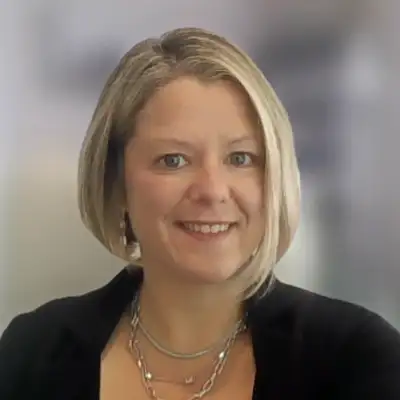
Each week, Host Natalie Nathanson will bring you conversations with CEOs, who delve into how they successfully drove critical change in their organization.
This show is sponsored by Magnetude Consulting, bringing you the thinking power of a Growth Consultancy and the Getting-It-Done Power of a full-service B2B Marketing Agency.
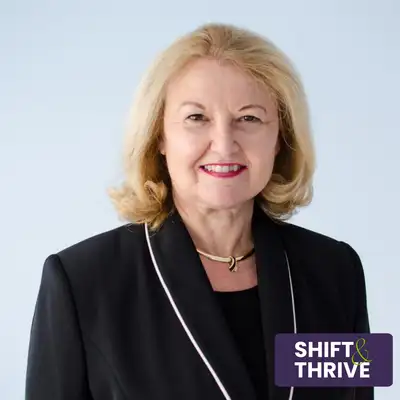
Natalie Nathanson: Today's guest is a bold transformation strategist and innovation catalyst who spent her career helping CEOs, boards, and other executive teams break free from business as usual to navigate disruption and build stronger, more resilient companies.
She's a longtime mentee of Dr. Deming, one of the fathers of the Quality Improvement Movement. She brings a systems thinking lens to her work and has advised a wide range of firms throughout her career. She is the author of Pivot, disrupt, transform How Leaders Beat the Odds and Survive. And she's the founder of m Dasko and Associates, a company that helps organizations rethink how they lead, learn, and compete.
Marcia Dasko, welcome to the show.
Marcia Daszko: Thank you very much. It's a joy to be here.
Natalie Nathanson: I'm very glad to have you. And to kick us off, I know you've had a front row seat to transformations of all kinds and all different kinds of organizations from Fortune 500 companies to kind of smaller nimbler firms. And so wanted to ask, when you reflect on the last, uh, kind of handful or so of major transformations that you've been a part of, what would you say are the top takeaways that other CEOs would benefit from hearing?
Marcia Daszko: the really different and and qualities that the transformational leaders have are two things, very, very simple. In my first conversation with them, we talk about this. In order for me to help them transform their organization and deal whatever issues they're facing, their challenges, the reason they called and so forth, they have to be number one, open to learning, really committed to more learning.
So that means they are naturally curious or have to really pivot their own thinking and get more curious about everything and really challenge their beliefs, assumptions, habits, the way they've been doing things. And then number two is they have to have the courage to apply their new learning. So that is, and they, they're not always sure they have it.
I know no one is to the level that they need to go deep inside because. To transform. It's a personal transformation first, and then an organizational transformation.
Natalie Nathanson: I think that's a very, uh, insightful point about the personal transformation, and I do want to, uh, you know, ask a little bit more about that. I personally can say that from especially the last few years of the world we've been living in, I can attest to that. Um, but tell me what that means to you. Why personal transformation first?
Marcia Daszko: Because it's the mindset first. It's how people think that has to change. As Dr. Deming said, we have, especially in uh, north America, we have western style management that we've had for decades. And as long as we hold onto that and, and it comes from the way we're raised, we're focused on competition. Um, and the way that we. Are, we go through school and we go through the university and we're graded and, um, given awards and incentives and then we get into the work world and it's more incentives and quotas and bottom line focus and, and those are not the traits and qualities that we need to transform our lives or our, or the organization or society. That's how Japan transformed so quickly because they didn't have the Western style management thinking that we are so entrenched with here and it, the faster we can. Understand the difference between the old style thinking and a new way to think, to think with a new lens. And that's what Dr. Deming gave us was his, um, theoretical foundation of management, which is called the system of profound knowledge.
And then for America, he went another step further and he gave us the 14 points because it was easier for managers to understand the 14 points. But transformation is hard. It is hard. That is why, as Dr. Deming said, um, an organization cannot do it internally by itself. The, the executive has to, or the board has to ask. For help. They have to invite from the outside someone with, uh, an outside perspective and the knowledge about the system of, um, profound knowledge. Um, when they have that, they invite in an advisor to help them through the process because it is not easy. It's, in a way, it's very doable and it's very easy for the outsider to see what needs to happen.
But when you're in the system, it's not easy.
Natalie Nathanson: And you had talked about, uh, you know, natural curiosity. And I wanna ask you, you know, obviously some people are innately more curious than others, but for someone who I would imagine maybe having awareness of the benefit of being more curious, are there things that, uh, that a leader can do to support themselves in that?
Marcia Daszko: there are many. almost, um, that, that I would advise leaders to adopt. And that is ask more questions, uh, challenge everything, especially the way that things have always been done. Like, um, even a startup company, when they get to have so many employees, they say, oh, now we need hr. And HR brings in performance appraisals and performance management systems.
And let's rank and rate and judge and criticize the individual. Worse thing that they can do because it's not about the individual and, and leaders or executives, managers try sometimes to hold the individual accountable. Um, it's not only leadership is accountable. Because leadership creates and designs the system that the individuals work in. So the employees work in the system, and I always ask the question, are you getting the results that you want? And if the leaders say no, then I say, then you, it's your responsibility to work on the system, redesign it, change it. Um, they have to make those changes and adjustments. And of course, working with the people, you know, two-way communication is, is, um, essential in order to d create a system. That will, that the people want to be creative in, they wanna contribute to, they wanna collaborate. And all of that is to serve the customer. And that's where, you know, leaders need to start. It's like, why are we here? What are we trying to accomplish together? And that's part of the strategic compass that, that I take them through.
Natalie Nathanson: And can you talk about the difference between system and culture? Because to some degree I could take what you just said about kind of the, the system you need for transformation. It's. It's a culture. So do you think of those as similar or different? And how do you, how do you define that?
Marcia Daszko: Uh, they're different to me. Um, that is because the system in is much larger. Uh, the system includes the outside world as well because in the system you've got your competitors, you've got your outside environment, you've got the impact of, uh, the economy, the um, climate, all of the other issues that are facing that an organization that's part of the system and it's just not some small thing.
And, um, and the system. Means that there are, there's the large system that you want to optimize, but then there are systems within the systems, there are processes, there's there the people, there's the resources, the machines, the, um, it's, it's all, and it's all about, the key is not any one of those, like we divide up into departments. Um, it's not about the silos, it's about how they are integrated and how e everything flows. So the work has to flow, the communication flows, the information flows, and the more that you remove those barriers, um, like taking the rocks out of the river, um, the more everything flows and you can optimize then your results hopefully. But it's, um. But taking, taking out those barriers is a big part of transformation.
Natalie Nathanson: I'm curious if you have an example of that, maybe a transformation that you were a part of and you know, what barriers had to be removed and how did that come about?
Marcia Daszko: Oh my gosh. Um, so many, when you ask that question, so many, um, pictures pop into my mind. It's like, okay, I'll focus and, uh, think about what, but it's interesting when I was thinking about this in preparation for our chat, I was thinking about clients across all sectors. Whether it was, um, the US Navy, a Fortune 50 corporation, a small private company, um, a group of healthcare professionals or education nonprofits, all of them. The focus was always first, what are you trying to accomplish together? What's your aim? What's your constancy of purpose? And they get jammed up in a lot of words, like I call, call it like one of my English professors would say, gobbledygook, then you've got a mission statement, which people can get rid of those things that that's a hundred words long.
And I would keep asking, so why are, so what are you trying to accomplish? Why are you here? And I'll get this, you know, these long words that they were massaging. And finally I would say, why did you, you know, for an ed, for a a superintendent's group, I would say, why did you choose to go into education? And the response would be. We love learning. We'd love to see that children love learning and so forth. And I then I would ask, so your aim to create an environment where there's joy in learning? And they go, that's it. That's it. And I would think, okay, let's, let's look at that more closely. Can everyone contribute to that aim? Can the superintendent, can the parent can the school nurse can the teacher can. The first grader, if they can all say, okay, why are we here to create the joy of learning, to experience the joy in learning the janitor? How does he contribute? He can say, uh, my job is to keep the school clean and safe. For the students so they can, so they can learn.
Natalie Nathanson: I love that, and I think it's a great example of why that simplicity is both so important and what you were talking about earlier of how do you tie back everyone's role to that purpose and make sure everyone is rowing in that same direction.
Marcia Daszko: Exactly. Because when you start with that first question, I always tell people, if you do not have clarity about your aim, don't go any further. Don't go into, um, the methods and the values and the metrics and all that sort of thing, because you will, someday you will have to come back and clarify that aim and it has to be tied to the future. and and it has to, you, you, the communication has to, I think. Continually every day. The leaders have to articulate that purpose so that people are hearing it over and over again, and through conversation they understand how can, how can everybody contribute toward that,
Natalie Nathanson: So thinking about transformations in today's environment where there is. Much changing so quickly, and I'm thinking about right, with AI and technology and just when you kinda rework something, you know, six months later, 12 months later, you know, things can look very different. I understand having the clarity on the aim and that, that most likely shouldn't change or definitely shouldn't change often.
Do you think the, the, how you get there, like how often does that, can that evolve?
Marcia Daszko: I've seen it evolve several times a day. So if an organization for Ex, for example, if they say, okay, we've got to achieve, you know, this for our customer, and we've got to keep improving, improving, improving the, the process to get the product out the door. As they're improving, they might go through, you know, 4, 5, 6 cycles in a day.
And for, for someone else, for example, I worked with a, a large r and d, um, division of a major corporation. They couldn't gather their data any sooner than once every 16 years. Yes. And so we worked with them to improve their processes and their systems and so forth so that we got it, you know, we got it cut in half and then we cut it in half again.
Because in order to be a global competitor, um, they needed to, um, be not only focused on continual improvement, but also in, um, focused on how do they innovate.
Natalie Nathanson: I wanna come back to another thing that you said earlier. You talked about the two traits of a transformational leader. The second one was courage that we haven't talked about yet. Talk to me a bit more about that and similar question to before, like what needs to be innate versus what can be learned.
I'll start there.
Marcia Daszko: Okay. So, um. Some people, well, I, I believe that everyone has natural leadership inside, and it's the role of the, um, executive, whether it's a board or the CEO, the business owner, to be very clear about that aim and that, like you said, it can change over time, but it's pretty much, um, a co a, a constant that people can get behind. And so the courage comes from everyone from within. So that natural leadership, the, the executive, their role, their responsibility is to create the environment where people are self-motivated and they, and they can contribute and then. Everyone working together can make that difference. But it's the, it's the job of the executive to develop the people and to invest in the people so that they are continually learning, working, improving, and innovating together.
That's their job. And it is, they spend so much time, and I've been in these meetings initially and I've seen these meetings where executive teams or boards focus on, they, they'll spend two days at an offsite or, or whatever, or every month or every week. Focus on the bottom line. That is, that is, that does not take courage to manipulate numbers. To create numbers, you know, out of a hat is so frustrating for the people in the organization because. They learn how to work the system, how to work around it, how to, how to get some of the awards and make their incentives and meet the quotas. And it's all manipulation. And if they can take that energy and stop focusing on the bottom line, yes, they need to care about profits.
And that's something Dr. Deming always asked. He said, does anybody care about profits? Does anybody care about profits? Because if executives care about profits, they will not focus on the bottom line. Instead, they will focus on, I like to say there's three business strategies, quality as a business strategy, continual improvement as a business strategy, and innovation as a business strategy.
And if leadership has all of the people in the organization working. On that integration of those three, focus on those three, the natural outcome is going to be great results.
Natalie Nathanson: That's, uh, that's a great way of thinking about it, and it does really make it very clear. Okay.
Marcia Daszko: It does, it does really mean they have to tap into that, their courage, and sometimes they have no idea how much courage they're going to need to transform. That's why I say transformation isn't easy, but it's for sure not impossible. It's just that what has gotten in our way is a lot of bad learning. Um, habits that are not helpful. Um, beliefs and assumptions. That, and the way we do things that are harming our organizations, the people in them and the results. So, um. As I go into organizations in any sector, I have not yet ever gone into a, a place where they have less than 50 to 80% waste. And if we can focus first on that waste and just start moving those rocks out of the river, get rid of the waste.
That means the management fads, the buzzwords, the, the popular tools that are not helpful, um, that maybe they've been around for 20 years. Um, the acronyms, like TQM, total Quality Management. That was not Dr. Deming, the tool Six Sigma. Sigma. He's sometimes they say, oh, Dr. Deming and Six Sigma. He, he had nothing to do with Six Sigma.
It's, it was a. There are just many, you know, like marketing gimmicks that come up and people grab onto them and run. And unfortunately later on people say, where did that come from? Well, it has no, that's why it's important to work with, um, people that have a theoretical foundation of knowledge, um, that can really help their help transform their organization.
Natalie Nathanson: Are there any leaders that come to mind that you've worked with that really kind of embodied this? Like any story you could share about someone that you worked with and, and then we can talk about the impact that that had on their organization.
Marcia Daszko: Um, when people first start, I mean, the reason they ask for help is that they've tried everything. They, they've. Tried every, you know, new management fad out there. They've tried the quote unquote best practices. Um, they get so far and then they say, I need help. And the ones that are that love learning and are open to apply it, those are the, those are the leaders that operate, you know, most quickly and see the results most quickly.
So there, um, was one organization the owner had, um, had invested a lot of time, um, in his, in his people to have them, um, go to workshops and so forth about systems thinking and so forth. So, so the, the organization was struggling. And when I came in, they were open. They were all open to learning. So the transformation there, um, was the fastest that I ever worked on.
It was about six months. Um, first I had to, I didn't, you know, when I walk in, they don't always tell me they're close to bankruptcy, so I need to stop the bleeding and then, um, pivot them quickly so that, and then they can scale. So in about six months, they went from near bankruptcy to, uh, they had, um, we had just really grown the business.
And, um, and there are other. Examples that, uh, they, some companies are doing very well. A, a, a business owner, CEO will invite me in and they're doing well. They're making a lot of money, but they're stuck. And one business owner said, uh, I am, I've got all these problems where at 30 million, I wanna take the company to 35 or 40 million. And, but I need help solving these problems. Can you help? Well, there was so much opportunity there, and he was very open to learning and he invested in. First, the, um, uh, the management team that we created and then the whole organization invested in his people to learn. And once they were continually learning and going through some exercises, that took them away from one of the most dysfunctional, toxic organizations that I had walked into because they, the management team was. Very, um, critical and blaming and judgmental of each other. So they, they were not interested in doing anything together. They didn't even our first offsite meeting, they didn't even wanna sit next to each other. But at the end of the two days, because of the exercises, because I don't tell people what to do and I don't PowerPoint them to bits.
Instead it's exer an exercise and then I ask, what did you learn? What else, what else, what else? Until they pull all the concepts out because they have gone through something that has led their them to a personal transformation. So at the end of the two days before they walk out of the room. They're hugging each other saying, have a, a safe drive home. So that was an amazing transformation. And then we went on to take that organization from 30 million, not to 35 or 40 million, to 300 million, 10 x because once they had an aim, they all agreed, you know, understood it and developed it. Then they, we were focused on creating systems and processes and, uh, focusing relentlessly on serving the customers and supporting each other, and it just was phenomenal.
So there are many examples like that.
Natalie Nathanson: I like that example. And, um, you know, I'm wondering, you've talked about a couple different types of transformations. The one you just gave the company was doing well, but stuck another one where the organization was struggling. I know when, uh, my firm comes in. To work with clients, it's, you know, anything from they're going through a turnaround or scaling or market disruption.
I'm curious for you, like, either, are there archetypes of transformation that you kind of look at, uh, so that, you know, leaders can place themselves in one of those, or ones that, um, that you tend to see most in your, in your client work?
Marcia Daszko: It's to, it's very much a variety, that's for sure. The key, I think, is that it is whoever can make that phone call and say, you know, I, I need help. We need help. Those. They will articulate their problem in their own words. And it can be, it's, it, it then all honestly gets very personal because it's, what are they struggling with?
Like, it might, it will be the company, but they have the personal struggles first because they are identifying, they can identify the problems, but they often don't. It, it, like you said, sometimes they're stuck. Um, they're nerve bankruptcy sometimes they're doing well. And Dr. Deming said those companies that are doing well, they have a responsibility to transform.
So that's, that was very interesting. Um, sometimes, and we see much of this now, it's um, uh. MA integrations. So there's a lot of acquisition happening out there, and bigger companies are buying smaller ones, or, uh, private equity is buying a lot of companies. And then it's what are they going to do so that they can be successful?
I mean, here I'm in Silicon Valley, we've got over 6,000 startups and the record, you know, the, the data show that over 90% will go outta business. Why is that? There's, you know, there, there are multiple reasons of course, but, um, the thing is a, a, a popular, um, phrase that I hear. So much like every week is, oh, what are their pain points? You know, how can we help? What are the pain points? And I just want to choke. Uh, it is just that, that comment makes me gag because it's not about the pain. I mean, an executive will say, I've got these problems, and that's okay. That's fine. But it's so, you know, really can be so far away from the root causes of the problems.
So they are usually articulating symptoms and that's why they need. To invite someone from the outside because through the lens of the system of profound knowledge. Um, through that, with that out outside perspectives, people can see what they cannot see. That's why when some clients will say, Marsha, I want, I want all your time.
I want you here as much as you can be here. I say, I can't do that because in a short amount of time, what will happen is I will get like sucked into your system and I'll lose my perspective. I, I'm, I won't lose my knowledge, but I'll lose my lens to be able to see quickly what I need to see to move that organization, uh, to be able to, to transform.
Natalie Nathanson: Yeah, I, I think it made me think of, um, you know, whenever I have someone new, uh, on my team, we always wanna get those, those insights when they're still somewhat of an outsider, right before they're drinking the Kool-Aid. And I think that just such a tremendous time when you know enough about the organization, but not too much.
And then similarly, that's the role that we play with our clients is we're coming in from the outside, but then we become part of the inside after, you know, after a certain uh, point.
Marcia Daszko: Right. That's why it's, it's so important to go in and out. Like I generally will go in for a week, a month, um, when I'm working with an organization, max two weeks, but then I limit it to like a few months. That's just until we get all the teams set up and all of, you know, the people. Um. Uh, educated more so that everybody's got the same language and we work really hard to get those, those barriers, those fears that waste out of the system, try to reduce the complexity so that, and build more trust.
So we wanna reduce fear and build trust. In fact, um, I'm, I've written some articles and, and uh, about fear erodes. I used to do a workshop called How to Reduce Fear and Build Trust. And now I've pivoted that so that it's focus more on fear erodes people productivity and profits. And then out of that you do the pivot and focus on. Building the trust. But in the, in the beginning, the first step is identify the fears, identify the waste, identify the complexity, and people who are working in that, they can't see it. One time I was, um, speaking to a couple hundred CEOs in Madison, Wisconsin, and I asked them, how many fears do you think you have in your organization?
I, I had 'em just, you know, chat with their neighbor for, uh, uh, 30 seconds and think about what fears do you have? How many do you think you have? And they, they answered back five or six. We think we have five or six fears in our organization. And I then I said, oh, you mean like. Fear of speaking up, fear of losing my job, fear of change, fear of not knowing the answer, fear of making mistakes.
And I just rattled off like 10 or 15 right then, and they just went. I said, actually, you probably have more than a hundred. And it's your job to investigate, identify them, investigate, discover them, and then work to remove them. And that's, uh, point number eight of Dr. Demings. 14 points is drive out fear and build trust.
Natalie Nathanson: I'm curious if you have anything to say on the topic of stamina. And I think there's, you know, transformation can be exhausting
Marcia Daszko: Yes.
Natalie Nathanson: at the same time. There can also be changes that just take a long time to go through and so there's kind of different kinds of stamina that I'm thinking about, but it's a topic that I've been thinking about a lot lately.
And given your expertise, would love any perspectives on it.
Marcia Daszko: Uh, I've never been asked that question, but I'm laughing because, uh, if you even read the, some of the, the testimonials on my LinkedIn profile, almost all of them mention my energy. And even my friends say, where do you get all that energy? And I'm like, I, I don't know. I just do what I love doing, what I wanna do, what I need to do. And there are not enough hours in a day and I, I wish I had another lifetime. Um, but, but transformation, like I said, it's hard and it does take stamina, but. What it also takes is like Dr. Deming, you know, part of the system of profound knowledge, um, which actually I have a thing here if you can see it.
Those four parts, theory of variation.
Natalie Nathanson: Can you actually read those four parts for the listeners?
Marcia Daszko: for sure. Systems thinking, understanding variation, theory of psychology and theory of knowledge. And so those four, four parts, they are not powerful independently or in silos. They are powerful because when they are integrated, because they're interconnected, and I've actually added a fifth part because Dr.
Deming was super focused on, we have to continue. We have to continue learning and. Adding more to our knowledge and so forth. So I have added, um, communication diffusion. We have to communicate two-way communication and then get the messages out there and get the messages, you know, back to us. So I, I've added that part.
But, um, so when, when we think about the stamina, I think we also need to have that variation, and that's a variation with people. And the theory of psychology is all about people. How do they learn, how do they communicate, how do they interact? And it's, it has a variety. Of all of the different styles, there are like 11 styles of leadership and you use certain styles.
You pick grab one when you need that style. And, um, and there's some styles you never wanna use, but, um, like an authoritarian directive kind of style. But for stamina, you need that variety. Like, so if you, you're around a conference table and let's say there's 10 people you don't wanna have, you know, that driver, you know, mentality and stamina. For an, for a solid hour or day. You want also people who have a different kind of stamina. They're very thoughtful, they don't talk a lot, but when they ask a question, people listen. So it's stamina, I think can, can mean many different things and, uh, if we embrace the various kinds of stamina, I think that that gives us a lot of, a lot of, I wanna say power, but it's not a bad power.
It's like, you know, a, a, helpful power.
Natalie Nathanson: Yeah, when you first said variation, I was trying to kind of listen for, for what you mean, and then as soon as you started talking, I started to think of different variations that I have experienced the value of, right, of variation in the pace, right? Are you in a sprint or are you slightly, kinda take your foot off the gas pedal mode?
Are you the only one talking to the team as the leader or are you letting kind of individual contributors share their experience? So I don't know if that's the kind of thing that you mean, but that's where my mind goes when I think of, you know, how do you think of what variations to bring in?
Marcia Daszko: Exactly, because one time I was visiting, um, a client up in Washington, I won't name names, but they make very big planes and they, the, the leader, um, was having a staff meeting and he said, come on. So we went into the staff meeting or they were gonna talk about a certain topic and he introduced it. There were at least 20 people around that table, 20, 25 people on his staff. And he introduced a, a couple of questions and a couple of thoughts. He didn't talk for more than a couple of minutes, and then he put the question out to them and the conversation took off and they probably talked at least 20 minutes, and then he inserted another sentence or two and away they went again, talking, talking, you know, it was, it was really amazing to watch the interactions. And then he, he, went to the board. He drew a few ideas. He talked for a couple of more minutes. He asked another question, and off they went again, like another 15 minutes having this conversation. And they were ma, they were formulating their decision about what they were going to do. What was their plan when they walked out of there?
Who was gonna do what, how were they going to address this issue that would impact the customer? It was fantastic. And, you know, the meeting ended, they felt very good about the, the decision that, the plan that they made and they walked out to go implement it. And he hardly, he hardly said anything, you know, in that meeting, but he guided it. He, he knew when he walked in, what his aim was, he knew where he wanted, you know, generally them to get. And then we went back to his office and he said, isn't it great when something like that emerges, unfolds and gets to where it needs to go? And he and his job was leadership. He was. He didn't have to talk for an hour with when everybody else had to listen. Um, and maybe he would ask them questions and maybe a few people would speak up. He was accountable, but they were responsible for contributing.
Natalie Nathanson: It's a great example of, uh, like you said, it's leadership and it's not needing to be the smartest person in the room, but needing to orchestrate what's happening in the room.
Marcia Daszko: I love that word. Orchestrate is so, um, meaningful and so needed.
Natalie Nathanson: I wanna ask you, what's something a bit different when we've spoken, uh, previously you said if you had to sum up transformation in one word or maybe successful transformation, it would be flow. So I wanted to hear from you, you know, describe what you mean by flow and why is it so important.
Marcia Daszko: So when. People begin to, the transformation that is really challenging all of their, their past, what they've learned, their beliefs, assumptions, environment, um, what they've learned in school. Their, they graduated, um, top of their class or let, let's say in the top 10% of the, of one of the, you know, top universities.
And Dr. Deming would often say, oh, I'm sorry to hear that, because getting the great grades and going to the great schools didn't mean success that they could transform. And so flow is all about asking, challenging and thinking about what are we trying to accomplish together and. The the flow that you want is that together we will make something meaningful happen.
We'll make a difference, we'll have an impact. We'll pivot. Whether it's a country or an industry or an organization or a community team, you know that we want to remove the those barriers. That's why in my book, the part one is the things to stop doing because otherwise, like I've said many times, if you just wanna start doing new things, it's like putting fresh strawberry jam on moldy bread. So you wanna get rid of that moldy bread. You wanna get rid of the things, the, the best practices and management fads that are not helpful and are causing the waste and the dysfunction and the bullying and the toxic environments. And like you mentioned, culture, culture is just, just a part of it. Um, and, uh, it, I really look at systems thinking and theory of psychology when I'm looking at the culture and what are the habits that people have gotten into.
So the flow comes from removing the, a lot of negative and then, and then, then the, it's almost easy. You can grab the strategic compass that I created to help, um, leaders and their organizations with the flow. So let's improve. The flow of the work, let's improve the flow of the communication of the information.
The more we are flowing together and supporting each other, the faster we can flow to serving our customers, to creating, innovating, um, with new products and services. Uh, creating, you know, like, not like leapfrogging the competition, but innovating, like going from the buggy whip to the horseless carriage, to the car, to the hybrid car, to the flying car, uh, you know, the self-driving car.
We've got them running around all over, out here. A little Waymo cars, they're pretty cute.
Natalie Nathanson: They are. That was, uh, my, my first trip to San Francisco where I saw the Waymo a few years ago was, uh, very eyeopening to figure out kinda where and how you cross this road when you don't see drivers in the vehicle.
Marcia Daszko: Right, right. Yeah, that's true. And we're now getting them across all the Bay Area. So I thought, oh, I, and I haven't ta, some of my friends have to ta have TA used them, but I haven't yet, and I'm excited to,
Natalie Nathanson: Yeah. Yeah, I have a, I have a colleague who did on our last trip to, uh, San Francisco, and it was quite a happening. I did hear it's coming to some other cities, probably not where I live in Boston because of the snow. So I've heard the, the weather is a little bit of a curve ball.
Marcia Daszko: oh, really? I hadn't heard that. Well, I'm sure they'll figure it out.
Natalie Nathanson: They will, they will. Um, and I guess, you know, we're on the topic of, uh, kind of new technology. I'm curious, in the world of AI that we live in today and, you know, conversation around transformation, how different do you think, uh, leaders need to navigate transformation today than maybe, you know, 5, 10, 15 years ago?
Marcia Daszko: I think, I think, there are so many people that are like deer in the headlights. They don't know too much about it. They don't know what to do with it. How it will will help, I think. I think a lot of organizations are. Using it as an excuse and doing knee-jerk, knee-jerk reactions. There are thousands of people being laid off and they say, oh, it's because of ai. They're not even that far, you know, into it to be doing that. I think it's an excuse for some large corporations that are doing that to say, um, either, either they're struggling, they don't know what they're doing. Um, they've got complexity, they don't know how to get rid of it. Whatever their challenges are, they're, they're now using AI as an excuse.
I mean, eventually it's it's definitely going to be, you know, a game changer and it's gonna take a new kind of leadership thinking. But, um, we're, people are going to have to have to transform that current thinking in that, uh. A lot of executives are thinking, okay, bring AI in and make things more efficient and go faster and we'll get rid of all these people.
That'll save us a lot of money. And instead, what they're like Dr. Denu says, talk about years ago, um, when people said, oh, we need to automate, let's automate everything, especially in manufacturing organizations, when we had so many more manufacturing, um, corporations in the us, people would ask for technology and automation. And Dr. Deming would challenge them and say, wait a second. You're, you just want to automate bad processes. So until you're, you've improved your processes and cleaned up, you know, and answered the question, what are we trying to accomplish? You're just, it's again, like putting that, you know, the strawberry jam on, on the moldy toast. You, you can put AI on top of anything, but what it will do is just create more complexity and waste faster so it will go faster. It doesn't, it might, it might be more efficient, but it doesn't mean that it's going to be effective or the right thing to do or impact the customers or be innovative. So. It really, um, AI really has to start, or the executives using it really have to start with strategic sys systems.
Questions. They need to think about what is it that we need to know, want to know, what direction do we want to go in before they start throwing in the AI tools on top of it?
Natalie Nathanson: That is very well said, and I think with that, Marsha, that's a really great place to wrap because I think that is really great parting advice for all of the listeners. So thank you so much for everything that you've shared today, and if our listeners wanna get in touch, what's the best way to do that?
Marcia Daszko: So, um. A couple of things I would suggest they get any of my contact information in my book, which is available on all forms, on, you know, at bookstores and Amazon and so forth. And, uh, I would say what I really like is when people text me, I mean, they can email me@mdatm-go.com, but you never know with emails these days, you know, what goes to junk and so forth.
So if they wanna text or if they want to, um, set up a time and I'm happy to talk to, you know, anybody for 15, 20 minutes who is facing some, you know, challenges that they need help with, just uh, text me at 4 0 8 3 9 8 7 2 2 0 and we'll find a time.
Natalie Nathanson: That's wonderful. That's a very, uh, gracious offer as well. So thank you, Marsha. And I really enjoyed hearing so much of what you shared from, you know, approaching transformation through this kind of systems mindset. Thinking about the courage and curiosity that we all need to bring to the table. And then keeping the clarity, uh, obvious, uh, at the forefront and simple.
And thank you too to everybody listening. I know, uh, I learned a lot from today's conversation. And if it sparked something for you, please pass this along to another leader. We know that insights like this fuel fresh thinking and help us all drive real transformation, both in our companies and ourselves.
Thank you so much, Martha.
Marcia Daszko: Thank you.
Natalie Nathanson: This has been another fantastic conversation on Shift and Thrive. I'll see you all next time.