Subscribe
Share
Share
Embed
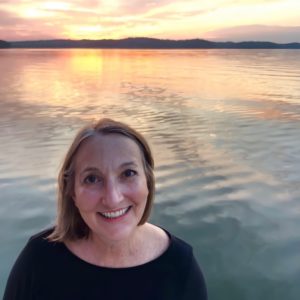
For our third episode, we talked to poet and short story writer Jayne Moore Waldrop, who shares two of her favorite writing prompts. Jayne suggests ways to make time for your writing and offers encouragement for writers at midlife and beyond.
A JCPL librarian interviews published writers about their favorite writing prompts—exercises that can help inspire, focus, and improve your creative writing. Whether you’re a beginner or a pro, a novelist, essayist, or poet, you’ll find ideas and advice to motivate you to keep writing. A partnership with the Carnegie Center for Literacy and Learning.
Prompt to Page Ep. 3
===
Carrie: [00:00:00] Welcome to the Prompt to Page podcast, a partnership between the Jessamine County Public Library and the Carnegie Center for Literacy and Learning. I'm your host, librarian and poet, Carrie Green. Each episode, we interview a published writer who shares their favorite writing prompt. Submit your response to the prompt for a chance to have it read on a future episode of the podcast.
Our guest today is Jane Moore Waldrop. Jane is a Kentucky writer and attorney. She is the author of Retracing My Steps, a finalist for the New Women's Voices Chapbook series, and Pandemic Lent: A Season in Poems, both published by Finishing Line Press. Her linked story collection, Drowned Town, was published in 2021 by University Press of Kentucky through its Fireside Industries imprint, a partnership with Hindman [00:01:00] Settlement School. Waldrop earned undergraduate and law degrees from the University of Kentucky and her MFA in creative writing from Murray State university's, low residency program.
She is a former book columnist for the Louisville Courier Journal. Welcome, Jane.
Jayne: Thank you. I really appreciate this opportunity to be with you.
Carrie: Well, we're very happy to have you here. So you are a writer and an attorney.
Jayne: I guess you could say I'm a recovering attorney, cause I'm not practicing right now.
I'm still licensed by the state of Kentucky, but I'm focusing on writing full time.
Carrie: So did you ever write while you were practicing?
Jayne: You know, I tried, yes. I, I toyed with it and aspired to it and I didn't seem to be able to make the full commitment law, practicing law and raising children and all of that.
I know that's [00:02:00] possible, but it didn't seem very possible for me. It just seemed like there wasn't enough time or energy or imagination left by the end of the day. So yeah. So when we moved, I practice law in Louisville and in Frankfort, And uh, we moved to Lexington in 2007. And since that time I've really tried to focus on my writing and began my MFA program in 2012 and finished in 2014.
And I guess that's when I really started focusing was I had made the commitment to write and I've been eagerly pursuing that since then.
Carrie: but, um, yeah. So I guess you could definitely relate to the struggle that a lot of people have.
Jayne: Yeah.
Oh, I can. I can. And just making the commitment to find some time. Nothing's ever perfect.
That's the thing I think most writers need to [00:03:00] know, especially new writers that, you know, it's, it's never going to be perfect. There's always going to be something that, that might challenge you time-wise or get in the way. But if you could carve out a little bit of time, either early in the morning or late at night, whatever you can with your, the rest of your life.
And also the recognition that sometimes life gets in the way of writing, but if you could even carve out 10 minutes, 15 minutes, um, and it's really more about the emotional commitment. I think this is really important when you're trying to figure out a writing life and how to build one.
Carrie: Yeah, that's great advice.
I think for our listeners. And you know, this is one way of doing that too, I think
Jayne: It is, it fits in very nicely because I think prompts make the most of, you know, a small amount of time. But you make a commitment to [00:04:00] that practice of writing and it is a practice just like anything else that it, it takes the commitment and sort of showing up and it's kind of showing up for yourself.
You know, if you have that drive and you want to write, it is really, um, a deeply held need to write. So, um, it's, it's really some me time in the healthiest of ways.
Carrie: Absolutely. So how, what's your experience with using writing prompts? Is that something you have used in the past? Do you use them currently?
Jayne: It is. And, um, I, of course, when I was in my MFA program, that was a part of a lot of our classwork that we would get going on, you know, or have a specific prompt that related to an area that we were talking about, you know, whether that was character [00:05:00] or place or, you know, any different, uh, topic in writing, in creative writing.
I think the prompts can really, take you outside. A little bit outside of what you're working on, that you're so committed to working on and sometimes you need to break free. So I think the prompt is really good for that, to loosen you up a little bit and maybe, um, it will sort of trigger, something new in your, in your thought processes on what you're working on.
Carrie: Well, would you like to share your favorite prompt?
Jayne: Well, and I have a couple of different prompts that I want to share, and one's not necessarily a prompt, but it can act as one. And I think it's particularly good for poets, um, because I write poetry and prose. So I think it's really helpful [00:06:00] to, to write haiku.
As a writing practice to sort of give yourself just a few minutes of writing, , that sort of capture a moment, um, where you are that day, if you could ride a haiku a day is often, um, brings you to some other thoughts and other ways of looking at your work. So it captures that moment. And it's also just a small, another small little commitment.
Five syllables, seven syllables, five syllables. That's actually how I wrote my book, Pandemic Lent. I had made the commitment to write a haiku a day during the Lenten season. And, I ended up, um, well, the pandemic intervened during that Lenten season. And so the poems became very much about, about the Coronavirus pandemic.
It can, it can grow into something much larger than that simple little haiku, [00:07:00] but my favorite writing prompt that I have used, in a class that I teach called It's Never Too Late, Writing at Midlife and Beyond, which I taught at the Carnegie Center a couple of years ago. And, um, because I am living proof that it's never too late to build a writing life.
I started that after my legal career. And you know, if you have that desire, I would just want to encourage anyone. To, to follow that desire as much as you can and give it as much time and energy as you can. So my prompt is, I'd like to give it about 15 minutes of writing time, and I want the writers to write about the bedroom that you knew growing up, or as a teenager, I want you to think about
whether you shared this room with a sibling or two, did you [00:08:00] have it all to yourself? What's the color of the room. Start going around the room and think about the details in that room. It will take you back and it will also help you learn about writing details of a space of a mood. It can capture. I think a lot of emotion by remembering this place that you spent time in, you know, you can include, as you're thinking about details, look at what did you prize in that room and what did you hide in that room?
What was the bedspread like? What posters did you have on your wall? Those types of things can put you into an era that you grew up in and maybe help you remember things that you might not have thought of in a while. [00:09:00] Also were there, especially as a teenager, were there any toys or stuffed animals or books that were saved from childhood and treasured somewhere in that room?
So I think that this writing prompt can help people who are either writing fiction, non-fiction or poetry, I think it can be used in all those genres. And I think that you know, it just helps you with those details on place and space and creating, uh, an emotional context for your characters.
Carrie: Yeah, just you saying it has me thinking about my own teenage bedroom.
So I could see how that would be a very, you know, you probably spend a lot of time in your bedroom at,
Jayne: Right! Did you have privacy there. Did you share it with siblings and that you, you know, did you like the fact that you shared it with [00:10:00] someone? I think that there is a. You know, can, help you remember some details.
And I think the details in any writing can provide the sensory details that make it seem real to the reader. So I think that's a good prompt to work on.
Carrie: So once someone has written for about 15 minutes on this prompt, what should they like be thinking about as they go back and reread
their work, I think.
Jayne: Did it help you remember anything? And can you put that space into some context, perhaps something about that era? Not just the bedspread or the posters, but what was going on at that time? Can you link that back up with something that was going on in the world or in our country or in your family? [00:11:00] You know, so you can give it some context that way you can also, it can also lead you into thinking about other members of your family or your best friend who came over to spend the night, you know, so you can, you can really let that lead you in all sorts of directions.
Carrie: So you're kind of thinking of the prompt as like a window or, you know, a way into writing. It may not necessarily be specifically about that bedroom, but.
Jayne: Yes, in the class that I mentioned at the Carnegie Center, uh, when some of my students read their work and they were so different, that's what was so wonderful about this because, you know, everyone had a different childhood or a different teenage, different family.
And they, it was really beautiful how they took these and turned them into some just amazing [00:12:00] pieces.
Carrie: And, do you recommend, I know you said 15 minutes. Do you recommend setting a timer or
do you,
Jayne: I think that's really helpful. Um, if you can, you know, set a timer or set your phone, the clock on your phone, you know, so that you can really, cause sometimes you need a few minutes, it doesn't happen instantly that you can just start writing.
So you might give it a few minutes. 10 minutes, I think is a good time. To to commit, but sometimes you just need a little more to really clear your head and, and think back. I think this prompt can also be very helpful if you are working on a work of fiction, that if you're kind of in a stuck place and you don't know, you're trying to figure out your characters as you're writing.
You can start describing their [00:13:00] home as you're seeing it in your mind, as you create these fictional characters, their home or their life as a teenager to help you know them better.
Carrie: And you mentioned that you write both fiction and poetry. Is that something you know what you're going to write when you sit down to write or do you kind of have to figure that out when you're, when you start
to write?
Jayne: That's a good question. I think it depends on where I am in whatever I'm doing. I mean, if I've already got a project that's, then I'm working on consistently. I still might write a haiku or two. Um, just as sort of a warm-up for the day, but usually I will go on to what I need to work on. So I think that, I don't know, sometimes I think writing is like channeling.
Whatever's going to come out sometimes. I naturally gravitate to, to prose and [00:14:00] fiction, but I feel like, um, sometimes the brevity of poetry. It's very appealing and that sort of distillation process of writing a poem, um, especially, um, I don't know. I, it just comes from somewhere, huh?
Carrie: Well, do you have any final tips for our listeners about writing or about working with prompts?
Jayne: I think. It's really important if you are writing to also keep reading, read other people's work, keep, um, I think most writers started as readers, you know, started as big fans of the books and libraries and all the things that come from that. I know I certainly did as a child, but the library was very important to [00:15:00] me and my family.
So I think reading a multitude of things is, is important throughout a writing life.
Carrie: Well, great. Well, thank you so much for sharing your ideas with us. We really appreciate it.
Jayne: Thank you. I think it's a wonderful program. So thanks for letting me be a part of it.
Carrie: Thanks for listening to the Prompt to Page podcast. To submit your response to Jane's prompt. Visit us at jesspublib.org/prompt-to-page. We also welcome you to join the Jessamine County Public Librariy's, Prompt to Page writing group, which will meet on Zoom on Tuesday, November 30th at 6:00 PM.
Register on our website. To learn more about the Carnegie Center for Literacy and Learning, visit [00:16:00] Carnegiecenterlex.org. Our music is by Archipelago, an all instrumental musical collaboration between three Lexington based university professors and musicians from all across the American south. Find out more about Archipelago: Songs from Quarantine volumes one and two at the links on our podcast website.