Subscribe
Share
Share
Embed
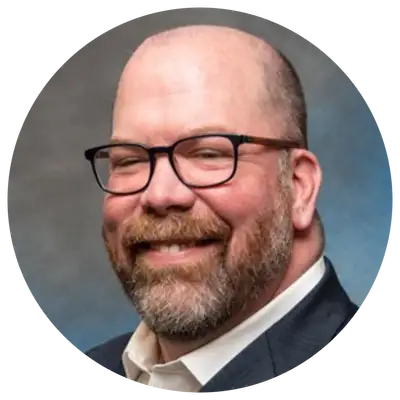
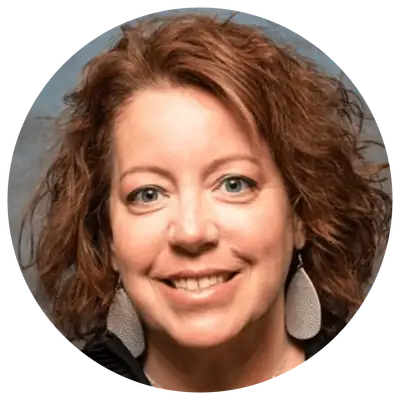

Welcome to "The Conversation", the ESC of Central Ohio's podcast! Join podcast hosts John Hambrick and Rachel Daniels every month as they explore a variety of topics featuring voices in education, helping to ignite ideas and inspire change. Want to be part of "The Conversation"? Email us: brenna.schoen@escco.org
Speaker 1:
Welcome back to The Conversation. We're kicking off season four with a special two-part series exploring the power of student voice through the Student Leadership Research Collaborative. In part one, you'll hear how this unique program was created and how it's empowering students to become researchers, advocates, and leaders in their schools and communities. Let's get started.
Dr. Keith Bell:
I went up to kids and asked them, "So when you go back, you guys are all protesting, you're holding signs, you're doing all this stuff, when you go back to school, what do you want to do?" And nobody could give me an answer. No student gave me an answer about what they wanted to do. And that's when I said, "Hmm, I've got an idea."
Speaker 1:
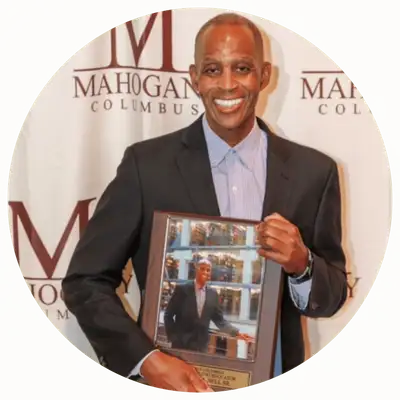
That was Dr. Keith Bell, instructional facilitator for the Student Leadership Research Collaborative at the Ohio State University. On this episode of The Conversation, Rachel and John are joined by Dr. Bell, fellow program leader, Dr. Maurice Stevens, and two student participants from the collaborative. Together, they'll discuss how the program equips students with the skills to conduct meaningful research, advocate for change, and develop as confident leaders. You'll also hear firsthand how the experience has shaped the students' perspectives and empowered them to make a lasting impact in their schools and communities. Let's dive in.
John Hambrick:
Hello, and welcome back to The Conversation, Ohio Voices in Education, Igniting Ideas, Inspiring Change. Rachel Daniels, are you ready for this episode?
Rachel Daniels:
Well, it's always exciting when we have students in our mix.
John Hambrick:
I'm telling you.
Rachel Daniels:
So yes.
John Hambrick:
I'm telling you, I'm super excited about this. And why is that? Why are we so excited? Well, a couple of things. Rachel said, "Hey, we're bringing in students to this conversation, and we're also going to a nearby home of the Ohio State University." So excited for that. With this conversation, Dr. Keith Bell, instructional facilitator with the Student Leadership Research Collaborative at the Ohio State. Dr. Bell, welcome to The Conversation.
Dr. Keith Bell:
Thank you. Thanks for having me.
John Hambrick:
Heck yeah. Hey, to help our listeners, can you give them some history about the Student Leadership Research Collaborative?
Dr. Keith Bell:
Sure. I want to make sure I give you the full context. So I'm a former recovering superintendent from Northeast Ohio. I was superintendent in Euclid for four years. And my last year we were developing our strategic plan for what's called the First Ring Schools, which is all of the Northeast Ohio suburban schools, including Cleveland Metropolitan. And in that conversation, we talked about all of the groups that we wanted to bring together. We wanted to bring together EMOs, we wanted to bring together the assistant principals, the principals, the superintendents, the custodians, all these people together. And I asked a question during that meeting, I said, "Well, what about kids?" Nobody said anything about kids. And they said, "Well, Keith, what do you mean?" And I said, "I'm not really sure about what we want to do, but I do know that we have an opportunity to involve kids."
So in Northeast Ohio we started the First Ring Student Leadership Institute where we had leadership and looked at research and advocacy and all that. And we had it going for two years, and then I retired and I finished my doctorate at Ohio State. During the pandemic, a lot of the districts in Northeast Ohio did not want to continue that because there were too many other things, and I get it, there were too many other things on the plate. And so, I though at that particular time, being how I am about things, that's a great time to start something new.
And so, I came to Tom Goodney, who believed in me and who we had a relationship with, and I said, "Tom, I've got an idea. I think I want to bring this particular initiative to Central Ohio." And what motivated it for me was that during that particular time was in the midst of the social justice unrest. The George Floyd piece was going on. Kids were protesting all over the place. And so, I went up to kids and asked them, "So when you go back, you guys are all protesting, you're holding signs, you're doing all this stuff, when you go back to school, what do you want to do?" And nobody could give me an answer. No student gave me an answer about what they wanted to do. And that's when I said, "Hmm, I've got an idea. Maybe this is the time to bring some type," I didn't know what we were going to call it, "Bring it to Central Ohio."
And so, then I went to Tom. I also went to Ohio State. I had relationships in the Department of Education and Human Ecology, went to them and talked to them about potentially partnering on it. And I remember Dustin Miller thought I was crazy, he said, "We're in the middle of the pandemic." And I said, "Yeah, I think we can make this work." And so, I wrote the grant to Martha Holden Jennings. We got some seed money. We got some support from the ESC through Tom's support and trust in me to make this happen. And as a result of all of that, we started our first year with just virtual sessions with about 60 kids. From there, it has grown to this past year 353.
And so, it has been an evolution over time, but what has happened is kids needed voice and we were able to give them voice. And what I found out during the pandemic was kids wanted to talk to somebody and they couldn't. And the collaborative gave them an opportunity to be able to do that. And the other piece of data was that the chronic rate for students and absenteeism during the online period of time, during that period was about 52%. We had about 99% attendance at every session because kids wanted to talk, they felt like they had ownership, it was authentic for them, and we listened to them. We allowed them to communicate with us about what it is that they wanted to do, what the problems were and so forth. And as a result of that, it has just grown from there to now we have the in-person sessions and we're able to do what we need to do.
But that was the seed. It was just an idea. And I think we as educators, sometimes it's right in front of you. The answer to the question was right in front of me. And I can kind of end it with this. Whenever I didn't know what to do when I was an administrator, whenever I had questions about what to do, I always asked the kids. And I would go to them and they would always give me the opportunity to avoid landmines and they would tell me what I needed to do. They were always straight with me. And as a result of that, this idea isn't necessarily working because of anything that I've done. It's more that these kids, all of them do all kinds of things, but they are so passionate about the work that they're doing because they can see that they have evidence to support change in their school and they're doing it in concert with their administration. That's what started this whole thing.
John Hambrick:
Amazing. And as a recovering superintendent, you're doing great, man. You're keeping student voice top of mind, top of action, that's awesome. Thank you for bringing this to Central Ohio. And to help with that, we've got a couple of your students with us here on The Conversation. We've got Evan, who's a junior at Hamilton Township, and Zarin, also a junior in New Albany Schools. I'm curious, Zarin and Evan, what inspired you to join the Student Leadership Research Collaborative and what were you hoping to gain from the experience?
Zarin Wentz:
So what really inspired me was my assistant principal, Mr. Tate. When I first was coming into the high school, I didn't feel like I had that much of a voice and I didn't know my place as a little freshman and all that stuff. And I was very shy and he asked me to be in it and he saw through my potential and thought it was a good opportunity for me to gain confidence and be stronger and have a bigger voice in school. And it kind of impacted a lot of people in my grade and in the grades below me and above me, and it just has opened a horizon of new opportunities for us.
John Hambrick:
Awesome. Thank you. Evan?
Evan Allgood:
Mine was kind of the same thing. I also wanted to be a better leader. And I'm a captain on my basketball team. I wanted to be a better captain and lead others on my team. I also wanted to learn how to advocate problems and help solve problems better and stuff like that.
Rachel Daniels:
Dr. Bell, for listeners who may not be familiar, what is Youth Participatory Action Research, or YPAR, and why is it such a powerful framework for students?
Dr. Keith Bell:
Youth Participatory Action Research, YPAR, gives kids an opportunity to authenticate their voice. It gives them an opportunity to use their voice in a positive way. What happens when student voice is not captured or not allowed to be heard, students will make their own narrative about what happens. And what Youth Participatory Action Research does is allow students to have a narrative that is supported with evidence. So it allows them to, and we're doing this with our year two and three students, allows them to also understand how to advocate in a community, but it teaches them how to find a problem in their school, whatever that problem is, they find a problem in their school, and then how to take that problem and analyze it and determine what could be significant recommendations that they could make for change.
And unlike other programs, when you look at this, they're looking at trying to work with their administration together to make those changes. And students on the ground can really tell you what's going on in school. They can tell you what's not happening, they can tell you what they think needs to happen, but it also gives them an opportunity to understand that. It also gives them a platform to be heard. And when we look at selection, and people ask me about who do you select for the program and all that kind of thing, I leave it up to the teacher advisors, but I always tell them, "Look at kids who are leaders in your building, but may be leading in a negative way, because those are the kinds of kids that can learn from other students who may lead in a positive way where they can learn from each other." But the energy behind that is really effective.
So Youth Participatory Action Research, the action component of that is really significant in that they have to do something. They don't just come and sit and get. There is action associated with their work. They have to do something. And I'll continue to allude to the fact that Zarin and Evan, they're into a lot of different activities, yet this is extremely important to them and this is an extra thing for them to do that they want to do, because they can see their work and they can see the authenticity and they can see the value of their work. So it's youth that are participating, but the action is the critical component, that there is something that they do. They don't just go home with paper. They have to create ideas, they have to work with a team, they have to do something. And that's what's behind this YPAR.
The other component of YPAR is the team building. All of the components that you look for in content standards are woven into YPAR and it allows students to, the work that they're doing in school, work with that and actually apply some of the things they're learning in school into a larger setting and be able to see how all the things that they're learning from these great teachers that they have in the building, how they can apply that into this work. So the action component is critical and the participation is critical, that these students are able to do this work and be able to do that with evidence that supports why these particular changes are being recommended.
Rachel Daniels:
You have struck so many chords within my heart, in particular this notion of providing space for students to learn how to participate in authentic collaborative conversation is so important. And something I spend a lot of time in my professional development talking about is making space for students to talk in class, that that is such a critical life skill. And so, I'm curious-
Dr. Keith Bell:
Can I add one thing?
Rachel Daniels:
Yeah, sure.
Dr. Keith Bell:
Can I just maybe add one thing? The other thing I just want to make sure I want to say, because I understand how it works, the teachers and administrators in buildings want to do the same thing. The problem that they have sometimes is the amount of time and all of the things that are on their plate that keep them from being able to do some of those kinds of things. They want to do that. I know I wanted to do it when I was principal, but sometimes I've got to deal with this or I've got to deal with that or I have all of these other things and sometimes I just can't do it.
So what we're trying to do is supplement that and give these students that opportunity that then helps them when they go back to the building. So I want to make sure I'm clear about how much the teachers and administrators in the building already do. This is just something to help them do what I know they would be doing more of if they could, they just can't because of the restrictions, and the brick and mortar limits you to how much you can do.
Rachel Daniels:
Sure.
Dr. Maurice Stevens:
I also think that this is part of such a long tradition of education being used for change. It goes back to Paulo Freire who was this Brazilian educator who was, like Dr. Bell mentioned, the kind of sit and get model, the banking model of education that students are just there and they get things poured into their heads and then they regurgitate it out. But he said, "No, that it's not just about reproducing cogs in some social machine, but that education can be about change and it can be a collaborative act of liberation." And that's what's so powerful about it and I think that's what makes teachers and students so excited when they get involved with YPAR or PAR or SchYPAR, because they see that they can actually change their worlds, the worlds that they live in through education and not just be modeled into some kind of conforming whatever.
Rachel Daniels:
Yeah. Dr. Stevens, that's a great transition, because I want to bring the students back in and give them a moment to talk about how working with students from other schools and districts have changed or expanded their perspective. So Evan, can you share with us what is something that you've learned through that authentic collaboration you've had not only within your school, but outside of your school too? And then Zarin, I'll have you share.
Evan Allgood:
I've learned a good amount of things. Working with other people in other schools helped me get a lot of ideas. It helped me look at other people's problems and how they solved them. And in my school, it helped me learn and look at other people's views in a different way. And it helped us gather one good idea together instead of letting one person do it all or not listening to others and have one person control the whole thing.
Rachel Daniels:
Yeah, I love the idea that you're letting the experiences and different situations and opportunities people have had, to come in and be part of that problem solving model. It's like look outside of just yourself to figure out what that possible next step would be. So appreciate your translation of that. Zarin, share with us your perspective.
Zarin Wentz:
I definitely think it has shown a lot of different backgrounds between people in different schools and how everybody has different problems in their schools and how they solve it, just like Evan said, and how other people can have things that are really big problems and how we can see it as small problems at our school. And just seeing everybody's different personalities come together and put in different ideas is really inspiring, I feel like. And I feel like showing what other people have to go through and how people can put in different inputs on how they think one school should solve one thing, how they could solve a bunch of different things together. I think it's just very good to put all these different schools and different people together and show all the different perspectives you can have.
Rachel Daniels:
Well, what I love is that it feels like a microcosm of what our world should be, right? It's just collaborative, working together, benefiting from other people's experiences. So encouraged by all of these little tidbits that you're sharing today.
Dr. Maurice Stevens:
And it's really powerful to see all these students together, hundreds of students together in a room working with each other, students coming from vastly different districts, because school segregation is real in this state. And to have students who have completely different experiences coming together, meeting each other, collaborating on things together, sharing in their work together, and actually building relationship across these lines of separation, it's amazing.
Dr. Keith Bell:
And I think to that end too, one of the things I didn't mention is one of the parts of the question was about the uniqueness of this. One of the things that makes it unique is that it's one of the few initiatives that bring rural, urban, suburban kids all together in the same room. And that's something that Dr. Stevens is alluding to that we have and we have them all working together. And I think Zarin mentioned it and Evan mentioned it, the fact that they have found that all of these students that come together, whether they be urban, suburban, rural, or wherever they come from, all have the same issues. They all want the same things. And so, they look at this and they see this school and they say, "Well, they've got this and that," or, "This school doesn't have this." When they come together, they all want the same things. And that to me makes this really unique.
John Hambrick:
I love hearing about the experiences, and then with Zarin and Evan, how you have a voice, you're gaining your social and community capital.
Speaker 1:
Stay tuned for part two to learn how students in the program created real change in their schools and communities.