Subscribe
Share
Share
Embed
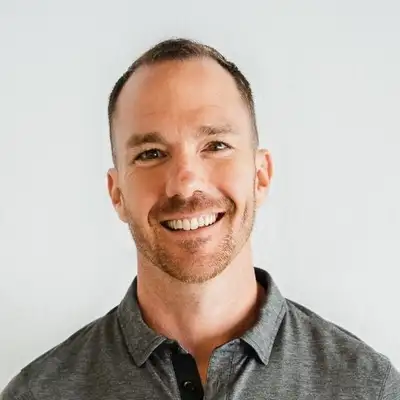
On a mission to share practical solutions to improve your wellbeing, The Real Health Podcast will equip you with evidence-based recommendations essential to achieving a healthy lifestyle. Join Dr. Barrett Deubert as he shares his passion for educating, inspiring, and empowering individuals to achieve “real health for real people”. Breaking down health topics such as: immunity, stress, real food, natural living, and much more to provide you with actionable steps to improving your family’s health.
There is a difference between your chronological age and your biological age. And your biological age is determined how well your cells are functioning on a day to day basis. A lot of it's metabolism or metabolic health. Welcome back to another episode of the Real Health Podcast. Today we are talking about aging, longevity, the truth about aging.
Dr. Barrett:What actually makes you live longer? But we're going to start with what actually causes you to age faster. If we know what ages us faster, then we can remove those from our lifestyle. And then we're going to add value to our life by increasing longevity with certain lifestyle changes. Today, it's gonna be lifestyle based conversation.
Dr. Barrett:You're gonna hopefully walk away with the top 10 things I would do daily to live longer. That's what we're gonna finalize with our podcast today. So stay tuned. It's gonna be information packed, jam packed for obviously you, but hopefully you can share the information with people around you. And let's have a conversation that isn't ad based or clickbait that's not selling you a supplement.
Dr. Barrett:Let's talk about truly what moves the needle in longevity. You know, the science of aging well. And we always say we want you to age well and suffer strong. It's one of the terms I use a lot. We wanna age well and suffer strong.
Dr. Barrett:So what does that mean? It means we wanna do the best we can with aging well and improving longevity, and we wanna suffer strong. We wanna be resilient humans that can go through pain and changes and obstacles and be resilient. So let's talk through what actually slows aging. So we're going go through a few causes of aging, not what obviously social media may say.
Dr. Barrett:But, you know, there is a difference between your chronological age and your biological age. And your biological age is determined how well your cells are functioning on a day to day basis. A lot of it's metabolism or metabolic health. And so let's get into the part one, what actually causes aging? Because aging isn't wrinkles.
Dr. Barrett:That's not aging, right? We're not just aging. It's actually the gradual loss of your cell's ability to heal itself, your body's ability to heal and regulate. As we slow down our ability to heal, we increase our aging. I always think aging is like making a copy of a copy.
Dr. Barrett:And if you make a copy of a copy, the second copy isn't as clean as the first copy. Or if we just now pull that out in a bigger term, if the hundredth copy of a copy of a copy a a copy, we look at that hundredth copy of a picture, it's not even nearly as bright as clean in lines as the first copy. Your body every day is making copies of copies and if we can slow down the copying process then we can age well. Without getting too technical, there are hallmarks of aging and when we look at it, it's chronic inflammation, your mitochondria which we talked about is dysfunctional, your DNA is being damaged, there's something called oxidative stress, insulin resistance or metabolic disease, loss of muscle, one percent loss of muscle every year over the age of 40, immune dysfunction and chronic inflammation autoimmunity, and a term you may have not heard which is called cellular senescence. And I know a lot of that feels very technical and medical jargon so I want to keep it simple and extrapolate this out a little bit.
Dr. Barrett:The number one biggest accelerator of aging is chronic inflammation. And it may be the biggest one. Inflammation is amazing. For a few days it can help injuries heal, tissue recover. It's necessary if you have a virus.
Dr. Barrett:But it's terrible when it goes on for twenty years. And we see markers of that. CRP is a marker, homocysteine is a marker, poor diet is a marker we can look at, chronic insulin resistance, poor sleep, obesity, gut infections and inflammation, autoimmunity. They all keep your immune system stuck in this attack mode and it slowly damages your tissue, increases that cellular turnover daily. Reducing inflammation is critical.
Dr. Barrett:We'll talk about that in our steps at the end. Number two, a big issue if you have it, it's going to increase your aging is insulin resistance or the body's ability to hear insulin and utilize sugar glucose efficiently. Imagine just pouring like syrup over your muscles, right? That's like, or in your brain. When we can't utilize glucose properly, it's just circulating like scrap metal in the body just creating so much damage.
Dr. Barrett:High insulin which is a marker you can look at increases directly heart disease, Alzheimer's, dementia and accelerates damage to your blood vessels. So we want to be mindful of not just our inflammation levels but our insulin resistance. Number three is loss of muscle. Muscle isn't something that's just for aesthetics. It's not just cosmetic.
Dr. Barrett:Muscle is a longevity organ and one of the most important ones. Pretty much more muscle you have the longer you live. Number four, sedentary lifestyle. If you're not moving, you are aging more rapidly. We need to make sure that we are increasing blood flow and oxygen to tissue, and so sedentary lifestyle is a major risk factor for aging.
Dr. Barrett:Poor sleep. This may be you. You may not be sleeping seven to eight hours of deep restorative restful quality sleep a night. You may be in bed that long but not sleeping that long. It is essential that we get into restorative sleep patterns that allow us to flush toxins out of our brain and inflammation out of our body and improve insulin sensitivity.
Dr. Barrett:Chronic stress is number six. It's an absolute risk factor for aging. Any type of smoking, excessive alcohol, those will directly impact aging. And then even number eight, relationships. Like loneliness has been shown to increase aging.
Dr. Barrett:Or I would even go to say like not having purpose, having something to wake up for, not serving humanity, not having a purpose driven life will increase your aging. Loneliness increases aging. Is well established that populations, blue zones that live longer have some of the healthiest relational communities and faith based communities out there. So that's what increases aging. What actually slows aging?
Dr. Barrett:And this is where we'll get into the technical where at the end we'll get into the top 10 things to do daily. Number one, lift heavy things. You gotta do some resistance training. Lifting heavy things is the closest thing to anti aging medication that's on the market. When we look at lifting heavy things, it directly improves your metabolic system.
Dr. Barrett:So insulin sensitivity, bone density, brain health, hormones. What does that mean? What does heavy things mean? Well, it means it was heavier than it was last week. I don't care how heavy is relative to a person.
Dr. Barrett:If you did a three pound resistance band last week, you're doing five pounds this week. Yeah, the reps may drop a little bit but as the reps increase back up and we get progressive overload then we increase the resistance again. If you have been training the same way for the last ten years and you haven't changed at all, you're not getting better. You're just not. So increase your steps, increase your weight.
Dr. Barrett:What if I get injured? Well, I would rather you have a tweak, an injury, than have heart disease, Alzheimer's, dementia. So I would much rather work through a joint injury or a muscle strain than directly impacting my aging. So lift heavy things three to four times a week. We've got to be doing it.
Dr. Barrett:If you're not doing it you start with that. Turn the podcast off, come back to it in a month, and you can look at the other items. Number two, when we look at what actually slows aging, walking every day. Aim for eight to 10,000 steps a day. Walking is simple.
Dr. Barrett:It's incredible. Walking lowers blood sugar. It directly decreases stress hormones, inflammation, helps your body heal and recover. It is simple. You got to be walking.
Dr. Barrett:You got to get your step count up. Number three. Eat enough protein. As we age, again we lose 1% of muscle mass every year over the age of 40, protein becomes even more important and most adults under eat protein. You got to aim for about a point eight to one gram per pound of body weight if you're active.
Dr. Barrett:So that's a lot of protein. Two hundred pound male is 150 to 200 grams protein a day. That's a lot of protein. But if we prioritize eggs and fish and beef and chicken you meet those metrics, okay? Number four is sleep like it's medicine.
Dr. Barrett:Sleep is essential at decreasing the aging process. Sleep, protect it. Dark room, cold environment, consistent routine, go to sleep at the same time, wake up at the same time, limit anything that hinders deep sleep like blue lights and alcohol and eating too late. It's where longevity happens. Number five, build your mitochondria.
Dr. Barrett:All right, this is something that we've talked about before but how healthy is your mitochondria is how healthy your cells are. One of the best ways to do that is sauna. Sauna is fantastic cold exposure protein, inflammation levels that are down. Creatine we talked about as a great supplement to improve mitochondrial function. If we can, which are the power plant of the cell, the mitochondria, if we can improve mitochondrial function, we improve our energy systems.
Dr. Barrett:And the better our energy systems, the lower risk for cancer and all forms of chronic disease. Next one, what do we do to decrease aging? We control our blood sugar. Protein, fat, fiber. Eliminate the big carbs, eliminate snacking.
Dr. Barrett:When we eat consistent meals over time, consistent three meals a day, it really stabilizes our blood sugar, especially if we have lots of fibrous foods combined with healthy fats, quality protein. We can control our blood sugar and blood sugar control is essential at preventing neurodegenerative conditions, heart disease, and virtually every chronic disease that exists. We talked about what unhealthy relationships can do to increase aging. Healthy relationships will directly impact your aging. So live a life of grace.
Dr. Barrett:We all make mistakes. We're all humans that are living this human experiment where we mess up every hour, every day. Give grace to yourself, give grace to others. Develop a deep relationship with the Lord. Grow in him.
Dr. Barrett:Love others, serve others. You'll be healthier for it. Novelty. Continue learning. The brain thrives off of learning.
Dr. Barrett:And if you're not learning something new, if you're not in a season of learning something new, learn something new. This is your go to. Whether it's music, right? Whether it's an instrument, whether it's reading, whether it's learning a different language. Learning a novelty is at like the cornerstone of healthy aging.
Dr. Barrett:And if you look at all these things I just talked about this is lifestyle. Yeah, mentioned creatine and but this is the lifestyle. This isn't hey take these five supplements. This is practical things that you can do every day. If you're not strength training, strength training.
Dr. Barrett:If you're not walking, you walk. If not eating three meals a day with protein, eat three meals a day with protein. Develop the rhythm and discipline of one habit and then develop the rhythm discipline of a second and then a third. Give yourself grace and know that in twenty years you're going to be different than you were today. Here's my final takeaway.
Dr. Barrett:If someone asks me, Hey Doctor. Barrett, what's the fastest way to slow aging? Here's the 10 things. Ready? Number one, lift weights.
Dr. Barrett:Number two, walk every day. Number three, we want to sleep seven to nine restorative hours every night. Number four, we want to eat enough protein. Point eight to one gram per pound per ideal pound of body weight. Number five, metabolically healthy.
Dr. Barrett:Stay lean but not under fed. Number six, control your blood sugar. Number seven, reduce chronic inflammation from food and drinks. Number eight, manage your stress well. Number nine, develop and maintain healthy relationships.
Dr. Barrett:Number 10, keep learning, novelty. Keep learning, keep moving. And you know what's not on the list is a miracle supplement or product to buy. That's lifestyle advice. That's simple.
Dr. Barrett:Anyone can do it. Let's establish the fundamentals. Fundamentals win and you'll never get healthy through supplementation if you're not establishing a healthy foundation. So be intentional with your food, with your movement, with your relationships and you'll be rewarded for it. It's harder but it's more fruitful.
Dr. Barrett:So I hope this was valuable for you. Know that aging is in your control. Aging is something you be intentional about. Your cellular health can can be ten to twenty years lower than your biological age, chronological age. Let's start moving the needle in our aging by managing our lifestyle.
Dr. Barrett:So I pray today was a blessing for you and that you learned something new. Thanks as always for listening to another episode of Real Health Podcast.