Subscribe
Share
Share
Embed
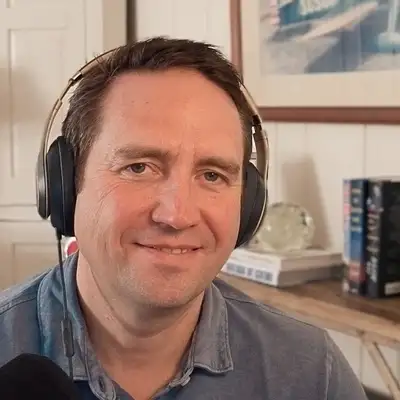
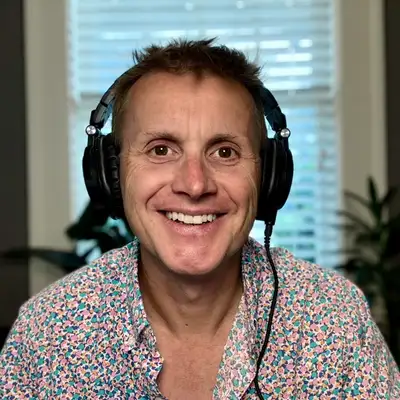
Space Insiders is your bi-weekly deep dive into the intersection of space, cloud technologies, and entrepreneurship. Hosted by Tony Sewell and Rob Ruyak, both seasoned space-tech executives, this podcast features candid conversations with founders, investors, and entrepreneurs shaping the future beyond Earth. Whether you're launching a startup, investing in innovation, or just space-curious, Space Insiders gives you the behind-the-scenes insights you won’t hear anywhere else.
New episodes drop every two weeks. Subscribe now and join the orbit!
Disclaimer: The views and opinions expressed in this podcast are those of the hosts and guests and do not necessarily reflect the official policy or position of any organization or employer.
Ben Venuto, Space Insiders, Tony Soo, Comestar Rob?
Rob Ruyak:Bien.
Tony Sewell:Fenneh. That's Italian.
Rob Ruyak:Fenneh. Oh, yeah, that's right. That's Italian.
Tony Sewell:Taking the family to Italy for a week. They're leaving tomorrow, so I've been brushing up on my Italian. And I think this is a suitable intro for our guest this week too.
Rob Ruyak:Yeah, even though he's Spanish, right?
Tony Sewell:Even he's Spanish, but speaks Italian, speaks German, really is accomplished executive within the European space ecosystem. Alvaro is the co founder of Lean Space.
Rob Ruyak:Yeah. Alvaro was great. And I always feel so dumb when I interview folks from other countries because I speak even though, you know, that's Italian. But anyway, our interview with Alvaro is really great. It's very unique and different too.
Rob Ruyak:Alvaro came from he started his career at F1 as an aerodynamics engineer and then made his way into wanting to study and get his master's in astrophysics.
Tony Sewell:Through Australia National University, which was interesting. I didn't know that about Alvaro until we spoke the other day.
Rob Ruyak:Yeah, that was super interesting. And then he took his interest there and went to work at TeleSpacio as a commercial manager working on a whole bunch of different projects and then decided to start Lean Space, which is a very unique cloud and software based approach to the space industry.
Tony Sewell:Yeah. So I mean, I first met Alvaro probably about three or four years ago when I
Alvaro Ruiz:was at
Tony Sewell:AWS. They're really, really doing something interesting that they their his and and his his cofounder, Guillaume Teniers, they both worked at Telespazio and they saw this problem in the industry around mission operations software or the lack of innovation and the very sort of static and customised nature and the fact that so many of these companies that are operating these multi million, potentially multi billion dollar constellations operating these systems with 1980s and 1990s technology. He gives an example of one well known space agency still operating on floppy disks, another big geostationary satellite operator running their systems on Windows 95. I mean, it's it's crazy. And and these guys saw the opportunity to to really innovate in this area, try to bring their solution to the cloud, and take on some of these legacy players to bring a more up to date solution to their customers, but also a more modern solution to try and bring space into the twenty first century.
Tony Sewell:Great discussion.
Rob Ruyak:Yeah. And if you're not familiar with it, if you think about the Apollo era times, if you've if you've if you've seen, like, Apollo 13 or if you've seen any of these kind of documentaries around the Apollo missions and you see that room with, like, a 100 people in it, probably less than that, but, like, you know, a lot of people in a room with all those old monitors looking at TV screens in front of them, you know, looking at the orbital trajectory of a spacecraft and, you know, they have slide rules and they're looking through, you know, you know, how to conduct a mission. It's not like that today, but it's not that far off either. Yeah. You know?
Rob Ruyak:And so I remember when we were starting to work through, Tony, when we were starting to partner and work on this new business in space, you know, one of the hypotheses we had was how can you take a lot of that and operate it in the cloud? Especially because at that time, it was right when COVID hit too. And you were thinking about how do you operate a mission remotely even, you know? Aside from, I think, all the benefits of doing a lot of this purely in software and cloud, but how can you actually operate a virtual mission operation center, you know, where people might not be in the same room? I mean, it's very possible, right?
Rob Ruyak:So when you think about what those rooms look like physically, it's a little bit of what we're talking about here with Alvaro, and they built a company around that. And it's really fascinating, especially for small companies that are building satellites, that are operating satellites, or supporting customer missions. By the way, if you haven't been there, the Johnson Space Center down in Clear Lake, Texas, Just I think it was a couple years ago, they completely revamped the original Apollo eleven
Tony Sewell:Oh, yeah.
Rob Ruyak:Mission ops center. So you can go there and, like, do a tour, and it's they they it's it's it's really cool. If you're ever in that area, definitely worth stopping by and checking it out. Yeah.
Tony Sewell:That would be a good one to to get a little private tour from Darrell Shook.
Rob Ruyak:Oh, yeah. Absolutely. Yeah. Darrell yeah. Darrell will give you the the best free tour you can possibly imagine.
Tony Sewell:Yeah. If if you're new to Space Insiders, we interviewed Daryl about maybe six episodes ago. It's a good one to go and check out. He's a
Rob Ruyak:he he's actually worked at that center.
Tony Sewell:He worked at
Rob Ruyak:that center. Worked in the center, worked in the room, you know, helping astronauts doing their spacewalks on different missions.
Tony Sewell:Just quickly, before we go to Alvaro, so back to, I think, why this is a really interesting discussion for our listeners. Not only is their mission really interesting and how they're trying to change the industry, but I think they're an interesting company because they've had numerous successful raises, they've just closed or they're in the process of closing a new round of funding to get them to the next phase. I think it shows some of the interesting really interesting companies and technology that's coming out of Europe. One of the things I love about working in the space industry is working in Europe because it's I think everyone talk everyone rightly talks about the innovation and just the scale of some of the stuff that comes out of The US. But it's such an interesting community in Europe and so much heritage and deep expertise, excellent engineering and educational institutions in Europe, and the community built around ESA.
Tony Sewell:I know it's a bureaucratic organisation and people often deride that, but there's so many interesting companies coming out of Europe. And a company like Lanespace, they've opened an entity in The US, and they're doing business with the US government. And I think it's a it's a really great story for for founders in in what's possible.
Rob Ruyak:And I didn't realize that Spanish are optimists.
Tony Sewell:Oh, yeah. That's right. He talked about that. I don't know
Rob Ruyak:was cool. He's like, I'm Spanish. I'm an optimist. You know?
Tony Sewell:And my my friend Miriam our friend Miriam might have something to say about that.
Rob Ruyak:Yeah. Yeah.
Tony Sewell:We should. Yeah. Didn't hear that.
Rob Ruyak:But I agree with you. Europe is awesome. Mean, the times I've spent a lot of time over in Europe, I wish I spoke another language. I try to speak French, but it's not great. But I don't know.
Rob Ruyak:I feel like it's a very collaborative atmosphere. And I actually have been to the ESA facility in Friscati outside of Oh,
Tony Sewell:cool. Yeah.
Rob Ruyak:And by the way, we yeah, there's a whole series, I think. It would be interesting to kind of talk through the Open Geospatial Consortium. They had an event there I attended. It was really, really good. And frankly, a lot of what we talk about with Alvaro in this segment resonated with me there because it was all around data integration standards around geospatial, which is, you know, a very important topic and something the industry does need to focus on more and more, I think, as we become more and more of a software type of approach to space.
Rob Ruyak:So it's really important.
Tony Sewell:All right. Well, I think this is a good point to get to the interview. What do you reckon? Let's do it. All right.
Tony Sewell:See you in a minute. All right. Welcome back to the show. I'm super excited to have with us today Alvaro Ruiz from Lean Space. How you going Alvaro?
Tony Sewell:Great to see you again.
Alvaro Ruiz:I'm doing fine. Thank you, Tony. Thank you, Rob. Thank you for having me.
Rob Ruyak:Love having you. Thanks for thanks for doing this with us, Alvaro.
Tony Sewell:Mate, I've I've been really excited to to have you join the show because like, we've known each other for a little while now and thinking back to my previous role at AWS. Lean Space, what what I loved about working with you guys, you were like the model the model for of a a a start up that was just totally embracing the full offering of AWS in terms of, like, you were cloud forward, you were working with partners, which is great because I was the partner guy. You were you were leveraging the AWS partner network to to build to create a new channel for your business. And and I'll give a little shout out to Miriam. I hope she's listening, but, like, the she always raved about working with you guys, and it's just it's been a a pleasure crossing paths with you over the years.
Alvaro Ruiz:Likewise. Yeah. I think AWS and Lean Space, we we share the common vision. Do we see the space industry going? And I'm happy to share a bit of what I have in mind during today's interview.
Tony Sewell:Yeah, awesome. So maybe just if we could start off just with a little bit of like how you ended up where you did. You've got a really interesting background, Formerly an engineer at one of the big guys, TeleSpazio. You've managed projects. You're obviously an accomplished European businessman, speak multiple languages, advisory board member at the Lifeboat Association, or Foundation.
Tony Sewell:I haven't heard of that before. I'm really actually interested to find out a little bit more about that later too. What led you to Lean Space?
Alvaro Ruiz:It's a it's a good story, I think. And I think I'm I have a background that doesn't come from space. So I'm an engineer. I've got a master's in mechanical engineering, and I started working as as such. I started working actually doing r and d on Formula one race cars.
Alvaro Ruiz:And I was working for Pininfarina or with Pininfarina working on Ferrari Formula One race cars. That was very interesting. Was very technical and and very like state of the art. From there, I moved into other engineering disciplines. So I've worked in automotive.
Alvaro Ruiz:I've worked in civil engineering. I've worked in I worked in aerospace back in the day a little bit. I worked in earthquake engineering even. So I've been doing I had a I have a quite long career working on different industries, seeing different ways of doing things. And at some point, because I've got a very curious mind, I did a degree in astrophysics.
Alvaro Ruiz:A bit just for fun, but it completely sucked me and is so, so cool. My astrophysics is very theoretical, so it was about cosmology, exoplanets, quantum mechanics, relativity, all these things. But but space hooked me in. And I was like, wow, I want to work in space. And of course, I don't want to be I didn't want to be an astrophysicist because it's very theoretical.
Alvaro Ruiz:But I thought, hey, how how can I apply my engineering skills to the space industry? So that's how I landed in this industry, which which I think is an interesting way of landing because a lot of space professionals have only worked in space. So I think I bring a a first perspective to this industry also on how things are done somewhere else.
Rob Ruyak:Just by the way, Formula One, F1, is so fun. I went there, I think it was two years ago, with my father and my brother and my oldest son. We had a great time. It was in Austin, so it was really freaking hot. But it was great.
Rob Ruyak:Yeah, AWS does a lot with F1. We do a lot of customer engagement in those, the different races and things. It's it's it's a blast. But the thing that is I I really think is so fascinating because I I do not have a physics background. I don't have an automotive background.
Rob Ruyak:You know, it's it's you know, you can see the similarities between aerospace, aeronautical engineering, I think, and and f one. And one of the things that fascinates me the most is that these things are going, what, 200 miles an hour around corners and things and just the way they're designed, like, help them stick to the road. So it's pretty cool. I mean, could see how your interest could translate into different industries and I think it's really unique that you've done that. What was the just so I understand, what was the sequence of you going from being an engineer and working on, you know, like f one to getting your astrophysics PhD?
Rob Ruyak:And then was it from there that you had this kind of, you know, bigger vision around what you think you can contribute to the space market or industry?
Alvaro Ruiz:So my the several steps I took. So I was working as R and D engineer. Was actually working on aerodynamics of the cars. So working on the airfoils and, you know, sticking the cars to the to the ground. Yeah.
Alvaro Ruiz:And it was it was very interesting job. It was very technical. And I'm an engineer. So I like my, you know, my tech stuff. I my strengths are not on on hardcore engineering.
Alvaro Ruiz:My strengths are somewhere else. So then I started to look for the jobs or other other roles, let's say, to develop more my management skills, business skills, project management specifically. So I went to several industries. I've traveled the world for for works. There was a period in which I was literally doing business from Japan, Taiwan, Canada, Mexico.
Alvaro Ruiz:So this opened my mind a lot. I worked in industrial engineering or civil engineering in the crossroads building or making really, really big projects in countries like Russia or Indonesia. So I think I saw all these different ways of working, not only technical or programmatic, but also like cultural. And then and then at some point, you know, this astrophysics degree just tied everything together. And I had I had all the tools that I thought I needed in my toolset.
Alvaro Ruiz:And then I said, okay, this is what I want to do now. I want to spend my career actually, you know, the rest of my career making an impact in this industry. So that's that's how that's how it happened.
Rob Ruyak:Is your interest in, you know, traveling and meeting other cultures and working with other, you know, you know, international entities and things, is that what kind of is there a is there a correlation between that and space in particular, you think?
Alvaro Ruiz:It's a good question. Space is inherently a very international industry.
Rob Ruyak:Yeah. That's why I asked. Yeah. It's really unique.
Alvaro Ruiz:So maybe I never thought about it, but now that you mentioned it, yeah, it's actually really cool because, I mean, I cannot drive to meet my customers. You know? I need to fly.
Rob Ruyak:Especially in Asia.
Alvaro Ruiz:Yes. Indeed.
Rob Ruyak:I love how I feel like there's so many people that's like, hey. You're going to Japan. Why don't you swing by Australia on the way? I tell you you've been there. It's everything is really far.
Rob Ruyak:Right? Tony, you know that.
Tony Sewell:Yeah. But it it the the international nature of the space industry, I think, and and the multicultural aspect of it, it's one of the things that I love the most about it. I'm not a trained engineer, but I've always been in the space industry and technical management roles. One of the guys I used to work with, David Freeman, whenever we're having a bad day, he would always say, just think about, like, what we're doing and who we're working with and the countries we get to travel with and and and compare that to what some sort of regional cloud salesperson is dealing with. So, like, we we are really, really lucky.
Tony Sewell:We get to learn a lot about about the world through the industry.
Alvaro Ruiz:Indeed. I cannot agree more. That said, the industry has a lot of diversity on the cultural aspect, but still has a lack of diversity in in voice of working. And I think this is this is the next derivative, you will. And it's something that, for example, we are trying to to break through with with Ling Space.
Tony Sewell:So tell us about that, because I've heard the story of how you and Guillaume founded Lanespace. But tell us about your experience and what led to that. Oh, there's something here and we need to do it.
Alvaro Ruiz:Yeah. So as I said before, I have worked in several industries. So when I arrived to space, I was like, wow, these guys, you know, this is the state of the art. And in many aspects it is. To my surprise on the software side of things, they're stuck in the in the seventies, eighties, nineties.
Alvaro Ruiz:It was really jaw dropping. Even though I'm a mechanical engineer, I saw a massive opportunity to actually, let's say, empower the growth of the industry through bringing digital technologies and helping to to change the mindset on how space missions are operated. What we're doing at Lean Space, just because it ties to this, is we're bringing this concept of software defined ground segments. So in a space mission, you need I mean, you have the spacecraft flying, you have the launcher, which is the, you know, the rocket that brings the spacecraft to orbit. And on the ground, have a control center.
Alvaro Ruiz:And this control center is basically software. You have some antennas, which is basically the pipe to communicate with the satellite. But the control center is where the magic happens, if you will. It's it's the brain of the mission. It's, you know, how you communicate with the spacecraft, how you make sure that everything is okay, how you resolve problems, how you plan the activities, how you make sure that the spacecraft it's in the orbit has to be everything is there.
Alvaro Ruiz:And and nevertheless, there's a massive focus in the space industry on the hardware side of things. And you think about it. Again, I'm a mechanical engineer. So, you know, satellites, you can touch them. You know, are cool.
Alvaro Ruiz:No launch events are amazing. You know, they're exciting with the fire and everything. Software is just these lines of code.
Tony Sewell:In the background.
Alvaro Ruiz:Yeah. But So I get it. But if you see, software is sitting in the world, like literally all across industries. It's hitting the world. But not space.
Alvaro Ruiz:And probably not banking. But but yeah.
Tony Sewell:So when you saw this opportunity, can you just tell us about like how you made that leap from a from probably a very comfortable position at TeleSpazio to What was that first year like? Was this something that you and Guern were cooking up in the back part time, and then you realised, Alright, this is something here. Let's go.
Alvaro Ruiz:Yeah. We yeah, we saw that the industry was completely oblivious of the benefits of of modern software technologies. Telespaz is it's a very good company. It's one of the legacy space companies in Europe. We tried to introduce change from within.
Alvaro Ruiz:But big corporations, they have a lot of inertia and it's not always so straightforward. And sometimes the fastest way to innovate is, you know, just do it yourself. Just step out, you know, jump into the ocean and learn how to swim. So that's what we did.
Rob Ruyak:That's really cool. But I guess as a follow on question to that, Alvaro, what was your core belief that helped you feel confident enough to make that leap? Because like we just talked about, the history of the industry is things like you can feel and touch and you can see it launch on a big rocket, you know, and a lot of the kind of the underpinning software and, like, how a lot of the stuff works, the brains behind a lot of this stuff is is something you can't see. Was it just you didn't see anyone else doing it this way? Or what gave you that confidence that this is something I can leap into and try to swim?
Rob Ruyak:At least I know how to tread water. Right?
Alvaro Ruiz:Yeah. So well, first and foremost, I'm Spanish. So I think I'm genetically optimistic.
Rob Ruyak:Well, I like that. Yes. I love that. This helps. Yeah.
Alvaro Ruiz:I saw that. I mean, when you go to an industry that is very mature and you have a lot of competition doing the one thing, you can jump in and try to do the same thing. You will always be like, you know, second, third, fourth in line. Becoming bring a differentiator is very difficult. Space, for better and for worse, it's an emerging industry.
Alvaro Ruiz:It was a blank blank canvas. Space missions in the past were done by agencies for agencies, if you know what I mean. So, you know, massive budgets, always like massive delays in the programs. And and the missions were they were basically art sculptures, you know, everything was like the mission. But since, I don't know, a decade ago, the industry has started to undergo a commercialization.
Alvaro Ruiz:SpaceX is one of the of the pioneering companies of this movement, for example. So when when the industry commercializes, then you start to be more sensitive to budgets, time to market, efficiency over engineering perfection. So that is when modern technologies come into play. We are not yet there by far. That is my daily struggle in my current job, educating the industry because the industry, it's it's an emerging industry with a lot of legacy on institutional programs, really bureaucratic, very political.
Alvaro Ruiz:So, you know, they will move slowly. And it takes time to, you know, to change direction. But but it's coming. It's it's unavoidable sooner or later.
Rob Ruyak:Yeah. I think most people when they think about, you know, like a mission operation center, they're they're thinking about a huge room of a lot of people with monitors that look like they're from the nineteen seventies. Right? I don't think most people see what what what that looks like. Even even on the SpaceX launches, I feel like sometimes there's, a quick yeah.
Rob Ruyak:Look at all those people over there. They're doing something. They're cheering. We don't really know what they're doing, but they're sitting behind a lot of monitors. Right?
Rob Ruyak:So a lot a lot of what you guys are building is to operate that, though. Right?
Alvaro Ruiz:Yeah. I mean, we have software. We say we call it for the ground segment, which is all the software unit on the ground. The core of our business right now, it's mission operations. So we work with satellite companies, with launcher companies, we are completely agnostic to the specific use case.
Alvaro Ruiz:But we have software to like monitor and control the space assets, to plan all the activities, to perform the flight dynamics, manage the networks, all the software. And believe it or not, I know of more than one, let's say, defense agency that still uses floppy disks.
Rob Ruyak:Yeah. Yeah.
Alvaro Ruiz:I'm kidding. And and I know
Rob Ruyak:The big ones or the little ones?
Alvaro Ruiz:The the big ones. The the biggest one in the
Tony Sewell:world. Yeah.
Rob Ruyak:The Yeah. Actual floppy, not the hard hard disk floppy. Yeah. Exactly.
Alvaro Ruiz:Yeah. Yeah. 5700 something, I
Rob Ruyak:think they were called. Yeah.
Alvaro Ruiz:I know of an Earth observation constellation with a handful of satellites that operates still today on Windows 95. So these are the realities of of of this So software right
Tony Sewell:how do you as a software company, like, how do you address that? So you're and this is a great sort of segue, because you're the chief commercial officer. You own go to market. So how do approach go to market as a next generation sort of solution to this problem with really big established companies that don't necessarily have a robust digital transformation strategy.
Alvaro Ruiz:I mean, can give you the go to market answer of like, no, we segment the the market, you know, like SMEs, institutions, different use cases by geographies because you have The US and Europe and it's all the same, of course. But I think what is what is interesting in your question is is the difference between the, let's say, the old minded or the legacy minded players versus the the modern disruptor. And I think it's a it's a big thing. Space is basically in all the in a big majority of positions of power and decision making, have, you know, like gray haired Caucasian males. And it is a problem.
Tony Sewell:All black dudes. Yeah.
Alvaro Ruiz:It is a problem.
Rob Ruyak:It is an easier way of saying it, Alvaro.
Alvaro Ruiz:Yeah. Because we're talking about how multicultural and international the industry is. Yeah. But you have the same profiles making the same decisions over and over again. So then you always get the same results.
Alvaro Ruiz:And that's why, for example, cloud is so difficult to adopt. That's why modern technologies are so difficult to adopt because these people, they have been doing the same thing for thirty years. They've got ten years until retirement. It's not their problem. It's the next guy's problem.
Alvaro Ruiz:It's difficult. But again, that's the opportunity.
Tony Sewell:Yeah. So just to kind of flip that, because I don't want dwell on the people that are not doing it well. If you can name some, like who are some of the organisations companies that are really doing this well and get it?
Alvaro Ruiz:I think I think in general, like a news based companies, they're they're more they're hungrier and they have to compete in a in a in a in a game that is rigged because because industry is very political. So then all the big organizations, they have teams of people to lobby the decision makers at the institutions. And so it's very difficult for the underdogs to actually, you know, get a footing in the industry. I think there's a number of people that get it. I've crossed paths in big organizations also, but they have a tough job.
Alvaro Ruiz:They have a very tough job because, you know, they raise their hand, but nothing happens. The inertia is just too strong and there's there's no interests. I know, for example, the our our biggest our biggest competition out there is is typically the the software legacy players. And they have they have typically built some products in the nineties and they have fairly cheap licenses, you know. So they give you the product.
Alvaro Ruiz:The process is a monolithic block, you know, built back then with whatever old technologies And they use it to They have to customize it severely for new missions. And people buy their products because they say, hey, know, they've done it for thirty years. They have the credibility and they're good and they deploy good solutions. The problem is that implementing these kind of products, which are old and not made for customization, and trying to implement them for the new missions, it takes years. It takes a lot of money.
Alvaro Ruiz:And actually, these companies don't live for the product licenses. They live out of engineering services. So that is the model. So end customers, they pay an arm and a leg to get to make to have software completely customized for them for a richest price and very long lead times. We're breaking this.
Alvaro Ruiz:The problem is the credibility because space missions are risky. So then there's a there's a huge risk aversion in the industry, which, you know, on the one hand, it makes sense. Right? Because if a satellite fails, you're gonna just go up there and repair it. On the other hand, you know, what is more risky To implement, I don't know, a modern microservices based architecture using infrastructure as code or operate a constellation on Windows 95?
Alvaro Ruiz:That's not been my case for years.
Tony Sewell:Makes sense to me. Yeah. Talk about cybersecurity. So do you think there is going to be a tipping point? Like there will be some And I think cybersecurity is a great example.
Tony Sewell:What is it going to take for there to be kind of an inflection point? Is it going to take like a massive breach with one of these large operators where they lose control? Like, what do you think can move the industry?
Alvaro Ruiz:Yeah, it's a good question. I don't think there will be like a tipping point like, you know, the moment. No, because I mean, the legacy suppliers, they're good. They do a good job. It's expensive, takes time, but they manage.
Alvaro Ruiz:I think the tipping point will come gradually by companies like us maturing to a point in which we are the credible solution for extremely complex missions. Because, I mean, we're flying missions since five years. But to build the credibility to compete head to head with the space primes, It takes, I don't know, one, two decades. We're trying to accelerate this, but, you know, because of the risk aversion. So I think bit by bit, you know, we'll just get more references.
Alvaro Ruiz:We were starting to work with on defense missions. Actually, two years ago, we flew our first defense mission. And bit by bit, we're building the brand, we're building the credibility, the name. And it will come. It will come.
Alvaro Ruiz:But we have to be perceived as a viable competitor or viable supplier as just the other company next to us. And we have to have the size because we don't have it today. So for the really, really big programs, we typically provide the technology, but we cannot own the contracts because of the size of their organization. So we have to get there. And then I think, you know, we will we will move the needle.
Rob Ruyak:Yeah. We see that also in just kind of the broader defense industry also here in The US. It's interesting because, you know, there's this, excitement around with the new White House administration wanting to buy more direct potentially, at least, you know, in theory, you know, want to buy more, more like a like a product company sells their widget in commercial industry that, you know, they want to sell it to government. Governments aren't used to doing that. They're used to what you were saying, Alvaro, which is, you know, I'm going to give you a bunch of requirements.
Rob Ruyak:You're going to build that little custom thing, you know, and then all of a sudden you end up with Windows ninety five thirty years later because if you pull it away, everything else breaks, right? So yeah, we're seeing that here too. I think the one thing I wanted to ask you was, know, based on the competitive nature of this, it's hard to change. There's lots of legacy stuff. There's lots of big players.
Rob Ruyak:What do you think is the where does a startup really focus? Like, where do you start to focus, number one? And do you see a lot more interest from investors for startups such as yourselves because they too see that particular entry point, whatever that might be? What does that look like in your mind? And I think it's really interesting to us because I think Europe is different than The US and which is different than in other parts of the world.
Rob Ruyak:So what are your thoughts there?
Alvaro Ruiz:Especially in Europe, it's difficult to raise capital as a software company operating in the space industry because we are in the crossroads between space VCs and software VCs. These VCs traditionally they invest in hardware, you know, in the moonshots, in the guys developing like, I don't know, cargo vehicles to go to Mars or whatever, because that's the funds they have raised is for that. Or these kind of new business models, the software VCs, they expect like SAS returns, you know? So space industry, it's a niche industry. It's missions are typically delayed.
Alvaro Ruiz:Missions are big. And once you're in, you're in for forever. But it takes time. Right. And investors, because of the nature of their business, they're impatient.
Alvaro Ruiz:So we're in the middle of, you know, between two worlds. And that makes it difficult for a company like us to to raise capital in general. But you know what they say? Like there is a gold rush. You should sell pickups, fixed access
Tony Sewell:Yeah. And
Alvaro Ruiz:So and that's what we're doing. So we are not building the mission to the moon. We are providing, you know, the shovel to actually be able to go to the moon. But that's exactly what what software software is enabler. So I think we have a massive impact in in, let's say, in the new age of the space industry.
Alvaro Ruiz:But it's behind the scenes. It's not the flashy front runner. It's it's behind the scenes. We are enabler.
Rob Ruyak:Yeah. You're also a aren't you a SaaS based subscription model? Or are you different than that?
Alvaro Ruiz:We do have a SaaS model. We also have a license based one because as soon as you go upmarket, forget about providing a service, to be deployed on prem, air gapped. So we also provide this model. But it doesn't matter. The model is not so important as the industry.
Alvaro Ruiz:The industry doesn't operate as a SaaS industry. Yeah. So the business model doesn't scale as a CRM tool in whatever other place would scale. It's just different.
Rob Ruyak:Think with this I think people refer to it as a global rebalancing around defense and space and all these things. Do you think that there's going to be more of an urgency? And and also, I mean, just the Ukrainian war and things, do you think there's gonna be a a bit of a forcing function for let's just look at Europe to to start to look more at these different business models, and especially as you have, you know, people retiring more in this industry? Is there going to be more of a, I don't know, just like a forcing function that, you know, where, you know, this industry or government's going to look at what you do and say, yeah, I think we need to figure out how to buy differently because we build this huge, you know, dollars 40,000,000 high performance compute data center just to support one mission. Do you think that's going to change soon?
Alvaro Ruiz:Yeah, it is changing as we speak. Massive change. And there is a few things come to mind right now. But on the defense side, for example, a classified project we are working on is that there is a defense organization and they have the classical software deployment. So basically they have the software deployed on premise in a location.
Alvaro Ruiz:If there is an attack and they blow up this location, it's game over. Like, you cannot talk to satellites anymore. So the project we are working on is basically because we have what we call software defined ground segments. So everything's virtualized. So through our software, you can deploy an air gapped on prem location.
Alvaro Ruiz:But if there's an attack, you can redeploy exactly the same thing anywhere else in a matter of like, I don't know, two hours. It's a game changer. So for resilience is this example. But but there's many others. For example, we are working with with a large with a large prime.
Alvaro Ruiz:And this this company, they they operate several missions, several satellite missions, extremely expensive satellites, like really big ones. And for each mission they have in the basement a rack and they have the software installed for that mission, which is tailored and no one can touch it. And some of the software is written in programming languages that no one in the company can code in anymore.
Rob Ruyak:Yeah.
Alvaro Ruiz:And they have like this replicated so many times. And they came to us saying like, can you guys do like a multi mission operations center? And we're like, yeah, that's what we do. And now we're implementing this with them. So suddenly, like the first time the the first time their coders got access to our technology, they were like, wow, this is so nice.
Alvaro Ruiz:This is so nice. They were really blown away because they had they are used to like old systems with the UIs from the nineties. And this happens a lot that you have like very bright software developers that come out of school. They join the space industry and they have to maintain our system on Windows '95. Yeah.
Alvaro Ruiz:You know?
Tony Sewell:Yeah, this is fascinating. I mean, just to kind of round this out, Alvaro. Lean Space, you've been in business about five years now. Despite the challenges, you've been able to tap into funding sources and grow your business. Think they've certainly become a well known name within the space startup industry.
Tony Sewell:So what's next for LeadSpace and where do you see like the big opportunities for your business in sort of the next twelve to eighteen months?
Alvaro Ruiz:I mean, now we're in initial years of the company. We developed the technology and we flight prove it, which is a very big thing in space to de risk. Right. So this was done through different milestones. And since one year ago, we have reached this tipping point in which we are credible for like big missions.
Alvaro Ruiz:So we are working with defense. We're working with like national missions, with institutional missions like across Europe, in The US also. For example, we have we have operated a US satellite from The US Gulf cloud. And I'm not sure there's a lot of European software providers that can say this. So we have reached this this maturity point in which we are starting to play in the big league with the big guy.
Alvaro Ruiz:What is happening in the next twelve to eighteen months is doubling down, like scaling up on this big time. We see massive traction. In the past, we had to go and search for customers. We see now we are getting more and more inbounds. In the industry, people are realizing that they cannot keep on doing the same things if they want to improve.
Alvaro Ruiz:Improve, I mean, reduce budgets, reduce mission timelines, reduce risks, reduce vendor dependency. They cannot use the same approach they have used for the last thirty years. So now it's we're actually in a bit of a sweet spot in this sense. And we just closed the funding round that
Tony Sewell:Congrats. That's awesome. Congratulations. You mentioned that something was going on. That's fantastic.
Alvaro Ruiz:Yeah. So this happened and actually we were were in a very good position because we have closed the funding ground with corporates. So there's a few big organizations like like organizations with massive heritage in system integration in space, but also outside of space at on both sides of the Atlantic. So both in Europe and in The US that are investing in lean space as a strategic alliance to actually go together to market. So they will use our technology to fuel all the all the the ground segments that they're they're working on and they will be working on in the future.
Alvaro Ruiz:So we see that now LeanSpec is becoming a technical authority, if you will. You know, it's becoming a technology to use if you want to increase the efficiency of your space missions.
Rob Ruyak:That's awesome. Yeah. It's so good to hear all your successes, Alvaro. Well, just to close this out, thank you so much for joining us. I think this is a very unique interview, Tony.
Tony Sewell:Yeah, yeah. I've been thinking about a things in the in the back of, like, there's so many interesting little little tidbits coming out of this, Alvaro. It's a it's been a really, really great sort of perspective on on the journey.
Alvaro Ruiz:Thank you. Also, for me, has been a very interesting experience, Kind of a unique interview talking a bit about things here and there and how everything connects together. It was very interesting. Thank you.
Rob Ruyak:Are you I was gonna ask you this earlier. So do you have any folks in The US that work for Lean Space? Do you have a presence here?
Alvaro Ruiz:We yeah. We have an entity in The US. So we are we are a French company, and and the HQ is in France and all the intellectual property is in France. But we do have an entity in The US basically to serve US missions. We have a handful of US customers since a few years ago.
Alvaro Ruiz:We're growing a lot. We're getting a lot of interest, not only from commercial companies in The US, but also from government. So we're a few things. And of course, missions, we need to serve them from US soil with US nationals, of course. Yeah.
Alvaro Ruiz:So, yeah, that's the purpose of the entity.
Rob Ruyak:Yeah. So let me know when you're in town ever. I think I have some ideas. I'd love to meet with you and kinda work through some of those. But enough of the serious stuff.
Rob Ruyak:So we always like to finish this with a fun question. Okay? So, you know, let's let's try this one out. What is your favorite European comedy? Could be a movie or show or, you know, either one.
Alvaro Ruiz:Okay. That's a tough one. You know, what what comes to mind, there's a there's a stand up comedian in The UK called Michael McIntyre. The guy's hilarious. And he has this sketch about like how it is to you know, to leave the house when you have kids and when you don't have kids.
Alvaro Ruiz:And he starts saying like, because people that don't have kids, they think they know, but they don't. And then he does a sketch and it's hilarious. I have two small kids and it's yeah, it's like laughing and crying at the same time. Yeah, that's awesome. And, you know, actually, like it's it's a bit the same because people that are not part of the space industry, they think they know, but they don't think people that's out of space.
Alvaro Ruiz:I think space, you know, like billionaires doing space tourism and and, you know, let's focus on Earth instead of, you know, like let's first solve the problems on Earth before going somewhere else. And I think there's a lack of education that we have in the industry. People, for example, they don't realize and if your audience is non space professionals, I think this might be interesting for them. For example, like people don't know this, but like more than half of the variables to measure climate change can only be measured from space.
Rob Ruyak:Right. Interesting. Yeah.
Alvaro Ruiz:Space is providing or we provide like a connectivity all around the globe. Imagine what this will do, for example, for education in remote areas. Space also enables, for example, relief efforts after disasters. Yeah. In many different ways, communication, imaging.
Alvaro Ruiz:So space technologies are really used to improve the way on earth and to and to protect earth. So so this is happening. And also something that that really touches me personally is that pollution on earth is it's a massive it's a massive problem. And I see a future in which we will shift heavy polluting industry from earth to orbit. We will, for example, generate energy on orbit, and we'll beam it down to earth.
Alvaro Ruiz:It's been going around in the space industry for thirty years. The problem is is budget because it's still easier to burn coal than to launch solar power satellites. But it will come. Eventually, we will have this kind of capability, harnessing power and space and beaming it down to earth, which for unlimited clean energy. So space is more than just billionaires doing space tourism.
Alvaro Ruiz:There's more and more to it. And we have to be more vocal to educate the people that, you know, the space is growing and it's it's really, really doing great things for for humanity.
Rob Ruyak:That's awesome. Well, you know, Alvaro, I think Tony and I might reach out to you because, I mean, I have a great idea for a space startup, and it's basically it's a capsule that you launch and you put people you're not really you don't really like or evil people on this capsule and you just launch it in a one way mission to a space graveyard or some like, not even a planet, just get them out of here. Right? So so that's my that's my idea, if you're interested.
Tony Sewell:Goodness.
Alvaro Ruiz:We can provide the control system.
Rob Ruyak:I was gonna gonna say, I mean, there's an opportunity for you there too. It's a startup. I'm not gonna go build a data center to send bad people away. I'm gonna, you know, stand it up, tear it down. Right?
Tony Sewell:Alright. Well, on that note, thanks, Alvaro. This fantastic interview. We can like, you can I can feel the passion in it that you have for the industry and and the the possibilities for space through the through the video call, and we really appreciate you giving your time to us today? So if people wanna learn more about you or get in touch or learn about Lean Space, where can they find you?
Alvaro Ruiz:I mean LinkedIn is the obvious place to go. I think that's the easiest. Yeah.
Tony Sewell:Cool. All right. Well, I'll put a link to the lean space website and to your your LinkedIn profile in show notes so people can get in touch. But with that, thanks very much for joining us everyone. If you enjoyed the show, make sure you leave a rating or write a review, even better.
Tony Sewell:And we look forward to seeing you next week. Cheers.
Rob Ruyak:See you later.