Subscribe
Share
Share
Embed

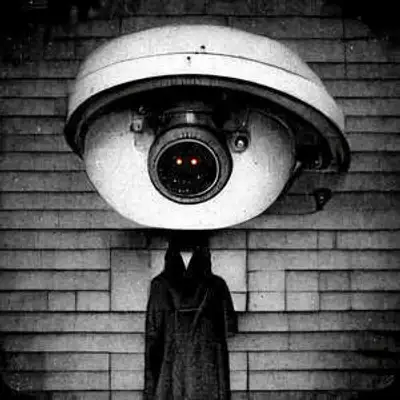
Stupid Sexy Privacy is a miniseries about how to protect yourself from fascists and weirdos. Your host is comedian Rosie Tran, and the show is written by information privacy expert B.J. Mendelson. Every episode is sponsored by our friends at DuckDuckGo. Tune in every Thursday night —or Friday morning if you're nasty — at 12 am EST to catch the next episode.
Duck Duck Go Commercial:
(Singing) Tired of companies like Google and Facebook watching everything you do online? There's actually a simple solution: DuckDuckGo. It's an all-in-one privacy app with a built-in private search engine, web browser, one-click data clearing, email protection, and more, all for free. Download the app today and get the most comprehensive privacy protection with a push of a button. Duck Duck Go. Privacy simplified.
Rosie Tran:
Hello everyone, this is Rosie Tran, and welcome to Stupid Sexy Privacy, a WAYWO.TV special report sponsored by our friends at DuckDuckGo. You may have heard my voice at the end of every episode on WAYWO.TV. I'm the one asking you to leave a review, which by the way, I hope you've done. You've left us a review? Okay, great. Unless you're lying! *Clears Throat*
Well, I'm a lot more than a voice. I'm also WAYWO.TV's intrepid reporter, and over the course of this miniseries, I'm going to share with you short, actionable tips you can use to protect your privacy. These tips were sourced by our fearless leader. (He really hates when we call him that), B.J. Mendelson. B.J., for those of you who may not know, is the author of the book Privacy: And How We Get It Back, a book that was published in the before times. (This means before COVID.)
B.J. Is currently writing a sequel called How to Protect Yourself from Fascists and Weirdos. So everything we'll hear in this mini-series is the most up-to-date information he's researched, bringing us into 2023 and beyond.
Throughout the series, you'll also hear from some special guests and experts in the information security field.
*Chime* You hear that sound? That means it's time for today's privacy tip!
***
Privacy Tip:
Your first tip is to purchase a notebook, one that we'll refer to as a privacy notebook for the rest of the series. What kind of notebook should you get? Any will do, but we prefer the LEUCHTTURM1917 Official Bullet Journal, which we've linked in the show notes below. They're sturdy, have quality paper, and they're great to travel with. I also like them because they're more expensive. That might sound counterintuitive, but privacy is something we all need to take seriously. So I think paying more for the notebook creates a larger commitment in your mind that you're actually going to use this thing and not let it gather dust somewhere.
Once your notebook arrives, there's one more thing that you have to do: You're going to go over to 1password.com and set up an account. We've included a link for you in the show notes of today's episode. The link below is an affiliate link. You don't have to use it, but if you do, it helps us fund more special reports like this one.
Now, here's the important part: After you set up your 1Password account, write down your master password on the inside cover of your notebook. Don't keep your master password saved to your desktop as a PDF. You won't believe how often people do that, and it's always a bad idea.
Don't make life easier for the fascists and weirdos. Keep your most sensitive data inside of your privacy notebook and not on computers, phones, or in the Cloud.
What else goes in your privacy notebook? We'll talk about that next Thursday morning at 9:00 AM right here on StupidSexyPrivacy.com
(Break)
Rosie Tran: Are you still listening? We hope so because we have a special surprise. Back in 2017, B.J.'s first book on privacy came out. It was called Privacy: And How We Get It Back. Broadway actor, Roger Wayne, did the narration for the audio edition of the book. Our editor, Andrew, was nice enough to go through that audiobook and pull out sections that are still very much worth sharing with you today. So if you stick around and listen to this miniseries, after every privacy tip, you'll hear another excerpt from B.J.'s book, Privacy: And How We Get It Back. Take It Away, Roger!
Roger Wayne:
This book is meant to inform you about what's being done with your data by billion-dollar tech companies like Facebook and how those companies and others like Equifax can get away with creeping on you due to a lack of tools and legislation to protect you from them.
If you're looking for an ethics debate about privacy or why it's important to be concerned about all this because that's part of being a good citizen, I'm not your guy. Like most Americans, I don't like the idea that companies are making billions off of my personal data, but I also know there's not much I can do to stop them beyond what's discussed in this book. This is especially true if we want to maintain the convenience and ease of use we enjoy with some of today's most popular apps and services.
With the way big data and most algorithms work, many of our favorite platforms and apps would not function well, if at all, if we dramatically curtailed the amount of information they could collect on us. Amazon, for example, can make great recommendations based on the things you've purchased and searched for, but you first have to actually go ahead and start your search with Amazon and purchase things through them to improve those recommendations. Likewise, imagine how much fun Instagram would be if you had no friends there.
There's a transaction that takes place between us and these platforms, but as I will show you, that transaction is comically lopsided mostly for no other reason than because we allow it to be. "Big data", by the way, rarely has a consistent definition that everyone agrees on. So I use data and big data interchangeably throughout this book. All "big data" was meant to refer to before it got co-opted by the marketing people is the sheer amount of data being collected that far exceeds the amount of space available to put it. The most I can do as an author, and honestly, all I want to do is to educate you about what's going on, and if some of this sounds like common sense, that's great. Give this book to someone who needs to read it. Before we get into it, I want to make a few points clear that I think will help you understand where I'm coming from.
(Break)
Smashing Security 1:
I am a Facebook hipster. I then deleted my Facebook account, then re-upped it in 2005, and have not been able to get off the stupid thing since.
Smashing Security 2:
So why can't you get off? So what are your (everyone laughing) ... You guys.
Smashing Security 3:
The award-winning Smashing Security Podcast hosted by Graham Cluley and Carole Theriault each week. It takes on a reverent look at cybersecurity and online privacy, helping you find out what's happening with your data. Find it in Apple Podcasts, Google Podcasts, Spotify, and all good podcast apps or at smashingsecurity.com. It's not all filth.
Roger Wayne:
What makes this book compelling and unique among other books on privacy is that it deals exclusively with something that's entirely within our power to fix. That is dealing with the use and abuse of our data on the part of companies like Amazon, Microsoft, Apple, and Facebook in order to further their bottom line. If I'm successful, I'll have helped motivate you to contact your state, not federal representatives, to push for legislation and regulations that will hold these companies and others accountable for how they use your data. My hope is that the threat of regulation will force these companies to be more transparent and form an independent organization that holds them all to a high standard and penalizes those companies that fail to meet it. And if not, then at least there will now be laws on the books in your home state that do exactly that.
I wanted to write a book on privacy that was light on histrionics and morality and heavy on educating you about what's happening. I write in an intentionally exaggerated and aggressive way that doesn't come from anger but from a desire to educate and entertain you. So if you notice me repeating a point or two, swearing, or saying something funny or ridiculous, this is intentionally done as a way to get some of the lessons found within this book buried deep inside your skull. So deep that you won't be able to forget them, and you'll place them along with memories of that time you tried to blank. Fill in the blank and email me your joke bjmendelson@duck.com or text me at 646-331-8341. All feedback and jokes are appreciated.
The why of this book: Your data is worth a fortune. Whether you actively use the internet or not, the odds are solid that there's a data file on you out there, and companies and criminals will stop at nothing to get that data for many reasons we'll discuss.
So although I have no idea how it'll be implemented yet, I'm a big advocate of you getting paid an annual license fee or a small daily payment in exchange for your data by these and other companies. If you're really into cars, you should be able to sell your data to Tesla or the local dealership group in exchange for seeing ads from them when you browse the web, or maybe you get compensated based on what you do. If you work in the online marketing business and a company wants your business, they could pay you in exchange for your time and attention. We don't need creepy companies collecting and selling our data without our consent and without compensating us anymore. We just need the will to put this system in place.
Now, in many books, readers don't make it through the first chapter. I hope that won't be the case here. For those of you who want to protect your data as you use internet-enabled devices, the following are my suggestions on what free services and tools you can use. None of these apps, websites, or programs are perfect. You need to understand that just by using the internet, you've already surrendered your privacy in some form to your internet service provider, ISP, to the company whose device you're using and to the company who makes the browser you choose to use. What you can do is minimize the amount of data being collected, and at the time of this writing, the following items are the best we've got at doing this.
(Editor's Note: Those suggestions are shared in episode two of this podcast.)
Roger Wayne: Also, always remember to update the software you're using, whether it's on your mobile device or on a desktop, and you should put some tape over your computer's camera or any internet-connected camera that you might have. That's the fastest, easiest thing you can do to protect your privacy that doesn't cost you much in terms of money and time. Do that right now before moving on to the next chapter.
Rosie Tran:
Most things people hate about the internet comes from a lack of privacy. Like those creepy ads that make you think your phone is listening to you. DuckDuckGo is an all-in-one privacy app that can help you with that. It's your internet browser with private search, tracking blocker, encryption, and even built-in email protection, all for free. Just go to duckduckgo.com to learn more. DuckDuckGo, privacy simplified.
(Break)
Rosie Tran:
Thank you for listening to Stupid Sexy Privacy, a WAYO.TV special report. Do you need a privacy audit? To help fund new episodes of this podcast. B.J. is offering one-on-one privacy audits. These are private one-time consultations that are conducted securely through Signal.
During the audit, B.J. will walk you through all 23 steps from our special report to help you better protect your privacy.
Now, just to be clear, we're going to share all 23 steps with you here for free in this podcast miniseries because these are all tactics you can use right now to help protect yourself from fascists and weirdos, and we want to help keep everyone safe.
These privacy audits are meant for people who may need some extra help implementing these steps or have additional questions that they want answered. You can have your one-on-one privacy audit with B.J. by emailing bjmendelson@duck.com. That email again is bjmendelsonduck.com, and we'll see you next time right here on Stupid Sexy Privacy.
***
End Transcript