Subscribe
Share
Share
Embed
One of the most essential ingredients to success in business and life is effective communication.
Join Matt Abrahams, best-selling author and Strategic Communication lecturer at Stanford Graduate School of Business, as he interviews experts to provide actionable insights that help you communicate with clarity, confidence, and impact. From handling impromptu questions to crafting compelling messages, Matt explores practical strategies for real-world communication challenges.
Whether you’re navigating a high-stakes presentation, perfecting your email tone, or speaking off the cuff, Think Fast, Talk Smart equips you with the tools, techniques, and best practices to express yourself effectively in any situation. Enhance your communication skills to elevate your career and build stronger professional relationships.
Tune in every Tuesday for new episodes. Subscribe now to unlock your potential as a thoughtful, impactful communicator. Learn more and sign up for our eNewsletter at fastersmarter.io.
Matt Abrahams: Crucial conversations
can be some of the most challenging
communication that we ever engage in.
My name is Matt Abrahams and I
teach strategic Communication at
Stanford Graduate School of Business.
Welcome to Think Fast
Talk Smart, the podcast.
Today I look forward to
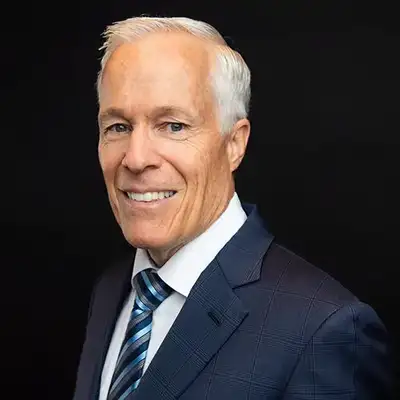
speaking with Joseph Grenny.
Joseph is a renowned author and speaker.
His work focuses on how individuals and
organizations can improve communication,
influence behavior and drive change.
He's best known for co-authoring
books like Crucial Conversations,
Crucial Accountability and Influencer.
His latest work looks at how to
equip younger managers with the tools
and skills they need to succeed.
Welcome, Joseph.
Your book Crucial Conversations is one
I've read and referenced many times.
I am super excited to speak with
you about it and so much more.
Thanks for being here.
Joseph Grenny: I'm glad to be with you.
Been looking forward to it.
Matt Abrahams: Excellent.
Shall we get started?
Joseph Grenny: Please do.
Matt Abrahams: Excellent.
In your work, you emphasize the power
of influence and behavior change.
These are two topics our
audience is really interested in.
How can we be more intentional about
influencing others without coming
across as manipulative or coercive?
Joseph Grenny: Yeah.
Let me first emphasize the
first part of your question.
So the concept of influence
is one that ought to be of
urgent concern to all of us.
Because really the most important
problems we face in our personal
lives, in our communities, even
on the planet, at the end of the
day, they're influence problems.
They're about human behavior and, and
most of us don't have an articulatable
way of thinking about the two most
fundamental questions of life.
And that is, why are people
doing what they're doing today?
How can we explain today's behavior
and how can we help people change?
You know, that's the essence of
social science, but it's really
the essence of leadership.
It's the essence of humanity,
is understanding each other
and then helping each other to
move into a better direction.
And so that, that's
the topic of influence.
Now when you ask, how can we do so
in a way that doesn't come across as
manipulative, to me, the, the kind
of ethical code that I carry is if a
strategy to help people change loses
its effectiveness when I announce it to
them, then it was probably manipulation.
If it requires covert status in order to
be effective, so in other words, if I'm
gonna flatter you in order to try to get
you to pay attention to an idea that I
want to share, if I announce in advance
that, hey Matt, you know, I'm gonna give
you three compliments and then I'm gonna
pitch an idea to you, you'd probably say,
just cut to the chase, Joseph, right?
So it loses its effectiveness.
But if I tell you that if you
start to move your food closer
to you, the healthy food closer
and the unhealthy food farther,
that's a strategy that might work.
And then I move things around on the
table, you're likely to let me do that.
Because now you understand the
intention and it's less subject to
that kind of ethical compromise.
So I think that's what keeps us clean.
Just if you're clear about your agenda
and honest about it then, then our
goal is to influence each other.
Our goal is to help each other change.
Matt Abrahams: I hear a few
things in that response that
I think are really important.
One, is this notion of reflection and
taking the time to understand what's
going on and then working to change it.
And I, I agree with you, that
influence is behind much of what
we do, if not all of what we do in
our communication and leadership.
You have done us all a big favor by
giving us some criteria on which we
can assess the influence we're doing in
terms of is it manipulation and coercion.
This notion of, if I announce what
I'm doing, does it diminish what
I'm actually trying to do, as well
as, if in advance I were to tell
you how would that impact you?
Those are some good heuristics and
ways for us to think about as we think
about deploying our, our influence.
I appreciate that very much.
You advocate for holding people
accountable in a way that fosters
collaboration rather than confrontation.
How can we approach accountability
conversations that both motivate and
preserve the relationships we have?
Joseph Grenny: Yeah.
You know, the work we've done around
Crucial Conversations has increased
in simplicity over the years, and I've
realized what it comes down to is our
capacity for two things, truth and love.
And, you know, I, I hope love is
a gentle enough term that we can
use it without having to attach
it just to intimate relationships.
It's holding a position of
goodwill towards the other person.
That's all it is.
And so accountability is really just
about being able to get truth across,
but do so in a way that other people
recognize is trying to protect both
their interests as well as yours,
that I come at them with goodwill.
And that's the measure of our success in
any crucial conversation, and it's also
the determine number of our success.
If people sense that you don't care
about their interests, that you don't
respect them, then it doesn't matter how
gracefully or diplomatically you package a
message, they're still going to resist it.
I could tell you, I, I want the toilet
paper hanging a different way, you
know, the waterfall versus the reverse,
and, and you're gonna get upset and
see some other agenda in it, and as
long as the condition exists that you
know that I care about your problems,
interests, and concerns, and that you
know I care about and respect you, as
well as my own interests and concerns,
and I care about and respect myself.
If you just know those two things,
we're capable of talking about many,
many more things than we otherwise
thought possible, including deep
accountability problems, where you let
me down where, I don't trust you anymore.
Matt Abrahams: This notion of truth and
love as the foundational principles for
crucial accountability is really powerful.
Can you give us some specific examples
and ways that we can communicate or
share that we care and respect somebody?
Is it listening?
Is it making extra time for people?
What are the things we can do to
demonstrate that care and respect?
Joseph Grenny: Yeah, Matt, I love the
way you're asking that question because
these are conditions for conversation
that aren't subject to manipulation.
You can make an attempt, but it's
not about a tactic or a technique.
It's about what does the recipient
interpret as evidence that I care about
their problems, interests, and concerns,
and I care about and respect them.
So as you said, just listening
intently, people interpret that
frequently as you respect me.
You believe my ideas have merit,
they're worth paying attention to.
Here's an interesting thing.
People will often come
and say, you know what?
I've gotta let somebody go.
I've decided that this just isn't
working and I'm gonna terminate them.
And you know what?
It just breaks my heart to do this
because I care about them and we're
friends and I care about the impact
on their family and so forth.
And they say, how do I start
a conversation like that?
And I say, just like you
just said, that's it.
Honestly, sometimes just sharing our
intent, sharing how we really feel
about the person, the situation,
and the conversation is the right
way of setting context for it.
And so to the degree you sincerely
feel that way, just disclosing
that is honestly all that you need.
Sometimes there are
other things we can do.
Little signals like making a joke or
smiling or leaning forward, or sometimes
body positioning can be interpreted as
whether the person is safe with me or not.
These are small, subtle cues, but
the larger ones are those moments
where you just express candidly
and sincerely where you stand.
Matt Abrahams: Thank
you for sharing those.
It reminds me of some advice we got from
Professor Jamil Zaki who talks about
trust and, and he said one thing that
really helps is to trust loudly, and
what he means by that is to actually
share out loud that I trust you and I'm
giving some of this to you, and, and
this, this disclosing of how you feel
towards the person, I think is a great
way to demonstrate it, in addition to
listening and some of the nonverbal cues.
So thank you for that.
When it comes to high stakes situations,
like crucial conversations, you
talk about the need for dialogue.
How can we make sure we're truly
engaging in dialogue and not just
debating or defending our positions?
Joseph Grenny: You know, the, what's
difficult in crucial conversations
is oftentimes our motive shift
to debating or defending without
us even being aware of it.
I remember once our family
went bowling for an activity.
Our kids are much younger at the
time, and, and I have two children who
had a lot of sibling rivalry and it
played out there in the bowling alley.
And uh, Kara gets up and bowls her ball
and then Seth gets up and bowls his and,
and Kara says, hey, don't use my ball.
And Seth says, no, that's
not your ball, that's mine.
She says, no, it's not.
It's mine, it's mine, it's mine.
So we're off and running.
We're doing this sibling rivalry thing.
And so, you know, I'm thinking
to myself, I am a world's
expert in crucial conversations.
Perhaps I can be of help.
So I said to, said to Seth, hey,
you know what, it's actually the
bowling alley's ball, and besides
last time you got up, you used my
ball too, and it was no big deal.
And he said, no, I didn't.
And I said, yes, you did.
And he said, no, I didn't.
Yes you did.
No I didn't.
Yes you did.
Pretty soon I look over and my wife
is staring at me like I've grown a
third head or something like that.
And, and, and it wasn't until that
moment I realized my motives had shifted.
I came in with a motive of
problem solving, but pretty
soon I got ego invested and
oftentimes we're not self-aware
that that has actually occurred.
People will tell you,
you're being defensive.
No, I'm not being defensive.
Well, you probably are being
defensive if it looks like to
them you're being defensive.
And so one of the best skills that we've
come to understand is people who are
really good at these moments, learned
to look, they learned to look for
signals, sometimes behavioral signals.
Sometimes it's physical
symptoms, sometimes it's just
something I feel in my body.
I've come to know that when my jaws
are tight and when my shoulders are
clenched and I'm leaning forward
and I'm talking faster, that's
a sign my motives have shifted.
I no longer want what I originally wanted.
I now want something else.
I wanna punish.
I want to keep the peace.
I want to win.
I want to be right.
So there are many different motives
we shift to, and the two most potent
ways of shifting back, of getting to
dialogue are asking two questions.
First, what am I acting like I want.
And you can do this covertly,
you can do it internally.
This can be an internal dialogue.
So I stop when I feel the tight
shoulders and the clinched jaw and the
leaning forward and the faster speech.
What am I acting like I want right now?
And I gotta tell you, Matt, at
least for me, it's an ego enema.
When in that moment, I acknowledge to
myself, now this is about punishing.
You said something I didn't like, I'm
feeling hurt, and that that was unjust and
I'm actually trying to hurt you right now.
Just acknowledging that to myself makes
me not want it anymore because most of
us don't like the dissonance of thinking
of ourselves as a decent human being,
but then acknowledging that we've got
motives that are not particularly pretty.
So that first question, what
am I acting like I want, can
liberate us sometimes from it.
And then the second is to
ask, what do I really want?
What do I really want?
Sometimes I'll nuance it.
What do I really want for me?
What do I really want for you, Matt?
What do I really want for the
relationship and what do I want for
the organization or the customer?
What happens is the short term impulsive
motives that often possess us in these
moments, we start to be liberated of
those and asking the really want question
orient us towards longer term goals.
Some of the more the, the
deeper interests that we have.
And so that question, having answered
it, as soon as I realize in that moment,
no, what I really want is to have a
wonderful time with the family right now.
I want this to be a
happy memory for my kids.
Just acknowledging that
to myself shifts my mode.
My behavior starts to change.
When your motive changes
behavior follows naturally.
And we tend to talk more patiently, more
respectfully, more openly towards others.
So even without a lot of training in
crucial conversation skills, just getting
your motive back on track can make an
enormous difference in how you show up.
Matt Abrahams: That was a
masterclass in so many things.
Thank you.
And, and it made me feel better
too because you, a renowned expert
in crucial conversations, struggle
sometimes with crucial conversations.
And I, as somebody who focuses a lot
on clear communication, often find that
I am not as clear in my communication.
So I appreciate that I am not alone
in still working on the things
that I, I try to help others with.
I wanna highlight a few things that
you pointed out that I think are
really important that I learned
from, and I hope others did as well.
That we really have to be aware
of our motives and there are, and
long-term motives, and sometimes the
short term can hijack the long term.
Taking that time to reflect,
and not just externally, but
internally was very powerful.
As you were sharing what happens for
you to signal that a motive has changed,
I reflected that my whole chest gets
tight when I'm in a place I probably
shouldn't be and and paying attention
to that and then making adjustments.
And your two questions are so valuable.
What am I acting like I want versus
what do I really want for me,
for others, for the relationship?
I really appreciate that and I have
to say I love, I love the notion of
ego enema and I think a lot of us need
to get our ego out of some of these
things and clear that and flush it out,
and I think that's great and I love
words that start with the same letter.
Alliteration is my friend, so thank you.
I wanna pull on the thread about
storytelling and emotion because many
crucial conversations often happen
in emotionally charged environments.
How can we best manage our emotions
when the other person have triggered
us during these conversations?
How do we stay calm?
How do we stay focused?
Joseph Grenny: Yeah.
Fortunately this, this will build
on what we just spoke about, the
meta, and sometimes it's not gonna
be till after and saying, you know,
frequently you can do before, and then
occasionally you can get to real time.
What we've learned is that under
conditions of threat, we have a tendency
to tell ourselves three kinds of stories.
So let's say for example, my,
my boss says, hey, I haven't
gotten that report from you yet.
If you can't handle it, I can
hand it off to somebody else.
So my boss just said that, right?
Now, my boss saying that
doesn't make me feel anything.
The important thing to understand
about emotions is the event
doesn't create the emotion.
It's way more complicated than that.
We then have to assign meaning, we have
to make judgements about what was said.
We have to tell ourselves
a story in essence.
And so when my boss says, if you
can't handle it, if those are the
words I seize ahold of and I say,
wow, you're calling me inadequate.
You know, you're challenging
whether I'm competent at this job.
If that's the piece I take and
I start to tell a certain kind
of story, I could be defensive.
Now notice with my boss saying
that I could also feel supported.
I could feel relieved, I could
feel appreciative, I could feel
curious, I could feel interested.
There are a hundred different
emotions I could feel.
And the really important thing for
people to understand during crucial
conversations is the emotion you feel
is far more subject to your control
and influence than you realize.
One of my boys, when he was going
through a tough time once, started a
conversation by saying, dad, I hate you.
And again, many people would think
that my son saying that to me
would make me feel a certain way.
No, it doesn't.
I could feel interested,
I could feel curious.
I could feel glad he finally opened up.
This is the first conversation we had.
I could feel heard, I could feel judged.
I could go all sorts of different ways.
So the meta skill on this one is learning
to recognize that you and I use three
consistent types of stories in these
moments that don't serve us well.
Victim, villain, and helpless stories.
And they're so predictable, so
consistent that you can pretty much
take it to the bank that you're
telling one of those in these moments.
So the victim story makes me
out to be an innocent sufferer.
My boss says, if you can't handle this,
and the first thing I think to myself
is all of the good things I'm doing,
all the wins that I brought to this
team and all of the, the reasons he
should be appreciative of me, right?
So I make myself to be an
innocent sufferer here.
I emphasize my virtues and none of my
vices, none of my failings in that moment.
It's a self-serving motive.
The second thing I need, if I want to
behave badly in a crucial conversation,
if I want to justify myself in moving to
silence or violence, which are the two
bad places to go, then the second thing
I need is to turn you into a villain.
So I now need to characterize my boss in
certain ways in order for me to either
sulk and withdraw and bad mouth him
behind his back, or to come back combative
and defensive or something like that.
And so I might do it like this.
I might say, gosh, you know
what an unappreciative SOB.
This guy's piling more on me
than on anybody else, and on
and on and on, and on and on.
The final kind of story we
need to tie a bow on it.
So anytime any of us have behaved badly
in a crucial conversation, we've always
told these three kinds of stories.
The final one is a helpless
story, a story that rationalizes
my use of silence or violence.
And by violence I can mean verbal
violence or emotional violence or
anything else, silence or violence.
I justify it as the only
healthy or appropriate response
to these circumstances.
Healthy dialogue.
Absolutely not.
So if I think to myself in calm
moments, the right thing to do
would be to ask my boss, what do
you mean by if I can't handle that?
You know, go into an inquiry mode.
If that might be a healthy response, the
justification I'll give myself right now
is, well, my boss is so defensive and
I don't really trust this person to be
able to take feedback, and so of course
I'm gonna just sit here and sulk instead.
So those three kinds of stories are
what amp up our emotions and justify
us in our unhealthy responses.
Becoming aware of those and then
challenging those stories is the way to
shift our emotions in another direction.
And if it's okay, there are three
questions I found to be helpful to
prompt that, to interrogate the victim,
villain, and helpless stories and help
us move into a more balanced direction.
The first, you've gotta turn
yourself from a victim into an actor.
A very useful question I've, I've learned
to ask myself for that is, what am I
pretending not to know about my role here?
What am I pretending not to know about
how I got us into these circumstances?
And if my boss had just said that and
I asked myself that question quickly
I pretty quickly get to the point,
well, I made a promise to him to get
him the report yesterday and I didn't.
So, you know, there you go.
I'm now responsible.
I'm now part of this conversation.
The helpless or the victim story
is a little less believable.
Second, the villain story.
So my boss is defensive and overburdening
me and picking on me and all this
kind of stuff, and it's easy for me
to scan evidence and find evidence
that conflicts with that judgment.
And now I start to see him not
as a villain, but as a human.
And that makes it possible
to have a dialogue.
And then finally, the helpless story.
What's the right thing for me to do right
now to get toward what I really want?
Well, it's probably to have
a candid conversation about
expectations and commitments and
let 'em know honestly where I'm at.
And now I'm off and running.
But you'll notice every one of those
provocative questions when you ask them,
it starts shifting you emotionally.
I get off this self-justification
for unhealthy response and I move to
a place where, where I could have a
potentially open dialogue with my boss.
So that's the meta scale.
It's being aware that my story is eighty
percent of this emotion I'm experiencing
and learning to interrogate it in a
way that gets me to a better place.
Matt Abrahams: The big thing I'm
taking away from that very helpful
response is there's agency in this.
There are things we can do.
Many of us feel like we're just swept
away by our emotions, but in fact, we
are actively creating those emotions
by the stories we're telling ourselves.
And I really like this notion that
there are direct questions we can
ask to interrogate ourselves to
break those patterns so that we can
change the way we feel, but most
importantly in these relationships,
change the way we're acting.
Um, very powerful ideas there for sure.
Joseph, I've really
enjoyed this conversation.
Before we end, I'd like to
ask you three questions.
One I create just for you, and the other
two are similar for everyone I interview.
Are, are you up for that?
Joseph Grenny: I'm gonna give it a shot.
Matt Abrahams: Excellent.
We've talked a lot about
crucial conversations.
I'd love for you just to share
with us your thoughts about the
conversations that are less crucial.
What are some of the things that matter
to you in small talk, in chitchat,
in other types of conversations that
don't necessarily have the stakes of
the many that we've talked about today?
What are your thoughts on how
to do those things better?
Joseph Grenny: I can only answer
personally, that for me, my life
has gotten better when I stopped
approaching those conversations
in instrumental ways and started
approaching them in human ways.
And, uh, you know, as, as a young
professional, and you probably experienced
the same too, you're so worried about
making a mark and climbing the ladder
and who respects me and whether doors
are gonna open for me and all of that,
that, that everybody becomes a thing
or an object that I need to manipulate.
And relationships that
I gather like assets.
And I've realized not only does
that not help you very well or early
in your career, but it also just
robs you of the richness of life.
And so I sure hope in my chitchat moments
and the non-crucial conversations that
I'm getting better over time at just
seeing the human being in front of me.
Matt Abrahams: Right.
Yes.
And this idea of just being present
with the person and not using every
communication as a strategic opportunity,
I think allows you to connect and maybe
something good will come from that.
Thank you.
Question number two.
Who is a communicator
that you admire and why?
Joseph Grenny: It'll take me a while to
come up with all the names, but I can tell
you the characteristics to start with,
and then the names tumble out after that.
People who are magnificent at challenging
the world, at challenging norms, but
at the same time being inclusive,
inviting, they're able to bring more
people into the tent while at the same
time challenging the way they think.
As I describe those two characteristics
names come to mind like Gandhi.
You know, somebody who was able
to say, this is not good, but
not in a way that divides camps.
He tried to build a larger camp and
to help people agree on justice.
Martin Luther King, Nelson
Mandela, I mean, what a remarkable
thing Nelson Mandela did.
The, the courage he had to create
mutual purpose, to say in this country
where profound injustice had been
done for decades, that he wasn't
going to let that define his humanity.
And yet he didn't shrink from challenging,
from truth and accountability,
and people were held accountable
for the wrongs that they had done.
So the, the idea that you could
do truth and love, that you
can do both, to me is profound.
And there are far too few people that are,
that are great manifestations of that.
We need more of them.
Matt Abrahams: Some of those names you,
you mentioned are fantastic communicators.
And those principles on which
you made the assessment of great
communicator, so important.
Final question, what are the first
three ingredients that go into a
successful communication recipe?
Joseph Grenny: Uh, well, I've
given you a start on it, so it'll
be an easy end, um, TLC for me.
So, truth, love, and competence.
The first two we've talked about a lot.
So the capacity to just put the
truth as I see it out there in an
unadulterated, unapologetic way.
To do so, in a way that shows that I honor
the humanity and respect the individual
that, that I may be contesting with here.
And finally, there's competence.
There, there are skills
associated with this.
You don't just get better at it
by accident, and most of us have
had terrible models in our life.
I find it hard to name people
in our current political climate
that I would say are great
expressions of both truth and love.
And that's a shame.
There should be more of them.
I've seen some that I think have
started their careers attempting to
do that, but then been worn down into
the competitive and divisive kind of
posture that we see so frequently.
So competence is necessary and I
think the world will get better to the
degree we start seeing more examples
of people that have learned to say
the truth and to say it in a way
that is inclusive and is inviting.
And I, I hope what I'm doing
contributes to us having more of them.
Matt Abrahams: It absolutely does.
TLC, truth, love, competence.
I like that it plays off tender
loving care and that's what
you put into the work you do.
And thank you for your time today.
The specific actionable advice partnered
with the expert stories that you shared
really can help all of us to connect and
to learn how to be meta aware so that
we can make the changes you suggest.
Joseph, thank you so much for your time.
It was wonderful chatting with you.
Joseph Grenny: Uh, I've
grown in this conversation.
I really appreciate it, Matt.
I look forward to future ones.
Matt Abrahams: Me as well.
Thank you.
Thank you for joining us
for another episode of Think
Fast Talk Smart, the podcast.
To learn more about how to have
effective, difficult conversations,
please listen to episode 105 with Kim
Scott, or episode 148 with Irv Grousbeck.
This episode was produced
by me, Matt Abrahams.
Our music is from Floyd Wonder.
With special thanks to
Podium Podcast Company.
Please find us on YouTube and
wherever you get your podcasts.
Be sure to subscribe and rate us.
And follow us on LinkedIn and Instagram.
And check out FasterSmarter.io for
deep dive videos, English language
Learning content and our newsletter.
Please consider our premium offering
for extended Deep Thinks episodes
AMAs, Ask Matt Anythings and much more
at FasterSmarter.
io/premium.