Subscribe
Share
Share
Embed
Welcome to Tangents by Out of Architecture, hosted by Silvia Lee. We’re highlighting some of our favorite stories from the amazing people we’ve met along our journey. We will hear how they created a unique career path for themselves from the variety of skills and talents they developed in and out of architecture.
Out of Architecture is a career consulting firm started by two Harvard-educated professionals interested in exploring the value of their skills both in and out of the architectural profession. We’re here to help you maximize all of the expertise you have honed as a designer to get you a role that fulfills and challenges you. We have the knowledge, experience, and connections to help you put your best self into the market–and reap the benefits.
Ep 9: Niknaz Aftahi
===
Niknaz: [00:00:00] I think it's all about finding, like finding your passion and love and doing what you enjoy.
And then also finding the right people, like like minded people, like your community. That's also so important. ~Um, ~
Silvia: welcome to Tangents by Out of Architecture.
Out of Architecture is a career resource network helping designers apply their incredible talents in untraditional ways. We're highlighting some of our favorite stories from the amazing people we've met along the way. We will hear how they created a unique career path for themselves from the wide variety of skills and talents they developed in and out of architecture.
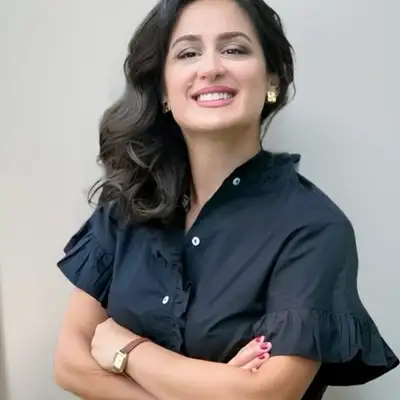
our guest today is Nick Na of Tahi,
CEO, and founder of a EC plus Tech. I hope you enjoy this episode where Nick Naz shares insights on embracing technology and innovation in an ever-changing industry while creating a community to foster continuous learning and collaboration.
~The cloud.~
~Okay. Okay, it is recording. And perfect. Can you say your name for me? Sure, Niknaz. And last name too? Aftahi. Thank you, so I can get it right when I record your intro. No problem, sorry, it's a little hard. Oh, no, I just want to make sure I get it right. ~ So, Niknaz, welcome to the [00:01:00] Tangent Podcast. We're very happy to have you here.
~Um, ~the first question we'd like to get started with is how would you describe yourself in three words?
Niknaz: Yeah, sure. Thanks so much for having me. Um, so I'd describe myself, ~um,~ as an entrepreneur. As a designer and, ~um, ~builder, innovator. Yeah,
Silvia: that's awesome. And I'm really looking forward to hearing how those will come out in the rest of our conversation. So what is your background in architecture?
Niknaz: Yeah, so my background is that I studied architecture. I did my undergrad in Iran, and then I moved to the U. S. back in 2010. I got accepted into UC Berkeley for the two year master program, so I graduated back in 2014, and then I practiced architecture.
In the Bay area, different size firms, you know, working on different types of projects from residential [00:02:00] to healthcare, commercial,~ um,~ and for almost years. And the last company that I worked with was. ELS, Architecture and Urban Design. It's a great, ~uh,~ design firm, architecture firm, actually urban design and architecture firm, uh, in downtown Berkeley.
And I worked there for almost four or five years.
Silvia: Very cool. And so what are you up to today?
Niknaz: Yeah, so I left my architecture job about three years ago and started my own startup Um platform called AEC plus tech So it's ~um~ Basically, it's a community driven database of the latest tools and technologies in the AEC space.
~Um,~ and the way it works is that companies sign up and they list their products, they list their technologies, and they share solutions and products and technologies and case [00:03:00] studies and their users with us. And the reason, and so I'll tell you a little bit back, I'll give you a little bit of background why I started AC Tech.
So, ~um,~ in my last job, so I was always interested in technology and always loved to test and see how it can improve our workflow as architects, as designers. And actually back in school, so my first experience with, ~um,~ technology and AI and all that is, Back in 2013, when AI was not still like a thing in architecture, so I was working on my thesis and I was working on this public space, it was a really fun project, it was a public space, ~um,~ building in Tehran and, you know, in Iran, ~um,~ women are persecuted, religious minorities are persecuted.
So there are a lot of like, ~uh,~ minority groups that are not necessarily in minorities, groups that are persecuted. So, and a lot of [00:04:00] like public activities of all these groups are prohibited, are considered illegal. Like for example, Art galleries or concerts for with a female singer. So my idea was to design this public spaces but hide them at the same time within like the ~urban, um,~ urban space, some of the urban spaces and some of the like existing building complexes.
So anyways, I decided to work with this AI scientist. who later became my husband. So at the time he was my, you know, partner and, you know, we were working together. So he was doing his PhD in AI at UC Berkeley. And then, ~um,~ he helped me develop this algorithm, this system with a scoring system that was giving score to three, we had three parameters.
So one was lighting. One was escapability. So if the police shows up and there's a concert, there's an art gallery, so you can escape. So you would give us a scale, escapability is going to that [00:05:00] little space. So it was live, escapability. And one more thing, I can't remember the third one. ~So, um,~ so you would give this algorithm all the existing spaces.
With your architecture design, and then the algorithm would give you the most optimal space. So it was really fun. And then, you know, we put together all these boards and the design and explain how, you know, we are using AI to improve, you know, the, the lighting system in our spaces for, or everything we had, all the elements, design elements we had.
So this was my first experience. And again, it was like more than 10 years ago, and I really enjoyed, ~uh,~ you know, experiencing this and seeing firsthand how technology can improve your, your work as a designer. But then later on, you know, I started working as a designer and You know how it is as a designer, you, [00:06:00] most of your time is spent on like doing repetitive tasks that primary, a big part of it ~can easily be, uh, you know, done,~ can easily,~ uh,~ in machines basically can help you a lot with that, but it has changed now, like compared to two, three years ago that I was, I was working on a lot of, like, projects in the CA phase, CD phase.
And then, you know, I was not testing or using any of these cool, exciting solutions and technologies in my everyday work. And after a while, it became a little bit frustrating for me, you know, not really This the process is very was very slow for me. Most of the time I felt like my brain is shut down. I'm not using my brain anymore.
And I didn't like that. So and I was always a design, you know, enthusiast in the office. So my last job I started this design technology group. ~Where we were, we were, and then, you know,~ the decision made the principles in our office were open to the idea of the [00:07:00] starting a group where we had we had three groups, sustainability, computational design.
So basically, each group had A champion, and then we would do ~research. Sorry, I forgot to share the third one. ~Computational design, sustainability, and visualization. So, we would do research in all these different, you know, spaces and then come back to the group and report what we found. Found and like,~ like, um,~ each of us were involved with some projects and then maybe one particular project was looking for an energy modeling tool or another one.
So we would do the comparison and I really enjoyed doing that thing, you know, learning about all the school solutions and learning about the cases studies and how companies are using them. So we would invite. design technology directors and be managers from other offices to come to our office and give a lecture and give a talk and share how they are.
Using these tools. And I found [00:08:00] it super beneficial for everyone in the office to learn about all this use cases and cases studies. And I started looking for a space like an online space. It was what I had in mind at a time where people can easily access all this information. And it turned out that there is none.
So there are conferences, there are events you can go to, you can follow people on social media, you can be part of different like Groups like WhatsApp groups, Slack channels, but there's no like, ~um,~ database, online database where you can, ~uh, ~search about all this exciting solutions. So I decided to leave my architecture job and start this as an online resource for everyone, especially small and medium sized firms that don't necessarily have the resources.
To be able to access this information and, you know, learn about basically the latest and greatest and the real world applications of all these [00:09:00] products.
Out of Topic due to the segue
---
Niknaz: ~Sorry, it was a long, really long introduction. ~
Silvia: ~No problem at all, um, feel free to go on, like, uh, talk for longer periods of time, because I think it's really nice to hear the journey, the, like, transgression of the, your Like the timeline, because I relate very much to what you said, you know, working inside of a company and finding a lot of joy in the tasks that aren't maybe your primary, um, project tasks, but like the things that you're interested, you still want to, uh, dive deeper into them and really enjoying that.~
~And I think that's where a lot of people can find inspiration or that spark of like, if they. aren't loving what they do most of the time, but what do they love to do? It's probably the things that you're already doing in your free time or that you're devoting your free time to. ~
Niknaz: ~Exactly. Yeah, totally. And that that's something that has potential to Eventually turn into like your full time business.~
~If you want to start, um, a business or your own venture at some point. So it has to be something that, like you said, you love and you absolutely enjoy doing because you end up spending more than when you, when you start doing it for yourself, you. Definitely, um, you know, end up spending way more than 40 hours a week for that.~
~And if it's something that you are just like, you know, exploring and not sure if it's your niche or your thing or not, it's just, you can't do you, there's no way you can do like more than 40 hours, even that 40 hours after a while, that. Because for your own, it's, you start something from scratch and then it takes a lot of time and effort for it to grow into a thriving business.~
~So it takes a lot of patience. It takes a lot of like, you know, just, I just love, I just love and enjoy what I do. So I'll do it regardless of, you know, how long it is. So that's how you, you can start a business, I think. ~
End of Segue
---
Silvia: Yeah, can you share a little more about that switch from doing this as part of the design technology group?
And then you talked about how there was no, ~um~ database available at the time. Yeah What kind of thoughts were you having or like? What were you seeing that made you want to like take the leap and quit your job and then pursue that full time?
Niknaz: ~Yeah, for sure. So, um, ~yeah, I I'd say ~um ~Experiencing that pain point.
So I saw that there is this gap between industry and all this great technologies and the technology world. So at the time I was going to all these conferences and, uh, so one of them, the, one of the great ones was like at a time I used to go with Acadia. Uh, the conference is still there. It's very, it's pretty academic and it's very good and very educational in a good way.
but not a lot of. Especially like small and medium sized firms, like for mainstream firms, people are going to these events, and then even the language that some of these conferences, [00:10:00] people like presenters, speakers use, don't necessarily connect to, ~um,~ this more like senior level people. designers and executives in the AEC firms.
So seeing this gap and, and then living on both sides, but then, you know, filling an experience gap, I thought that this kind of like database, this kind of like community would help. It won't solve the problem. Of course, a hundred percent, ~we, ~we have to collaborate. We all have to collaborate~ to, um, ~with the technology adoption problem ~this, uh,~ in our industry, because you know, it's very, this has been very slow.
It's the second~ list. I think digital, uh, less~ least digitalized industry in the world. The first one is fishing. The second one is like construction and design and AC, but anyways, we all have to work together to solve it, but I, I felt like this kind of like an. ~Um,~ space community that are sharing knowledge would help, you know, [00:11:00] hopefully expedite the process and, and then, you know, just inspire more and more people to break the mold, to break the, you know, status quo and don't see it as like a really.
~Um, uh,~ big stone to, uh, lift, um, you know, it's just something that, of course it won't happen over time. We're not going to change our workflow, all the software and solutions we are using overnight, but it's gradual. It's going to take time, but you have to start somewhere and then accessing, you know, information, accessing data and seeing how other companies and how other people are doing it.
You know, I, I thought, and I felt like would help a lot. So I started the platform and I started from scratch, like any other company and business that you start on, you know, you, you are in the dark, you just don't know how there are a lot of~ like, uncertain, uncertainty, there's a lot of~ uncertainty. ~Uh,~ but I started and, you know, and now it has grown into more than 500 companies being fully registered.
[00:12:00] And so it has grown and the, and the culture that like sharing culture, because, you know, the main mission and vision and goal of AC plastic is, is sharing knowledge and,~ um, and ~it's not something that is, ~um, ~Is common in their industry. I feel like, you know, competition and competition is really an inherent part of what we do and what we learn, even at school, you know, you're all competing and not that competition is a bad thing.
It's good. It could be very constructive. But when it comes to knowledge, like this kind of knowledge, for example, what we are focused on like stack,~ um, ~like your tech stack, then it's something that is not necessarily like an internal knowledge that you can share. You have to share so you can learn from other people.
You have to share your challenges, your success stories, your failure stories, all you know, so we can all collaboratively learn from each other and, um, you know, just succeed. And then, yeah, like [00:13:00] anything else, I feel like it's a culture and we have to start from somewhere. When I started our, we call it like a case study library or our solution library.
A lot of people told me that there's no way anyone is going to share like a case study with you. There's no way like people are going to list this kind of information. You have to have really strong like incentives and but but now people are sharing so a couple companies, you know step forward and shared and some of the like digital leaders within offices and Now more and more people are sharing not just on a specific.
I mean everywhere on social media you see a lot of people are talking about their workflow and their learnings because You know, we've realized that we have to learn from other industries. Uh, we can't be so secretive and too competitive when it comes to certain things in our industry anymore. So, yeah, I'm glad with the progress and I understand it takes time, but I'm really glad with it.
Where we are [00:14:00] now.
Silvia: Yeah, that's a really good example of that share. ~Um,~ that feeling of around sharing because I'm sure some firms or maybe some studios are more open than others. And I think this platform helps you find those other people that are just as excited as you are about the technology and implementing it and discovering new things.
So I found that that was very helpful when I was kind of moving outside of traditional architecture is that you meet more people. So like, like you said, when you, when you were going to conferences and being able to meet more people means that you can find more people that, you know, are excited and open minded.
And I think that's great. This, like that, I think the culture is shifting a little bit in that way. Like part of out of architecture and tangents is to kind of like connect to more people that maybe don't have access or awareness of like. what's out there. So I, I feel like there's like some similarities there.
Niknaz: Exactly. Yeah, for [00:15:00] sure. Totally. I know a lot of people are coming to our industry from outside. Like it's great that we go out and we meet all these people. And then it's also the other way that a lot of people from other industries are also coming. Like, ~um,~ this, some of these technology companies that I work with and I talk to on a weekly basis.
So their CTO has come from, I don't know, tech world or some, some other like industries or from the, ~um,~ from the business world or finance or, or, or other spaces, other industries. That's going to help us a lot. You know, this like mutual, ~um,~ it's like mutual benefit for, for both sides.
Silvia: And actually, can you share more about what your week may look like, ~um,~ or just an example of all the things that fall on your plate?
And I'm curious, also, if like, what kind of skills either you had to learn, or did you already have from architecture that you just kept using in a different context?
Niknaz: Yeah, that's a great question. So as far as the skills, ~um,~ so I've, I'm a designer, ~uh, ~I'm [00:16:00] an innovator. So at school we get pretty good at starting things from scratch.
So from like a piece of paper, like a white paper, you start designing a project and you first you're scared, but then you have to deal with all your like fears and insecurities and everything. And just come up with a design and come up with a project because everyone else is doing that and your deadline is coming up.
So you get good at it. You get good at like being innovative and just like, ~um,~ somehow like finding solutions to different kinds of problems. So every time every project is a different problem, they are never the same, different scale, different types. So you become good at that. ~And then, um,~ and then, yeah, when I started AC Tech, I had to design the whole platform myself, thinking about the workflow.
A lot of things I had. I didn't know, I had no idea how to do it. Like, for instance, ui, ux design or, or a lot of things that I had to get help and reach out to people who either like hire people or [00:17:00] just like, you know, reach out to experts and seek guidance, seek mentorship, ~uh,~ seek advice. You know, Erin and Jake have been so wonderful.
to me and they are my, they're still my great advisors. So they, we had, at the beginning, they had like monthly calls. ~Um,~ and then, yeah, I think you have to be open to seeking advice and guidance from people who are experts in specific fields. And then also the business side of things. So I had no business background, no understanding of how important it is to have like a Business strategy business model like people ask me all the time.
What's your business model? And I didn't even know what it is so, ~um,~ I had to You know hire and ~uh~ work with this wonderful business advisor and learn Because it's important. I knew I I wanted my company to grow, I had to implement certain strategies. ~Um,~ [00:18:00] so yeah, skills that I had and I didn't have, ~um, I'm trying to think ~and then being out of your comfort zone, like dealing with all those uncertainties.
So this is a skill that I, I had, but over this last, like two, three years, I feel like ~they've Uh, ~I've become better in, uh, making those important decisions because almost every day you have, not every day, but maybe that's a little bit of exaggeration, but every week something comes up and you have to make a big decision as like the CEO, as the leader of the company that would affect so many things.
And at the beginning it was kind of scary ~but uh,~ but now I'm kind of used to it So I'm kind of used to being out of my comfort zone and having this list of things that Have to be figured out on a weekly basis. ~So, and then, I'm sorry, I forgot your first part of the question, Sylvia. You ~
Silvia: ~actually covered a lot of it because, uh, it's very interesting to see all the things.~
~I was asking, like, what your week may look like or things that fall on your plate. Oh, yeah, yeah, yeah. And you touched upon a lot of those. ~
Niknaz: ~Yeah, sure. So, my week is usually, ~so, AEC Plus Tech is about AEC industry. So, professionals who are using these technologies. Plus, It was tech and tech are the startups and all this technologies that are on the platform and [00:19:00] innovators and they are, they have products in different phases of development.
So some of them have, functioning product. They have to, the product has to be functioning as a features so that they can list their products, but some of them have. ~Um,~ just to start it, there are startups like pre seed, seed, ~um, ~that are like still figuring out, like there are some more like features and details about the products and then all the way to like.
Autodesk products or very like established ones. So part of my daily, ~uh, ~work is talking. Actually, most of it is talking to the AEC side, like professionals and those who are looking for these technologies. And they reach out to learn about either certain or specific tools and solutions and plugins and products, or just like.
They are researching, let's say energy modeling tools, and they are curious about some [00:20:00] categories. We have about 50 categories on the platform, and then they reach out for some, you know, advice or help. And then we, we talk to them to sometimes walk them through what we have on the platform and then, ~um, ~help them find the right one for their business.
Actually, this is what the platform does. So helping them understand and. See the applications of these products and find the right one for their business. Because, you know, AEC is a huge, like it's a very broad industry and the lifecycle of the project, it starts all the way from programming goes like all the way to operation.
And then these tools and products, most of them are. Um, and they're applicable to certain phases of design and construction, and then some of them are specific to some certain types of projects, some are like for some specific locations, for example, they have like their expertise is in somewhere in You The U.
S. [00:21:00] or in the U. K. I was just talking to this wonderful product like called Arc Design two days ago to DT and then their focus is only like New York. So anyways, um, so we help AAC professionals they find the right one for their tools and then part of my day is talking to startups and technology innovators.
Who are they either want to be promoted on like certain communities or on our platform, or they're looking for some connections to, you know, some like construction companies or engineering companies, they want to be involved in some of these events that we are part of, ~we don't organize a specific we are,~ we have not organized like a specific event.
In person events yet, but we collaborate with like, for example, Architect Newspaper, Tech Plus was one of them. We collaborate with PSMJ for this great event called AEC Innovate. ~It's an, um, ~it's an event for conference focused on AI power tools for the AEC. and also like, yeah, got tech. They are based in San [00:22:00] Francisco.
So these are all collaborations. ~Um,~ I'm also part of the A. I. A. Design Technology Committee in San Francisco, and we have a symposium coming up at the end of this month on February 27. That is focused on like sustainability tools, and it's called Climate Tech 2025. So anyways, yeah, this is what my days look like talking to the AEC side and talking to startups and AEC technology companies that are part of the platform and help the two sides connect and the goal, like I said, again, is is accelerating technology adoption in the industry so the workflow becomes more and more optimized.
Silvia: I'm curious, and I have a bit of a vague question, because you speak to so many different companies and have like a very unique insight into technology in AEC companies, has there been like a shift over the years in types of roles you see in companies because now [00:23:00] that technology is becoming more bigger.
You must have someone that is more trained in this. So are there, is there a shift from designers and like a lot of production workers to more design roles? Like it feels like there's more ways to be an architect today than there were before.
Niknaz: Yeah, for sure. Yeah, definitely. So I'm not sure about small and medium sized firms yet.
They're definitely Eager to use more, you know, technology technology is becoming more affordable, you know, all these new software. So that part is definitely changing and then, ~um,~ they're also becoming like a part of the workflow. Like for instance, three years ago, rendering and visualization was like an add on to what you were delivering to the clients.
Like really nice, beautiful looking, like high resolution rendering visualization, you know. Some firms like small million size, they may not, they didn't need to deliver that. But now with the AI and with all this [00:24:00] accessible solutions, many of them are even free. You have to have that. There's no way you can compete, ~um,~ you know, without.
Having, using like visualization tools. So that part is definitely changing like take adoption bias. But as far as roles, yeah, I've seen a number of, ~excuse me, uh, larger, ~larger firms that are now hiring, for instance, data scientists, you know, or even AI engineers or AI scientists. And then in an ideal situation, these people have an AEC background too.
So just talking to an engineer. Like a medium sized engineer, a structural engineering firm in based in Austin, Texas. And he was telling me that they are hiring a data scientist and they would love to have. applicants that have some structural engineering background too. So that would be amazing if someone has, and now there's all these courses are like available online.
~So, um,~ and then, ~yeah, companies are hiring for,~ AEC companies are hiring for roles that they had never hired in the past. So that part is definitely [00:25:00] changing. And then within firms, I assume, ~um,~ the roles are gradually changing as well, like a designer. Has to have a level of knowledge of all these technologies and solutions that are out there.
Otherwise, you know, you can't keep up.
Silvia: Yeah, you made an excellent point. Like, even the way that you would win projects and approach, ~um,~ getting work is going to change because of the technology that's offered there. And also, Everyone, like, I've seen my co workers and just people in general use chat GPT in every which way.
So, like, it will be harder to keep up if you're using all of your old ways against people trying out new, different technology and things. So it's really, like, it's very exciting because it's like, you can't ignore it and, like, we really have to embrace it and, like, find new ways to use it.
Niknaz: Exactly. Yeah, totally.
That's very true. And then, and then also, so there, there is all this advancement, but then again, [00:26:00] going back to our industry, it's a very like, people oriented industry too. ~Um,~ so like, for instance, when I was a kid. When I was building AC plus tech, I thought about like making it all automatic and crawling all this data from online.
So chat GPT was not around three years ago, but now we can get help from chat GPT. But at the same time, I wanted it to be a community where there are people who are interacting with their. Pages and with the content with the info. So I, I know who they are. I hear their stories. And I, I'm personally, I personally really enjoy like, ~uh,~ learning about all this as people and learning about their story.
So I love technology, but I also love people. So that's also important that we. We remember that in our industry, it's a very people oriented industry. And at the end of the day, technology adoption is all about people. So how [00:27:00] they, how they feel and how they adopt these tools. So. And that's, that's the, also the feedback we get from, um, users like AC professional, like design technology directors or B managers, people who are using these tools, that there are so many, so many things they need to know so they can invest in certain products.
It's not just about what the tool does, but it's also about like a lot of things like integration is a part of it, but also how. How long the tool has been around, how, ~uh, um,~ easy it is for their staff to, to learn it, to work with it. And so it's, at the end of the day, it's the people in the office that have to adopt it.
And if they are not investing emotionally and financially, so the tool and technology is useless.
Silvia: ~ So, ~
Niknaz: ~yeah. ~
Silvia: that's a really important point and I'm really glad that you [00:28:00] connected it back to people as well and how like you're trying to still hold on to that aspect of it and not just go like all the way to the other side and just rely on tech blindly in a way.
~Um,~ I work for a tech company as well and like what you're saying about the adoption of it is so familiar. Like if you can't just buy a tool and then press a button and everything works like you kind of have to like. Bring your existing practices into the new tool. And, and the user in a way has to merge them together.
Like you have to apply what you used to do with in the new tool. And I find that like people that don't have the time to figure it out, what that looks like, that, ~um,~ like translation, they don't really get very far with it, but if you have a dedicated person who really understands it, what they want out of it, and then they can.
Connect the dots and then kind of help others along. Like that's the best way to go about it. So there's, there's a big learning curve or gap that needs to be [00:29:00] bridged. Like you can't just give people technology, like how do they embrace it into their company? I'm sure you have many thoughts on that too.
Niknaz: Exactly. Yeah, that's very true. And then getting the feedback from the community, like on a regular basis is always like we see. This is all the successful tools and solutions out there. There are the ones that have
been really like engaged with their users and with the community. Like one successful one is this tool called BQE core that we have now on the platform.
It's like a business management, business operation management. Tool for architects. And I love how they engage are constantly engaged with the community, like true webinars, true newsletter, but also like the CEO is very hands on is very like engaged and, ~um,~ there's another one called one click LCA that we have on the platform.
I love what they, their, uh, platform and what they are focused on. It's a sustainability tool that. Um, and then I see that it's a huge [00:30:00] company, but again, that's the CEO is always like actively following the users, getting their feedback and incorporating the ones that they can. And then, so I think that's, that's.
Ultimately, what success is rendering some service to the community is not just about having a I or the machine solve a problem and then delivering it to the community. It doesn't work that way. So you have to be engaged. You have to really like here from the people and hear their pains and then back and forth.
And then we we see companies and products. We have a lot of them on the ice. Let's say that they start from one point and then they Okay. They pivot, they, they realize that it'd be the product that I started with is not the, is not solving the main pain points. There are some like more important problems that they can solve.
And then they are, ~um,~ they tackle like another completely different problem, but some issues that are more like timely and important, ~uh,~ and there's nothing wrong with that. So it means that [00:31:00] they are. They are real, they are practical, they're realistic, and they are engaged with the community. So yeah, I think you using AI technology as much as you can for the part of the job that you can and then leaving the rest to humans and, and I think we as architects, ~we understanding,~ we understanding it so well because we are designers, we are creators.
We always wanted to do that. We always wanted to design. But then when start, when we started and working for traditional architecture firms, we. Got disappointed because we were doing a lot of be very involved with a lot of retro repetitive things that we did not do at school, you know, at school, we are so creative designing all this beautiful projects we would be so excited to present, but in the, in practice and now it's such a, such an exciting time, incredible time in our industry, because finally AI and technology are, you know, taking over some of these [00:32:00] tasks, repetitive tasks.
And would leave designers and architects do the creative part. Because I think humans have to do that part, there's no way, like they can't help, but the creative part has to be done by humans. So, uh, yeah, that's why it's such an exciting time, because finally the repetitive tasks can be automated.
Silvia: ~I'm a little, I'm backtracking a little here, but I'm curious.~
~I hear so much excitement in your voice and like about, um, your platform that you've created and everything that it has enabled people and you to do. ~Do you ever think about what your life would look like if you hadn't made the switch, ~any, what kind of like,~ do you ever think about that life? And do you ever wonder like what else you would do or.
What if you never switched?
Niknaz: Yeah, that's a great question. I've actually honestly never, I mean, I've never thought about it, but I haven't thought about it a lot. ~Um, I'm,~ I'm so happy with the decision I made, but then if I had not made that, I would either stay in our, just architecture and leave so bored.
And so, you know, disappointed, or, ~um,~ at a time I was considering like, ~um, ~[00:33:00] starting, ~um, ~Like applying for some other majors like computer science, like data science, and then switching completely to something else. So becoming like a data scientist or, but that's something I considered doing. But then I realized that I have so much love and passion for this industry and for design.
And I've spent so many years in it, so I don't want to live it completely. So what if I can somehow find something that. Over and has some overlap. ~Uh,~ but then the challenge was, and still is that for us, like AC plus tech, there has never been any like precedents in our industry. There are some present in other industries.
So that's been the biggest challenge. And I'm sure it's a challenge for so many other like startups and companies that start like a new, new venture from scratch and want to be so Um, It's much easier when you, you know, follow a certain path, but then starting from scratch has been the challenge, but to answer your question, yeah, I [00:34:00] would, ~um,~ either just stay in architecture or, or like do something else completely, like switch completely to another major.
Silvia: So it sounds like the way that you feel fulfilled currently, like it wasn't, you weren't getting that out of your pre prior role. Yeah. Yeah, for sure. Yeah, it's great to hear that. And I love that you made your own like dream job in a way. Thank you. I really, like, encourage our listeners, ~um,~ to kind of embrace that, like, make the role that you want to, because from talking to you, it just sounds like there's so many parts of the industry that someone with an architectural background can tap into, like, you can stay inside of a firm, maybe lean heavier into the design technology or whatever aspect of it, like, you just find it.
The parts that excite you and then kind of try to implement that in other areas in a way like kind of [00:35:00] create The your dream job within and I I think like when people kind of hit a wall where they can't get any further That's when they start branching out and it sounds like you know, you don't have to start your own ~Um,~ company and make a product.
There's plenty of roles within other companies that are starting up to apply your skills and talents inside there. So it's really exciting to see all the opportunities out there.
Niknaz: Yeah, for sure. Absolutely. And you know, it's, I think it's all about finding, like finding your passion and love and doing what you enjoy.
And then also finding the right people, like like minded people, like your community. That's also so important. ~Um,~ so you can talk to them, you can ask for mentorship, you can ask for guidance. So people reach out to me all the time and I try to help as much as possible when they are like, sometimes it's.
Even before they, they start like studying a major or something, or sometimes it's after like graduating from architecture or from some other [00:36:00] majors. So they reach out and I'm so, I'm so happy when they do that, you know, sometimes, ~um, ~you have some assumptions that. You reach out to people, Oh, they won't answer.
They are busy. But, but do you, we always have to do that. Then we find like like minded people, I don't know, on LinkedIn or in some like, um, events or conferences we go to, we always have to reach out. We always have to connect and see how we can support each other and how they can, you know, inspire.
Inspire us to maybe follow what their path and what they're doing, or just get inspiration and support to do something else that we are more interested in. But, but creating that community and connecting to like minded people and finding those, you know, friends and colleagues is so important.
Silvia: Yeah, of course.
The support network is like, I think it's so important because I think it makes you feel seen and heard and understood. So, especially if you're doing [00:37:00] something new and like you said, there's not a lot of precedents or things to follow, then like, it's kind of a hard place to like, live in sometimes.
Niknaz: Yeah.
Yeah, for sure. Yeah, and also university, you know, now I've, now looking back at my time at Berkeley, someone told me once that These people you are studying with, they will become like your lifetime friends. I didn't think that, but now my, my three best friends are my friends from the school, and we are all doing different things right now, but they are still in touch all the time and support each other.
So yeah, really investing in those relationships and friendships, either it's a mentorship or someone is that your advisor or your friend, it all really helped us in our, in our professional career.
Silvia: Yeah, I'm the same way. I'm really close with two of my friends from school. Like we chat every day through different platforms.
It's just kind of like ~the, uh, like~ the camaraderie of like someone else who knows exactly how you feel. Yeah. Are there, ~um,~ any resources, [00:38:00] books, podcasts, or just like places that you either find inspiration or support through that you love, that you want to share?
Niknaz: Yeah, so yeah, I listen to podcasts all the time, like Out of Architecture is one of my favorite ones.
So I listen to like Practice Disrupt, to Troxel Podcast, all these great podcasts, you know, talking to innovators and creators all the time. And I follow and, you know, read articles on ~um,~ AEC Bytes, AEC Magazine, so publications that post about you know, technology and technology adoption and, ~um,~ digitalization of the AEC industry, basically.
So yeah, these are like the AEC tech related, ~um, like ~podcasts and media that I follow.
Silvia: Very cool. And then what is in store in the future, like for you or your platform, AEC plus [00:39:00] tech, because I'm sure there's so many ways it can grow as technology just keeps happening.
Niknaz: Yeah, for sure. So the next thing for me is right now I'm collaborating with my great friend and colleague, Stefan, Stefan Mullig, from AEC, AI and AEC.
Um, so we, we are planning. To build and Platform space for technology adopters, because right now AC plus tech is a discovery platform. It's like a catalog. It's definitely more than a catalog, but we have, it's very interactive, but it's mainly a discovery platform. So we want to go one step forward and help the adopters more with their adoption.
The technology adoption process and helping them understand the existing tech stack that they have internally. So being able to analyze that R. O. I. What they are using, how they're using it, how many licenses, all that information and then [00:40:00] giving them access to the database of our tools on library. So this is now next thing for, for me to work on this like new plan.
It's not necessarily like a brand new thing. It's going to be an extension of AI and AAC, Stefan's company and my company, AAC plus tech, but we are very excited about it because it's going to have AI, you know, features and, ~um,~ a bunch of features that would help AAC firms with their technology adoption journey.
Silvia: Yeah, that's very cool. ~And then, um, do you have any, um, oh, sorry, my question is, uh, ~do you have any advice for your younger self? Was there any point in your career where maybe, like, you were in the middle of something and couldn't see, like, where you would end up today? So, any advice to your younger self?
Niknaz: Yeah, younger se My advice to my younger self would be that I should have done this switch sooner. So maybe I waited too long, not too long, but I'm sure I learned a bunch of things that I didn't know if I had left like five years earlier. But I think, ~um, yeah,~ if I go back, I would do this switch [00:41:00] earlier.
So, ~and I would,~ I would have time to learn some more skills, some more technical skills that I don't have right now, like, ~um,~ coding or maybe an MBA, some like business degree or something like that. So right now I'm too busy that I don't have time for that anymore. But if I had done the switch earlier, maybe I had more time or maybe not.
I don't know. So that would be my only piece of advice to. Yeah,
Silvia: people usually don't regret making the switch right because I don't know exactly why but I feel like if you're following your and trying to create a path for yourself like you will always learn something from it and then find the strength or courage to keep going.
Going along that and making it work, so I think, like, it's always worth it to kind of take a leap of faith because you're gonna grow through that.
Niknaz: Definitely, yeah. I feel like you're moving forward, you know, [00:42:00] even if you end up going back to, like, what you were. We're doing in the past, but you are a different person.
You know, you have so much experience. Well, someone told me my uncle actually told me when I started my business, I loved his piece of advice. He said, Nikki, don't worry if you are Nick. Now, as you know, my, my shorter name is Nikki. So he said, don't worry if you don't make a lot of money, like in the first or second year, if you don't make.
Any money, but you're still learning so much because you are you you are entering this new world this New venture that you are you will never be the same So his advice for me was it's not going to be about the profit like the first few years Maybe later on it will be because you have to grow But the first few, it's not going to be all, it's going to be all about learning and your experience.
And with that, who would regret, you know, learning all these new things and all getting all these new experiences. Like I said, even if you end up going back to where you were, you are completely a [00:43:00] different, you know, professional.
Silvia: Yeah, I love that. And I feel like the architecture industry, like you do always have to be learning and like, ~um,~ innovating and pivoting, but I feel like when you're stuck in the middle of a very long project that you're doing the same thing you did on the last project, you kind of lose sight of that, that like this, ~um,~ growth mindset or like this, like always learning.
And I feel like it's unfortunate that like, The way that we work on projects doesn't give us more time to embrace new technology and ideas, but I'm glad that we, like, hopefully we can keep this trend of, like, growing and learning in architecture because I think that's, like, That's the problem, right? ~Like, um,~ like you said before, we're not, ~um,~ what was it?
The, the least digitized industry, like, so, yeah,
Niknaz: for sure. And I think, ~uh, yeah,~ to follow that, I think technology is going to solve,~ um,~ a part of this problem. Because again, like AI and [00:44:00] all these new tools are automating a lot of this like repetitive tasks that we do as architects, we are involved with as architects and it becomes like annoying for us because we feel like our brain, we are not using our brain.
So now technology and AI is automating a lot of that. So hopefully we get to do the parts that are enjoyable and are challenging and, you know, ~uh, are in, um,~ are directly giving us that sense of like growth.
Silvia: For our listeners that want to keep in touch with AEC plus tech, what's the best way to keep tabs on and follow up with you?
Niknaz: Yeah, please check out the platform AEC plus tech. com and sign up for our newsletter. We have a monthly newsletter. ~Um, and what else?~ Yeah, we have, um,~ have, um, ~This series of AEC Tech Talks, there are webinars where we invite technology users to come and share stories with us, case studies, you know, their learnings, please join those, those, you know, calls and events, they're all online.
So very easy to join. And then [00:45:00] yeah, please keep in touch. And then feel free if you know of a great solution and technology that you've used, and Or if you have a case study you can share with us, project use cases, please sign up on our platform and share that with us.
Silvia: Awesome. Thank you so much for your time, Niknaz.
It was really nice hearing about everything.
Niknaz: Of course. Thank you so much for inviting me. It was fun. I really enjoyed our conversation. ~Yes, me ~
Silvia: ~too. ~
Niknaz: ~Okay. I'm gonna~
Erin: *Hey everyone. It's Erin from out of Architecture. If you find these stories inspiring and are looking for guidance, clarity, or just need someone to talk to about where you are in your career, please know that we offer 30 minute consultations to talk about what may be next for you. If you're interested, head to out of architecture.com/scheduling to book some time with us.*
Jake: *Hey everyone. It's Jake from Out of Architecture. We love hearing your stories, but we know there's more out there that we've still yet to experience. If you or someone you know would be a good fit for the *[00:46:00] *podcast and has a story about taking their architecture skills beyond the bounds of traditional practice, we'd love to hear it.*
*Send us an email at tangents@outofarchitecture.com. *