Subscribe
Share
Share
Embed
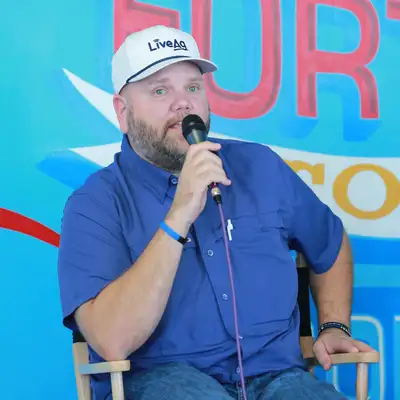
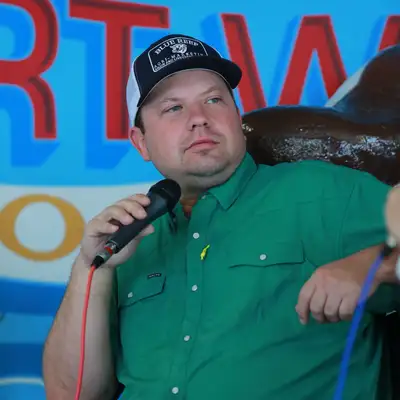
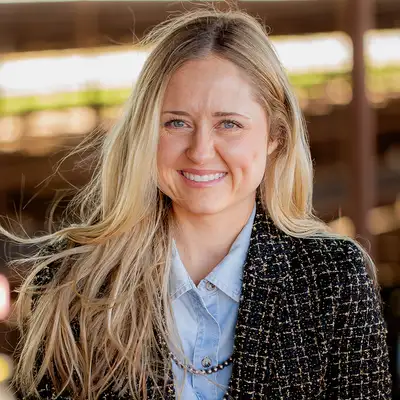
Welcome to the "We Live It" ranch and livestock marketing podcast, where cattle market intelligence meets ranch-ready wisdom. Join hosts Ty deCordova with LiveAg and Casey Mabry with Blue Reef Agri-marketing as they bring you straight-talk market analysis, proven strategies, and insights from industry leaders who understand ranching isn't just a business - it's a way of life.
From livestock market trends to cattle management practices, each episode delivers actionable knowledge to help take your ranching operation to the next level. Whether you're in the saddle or in the truck, tune in for conversations that matter to modern cattlemen. Because we don't just talk about the cattle business...we live it.
I learned everything. I worked in the plant. I ran a plant. I was the head buyer. Was a feeder cattle buyer during college.
Dick Monfort:I was awful at it and they decided I needed to find some other job. But yeah, so I've I've been involved for a long time.
Announcer:That's a head off. We live it. The live ag podcast. Quality cattle deserve premium prices. Consign to a live ag video auction and capitalize on today's strong market demand.
Announcer:Our upcoming auctions are on your screen and available online at live-ag.com. Contact your local rep to get started. Now here are your hosts, Ty De Cordova and Casey Mabry.
Ty deCordova:Well, welcome back to the We Live It podcast here. Myself, Ty De Cordova and co host, Casey Mabry. We are here live at Coors Field in Denver, Colorado with mister Dick Montford. And thank you, sir, for taking time out of your busy schedule to come visit with us today on the podcast. We've the name a long time, known the heritage of the family a long time, and it's just great to get here to sit and visit with you and learn more about it and get to hear some of the stories.
Ty deCordova:Me and Casey, when we found out we was gonna be able to do this, we'd be kind of pretty giddy about it because it's been just neat to interview the guys like yourself that have such knowledge of the industry, such knowledge of the business that and now you're in a different industry, different business, but you got the growing up in the background of the cattle industry or the beef cattle industry, and we just kinda wanna sit here and pick your brains. And me and Casey do a lot with our kids. We do like to start out talking about the kids. They're getting ready to show. Got Fort Worth livestock show coming up here in the next couple of weeks, and you got some hogs going, Casey.
Ty deCordova:We got some steams So has barn been busy?
Casey Mabry:Yeah. I mean, we're we're rolling right through it. I mean, we're right at the beginning of the the season here, but girls have been working really, really hard and hopefully they get to hang a few banners this year. We'll see.
Ty deCordova:It'll be fun. It'll be fun with it. So let's kinda get right into your your use and your background of where you grew up, how the family I guess the family's been in the industry, the beef industry for a long time, and kind of what that looked like, and we'll just kind of let you talk and we'll listen.
Dick Monfort:Okay. Well, thank you for having me first of all. Yeah, I was born in the beef industry and my grandfather ran the feedlot, and that's all it was, was a feedlot. The head count I remember, which was probably early sixties, was around 20,000 head. Probably was smaller than that, but everything gets inflated over time.
Dick Monfort:So I actually my grandfather had horrible arthritis and my grandmother was sick, so I would spend the night with my grandfather when I was really young. If you think about it, there were no cell phones, there were party lines, stuff like that, and they worried that he'd get flipped over or something. So every morning he'd get me up, he'd feed me something, not much, And then we'd go out and I would ride the pins with him. So I started really young. I was on a horse when I was four years old.
Dick Monfort:Told my wife that, that I rode when I was four I actually told her I rode when I was six years old because I didn't figure she'd believe the four. So we're cleaning out my house one time and she comes across this picture and sure shit I was four, so there's proof of it. I learned the business from that standpoint and went all the way up. I I, you know, I worked in the beef industry till 95. My last gig was as the president of ConAgra Red Meats.
Dick Monfort:We killed about a 100,000 cattle a week, you know, which is a ton of meat. Our margins were really shitty. But I learned everything. I worked in the plant, I ran a plant, I was the head buyer, I was a feeder cattle buyer during college. I was awful at it, and they decided I needed to find some other job.
Dick Monfort:So I've been involved for a long time.
Ty deCordova:You said earlier about your grandfather, he was a farmer, is that correct? A corn farmer.
Dick Monfort:Yes, he was. And then
Ty deCordova:he was feeding it to his chickens?
Dick Monfort:The story goes, of course I wasn't around, that he fed chickens and he figured out that it took a hell of a lot less cattle to feed his corn than chickens. If you go back then, people, it was all value add, right? Farmers would, you know, in the Midwest there were big elevators and stuff like that where you could ship it from, but in Colorado there was you fed it, and you put it into cattle or chickens or hogs or whatever, and then you sold the livestock, and that's what he chose to do.
Casey Mabry:Yeah. So we're talking about that time period, you know, then. And you gotta think about the Front Range Of Colorado where you guys were. Obviously, there was some areas in there where you could irrigate out of the rivers or canals, and you guys were able to confine feed cattle. You're probably one of the first ones in the country to do that or at least out in this region.
Casey Mabry:And then you guys would do what with the cattle then? You'd ship them where?
Dick Monfort:Yeah. Well, to hit on one of your points, the story goes that he was the first person that fed cattle all year round. And the climate in Colorado was sort of okay to do that. And he had noticed the cycles that when all the cattle, the calves, and the different cycles of when all the cattle got fat, that the market got depressed and then it would go up. And so he figured out a way to where he would feed cattle three sixty days.
Dick Monfort:I'm told he was the first one. And then what we'd do is we'd fatten them. And then the best I know, would go to either Denver had a stockyards where you could sell them or they'd go to Omaha or Chicago. I don't know why you'd ever go to Chicago, but, I'm guessing there was some rationale behind.
Casey Mabry:It. Oh, because a guy in Omaha didn't bid him enough, Yeah, and so he wanted that's to go somewhere probably right.
Dick Monfort:That's the way we marketed them. So I had an uncle who I never met who died in the war, and he was the heir apparent to taking over from my grandfather. My dad was in college at CSU and he was a journalism major when that happened, when he died in the war. And so he got pressed back into action. And my sense is that my grandfather and my uncle, whose name is also Dick, had a lot better relationship than Kenny and Warren.
Dick Monfort:And so there were some different strategies along the way. But Kenny figured out that shipping a thousand pound live animal to one of these stockyards and then them shipping it to some slaughterhouse, that that was inefficient as hell. Why not build a plant right there in Greeley and now you're gonna ship a 600 pound carcass rather than a thousand pound animal. And that was his theory. They about went broke.
Dick Monfort:In fact, their partners quit them. But they kept going. That plant was built early sixties. It's still where the plant is today. So that's sixty some years later.
Dick Monfort:It's still there. It's grown quite a bit.
Casey Mabry:What the original kill at that plant?
Dick Monfort:Oh, God. I don't know that I've ever been told. I know that it's about 5,000 a day now.
Casey Mabry:Oh, yeah. It's amazing to see how they've progressed into these monsters that they are. Then you guys would have been shipping carcasses to the East Coast probably predominantly. And then about not very short after that, the industry started to morph into boxed beef sales.
Ty deCordova:Right.
Casey Mabry:And you guys are probably one of the first ones to do that.
Dick Monfort:Yeah. We think we were the first. And boxed beef sales then was you took the chuck and put it in a box, you took the rib, put it in a box, you took the loin, you put it in a box, and you put the round. So you had four boxes and you shipped them. You know, when I left in 'ninety five, I think there was, I may not even remember this right, like 15 boxes or 16 boxes per animal.
Dick Monfort:So they just kept cutting them down and down. But yeah, it changed. I mean, not being in the plant when they just shipped carcasses, really couldn't tell you what that looked like. I did when I was 13 years old. I did work as a scheduler for the boxed beef, so I got around the plant a little bit then.
Dick Monfort:I got a good story. I was working at the feedlot, and this was when I was 12 or 13 years old. I was seriously doing the same type of job that anybody would be doing. I was going in checking a pin of cattle. I was moving the cattle when we dipped them.
Dick Monfort:You know, I would work in the deal. One time and I, you know, I was 12. I was stupid. I I was, you know, I had no fear. And so I'm chasing some cattle into the dipping vat and I got everything so screwed up and I got cattle turning on me all sorts of different ways and breaking shit down.
Dick Monfort:This guy comes up to me and he says, Dick, having you around is like having two good hired men gone. And that's always stuck with me. And and unfortunately, I think he was correct.
Ty deCordova:Have you ever used that on anybody?
Dick Monfort:Oh, use it all the no. I haven't used it on anybody else, but I tell them that about me. Yeah.
Casey Mabry:So then so then you did you go to school?
Dick Monfort:I went to University of Northern Colorado in Greeley, so I didn't get too far away from home. We lived out by the feedlot, and literally, I went to a school, my sister and I went to a school that had three classrooms, nine grades, three teachers, and 39 students. So we went to this school there and the principal died. So one of the teachers is gone. Well, his wife was one of the teachers, so she retired.
Dick Monfort:They bussed us up to Eaton. I went to school in a real small town, Eaton's just four miles north of the plant where we lived. And then my parents got divorced and I moved to Greeley. So I went to Greeley West and then I went to UNC.
Casey Mabry:So then your intent was to come home and get back into the business.
Dick Monfort:Yeah. I tell college students all the time that, know, first of all, I was going to college. Nobody ever, you know, it's not as if I was going anywhere other than college, I was gonna have to go to college. Second of all, I knew what I was gonna do. I was gonna work for the company.
Dick Monfort:What I was gonna do, I didn't know. At the time I was buying cattle, and so I did that for all of my college years and then for a couple years after that.
Casey Mabry:So you were going to class and then they would send you out in the country to buy cattle?
Dick Monfort:Well, back then I just went to the auctions. So I would go and they thought it was sort of cute to have a college kid drive up to Scottsbluff on Saturday morning and be there at 09:00, take a three hour drive. So I think they felt like it'd keep me calm the night before. It didn't, but I would go to Scottsbluff on Saturdays. There were times that maybe on Friday I might go to Brush.
Dick Monfort:We had a few cattle buyers, so they just sort of sent me wherever. But I didn't buy many cattle in the country.
Casey Mabry:So were y'all mostly slaughtering what you were raising?
Dick Monfort:When I about that time, we were probably slaughtering two to three times whatever. We probably were slaughtering 700 maybe of our own and maybe 2,000 total. It was one shift. And I bought some fats also during my college years. I'd go I had a couple customers, so I'd go buy some fat.
Dick Monfort:I'd no better at fats than I was at feeders. I you know what? I bought fat feeders and I bought skinny
Casey Mabry:fat adults.
Dick Monfort:Yeah. I mean, it would just I had everything else backwards.
Casey Mabry:Yeah. So my first territory when I worked for Cargill would have been in Torrington and Scottsbluff. Yeah. So I grew up in Weatherford, Texas.
Dick Monfort:Yeah. And then they stuck me in that area out
Casey Mabry:there and it felt like I was on
Dick Monfort:the edge of the earth.
Casey Mabry:Yeah. So What's cool is that area is still full of a lot of the same people.
Dick Monfort:Now, did you buy cattle for Fort Morgan?
Casey Mabry:I did. Yeah. Yes, sir. Yeah.
Ty deCordova:So when y'all the peak of the cattle feeding, how many cattle did y'all feed?
Dick Monfort:When we sold to ConAgra, we had just built the Yuma lot. So we had Kuner, Gilchrist, and Yuma, and they all fed about 100,000. Yuma, a little bit more than that. Yuma was an interesting one because my dad, he went to Yuma, he studied things, he was very strategic. And he went to Yuma because of the corn, the price of corn.
Dick Monfort:But land was cheap. And so I don't know back then how many head per animal they'd build those pens or per bunk size or whatever, but he tripled it. So these pens were massive pens, 1,200 head per pen. It was supposed to help in the winter and stuff like that. Later, not us, but when other people took it over, they made those pens much smaller.
Dick Monfort:It was really hard to check the cattle to move them, and it was hard to put 1,200 head together at a time. But Yuma was a very interesting feedlot. It's interesting the way they built that.
Ty deCordova:I worked at Kilcrest for a summer.
Dick Monfort:Oh, you?
Ty deCordova:Bill Martin's kind of like a second dad Yes. To I come and live with Bill for a little while, him and my dad were really, really good friends. That was a yeah, I lived there, I worked there for summer, it was pretty neat.
Dick Monfort:When I was 14 or 15, my summer job was driving a feedlot at Gilchrist. They And used to have this overpass. I don't know if when you were there. So they had the Drover's Alley where the cattle came in, where the the new cattle came in. They had a drover's alley and it went underneath the road so that you would never have to stop the feed trucks.
Dick Monfort:And so it was a big windy turn. And driving a feed truck is no fun. There's no radio. There was no power steering. It was a pain.
Dick Monfort:And so there was a couple of us that we'd see who could deliver the most loads of feed in a day. And so we we drove hard. And I'm coming off that bypath one time, and the sun just hit me right in the eye. And I probably was screwing around a little bit, I'm guessing. And next thing I know, there's another feed truck right in front of me, and he and I go like this.
Dick Monfort:And it wasn't bad. I mean, when I say we're going fast, 40 miles an hour maybe, right? By the time I saw him, I probably slowed it down quite a bit and he was scared to death. But it was funny because Leroy Johnson was the manager then, and Leroy had sort of designed the feedlot. And Leroy took me to the site and he chewed my butt like you can't believe.
Dick Monfort:I've never had a man ever before or after yell at me like that. And so anyway, I go home and I'm saying, Okay, here's the next one coming. Leroy never told my dad it. That's a bit about it. So I thought, You know what?
Dick Monfort:I learned from that. He was my boss. He's the one that had to take care of it. He sure as hell did. And that was that.
Casey Mabry:Yeah. So you've seen this thing. I mean, there's probably not very many people that have had the experience because at your age where the industry really started to transform and go from the swinging beef to the box beef and then morph through there. So you've obviously done a lot of good things right. I know you like to pick on yourself, but as you transitioned running these beef businesses, can you talk a little bit about the ConAgra transition and whenever that happened and what that was like for you and what your role was?
Dick Monfort:In 1980, I was run or no, I guess it was 1980. They sent me out to Grand Island to run the cattle by. We had the plant in Greeley, it was going to go on strike. That's why my dad bought the Grand Island plant. We put a fab on it and some more coolers and this and that.
Dick Monfort:So he sent me out there and I was gonna head the buy, and then we hired the guy from Swift whose plan it was, he was the slaughter manager, and then the fab manager was a guy I think we got from Cargill. So we're running and it's startup and two shifts, you're not only starting up the beginning and then you're starting up the second shift. But it was tough, we're losing money. The buy did not take very long, especially the startup. You buy a pen of cattle and you're almost through the week.
Dick Monfort:And so I got busy and I would go down to the grading chain or the kill floor, fill in wherever, go to the fab floor. So anyway, we got to a point where we're losing money. We had this DES, Stebestrel. Do you remember that? It was a supplement or a steroid implant.
Dick Monfort:For whatever, they viewed it illegal at one point in time. Well, nobody other than us had to destroy the livers because they were selling the other pack. Was stupid. Anyway, so we got 20,000 cattle that we had to destroy the livers, which is like $6 a head. And we I mean, it was just this and that.
Dick Monfort:We had a tornado in Grand Island. The market was bad, all sorts of stuff. So, we were near bankruptcy and people at the plant were fighting. My dad comes up with this idea that I'm going to be the plant manager. That ripe age of 26 years old, running something I've never run before, I became the plant manager.
Dick Monfort:But from 1980 to 'eighty seven, we killed it. We just got really good. I remember somebody telling me how poor our product was and how we were easily the worst packer in the world, which I'm afraid to say was right. So we had a lot of young guys there that didn't want to be the worst and we killed it and did great. I I don't know when you got out of the business, but our kill and fab cost was less than $70 and today it's $300 That is.
Dick Monfort:Yeah. We were really good, really efficient. We had good cattle out there. We had great people, and so we did really well. And we were literally bankrupt in 'eighty.
Dick Monfort:So in 'eighty seven, ConAgra came to us and my dad and I met with him. It was weird, my dad sort of told him what the price was and Mike Harper, who was the chairman of ConAgra said, How
Ty deCordova:in the
Dick Monfort:world did you come up with that? So he took out ConAgra's annual report and says, This is your returns, this is this, this is that, That's the price. I just put it all figured out and that's the price. And so we literally closed that thing in about a month. And so from there on, we were part of ConAgra.
Dick Monfort:At the same time, Harper bought, with us telling him not to do it, bought Swift, which was run by a guy by the name of Eddie Cox Jr, bought them for about a third of the price of us and they were about the same size, but they had pigs. We took over the whole deal in 'eighty seven, doubled their size. Now we had pigs, which I knew nothing about. And then I was there for eight or nine years.
Casey Mabry:So now we're gonna start transitioning in a little bit what modern day is for you. So how did you get into Major League Baseball?
Dick Monfort:So in 'ninety 'ninety two, 'ninety three, the Rockies won a franchise or won, they got selected to do a franchise, and the price tag was $95,000,000 And so they had some guys from Columbus, Ohio that were going to be the ringleaders. And so those guys were going to be the general partners, they were the ones approved by baseball, but they had to have a group of people to raise 75 of the 95,000,000. Jerry McMorris, who was a friend of my father's and in the trucking business, came to my dad, said, Would you like to invest? My dad said, No. He said, Do you mind if I talk to your kids?
Dick Monfort:And he says, No, but I wouldn't waste much time with Dick. He'll say, No. Charlie, who knows? So Charlie invested and then Jerry and some of the guys got in financial trouble, and so I had just left ConAgra, so I sorta picked up some of the pieces.
Casey Mabry:So what what I mean, it's just amazing to me. So I bought cattle to watch how you transitioned into where you're at now. You still stay pretty close to the cattle industry?
Dick Monfort:A little bit. For many years in 'ninety five, Rick Monterra, who was the head buyer at Monfert. When I left, he left. Rick was my brother-in-law. There was a guy named Dallas Horton, everybody know him.
Dick Monfort:Dallas was big cattle feeder. He had feedlots, he had schemes, he had all sorts of stuff, but he needed head count. So Rick and I decided, you know, we'll feed some cattle. We made sure when we left there wasn't a non compete, it was easy because they wanted more people to feed cattle. And so we started feeding cattle with Dallas and we did that for fifteen, twenty years.
Dick Monfort:So over those 'ninety five to 2015, we were still buying and selling cattle.
Ty deCordova:So now your day to day deal is just you you were you running Rockies now? Is it
Dick Monfort:Yeah. They've sort of set me to the side. And my son is the president now, but yeah, I'm still involved.
Ty deCordova:That's pretty neat.
Casey Mabry:So what are the what's the I guess, what's what what's the most sim I mean, did I'm guessing the things that you did in the in the feedlot and the packing plant and running that. What's tougher, running this or running a
Ty deCordova:packing plant?
Dick Monfort:I would have said running a plant. First of all, margins were super low back then, like 1%, 2%, which is crazy. The amount of capital, the amount of employees it takes, the risk you take, and all that. It's crazy that our margins were that low, but I loved it. I loved every bit of it.
Dick Monfort:I loved the work. There was always work. It was hard work. Baseball, I often wonder, all our revenue comes from paying fans that are watching a sport. And I came from a business that helped feed the world.
Dick Monfort:And I always felt like this is sort of cheating, baseball part of it. But baseball's tough, but I love the beef business, I love the cattle feeding business. It got tough and it's weird. We still have a ranch in California, but it's like twenty minutes out of Reno. And we just sold our cattle for $3,200 a head It come is crazy.
Dick Monfort:Unbelievable. Yeah.
Ty deCordova:It's a different industry, different world now.
Dick Monfort:It really is.
Ty deCordova:Well, Dick, I don't know what else we need to cover. You got any other stories you wanna tell?
Dick Monfort:Got lots of stories, but probably not noteworthy. I will tell you one thing we did, and I wish if I would have stayed, I'd have got it done forever. It was very complicated, the hot fat trim. I had a belief that When I left, everybody was buying quarter inch or eighth inch or whatever. Amazing that we kill these cattle, we use all these BTUs to chill down the fat, and then we have these people struggle to get this cold fat off the animal and not do that great a job.
Dick Monfort:And cattle feeders get paid whether they're too fat or not fat enough. The hot fat trim that we started could revolutionize things. When I the But problem was you always had a piece of meat that you had to sell at regular price. But I wish they'd have stayed with it. I think it was my idea, so I think it's one of the greatest
Casey Mabry:No, I think if you go into a plant and a bunch of them today, they're definitely pulling the kidney knob out after the hot scale, right before he goes in the hot box. They're streamlining a lot of the carcasses from a hot fat trimming standpoint now. One of the big deals is the value of the fat. Yeah. And if you think about beef demand when you were doing it and it was prob you know, let's say you're probably grading and sorting half the cattle.
Casey Mabry:I mean, you're fifty fifty choice and select.
Dick Monfort:We were more than that, especially in Grand Island.
Casey Mabry:Today, the industry's grading like 87. Yeah. We're feeding cattle. We used to sell a thousand pound steer.
Dick Monfort:Oh, 1,500.
Casey Mabry:Yeah. Now they're huge. And these cattle have gotten way fat. That's a
Dick Monfort:credit to the cattle feeder, really. Absolutely. And you know, the cattle that do the best in the feedlot are the ones that also do the best in the plant. Now, not grade wise, but you know, so it was easy for the cattle industry to take us I was telling you about my dad's split ear that won some champion deal. It was a Hereford and just looking at him, he's a yield grade five, he might even be more than that.
Dick Monfort:And you know, today, cattle that you see coming through this auction and stuff like that, the amount of black cattle is amazing.
Ty deCordova:Yeah. Yeah. And you're talking about the bigness and the genetics and the high grading and the choice prime select scale now is 85 or better. He had a good feeder, but also you gotta back up the genetics to it. I mean, these genetics guys and these ranchers that really went out there and honed their cow herds and their bull batteries.
Ty deCordova:I mean, it's it's the whole industry got together and said, we wanna do a better job.
Dick Monfort:And they they have. Yeah. And you know, I always figured a Holstein Angus Cross would be a good one. And right now, he is a good
Casey Mabry:one, Isn't that amazing? They said they think eighteen-nineteen percent of the cattle on feed right now are Right. Angus
Dick Monfort:there's again, you can genetically make these Holsteins boys, right? Every once in a while you'd buy a Holstein Angus cross, somehow the cow got out with whatever happened, and you just could envision that that's the way to go.
Casey Mabry:Yeah. No, it's taken some of the fat off the car because it scaled them up a bit and kind of made them absolutely great. But man, I appreciate you getting on here with us. Like, Todd and I are extremely humbled that what's cool is we're sitting here at your stadium. We had the sale here last year.
Casey Mabry:The National Western's going on, and and it's it's it's great to be able to tie all that back together Yeah. With you guys owning the Rockies. And really, this area has changed. If you think about when you were at Eaton and it was four kids in a grade. There's a million people that live in that area now to watch what the Front Range has done and what your family did as pioneered through that area and where the industry syringes.
Dick Monfort:Well, it's fun to talk about this. It really is. So I'm glad to have done it. I'm gonna stop by your auction tomorrow.
Ty deCordova:Maybe we can buy another
Casey Mabry:fish head or two of cattle.
Dick Monfort:Yeah, maybe.
Ty deCordova:Yeah, you're gonna show up. We gotta buy our number for you.
Dick Monfort:Yeah. The only way I was gonna ever get Rick out of buying cattle was if we sold those feedlots, so thank God. We used to feed $25,000 at $3,000 a head, I think we'd probably be down about 2,000 heads.
Casey Mabry:Yeah. I met I met Rick when I was probably 25, 26 years old, so like eighteen, nineteen years ago, in Torrington. Because he used to come to Torrington
Ty deCordova:every week.
Dick Monfort:Yep. Yeah. He was Rick's, Rick's probably my one of my best friends in the world, and, you know, he's doing a lot of roping now.
Ty deCordova:I was just saying, we'd go out there and rope with him. When I come up here and was living with Bill, we'd go out
Dick Monfort:there with Rick. Yeah. Yeah. He was good buddies with Billy.
Ty deCordova:Yeah. Yeah. I tried to get Billy to come out tomorrow, but I don't he just you can't pull a prime out of that sub barn down there.
Dick Monfort:Yeah. That's good.
Ty deCordova:Dick, we appreciate you.
Dick Monfort:Yeah. Thank you, guys. Good luck, and I appreciate it. And it's been fun talking to you.
Casey Mabry:Likewise. Yes, sir.
Ty deCordova:Thank you everybody for tuning in here on the We Live It podcast. Once again, don't forget to hit the subscribe and like button, and as always, God bless.