Subscribe
Share
Share
Embed
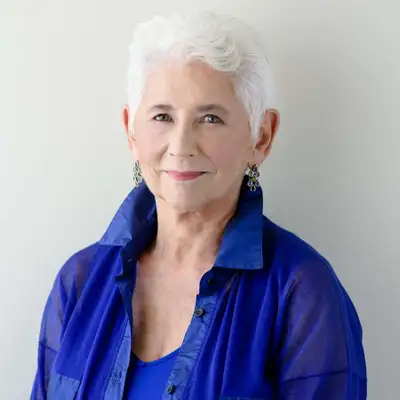
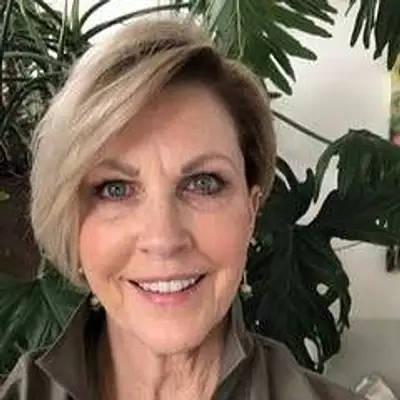
In this episode of the Real Retirement Show, hosts Yasmin and Kathleen discuss the unique challenges faced by lawyers when retiring. Joined by special guest Ida Abbott, a renowned retirement strategist, the conversation delves into the emotional and institutional hurdles of transitioning from a legal career to retirement. Ida shares her personal journey, highlights the importance of self-awareness and empathy, and emphasizes the need for early planning and open communication. Discover actiona...
In this episode of the Real Retirement Show, hosts Yasmin and Kathleen discuss the unique challenges faced by lawyers when retiring. Joined by special guest Ida Abbott, a renowned retirement strategist, the conversation delves into the emotional and institutional hurdles of transitioning from a legal career to retirement. Ida shares her personal journey, highlights the importance of self-awareness and empathy, and emphasizes the need for early planning and open communication. Discover actionable advice and real-life stories for a smooth transition into retirement.
00:00 Understanding Lawyers' Reluctance to Retire
00:45 Introduction to The Real Retirement Show
01:30 Meet Ida Abbott: Retirement Strategist
02:39 Ida's Personal and Career Journey
06:47 Challenges Faced by Retiring Lawyers
07:36 Institutional Challenges in Law Firms
09:19 The Importance of Normalizing Retirement
10:50 Overcoming Personal and Professional Barriers
16:23 Success Stories and Client Breakthroughs
24:51 The Role of Design Thinking in Retirement Planning
32:43 Final Thoughts and Advice for Retirees
Real Retirement Video Podcast: Real Retirement - YouTube
Welcome to "Real Retirement," a groundbreaking podcast where your hosts, Yasmin Nguyen and Kathleen Mundy, delve into the multifaceted world of retirement beyond the numbers. This isn't your typical retirement discussion; it's a vibrant journey into what retirement truly means in today's world.
Each episode of "Real Retirement" brings you compelling conversations with guests who bring a wealth of expertise and authentic retirement life experiences. Our goal? To inspire and educate our listeners to approach retirement with intentionality and a broader perspective.
But "Real Retirement" is more than just a podcast. It's a community for those navigating the uncharted waters of retirement, whether you're just starting to plan or are already on this deeply personal journey. We explore a wide array of topics, including:
What sets "Real Retirement" apart? It's our commitment to authenticity. We bring you real stories from real retirees, discussing real challenges, surprises, joys, heartaches, and the myriad emotions that come with retirement. From addressing family dynamics to confronting identity shifts, we tackle the issues that truly matter to retirees.
Join Yasmin and Kathleen as they journey through the honest and often unspoken aspects of retirement. "Real Retirement" isn't just about ending a career; it's about beginning a new, exciting chapter of life with all its complexities and joys. Tune in and be part of a conversation that redefines retirement in the most real way possible.
Ida Abbott: Lawyers tend to work
longer than the general
population.
And they hold on as long as they
can because so much of their
life and their identity and
their activities and everything
they really do is wrapped up in
their work.
How do I let go?
What do I do if I don't do this?
This has been my life.
if I don't do this, I'm useless.
I have no value.
I won't have any income.
nobody's going to need me
anymore.
Nobody's going to call me.
I've got a calendar that's too
full.
what happens if that goes away?
So those are common problems for
most people, or at least most
professionals.
And professional, that's been
the area that I've concentrated
in even beyond law
Yasmin Nguyen: Welcome back to
the real retirement show.
My name is Yasmin here with my
cohost Kathleen, whether you're
retired or thinking about
retirement, we delve into the
multifaceted world of retirement
beyond the finances.
This isn't your typical
retirement discussion.
It's a vibrant journey into what
retirement truly means in
today's world.
We bring you real stories from
real retirees and experts
discussing real challenges,
surprises, joys, heartaches, and
the myriad of emotions that come
with retirement.
From addressing family dynamics
to mental and physical health to
finding purpose, we tackle the
issues that truly matter to
retirees and those thinking
about retirement.
We're so delighted to have our
special guest today.
our guest is Ida Abbott.
She is a retirement strategist
who helps law firms design
respectful and effective
succession and retirement
processes and helps individuals
design happy and meaningful
retirements.
She's been a lawyer.
and a legal consultant for
almost 50 years and is an
internationally recognized
expert on legal talent, career
development, and women's
leadership.
An elected fellow of both the
American Law Foundation and the
College of Law Practice
Management, Ida has been an
advisor, coach, speaker, and
author of several seminal books,
including Retirement by Design,.
of the best retirement books of
2020 by the Wall Street Journal.
We are so delighted to welcome
you.
Thanks for joining us, Ida.
Ida Abbott: Thank you so much
for inviting me to do this with
you.
I'm delighted to be here.
Kathleen Mundy: pleasure to have
you as our guest this afternoon,
and I know that Yasmin's
prepared some really interesting
questions, and I'm so excited to
get started with these
Yasmin Nguyen: Yeah.
Ida, we'd love to hear a little
bit about your personal and
career journey and what's
inspired you to focus on, on
this retirement journey, but
more specifically also on the
legal field.
Ida Abbott: it was my it's my
world.
I've been I started practicing
law a long time ago.
I did that for 20 years and both
in a very small firm and then in
a very large firm for most of my
career and when I Decided it was
time to move on.
I kidded around saying I was
retiring, but didn't have a
plan.
Didn't have a clue.
Had two T young teenage kids.
And my husband was very
supportive.
He didn't, he figured I would
figure it out.
My, at some point and I did, and
I started looking around to see
what was Needed, but wasn't
being provided and I had been in
charge of professional
development in my firm.
I was with a firm that was quite
progressive in terms of,
developing new lawyers and in
law, there's no postgraduate
experiential requirement.
All you have to do is pass a
test, the bar.
And so lawyers would come in
with some book learning and they
wouldn't know anything about the
practice of law.
So I decided to focus on helping
them.
And helping firms help them do
that, become practitioners,
become good lawyers.
So I did that for a long time,
gradually moved into leadership
development within that field,
focused a lot on mentoring,
which was my sweet spot.
And the first book I wrote was
The Lawyer's Guide to Mentoring.
and gradually, the leaders and
the people I was working with
started to ask me, what do I do
next?
many of them were in their
fifties and sixties.
They held a lot of
responsibility and they were in
prestigious positions.
And they just felt they wanted
to have something to do when
they finished doing that.
And there was no path.
So I started looking into it and
realized there was nothing other
than books on financial planning
and, financial consultants to
help you plan.
your, financial status for the
next few years, for the rest of
your life.
And I pulled together a group of
people who kept asking me that
question and they decided they
wanted to start a group.
and I agreed to facilitate that.
And it was in the course of
doing my research to understand
how I could help them and how
they could help each other that
I realized this was another
major need and it wasn't being
met.
And even though most of my work
was in law.
Especially with the mentoring
and the leadership work, it
wasn't exclusively.
So some of the people involved
in this were in business.
And I realized it was
everywhere, but particularly in
law, because lawyers tend to
work longer than the general
population.
And they hold on as long as they
can because so much of their
life and their identity and
their activities and everything
they really do is wrapped up in
their work.
so how could I help them?
And, that's where I started just
moving in this direction.
And then at some point decided.
There were enough people doing
the other work now, but there
was nobody here.
I decided to just, stop doing
that, transition that off to
other people, and started to
focus.
And it's been, I don't know,
eight, seven or eight years,
maybe longer, I don't know.
but I've been working on this
field now exclusively for almost
that long.
Kathleen Mundy: attitude for
sure.
Yeah, absolutely.
Yasmin, we talked about some of
the challenges that starting
this journey has for many people
and I'm curious, what did you
find to be the biggest challenge
for the people in your practice
now?
The lawyers.
Ida Abbott: some are personal
and some are institutional.
The personal ones aren't
surprising.
How do I let go?
What do I do if I don't do this?
This has been my life.
if I don't do this, I'm useless.
I have no value.
I won't have any income.
nobody's going to need me
anymore.
Nobody's going to call me.
I've got a calendar that's too
full.
what happens if that goes away?
So those are common problems for
most people, or at least most
professionals.
And professional, that's been
the area that I've concentrated
in even beyond law.
but the institutional ones have
been the most challenging
because retirement is
stigmatized.
And, people who reach a certain
age, even, and some firms, fewer
and fewer firms have mandatory
retirement that's age based.
Sometimes, and that means
anything.
Nobody believes it because in
most firms there are more
exceptions.
And everybody believes they will
be the exception.
even where it's firm, where it's
absolutely firm, many people can
still continue just in a
different capacity.
They're no longer equity
partners.
They're no longer owners.
And sometimes that works.
Most of the time it works for a
little while and then it just
doesn't.
but, it's just there's a view of
people who reach a certain age
as being too old.
It's an A, it's a lot of this is
a just a lot of this is just,
it's a stigma that goes along
with, you're the people who are
making the most money, have the
most clients, have the most
control.
You should get out of here so we
can move in.
And what happens is among some
of the older partners, they look
around and say, I built this.
I earned this.
Why should I give this over to
you?
And I'm not going to do it.
without some kind of
compensation, without some
protection, that if I do that,
I'm not going to lose, lose
money and lose my connection.
And so there's a kind of an
unspoken conflict.
So nobody talks about it.
Kathleen Mundy: huh.
Ida Abbott: It's silence.
Nobody talks about it.
And so what I've been trying to
get firms to do is to normalize
retirement as just another stage
in a career
Kathleen Mundy: huh.
Ida Abbott: and to talk about it
so that people don't feel
embarrassed or like they're
failures or they're being pushed
out.
Or they aren't resented by the
people who want them to leave,
and that there's a systematic
way because, firms need the
stability of knowing who's going
to stick around and who's going
and approximately when clients
need to know, and they get lost
in all of this.
And so I try to emphasize that
clients need to be considered
and they don't want to be
blindsided.
And, the individual lawyer who's
retiring needs to have some
systematic way so that they
leave feeling good about it,
feeling prepared, feeling like
they've left a good situation
behind and not like they're
going off into the unknown to
become totally obsolete and
irrelevant, though, and die
because, that's they assume that
this is the end.
I try to emphasize that really
this is the conclusion of one
stage and the beginning of
something new and filled with
potential.
Yasmin Nguyen: Ida.
I'm curious what holds both the
individuals as well as the
organizations back from having
these conversations because it
seems like that's a an important
starting point, but not always
the case for individuals or
their firms.
Ida Abbott: lawyers deal with
conflict professionally all day
long, so they avoid it in
anything personal.
And they really don't want to
get into uncomfortable
situations, unless they have to.
And sometimes, there's a
performance problem or a
competence problem.
sometimes they're not all,
because somebody's older, but
there are a lot of problems
where those conversations have
to take place.
And then they'll do it.
but they're awkward about it.
And this is true in a lot of
different Areas, within legal
organizations, in particular law
firms, but it's, in the legal
department of a corporation,
they plan for succession.
This is, it's normal.
It's not, you don't have a lot
of this, in agencies and other
things.
Again, they're normal.
So this is a problem that is
primarily in law firms, and
there's a concern about
succession who can do this.
Who can represent my clients as
well as I can, nobody.
And for many people, it's hard
to, to think about letting
somebody else take over this.
I've built this.
I've spent, 30 years, 40 years
of my life, maybe longer
building this, and I can't just
let it go.
it gets to be a little more
complicated than in many other
situations.
Kathleen Mundy: Ida, you hit the
nail on the head for two reasons
and, Yasmin and I have had
conversations with lawyers and
we've discussed retirement and
everything that you've said is,
true to our experience.
And,
Ida Abbott: That's a relief.
Kathleen Mundy: It really is.
And the part where the part
about, having that, I don't want
to have any conflict in my
personal life is like true, but
you're right.
You can only take on so much in
your lifespan.
And if you're giving and
conflicting in one area, you
want a little balance in the
other.
But, I think is it, do you think
that it has, Or is there
limiting mindsets around this
and how you've been able to help
people shift their perspective?
Ida Abbott: I think there
definitely are limited mindsets,
to begin, you know, one area is
about, I emphasize the
importance of curiosity.
When you have been an expert all
of your career, people come to
you for answers.
It's not as easy to change
positions and be the one who
doesn't know, who's now Entering
something really new and scary
and you are, you're having to be
the person seeking help or
seeking answers and who do you
even go to where you're not,
where you're willing to let your
guard down enough to ask.
Kathleen Mundy: Yeah.
Be a little vulnerable in the
process.
Ida Abbott: That's right.
it's very hard because we're
taught to be confident and to
know.
The answers and we can work
within the framework of what we
do every day within legal
frameworks, I can go to trial
every day and fight and
everything else and know exactly
what's expected.
Whoops.
Sorry.
And know exactly what's
expected.
But, when I go home.
That's wide open.
There are no rules, and that is
a much scarier thing.
So when I'm talking to somebody
about facing another 30 years If
I'm not going to be a lawyer for
the next 30 years, or maybe I
will, but I'm not going to be in
this firm doing what I'm doing
in the position I am, what is
this new thing going to be?
And lawyers tend to also be risk
averse.
And so it's not like they're,
happy to go jump off, jump, on a
parachute, get into a plane and
jump down.
some of them do, many of them
are, and certainly there are a
lot of lawyers who take a lot of
risk and many of them are very
entrepreneurial and, uh, It's
not, I'm not talking about this
as a universal situation at all,
but for a lot of people, the
thought of what, this next 30
years could be longer, could be,
who knows, could be a week, is
too, is scary.
And I don't want to deal, this
is what I know, I don't want to
necessarily walk into something
where I don't know any of the
rules.
Yasmin Nguyen: Yeah, it's.
It's scary to not know what's on
the other side, and I'm curious
from your personal journey, but
also in having conversations
with various different legal
professionals.
there stories of people who have
had a very successful,
fulfilling experience on the
other side of their career, as
well as stories that you've
noticed of those who are
struggling with that transition
then?
Ida Abbott: Of course there are
loads of them.
A lot of people are very happy
to retire.
They can't wait to retire,
right?
They have a million plans or
they have a plan or they have
something they want to do or
they're just, they're done.
They're ready to move into
whatever's out there.
That's a pleasure, right?
Those people are fun and you can
talk to them, work with them.
They don't really need a lot of
help.
They've got it.
They've thought it through, but,
but they're not the general
rule.
Kathleen Mundy: that just, it
inspired me to be a little
curious about this point of
view.
If you could share a story with
us where your client had a
breakthrough and working with
you made a difference in his or
her outlook for the next 30
years.
Ida Abbott: I actually had one
that's the reverse of what
you're asking about,
Kathleen Mundy: Okay, that's
perfect.
Ida Abbott: it's my favorite.
I had somebody call me who was
a, trust and estates lawyer.
And she had been in her firm.
She helped build the firm.
It was about, I don't know, 15,
20 lawyers.
And.
She had been very successful,
very happy, and now she wanted
to retire, and she was a little,
she was very nervous about it,
and her anxiety was making it
hard for her to even stay in
practice.
So we started to talk.
We had a very nice conversation.
When I asked her what it was
that was all of a sudden, after
all this time, it sounded like
this was Very, relatively abrupt
and she told me that she'd been
working on a case for a long
time on a with a client and
Somebody got unhappy and there
was a lawsuit and so now it's in
litigation and the litigation is
making her so anxious and it's
taking so much out of her that
she can't really cope now, trust
in the States is not a conflict.
Bill field, it's probate, it's
writing wills, it's developing,
state plans and stuff.
So it's, I could understand why
this suddenly, sudden change
would be so upsetting to her.
And as we talked, I said to her,
aren't there lawyers who
specialize in A state litigation
or probate litigate all these,
in the litigation of these
issues.
And she said, yes, there are.
I said, is there anybody, who
specializes in that?
And she said, there's someone in
my firm.
I said, what if you transferred
that case to that lawyer?
And it was like one of these,
why didn't I think of that?
And all of a sudden I could feel
in her voice.
and I said, I said, when you're
really ready to retire, she just
had a situation that she
couldn't cope with.
So we had that one session, and
that was it.
And I said, when you're really
ready, call me back,
Kathleen Mundy: god.
Ida Abbott: that was my favorite
because it was a lot of times
people really don't know what
the situation is.
And when you're coaching
somebody, when you're working
with somebody, helping them
identify what's really going on.
Is the key to the whole thing,
because sometimes that's all it
takes is to turn it around.
But I have to say, most of the
people I work with individually,
they're not as, they're not in
as serious a situation as I've
been describing to you.
Most of those people don't
necessarily seek help.
Even when it's offered.
that's why most of my work is
with the firms themselves.
and sometimes somebody will call
me, but usually it's because
they have, they need some
guidance.
They need to figure out how to
approach what's going on.
but I know there are a lot of
people who do seek coaches who
are much more, conventional in
their approaches and will, work
with them with instruments about
retirement readiness, like some
of the things that you've you're
providing and, they'll need to
go into it.
More deeply, but I found that
the people I've been working
with anyway, most of them are
not, they're stuck, but it's not
that hard to help turn them
around with many people.
It's reframing, it's going
through the things that are
frightening them or holding them
back and helping them understand
and see a way out.
Occasionally, some of my
favorites are working with
couples.
Because there are what I found
interesting.
A couple of times I've worked
with clients.
who's, who have had problems
because they and their spouse
don't agree.
In fact, I worked with two women
simultaneously, where both of
them were married and one of
them couldn't wait to retire.
she was very successful.
She was under so much stress.
Her last child was going to
college.
Her husband had been a stay at
home dad.
He did not want her to retire
because.
Of what it was, what the impact
would be on their lifestyle.
He was, that's what worried him.
The other woman was a lawyer who
was at really her peak.
Her husband had been a lawyer
who retired a year or two
earlier.
He wanted to do things.
He wanted to travel and go
places and, do a lot of things
with her.
And she wasn't ready.
And to me, those are interesting
challenges, helping them have
conversations.
And in my book, actually, there
are a lot of exercises for
couples.
To have with each other.
So that, to do with each other
that facilitates a conversation.
Kathleen Mundy: hopefully in
alignment with outlooks as well.
Ida Abbott: that's right.
Because, a lot of times I found
that my clients will have made a
decision and they've come up
with a plan, but they're
assuming that.
Their partner is going to agree
Kathleen Mundy: yeah.
Ida Abbott: a deep conversation
about it.
the example I give is that we
both want to travel and I say,
that's great.
What kind of travel?
And it turns out one, wants to
go backpacking in the mountains
and the other wants to go first
class, a cruise or something.
And so the words are the same,
but the meanings are very
different.
And, so sometimes it's a matter
of making sure they, they get to
the source of the challenge that
they're having.
Yasmin Nguyen: Yeah, Ida, you
had mentioned a, exercises in
your book as well as reframing.
Is there a particular framework,
exercise or experience that,
that you've either taken an
individual client through or
when you're working at the firm
level, taking them through
that's really created some sort
of breakthrough?
is there something that you
could share with us that, that
Has been a favorite tool,
exercise, or experience that's
created a transformation for
people.
Ida Abbott: I don't have a
particular exercise.
and it's very different when I'm
working with a leadership team
trying to figure out processes
because they're dealing with
different issues.
Um, what I encourage them to do
is to make sure they talk to all
of their partners and get,
everybody's input before they go
off and come up with a policy.
young people, old people,
everybody, cause they all have a
stake in it.
And if they all aren't buying
into it, it isn't going to
happen.
But with an individual, my book
is based on the premise.
That's a framework for people to
use called design thinking.
And so if, if we do more in
depth work, I have them take the
book, go through it, not, page
by page, but to see where they
are in the journey, to see what
part of it is most useful to
them.
And that's what we focus on.
but it's basically, it's design
thinking, which is a different
kind of approach to planning.
To thinking through problems and
coming up with solutions.
It is easy to personalize it.
And I think this is something
that has to be personalized.
It's why I have a bias against
instruments, even really good
ones, because I think a lot of
times they make assumptions
about where people are and what
people who are retiring.
Are interested in, and a lot of
times that's not really
relevant.
And I used myself as an example
where I was asked to, to test,
to try out something one time.
And when I got the results, they
debrief me and, I had flunked a
couple of parts of readiness and
I thought, that's interesting,
so it turned out the two areas I
flunked were travel.
and volunteering, and I said, I
travel every day in my job.
I'm a consultant.
I'm on a plane all the time.
My family has always taken
vacations, long vacations, like
sometimes two, three months.
I've, gone during work.
I've worked it out with my firm,
so we always traveled.
I've been to almost all the
places on my list.
Travel is not something I put
off.
And volunteering, I've been on
nonprofit boards, and I've done
pro bono, I ran a pro bono work,
the pro bono program in my law
firms, it was one of the largest
in the country.
So I've always done that work.
I don't need to worry about how
am I going to give back when I
retire, because it's just a
continuation.
Kathleen Mundy: Right.
That's
Ida Abbott: I said, so why would
this, if you tell me that I
flunk these three areas, these
two areas, I immediately get on
the defensive.
I'm a high achiever.
You don't tell a high achiever
that they failed.
And, and this person who was
debriefing me said, Oh, my God,
I never thought, and so I, this
was several years ago, many
years ago.
I know the field has evolved
quite a bit since then.
But, yeah.
I've always felt that this is
one of the most personal areas
and we, you can't make, I can't
make assumptions about anybody.
I've been telling you about all
these general, things that I
see, the general behaviors and
attitudes and feelings and
stuff.
But I don't assume that.
When I work with somebody
Yasmin Nguyen: Mhm.
Ida Abbott: because I have no
idea where they're coming from
and it's up to them, to let me
know and for me to help them
figure it out, but there is no
reason, especially for somebody
who's been very successful.
all their life, to be who's now
in a position where they're
feeling vulnerable.
The last thing I want to do is
assume that I know something, or
I can help them because I'm the
expert in X, Y, or Z.
I think that's, that is a
critical piece of it.
And why I like design thinking,
because it's easy to jump in and
work with wherever you are.
at any point in the in that
whole process,
Yasmin Nguyen: Yeah.
Kathleen Mundy: you're
Ida Abbott: flexible.
It's very flexible and
adaptable.
You can change it whenever you
want.
It's not like a plan that gives
you step a B.
C.
D.
Kathleen Mundy: but it all
evolves around the communication
piece, which you've outlined
several times through this
discussion today, and it really
brings things home.
If you have alignment has to
happen only through the open
communication you have, and the
fact that you are guiding it
through with questions and
queries in that process is
really beneficial to those
participants.
Ida Abbott: There's a piece even
before the communication that's
just as important, and that is
the first step in the design
thinking framework in that
process is empathy, which in if
you're talking about yourself,
it's self understanding, self
awareness, and it's really hard
sometimes to have a effective
communication if you are
clueless.
about what's really important to
you and what's driving you and
what you're afraid of and what
you're strong at and what you're
looking for.
All the questions you need to be
asked first before you can then
leap into what you want to do.
You have to start really with a
deeper self understanding.
Communication with yourself,
which in some ways for people
who have never done it, is
pretty scary and difficult.
there are a lot of us who've
been asking those questions, our
whole lives and it feels very
natural.
and like you assume everybody
does that, but they don't.
Yasmin Nguyen: Wow.
That's so powerful.
Kathleen, did you have any final
questions that we wrap up?
Kathleen Mundy: Yasmin, as I'm
listening to this, I made an
assumption that the people who
were starting this journey might
know themselves, but truth is,
oftentimes they don't because
their career is consuming that
they really haven't taken the
time to really understand who
we, who they are and what their
core values are, if they've
shifted and what they want them
to be in the future.
And Yasmin and I had a
conversation about that.
Very topic this morning, and it
just came full circle, and I'm
so glad that you mentioned it
because it's highly important to
us as we do this work.
Ida Abbott: Absolutely.
And, you know, a lot of the
people I deal with who are
lawyers, they've been working in
at something that gives them a
lot of purpose, but isn't
necessarily in sync with the
values they want to promote.
And this is a time, really, and
I try to help them understand
that this is a time where if
that's what you find, this is
where you can now bring your
life into sync with the things
that are the most important to
you.
Kathleen Mundy: Again, we had
almost verbatim
Ida Abbott: is that right?
Kathleen Mundy: yes, we had this
conversation just this morning.
And thank you.
Thank you.
Thank you so much for being so
succinct in your descriptions
and your outlines to us today in
our audience.
I'm sure they're going to gleam
a lot from
Ida Abbott: Oh, thank you,
Kathleen and Yasmin,
Yasmin Nguyen: And one final
question, Ida, how can our
listeners find and learn more
about you and the powerful work
that you do?
Ida Abbott: My website is
IdaAbbott.
com.
there are links there to most of
my work, to videos that they can
watch on YouTube for free, to,
videos they can download of
other podcasts and, different
programs, to articles and books
that I've written.
So you know, or they can call
me.
They can email me, Ida at
IdaAbbott.
com or, or call
Yasmin Nguyen: Wonderful.
as we wrap up, are there any
just final thoughts that you'd
like to share, Ida, with our
audience or anyone who may be
considering retiring or maybe an
organization that's navigating
that with their teams?
Ida Abbott: I think the
important thing is to start
thinking about it.
Early to give yourself a lot of
time and I mentioned the design
thinking mindset.
About curiosity and trying
thing.
I don't know if I mentioned that
action orientation, not just
thinking about it, but doing
things.
But another one is collaboration
and not to, you don't have to do
this alone.
There are there are coaches that
can help you.
There are people who have
already retired that, you can
reach out.
They can tell you about their
journey, what worked, what was a
problem, that kind of thing.
Get help.
And, talk to people about it.
Most people are happy to talk to
you about these things, but, a
lot of people hold back because
they're afraid to talk about it
because they're embarrassed.
We don't, all the things that I
mentioned earlier.
So finding people to work with
and talk with, including your
spouse, is, your partner, that's
important.
But start early.
Don't wait until the last
minute.
Kathleen Mundy: Yeah, start
early.
I think that's a key phrase.
Start early, know yourself and
start early in the
Yasmin Nguyen: Wow.
what a gift to be able to spend
this time with you, Ida.
And thank you so much for not
only your wisdom, but your
contributions in so many
different ways.
And we're so grateful for this
opportunity to, Collaborate with
you and to be able to share an
important message for anyone
who's navigating this
transition.
Ida Abbott: Well, Yasmin, thank
you.
Thank you for, both of you, for
what you're doing in this area
and all the people that you're
able to help this way.
and thank you for inviting me to
be part of that.
Kathleen Mundy: Our pleasure.
Our pleasure.
Yasmin Nguyen: Thank you for
taking the time to join us
today.
If you enjoyed this episode or
found it valuable, please
subscribe, follow, and leave a
comment or review on your
favorite platform.
If you have friends, clients, or
loved ones who are retired or
thinking about retirement, we
invite you to share this show
with them.
Check out the show notes with
links to resources mentioned in
this episode at
RealRetirementShow.
com.
Remember, retirement is a joyful
journey we get to experience
together.
Join us next week for another
Real Retirement Conversation.