Subscribe
Share
Share
Embed
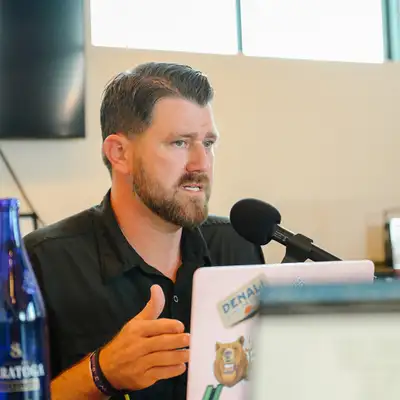
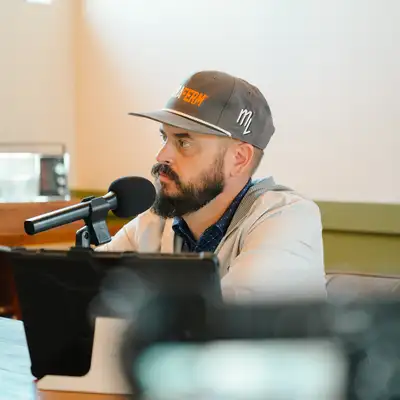
Most show families figure it out the hard way. They ask around, get partial answers, and fill in the rest on their own. Logan Newsom and Sam Silvers have been in the show industry long enough to have made most of those mistakes themselves — and they're sharing that wisdom with you.
Drench Line is a podcast about sheep, goats, and everything that comes with life in the show world. When to vaccinate. How to pick your animal. What to expect at your first major show. What nobody standing on the sidelines will actually tell you. New episodes drop twice a month, and they don't sugarcoat a thing.
Logan and Sam have been friends since they were teenagers working summers at a sheep ranch in Eden, Texas. Now they're both show dads raising their own families in world they grew up in. This show is their way of passing it on — not just to their kids, but to every family that's new to this and looking for someone to shoot straight.
Coming soon!
Drench Line is just getting started. Coming soon: voice memo questions answered on air, and guests who have genuinely shaped the show world — the breeders, stockmen, and industry figures whose names you already know. If there's someone you want to hear from, send your request to www.drenchline.com.
Be part of the conversation!
This show is built around the questions real families are asking. Got something you can't get a straight answer on? Submit your question at www.drenchline.com and it might just get answered on the next episode. Logan and Sam want to hear from you — that's not a throwaway line, it's the whole point.
Sam Silvers: Um, so w- we
gave him that vaccination.
Um, w- we've, we've gave him like
a Dectomax or an Ivomec injectable
for some internal/external
parasites, things like that.
Um, we're probably gonna hit him with
some kinda other wormer too, I would
say, maybe like, um, a Safeguard or a
Valbazen or a Cydectin, something like
that to get some of those internals.
And then, and then we wanna, we
wanna alternate those monthly, right?
Right.
They need to be-
Sure ... wormed every month.
I think that that's key,
uh, for a lot of things.
And then we start talking about things
like, like heel mites and stuff like that.
Um, there's a million
different techniques out there.
Logan Newsom: All right, guys.
We welcome, uh, welcome you
back to The Drench Line.
I'm Logan Newsom, and this is Sam Silvers.
Um, we appreciate you guys,
appreciate you guys being here.
Hopefully, maybe we've been through
three episodes now, and maybe you've
kind of been able to grasp a little bit
of some advice or tips that, that we've
learned maybe the hard way along the way.
And, um, we're here to kind of put
together maybe some information
for folks that are serious
and, and trying to get better.
So, um, Sam?
Sam Silvers: Yeah.
If you're new to the show, be sure to go
back and watch episodes one through three.
It kind of sets up everything
that we're gonna do today,
um, what we're talking about.
And be sure to follow The Drench
Line podcast on Spotify, Apple,
YouTube, and all the social platforms.
Logan Newsom: Yeah, drenchline.com
is kind of home base.
So if you guys got questions or, um,
find sponsorship information, wanna reach
out, um, that's definitely where you
can find some info on kinda what we've
got going and what we've put together.
And, uh... Or obviously,
reach out to us directly.
Yeah.
Follow
Sam Silvers: us on Silvers
Livestock or Newsom Livestock.
We both have sales kinda going on.
Um, Logan's got a big one coming up
tonight as we're shooting this, the 806
Live, some really good sheep in there.
Um, but like always, just reach out
to us if you have any questions.
Logan Newsom: Okay, so we picked up, uh,
you know, I guess, or pr- or picking up
where we left off with episode three.
Uh, we've got, we've got a
good one in the barn, okay?
We've, we've went through, we've done
all the checklists that we talked about.
Um, we found the one that we want.
We wrote the check.
We got him home.
What now?
Sam Silvers: Uh, we keep him alive.
Logan Newsom: Yeah.
Sam Silvers: That's
the main part, I think.
Um, b- before we get into that,
um, I thought you did a really
good job on your hair this morning.
Logan Newsom: Absolutely.
Yeah.
Sam Silvers: You got, you
got lined up yesterday.
Logan Newsom: I did.
I got lined up.
Um, you know, I went to the barber.
I think we had a little, you know,
for folks that listened on the
last one, we don't go to salons.
Oh, okay.
Men go to barbers, barber shop.
That's where we go.
Um, yeah, cleaned up, nice.
Sam Silvers: Looks good.
Yeah.
Cool.
Logan Newsom: Beard oil.
Everything's ready.
Sam Silvers: I wish I had hair.
Logan Newsom: We can work on that.
That's in the next episode.
Melatonin.
Get sponsored by some, one of those-
Yeah, we- ... implant companies maybe.
Yeah,
Sam Silvers: yeah, maybe, like Bosley
for Men or something like that.
Logan Newsom: For those guys that, you
know, don't know, Sam is at some point
probably gonna go across the pond and
look at the hair implant deal, and
I would definitely am probably gonna
be in attendance when he does that.
Sam Silvers: Yeah.
Y- you're gonna be my reference point.
Like, I, I want it like this, so I
don't come back looking like, you
know, Donald Trump or something.
Okay, so we got him home, right?
Yeah.
We're, we're backing, we're backing
up to the pens, and we're fixing
to unload this little booger,
and, uh, w- where do we start?
That's a big question that we get a lot.
Um, and I think it's still something
that, that changes yearly w- with me
of what we do as pre-regiment protocol.
Um, but some things that I like to
think about is, um, y- you know,
gut health is important to me.
Um- Just immunity is important to
me, um, i- and keeping those things,
obviously I know that sounds trivial,
but keeping them alive and keeping
them on feed a- and trying to keep
those bugs out of them, if you will.
Um- Sure ... so what are some things
that you'll first do when you unload off
that trailer with, with that in mind?
Logan Newsom: Yeah, and I think that's,
you know, like kind of what you said,
you know, the age-old saying, you know,
like, sheep are looking for a place
to die, or goats, you know, whatever.
And not that, you know, that's 100% true,
but, like, we're taking those animals
out of their environment that they've-
were obviously born into, you know, maybe
they're fresh weaned, whatever that looks
like, and then we'll put them into a
new environment, you know, maybe across
the state, maybe across the country.
Um, you know, so not only just, you
know, kind of health related, but that
whole environmental setting, s- the
stress that can happen with weather
events and new pens and new dirt.
I mean, just, just all of it.
Other sheep, you know, they've been
in maybe pens with, you know, their
buddies and, you know, creep pens
and all that, you know, as they've
kind of grown out, and then all of a
sudden, you know, we're kicking them
into a pen of, you know, maybe two
or three at the house or whatever.
So you've put these animals
into a stressful situation.
So I think that's probably the biggest
thing that, you know, we have to sit back
and really think about is, like, how can
we manage that stress, because I do think
that's probably the beginning point of
a lot of the things that can go wrong.
Um, you know, so like whenever
we, whenever we get those home and
we get them and, you know, we're,
we're big, especially early on,
kind of group pens type situation.
We don't ever wanna put anything
just in a pen by itself, you
know, or anything like that.
So we might put them in a pen of, you
know, three or four more, and, um, I
think the biggest thing is you obviously
gotta, first and foremost, like,
they've gotta figure out where feed is.
They gotta figure out where the water is.
They gotta figure out where the hay is.
You know, just kind of like,
"Hey, here's your new home.
Let's get those things on feed.
Let's make sure they drink.
Let's make sure they're eating." Because
those animals that are eating and, you
know, drinking, obviously, you know,
at the beginning level of that health
stage are obviously gonna do better.
Yeah.
And so that's always kind of like
first and foremost, you know,
kind of maybe where we start.
Sam Silvers: Yeah, a-
and I think we do too.
Um, Dr. Chris Cassidy, who's on our tech
support team at BioZyme, i- big in the
cattle world, he always says something
that, that kind of sticks with me is, "We
need to be proactive and not reactive."
Sure.
Right?
Um, a- and I think in, in general health
and maintenance of, of these small
ruminants, that's what I look at is, is
let's be proactive and not reactive, and
what I mean by that is let's, let's try to
offset any of these problems we're gonna
have before we ever get there, not just
reactionary, like, "Oh, that one's sick.
Now I need to doctor him." I wanna prevent
him from ever getting sick, and I, I think
environment's really important, right?
Good clean pens.
Um, y- you know, let him, let
him co-mingle with some others.
Doesn't need to be
stressed out by himself.
Um- That's something that we do,
you know, all the time at our house.
If we have a customer that comes and
picks up, maybe they buy one lamb,
the first question I'll ask them when
they're picking them up is, "Hey, do you
have any other animals at h- at home?"
Logan Newsom: Yeah.
"Do you need a feeding buddy?" You know-
" Sam Silvers: Do you need a
feeding buddy?" A- and I'll, I'll
send a feeding buddy with them.
Sure.
Usually it's one that's not very good or,
or maybe it's a DD or something like that.
But-
Logan Newsom: Ewe lamb type deal.
Sam Silvers: Ewe lamb-
Like you had a bunch.
Yep ... and I just tell them, "Hey, you,
you bring it back when you get another
one or, you know, haul it to the sale
barn later and, and, and send me the
check. But I, I want that, that good
one they bought off to a good start."
Logan Newsom: Absolutely.
Yeah.
And I think that's, you know,
something that, you know, we're
probably in a situation where there's
always sheep at the house, right?
You know, I mean, so it's easy for, you
know, and even like breeders or, you
know, families that might have multiple
kids and feed a lot of them, but some
of those families that maybe they just
feed one or two or, you know, maybe
they're going to an ag facility type deal
and maybe they're the first ones that,
you know, might have bought something.
So like, I think that's important.
Like again, you know, it's kind of
going back to that whole stress deal.
Like you don't wanna just take those
things from day one and we're gonna
pull 'em out of, you know, wean them-
Yep ... move them, all the stuff, and then
boom, put 'em into a pen by their self.
I think that's just kind of almost
like, you know, the recipe for a
disaster in terms of just things
not getting a good start early on.
Yeah.
So what is, like whenever we're kind of
talking about that, you know, we'll kind
of hit on this and kind of, you know,
as we kind of go down that road and, you
know, again, as we kind of work through
this, this is obviously things that we do.
I'm not by any means sitting
here saying that it, you know,
has to be done like that.
I mean, this is just things that we've
done that we felt like, you know, have
worked for each one of our families
and, and our management programs.
But what is, what is that kind of
that, you know, maybe some vaccines,
deworming protocol, like what's
kind of that protocol look like
as far as day one, let's say day
one to like seven, you know- Yeah
kind of what that looks
like that first week?
Sam Silvers: Yeah.
And, and I, I know it's gonna
probably differ, but there's some
things in my mind that I always
worry about o- on, on fresh lambs.
A- and one is cocci, right?
Um, two is, is respiratory.
I'm worried about that.
So I'm worried about cocci, I'm
worried about respiratory, and
then probably three, the big one
for me now with this whole leg
wool thing is external parasites.
Sure.
What I mean by like, uh, um, y- you know,
heel mites, things of that nature, uh,
maybe ear ticks, and then probably lastly
I'm gonna worry about, um, like CDT,
overeating tetanus, that kind of thing,
um, and maybe some internal parasites.
So I guess that's six core things-
That we're gonna focus on ... uh, what
I would call the core things that I
wanna, I, I wanna manage and get rid of.
Um, you know, so when we unload,
um, everything's, uh, first thing
that's gonna happen is, you know,
you know, Jurahee big on that.
Jurahee will come out and she's gonna
check 'em for heel mites first thing.
That's what she does while I'm probably,
you know, treating them for some cocci
regiment, um, or maybe I'm giving
them a, a shot of Nuflor or something
like that just for respiratory.
Or I'm deworming with, like,
Dectomax to, to help with some
external parasites, things like that.
Um, a- and we'll get into those later,
but I, I just y- you know, that's
something we all check for right there,
right off the bat as we're unloading.
Logan Newsom: And then, you know,
obviously with Jurahee, and, uh, that
doesn't surprise me at all that she's,
like, the leg wool, you know, queen.
Sam Silvers: Nazi.
Yeah.
Logan Newsom: Like, uh, do you
start wrapping them immediately?
Sam Silvers: Uh, not immediately,
but she will wrap them within
probably the first two weeks.
Logan Newsom: Yeah, inside joke.
We'll obviously get into that, um,
probably- ... in later episodes, but,
uh, Jurahee definitely is the person
to probably reach out if you need
to talk to someone in the Silvers
household about leg wool regimen.
Um, yeah, so, like, you know, similar-
Sam Silvers: I've taught
her everything she knows.
Logan Newsom: Yeah.
Similar situation to what we do.
Um, you know, I, I think that, you know,
the CDT deal, like we talk about that,
and kind of our rule of thumb in growing
up was always, like, any time you move
them to fresh dirt, you know, hopefully
you got those, those animals from
someone that has a good vaccine program.
Most breeders, you know, if not all,
you know, are obviously taking care
of that, and, um, those things have
probably had, you know, their initial
one and then probably a booster,
you know, maybe at some point.
That's kinda what we try to do.
But we still always, like, we'll CDT
them whenever we get them in, and then
kinda like what you said, like some sort
of internal/external parasite program.
Um, we do different things as far as,
you know, kind of our cocci treatment.
Um, we do have, like, a medicator, you
know, so that's something that, you
know, at various points, whether it's,
um, what we try to run through and kinda
what we try to do is, you know, some sort
of coccidiosis protocol in the water,
and then, you know, we might rotate it,
like, with the product, like, you know,
that BioZyme has there to kinda always
kinda put back some good bugs and, you
know, just kinda rotate, rotate that.
But again, I think it's one of those
deals that goes back to that whole
deal of, you know, trying to l- trying
to limit our stress, you know, and
get those things off to a good start.
Yeah.
Like, we've all been there, and,
and it can happen to, you know,
obviously the best families.
Like, but it g- at the end of the day,
it can happen, you know, to anyone.
Like, if those things have a hiccup
whenever you first get started,
it seems like even if it's little,
like, all of a sudden you're a little
behind the eight ball, and you're-
Sam Silvers: And then you're,
and then you're chasing
it ... and you're just chasing-
Logan Newsom: You're chasing
it ... the whole time.
Like, you're just trying to get better,
trying to get, you know, trying to get
those things better and, you know, and
it's almost like one of those deals, like
when that first domino falls, like one
small thing can turn into a big thing,
and then all of a sudden, you know, we
have, again, we talked about, you know,
like, as we kinda introed this, this
episode, environmental changes, like
we're in, uh, you know, Texas Panhandle,
Central Texas, you know, Southwest.
Like, we're fixing to get
into the middle of summer.
Days are gonna be 100.
Like, trying to keep those things cool.
They might not eat as well.
And so then all of a sudden, you
know, what started off as maybe, um,
an issue that could've been treated
with three days of medication or, you
know, a, a good, good practice early
on- Here we are, and, you know, those
things get skinny, and you're just
like, "Dude, we're, we're in trouble.
It's summertime, it gets hot, they're
not eating great." And then you're
fighting that all summer long, and
it seems like you can't ever catch
up until, like, almost the fall.
Like we, you know- Yeah ... we've kind
of ran into those situations before.
Sam Silvers: And I, I think this is, this
is the point, too, when you get home, that
you need to have a really good established
relationship with a veterinarian.
Logan Newsom: Absolutely.
Sam Silvers: A small ruminant
ve- veterinarian, one that
knows small ruminants.
'Cause this is where it's gonna come,
come key, because there's so many
things out there not labeled for
sheep and goats, and you just have to
have a, a really good veterinarian.
Logan Newsom: Yeah, a good relationship.
And that's the deal.
And like we're fortunate, you know,
like we live in areas where, you know,
veterinarians are, are available,
especially on, you know, small ruminant
side, and, you know, guys that maybe not
necessarily are, like, as in tune with
maybe sheep, but like, you know, they've
been around livestock, large animal stuff.
Yeah.
You know?
And I know that probably some of our
listeners, 'cause we've got some of
those families that, you know, they
run into that deal of like, okay,
you know, and this is obviously
stereotypically speaking, but like
bigger cities, like, you know, small
animal clinics are on every corner,
but like getting any assistance from
someone that knows something about
maybe large animals can be challenging.
So, you know, we have some of those
families that, you know, might be in
some of those areas, and I'm like, "Hey,
call this guy. I know he's, you know,
three hours away from you, five hours
away, whatever, but like we've gotta
have a relationship with some sort of,
you know, um, you know, vet that can-
Mm-hmm ... that can help us kinda get
through some of those situations."
Because even, you know, me personally
that feel like I've seen as many issues
that can go wrong, sheep and goats, you
know, from lambing all the way through
the show world, you still run into
those deals of like, "What is going
on here?" Like, how can I... You know,
I've done this and I've done that.
And even it's s- good just to, like,
have dialogue with those guys, you know?
Sam Silvers: Absolutely.
Logan Newsom: Like, "Hey, this
is what I'm seeing." Like, and
just, you know, different ideas.
"Hey, will you try this?" Or, "Hey,
we're using this, you know, medication
a lot on respiratory issues and having
great success." Something I hadn't
thought of, something I hadn't heard of.
Maybe it's something new, you know.
Have a good relationship with those guys.
Like it's- Yeah ... imperative.
A-
Sam Silvers: and we're probably
gonna... You know, I know as we go
through this, we're gonna make some
suggestions on some products, um, that,
that we use and work great for us.
Uh, but the number one thing
is, is, and I'll caution the
audience, is don't just go do it.
Consult your veterinarian first-
Logan Newsom: Absolutely.
Sam Silvers: Yeah ... be- before
we, before you do anything.
Um, I, I think it's imperative that
we s- we say some of the products
on here that we're gonna use.
Um, but always consult your veterinarian
first before you do anything.
Logan Newsom: I like to joke with
our families, and I say this,
you know, 100% in a joking manner
that, like, I'm a practicing vet.
The state of Texas just
doesn't recognize it.
Sam Silvers: Yeah.
You know?
Logan Newsom: Like we see enough things
that, uh- You know, sometimes some of
those vets might actually probably,
you know, have some dialogue with me
and be like- Right ... "Wait, you saw
what?" Yeah, but the state of Texas does
not recognize me, so please make sure
and contact your local veterinarian-
Sam Silvers: Local veterinarian
practice.
So let- let's drill down on
some of those products, right?
Um, whi- which seems common to
us, but it might not to others.
So CD&T, why are we, why are
we giving them two cc's of
CD&T when we get them home?
Logan Newsom: Yeah, so that's a,
uh, you know, that's a... And I, I
think CD&T is, is kind of a funny,
um, you know, vaccination practice.
I remember growing up and showing,
and, like, our protocol at the
beginning of every month was we
gave CD&T and we dewormed them.
So monthly we gave that.
And I would say personally, we've,
we've kind of gotten away from that.
Um, that was maybe a Papa K deal
that, you know, he just, he just
always did and so that, you know,
that's what we did for a long time.
But now I would say our practice
is probably maybe every 60
to 90 days on a CD&T booster.
Um, again, you know, we talked about
that early on, like, that is a, that is
a vaccination for sheep and goats that
your, your breeder probably did early on.
Mm-hmm.
Um, personally, what we try to do is
we hit the ewes before they lamb, um,
so that hopefully some of that can
be passed along in the colostrum or
in the milk, and then we'll hit those
lambs whenever we usually tag and...
Or I guess not tag, but,
you know, whenever we band
tails, mark sheep, whatever.
And then we'll usually hit them
again whenever, you know, we
kind of call it our booster.
Hopefully, you know, kind of in that,
I'd say 45 to 60 days, maybe kind
of pre-sale timeframe, whatever.
And so those sheep and goats have
hopefully had at least two shots.
Yeah.
I mean, that's pretty standard,
I would say, across the board.
And then we try to come in, again, like
I said... And Papa K used to always
say anytime you move them to new dirt.
You know, I know that, and I'm not
gonna sit here and act like I'm, you
know, Clostridium perfringens, you
know, expert, but it is a, you know,
bacteria that, that can be, you know,
in the dirt, and so in the soil.
And so any- I always tell those families
whenever they take one home, "Hey,
they've had two shots. Go ahead and
hit them with a booster. Just kind of
cover your bases there." It's easy.
It's cheap.
Cheap.
It's just such a good,
like- Yeah ... safety net.
Like, because CD&T is one
of those that's very unique.
Like, there's no, "Hey, I
think they might have CD&T."
Like, they're either
there or they're dead.
I mean, that's- Yeah ... the reality.
Like, it happens- Yeah ... fast.
It's not something you
can necessarily treat.
Um, it's just something that, you
know, kind of comes on, comes on quick.
And then obviously, you know, the tetanus
piece that's in, that, that's would be
the T in that, in that particular vaccine.
So that's, you know, I guess,
a little bit of the why.
You know, not diving too far into it.
Obviously, anyone can- You know, Google
and kind of, you know- Yeah ... get
you some knowledge on, you know,
that particular d- disease or, uh-
Sam Silvers: For the pre- prevention
of tetanus and clostridial- Prevention,
yep, yep, yep ... type bacterias
that, that can really affect them.
And, and I think probably help ward
off, um, some subclinical acidosis.
I think we see a lot of that in, in the
summer times when we're feeding them high
grain loads and we're trying to push them,
um, and we mask it with other things.
You know, uh, they might get the, the
feed scours or something- Sure ... and
we, we write it off as, "Oh, it's cocci,"
or, "It's this or that," when it may
just be a little subclinical acidosis.
Logan Newsom: Yep, yep.
Yeah, so like that's, you know, that's
kind of one of the ones, and I would
say if we were talking just vaccines
for sheep and goats, like that's
probably like the main one, you know?
Yeah.
Um, something that we've done as of late,
and again, you know, I, I felt like this
episode was definitely one that we'll
probably reference it multiple times, talk
to your vet, see what works in your area.
We've been doing the nasal vaccination.
Mm-hmm.
And I think that's kind of helped.
We talked about respiratory there
early, and what we try to do is we
do it, uh, again, you know, kind of
going back to that on the breeding
side of it, we try to do it to
those babies whenever we mark tails.
But as those sheep have come in and
those goats have come in, that's
been something that we've also
kind of utilized in our program.
'Cause I think the hard part that we
deal with in the Texas Panhandle in,
in this time of the year, and it's,
it's always, you know, I would say from
March till, you know, probably kind of
the end of May that we kind of fight.
And I know other parts of the world,
you know, in the country it can be
similar, but we might be 95 and then
cold front blows in, or, you know,
it gets cool at night, but we just
have these constant swings in temps.
Swings.
You know, and it's, and it's
40, 40 degrees sometimes.
And so, you know, we all know kind
of how, what that can lead to,
you know, as far as especially s-
the, you know, ruminant animals.
Yeah.
And so respiratory deal
for us is, like huge.
I mean, it's just, it's a constant battle.
It's something that we constantly
kind of fight this time of year.
Once we kind of level off, we get into
the summer, seems like things might
kind of, you know, clear up a little.
But like, again, we talked about it,
you know, kind of the stress, the
new environment, all the things that,
you know, can go into that and play
that role, and then all of a sudden,
you know, you put those animals...
You know, let's say I bought one from
you, maybe y'all have been warmer,
you know, a little more kind of even
keel as far as the weather goes.
I take them to Plainview and, you
know, we wake up one morning, it was
95 yesterday, and all of a sudden
it's like, oh, hey, it's gonna be 37.
Yeah.
You know, so the stress that that can kind
of, you know, how, and how that can impact
those things, it, it, it can be tough.
It can be challenging.
We've all had them, you know, like you
come out there and like kids had set that
sheep up the night before, life's good,
everything looks good, and that thing's
like thumping and sick the next morning.
You're like- Yeah ... "Damn,
we got a problem."
Sam Silvers: So we, we gave them the CD&T.
Um, I, I don't...
Are, are you, are you a proponent
of, of giving an antibiotic- As
a prevention if they're not sick?
I, I wanted to ask you that question.
I-
Logan Newsom: We don't
... Sam Silvers: I typically don't.
Logan Newsom: Yeah, we don't.
I mean, I'm more, you know, probably in,
in that aspect, you know, kinda going back
to that, you know, reactive, proactive,
whatever on, on the antibiotic side, like
I'm gonna, I'm gonna wait, you know- Yeah
and kinda see just, just so that, um,
you know, kinda get those things in.
And I think also because, like
we might give them, you know,
let's say like a Dectomax,
something for internal parasites.
We've given them a CDT shot.
We deworm them.
We've kinda already like hit those
things with a couple different things,
so I'm just kinda like, "Yeah, let's,
let's wait, and let's just kinda make
sure they're, you know, eating good."
Now, if we see something we don't
like or that things maybe, you
know, cousin has his ears down,
acts like he doesn't feel good, you
know, then we're gonna jump on it.
But we're probably not as much on the
antibiotic deal of giving something
as- Yeah ... soon as they come in.
Yeah.
Sam Silvers: Um, so w- we
gave him that vaccination.
Um, w- we've, we've gave him like
a Dectomax or an Ivomec injectable
for some internal/external
parasites, things like that.
Um, we're probably gonna hit him with
some kinda other wormer too, I would
say, maybe like, um, a Safeguard or a
Valbazen or a Cydectin, something like
that to get some of those internals.
And then, and then we wanna, we
wanna alternate those monthly, right?
Right.
They need to be-
Sure ... wormed every month.
I think that that's key,
uh, for a lot of things.
And then we start talking about things
like, like heel mites and stuff like that.
Um, there's a million
different techniques out there.
Um, y- you know, something that we do,
um, is we, we like to put, um, m- we
like to put the, the Ivomec pour-on on
their heels to, to try to get those heel-
Logan Newsom: Do you just, like,
put that in a spray bottle?
Sam Silvers: Like- No, we just
put it on there with our hands.
We'll get them on the stand.
We just kind of- Just kind of- ... pour
it on there on the back of their heels.
Um, and then we'll just kinda
rub that in, let it set a while.
And we may do that for three or four
days in a row just to try to get as much
heel mites, 'cause it seems like when
you lose that hair right around that,
y- you know, right around their heel or
their hoof line, it's hard to ever get
it back, and it just looks kinda weird.
Logan Newsom: Well, and I think
as we talk about that and, you know,
and you kinda hit on it a little bit,
like obviously, you know, we're trying
to manage that because, you know, the
leg wool deal is, is, is a, is a thing
that we, you know, are paying attention
to and trying to be aware of, you know?
And, and so early on, and I always joke
with people, like sheep are stupid,
but I, I don't believe that they just
wake up one day and think, "I would
like to chew off all of my leg wool."
Yeah.
Like, while you're at school and this
leg wrap came off or, you know, you're
at work, I think I would like to just
eat this show side front leg to the bone.
Right?
There's a reason for that.
Yeah.
There's a reason that they did
it, um, not just 100%, you know,
because of their intelligence level.
And so the reason, you know, might be
that there was something there that was
obviously bothering them, and then it
kind of becomes, you know, just this,
you know, 100% this domino effect.
And so, you know, for the listeners
out there, we're, you know, we kind
of, as we kind of talk about, you
know, external parasites and what
we're, what we're talking about in
that capacity is, you know, why those
things might be trying to mess with
their legs- Yeah ... chew, et cetera.
Sam Silvers: So from that point, we,
you know, we've got them vaccinated
and we've got them dewormed.
We- we've, we've looked
at this hill mite issue.
Um, to, to me it's about, y- you
know, getting them hungry and
keeping their immune system in check.
You, you talked about having a, um, y-
uh, what do you call, a medicator- Yeah
... which we, we have a medicator in our barn.
It's something that we didn't do until
last year, but I, I think it's the best
300 bucks I've ever spent in my life.
Sure.
Um, Dosatron one to 128.
Um, y- you know, if we're having
some cocci issues or something
like that, we can dose some Corid
through it, or we can run some
sulfadimetox- dimethazine through it.
Um, but the big thing to me is, is I like
running some Liquid Boost through there.
Yeah.
Um, I, I think Liquid Boost
is a great product for as far
as just gut health, immunity.
It's got some B vitamins
in it, zinc, biotin.
Anytime an, a sheep or a goat is under
stress, they're gonna get some of that.
If they get an antibiotic shot, if they're
sick, whatever, I'm gonna give them some,
some Liquid Boost, or I may, I may pulse
it through that medicator for, you know,
a week, come off, go on another week
without it, maybe come back another week.
Uh, I think that's important.
Logan Newsom: Yeah, and that's, and that's
like the same thing we do in, in, and, you
know, we talk about the Liquid Boost and,
you know, um, obviously Sam, you know,
gets paid to give, you know- ... Bio-Zyme
and Durafirm the plug, but I don't.
Um, Alan, feel free to reach
out if you'd like to sponsor.
Um, but, but the Liquid Boost
deal is, is something that we
really, really, um, we believe in.
And, and again, I think it kind
of goes back, you know, we talked
about that on the medication side,
like our medicator is running with
something in it at all points.
Not necessarily always, you
know, quote-unquote medication.
If we're, if we're running some Corid
or some sulfa or maybe even some of, you
know, the powdered linco, some of the
different things that we do, I always try
to follow that up immediately with, you
know, the Liquid Boost or the concentrate.
I know you said that, you know, you
use the, the red one, Liquid Boost.
Mm-hmm.
We use the- Hydro Boost ... Hydro
Boost, the concentrate and the blue one.
Um, but I also think, and this is just
a, an observation that I've noticed
and I've always wanted to put like a
water meter on our, on our medicator.
When we're running Hydro Boost,
I feel like they drink more.
Like I don't know if there's a flavoring
in there or they're, maybe they're just
feeling good or whatever it is, but like,
it always seems like when we're running
that, and this is just me noticing on
the, on the medicator, you know, and
how fast, you know, whatever is, you
know, whatever product is going down.
When Hydro Boost is in there-
They're drinking more Yeah.
Yeah.
That's probably something y'all
put in there to sell more of it.
Absolutely.
It has to be a new-
Sam Silvers: It's trade,
trade secrets right there.
Trade secrets, yep.
Um, so do we, do we
wanna talk about cocci?
And, you know, that's something
I feel like we all face, and y-
you know, what, what do we...
what do y'all do at Newsom Livestock for,
for prevention of cocci, to treat cocci?
I know there's a, there's a million
different things out there that
people do that, that work, right?
Um, I, the biggest one is,
again, talk to your veterinarian.
Um, something for us at home is, is we're
big on making sure that rumensin is in...
It's not labeled for sheep, it's labeled
for goats, I know that, but to me rumensin
is key to, to really stopping, uh, cocci.
A- and the best way that it was described
to me is, this has been years ago, is
rumensin will kill cocci at any point in
the life cycle, or stop it at any point.
Whereas some of those other ones,
it, it'll only hit it at a certain
stage in the life cycle of cocci.
Hmm.
So that's why rumensin's, to me,
is important having it in the diet.
Logan Newsom: Yeah, and, and you know,
that's obviously a, you know, a product
that's, that's big in our world,
big in the sheep and the goat world.
You know, again, you know, maybe whatever
you call that, extra label, off-label,
you know, however you wanna, you know,
kinda, kinda talk about it or go about it.
Um, so obviously a product that's
in, you know, the, the, the feed.
It's already mixed in.
So, you know, if you're, if you're
listening out there, that's not
something you go and buy off the shelf.
That's not something you go to your feed
store and ask them, you know, where,
where they're keeping their rumensin.
Yeah.
Um, but yeah, cocci to me, and
what we see, is probably one of
the most challenging... Gosh.
Um, cocci to me is probably one of
the most challenging things that I
think we face and our customers face,
especially during the summer and maybe
while those animals are developing.
Or, you know, you talk about
rumen development and, you
know, just things like that.
But just as they're growing, as
they're developing, and I think the
thing that I probably see that can
be the most challenging is maybe
originally you think about coccidiosis
and you think bloody scours.
Like, that's always kind of been a,
you know, a thing that, you know,
people kind of correlated with.
What I've noticed and what we've seen
is like, and I call it low-grade cocci,
it seems like they might not have to
be scouring, and they could have just
enough that's almost like pulling on that
animal to where they're not thriving.
And I think we see that a lot in the
sheep and the goat world, especially
it seems like maybe during kind of
the summer months or maybe right
after you got those animals, right
after you got them on feed, whatever.
It seems like maybe just
some low-grade cocci.
They're eating, they're not scouring,
they appear that they're healthy and
everything's good, but, like, you
can just tell they're not thriving.
Yeah.
And like, again, this is just my
personal opinion, but like- I feel
like sometimes you can go and you
can handle those sheep, and, like, if
they're muscle shape, if they're a sheep
that, you know, we went through that
whole checklist, we bought the good
one, we bought the one that we want.
If they're muscle shape or they're,
like, stifling butt cheeks, you
know, like, you feel like, "Hey,
that thing's just not, like-"
Sam Silvers: Almost like
they're kind of melting
Logan Newsom: or- Melting, yeah, like
it's just one of those- Wasting ... yeah,
like almost like wasting away, and
you kind of just look at them and
you're like, "Dude, I screwed up."
Like, "What is wrong with this thing?"
'Cause we get that call a lot like, "Hey,
this thing looked legit when I got him.
I gave a gazillion dollars for him,
and he's just not doing it." And, like,
they'll bring him to the house, or
maybe I'll swing by, or they'll send
me a picture, and I'm like, "Where are
we kind of at on our cocci protocol?"
"Well, oh, he doesn't have the
scours. No, he's fine." Yeah.
"All right." It's maybe something that's
just, like, pulling just a little bit
to where it's like, again, you know,
kind of talk about that, like they're
just not doing what you want them to do.
And I think, I think that, again,
that's where the relationship with
the veter- veterinarian comes in-
Sam Silvers: Absolutely
because it, it doesn't cost a whole
lot to, to bag some of that up and
take it in and get a stool sample.
I will, I'll, I'll still do that.
If something's not right at my
house and I'm kind of going through
that, I'll pack it up, run it up,
and, and we'll look, "Okay, what's
our cocci load look like?" Yep.
And y- you know, that, that's
a good indicator to tell
you what's going on there.
Um, so we- we've gone through that.
We've talked about Rumensin.
We've talked about some Corid in there.
We've talked about- Corids, sulfas
... sulfas, sulfas, um, things of that nature.
Um, there's some other compounded
stuff that you can get from vets
that's like Toturazil and vitamin
E and stuff like that to mix.
It works really good, but I think
the prevention and making sure
that we get cocci out early is
really important to a good start.
Logan Newsom: Absolutely.
Yeah, that's, that's something,
again, you know, we, we hit on it
now, you know, for a little while.
Like, it's just one of those things
that can, that can put you behind-
Sam Silvers: Way behind
Logan Newsom: from the get-go, and
then you are playing catch-up, chasing,
you know, the whole time, and it can
be, it, it is, like, it's frustrating.
Like, we've, we've all been there.
We've all seen it.
Like, it can be so frustrating because
you did, you bought one of those things
that you feel good about, and then you get
home, and it's like, "What is going on?"
Yeah, and we're, we're dealing with it.
Sam Silvers: I mean, we're
dealing with it right now.
We've had this, this rain come through
and set in, and that seems like when we
see it, we've had these wet days forever.
Um, y- you know, glad we got the
rain, but it, it does make it hard on-
Challenging It makes it very challenging.
We're back after a slight tinkle break.
Logan Newsom: Yeah, yeah, no, um, I,
I felt like that was a good time to
take a break because, like, you know,
we'd been so serious, coccidiosis
and medications and everything, and
obviously you got a little more of, like,
you got a relaxed feel about you now.
Yeah.
Like, you thought, "I'll just lean back in
this chair, and I'll just grab this mic."
You kind of look like, like a different
version of Eminem whenever he- ... you
know, is on stage, like- You know,
grab the mic and, like, shout out.
I think you're supposed to
tilt the mic up, though.
Sam Silvers: Yeah, I don't
think I'm gonna do that.
Logan Newsom: You don't,
you don't feel like that?
Okay.
All right.
And I think that's a good time, like,
okay, so we've been, like, super
serious, like, on this, you know,
first part of this episode just...
Y- and it is.
Like, it's obviously... It's
important stuff, like, you
know, health of that animal.
We've- we've- we've wrote,
you know, the check.
We've paid, you know, money for this
thing, and, like, getting it home, so,
like, the health of it, like, it is.
It's, like, one of the
most critical times.
Let's, let's lighten the mood a little.
Okay.
Let's talk about how you halter
break your sheep with rope halters.
Sam Silvers: So this is n-
no rope halters, only chain.
Um, this is where the tears
and cussing really comes in.
Logan Newsom: Fact.
Sam Silvers: Um, but I wanna, I wanna
add on there, like, right quick before
we get into that 'cause we went, we
went through all the little stuff.
We really didn't talk about environment,
and, and I think it's important
for the viewers to know that you
don't have to have the Taj Mahal-
Logan Newsom: Absolutely
... Sam Silvers: to feed good sheep-
Logan Newsom: Good point
... Sam Silvers: and win.
As long as it's clean, right, it's
got good air flow, especially for
those summer months, and you can
keep 'em warm in the winter- Yep
you're fine.
Yep.
You don't have to have the Taj Mahal.
You don't have to get... Hot take,
you don't have to get into a measuring
contest with your neighbor on his barn.
Logan Newsom: Absolutely.
I remember, uh, one of those families
whenever we first got started, um, it
was a wooden lean-to shed, you know?
And, like, the, the wood
part was the feed room.
Um, you know, it was older than
all of us combined, had three
pens made out of Gebo's panels.
Yeah.
And, uh, hey, they were,
like, pretty successful.
They're actually one of those
families that has, like, eight of
those H trophies in their house now.
Sam Silvers: Ours, ours
growing up was a lot like that.
Usually had to, like, fight off
a rattlesnake every morning-
Logan Newsom: Yeah, from time to time
' Sam Silvers: cause they were gonna
be under the feed room or something.
Logan Newsom: Yeah.
Yeah.
Yeah.
Good, good, good point.
Yeah.
Clean, um, I know you guys are,
like, you know, dirt in your pens.
Mm-hmm.
Um, we're shavings in ours.
Like, either, either
one is obviously fine.
Like, you know, each one,
you know, probably has its
advantages and disadvantages.
Sam Silvers: So, but, but let's, let's
talk about that for just a second, right?
So your, your barn is probably a
little more, I would say a little
more closed in than my barn.
Yep.
But I, I see the reasoning behind that
because of where you live, constant high
winds in the spring, stuff like that.
I, I mean, it, it, it kinda needs
to be that way a little bit, whereas
ours is completely open to the south.
We get a nice south breeze all summer.
Um, we don't do shavings because typically
they'll just blow plumb out of there.
Logan Newsom: Be gone.
Sam Silvers: Uh, we sweep or
rake the pens down every Sunday.
Um, that works for us in our environment.
Logan Newsom: Yeah, ours is, you
know, again, you know, kind of, you
know, our environment, climate based.
Ours is a little more closed off.
You know, h- uh, ventilation in the Texas
Panhandle is usually not a big deal.
We've usually got, you know,
the 40 mile an hour ventilation-
Yeah ... um, fan going.
And, uh, at the same time, like when
we get into, you know- Cooler fall,
obviously winter, like we have to be a
little more closed off 'cause we can't...
You know, that's what we talked kind of
about that, you know, as far as, uh, you
know, our swings in temp. Texas Panhandle,
it's probably gonna freeze every night.
Yeah.
So, you know, or at least get
pretty, pretty close to kinda, you
know, like that 32-degree deal,
and so we close everything down.
You know, we have heaters.
So different areas, different setup,
both of them obviously very functional.
Yep.
Okay.
Um- That's, that's good.
Sam Silvers: Okay, so halter breaking.
Logan Newsom: Yeah.
Sam Silvers: What do we-
Logan Newsom: The fun
... Sam Silvers: the fun, right?
Um, and it's, it's really not that hard.
Halter breaking to me
is really not that hard.
It seems like, um, at our setup at our
house, you know, our, our, our show barn
and where we treadmill and, and do boots,
uh, it- it's probably, I don't know,
what, 50 yards away to the other barn.
So they get halter broke and, and broke
to lead pretty easily because we're
gonna be taking them over there quite a
bit, at least a couple times a week, y-
you know, doing, trying to do boots and
leg wool on them and stuff like that,
or weighing them and tracking weights.
That's where our scales are.
Logan Newsom: Wait, so do you think
that you spend more time halt- like,
this is obviously past halter breaking.
Do you think that you spend more
time walking your sheep, getting
out, getting them out of the pen,
laying eyes on them, kids actually
putting hands on them because you
have a good leg wool exercise regimen?
Sam Silvers: 100%.
Logan Newsom: Interesting.
Hmm.
Sam Silvers: 100%.
We... Yeah, that...
We'll get into that, too.
Um, but typically what we'll do is we'll,
we'll halter them things up, and we'll tie
them to the fence in their pens, um, with
their heads up, um, not try to choke them.
Kids usually will set in there on a bucket
or something, get them used to them.
That's the initial halter breaking
process, just getting them used to
having that on their head, um, where
they're not just sucking back on the
fence, jumping around, falling down.
Uh, if they do, uh, one of, one of
the kids or myself or Jeree's there
to, to prevent anything happening.
But I would say the first, like, I
don't know, maybe four or five days,
let's just say a week, the first seven
days is just them tied to the fence.
Logan Newsom: Tied to the fence, yep.
Yeah, same deal.
That's what we do.
Um, we have the benefit, you know, at
our house that not everyone has, we
have Cub- Yeah ... so we can tie him
to the fence, and then Cub probably
has, you know, like a sorting flag
in his hand, and he's, like, running
through Dennis the Menace style.
So that, uh, that kinda gets a lot
of the, you know, let's say piss
and vinegar out of those things-
Sure ... rather quickly, so.
But yeah, tie them to the fence,
stand there, let them get used to it.
And I think we talked about it, you
know, on the last episode, again,
that rope halter versus chain halter,
like this is a g- you know, where we
talked about the benefits of that.
Like, they can fight that chain, but
it's like gives them just enough of
some tension there that they're like Hey
Sam Silvers: That hurts
... Logan Newsom: that hurts.
I can't get away from that.
Where that rope deal, not only can
they pull on it, but kinda like what
you hit on, like, they can actually
cinch it down so tight that we
could run into some other issues.
Sam Silvers: Yeah.
So then, then we talk about w- we've
kinda got 'em broke to that halter, now we
wanna start teaching 'em to lead, right?
And this sounds really basic, but w-
what do you do there at Newsom Livestock?
Yeah,
Logan Newsom: um, it is, and ours is,
ours is b- ours is probably pretty basic.
Uh, kids get 'em out, and we
head down the road, you know?
And again, you know, kinda
jokingly, but we might have Cub
with a sorting flag behind 'em.
Um, and it is, like, it- let's be honest,
it's a pain in the ass to start with.
It's not hard, it's just a pain, you know?
Mm-hmm.
Like, and I think one of the things
that I probably yell at the kids
about as much as anything is they
just take off, like dragging them and
pulling them, and then they're just so
confused on why they won't follow 'em.
Yeah.
And I'm like, "Dude, walk beside 'em.
Let it kinda be their idea. Let's-"
Sam Silvers: Or let 'em go
ahead of you if you want to
... Logan Newsom: let 'em go ahead of you.
Sam Silvers: Like, let's, let's
outsmart the sheep or the goat.
Logan Newsom: Like,
let's not just drag them.
Yeah.
So we probably have to kinda
have some daily reminders of
that with my two children.
I'm sure everybody else that's listening
is probably better from that standpoint.
But yeah, let those things kinda,
let it kinda be their idea.
Like, let 'em kinda take off, and it's
amazing how all of a sudden, you know,
things start working and coinciding.
And it's so much easier, and, and
I, and I'm not gonna sit here and
say that I haven't been this person,
but, like, it's so much easier
to do this- When they're young
when they're young, when they're
little, than, uh, when they're bigger.
Or, like, "Hey, let's go jackpot
that thing." Like, as a stock show
dad, we've been there, we've done it,
and like, you're having to drag that
thing to the scales at like 7:45 in
the morning, and you are pissed off.
Sam Silvers: Uh-huh, 100%.
So w- we're getting 'em, we're getting
'em hand broke, and, and I think that's
the time, too, that like, um, before we
let everyone, uh, let any of those sheep
go as they're tied to the fence, we'll
get the kids to kinda just walk 'em.
This is early in the process, right?
The kids will walk 'em around in the pen.
In the pen, yep.
In the pen, and then they'll set all
them sheep up before we let 'em go.
I'll, I'll have 'em-
Logan Newsom: Yeah
... Sam Silvers: set 'em up, brace 'em
to the best of their ability, 'cause
they're, they're not trained yet.
They don't know everything.
But they will set 'em up and
brace 'em before they let 'em go.
Logan Newsom: Yeah, and again, like
we said, it's so much easier to get
all that done when they're little.
You know?
Sam Silvers: Yeah.
Logan Newsom: Those
things are 60, 70 pounds.
And it's easier, like, it's
easier on the kids, you know?
Like, because it's not a, "Hey,
that thing's 120 pounds, let's,
let's teach him to show or, or,
you know, teach him to walk."
Like, you can c- they
can kinda manhandle 'em.
No matter how big they are, they can kinda
manhandle 'em and kinda get 'em going.
And I think it also kinda works to
where those two start kind of forming,
like, a relationship, you know?
Like-
Sam Silvers: A bond
... Logan Newsom: a bond.
Sam Silvers: Kinda like
the bond you and I have.
Logan Newsom: Yeah, like where you, you
sometimes wanna punch me in the nose?
Sam Silvers: Forged in fire.
Logan Newsom: Whoo.
I like that.
We should put that on a T-shirt.
Okay, so we've got those things.
We got them haltered.
Again, I think that's a good point, too.
You don't have to immediately
walk outside of the pen.
If you got room in the pen, especially
like, you know, ours are not as big as
yours are, but, like, they're 8 by 20s.
Um, yeah, walk those things
just like in a circle, you know?
Like, just kind of walk them over to lead
them or, or, you know, walk them over to
set them up, whatever that looks like.
A few circles.
Few circles, yeah.
Yeah.
Kind of just makes it to where you
can avoid the, "Oh my gosh, Dad,
I let that thing go," and he's
running down the keletchi road.
Sam Silvers: And this is where w-
w- we're kind of getting into our,
our, our next little segment here.
Um, this is where we start
building that routine, if you will.
Logan Newsom: Absolutely.
Sam Silvers: Right?
A- and that kind of sets the, to...
in my eyes, sets the precedence for,
for the rest of the year, right?
Um, because I think routine
is key to successfulness.
Logan Newsom: Yeah.
I can get behind that.
Sam Silvers: So we're,
we're doing that, right?
And this is when we're gonna start
integrating, like, our, our leg regiment.
Um, maybe we start getting them on
the... Y- you know, you may be different
than me, but we'll start getting them
on the track at a pretty early age.
If it's just once a week, it's a
light breezing, yeah, everything's
skinny at this point, but we
still get them broke to the track.
We get a little bit of exercise.
I think that's important, 'cause I, I
look at these things as, as athletes.
Logan Newsom: Yep.
Sam Silvers: A- and, you know,
a professional athlete works
out every day, no matter what.
Logan Newsom: Yep.
Sam Silvers: Um, a- and I, I
think it's kind of like a bell
curve to me a little bit, right?
They might kind of start going down
a little bit in terms of, like,
condition and fleshiness, but then
they're gonna start catching up, right?
Yep.
Their body's gonna catch
up with what they're doing.
They're gonna start
metabolizing everything.
That's when we start getting it.
Um, but again, routine, right?
We get them on the track maybe
once a week, trying them out.
We're gonna get them on the treadmill
once a week just to get them used to it,
'cause fighting them, fighting a 170-pound
lamb on a treadmill is a nightmare.
Logan Newsom: For the birds.
Sam Silvers: Yeah.
Logan Newsom: You know, and I think
that's just... It's exactly the same
way as the halter breaking deal, right?
It's, like, so much easier
to teach them early, so much
easier when they're younger.
You know, on the track, we
obviously utilize, you know,
a, you know, a track dog.
Um, it's kind of that same deal.
Like, it's easier to get those things
broke to that and scared of that dog
and get all of that out of the way.
If you do need to do a little
stitching or sewing or-
Sam Silvers: Mm-hmm
... Logan Newsom: you know, cosmetic work
there, like, it's better to get all that
done and out of the way, as opposed to,
"Oh, hey, that sheep weighs 140 and he's
fleshy and I need to be tracking him."
Doesn't work.
Sam Silvers: No.
Logan Newsom: Bad idea.
Like, it just absolutely doesn't work.
Like, I don't care.
I'll leg wrestle anyone
that argues with me on that.
Sam Silvers: So your, your leg regiment,
I would assume, is a lot like ours.
I've been to your place, and I, I've
seen your wash rack area and stuff.
W- we have, like... I don't know.
Uh, so our pens are set up
different, but typically we'll feed
four to five head per pen, right?
A- and that's what we call a group.
So i- in our wash bay area, we
have five tables set up, um, a-
and we'll do a pen at a time.
So we take a pen over there.
We'll put You know, four to
five on the stands in there.
Um, that's where we kinda start teaching
them to jump and all that stuff, slowly
and surely building that routine where
we're not having to pick 'em up when
they weigh 140 to get on the stand.
By, you know, by November, we can
lead in there and, you know, kinda
like a horse- Yeah ... kinda click
'em and then they'll jump right up.
Um, we'll do our leg wool regiment,
which I, I don't... I would assume
that's probably gonna be a whole
nother episode on just leg wool stuff.
Probably.
But- That's something, yeah,
Logan Newsom: we'll have- Um
to dive into that.
Sam Silvers: Um- Typically what we
do is, is like we'll, we'll start
their leg wool, you know, we'll, we'll
rinse, condition, blow, all that stuff,
and then, uh, we'll jump 'em off.
We'll run 'em across the treadmill,
um, maybe run 'em across the
scale, our scale's there.
We have a big whiteboard in there.
We track weights.
Uh, right now we just kinda track
weights once a month, but we'll
get to where we track 'em weekly.
Um, and then we jump 'em back
up, and that's when we finish
blowing, wrapping, all that stuff.
Logan Newsom: I've noticed, um,
obviously being in your barn, you
know, multiple times, and, like,
it is... Like, you've got the big
whiteboard there, and I think this is
a interesting take, like, you know,
whether people weigh often or don't weigh.
And, and you obviously are, you
know, pretty religious about y'all's,
y'all's scale management there.
Do you weigh yourself as
often as you weigh your sheep?
Sam Silvers: No.
Oh.
I should, though.
Logan Newsom: I was just... I was curious.
Sam's got a board that's, I don't
know, like, 10 by 20 I feel like.
I think that- It is huge, and he-
Sam Silvers: 4 by 8 maybe
Logan Newsom: weighs, weighs
I would say very, very
religiously throughout the year.
We're on the other side of that.
I don't weigh very often.
Um-
Sam Silvers: Yeah, I
noticed that the other day
... Logan Newsom: personally either.
Um, but, like, we weigh when we go
to a show, and I guess I just... I,
I probably wish that... Excuse me.
I probably wish that we did weigh
a little bit more 'cause I'm...
I would be interested to see, like you
said, and I think that brings up a good
point, just tracking them, especially,
like, this time of year, like, making
sure those things are gaining, making
sure they're growing, making sure
they're doing what we want 'em to do.
So I think it's a very, very good tool.
We personally don't do it as often,
but at the same time, you know, we,
when we start jackpotting, I guess
that's when I'm usually like...
'Cause I do keep everything on my phone,
and I'm like, "Okay, he weighed this,"
and then, you know, three weeks later
we took him out and he weighed that.
Yeah.
I don't know.
Inter- dif- different, different strokes
for different folks I believe is the term.
Sam Silvers: I guess I, I like looking at
it too because I've noticed a trend over
the past, like, three or four years is,
like, we have these steady gains kinda
through the summer, and then it seems
like every time about, like, October,
November, when, when the weather finally
starts cooling down where we live,
that's when you start getting huge jumps.
Logan Newsom: Yeah, big jumps in 'em.
Sam Silvers: A- and now I know that,
hey, October- ... November we're fixing
to start seeing some serious gains here,
and we might need to start dialing some
of these back or doing something, right?
'Cause they're gonna start- Y-
you know, I have some that'll jump
8, 10, 12 pounds in a month- I
th- ... and you're like, "Oh my God"
Logan Newsom: I think that's the part
that, you know, if you're listening and
you're, you know, curious about, you
know, making your program better, I think
that's the part that everyone has to
keep in mind, is it's, it's different in
different parts of the country, right?
Because for us, when it starts
getting cold in the Texas
Panhandle, like, our stuff's done.
Now, we're fortunate up here because we
might be 100 degrees middle of the summer
during the day, it's gonna be 71 at night.
Like, it's amazing.
Yeah.
You wanna sit out on the patio, you
wanna sit out on the patio, you know,
in the evenings or early part of
the mo- you know, in the mornings.
I mean, until 10:00, 11:00, we might
not turn fans and porti-cools on.
So we catch a lot of our grow and our
gain, and I mean, you've been to the
house and you've seen it, you know,
like, you know, sometimes like, oh my
gosh, your state fair sheep are like-
Sam Silvers: Huge
... Logan Newsom: blowing through the...
But like, at some point there,
when it starts getting cold and
things cool down, like, we're done.
I remember a couple years ago, we
had a sheep that I was worried about.
You know, like, I thought he was a
little big, a little big, and I knew
he was probably gonna be, like, one
of our Houston options, and I think
between Thanksgiving and Houston,
he gained, like, five pounds.
You know, he just kinda got there
and he was done, but we started
getting cold, things kinda shut down.
So it can vary depending
on where you live.
Again, we kinda talked back about
that, you know, the environment
and, you know, different situations,
different settings, whatever.
So just because maybe you're ahead
or you're behind where maybe somebody
else is at that time, like, think
about where your environment is.
Like, okay, I know I'm gonna
catch up whenever we get to the s-
fall, you know, that's whenever-
Yeah ... our stuff really kinda takes
off, or this or that or whatever.
So keep that in mind if you're a listener,
you know, and you're kinda thinking about
that, like, "Oh man, that, that seems
like that might not work in my area."
Might not.
Your- Yeah ... your
situation might be different.
Okay, so you kinda hit on that just a
little bit and, and we kinda, you know,
went off on the weight kick or whatever.
Um, talk about that, kinda
that initial treadmilling.
You said run 'em across the treadmill,
kinda what that looks like, you
know, for those guys that might be,
um, you know, just learning or, you
know, kinda what your, you guys'
routine in Junction there looks like.
Obviously, you don't jump 'em on
and go 100- Four times ... for
five minutes right out of the gate.
Sam Silvers: Yeah.
So, um, typically we'll just kinda jump
'em on there, um, get 'em in position,
and then we may just start 'em out on
one of the lowest speeds there are,
uh, one to two minutes, and that's it.
We're, we're not really trying to
f- to fix anything or do anything,
we're just getting them used to it.
And then we slowly, I would
say over a month, we slowly
start building that up, right?
Build the speed up, that kinda thing.
Um, and, and you're gonna find out,
too, and I think you've found this too,
there's, there's some of those sheep
and goats that are really coordinated.
Logan Newsom: Sure.
Sam Silvers: Uh, I mean, they, they're
gifted with an athletic ability, I think
And, and there's some that just aren't.
They're just-
Logan Newsom: Kind of like humans
...
Sam Silvers: dumb.
Logan Newsom: Yeah.
Oh, also kind of like humans.
Sam Silvers: Yes, very.
Logan Newsom: That's interesting.
Sam Silvers: Um, so start slow.
Logan Newsom: The Lord
says that we're like sheep.
Sam Silvers: Yes.
Start slow, build up.
Um, that's... A- and again,
establishing that daily routine.
I- so I'm gonna ask you this question.
How important do you think it is to
have that daily routine, feeding at
the same times, things of that nature?
Logan Newsom: I think you know the answer
to that because you've been around me,
and, you know, I'm pretty punctual,
and when I mean that, like, if I need
to do it at 8:00 AM on Tuesday, it's
probably gonna get done by Thursday.
Yeah.
Not so much in the feed barn.
I'm probably like... That's
probably where I am maybe just a
little more, uh, punctual than I
am, you know, in other aspects of
my daily life, like all of them.
Um, but yeah, like we, we try to have
a routine, you know, like we're not,
um, the guys that feed, like, with the
chickens because I don't like, I don't
like waking up as early, but we try
to have a routine, you know, feeding
Sam Silvers: Yeah, but what,
what I'm getting at is it, if
it's 9:00 AM, it's probably gonna
be 9:00, 9:00 PM- Yeah, yeah
10:00 PM, something like that.
Logan Newsom: Yeah, definitely.
So like, and I think you kind of
naturally fall into that routine.
Like, we try to have everything fed in
the show barn by 8:30 because whenever
kids get out of school, we get done
with our routine in the evenings,
whatever that looks like, ball practice,
all the different things, like it's
probably really and truly gonna be
like 7:30 to 8:30 before we feed again.
Like, it's just kinda what works.
Like, we're not gonna feed at 6:30 or
7:00, like everybody's still scattered,
everybody's still doing stuff, and
I think that routine kinda naturally
just falls in line with what your
family schedule looks like, and so
that's just kinda where ours hits.
I know some families it'll, you know-
Sam Silvers: It's different for everybody.
Logan Newsom: Yeah, yeah.
They, they feed... Maybe the kids feed,
you know, before they go to school.
Um, mine are lucky enough that I
like them enough that I guess I feed
for 'em in the mornings, and then,
um, you know, then they do... Like
Graham's deal is the feed board.
Like, he does all the, all the
mixing and Joe pours it out.
Like, that's kind of our
little routine at the house.
Like, you know- So- ... it took me a
little while to make sure I could help
him with fractions because that was
definitely something we probably like,
you know, scoops and fractions and, you
know, what a half is and what a third is.
Um, but yeah, that's kinda their deal
and that's kinda what it looks like
by the, by the time you get d- they
get done, and I think the same thing
kinda falls in line with that routine
deal, whether it's exercise, whether
it's, you know, treadmilling- Mm-hmm
whether it's leg day.
Like, you have to kind of find what fits.
And it... And we're all busy, right?
Every kid's involved in stuff.
Parents are busy.
It's the life we live, like fast-paced.
We, we, we can talk about it till
we're blue in the face, but, like,
you gotta just kinda find what works.
I always tell people, like,
if, you know, you can...
If you need to track those things three
days a week, I'm not telling you it has to
be Monday, Wednesday, Friday That sounds
great, and you can write that on paper,
and you can pretend that that works.
Sam Silvers: It's
probably not gonna happen.
Logan Newsom: Yeah, things come up.
There- yeah, there's, there's some of
those that we might, we might go Tuesday,
and then we might go Saturday, Sunday.
Like, that's just what fits our deal.
Sam Silvers: And I think th- I think
the routine, it, it, and, and you
pick the times that you want to,
but I, I think it's really important
'cause I see this at, at my house.
It- when they're younger because let's
say that we have a day that, like, we-
let's just say we've been feeding at,
like, 8:00 and 8:00, 8:00 in the morning,
8:00 in the evening for a few weeks, and
something happens, comes up, and then
we had to feed, we had to feed at, you
know, 8:00 in the morning and at 10:00
at night, that's when we see some stuff.
Like, they're gonna- they might crap out
on us, or they'll go out on- they'll,
they won't eat the next morning.
So it, it's important, I, I think,
that when, when you set that routine
and you get it, try to stick to it.
And, and I do realize that things come
up, things happen, you know, there,
there's ball, there's this, there's that.
Um, but the one thing that I've always
said is this isn't just a kid project.
It's a family project.
Absolutely.
And it takes an army, right?
Yep.
Like, like if, if, you know, if, if
Graham's gotta go to ball practice
and, and JB's taking him to ball
practice and y- you know, Gracie Jo's
doing something else, then, you know,
you're probably gonna have to pick up
the slack and make sure they get fed
sometime between 8:00 and 9:00, right?
Or it- so you just gotta...
That's how we manage it, right?
Yeah.
That's how we eat the
elephant, if you will.
Logan Newsom: Well, and that's,
and that's how it has to be.
And like, if you're not in this,
and like, as a parent, I mean, I can
sit here, and I will, I will tell
you, if you're not willing to help
the kids, and- It's not gonna work
Sam Silvers: it's not gonna work.
Logan Newsom: Like, it's not.
Like, th- this is, this is their
project, you know, to help them and
grow and do and all the things, but
like, you have gotta be involved in
it from the beginning to the end.
And you know, we've got a, we've got
a few families we, I think are, are
learning that, but like at first it
was just like, "Oh yeah," you know.
And, and, and their families, I wouldn't
say, are maybe as, um, invested.
Like, it's kinda just like, "Oh,
we wanna do this." And not, not
taking anything away from 'em.
I think they just haven't realized,
like, hey, this is a deal that,
like, we've all gotta be involved in.
And there's good and bad with that, right?
Like, you can win together and lose
together and fight together and all that,
but like, it's a, it also, you hear it all
the time, like whenever families graduate,
like, and you know, some of the dads all
of a sudden wanna get like sentimental,
and like, "Man, I'm gonna miss, you
know, all the screaming and yelling, and
now all of a sudden the barn's quiet"
Sam Silvers: Yeah
Logan Newsom: and all this stuff.
But yeah, I mean, you just
gotta kinda fit, you know, kinda
back on that routine, though.
You kinda kinda find, find what works.
And I think I thought about something
while you were saying that, and I
think it ties in with that routine.
And you know, I, I kinda poke a little
fun at Graham and his, you know, fractions
and ability to, you know, look at a can
and realize what, you know, a third is.
I also see- Some differences in like
those animals aggress- aggressiveness to
eat or maybe just, you know, you talked
about like maybe some of them getting
a little loose in terms of, you know,
their stool or, or anything like that.
If Graham hasn't been feeding for like
three or four days, like if he's been gone
or something, and then I've been feeding,
and then all of a sudden, like we both
have been looking at the same board, but
then all of a sudden, like he comes back.
I'm not saying that he was right and
I was wrong or vice versa, but there
was a little bit of difference there.
Sam Silvers: Yeah.
Logan Newsom: Maybe his
can is a little heavy.
Maybe his-
Sam Silvers: Jurahee's quarter is a little
different than- Yep ... Sam's quarter.
Logan Newsom: Absolutely.
And so like you wanna find some
consistency and some routine there.
Like if there's five of you guys, like I
would not recommend, you know, "Hey, it's
your turn to feed, and then I'll feed
tonight, and then the next kid feeds, you
know, the next morning." Like somebody
kinda needs to be the one that's probably
doing majority of the scooping there.
Sam Silvers: Yeah.
Yeah.
So we, we've... I, I think
it's about time to probably
start wrapping this episode up.
Yep.
We, we've, we've talked about
unloading them at the house.
We've talked about our, our vaccination
protocol, keeping them things
healthy, uh, keeping them on feed,
building a routine, halter breaking.
Um, we're starting our leg regiment.
We're kinda starting our, our
exercise regiment, if you will.
Um, so y- you know, that to me, that's
kind of a good place to s- I would
say start wrapping up this episode.
Logan Newsom: Yeah, no, that's,
uh... I mean, we're, we're
in a good spot, you know.
If you think about our, you know, our
kind of our, our visual project here that
we've kinda built up in our, in our heads
and, you know, that have... as listeners
are driving down the road, you know,
they're maybe kind of visualizing also.
I think when we kinda wrap
that up, you know, and we kinda
talk about it, like, and we...
as we're entering into, you know,
maybe those summer months and,
you know, obviously we're gonna
continue and, um, talk about, you
know, summer prep and k- kind of how
that, kinda how that goes through.
Real quick, and just, you know, the
first thing that comes to mind, what
do you think the biggest mistake
a family can make the first...
We've, we've kinda hit on this,
you know, the first seven days.
What's the biggest mistake that you
see or that you have to maybe try to
caution families to make that could
potentially go wrong first seven days?
Boom, what is it?
Sam Silvers: Oh, man, that's a tough one,
'cause I think there's a lot of things.
Um-
Logan Newsom: Leaving the gate open?
That could be a big deal.
I had this family the other day that like
came and they bought a couple of sheep,
and one of them was like, "He was really,
really good. He was a little expensive."
And they left the gate open, and they
had to go hunt them through the woods.
For a later episode, I'll tell you guys
who it was, 'cause everybody knows him.
Sam Silvers: Hmm.
I had one one time, uh, jump out, and
they had a mountain behind their house.
And, uh, they were gone.
Never caught them again.
Logan Newsom: Never?
Sam Silvers: Never.
Gone.
Logan Newsom: Gone.
Dude, that-
Sam Silvers: Till this day, they are
still roaming the mountain somewhere.
Logan Newsom: He's still out there?
Sam Silvers: He's not still out there.
Unless a hunter got him.
I guarantee he's...
Yeah, he's gone.
Um, I, y- I don't know.
Biggest mistake?
I don't... Dumbassery.
Logan Newsom: Yeah.
Sam Silvers: Can I say that?
Logan Newsom: Yeah, you can.
Sam Silvers: It's a, it's a real thing.
Just, I mean, pull your head out.
Pay attention.
Watch.
When you get done feeding in the
evenings or you go out in the morning,
take two minutes and walk the pens,
make sure everything's eaten, make
sure nothing doesn't have its head
down or his ears down in the corner.
Uh, y- you know, make sure water buckets
are filled up, make sure they're clean.
It's just simple, basic animal, what
I would call animal husbandry skills.
Logan Newsom: Absolutely.
Sam Silvers: Yeah.
A- and it's gonna... Yeah, just
don't, don't do dumb stuff.
Dumbassery.
Okay.
No, it's a real thing.
Dumbassery, yeah.
Like, it's a, it's a, it's, it's for sure.
Logan Newsom: The one thing that I
tell people and, and, you know, we're,
what we feed, and I just think this is,
like, the first thing that comes to mind
when I think about that is, you know,
those things have been on the pink bags
the whole time, like, whenever they're
little, and then all of a sudden people
go and boom, they just change everything.
Sam Silvers: Was that a plug there?
Logan Newsom: Nope- Oh ... because
they haven't sponsored anything.
So I'll, I'll let you guys know who
actually owns the pink bags at some point,
but for now it's just the pink bags.
But yeah, like, just, like, change
feed, you know, new environment, like,
all this stuff, just, like... And
expect those things just to take off.
Like, I, I think that probably actually
falls, if we looked up dumbassery, I think
that kinda also falls in line with that.
Like-
Sam Silvers: Yeah
... Logan Newsom: think, just think
through some things just a little bit.
Like- Just a little bit.
Yeah.
Make it easy.
This game's hard.
Like, and you always tell the kids, like-
Sam Silvers: But if you do-
Logan Newsom: Some shit's
hard and you make it harder.
Sam Silvers: E- exactly.
If you do have a question, you
can go to drenchline.com- Submit
it ... and plug that in there and
submit it and we will answer it.
We love to answer.
You might not like the
answer, but we'll answer it.
Logan Newsom: We will certainly answer it.
Okay, so that kinda
wraps, uh, episode four.
We've got our, we've got our,
we've got our sheep, we're on
feed, we're rocking and rolling.
We've got a routine going.
Um, we've walked 'em across the treadmill.
Sam's weighed him 17 times now so far.
And, uh, yeah, we're, we're, we're ready
to kinda get into our summer prep and
start thinking about what those things
are gonna grow out like, maybe, you
know, kinda hitting a few jackpots, all
the different things that can go in.
So, um, Sam said it, drop us a line.
Uh, any questions that you
guys might have, submit 'em.
We'll try to, we'll try to catch 'em.
I think this time we have one that we were
gonna talk about that Abigail submitted.
Sam Silvers: Yep.
Logan Newsom: And she was curious,
as we kinda roll into this, and I
think it kinda ties into what we're
gonna talk about, you know, as we move
through episodes, summer jackpots-
Sam Silvers: Yeah
Logan Newsom: and drenching.
Sam Silvers: Yeah.
Logan Newsom: Obviously, a, a
big deal on the Drench Line podcast.
Whenever
Logan Newsom: you go to a summer
jackpot, what does that look like
as far as your drenching protocol?
I know in the last episode we
talked a little, if you hear that
I'm going to the jackpot, you know,
you, you go into super prep mode.
Sam Silvers: Mm-hmm.
Logan Newsom: I mean, you are
full bore, like fitting legs.
Sam Silvers: By God, I am.
Logan Newsom: I mean, Tim's gonna
be there, like, blue ribbons on.
Sam Silvers: Yeah.
Tim's there.
Logan Newsom: I mean,
it's, it's wide open.
Now-
Sam Silvers: Going, going for the throat.
Logan Newsom: Going for the throat.
Yep.
Yep.
Um, Medina Meltdown 25,
four for four, just-
Sam Silvers: Four for four
... Logan Newsom: just the, uh, you know-
Sam Silvers: Just put
the whoop on them boys
Logan Newsom: I, I believe they call
that BTA is what Michael Irvin says.
But, um, yeah, what's that look like
in a summer jackpot and what does
your drench protocol look like as
compared to maybe what you might
do in the spring in a major show?
Sam Silvers: Yeah.
So, um, I think, Abigail, I
think that's a great question.
Um- Me personally, for jackpots, it,
it's hot, it's in the summer, um,
they're young, we're still trying
to get their guts lined out, we're
trying to get everything right.
I am not a big proponent of drenching
with a bunch of stuff while at a jackpot.
Typically what we do, hay,
feed, and water at jackpots.
That's what we're big on.
Now, if I'm there and one, I am really
losing one, I can tell that he's stressing
hard, just doesn't look right, I might add
some electrolytes in there, something like
a Resorb or, or, or something like that.
But I typically do not drench
with anything at jackpots.
It's hay, feed, and water.
Yeah.
Logan Newsom: That's,
uh... We're the same deal.
We, we do Dyne water.
Like, I'll, I'll, I'll put a
little of what I call, you know,
like a dollop of Dyne in there.
I think it, you know, you
kinda get a little sugar-
Sam Silvers: Little energy
... Logan Newsom: little
sugar, a little energy.
And it ma- and it kinda sweetens it up, so
they maybe kinda drink a little more when,
when you're on the road, not the show.
I do try to, um, at some point, and it
usually happens more probably, like,
at our fall fairs, I try to start kinda
figuring out how those sheep or goats
will react to maybe what we're gonna do-
Sam Silvers: Sure
Logan Newsom: in the spring.
You know, kinda, you know, start
off with, like, our base drench, and
I'll, you know, I won't go, like-
Sam Silvers: Crazy
... Logan Newsom: three or four days out
like we would at, you know, a major show.
But, like, if we're gonna show on a
Saturday, you know, Thursday evening I
might start 'em on a little bit, just
to kinda see, 'cause I think that can
be important, 'cause we've seen each
one of those, like, one, you know,
they react different, but some of 'em,
you know, they might, like, gas up and
kinda air up on you, and, you know, just
kinda have, you know, like, kinda that
full, sloppy look, and so you're like,
"Okay, that didn't really work great."
So we do do that a little bit more,
but that, again, is, you know, probably
later on in the year, fall fairs, shows
that maybe it's gonna be, like, an
overnight deal where we're unloading
them and, you know, you kinda get
into a little more of that, you know-
Sam Silvers: But if we're
talking about these June, July-
Logan Newsom: June jackpots
Sam Silvers: August jackpots,
I don't wanna sour their
guts with a bunch of stuff.
Logan Newsom: Yeah, I'm more
interested in probably going and
swimming than I am, like, going back
for the, you know, 9:00 drenching.
I don't, I don't know where
you're at on swimming pools.
Sam Silvers: You- You, you know
I'm not gonna do the 9:00 drench
Logan Newsom: No, no, you definitely
don't do that, and you don't like
to get in swimming pools either, so-
Sam Silvers: No
Logan Newsom: it's a no-fun zone.
Okay, that wraps up, uh, episode four.
Love to have you guys come back.
Um, listen, follow everywhere,
Newsom Livestock, Silver's Livestock,
follow us on social, and, um,
we'll see you guys next time.