Subscribe
Share
Share
Embed
Since 1986, Convene has been delivering award-winning content that helps event professionals plan and execute innovative and successful events. Join the Convene editors as we dive into the latest topics of interest to — and some flying under the radar of — the business events community.
Convene Podcast Transcript
Series: The Hidden Stress Crisis in Events — What Angelika Bazarnik’s Research Reveals
*Note: the transcript is AI generated, excuse typos and inaccuracies
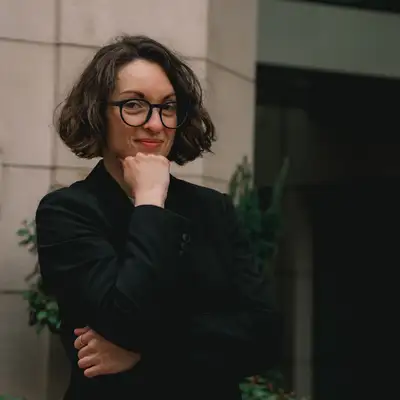
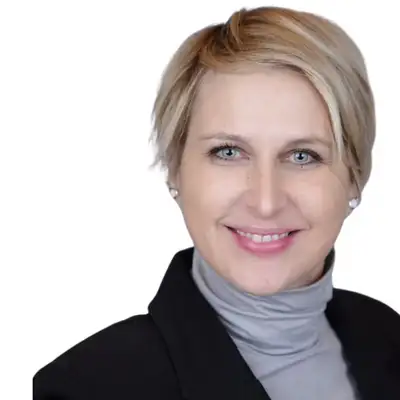
Magdalina Atanassova: Welcome to Season 11 of the Convene Podcast, brought to you by Destination Madison. This season we’re focused on wellness and designing events that don’t exhaust people. Today my guest is Angelika Bazarnik — founder of BanquetConsulting.com, CPCE‑certified event professional, and a seasoned expert who has spent more than two decades producing high‑profile programs inside luxury hotels. Angelika pairs this deep operational experience with her current Ph.D. research at UNLV, where she studies stress and wellness in the events industry. She’s also the creator of EVENT‑IT, a growing suite of digital resources that help planners reduce friction, clarify decisions, and plan with confidence.
As the season finale of our series on wellbeing, our conversation explores the real stressors planners face today, why research on event‑industry wellness has nearly vanished, and how Angelika is building solutions to support healthier, more sustainable ways of working.
We start now.
Hi Angelika and welcome to the Convene Podcast.
Angelika Bazarnik: Hi Maggie, I am so excited to be here. Thank you so much for taking the time to talk with me about some important issues in our industry.
Magdalina Atanassova: Well, thank you for the time because I think what you're currently doing is extremely important for our industry.
You've spent years on the front lines of banking event operations and you're now doing a PhD research on planner stress.
From your perspective, why should event professionals care about wellness and what's at stake for them day to day?
Angelika Bazarnik: Wow. I can't believe it. It's been 25 years since I've been working in this industry.
Everything from luxury high profile events with high profile guests as as important as presidents or large scale events.
And throughout my career what I was told is I was told I handle the stress of event planning very well.
So when I entered academia and started thinking about what I wanted to research,
I realized event management consistently appears on the list of most stressful professions.
And after 25 years in the industry and kind of experiencing these stressors firsthand,
I knew I was decided that this is, this is what I want to what I want to research and what I want to focus on.
So what I call is my research focuses on event professionals wellness.
But and I do approach the topic from theory and experience combined so it gives me a very unique perspective.
But one thing I do want to clarify is that wellness in our industry is often misunderstood.
It's not about yoga classes or spa days.
Wellness and event management should be about cognitive clarity,
emotional regulation and decision making under pressure.
It's about long term sustainable performance.
I often say that in our industry wellness is operational stability.
It's being able to move from event to event without questioning why I chose this profession in the first place.
Magdalina Atanassova: You've exactly wrapped up what the whole Season was about.
So thank you for that. I just saw the alignment go. I was like, yes, yes, yes.
So just to give some background for those of our listeners who.
But you search actually through over 3,000 articles and you search for the word stress, right?
Which turned to be quite difficult. It was not an easy challenge.
So you saw that in the last decade there was a lot of research that just disappeared from our industry.
Angelika Bazarnik: Right.
Magdalina Atanassova: The industry stopped researching stress.
So why do you think the industry really did that and kind of moved away from the issue?
And what risks does that pose for planners today?
Angelika Bazarnik: So let me kind of clarify what the research looked like and kind of what I got out of the. What it's called academically, a scoping review.
So first of all, I went in this direction because I was looking for contents everywhere and I was looking through for a needle in a haystack.
So I had complete difficulty in finding anything important in literature in the academic research.
So my professors were very skeptical and they were like, well, you're not looking hard enough. Right.
So that's where this whole like scoping review comes in, where it's a very systematic approach of how you research the existing literature that is out there.
And it did come up with over 3,000 articles to begin with,
but sadly to say,
only 66 of them were actually relevant.
And that's 66 articles in the last 40 years.
4, 040 years.
That is literally one to two articles per year.
And that number is going down. I divided this, these articles by decades and honestly, it's getting smaller and smaller and smaller. So. So it looks like, you know, we're talking and we're writing less and less about this.
Okay. Another startling fact is only two of them were academic.
Two out of 66 in 40 years, just to put a perspective on this.
So yes, in my initial searches,
unfortunately in academic literature,
the term event is very heavily used.
The term stressed is very, very heavily used.
So yes, it's going to give me a lot of articles.
But then when you really look deeply into them,
you realize after eliminating all the duplicates, and it was only 66.
So these,
like I said, these 66 articles, articles just like proved to me, and most of them, most of them actually 64 out of the 66.
So almost all of them, they were all trade articles. So from the common trade industry magazine like your convene or meetings and events and whatever other publications that are out there, some of them do not exist anymore.
So most of them are just within just people kind of enlightening us about either their processes or how they see it.
Some articles involved some academics in some way,
but like I said,
it was definitely just affirmation on why this research needs to be completed.
Magdalina Atanassova: Yeah, I can't agree more because it's scary to hear that most of the articles came from publications like us and not from academia, which is a completely different way of writing and looking into data.
Angelika Bazarnik: Well, let me, let me help you understand why academia hasn't really researched a topic. And the first of all is this event profession is very new.
It was just registered with the US Department of Labor as a qualified job classification in 2016.
So. And then there's not many people like myself who have extensive event background that enter academia.
So I would say most of the academics that teach events or research events,
they had a very brief, very short career in events when they decided to switch to academia. Like it just doesn't happen where somebody has well grounded experience of decades and now they're like, okay, I'm going to be an academic.
It just really motivates me because I feel it's a big problem in our industry and I'm really excited to learn and help the industry.
Magdalina Atanassova: That's great. And as a person who has a degree in event management, I have a bachelor's degree in event management.
I remember it was really hard for my university back then to find qualified professionals like you say, with actual experience and to find academic books written by then professionals.
Back then that was like 20 years ago. So I hope that things have moved forward and now it's not as difficult as it was back then, but still, yeah, I hope those that listen to us and are thinking of maybe going into retirement maybe or changing things up in their career,
maybe going to academia is a good,
good suggestion.
So let's talk a little bit how you define wellness for planners.
What does it actually look like in the context of a normal work week? So it's not as party,
but it's not spa day, but it's the way you plan, communicate and run events. Right. So can you give us a bit more nuance here?
Angelika Bazarnik: Yeah, absolutely.
For me, planner wellness and a lot of the articles that I read did say make sure you eat, make sure you sleep, make sure you do this. And it's true.
Those things that they say is absolutely true because lack of food, sleep and it's going to make you even more stressed.
So I do not disagree with these, with what is already been written.
I just feel planner wellness is about eliminating unnecessary stressors by redesigning outdated processes.
It's about applying Technology to reduce friction rather than adding complexity.
It's about encouraging honest conversations about stress and, and stop stopping the normalization of burnout.
I'm actually really happy that the new generation is more focused on themselves and their well being versus how we were focused on the well being of the companies that we worked for.
You know,
it's also about understanding the human dynamics behind every event.
The personalities, the, the pressures,
the partnerships and shape how the events actually unfold.
Ultimately, wellness requires shifting industry standards and the way we operate from all perspectives.
Magdalina Atanassova: In your interviews with planners,
what are the top stressors you're hearing about at each stage of the event lifecycle? And which of those do you think we underestimate the most?
Angelika Bazarnik: I did begin my qualitative research and the way I approach this qualitative research is I divide the event planning, the whole event into four stages.
So first is like the creation and ideation stage, kind of where we come up with the ideas and we, you know, kind of see the vision of what the event is going to be like.
Then we go to like the sourcing and the planning stage. So this is where we're actively seeking venues and contractors and,
and then of course the planning where, you know, picking out menus and speakers, et cetera, et cetera. The execution stage, I call that anything from like the day you're on site to the day you leave.
So the whole program itself and then the post event stage. So everything after the event, it's still like tied to the event.
And that could be your ROI, it could be your feedback, it could be budgeting. Budgeting can be very stressful.
Final billing process. Oh my God.
You know, looking through these numbers because it just always seems that there's so much inconsistency there.
The one thing that I'm seeing and is that a clear pattern is that planning and sourcing stage and the execution stage consistently emerges the top most two stressful stages.
There also appears to be an interesting relationship between those two steps.
Planners who experience higher stress during the planning often report less during the execution and vice versa. The planners who report lower stress during the planning tend to experience more, much more higher stress during the event days.
And that suggests that the stress doesn't disappear,
it shifts.
Okay.
If you absorb the tension during planning, refine processes, tighten communication,
anticipate any variables,
execution becomes far more controlled.
So my working explanation for this is that more experienced planners place greater emphasis on anticipation.
They stress earlier because they are predicting variables and pressure testing systems in advance.
Unfortunately, my sample size is still too small to make it statistically significant.
So in other words, season planners often choose structured stress during planning to avoid the chaotic stress during execution.
Magdalina Atanassova: And I think it's a good moment to mention that you're still running the research. So if people want to contribute and help you out, they can just reach out. There's information in the show notes.
I know people are surveyed out,
but this kind of research is extremely important for all of us to move forward, more informed.
Angelika Bazarnik: Right? So, yeah, absolutely, we won't fix it if we don't all pitch in. As simple as that.
This is probably still going to go at least for another 18 months, this research.
So there's three different research options that people can participate. They can also choose one of the three or all three as they prefer.
And that is we are designing focus groups,
we are designing interviews, which we've actually already started conducting.
And then based on all this data that we gather from the focus groups and from the interviews, we are going to do a robust survey. And I do understand, yes,
people are surveyed out,
but if there is one survey that you feel that you have few minutes to take,
please,
when you see that link,
please contribute.
So, yes, all of this is on the website. It's on banquetconsulting.com this allows me to reach out to the right people at the right time. If they signed up for the survey, they'll get the survey.
If they signed up for the focus group, they'll get an invitation to attend the focus group. So I don't want to bother people. I know everybody's very busy, but if, if, if so if people can contribute anywhere from 20 to 90 minutes of their life,
I will truly appreciate it.
Magdalina Atanassova: In those interviews that you've had already, what has surprised you the most about how planners describe the type of stress they carry compared to maybe other roles or other industries that you've researched?
Angelika Bazarnik: So I have not done any comparison research myself.
One of the two academic articles does compare event planners to communications managers.
I feel event planning is actually closest to project management in many ways.
Okay. If that's project managing a project, like a building being built or software development or something,
the only difference is if you're building a building and you're one day late,
the building's not going to fall apart.
Right. If you're building an event and something is a one day late,
it makes a much bigger impact. Right? So there's also. So it's like project management with a very strict deadline.
You hear this all the time, oh, this is delayed. That is delay that you don't you don't get that flexibility in events.
The date is the date, the time is the time,
and if it's 15 minutes later than it was supposed to be, people are going to be upset already. Right?
That's kind of where I kind of draw the two professions being somewhat comparable.
Let's. Let's talk a little bit about the article that I read.
And this was a study conducted in Spain by Verdejo Casado and colleagues in 2017.
And what they did is they used the Maslaw’s Burnout Inventory,
which is like a questionnaire to measure burnout,
and then the Occupational Hardiness Questionnaire to assess stress tolerance of the people.
And they hired two groups.
And interestingly, the study found no significant differences in overall stress levels between the event professionals and the communication professionals.
What my question was though,
was event professionals is a very broad term.
You can be hosting small retirement parties or you can be building conferences for thousands of people and everything in between.
First of all, that lack of definition, like my first question was, okay, which type of event professional?
You know, this is why I gather that data when I do my interviews and when I do my focus groups or when the survey will come out, that data will be gathered because event professional is a very, very broad term.
At first glance, that was surprising because event planning is consistently ranked as top most stressful professions.
However, in my view, the study completely lacked clear operational differences.
The term event organization professional was not deeply defined and the comparison group was broadly categorized as communication professionals,
which I didn't even clearly understand what that meant.
So while the quantitative scores may have not shown our differences,
I think qualitative approach may tell a very different story.
AD: Planners are embracing tier two destinations for new attendee experiences—and Madison, Wisconsin delivers. With city lake scenery, green spaces, and a safe walkable downtown, Madison will leave your attendees feeling recharged and reconnected.
Enjoy urban amenities, a welcoming vibe, and coffee under forty-eight dollars a gallon. Learn more or submit an RFP at visit madison dot com slash PCMA.
Magdalina Atanassova: And listening to you just describing the research and I'm like,
who did that research?
Who,
who agreed on that research to be published if it was peer reviewed? Confused. But anyway,
thank you for highlighting the differences because for those without the academic background, it may seem as a obvious comparison, but it's not.
Angelika Bazarnik: I just think in general, in society, like the term event planner,
the people don't understand the scope of the work.
And that might be also in academia, because if you don't really experience it,
if you just hear about it once in a while, everybody goes to an event.
Of course, there must be some people that put it together, but they don't understand the scope of work.
So this is why I think this is where my background puts me in a very advantageous position to research this.
Magdalina Atanassova: Earlier this year, we interviewed the current class of PCMA is 20, in their 20s. And we asked them, did you know the event planning was the industry that it is. And most of them said we had an idea about it, but we had no idea of the depth and how broad it is and you know,
how many things make up actually the industry. So it was a recurring answer.
Angelika Bazarnik: And I'll be honest with you, I researched the stressors but I never talked to my class about it.
Magdalina Atanassova: Yeah.
Angelika Bazarnik: Because I am hoping that we will,
we will shift.
The industry will shift by the time that they're fully submerged in it.
I don't want to scare people away from an industry I love.
I but I've thought about that. I thought about that a lot. I was like, I am researching this so if they're like really interested in what I do,
you know, they'll find it.
But I've never, I never discuss it. I never even tell,
I never tell them what my research is about and what I'm researching.
Magdalina Atanassova: To be honest with you, I don't remember my university professors sharing the amount of stress.
But then I had a unique situation where I was,
my actual university was within a five star resort with a convention center.
My classrooms were the breakout rooms and we were part of events from day one. So we were part of the whole organization. And you could see it.
So even if they don't didn't share it, we were,
it was very obvious because we were also stressing. We're like, oh, we are studying this. We have to be much better than everyone else. But it doesn't work like that.
Right.
So let's get tactical a little bit.
What are three concrete changes planners can make in how they design their events that improve wellness for their attendees and also reduce stress for the team?
Angelika Bazarnik: What I do is I group everything in what do I call the three Ps.
So first one is processes,
second is people,
and third is priorities.
This is not a magic formula, but this is something for the listeners to kind of digest during this broadcast.
Processes is where a tremendous amount of stress lives.
It's how we use technology,
how many platforms we're juggling, how much information flows through the embed team.
When processes are fragmented,
planners carry unnecessary cognitive load.
Okay,
the second one is people.
Event planning is deeply human work.
It's managing client expectations.
It's navigating internal politics.
It's working with vendors and partners.
It also means recognizing toxic dynamics and not internalizing the people's chaos.
Reliability should outweigh the price, the cheap. Like for example, if you're working with vendors,
finding a reliable vendor is more important than finding a less expensive vendor.
That's like one example when it comes to priorities,
this is where the project management discipline comes in.
Not everything is urgent.
Strong planners understand sequencing what must be done right now,
what can await,
and what may change.
Dealing with changes is a huge stressor.
So sometimes getting ahead of the game can be your biggest disadvantage and can become your biggest stressor. Because now everything you plan for, now you need to change it.
And I used to be that person that just wanted to get things done, done, done, done, done.
But then when I have to redo everything because the agenda changes,
it's sometimes better to pick a date that has like a reasonable timeline for me to accomplish this,
Reverify everything with my clients to make sure I'm doing the work once.
So prioritization will reduce reactionary work or reduce change work,
and it'll just become make the planning process more structured instead of chaotic.
So when planners strengthen their processes,
manage people dynamics intentionally and operate with clear priorities,
stress becomes more structured and less chaotic and less willing to take over your emotional state while it's happening.
Magdalina Atanassova: I feel you touched on it, but I want to go a little bit deeper into that from a practical standpoint. What kinds of technology or digital workflows have the biggest impact on reducing stress?
Angelika Bazarnik: So I'm going to tell you. I ask planners every interview what software they use. And the number one software used is a good old spreadsheet.
Magdalina Atanassova: Okay.
Angelika Bazarnik: I think a lot of the technology that has been put out there,
there's a large learning curve and restructuring of the way you do things. And I think that's. That's another stressor. It's called technostress.
And so I think people just avoid it. Like, I don't need this other thing in my life.
When this research started or even before that,
I was incorporating different tools from different industries to kind of help me with the event planning process after that. And when I started doing the research, I started to actually build some tools and design tools.
Like, okay, what is my pain point? My pain point is figuring out how much space I need. There's not one good calculator out there that can tell me how much square footage I need for this event.
I can draw diagrams. I'm really good at drawing diagrams. I actually enjoy drawing diagrams. But sometimes I don't have time to do that. Sometimes I need to make a decision.
Client looks at me and they're like, oh, we want this, this, this, this, this, this, this, this, this.
And how big of a space do you think we need? Like, will it fit in this hotel? In that hotel. And I'm like,
that's not a question I can just answer off the top of my head.
So this is where I started designing tools. I've actually designed 13 tools already that can help. And these tools are, they're, they're available online, they're completely free,
and they're really easy to access with one click. No need to sign up, no need to do anything, just use its benefits. Okay.
And these tools, two tools that are already in MVP format,
live for people to use are sets, which is an, actually a very robust calculator that allows you to calculate exactly how much space you need for an event.
And it also allows you to like play around with the seating options. So instead of, you can do rounds of 8, 5, 4, 7. It doesn't set you to a specific, you know, rounds of 10,
like what is normally the industry standard.
And then it also gives you, it kind of works in a form of a checklist.
So the idea is you go to this calculator and you have, and you have three tabs. First is the sets. This is where you place your guest count. And this is where you,
you select like what kind of seating configuration you want. Do you want classroom tables?
Crescent Grounds Theater,
where every day we're trying to add additional information into the platform.
So let's say if somebody is new in the industry and might not kind of understand why a crescent round might be better for your event than a classroom setup,
we're adding that information in there. So the platform works for very highly experienced event professionals as well as somebody who just is doing their first event.
Hopefully it has like this guidance process that kind of walks you through whatever is needed.
Next you can add exhibits to a room. So the calculator accounts for mixed setups.
You can't find this anywhere because most events I do are mixed setups.
There will be rounds and there's. It just, it just doesn't happen anymore that you just have a theater set up and nothing else in the room.
So the calculator has the setups, the exhibits, then you can add all your audio, visual.
It actually automatically suggests the type of screen you need for that setup to optimize all your attendees view.
And then as well it allows you to add everything that is within the event.
And I hope I have everything listed. If I did miss something,
anyone can email me.
There are also links on the website. The website is EventToolkit app,
but it's not only an app,
it's actually a website.
So you can use it from any device you don't have to download anything. You don't have to go to your Google Play or App Store.
Another big stressor is miscommunication.
And that is huge in our industry.
And what I used to do when I worked in the industry is I would draw with my finger,
I would take a picture of where I want the registration table and I would draw a little table with my finger,
you know, and send it to the my team to put the table right there so then I can move on. And I would, I knew that I can now focus on something else.
They know exactly where to put it.
Instead of making this a half an hour, process one table. Like, I don't have time to stand here and wait for you to bring the table for me to show it to you.
So I would walk off, do some other things because.
Because I'm that type of person. And then I would come back and then I would be dragging the table from one end to the other.
This is where Snaps comes into play.
Snaps is a picture visualization tool.
We all speak different languages.
We all process images the same way.
So no matter if there's a language barrier or if it's hard to explain or if the room looks pretty much identical on each side, you can you send a picture of exactly what you need where you need it.
So these two features are live.
They are completely free.
It's not like a bait thing that they're free now and then they're going to be paid.
No, this is our. The motto of our company is to make an impact on the events industry. And they will always be free for anybody. So that's why there is really no sign on or anything like that.
Because we want to prove to the industry we're not here to sell something. We're actually here to make changes within the industry.
Magdalina Atanassova: Well, thank you on behalf of all the planners that are going to benefit now,
hearing about them here.
Huge thanks for making this.
I've been in the planning process too many times to know about this process, about dragging the table.
One table.
Angelika Bazarnik: Everybody always does. Like, I've never told this to Ed somebody and somebody would say,
I've never done that.
Because we've all done it. We do it all the time.
Simple little things.
An extra registration table, an easel and a trash can can take half hour of your day. I don't have half hour to talk about a registration table.
Magdalina Atanassova: Yes.
When you plan events across the world and there's a language barrier, I mean these tools would be just a bliss. I can, I can picture it Especially in cultures where confrontation is not really a thing and they can't really.
They don't have the possibility to explain, to say things as they want. Yeah, I mean, perfect. Thank you.
For the planner who's listening, what are three practical changes they can make in the next 30 days to move toward a more sustainable way of working on top of those tools that you mentioned?
Angelika Bazarnik: All right, so we're going to call, we're going to say,
go check out EventToolkit, It’s one word EventToolkit app. That would be one of the three. Okay.
Another thing would be managing the people you work with,
the inner dynamic with your clients. Give them, give them deadlines, too.
Set up standards that you need this and this information by this time. And after that, that's their last call to make any changes. Like, be very clear with them what the planning process entails and what they can do.
Yeah, I've heard. I've heard absolute horror stories of event attendance going up 200% because the company invited way more people than they booked with the hotel.
You, as the event planner have to manage the people,
the people of, like your clients and your superiors.
We can't be just yay, yes for everything.
Okay. We have to give them some structure and guidelines,
the people on the side of you.
So if it's your coworkers, like any negative dynamics in the office, and you know what? I've noticed this in my career,
it happens everywhere.
It takes a very, very strong leader to ensure that the dynamics within the organization are positive and people work well together.
And then of course, the dynamics with the people that, let's say, are putting the event together,
like they're putting parts of the event for you. Right. Being very clear.
And learn how to communicate very clearly. So don't ever assume that somebody understood something just because they were not it.
I had this one employee with very limited English and she would just nod her head to everything I said.
So in the beginning, I was like, oh, okay, she understands. Okay, good, great. Let me move on to do something else. Right.
But over time, I. I realized she was nodding, but she wasn't understanding anything. I was telling her.
I was doing absolutely the complete opposite.
So when I think of that employee, I say, there doesn't have to be a language barrier for there to be misunderstanding.
Magdalina Atanassova: True.
Angelika Bazarnik: So whenever you are dealing with people, don't ever assume they understand because we all have different ways of processing information.
So be very clear.
Be very clear and ask questions to make sure that that person understands,
because your wellbeing is on the line for how they perform is how your event is going to come together.
And the third would be processes.
Simplify.
I think the processes loaded with PDFs and emails. Like, I go through emails. Like, I have string of emails about one event and the string of emails. And then you know how the email, like, does this thing where it also, like, shows you the email within the email chain and then it shows you all the replies.
So this, this document is like exponentially growing.
So my thing is,
I try to divide my email threads based on topic.
Like, if I'm going to go on a totally different topic in an email and let's say address the venue and let's say now we're just totally focusing on food and beverage,
I will create a completely new email thread that will just talk about food and beverage.
Another thing I do is, and I've done this a few times and it's shown to be very effective,
is if I'm in the contracting space, I will ask to use a shareable document so we can iron out the details so that way we clearly see what we're changing.
Some places will be like, no, they want a PDF because they want to make sure that they're working based on this version of the document shared. But I say it tracks all the changes I make.
And then I also always highlight yellow everything I make. Just so it's very, like, it's very visible.
And for me, like, every time I did this, I felt, you know, that whole planning process, when you're putting together either the contract or you're putting together the Bosnia, I feel it's just much less stressful than digging through the versions of PDFs and then, okay, was I on PDF version three or six or,
you know, we're in one document, we're both seeing what we're changing. We're writing each other comments about specific items.
We're eliminating probably a hundred emails at that point.
So I think emails are very stressful to a lot of us.
So how do we move that communication to something more sustainable?
That would be probably one of the three things that I feel people can take away today and start trying to manage their email load.
Magdalina Atanassova: I would say I agree with you. Maybe in some years we'll be speaking about email like we speak about faxing things.
Angelika Bazarnik: I hope so. I hope so. Email has been not only abused by, like, marketing, and I am adamant about unsubscribing from places that I just get subscribed out of nowhere.
And I manage that mailbox so it can be a place for information, not stress and work overload.
Magdalina Atanassova: Correct. So, Angelica, was there anything we didn't mention? We definitely should before we wrap up.
Angelika Bazarnik: So I want to kind of finalize that. Wellness has become very popular in hospitality but is largely focuses on guest wellness.
That's important.
But there is another audience that deserves attention.
The event planner who brings businesses to venues in large volumes.
Vendors and venues that intentionally design their planning process to reduce planner stress will have a significant competitive advantage.
Planners remember where it felt easy.
They remember where communication was clear.
They remember where the system supported them instead of exhausting them.
Hotels that reduce planner friction will win.
There also is an internal benefit when venues reduce stress for the planners, they often reduce stress for their own teams.
And interestingly,
many venue professionals have already asked me to conduct research on stress within sales and operations teams within the venues.
So I just want to make it very clear this stress in the events industry,
it's not just a plan or issue,
it's a structural issue within the industry.
Magdalina Atanassova: Very well said. I think that's just a perfect wrap to the conversation to this season.
I think you left a big door open also to continue the conversation and out urge all our listeners who want to continue that conversation with you and be more engaged with what you do and the research and so forth,
just to reach out. All the mentioned links are in the show notes for easy access. So I'd urge once again everyone to contribute to the work that you're doing because it's very, very important.
So thank you, Angelica.
Angelika Bazarnik: Thank you so much.
Magdalina Atanassova: Remember to subscribe to the Convene Podcast on your favorite listening platform to stay updated with our latest episodes. We want to thank our sponsor, Destination Madison. Go to visit madison dot com slash PCMA to learn more. For further industry insights from the Convene team, head over to PCMA.org/convene. My name is Maggie. Stay inspired. Keep inspiring. And until next time.