Subscribe
Share
Share
Embed
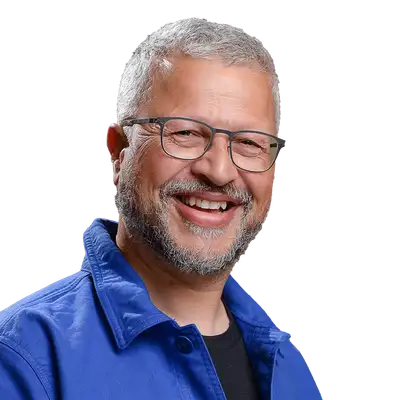
Ian Jindal speaks with Gertin Schraa Head of Sustainable Sales at Dyson, about the company's heritage, innovative approach to sustainability, and the challenges and opportunities in the refurbishment market. Gertin shares insights into consumer behaviour, the importance of quality standards in refurbishment, and the role of sustainability in sales strategy. He also discusses his career journey, Dyson's global operations, and the future growth opportunities within the company.
Dyson's philosophy is to rethink, reimagine, and renew.
Sustainability can coexist with sales strategies.
Focusing on fewer markets can lead to better results.
Consumer motivations for refurbished products include sustainability and price.
Refurbishment processes require strict quality standards.
Different regions have varying maturity levels in sustainability practices.
Sales KPIs are closely tied to return rates and refurbishment cycles.
A career path can be unpredictable and shaped by opportunities.
Continuous improvement is essential for growth in a sustainable business.
Chapters
00:00Introduction to Dyson's Heritage and Philosophy
02:51Gertin Schaaf's Role and Sustainable Sales at Dyson
05:56Refurbishment Strategy and Market Focus
08:50Consumer Behavior and Sustainability Trends
12:12Refurbishment Process and Quality Standards
15:00Global Operations and Regional Differences
18:11Key Performance Indicators in Sustainable Sales
20:57Career Journey and Transition to Dyson
24:08Future Opportunities and Growth at Dyson
-- Run time: 38 minutes
INFORMATION:
[ 🖥️ ]
Dyson - https://www.dyson.co.uk/
[ 👨👧 ]
Gertin Schraa: https://www.linkedin.com/in/gertin-schraa-17b8595/
Ian Jindal: www.linkedin.com/in/ianjindal/ and www.twitter.com/ianjindal
[ 📷 ] (c) Ian Jindal / www.instagram.com/ianjindal
-- Run time: 38 minutes
INFORMATION:
[ 🖥️ ]
Dyson - https://www.dyson.co.uk/
[ 👨👧 ]
Gertin Schraa: https://www.linkedin.com/in/gertin-schraa-17b8595/
Ian Jindal: www.linkedin.com/in/ianjindal/ and www.twitter.com/ianjindal
[ 📷 ] (c) Ian Jindal / www.instagram.com/ianjindal
Multichannel retail, ecommerce and digital business - interviews, analysis and discussion with Ian Jindal and InternetRetailing
Welcome back to the podcast, and I'm incredibly pleased to say that even though
this is only sound, the view we have is amazing.
So over my shoulder, you can see out from the Dyson office over the river.
Now, how do I pronounce it?
Is I-J, is it I? I-River. The I-River. Lovely. Good.
Well, look, helping me here with my Dutch pronunciation is Gertien Schraaf,
so welcome to the podcast. Thank you very much.
Pleased to have you here, as well as in this building, beautiful building.
I mean, it's a lot of heritage in here, and, you know, I think that that recognizes,
I think that if you go to all the Audison offices across Europe,
the world, there's always something iconic to it. Yes.
And also this one is really lovely. So I'd expected it to be super modern and engineering,
when in fact it's sort of Dutch, minimal, and then you come inside,
it's modern, and then you walk up these incredible sort of Art Deco stairs, amazing place.
Yeah, yeah, I know. I think that's also, when I came here for the first interview,
like, you know, you look for a big sign that says Dyson or whatever,
right? You can't find it because it's very minimum.
On the door, it's Dyson. But if you then enter it and suddenly,
wow, you know? I came into a few offices of Dyson now in Europe.
And i think the philosophy of dyson is also it's part of the philosophy as a company you know to say,
we want to rethink re-imagine renew
so everything we do in buildings has a
story to it yeah so we use solar
power we rebuild old stuff into
new we reuse it etc etc and i think
that that is what dyson stands for right which is which is
great to be you know because i think the culture in this office
as well like it's not all brand new it's
not like if you have a look at the brand of Dyson which all is engineering
it's new it's innovative etc and here you suddenly are in a very old building
but on the other hand it has a touch of technology into it because it is a great
office to be in yes well look I'm feeling jealous but as a consumer when I see
Dyson I'm thinking of your high street stores.
And so London, New York, San Francisco, wherever I've visited a Dyson store,
they're kind of the same, very space age, very minimal, 12 products,
really celebrated with amazing lighting.
So that's the consumer view of the brand. But when you look at the website,
it's a totally different story.
There are thousands of staff, which I was shocked by, Global operation,
real focus on sustainability and invention and innovation.
So lots to unpack, which we get onto, especially given your role.
But we've sort of dived in with our architecture and heritage chat.
Let's start with you. So tell us, firstly, who you are and your role at Dyson. Yeah.
So, indeed, it's not a very English name, so Gertin probably is the best to
pronounce it internationally, right? Tell us the correct pronunciation.
Look, but in Dutch it's Gertin. Gertin, lovely. Gertin, it's a lovely hard G, right? Yes.
So my official title is Head of Sustainable Sales, which is actually a new function
to Dyson since last year.
I got contacted, came in contact with Dyson and we talked about the role.
At that moment, it was a very great interview, you know, the role wasn't really there yet.
They were in discussions about it, but my resume was interesting to them because
of my background in a bit of supply chain operations, but in commercial, e-com, etc.
So, and they said, well, Gettin, we're really thinking about doing something
with all our returns products.
We have to renew them, do something with it, and not only from a sustainability
point of view, of course, but in the end, we're also here to make money, right?
So we look at a new proposition. We want you to build it up.
Now, my experience is that Dutch people are very direct.
So when someone says, head of sustainable sales, it sounds like a contradiction.
You either want more sales or you want to be sustainable. So what was your first
response when someone said, come and sell more, but in a sustainable way?
I find it interesting because it has a commercial touch to it.
And that is something I love, you know, so I do want to be part of the commercial side of business.
In the end, to sell and make money, right? That's where a lot of companies are for.
On the other hand, I think building up a new proposition also is something which sparked with me.
You know, at Philips, and we'll come back to that later, I built up the whole
direct-to-consumer proposition, also from scratch. And I think also here, it's something new.
Build up a proposition, greenfield, look at it, see how it works, et cetera.
And I think that, of course, sustainability and sales might have a contradiction.
I don't think in this case, because you still do something with products that
are otherwise collecting dust or you need to recycle.
Which is the worst, which is probably the worst. Which is that link to things
coming back to you and the recycling as well.
So you've been enrolled now nearly a year.
So how is the role shaped up? How would you describe it now,
given that you've had a chance to settle in?
Yeah, so this role is focusing on our region, EMEA.
At start, when I came in, they already did refurbishment of returned machines.
But there was no very clear strategy on which channels to sell,
the pricing proposition, the branding of it, etc. And that's one.
Secondly, there was a lot to do about the whole process from returns into the refurbishment cycle,
the quality standards, how to shape the supply chain of getting spare parts
in or harvesting parts from returned machines and all those things. So I think step by step,
took that mapped it out and say guys what are the the big wins we can gain in this proposition,
and that was first be very clear
on your channel strategy and the countries to
focus upon because when i started we basically sold in every european country
refurbishment but then the business per country was very small so do you then
get the right effort of people the right focus etc i said guys is I believe in less is more.
First, shrink it down, create focus with a few countries, let it be interesting
for the people to work upon, and then start to scale afterwards.
So fewer, bigger, better.
And so which countries did you end up focusing on? So now we sell in Germany,
Austria, France, Italy, and UK.
Right, and is that, so when you think about sales, we've already touched upon
your direct-to-consumer at Dyson stores.
We also see you online, of course, and in department stores, specialist stores.
So you've got, you know, quite a mix of channels to market.
Where does the refurb fit with that? Are you mixing it in, selling at the same
time, or separate channel?
Yeah, no good question. And I think we're still exploring, right?
But next to the proposition having it on our own Dyson.com store,
which I think is important because also our consumers need to be aware of the
fact that We don't only sell A-grades, but also refurbishment because out of
the sustainability strategy we have.
And I think there are a lot of customers, of course, going direct.
And you need to offer them the full range of what we offer as Dyson,
which is also refurbishment. And there's a big market for it.
Secondly, we know that there are still a lot of marketplaces actually out there
which focus heavily on consumers that are looking for a refurbished machine.
And those ones are we now tapping into.
And those consumers, obviously there are many reasons you would want that.
But if you had to weigh, are consumers doing it because they themselves feel
they want to avoid waste?
Or is it because of pricing or a happy mixture of both? Is there a difference or is it?
No, that's a mixture of both, actually.
From our research, of course, which we have done a couple of years ago also,
there are many shoppers. So there are, yes, there are shoppers that look for a bargain.
So they want the best price for a steel Dyson. Can they afford a Dyson machine
against the lowest possible price with a quality standard?
Yes. And that's where we have also refurb for.
And you have also channels where we see people acting because of also price.
So eBay is a great platform. We know eBay is a big platform,
but we also know historically eBay is a kind of a bargain platform as well.
On the other hand, we see more and more marketplaces coming up in Europe,
which specifically target consumers that are buying because of their sustainability.
Vision, their beliefs, etc.
So if you are, for instance, in France, we sell on back market,
back market typically positions themselves as the marketplace for shoppers that
from their belief want to do good to the planet. And that's where they buy.
So that's where we are tapping into to different markets with different marketplaces
touching upon different target audiences, actually.
And I think it's great, you know, even myself, I'm seeing it myself with change
in buying behavior, you know, like, I mean, everything becomes more expensive.
Why not buy a secondhand machine, which is still good, you know?
Of course, but also if you've- There's nothing wrong with it.
If you keep your own machine for five years, and you look at it and think that's
now an old machine, you're still happy with it.
But I think there's also a cross-generational effect we're seeing with the millennials
and Gen Zs, where they've grown up with parents who have branded items.
And last century, they'd have bought a good or better alternative and then traded up.
Whereas now they're saying, well, I want the same thing my parents have,
but I'll get it from eBay or I'll steal from them when they're not looking.
So I think there's a real brand-focused.
Especially for brands with a good engineering pedigree so you know they're going to last 10,
or more years yeah no and i think in all fairness i mean our dyson appliances are high-end,
there's a premium to it so with even a
refurbished machine with a bit lower price point we're stable
able to tap into potentially new target audiences as well yeah which we hope
they become dyson lovers and stay connected to the brand later on as well yeah
so there are multiple effects which we're trying to tap into and see how we
can get our products into the target audience,
who's looking for something like this right and let's think about the people who are doing the.
Refurbishment so you have manufacturing around the world and putting things together first time,
is one skill but taking it apart fixing it
putting it back together is another a very difficult
skill so where does the refurbishment happen and
how are you managing the training and growth
of those staff so across the world we
have several locations where we do refurbishment activities if you then zoom
in on emea with the region where we're at we do majority of our continental
europe refurbishment at a third party flex in budapest in hungary which is known
not only for dyson but for multiple brands they do these kinds of activities.
So not only repair but also refurbishment which is quite closely connected from
a capabilities perspective.
In the UK we also do our refurbishment which is owned by ourselves,
at this case and then we have a team around let's say for the globe that looks
at our quality standards, works with our outsourcing partner to look at how
they basically get all the returns in, do the refurbishment, do the testing,
the quality adherence to what we want,
re-box them and able to be shipped out again.
So against the quality requirements we set, right? It's something we want.
A certain quality standard to be delivered to our customers.
That's the promise we have to make.
Has this been going on long enough that products have been refurbished more than once?
So they've gone out new, come back as refurb, and come back again?
Or is it typically a new, then refurb, then you lose contact?
Yeah, exactly. So first focus is really one-time refurbishment.
And then hopefully the people keep their refurbishment scenes for at least 7 to 8 or 10 years.
And I mean, in all fairness, if you use a vacuum cleaner for about 7 to 10 years,
the yield is so low, you can't refurbish it.
And then you just need to make sure you get rid of it in the right possible
way through the recycling.
And to what extent are you involved in helping that recycling process?
Because there's lots of legislation in Europe, for example, around that.
So is that something that falls under your remit?
No, no, no, no. So, yes, we do, of course, doing some pilots last year as well.
We're looking at certain trade-in solutions, like you see already with iPhones,
etc., right? Oh, yes, yes, yes.
So you can trade in your old machine and you get a certain discount for buying a new one.
Right. And then we want to control as well and get rid of the recycled machines
or dispose of them in a good way, right?
So we continuously need to track how to recycle, how it's been recycled,
etc., etc. So that's a quality requirement we put at those parties that do the
recycling for us, of course.
And then now on top of it, we're looking at what can we do further in recycling,
reuse of materials and stuff like that.
Which I think is a very untapped potential still at a lot of brands, which we need to do.
That's right. Now, we're talking about EMEA.
But obviously you're a global brand. So when you look at the other regions,
is there a sort of clone of you sitting somewhere in the Americas or Africa, Asia?
And if so, how would you characterize the difference in maturity between what
the Amir market does and the other regions?
Yeah, so we have initiated likewise roles in other regions as well,
led by also a group function, let's say global function, to coordinate.
And I think you look at different maturity stages, the business and the way
of doing business in other regions is different from each other.
Like the US, for instance, we look at a higher percentage of returns typically,
that is the US market, right? And why is that?
I don't know exactly. I think the way, it's not related to Dyson, right?
When I come from the former appliance industry as well, we see still a higher
return in the US as well. And return instantly, as in, I bought it,
I wish I hadn't, or I've used it for three months.
Within the remorse period, take it back and stuff like that. Oh, interesting.
That's going up on another time, I think. And they also have their people that
look after the whole refurbishment.
They also make use of Flex as a refurbishment partner and then sell through
the marketplace. So we have likewise functions.
It's not always the same job title as we see, but we're maturing in this proposition.
In, let's say, people process tools. So yes, we have a network within the globe,
talk about challenges, opportunities, and stuff like that, because we're all learning still.
So I'll be interested in a second just to ask you about where the opportunities
are, because it's such a fascinating area with so much growth,
so I'd love to hear your view.
But let's get super practical first.
So you're sitting in the management team meeting, and everyone's talking about
sales, some innovation here, some philanthropy there, and then they all look
at you and say, Gertien, how's it going?
What's the KPI or KPIs that you're tasked with to deliver within the group overall? Yeah.
So, of course, one is sales. Yes. So you're still charged on sales, yeah. Quantities.
Because what we want in the end is we have an X percentage of returns.
Which X percent is scrap, X percent go to back on stock as an A-grid because
it hasn't been touched and the rest goes into our refurbishment cycle.
And so that's really your supply. And that's what we look at.
So we have a certain constrained sales because,
the maximum we can do is sell what we get back and where we get the maximum yield to refurbish.
So if, for example, the world changes and every product 100% perfect and every
customer keeps every product, then you're going to run out of stock to sell. Exactly, yes.
That's in the end maybe the goal as well. So the less returns we get as a company,
the better it is, of course, right?
Because we want to make sure the people are happy with what they buy and it's
against a good quality standard.
So there's no reason to return right i mean that's in the end what we all would
love yes we know in the world of ecom etc return rates are massive and i think
everybody will be looking at that.
But in the end i will be out of a job if we don't get returns
right next to some other work i'm doing a
dice so i'm not too worried but no but that's in the end our goal right so the
constraint i have on sales as a kpi is what i get as a return refurbish and
then sell out that's the the core KPI we look at to reduce the amount of stock
sitting in our warehouse collecting dust, right?
We want to get them moving and generate cash flow for the company.
We want to do that, of course, against a reasonable margin with a price that
fits the expectation of a customer,
but also, of course, is in line with how we as Dyson want to brand and market
our products. So there are two sides to that.
There's obviously the cost saving through the avoidance of waste and a margin
on sales. So an interesting balance there.
But that sort of brings us on to, coming back to you, because you've had in
your career a mix of direct-to-consumer sales roles and more operational roles as well.
So our listeners waited long enough, and they've probably looked you up on LinkedIn by now already.
But just give us a sketch of how you ended up here.
I have Philips and Cramp in mind, but there may be more. So what was your path to here?
It's always fascinating because I sound old now if I say this, right?
But when I talk to younger generation as well, and they talk to me about how
I built up a career and how you build up a career and,
you know, because young graduates always think they can plan their whole career
out and it puts a pressure on them. I said, guys, I never planned any career.
Forget all about it. You know, it will just happen to you.
But of course, there are a few things in your character and your beliefs,
which probably will guide you.
And then things will come towards you.
And you'll know whether to take them or not. Exactly. So, if you come back,
I studied both marketing and a bit of supply and operations,
where people say, that is rather strange, right?
Because typically people in the commercial side of the business don't genuinely
are interested in the operations of it.
That's also a Dutch, in that way of assembling different things with a degree,
where you can study you know science technology
and you know sort of softer liberal arts
things so that's so that's when after my study i
got contacted at phil from philips and they said you know we have still manufacturing
at that moment in the netherlands which is not there anymore but it was it was
those days it was all the last days of philips manufacturing in the netherlands
but we still produce vacuum cleaners and stuff like that and there i started
in logistics doing lead time reduction,
stock reduction programs and stuff like that.
Went to do purchasing. That was the moment when we launched Senseo. Oh!
I might still remember like 2000, 2001.
It was a revolutionary of coffee drinking, right?
So that sold in millions. So I was lucky to be in purchasing because I always
could reduce my cost price. I got my targets.
So I went into China, restructured that whole purchasing department.
At that moment also was part of sustainability audits, which typically now come
back right so i'm not sure if it's the right thread but.
From a purchasing department also there are days they
were less purpose-driven and
were more about cost and risk management
well if you look at that moment the reason for having also sustainability audits
was to make sure we work with suppliers that are in adherence to the standards
we would love to have and we all know the examples of our famous shell and everybody
that, you know, with child labor and stuff like that.
So that's where we really got into the details of every single supplier to make
sure their adherence to what we believe is right and how we want to do business.
And again, an interesting balance, because on the one hand you're saying reduce
costs, because I'm buying all these Senseo things from you.
So driving costs down with volume, but also saying we want standards to come up.
So in a way, it's always this sort of pincer movement of push and pull.
You will always find cheaper alternatives, but you need to remember,
right, cheap is not the most sustainable way of doing business towards the future.
And I think when you keep that in mind, you know, you will always find the optimum balance.
It will pay off in the end, in terms of quality and stuff like that.
So you're in China? In China, by myself.
Trying to find out and discover the world of China, which is fascinating.
So I will, to all young people that are in early careers and even maybe older ones, go out there.
You know, the world is not your country you live in.
There are different cultures, ways of doing business. I mean,
and the philosophy of people in Asia of doing business is completely different than in Europe.
And you need to understand that because that will help you throughout your business
as well, when in contact with them, when doing business with them, etc.
So it was fascinating. I spent there six, seven months, saw a lot of businesses,
saw the culture, so it was fantastic.
Moved back, head of purchasing, and then there was a moment in my career where
I said, I'm now working seven, eight years.
I have a bit of marketing and commercial backgrounds. I want to do something. Time to use them.
Time to change. It's not easy. It's not easy to change cross-functional.
If people look at you being a supply chain purchasing
logistics guy saying yeah but i want
to move into marketing yeah so that was very difficult
how did you persuade them because this is something that
my university age children are saying
to me which is you know should i go this path or
that path whereas you had both so you're there a senior
logistics person saying look can i
have the budget please and starting some marketing what what persuaded
them to let you do that a lot
of talking first into in the company how people look at
you how they you know how they think you could fit in or not what they think
is important in a role and what you can bring from a capability perspective
and skill perspective you know because from an experience perspective you can
talk long but you don't have it apart from your university i got lucky that,
we had a black belt program in philips right and i ended up in a black belt
program and then i did a project in the e-com team of Philips.
Actually, when we started a bit of the direct-to-consumer proposition.
So probably I've done something well because after that Blackwell program, they asked me to stay.
And I think that is because you show them certain capabilities and skills.
And I mean, certain knowledge of e-com and digital, you can quite quickly learn
and start to apply, right?
But also I think there was a time when the emergence of e-com shook things up a bit.
And it was an opportunity for people to shift us now, I think,
if someone's entering econ, because the skills are so much more demanding and
better known, that's not really where the chance for breakthroughs come.
So that's why I said a career is not to be planned. Things overcome you sometimes
as well. And I was at that moment.
Or maybe lucky or whatever, if it's luck, I don't know. But at least you get
into an area where you just can apply your skills and capabilities,
personality, in an industry which is just trying to learn.
And it's going fast-paced, and you trial and error.
And that rewards people who don't just know one thing, but know lots of things
that can pull them together. Exactly.
You know, so especially at that moment when entering into the
direct-to-consumer e-com proposition so we
just launched one country we started to build it up i
became in the end responsible for building out that proposition
and i think i used a lot for my
past experience because in a building up a direct to
consumer proposition was something new to phillips as well right a manufacturer
100 year old more than 100 year old manufacturer by dna suddenly still start
to sell directly of course then all of a sudden instead of having a hundred
major accounts you've 10,000 things called customers.
Single-piece delivery. Causing a problem. Not shipping pallets, but single pieces.
Having opening hours of call centers, not between nine and five,
but certainly in the evening because people buy in the evening on their couch,
right? So there's a lot of things to explore.
You know, in the noughties, it was very easy to put a button on a website that
says, click here and you'll get magic.
But if you didn't have the operational capabilities behind that button,
you couldn't keep your promises.
So I think that blend of especially supply chain operations logistics was really
needed to make the promise of the web work. Yes.
And I learned a lot of new things as well, like product teams,
working with IT and how this whole engineering works, you know,
and how things can go wrong.
Everything you have to do with online payments and fraud and all the things.
So we need to learn everything, basically, which I love, you know.
It's greenfield, it's building, it's working with new people.
New capabilities, trial and error,
And what I loved is really multifunctional, you know? It's from operations,
what you said, operations, marketing, IT, payment, finance, and everything in between.
And of course now, you've added in that post-moment of purchase to the returns
and then you sell again. So it's becoming more circular. Yes.
But you were at Philips for quite a while. Yes.
I think around 19 years. Wow. Where people are like, especially the younger
generation, how can you stay 19 years in a big company? And I said, agree.
Before I say, agree, it's a pretty long time. If you look at Philips,
I mean, when I started, I mean, it was, and still it's a big company,
but at that moment it was a massive company, you know, many different industries.
It was still TV, audio, lighting, domestic appliances. Medical, scanners, everything.
So there was a lot to do. So every time you moved from a business unit to a
business unit, it felt like you're almost in a new company, right?
So, and I love to be part of a brand that produces a product,
which I love, you know, I'd love to be part of a company that,
where there's a physical product where you can be proud of, you see out there
in the street, people use it, people talk about it, that, you know, I have that. So then...
In the end, after that period of 19 years, you saw the transformation of Philips.
You know, they already divested TV audio earlier than domestic appliances, lighting.
So basically, the old Philips where people recognize Philips for is not there
anymore from an ownership perspective.
It's still branded Philips, but it's a brand licensing.
Yes. And they now focus heavily on healthcare, which I think is a great industry
to be in. There's lots of untapped potential, you know, having healthcare at
home, et cetera, rather than in hospitals.
So I think the strategy is great, but there's a big transformation ongoing.
And that was for me also a moment to say, am I stepping into that?
Do we then continue that journey or do I think, I'm not sure if healthcare is
the fast paced industry, which I now want to be part of, which I love to be part of.
But then you're saying a fast paced industry. I think your next move was then to cramp,
which, you know, for me, trying to explain it to someone, it's like taking RS
components or Euro car parts with agricultural machinery.
I'm sure that's a terrible comparison. But for somebody who doesn't know cramp,
can you just try to explain the enormity of it?
I had exactly the same. And when they contacted me, and I didn't know about
the company, because it's a Dutch family-owned company.
And very much B2B. Working within Europe and B2B. So it's not a consumer brand.
Nobody knows it. It's behind the login, right?
So you dive into it. You start to read about it. And then my first reaction
was the same, like agriculture, B2B.
I'm not sure if that is something I should tap into.
But when you start to read about it talk to people about it there's a fascinating
world of how agriculture actually is quite dynamic yes you know so and especially
if you look at the company of cramp who's a leading wholesaler in agricultural
spare parts serving around 600 000 parts in europe.
The core need is that,
keep farmers farming so if something breaks you
lose money so it needs to be
on the spot the right product at the right time at
the right place and i think that philosophy in itself
resulted in the fact that this company already launched
their first online web shop early 2000 yes so
the big philosophy the owner was there already they continued
to invest in that and nowadays almost all orders go
online which is in b2b unknown yeah right
i mean it's very still a bit lagging for
b2c but almost all orders online their
warehouses to a large extent are robotized so
deliver or let's order this afternoon deliver sometimes in
night which a lot of b2c brands even can't
do right no no but when you say that i mean looking at the the
stock because i spent i thought i'll of a quick
look two hours later it's everything from
engine gaskets for a
tractor up to cab fairings
which must weigh you know two three
hundred kilograms and so i'm just imagining a warehouse where you're trying
to pick and pack things that weigh 10 grams and are flexible size of a4 and
these enormous things a logistical challenge this is enormous yeah it was enormous
So the moment, the first moment I entered actually a warehouse,
I was like, wow.
This page, all the different articles ranging indeed from very small screws
until barbecues and everything we have, right? And even custom made parts.
And I think that was the philosophy of the company. You know,
we need to serve everything for the farmer, everything.
So you've done direct consumer commerce, e-com, logistics, purchasing,
international, agricultural, B2B, just-in-time, massive SKU range.
Then the phone rings, and it's Dyson. Just tell me about the,
what was the moment you thought, this is it, I want to go now more into that
sustainable, circular, but still commerce.
Yeah, so after, let's say, a little over three and a half years at Kramp,
you know, building up a whole digital marketing department.
So Kramp was technologically advanced. They had an online shop,
but it was a lot about e-ordering, what I call, which in nature should be it,
right? People need to order, deliver, use.
But there's way more on e-com, where I said there's a difference between e-ordering and e-com.
With e-com, you get into the experiences, personalization, and use digital marketing
tactics to keep people loyal, etc.
With e-ordering, you're not doing it for fun.
No. For example, you know the tractor, you know your machinery,
and often, if you're the farmer, you may have delegated the ordering to a junior person as their job.
So there isn't that idea of desire, of building demand and loyalty,
because it's just a job that's functional.
It's a very functional way of buying, right?
But on the other hand, you can still make their life easier to support them
because they don't always know the part number or the name.
But they know they have a John Deere tractor and it should fit.
So that's where personalization comes into place.
And also digital marketing where we said guys
we know that after a certain period of time you
need to renew so then you kind of
help and say it's about time to renew this here's it
but really it's the difference between being part of their working
life yes and then with dyson
it's more part of their lifestyle yes so
when dyson i got in
contact with dyson and i said i love
the appliance business let me start with that you know i think
agriculture was fantastic it was a great addition
to my career because of the work to be
done in e-commerce digital marketing etc which i love
but when dyson gives a ring i got back to my phillips time again and then when
we looked at innovation there was always a dyson machine on the table of course
because the the first dyson appliance was the bagless vacuum cleaner and there's
one of those and it was It was one of the first ones, actually.
So you always said, you have this iconic brand in your head where you said,
wow, you know, this must be so fascinating company to work for,
so revolutionary, innovative, from a branding perspective, quality.
So that was one, right? So that attracted me to start and build my career here.
The other one was, Gettin, we have something new, we have a new proposition.
You've done something like this in the past in building a proposition.
In sustainable sales which is not only about sales but
you need to look through the whole supply chain with us to see how we
can optimize things how to build processes etc
so that's where my knowledge and background in operations logistics etc came
will come back and i think that was the connection between the two to basically
merge and say wow you know it will be a perfect fit And that's when I said, guys, I'll be joining.
And here I am. And here you are.
So our time is coming to an end. Let's just finish it with what next?
So you've got your feet under the table, some incredibly interesting opportunities as well.
When I walk out of the door and start wandering the streets of Amsterdam,
what's the most exciting thing on your agenda now? What are you doing next?
I think next to, let's say, making sure that the whole refurbishment proposition
gets even better optimized, etc.
With, let's say, the constraint of returns. I'll just make sure all the returns
we refurbish and sell in the best possible way for Dyson. That's one.
And still lots to do there. The other big thing we're working on now is within
the after sales remit, making sure also our spare parts get to the right consumer,
because we want to make sure as well that people, when people buy a product,
they also get the right support.
To continue to love their product in the best possible way.
Yes, we sometimes have quality problems as well, but we want to solve them as quickly as possible.
And there's lots to do with Dyson still growing, and we're a growing company still.
It's still a big scale-up, I would call it. So there's a lot of processes,
et cetera, which need to be fine-tuned, built up, etc.
And I think that's where my experience coming from a bigger company like Philips comes into play.
You've seen it, you've done it. What can we use from your knowledge into building
Dyson into well-designed processes, efficiency, etc.
Because we still continue to grow. And I think that's the big thing working
on now to mature Dyson, get processes into play, and get my experience with them. Great. Right.
Well, look, Khatyn, it's been fascinating chatting.
I'm going to snip some of these and send it to my daughter when she next asks
me about career advice, because I think you've come up with so many points there.
As well, of course, has given us an insight into how such an innovative brand
is balancing that invention with quality, but also sustainability.
Absolutely fascinating. Yes. Thank you so much. Thank you very much, Ian.