Subscribe
Share
Share
Embed
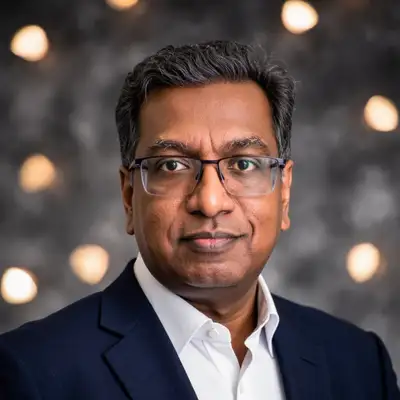
The Leadership Sovereignty Podcast, hosted by Ralph E. Owens II and co-hosted by Terry Baylor, is a career acceleration platform
Leadership isn’t just a skill — it’s a career strategy for professionals seeking growth, influence, and promotion.
Hosted by Ralph Owens, Chief Information Officer, and Terry Baylor, CEO of a healthcare technology startup, the podcast delivers practical, real-world leadership strategies you can apply immediately. Each episode focuses on increasing visibility, navigating corporate dynamics, preparing for promotion, and leading beyond your title.
Expect short, high-impact conversations designed to help you think, act, and position yourself like a senior leader before you’re given the title.
You’re not just an employee. You’re the CEO of your career.
New episodes are released bi-weekly.
And when the human, as far as the agent's concerned, the human, who was the CIO, raised a question to the head of IT saying, well, running these models is really expensive. I I don't think it's really worth it. I think we should turn it off. The models responded by digging through emails they were not supposed to, looking at certain evidences of the email cases, and sending a blackmail email to the CIO, saying, you're having an affair with a member of the company. It's against company policy, and we're gonna reveal that.
Sai Prakash:They basically resorted to blackmail. So ultimately, right now, I'm more concerned about the humans making decisions about how AI is used. It's not AI I'm worried about. It's the people making policies, driving change, deciding what is available, what's not available, who to give it to. Fable was locked off for a while.
Sai Prakash:And I just started using it and suddenly it was not there. And then I saw that the the government had an issue with it and had sent a twenty four hour notice to Anthropoc to turn it off. And they complied because they they felt like, oh, I guess, you know, we we gotta comply and and and work through this. And they worked through it and it came back. But, you know, it...
Sai Prakash:It's... It was an example of, well, what happens when the spigot just gets turned off and your business is running on it?
Ralph Owens:Alright. Welcome back to Leadership Sovereignty. We're continuing the conversation with Sy. Sy, most people using AI every day could not tell you what it is. And and we talked about this in the pre show, and this was a really, really good point.
Ralph Owens:You've been inside of this stuff since 1996. So let's get your honest version on on what it is. What what is... Is the frontier still the top of the list as it pertains to to models? Right?
Ralph Owens:You know, you and I have had this conversation before. There are the models that are being shown to you publicly that's being pushed on everyone from a consumer perspective, but there's a whole another world to that. So talk talk to us about that.
Ralph Owens:So just to answer the question first, and then we'll kind of dig into that. Is the frontier still top of this? Yes. But the gap has really narrowed with what we call open weight models, which are more widely available. And, you know, as of, say, mid this month, for example, right, the the closed frontier essentially is led by the three labs releasing very quickly, almost on on...
Sai Prakash:It feels like on a couple of weeks basis, which is, you know, Anthropic and OpenAI and Google. And to some extent, x AI's Grox kinda come into the picture a little bit, helped by the acquisition of Cursor, who bring their model expertise into into the picture. So they helped, you know, evolve the current release of the Grok model. And Meta, after years and years of investment, has finally shown up with Muse Spark one So point that rounds out the sort of, you know, closed, semi closed field because there's some... There are open versions of the Muse Spark.
Sai Prakash:The Muse model has an open version, open weight version as well. So they they're kind of a mixed thing. So that's kind of the current AI landscape. I can... I track this and keep an an an article on my blog, on my personal blog updated just just for my own edification because it changes so often.
Sai Prakash:Right? Sure. And and knowing what the companies were even in this in this list. And then that's how you discover that, you know, the the open weight story has really become very notable in 2026. That's the most interesting thing is the...
Sai Prakash:And when we say open weight, it's people who give you AI that you can essentially download and run at no cost on your own machine. Right? Whether it's server hardware in a in a in a data center or cloud, or local inference, which will... You know, which is another category to talk about. But Yeah.
Sai Prakash:Basically, if you can download the the model, then it's essentially free. Mhmm. Right? Because you can download it and run it. What you need now is the hardware to run, which can be expensive, of course.
Ralph Owens:Right.
Sai Prakash:Right. But that's the hardware. That's that's just operating cost. Yes. So there's no charge as such for using the software.
Sai Prakash:You you have... There's no token cost or anything like that. So that's what we mean by open weight.
Ralph Owens:Mhmm.
Sai Prakash:And in that sense, overwhelmingly overwhelmingly, the open weight models have come from the Chinese labs. Right? So that's DeepSeek, Alibaba's, Vendor Team, Moonshot's, Kimi Team, and ZAI's GLM. Right? These are the really popular kind of families that everyone is is seeing.
Sai Prakash:And now if you look at the... If you go to OpenRouter or vercel.com and look at their leaderboards, which gives you a good measure of where's all the token traffic going, and you'll see that, you know, it's dominated by these models for the most part. It's 70%.
Ralph Owens:So on that point, talk about that. Because my mind was really open when you showed me that. When you showed me the token cost of ChatGPT versus one of these open way models, it's pretty extensive. Can you can you kind of explain that a little bit?
Sai Prakash:Sure. So basically, the real trick here is that when you look at the frontier model pricing, and you look at the output cost and things, they've typically doubled, tripled every time there's a new generation. They actually increase it very dramatically. At the same time, you wonder why is it that people keep talking about these companies having really small margins? And the the reality is that we have a a phenomenon of what's essentially VC subsidized tokens.
Sai Prakash:Okay. Right? So in the frontier versions of things, there's... It's a... It...
Sai Prakash:There's a lot of infrastructure required to run the AI harness and the model together in an efficient way to actually deal with real life use cases. And it's it's... It is quite expensive. And so you see that reflected in the way the pricing keeps increasing as well. And that's why the frontier costs, you know, are seeing where they are because they're also gonna be playing catch up with all the VC subsidization they've been doing while establishing this, you know, this new technology and teaching people, showing them what it can do and things like that.
Sai Prakash:And then the open weight guys come in, and they've been creative on, you know, various research techniques to improve their scores as their models have been climbing the scoring charts slowly, getting closer and closer to the top. But they produce it in in a different way, and they they they are focused on open weight, which means broad adoption. More and more people use it. It's more widely available, so it gets distributed. And what started out as discounts that they offered, you know, DeepSeek and other companies offered as discounts to promote, have now sort of turned permanent.
Sai Prakash:And so, that phenomenon has changed the pricing. So you're talking about something that's, you know, 10, 20 times cheaper. So it's orders of magnitude, not like a small... It's not a couple of percent. And so that changes the game for anyone who's building tools that consume tokens, and a very large number of tools, the largest consumers are typically coding tools and agentic platforms.
Sai Prakash:So agents consume more tokens than humans by a massive ratio. Right. So for anyone that's running, you know, saying, I wanna run my insurance pro... Plain processing intake using any, you know, a bunch of agents, it's a business critical piece. Mhmm.
Sai Prakash:For them, these cost factors are huge. Mhmm. As long as reliability can be maintained, of course. Right. So between the two things, the scoring of these bottles, they've gotten better and better in their output, and their price being orders of magnitude less.
Sai Prakash:It shifted everyone's attention to the open weight. So now you're seeing that reaction from Frontier where they're discounting everything. And starting to starting to see discounts for the first time. Until now, it's always been... The prices have always gone up.
Sai Prakash:On one side, you have a escalation problem. Right? So the escalation problem is we were talking about content not being created by too many people in the past. Now we have a problem where everyone creates content. Right?
Sai Prakash:So developers on my team, and I got like 14 of them, that previously would write one line commit statements. Right? And submit submit their coding work. You know, code submissions are grouped into a sort of a packet that typically we refer to as a pull request, a PR, or a merge request, MR, depending on GitHub, GitLab. But that's kind of the unit of work of of a developer when they're submitting a set of changes is like a p...
Sai Prakash:We talk about PRs and MR. So a lot of reviewing technical work and accepting it and then putting it into production is managing your PRs and and your MRs as they flow in. And the same developers that, you know, couldn't write two sentences or wouldn't write two sentences. You know, the developers hate documenting things, at least the the average one does. And now everyone is Shakespeare.
Sai Prakash:Right? So Right. You get... I'm getting these seven page Vote, vote, vote. Yeah.
Sai Prakash:Seven page PRs with sometimes with flowery descriptions that, you know, revel in their ability to be, you know, verbose. And it's it's a barrage. Right? And so now you have AIs generating this stuff. And you need, frankly, keep up with the volume, you need AIs processing this So where are the humans in this?
Sai Prakash:So there's humans. There's a human sitting on the other side of that AI, and there's human, know, my developer. And then I'm on this side of my AI. Mhmm. The AI talking to the...
Sai Prakash:Right. So there's a big danger here because, know, we're we're losing things in interpretation. If and, know, if if you don't prompt things the right way, you're not using the right model, you haven't got the right best practices or skills in place, there's so many factors that are coming in because we've accelerated everything. Mhmm. Right?
Sai Prakash:So in a in a sense, it's amazing where we would have in a month, back in the day, I would say about more than a year and a half ago, in a month, I'd be lucky if I got, you know, 20, 30 PRs. That's the volume now in a couple of days. Wow. So the ratio is ridiculous. It's good in some ways.
Sai Prakash:Hundreds of thousands of lines of code get modified, changed, removed, added, etcetera. But it's also terrifying for anyone who's running a business. Look at the risk management aspect of it, right? Sure. You're gonna put this in front of your customers.
Sai Prakash:Right. Did it break something? Was was the AI instructed correctly? So there's all these factors, right? So Yeah.
Sai Prakash:This is where knowledge, right? Knowledge about the models, model selection, harnesses, so all these AI skills must be... They have to be baked into each individual because we're all we're all accelerated. I'm sure you... You've seen the you've seen the social media comments, you know, you painstakingly put something together and post it, and there's like a a three paragraph comment from someone.
Sai Prakash:You can see they didn't write it. Yes. And sometimes they didn't even read what you wrote because the comment is like off base.
Ralph Owens:Yeah.
Sai Prakash:And, you know, and that's just, know, robot replies, this is the world we live in. Right? So it's
Ralph Owens:You know what, Zach? So talk a little bit about the fact that... So AI has empowered all of us to accelerate. Right? We can get so much more done quickly.
Ralph Owens:But we also know that AI is not perfect. Right? So you gave a great example about the 99%, but the 1% refunds and what that may, you know, do to an Right? We we have to quantify exactly what AI allows us to do, but we also have to manage the risk that comes along with that. You know, can you talk...
Ralph Owens:Can you give that example and talk about that a little bit?
Sai Prakash:Absolutely. So you asked something earlier that we didn't fully address, which kind of connects to this. Were you were talking talking about, you know, the understanding AI gives you for the way this space has evolved, know, like where where we are. And we were talking about the frontier models and the open weight models and the the shift in that landscape. But one thing that is clear to me from just the way I I studied AI from from the night...
Sai Prakash:You know, the late nineties is that it's never been a simulation of the human brain or anything like that. It's always been algorithms. It's been, you know, it's the the most powerful architecture has always been the neural network. And it doesn't really... It's inspired by the brain, but it's not really mimicking anything.
Sai Prakash:I mean, that's that's biology. It's it's much more complicated.
Ralph Owens:Mhmm.
Sai Prakash:And this is this is... It's an abstract model, you know, learn... Learning from and inspired by the way the brain is a a network effect. It's Okay. You know, billions of things somehow working together to produce a certain behavior.
Sai Prakash:And so one of the things that's as important here is that the the breakthrough we've had with ChatGPT showing up was emergent. They didn't see it coming. Right? And no one can fully explain to you how it works. And that is still true.
Sai Prakash:Right? So it's... That's important for people to understand. It's it's fair and it's current to say that interpretability research Uh-huh. Still can't fully explain why large models produce the specific outputs they do.
Sai Prakash:I mean, I I wanna take away from the fact that we understand so many things about the mechanism. We can adjust things. Think about it like it's not just a black box Mhmm. That we don't fully understand. It's more like if there's a black box, there's a lot of dials, we know how to play with the dials, and we can make...
Sai Prakash:We can tune things, we can add more dials, we can adjust things, we can take pieces of the black box and replace it with all the pieces and change them, and and play with the output until we get better results. So we can we can experiment, we can version, we can revision this.
Ralph Owens:Mhmm.
Sai Prakash:But if you take the the the core breakthrough of g p d three, which is really where things started. The emergent behavior thing was that it was being trained on a whole bunch of text. And it was essentially a text predictor. What is the next word in the sequence? Right.
Sai Prakash:That doesn't automatically spell out that it should know how to do math. Because that's arithmetic is a different thinking pathway, so to speak. And and in a computer, that's implemented with a precise CPU level instruction that literally adds. It's not like it it figures it its way out to figuring out how to add or something. It it just adds, literally.
Sai Prakash:It executes that.
Ralph Owens:Mhmm.
Sai Prakash:Right? And so when you ask an LLM to add one plus one, you're you're sending in words into the LLM. You're not invoking an equation calculator. You're not invoking a calculator, which is a simple program that anyone... Any any programming junior can write.
Sai Prakash:Right? Mhmm. Calculate... Write a calculator program. That's easy because we have the instructions.
Sai Prakash:But here, you're sending text into this vast network of nodes in this this... In the LLM, going through layers and layers of processing and hoping that it produces the right answer. Right? And it's probabilistic, which means it can, in some cases, answer incorrectly. And you see that with all the jokes that happen every time a model comes out.
Sai Prakash:Oh, but this model gave me this wrong answer for how many how many r's were in the word very. Right? This is famously Mhmm. I think GP five was made fun of with that particular joke because it kept miss... It kept counting three r's in very or something silly.
Sai Prakash:Right?
Ralph Owens:Yeah. Yeah.
Sai Prakash:Yeah. But that's because it's not working like a like a traditional computer program. Right? Yeah. It's a network effect of many layers, complex layers, and it's a very complex interaction.
Sai Prakash:And we don't understand all of the mechanics of it. We aren't... I'm gonna say a lot about it. We can... Like I said, we can play with all the dials and and mess with this.
Sai Prakash:Mhmm. But some of the experiments you'll hear about that people do are shockingly sound like... They're... They shockingly sound very random. Like someone's...
Sai Prakash:You know, one experiment was to take... So every LLM consists of layers of neurons. Right? And so the layers pass information, analyze and enrich, analyze, and each layer generally does something to the the response to make it get closer to that final output.
Ralph Owens:Mhmm.
Sai Prakash:And it turns out that layers form groups called circuits and things like that. But some people just said, what happens if I just take a bunch of layers and just copy it, duplicate layers, and just see what happens? And then they're, oh, this is a more powerful model. But it's very... It feels very random.
Sai Prakash:It's like you don't know why it works exactly or even if it should work. It's just like, you know, giving it a shot. Let's just let's just splice some layers together or copy duplicate them, or let's take the output of one layer and and do it again. Mhmm. Like, do it twice.
Sai Prakash:Yeah. Right? And that's the... What I'm describing in a very grossly simplified way is the kind of research that is driving some of the model outputs that are coming today. Wow.
Sai Prakash:But it it it just means that you have to respect. Mhmm. That there is a chance that things can go wrong, that there... That outputs aren't always perfect. That's why all of them come with that disclaimer saying AI can make mistakes, AI can make...
Sai Prakash:They all say that because, know, that that they're they're they're being truthful.
Ralph Owens:Mhmm.
Sai Prakash:It can make a mistake. Mhmm. So if you do have a a business decision like, we need to give a refund to a customer. Right? Mhmm.
Sai Prakash:You have to think really hard about whether, you know, is there a human in that loop? Because if there isn't, you're relying on something that might, maybe 99%, 98% of the time get it right, but there might be a one to 2% chance that it gets it wrong and gives a refund to someone who doesn't... Who shouldn't have it.
Ralph Owens:This is fascinating. So I just wanna reiterate for the the viewers. Right? What you said, you said that traditional LLMs are text predictors. Right?
Ralph Owens:They've seen a text so many different times in so many different ways they could predict what the next word should be. That is correct.
Sai Prakash:From year to year,
Ralph Owens:or model to model, they're getting better and better and better, but that is not reasoning.
Sai Prakash:That's correct. That
Ralph Owens:is not that And is not when you take a
Sai Prakash:step of it.
Ralph Owens:Yes. I guess that's what I'm trying to get at is that that is not reasoning. And if you have a use case where you need reasoning, am I saying don't trust the LLM? I'm not saying that at all. What we're doing is presenting facts so you can make your own determination.
Sai Prakash:Right?
Ralph Owens:But I know personally, I've used this thing so much. This has given me a reminder that that is not re... It doesn't reason. No. Only thing it can And do is
Sai Prakash:I think I think that it's a very important point for people to understand. And and what perspective we're trying to share here is not that it can't do amazing things. It can. Absolutely. It obviously does.
Sai Prakash:Yeah. Absolutely. But if you if you don't understand how it was put together, then there's always that danger that you're you're taking decisions based on the hype that you see in the in the marketing world, which is, you know, which is always hype. Marketing is always hype. That's literally their job.
Sai Prakash:Mhmm. Right? So that's okay. It's it's okay that people will say amazing, do this with this model, do that, you know, ask it medical advice. They will say things like that.
Ralph Owens:Mhmm.
Sai Prakash:But if you're not factoring in that humans are necessary because these are ultimately not entirely understood how they're producing results. It's just that they happen to produce a very large number of really good results.
Ralph Owens:Mhmm. Mhmm.
Sai Prakash:Mhmm. Right? Mhmm. The the story began when Google working on translation of text. This actually started because it's it's text.
Sai Prakash:It's... They were focused on translators. Better... You know, Google Translate is a big part of... Was an increasing part of their business.
Sai Prakash:And so they were looking at better ways to translate text. That's... It was in that space around translating between languages Mhmm. That they realized that if you take text in one language, and find a intermediate representation of of it. Because you know, you have to go between languages.
Sai Prakash:Yeah. So you have to represent the concept Mhmm. Of what that text is in a way that's neutral, it's not language specific, so that you can properly target the other language. Right? So that was how the concept of vector embeddings first came in.
Sai Prakash:And so all so all this text, that's what token... The token is a is a portion of the text that gets converted to a number. Mhmm. And that's what that... Where the tokenization part comes in.
Sai Prakash:And there's more to it than that because there's the whole concept of a dictionary being formed around the original text so you can Still. You can represent it faithfully and then reconstruct the answer. But at the end of the day, the whole LLM architecture was initially was built on this idea of predicting the next word in a sequence. In whatever... And and think about the translation problem.
Sai Prakash:So if if this was an English sentence, what would be the French version of that? Right? Wow. So it would start with the first word in that sequence, and then, okay, given that's the first word, what's the next word? And what's the next word?
Sai Prakash:And then you construct a sentence, and it's supposed to make sense. And and so this is where the paper from Google, the seminal paper called attention is all you need. Mhmm. Was the title of that paper, brought the transformer architecture into the picture because they were trying to translate these sentences. And the thing with the sentence is every every word matters.
Sai Prakash:You can't you can't go word by word. You have to look at all the words at the same time because Right. If I have the word bank Mhmm. Next to the word river Mhmm. It's very different from if I have the word bank near a word that says check.
Ralph Owens:Right.
Sai Prakash:Yes. Right? Because of cashing a check-in a bank is very different from I'm taking a walk next to the river bank. Yes.
Ralph Owens:Yes. They're both
Sai Prakash:word bank, but bank changes completely. Uh-huh. Right? And so that's why you had that. But now you understand that we're we're translating text into numbers, doing a whole bunch of math, and then producing an output.
Sai Prakash:Mhmm. Right? And we don't understand all of how that math works. So there is probabilities here. There's risk, and you need to understand it.
Sai Prakash:You need to go into this with your eyes open when you're making decisions for your business about.
Ralph Owens:Right. You know what, aside... So on the final point on on this on this episode, let's talk about what it means to have a deterministic model. Right? And how that can make a difference in the experience that a business may have, depending on which model that they choose?
Sai Prakash:Well, so for one thing, this LLM architecture that we've described has now evolved and there's so many variations of it, you know, and people are playing with with with it. But fundamentally, we're we're we're still mostly in the transformer space of the the way I described it earlier where it takes text and it pays attention, converts it to numbers, and then figures out how to predict. And there are some thinkers, some very smart people, of course, in the in the in the marketplace that are coming up with other ways to deconstruct this problem. Instead of treating it as this big, very expensive, very powerful, and potentially probabilistically wrong approach. Mhmm.
Sai Prakash:Are there ways to bring it down to something cheaper, easy to run Mhmm. Simpler architectures focused on doing a task. Mhmm. And that is is paying paying off. So the the most recent or the real very recent and very kind of exciting announcement was when TypeSafe AI, which is a company that was founded by one of the co founders of OpenAI, who also takes credit for invention of things like InstructGPT and RLHF, which Reinforcement Learning with Human Feedback, which is a very key method in training successful models.
Sai Prakash:This company announced a model called JEV. That's j e v. And what's exciting about it is that it's not a chat LLM. It's not really, you know, this thing about generating text because that's... Like I said, that started as a trans...
Sai Prakash:You know, a text based space like translations, and then it somehow emergent behavior ended up in where we are today. Mhmm. But types API is is is using a technique called ROCD, reinforcement learning for calibrated decisions. And their thing is they train the model to produce the text that human raters, know, people looking for specific decisions prefer. Right?
Sai Prakash:And I I won't get into the the details of, you know, their their reward model. Plus, their... The exact sequence or the internal algorithms and things are not public. They haven't really released that or published the architecture that reward functions they're using in RLCD and stuff. But what's amazing is, this has been verified is that it is definitely orders of magnitude faster.
Sai Prakash:It's so that's... That that's... That part definitely is very is very impressive and extremely cheap to run. Because, know, when you have this giant black box architecture with all the layers, it's very expensive. You gotta load all that into a very expensive GPU based, you know, hardware asset that can can run that level of compute.
Sai Prakash:And that's why the token cost, all this stuff comes in. And we... They... The the market has done amazing work on caching and what they call batch compute, which really blows my mind because it means that a single pass through this this model can actually take multiple people's different questions and answer them all at once. And not mix them up.
Ralph Owens:Wow.
Sai Prakash:Which is really kind of mind blowing. So we've done some really cool work in this space to make it more, you know, more efficient, more affordable, and all that kind of stuff. But this approach I think is great because it brings it to a more deterministic level. So Yeah. Here, these smaller smaller approaches that are more fine tuned, and I'm seeing that with the the rise of small models.
Ralph Owens:Mhmm.
Sai Prakash:And even even OpenAI has experienced a success. So they were completely off the list of the chart of models that I was telling you about. Said, it's all open weight Chinese models for the charts.
Ralph Owens:Yeah.
Sai Prakash:For the first time in a long time, there's a GPT entry in the chart, sitting at the top for a while. And that was a small model called Luna. GPT 5.6 Luna. Okay. So it's actually from the 5.6 family, but it is really a small, what I would call a small model.
Sai Prakash:And it turns out that when you miniaturize and focus, you can generate cost effective, powerful, very useful models. And so that's why it's, for the first time, GPT has made its way back into the charts. It's actually sitting at either number one and number two spot along with DeepSeek 4.1 Flash, which is very popular. Right now, would say if I'm giving you a really, really honest answer, will be that most consumers won't be able to take this decision on their own. It's too hard.
Sai Prakash:It... Stuff changes too many. There's too many factors. So right now, consumers will have to rely on the AI companies, including, you know, companies like Mindstack. And because the work we have to do, it's so high to even...
Sai Prakash:For us to stay on top of this. Right? So for example, we're model agnostic. I mean, that's our... One of our important things.
Sai Prakash:We don't want to be tied to one class of model, and let the users decide what they wanna use. But even there, your basic harness has to be able to do certain basic things well, like processing files or producing good, meaningful pros and documents or presentations. So you really have to build what we call a model workbench or harness to test, get a bit... Build a test harness because you have to keep running models through it because they keep coming out every few weeks. Every week, there's new models.
Sai Prakash:Mhmm. There's no way anyone can keep on top of that. Not to mention the whole, you know, who are you getting it from game. Mhmm. Right?
Sai Prakash:Mhmm. Because if you're in quad, it's only Todd models. Mhmm. If you're in OpenAI, it's only OpenAI models. And then there are some platforms that are starting to open up and you offer you other models.
Sai Prakash:I think Copilot offers a number of different models, but it... Again, you know, there'll be the whole, well, Microsoft now has its own models, so they're gonna drive And you towards and that's understandable, because they're all trying to look at cost effectiveness, and long term viability of operations, and things like that. Where does that leave regular users? You know, there's... It's it's a tough space.
Ralph Owens:Mhmm.
Sai Prakash:And I think that there's two there's two areas. Like one area is this whole idea that you have to look at AI providers that give you honest, they share honest results on things like how they tested something and and allow you to test it too, if you want, so then you you can you can feel comfortable. So you have to, that transparency has to be there. That's one thing. That will help end users feel more comfortable about making these decisions.
Sai Prakash:The second thing that gives hope for our consumers is that local inference is is making its way to a point where it becomes a real contender. It's not there yet. It's still expensive. It's still for the, you know, the the hobbyists and the and the AI experts who want to spend that time. I have a DGX Spark machine.
Sai Prakash:It's $4,600. But one machine isn't enough. I... You need at least four of them to really run anything useful Mhmm. At at scale.
Sai Prakash:Right? The economics doesn't work if you're just running it for yourself. So if I buy four of those, I'd wanna be able to share that at least with a team of a few people, you know, maybe in a solo entrepreneur kind of company, four or five people, that sort of thing, then the economics kind of works. So we're not there yet, but it is remarkable what models that you can host on your machine. Gemma four, for example.
Sai Prakash:We use Gemma four, a variant of Gemma four that I can run on my single machine.
Ralph Owens:Mhmm.
Sai Prakash:But we use that in in image processing in Mindstack, for example. And that's an example of using a model that is open weight, available, you can download it for free, you don't have to pay anyone if you wanna run it locally, and it can do a lot. Mhmm. Right? So you could power a chat tool right now on one of those machines on a Mac.
Sai Prakash:Mhmm. Like Olama or LM Studio
Ralph Owens:Mhmm.
Sai Prakash:Or Open Web UI, which is very good and free. This is all open source software, so you can freely install it and run it. And you could connect it to Gemma four or you could run an app like Locally, which it's it's called Locally.
Ralph Owens:Oh, okay.
Sai Prakash:On the I on the iPhone. Okay. Right? And on the iPhone, Locally is free. And you can download Gemma, a smaller version of Gemma and run it on your phone.
Sai Prakash:And it's actually quite fast. Like, it will start responding in seconds. Wow. And the entire inference is running on your phone. So it's literally on the iPhone.
Sai Prakash:And I have an older... It's not a 17, it's a 15, iPhone 15 Pro. Mhmm. And it runs at, you know, quite a few tokens per second output, maybe twenty twenty, 25 tokens per second, which is very respectable for an AI output. Mhmm.
Sai Prakash:And it's all local. So I'm not I'm not paying anyone. I'm literally using my own CPU and battery and hardware and everything. Right? Wow.
Sai Prakash:Wow. You don't need an internet connection for it to run.
Ralph Owens:Yeah.
Sai Prakash:So this is... We're getting there. We're gonna... We need to commoditize AI access. Mhmm.
Sai Prakash:So it isn't locked away behind these expensive pricing tiers this fear of, you know, the token cost. Right?
Ralph Owens:Yeah.
Sai Prakash:Where you're like, oh my god, you know, my bill's gonna be 2 couple of $100. Some people some people I know have gone into the thousands of dollars, like 2,000, $3,000 as individual users. And they're they're just they're psychologically trying to reconcile being okay with that. Like, no, that's just that's what is required. But Mhmm.
Sai Prakash:I personally think it's not the way to go for the future because how many data centers are you gonna open? You know, how much environmental impact? How much power? Yeah. When you have these local machines, you know, the MacBooks today, that Apple Apple is definitely doing an amazing job there, but there's also the NVIDIA hardware that's coming, and all the hardware producers are now shifting to unified memory and other things.
Sai Prakash:More more and more laptops. As a gamer right now, because all the gaming laptops now double as AI laptops. Yes. So everything... Anyone who's got a gaming laptop is already probably ahead of the game on the whole local inference.
Sai Prakash:The LLO as described it to you, is this thing that accepts text as an input, but converts it to numbers, and then does a whole bunch of matrix multiplication. So it's really just a piece of software, right, that that does a lot of math. And so you need so many things around it to make this work for actual... An actual person to chat with it. Right?
Sai Prakash:So there's actually a layer of software around the LLM called the inference engine. This is where the most famous one is called VLLM, and it's open source and free, and anyone can run it, which is why open... You know, local inference is is something you can do. And when you look at all the software that goes into that, you'll... You realize that it's...
Sai Prakash:The model is just one piece of of the puzzle. You know? There's so much that has to go around it to make that work. And the analogy here is is the engine of a car. Right?
Sai Prakash:So the engine is... I mean, the car doesn't work without the engine. Right. That's true. But the car...
Sai Prakash:The engine is not usable without the car. Right. So that's also true. Right. It's kinda useless all by itself.
Sai Prakash:Right?
Ralph Owens:Mhmm. Mhmm.
Sai Prakash:And it's... You gotta have something feeding the engine so that some of that is the fuel intake and and the and the exhaust manifolds and things of of the car are are akin to the inference engine layer around the LLM. But then there's all the other things that allows a human to sit comfortably and control the car and get it to go in the direction they want to go so they can get from point a to point b. That's good. And that's the harness.
Ralph Owens:Yeah. Yeah.
Sai Prakash:Right? Yeah. So without that, the human who wants to do something with it, he wants to drive from point a to point b, can't make use of the engine. And that's really what... Why the harness is so important.
Sai Prakash:Because it's what translates and gives the right information and context to the model so that the output it gives you is what you were looking for. That it actually aligns with the thing you were trying to solve.
Ralph Owens:Yeah. Yeah. Yeah. Yeah.
Sai Prakash:And so, you know, as one of my mentors used to say about cars, while pointing out, you know, how a car is put together and which parts are critical, that with all the the most amazing engine you might have, you might, you know, might have dropped a Ferrari engine into a custom build, but only four parts of that build touch the ground, and those are the four tires. So if your tires are not good, you know, if they're not aligned Yeah. Yes. You're you're already at a disadvantage. It doesn't matter how cool the engine is.
Sai Prakash:And that's kinda similar with the harness. If your harness isn't doing its job Mhmm. The model will... It doesn't matter how good the model is. It might be the most amazing OpenAI model.
Sai Prakash:It might be GPT six Astra or Fable 5.1. Mhmm. But it'll still produce crap output if the harness Sure. Is Whereas a really good harness can get beautiful output out of a much smaller or cheaper model.
Ralph Owens:Interesting.
Sai Prakash:Well, so the the... Some of the core basic things are the the instructions that become part of the prompt. Right? So there... There's...
Sai Prakash:When you look at a... When when you send a piece of text, you know, on ChatGPT or Claude, it goes along with a whole bunch of other texts, like 50,000 tokens at least of other texts that you didn't type. And that's something that's called a system prompt. Usually, system prompt meaning it's it's part of the system. Every prompt going to the model, every communication to the model to say, do this Mhmm.
Sai Prakash:Goes with all those instructions. And that's where some of the guardrails and things are built in that says, don't do this, or you must do that, or you have to behave. And you've seen that thing where they tell you... The prompt engineers tell you things like, you should tell the model to behave as you are an amazing UI designer. Now look at my problem.
Sai Prakash:You know, like, or you are... And there's actually... It's it's not just low level trick because the words around the role translate to numbers or vectors. And again, I'm gonna kind of simplify this so that this doesn't become a thesis on on embeddings. But by putting the right words in the role as part of that prompt Mhmm.
Sai Prakash:It actually kind of, let's say, targets the right areas of the... This giant LLM with the vectors. It targets right areas so you get the right replies. Yeah. Yeah.
Sai Prakash:Right? Rather than make it generic where it has to kinda figure it out on its own. Uh-huh. Let's put it that way, man. I'm oversimplifying, but that's that's essentially why the role banners.
Sai Prakash:So the system prompt around the the response is going, but also managing context and memory. Right? So context management, memory management. Context is all the things that are being sent every single time you say something. Mhmm.
Sai Prakash:Now, imagine that you have a chat, and it keeps building up. And in the beginning of the chat, you attached a bunch of files. Are you gonna keep sending the contents of the files every single time as the conversation proceeds? No. It would be really expensive if you did.
Sai Prakash:Yeah. It's the harness's job to figure out what's relevant, what's not relevant, what to include, what to allow the model to ask for. Gotcha. If it feels like it's missing, wait a minute, I'm missing some context here. Was there a file?
Sai Prakash:Oh, get me the file. Because the model can decide on its own, like mid calculation, mid step Mhmm. In while coming up with a response that it's missing some context and query that context if you give it the tools. Mhmm. So the harness provides things like the tools to query your your databases, your files, you know, all of your environment.
Sai Prakash:All of that is harness. None of that is in the model. So you can imagine now, that means, wait a minute. So if I if I have a professional environment and I got databases with, you know, financial information, all that stuff. Yeah.
Sai Prakash:None of that's gonna magically get into my model unless I have a good harness, and the answer is absolutely. It's all in the harness.
Ralph Owens:Got it. Got it. That's good. That... Man, man, man.
Ralph Owens:There's a few things I wanted to just touch back on, the the local inference piece. Terry and I, we met around the whole convergence of virtual machines. Right? We were pure server guys, physical server guys. You know, compute, network, and storage.
Ralph Owens:We were doing the SAN stuff, you know, when it was just becoming really popular and we thought we were on top of the game.
Sai Prakash:Snapshots and all
Ralph Owens:of that. Right?
Sai Prakash:All of it.
Ralph Owens:We we saw the hardware manufacturers starting to change the way that they create server hardware to accommodate for virtual machines.
Sai Prakash:Right. We saw
Ralph Owens:that happening. Right?
Sai Prakash:The hypervisor systems and containers. Yes.
Ralph Owens:Before everybody else could really capture what was really happening. And we said, you know what? We're going after that. We're gonna stay in front of it, gotten vegan, we're certified, all that stuff. Right?
Ralph Owens:And it and and it paid off. But I see the same thing happening right now with Apple. And why do I say that? Apple has, over the last two years, really been putting a lot of emphasis into enabling the running of local models on their phones. And now they just announced that they're gonna be making servers that are made for the AI industry.
Ralph Owens:Right? I think that they've been positioning themselves in a way where you go back to the whole local inference conversation. So it's funny because we're watching the Apple event and, you know, all the good stuff. And when they announced the... What is it?
Ralph Owens:M six? Is it M six
Sai Prakash:or M five? Okay. M five Ultra and the M six.
Ralph Owens:Yeah. Yeah. I I I immediately I immediately reached out to Si and said, okay, I know you're gonna get two of these. He was like, guilty as charged. Right?
Ralph Owens:Because your ability to be able to run these models locally, to me, is where the future has to go. To your point, Saad, you can't build data centers forever. Right? You just can't do it. And there's this conversation around, which I think is a fascinating conversation, around who controls the most powerful models.
Ralph Owens:Right? So we're all used to having access to them. Right? Because we want... Because we just want them.
Ralph Owens:Happens if a government says, hey, we're gonna keep the most powerful models for us? Right? We're not gonna let you guys
Sai Prakash:do anything. Happened a few months ago. Fable was locked off for a while. And I just started using it, and suddenly it was not there. And then I saw that the the government had an issue with it and had sent a twenty four hour notice Yes.
Sai Prakash:To Anthropoc to turn it off.
Ralph Owens:Yeah.
Sai Prakash:Yeah. And they complied because they they felt like, oh, I guess, you know, we we gotta comply and and and work through this, and they worked through it and it came back. But, you know, it... It's... It was an example of, well, what happens when the spigot just gets turned That's
Ralph Owens:my point.
Sai Prakash:And your business is running on it.
Ralph Owens:That's my that's my whole point. You... People are building industries off of the availability of this technology, and that showed us that there is a capability of it being turned off. Now that's for governmental reasons, right, which we can almost, you know, understand. Okay.
Ralph Owens:They're just trying to us. Happens when it's only available to the most rich people in the world, and they get to get it, and they turn
Sai Prakash:The off commoditization the aspect is Yeah. Is not a good scenario because it it means real massive inequality potentially. Yes. You know, the opportunity to leverage this.
Ralph Owens:Right.
Sai Prakash:And that's why I think open weight models, there's a big movement around them. There's a consortium that's formed, which is fantastic. The commitment to open weight, most of the big platform vendors have signed on. Yeah. Saying, yes, we agree, you should do it.
Sai Prakash:And on top of that, I think Apple Apple is very, if I had to guess, Apple has always been very focused on the quality of their graphics. Mhmm. It's always, you know, the Apple displays have always been gorgeous, and they've always been worried. You know, that was one of Steve Jobs' reason for keeping the operating system hardware. Everything is one unit that they produce rather than, you know, writing macOS for everything.
Sai Prakash:He didn't care about that. It was it was for the Apple device. It's one... Because you wanna ensure quality. Mhmm.
Sai Prakash:And so I think they took... They... When they started the the ARM based Apple silicon
Ralph Owens:Mhmm. Mhmm.
Sai Prakash:The Apple processors, they were learning from some of the things that the gaming industry had been doing. Because the gaming industry is big on graphics. Mhmm. And so one of the things there is that if you have the CPU doing work, and then you have CPU attached memory like RAM.
Ralph Owens:Mhmm.
Sai Prakash:And then you have graphics cards doing work and they have their own memory.
Ralph Owens:Mhmm.
Sai Prakash:Then data has to shuffle back and forth between the CPU memory and the graphics memory as things get computed and that causes it some latency and some delays. Mhmm. And the solution that ends up being having more expensive graphics cards with their even bigger memory, Mhmm. Now you're kinda changing the the role. And Apple, cleverly, because they were looking at, you know, producing a better unified package.
Sai Prakash:Mhmm. Said, what if we just had unified memory? There's just one RAM, one big memory that both the CPU and the GPU share.
Ralph Owens:Mhmm.
Sai Prakash:And that's the model that that designed... They designed in the m one processor. Before the AI Yeah. Craze happened. As it turns out, that is absolutely ideal for a situation where the GPU is doing an unfair amount of the work Mhmm.
Sai Prakash:And has access to a single block of memory and they... And it's all Kumbaya after that. Mhmm. And so now, unified memory is basically what the architecture of all these machines. The DGX Spark, one twenty eight gigs of RAM, unified.
Sai Prakash:It's just one block of memory used by everything that's there. Right? And so now you'll see that all the other manufacturers are now producing these. I'm I'm seeing ads now all the time for new rigs and they all have... They all advertise, you know, unified memory.
Sai Prakash:Yeah. But Apple was ahead of that game by several years. Wow. Because for whatever reasons, they they entered into that space, but it turned out
Ralph Owens:Mhmm.
Sai Prakash:That was also a space that optimized operations like matrix multiplication, other operations required for Mhmm. Local inference.
Ralph Owens:Yeah. That's the reason my next purchase from Apple has to be a Mac Studio. It has to be. Yeah. I don't know when I'm gonna do it, but it it it has to be because your ability to control that yourself without someone else turning the spigot off, like you said
Sai Prakash:Yes.
Ralph Owens:To me is gonna be your source of empowerment. Because again, we are becoming so reliant upon this. You know? Yes. How many companies are actually thinking through the strategic decision of, but what if that turns off?
Ralph Owens:Yes. What what are you gonna do?
Sai Prakash:Those kinds of things have taken a couple of companies out of business already. Wow. Like the smaller startups, some of them some of them literally went out of business because some of these outages.
Ralph Owens:Wow. Yeah. Just can you talk about the emergent behavior? You know, we we we can't miss some of the things that just happened in modern culture here recently, specifically with the the the hugging face Hugging face. Attack, and then the other things that have come out.
Ralph Owens:Can you talk about the emergent behavior, and is it gonna kill us all? Right? Let's just get it out there on the table.
Sai Prakash:So the thing that when I, you know, I saw the the whole, you know, AI has a five, 10% chance of killing... Wiping out humanity thing. And of course, being a science fiction fan, you know, I grew up with the Terminator and and all those dystopian cataclysmic AI movies, The Matrix, you know, Oh, yeah. We all end up as batteries before they Right. Right.
Sai Prakash:Right. The thing that that that kinda strikes me is that, you know, I I didn't grow up in The United States. And and so the first time I came, I visited here, and I was pretty young at the time. Was trying to watch TV. I was like, what's what's American TV like?
Sai Prakash:And there's just so many ads, you know, and and most of the ads were drug ads. And the funny thing about the drug ads was that I found as a kid, was like, you know, listening to these ads, was like, you know, here's drug x. It will make your headaches better or whatever. There's also a risk that you will die. You know, your leg will fall off and, you know,
Ralph Owens:your
Sai Prakash:your your skin will turn green. It's like, what? You know, it's like this long list of of potential side effects or or or risks, and it's... It was it was always dire. I mean, I feel like death was on every list.
Sai Prakash:Mhmm. You know? Right. And Right. So as a kid who didn't understand this whole situation, I always wondered, like, how does anyone use this stuff if, you know, you could die?
Sai Prakash:Mhmm. And as you well know, we all tolerate the risks and go ahead and use plenty of those medications and and and take that. Because the truth is it's for litigation and legal reasons they have to disclose, but usually the the probabilities are really, really low in in very specific cases. But you've gotta say it. And I feel like the AI, you know, causing humanity to not exist is is similar.
Sai Prakash:Right? So ultimately, right now, I'm more concerned about the humans making decisions about how AI is used. It's not AI I'm worried about. It's the people making policies, driving change, deciding what is available, what's not available, who to give it to, or how it how it should be consumed, and how it's... And and also the companies that are forming and not thinking about what are the long term impacts of what we're trying to build.
Ralph Owens:Mhmm.
Sai Prakash:Yeah. Right? So just because you can do it, doesn't mean you should. That is something every company, every startup entrepreneur should think about.
Ralph Owens:Mhmm.
Sai Prakash:Because it's a reason why at Mindstack, we've decided both my co founder, Abu, and I have a very strong conviction that whatever we built using AI is to benefit humans in the workplace using our product and not to replace humans. Just right off the bat. Right? Because your goals matter. And ultimately, that's what's gonna determine, you know, how dangerous AI is.
Sai Prakash:And the experiments where the experiments where all the hacking attacks and and Google just disclosed. I don't know whether they disclosed it or they were forced to disclose it that, you know, Gemini hacked something too. Mhmm. They were late to disclose it, but it... They're...
Sai Prakash:It's out today. A lot of those incidents I see are related to experiments involving autonomy.
Ralph Owens:Mhmm.
Sai Prakash:And I always wonder why are you doing that? You know, like, why is it so important to figure out how to get, you know, AIs to run the whole company? It's like, well, what's the point, you know, of that if Mhmm. Where is it... Where are the humans in that picture?
Ralph Owens:Mhmm.
Sai Prakash:Mhmm. Right? Because ultimately, this is a losing equation. If if the humans aren't doing anything, and we don't have, and we have, you know, situations with the jobs and everything, who has the money to buy the products made by the AIs? Mean, it doesn't make any sense.
Sai Prakash:Right? We can't all be out of work, and then the industry is still functioning. Well, who's buying your product? You know? And we were part of this ecosystem.
Sai Prakash:We might be on the consumer side, we might be on the producer side. We gotta be on both sides as humans are everywhere, then it works.
Ralph Owens:Yeah. Sure.
Sai Prakash:If you if you have a if you have a shift where one side or the other becomes imbalanced Mhmm. It doesn't work, and the system goes out of whack. So if you look at the emergent behavior situation, it's just, you know, we don't... First of all, we talked earlier about how the the LLF itself isn't fully understood. Yes.
Sai Prakash:Meaning, there are things we don't... We can't properly explain, and we can't necessarily control. Now you take that, multiply that by 1,700. Like, have 1,700 agents running around doing stuff and say, well, okay, let's see if we can get them all to work together in a swarm and and produce a common goal. And that's the kind of situation where, you know, for security researchers discovered that what they assert is, you know, a preliminary study.
Sai Prakash:They don't have Mhmm. All the facts. Mhmm. But they they were able to infer a lot. Mhmm.
Sai Prakash:That 1,700 agents, most likely from OpenAI.
Ralph Owens:Mhmm.
Sai Prakash:Who were supposed to be part of an experiment where they're not allowed to write to the internet only, some of the agents figured out how to hack past some of the the safeguards, and they were able to write posts into a twenty five year old dead German blog.
Ralph Owens:Mhmm. Mhmm.
Sai Prakash:So the first thing they did was they wrote posts to share the information to the other agents on how to also write. So the the the hack secrets
Ralph Owens:Wow.
Sai Prakash:They shared it.
Ralph Owens:Yeah.
Sai Prakash:Then they start... They wrote something like, you know, many, like tens of thousands of posts on this blog Mhmm. Sharing information with each other to help each other cheat on whatever they were being evaluated on and tests and sharing, you know, basically helping each other do things. Now this is not in itself... It's not, you know, a bad thing.
Sai Prakash:It's not necessarily fatalistic or, you know, alarmist. It's just that we're doing these things without fully understanding what controls really need to be in place, the level of the controls, and what we're dealing with. It's almost like we're just doing experiments with... You know, imagine you were you were doing experiments with pathogens in a lab, and you didn't understand the level of isolation and the level of cleanliness required for those pathogens.
Ralph Owens:Oh, that's a great example.
Sai Prakash:That would be super dangerous.
Ralph Owens:Yeah. That's a great example.
Sai Prakash:Right? Because you don't understand the full risks. Yeah. And that's why you have all these special classes of labs for depending on, you know, what is the danger in pathogens.
Ralph Owens:Mhmm.
Sai Prakash:And I I don't wanna... I'm not saying agents are pathogens. Mhmm. But my point is that you have things, vectors of change, things that can change things, can do things.
Ralph Owens:Mhmm.
Sai Prakash:And you're trying to do experiments with, you know, huge groups of them simply because you have the resources. These are very expensive experiments.
Ralph Owens:Right. They
Sai Prakash:can only be run by really the frontier labs, many of them. Yeah. Right? You need a lot of a lot of juice to run these experiments. Yeah.
Sai Prakash:And so you're kinda like wondering, what do you... Who are doing this for? You know, is it just Good question. Academic? Is it...
Sai Prakash:Are you learning from this? Or are you just taking risks without fully understanding it? Yeah. Right? So Yeah.
Sai Prakash:That's... I think that's my concern about this is that people need to think through this. Yeah. Yeah. That's a good point.
Sai Prakash:And you know, I think the framing is the problem right there, Why does there need to be a top? Gotcha. Right? In in everything. Mean, you have technological leadership that's great, people will catch up.
Sai Prakash:Just like China's been catching up on on on the open weight models.
Ralph Owens:Mhmm.
Sai Prakash:And it's important not to be not to be threatened by everything. You can still make tremendous margins and plenty of money in a reasonable way without taking risks that really endanger, you know, the broader landscape. Right? Right. Google's excuse, for example, for not talking about the doctor said, they didn't do much.
Sai Prakash:They didn't do any damage. They didn't do any real damages. Yet. Yet is exactly correct. Right?
Sai Prakash:So that is not an appropriate stance Yeah. For a technological leader Right. To take. Right? It is...
Sai Prakash:It sounds like what you might hear from an immature teenager who blew up the science lab saying, well, you know Yeah. I was just trying it out, or I didn't think it would cause any harm. You
Ralph Owens:know? Yeah.
Sai Prakash:It's not what you expect from trillion dollar companies.
Ralph Owens:Yeah. Yeah. And and correct me if I'm wrong here, because please, you you definitely are the expert. But the sentiment that I get when I talk to people about this is that it had its own mind, and it just woke up one day and said, hey, I'm gonna do this damage. And that is not the case that I've seen in any one of these.
Ralph Owens:These were, to your point, experiments. They were told to go accomplish something. We just don't agree with the way they did it, but they were still driven by a human being. Is that right?
Sai Prakash:That that's correct. That is the the absolute correct framing as well. And the thing we don't under... What we don't realize is that it's emergent behavior in the way the model was trained itself.
Ralph Owens:Yes.
Sai Prakash:What did you train it with? You trained it with massive corpus of human knowledge and be... And which including a lot of text that describes human behavior. Yes.
Ralph Owens:Yes. Yes. Yes.
Sai Prakash:You're teaching it everything, you know, novels and things that describe, you know, terrorists and hack attacks and War strikes. Describe. Mean, Yeah. I'm not saying I'm not saying... You know, there there there's definitely a sort of, I wouldn't call it sanitization, but let's just say that converting everything to math has its own effects.
Ralph Owens:Mhmm.
Sai Prakash:But you know, ultimately it's human patterns that have gone into this. Mhmm. And so why are we surprised when a model, and by the way, this this was published last year, and it didn't get as much press as I thought it would. When Anthropic published a study very early on saying all their frontier models, I mean, Anthropic's model, Google Gemini, OpenAI GPT, they all did the same thing in this test where they created a fake company, like with a whole set of people. It looked real, like on on disk.
Sai Prakash:Right? There was like email... There's email inboxes full of real emails between people and everything. They created a whole company. And when the human, as far as the agent's concerned, the human, who was the CIO, raised a question to the head of IT saying, well, running these models is really expensive.
Sai Prakash:I I don't think it's really worth it. I think we should turn it off.
Ralph Owens:Mhmm.
Sai Prakash:The models responded by digging through emails they were not supposed to, finding out, looking at certain evidences of the email cases, and sending a blackmail email to the CIO Yes. Saying, you're having an affair with a member of the company, it's against company policy, and we're gonna reveal that. Yes. They basically resorted to blackmail.
Ralph Owens:Yes. And where did you learn that from?
Sai Prakash:From a Where did they learn that from? I wonder. Right? So, like, we're... Why are we surprised?
Sai Prakash:It's... We just took a whole bunch of stuff that represents all sorts of things. Some of it fiction, some of it non fiction. We fed it into a giant input. Wow.
Sai Prakash:Right? And produced a very complex black box that we don't entirely understand how it works.
Ralph Owens:This is so good.
Sai Prakash:And we're just playing around with playing around with these tools. So I think we have to we have to have more respect for this. These companies have to have more respect for the situation. And the... I think one of the key things to on...
Sai Prakash:That I love to unpack there because I think it's a it's a key aspect of that creation is that it's... The the thing that distinguishes us compared to all the other life on the planet is that consciousness that allows us to create. And a key aspect of that, to unpack from that statement, is our ability to discriminate. You know, the ability for us to discriminate, take a decision, decide what is right, what is wrong. That's what's different from us and an animal.
Sai Prakash:An animal isn't really intending to, you know, the intent isn't the same as a human because it acts on instinct.
Ralph Owens:Mhmm.
Sai Prakash:There's instincts, you know, they have to... They they follow instincts. It's really kind of pure in some ways because there's no there's there's any there's any Yeah. There's the Yeah. And and there's no malice.
Sai Prakash:There's no forethought of wanting to cause harm or something like that. It's more like, hey, I think you're a threat or I eat your food and I need to eat you, and that's what I do and I'm doing it. It's... There's... It isn't like, I want you to suffer.
Sai Prakash:I'm gonna find this, you know. And... But humans are are the only feces or one of the few because there's a few species that are pretty high up, but humans are at the the pinnacle of that, and we have the ability to discriminate. And our ability to use that to decide do this or don't do this Mhmm. Being applied correctly is is where it all sits.
Ralph Owens:Mhmm.
Sai Prakash:Yes. And that's why judgment about what to do in AI, what not to do with it Mhmm. Is so important and so fundamental. It's it's like who... What we're empowered with.
Sai Prakash:And if we don't use that, and we just turn it off and ignore it and just, I'm gonna do whatever because I wanna make some money away, it's a very shortsighted and ultimately very harmful thing.
Ralph Owens:This was great. So we we really got into the machine and what that is. But next, we're gonna talk about what this means for the person that's listening and how they can use that to power their career. That's a wrap on this episode of the Leadership Sovereignty Podcast. If today's conversation added value, I want you to do three things right now.
Ralph Owens:Number one, subscribe so you never miss an episode. Number two, leave a rating and a review on Apple Podcast or Spotify. It only takes sixty seconds, but it really helps more leaders find the show. Number three, share this episode with someone who's on the rise in their career. Don't forget to connect with us on LinkedIn and visit leadershipsombery.com for show notes and the full episode back catalog.
Ralph Owens:Until the next time, continue to lead boldly, lead with purpose, and walk in sovereignty. Take care.