Subscribe
Share
Share
Embed
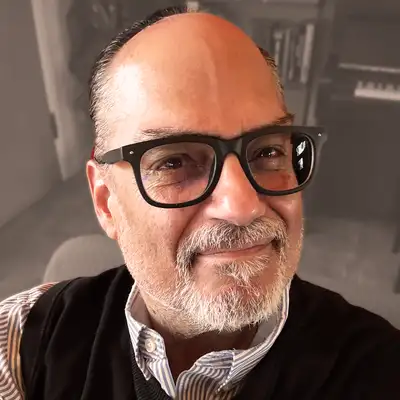
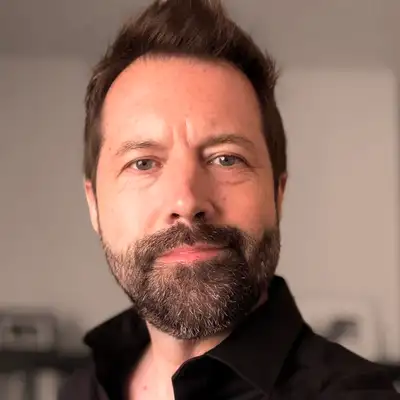
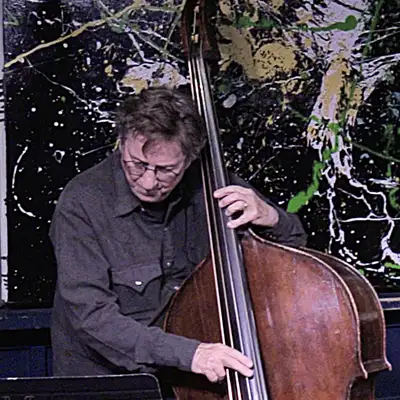
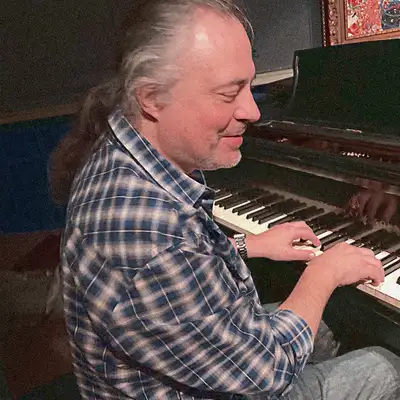
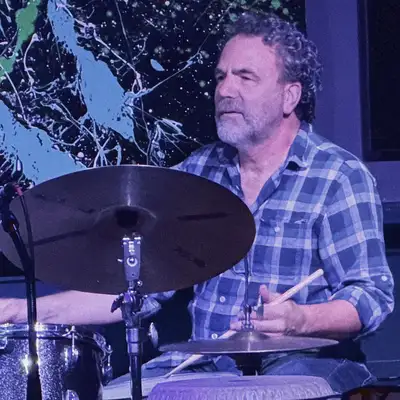
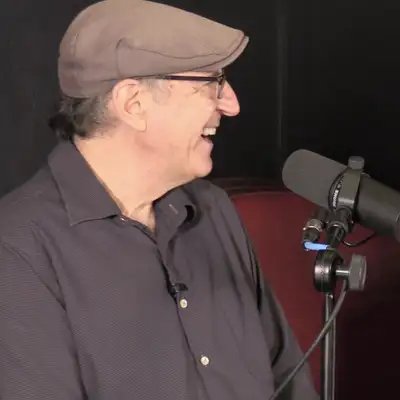
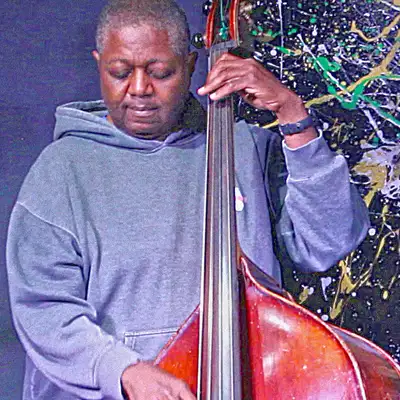
New performances and chat about Jazz and Great American Songbook Standards in the Public Domain. Special focus on the role of Central Indiana creators, entrepreneurs and institutions in the development and propagation of Jazz and Popular Music in the early 20th Century.
Episode 6 — Softly, As in a Morning Sunrise
Here's something you may not know. In 1928, a classically trained operetta composing titan created a dramatic minor key Broadway tango warning listeners about romantic betrayal and heartbreak. Decades later, that theatrical piece was stripped of its melodrama, recalibrated to a faster tempo, and transformed into a cornerstone of modern jazz.
We'll explore how a Viennese style operetta became a high octane jazz proving ground on today's episode, "What You Don't Know About Softly As In A Morning Sunrise." This is Century Songs, and we talk about American standards in the public domain.
Here's our conversation with musician Rich Cohen.
Rich Cohen, so glad to have you with us today. Fantastic sax player in Indy and around the area. One question we're asking some of our guests on the show as a curiosity is, you've been playing for a while, have gigged around town for a long time. What's one interesting or funny gig story that you have?
Back in probably 1995-ish, something like that, I was living in South Bend, Indiana. I lived there for nine years, and I was playing in a pure bebop band. We were called Apogeebop. Wow. Okay? All we played was bebop tunes. Like the word apogee — Yes — and bop together? Apogee and bop put together. Oh, wow. Very nice.
Wow. Creative. Yeah. Yeah, my brother-in-law came up with that name. He's a very creative guy. He put it together. So I was playing in that group, and there is a celebration that happens every year in South Bend right around Easter, I think, maybe the Monday after Easter — Mm-hmm — called Dyngus Day. Mm-hmm. And actually, I had to look up what that was.
I never really knew what it was. I thought — Yeah — "What is Dyngus Day?" Dyngus Day is like St. Patrick's Day for Polish people. Mm. It celebrates actually the beginning of the whole Polish nation. But it really is just a big festival and lots of partying. My brother-in-law had convinced a guy that had a pretty new event space in South Bend to hire us —
to play Charlie Parker tunes at this club setting for Dyngus Day. Yeah, not what they're expecting, right? Yeah. So we get there, we set up, and we're starting to play, and there weren't too many people there, but anybody that was coming in just looked at us like, "What…" 'Cause apparently Dyngus Day is known for polkas.
Oh, yeah. Right. I was just gonna say — Good ol'… Yeah — did you guys have a polka set? Yeah. South Bend has a huge Polish population — Oh, yeah — if you didn't know that. So they were probably expecting a polka band, and we're playing Charlie Parker tunes. Yeah. So anybody who walked in, which wasn't very many, just immediately walked out.
They're shaking their heads. Right. All I can think about is the Blues Brothers scene where people are throwing bottles at them — Yeah. Yeah — from behind the screen. Yeah. Pretty much it was like that. So we finished the gig — And my brother-in-law goes to get paid, and the guy didn't wanna pay him. Wow.
'Cause he's like, "Well, you told me that you've got a following and you're gonna bring in people, and people are gonna love this, and people did not love it. And you didn't bring anybody in." And I don't know, whatever my brother-in-law did, he convinced the guy to pay us. Yeah. But — Very nice — so when people say, "What's the worst gig you ever played?"
Yeah. That's probably it. That's great. You're obviously a guy that's been playing for a long time, people who know you. You've been in a lot of different combos, a lot of different — Mm-hmm — solo things. Your wife is a wonderful singer. Yeah. And it's always a joy when she comes in with you for a Monday jam and sings.
Yeah, yeah. She's just a phenomenal vocalist. But how did you end up in the Midwest? Where are you from? So I was born in Hartford, Connecticut, so I'm an East Coast boy. And I have a doctorate in physics, and I got an offer to do a post-doc at Notre Dame. So that's what brought me to the Midwest. Yeah, sure. And I like to tell people this was Labor Day 1991. Yeah. I landed with my K-car and my little U-Haul trailer —
in South Bend, and I like to say my spaceship crash-landed in South Bend, Indiana. Yeah. Right, right. I met my now wife a few months later, and the rest is history. Wow. Okay, wow. Yeah. So that's how I ended up in the Midwest, and yeah, I met her actually through my brother-in-law. Oh, wow. 'Cause I was in a different band with him. Mm. And I don't know if you know that Suzy and some of her sisters did like an Andrews Sisters thing. No. Oh, okay. So they were gonna sing with us, and they came over for rehearsal, and that's where we first met. Wow. Yeah. And here we are 34 years later. That is really cool. Yeah, yeah. So — How long have you been in Indy then?
Uh, 2005 — 2005 — is when we moved to Indy. Okay. Yeah. Okay. Yeah. So over 20 years. Yeah, 20, 20. Yeah, I taught school in West Hartford, Connecticut for several years. You did? I did, yeah. How did we — how did I not know this? Well, I think maybe I was about to — Did we talk about that? — chat with you about it at some point — No —
when you mentioned that you were from Hartford. It's a small private school, a gorgeous part of the country, and worth seeing. Yeah, it really is. Yeah. I loved living there, but man, for raising a family, you can't beat the Midwest. Mm, mm. It's, it's pretty great, you know. Anyway, so what are you listening to now?
What's driving you musically? Yeah, I'm boring. I mostly listen to saxophone players. Yeah, that's okay. 'Cause I'm always wanting to hear a really great sound or great ideas. And I recently stumbled on this guy who I'd never heard of, and the reason I stumbled on him was that I saw a post on Facebook.
Sometimes Facebook gives you something positive. In this case, somebody who I'm not friends with posted a tribute to a guy they had gone to school with at Eastman and said, "This great tenor player, Bob Sands, just passed away. He was an amazing musician, lived in Spain for a lot of his adult life." And I decided to check him out.
Mm. And I just loved him. I just love his sound and so I've been listening to a lot of him. Cool. Like I'll stumble on… You get into the YouTube vortex and — Yeah. Yeah — and then all of a sudden you stumble on somebody new. Yeah. And then, oh, and that's my favorite person for a couple weeks. Yeah. I'll listen to them and — Yeah.
I know you play with Pavel Direct Contact. Uh-huh. Yeah. What other kinds of things are you doing right now? Bunch of other things. Yeah. You, you, you're busy. So I do some gigs with this guy. Yeah, yeah. Oh, nice. Right? Yeah. A few things. I'm doing a couple of sub gigs where regular horn player can't make it, so I got a few of those coming up.
I do some duo work. Yeah. I've actually been playing with GMH Horn's big band. Oh, nice. Nice. Oh, that's right. He's done that. Yeah. Yeah, I've been playing, yeah, lead alto with them. Yeah, that's enough. We did — Not to revisit the gig thing — Yeah — but didn't you have a gig story? Didn't we hear it? Yeah, I do. I do.
So yeah, we were talking about what Rich's gig story was gonna be, and Eric was like, "I've got a gig story about Rich." Yeah. He may not wanna tell it, but I wanna tell it. Go. Yeah. Rich, you mentioned that you and I get to play together. I love — Yeah — when we do duo stuff. So this has been a few months ago now.
We were playing at a private club in Indianapolis just doing duo stuff, and we had a small audience listening to us. And we do a song, and maybe I would sing it, and he would play a solo, and then I'd come back with the head at the end. And we're doing one of those songs, and we're standing on this balcony at the top of these stairs, and this woman comes up the stairs while I'm finishing the song and says something to Rich.
And he kinda has this perplexed look — and so she turns around and walks down. And so I finish the song and I said, "What'd that woman say to you?" And he said, "She said she wanted to hear just me on the saxophone." And I said, "Sure. Go for it." He was like — "It's, it's a little weird." And I said, "No, it's not at all.
Go ahead and play something." So he says, "Okay." So he plays, and while he's playing solo saxophone, she comes up the stairs — Oh, no — and stands on the second to the top stair and just looks at him. And he finishes, and she says, "Thank you." So then she turns around — Oh — and goes back down and sits at the bar with her friends.
And we go on and play. And then she and her group get ready to leave. And as we're in the middle of a song, she comes back up the stairs and drops something in the tip jar, and then she leaves. And so we finish this song and I go over to the tip jar. She has dropped in a $100 bill. Wow. So I told Rich, "I'm gonna tell everyone that this woman paid us $100 if I would stop playing."
Wow, that is funny. Yeah. Listen, man, I appreciate so much what you do. I actually heard Rich before I ever started coming to the Jazz Kitchen because you were coming over to the Lafayette jams and — Oh, yeah. We did a few of those. Yeah, yeah, yeah — you had come over there a couple of times. Yeah. And I remember saying to Scott Poncero, "Who's that guy?"
And he's like, "Oh, he's a really good alto player." Yeah. Yeah. He took us — And so that was… Man, that was like — Took a while — 2018. October, I think — Yeah. Okay — 2018 or — Yeah. Yeah — April 2019, something like that. Yeah. But it's been so cool to get further and further into the periphery of where you play, and also of just the way you do what you do, Rich.
Oh, well, thank you. It's, it's great to hear you. Thank you. It's great how collaborative and how enthusiastic — Yeah — you are — Yep — with other players. And as I said, and I'm just putting this in there as a point to make, that it would be really great if Susan Merriman came back over here and sang with you —
every now and then. Try to get her sometimes. Yeah, yeah. It's always great to see you guys — Oh, well, thank you — and it's so cool that you came to, to do this today. Yeah. I really do appreciate it, Rich. Yep. Yeah. Yeah. Well, thank you for having me, guys. Yeah. Really honored to be part of this. You guys are both awesome musicians, and what you're doing here is just fantastic.
Thanks, man. Thanks. Yeah. We'll see you again. All right.
It's time for our three-question quiz to find out what you don't know about Softly, As in a Morning Sunrise.
Hey, Eric. Good to talk to you again. Yeah, good to be with you. So we are talking today about the standard Softly, As in a Morning Sunrise. We've heard Rich Cohen play it with the house band. Yeah. Great alto sax player and such a good guy and a good friend of ours. He really is, yeah. Uh, super fun to talk to him, to hear his gig story and to have him play this tune.
So we asked Rich and the house band to start that performance in a tango style. Mm. And then they sort of make a left turn with that into more of a be-bop anthem, and that's all sort of a reflection of history. So we're gonna hear a little bit about that in this three-question quiz, what you don't know about Softly, As in a Morning Sunrise.
Eric, are you ready? Hit me. W- Once again, everybody, Eric is not seeing these questions beforehand. Yeah, right. And, uh — So the, what you're saying is the title of this part of the program, What You Don't Know, is literal when it comes to me — and these questions. Yeah, yeah. Well, we may find out you know more than we think you know.
Yeah. Here we go, question number one. From which 1928 Broadway operetta does Softly, As in a Morning Sunrise originate? A, The Desert Song; B, The Student Prince; C, The New Moon; or D, Show Boat. I know it's not Show Boat. Um, I'm gonna say B, Student Prince. It is The New Moon. New Moon, okay. And all three of those — All right —
A, B, and C, those are all Sigmund Romberg — Oh, see — uh, sort of operetta shows. Oscar Hammerstein II writes the lyrics for that show and for some other Romberg shows as well. This is his pre Richard Rodgers days, but he distinguishes himself as a great lyric writer in this show. Yeah. One of the other tunes that comes out of this is Lover, Come Back to Me.
Yeah. And that will be in this first season of Century Songs, really Lover, Come Back to Me being covered way more by vocalists. Peggy Lee did a great version of this. Sarah Vaughan did it. Ella Fitzgerald did it. Yeah. A lot of other people have covered Lover, Come Back to Me. But as far as Softly, As in a Morning Sunrise, that came from The New Moon.
All right. Here's question number two. True or false, in the original theatrical script, Softly, As in a Morning Sunrise was written as an optimistic, joyful celebration of new love. True or false? I'm gonna say false. It is false. Okay. Mm-hmm. Right. This is written as this really mournful indictment — Mm-hmm —
of love. And for those that don't know Oscar Hammerstein's lyrics, because the only times that most of us hear Softly is as this up-tempo — Yeah — bebop thing that gets called at jams, probably one of the top 10 songs that gets — Yeah — called at the Monday jam by instrumentalists. Yeah. And it's one of those songs that we know the people that are sitting in the room, if it gets called late at night, there's like a general call — Yeah —
for anybody that wants to play — Yeah — on this, come up. Yeah. Everybody knows this tune. Instrumentalists know this as a rite of passage. So this song originally in its performance is done in a tango style. Mm. And the Oscar Hammerstein lyrics, "Softly as in a morning sunrise, the light of love comes stealing into a newborn day.
Flaming with all the glow of sunrise, a burning kiss is sealing the vow that all betray." And the passions that thrill love and lift you high to heaven are the passions that kill love and let you fall to hell. Ooh. And here's the phrase, "So ends each story." Like, hey, guess what? If you fall in love — you're signing up for tragedy.
Yeah. So anyway, true or false, the song was not done as an up-tempo, energetic love song. So you're correct on that one. Here is question number three. Which jazz innovator transformed Softly As In A Morning Sunrise into a modal masterwork in 1961 on the soprano saxophone? Was it A, Charlie Parker; B, John Coltrane; C, Wayne Shorter; D, Stan Getz?
I'm gonna say Coltrane. Yeah, that is correct. Yeah. So in 1961, Coltrane's soprano sax performance of this is really what ushers it broadly into the bebop era. But I do wanna mention this. In 1938, Artie Shaw takes Softly As In A Morning Sunrise into the swing era. Yeah. He's really the first person who, on a national, international scale, turns the corner on this thing being an up-tempo swing number.
And then once Coltrane gets ahold of it, and I think it's a live performance recorded in 1961, once Coltrane's version of that gets out into the world, it becomes the standard by which all of these other performances in jazz jams and in bebop settings really happens. When I started learning Softly As In A Morning Sunrise, in that early group of songs that I'm learning, this is when I discover that this thing was written as a tango.
Mm-hmm. So I'm trying to, just in my ignorance, I don't know what I don't know, I'm trying to go find tango recordings of it. Yeah, yeah. I can't find any. And then I come across one. And it is a Bing Crosby recording — Oh — on a late career album that he does that's called New Tricks, and it has a dog on the cover, like a basset hound.
So it's a send-up on the metaphor an old dog learning new tricks. Yeah. Right. And when Bing Crosby records Softly as in a Morning Sunrise for that album project, he records it as a tango. Yeah. So you have this aging Bing Crosby voice doing it, which is really interesting. The band that accompanies him has an accordion in it.
Mm-hmm. And they really convey the idea of that tango style — Yeah — in which Sigmund Romberg originally wrote it. So I will link that in the show notes as well. Just as a reminder to everybody, for all of these episodes, we do curate and keep links at the show notes page on centurysongs.com. And then the other thing I wanna do here, Eric, we're getting into that time of year when there are gonna be some cool holiday shows coming up.
Yeah. And if you don't mind just looking quickly at the Jazz Kitchen calendar and letting us know about, I think there's one in late November that's already on the Jazz Kitchen calendar. Just mention that one if you don't mind. Yeah. So this is our good friend Sarah Scarborough does holiday shows every year, and they are a huge draw.
This year she's doing six shows. She's actually doing her holiday shows in late November, and has been for the last several years as she goes on the road with the gospel group Point of Grace. They do a Christmas tour all over the country, so I think this is the third or fourth year that she's doing that.
So her holiday shows at the Kitchen are happening November 20th, 21st, and 22nd. Um — Right. So I think that's the week leading up to Thanksgiving, right? Uh — It is — yeah. And they will, most if not all of those shows will sell out. Again, that's Sarah Scarborough, and that's friend of the program Bethany Robinson is on that show.
Sarah's husband plays drums, Jeff McLaughlin. Her brother Stephen Scarborough plays guitar in the band. Just good friends of ours and fantastic musicians. If you're interested in that, be sure to get those tickets and don't wait on that. In addition to everything else going on with the Jazz Kitchen, they end up having just some great holiday shows.
Yeah. Heather Lake Bays — Oh, yeah — has another Christmas show. That's one that also typically sells out. Yeah. Check out the Jazz Kitchen's calendar, and you definitely should, through the holidays. So — Yeah, yep — I wanna tease this, because October 5th some really great Indianapolis musicians are coming to participate in the podcast, and their performances and conversations with us will appear after the holiday season.
Centurysongs.com is where you can find out about that. We go ahead and publish the show notes for a lot of those ahead of time. Some of those shows will be there with some of that information as well. Eric, great to see you, great to talk to you. We will be back here next week with Century Songs Podcast, American Standards in the Public Domain.
We'll see you next week. Thanks, David.
Thanks for listening to the Century Songs podcast with Eric Baker and David Ponce. Show theme by Eric Baker, performed by Kevin Anker, Fred Withrow, and Mike Kessler. Show logo and branding by David Ponce with creative direction from Paul PJ Yinger. Production assistance by Ryan Busse, Noah Champion, Carson Ponce, and Pierce Vaughn.
Research assistance by Miran Fox. Produced by me, David Ponce. To find out more about the public domain standards we perform and talk about, visit centurysongs.com. Century Songs podcast copyright 2026 by Someday Songs Music LLC. All rights reserved. If you enjoyed the show, follow or subscribe and discover more episodes of the Century Songs podcast wherever fine podcasts are downloaded.