Subscribe
Share
Share
Embed
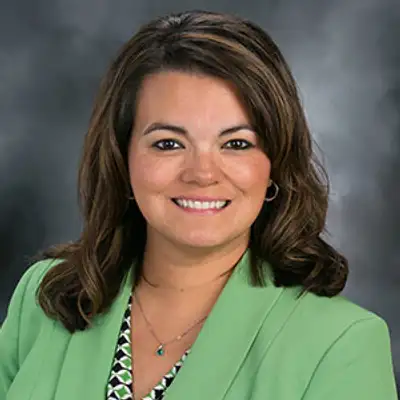
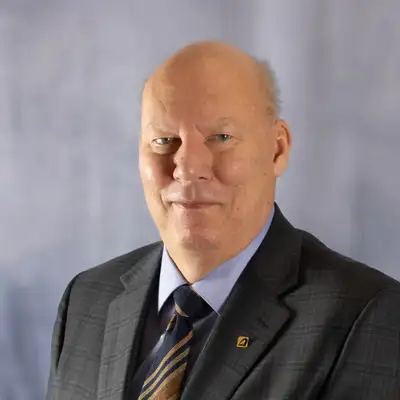
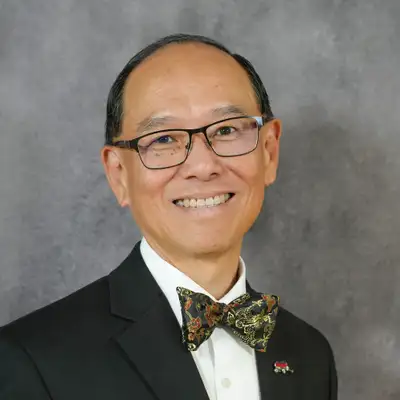
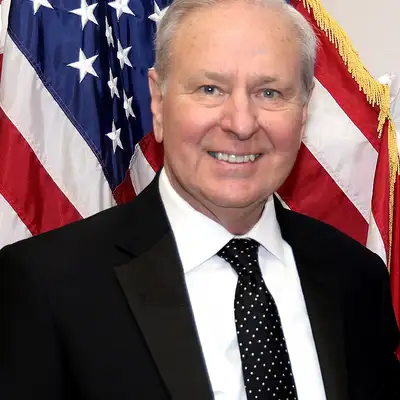
Explore the people, programs and partnerships that make Northeast Iowa Community College (NICC) more than a campus. From student success stories to behind-the-scenes of athletics, innovation and industry collaboration, each episode answers the question: What’s happening at NICC? Energetic, informative and always evolving, this is your inside look at the impact of community-driven education.
Welcome to The Catalyst, an exciting and insightful podcast produced by Northeast Iowa Community College. I'm your host, Lasack. Together, we'll explore the people, programs, and partnerships that make Northeast Iowa Community College unique. From student success stories to behind the scenes info about athletics, innovation and industry collaboration, each episode dives deeper into your community's college. Get ready for an inside look at the impact of community driven education at NICC.
Amy Lasack:Well, hello and welcome to The Catalyst. Every institution has defining moments, but it's really the people who lead through those moments who shape its future. And today is a special two part episode of The Catalyst. For the first time, we're bringing together three generations of leadership at Northeast Iowa Community College, two former presidents and our current president for one conversation. Collectively, these leaders represent decades of vision, change, and challenges and milestones that have helped make NICC what it is today.
Amy Lasack:Each of them have left a unique mark on the College while building upon the work of those that came before them, and together they offer a rare perspective on where we've been, how we've evolved, and what lies ahead for NICC. So whether you're a current employee, a retired colleague, an alum, a community partner, or simply someone who cares about the future of Northeast Iowa, you're going to want to listen to this special two part episode. So welcome to the special edition of The Catalyst. We want to welcome Rob Denton, Doctor. Lee, and Dave Doms to The Catalyst today.
Amy Lasack:Thank you all for joining us.
President Robert Denson:Great to be here. Thank you. Thank you.
Amy Lasack:I'm gonna have each of you first just talk a little bit about your backgrounds and what brought you to NICC. Dave, we're gonna start with you. If you wanna talk about your background in finance and what brought you to NICC.
President Dave Dahms:Thank you, Amy. To begin with, I'd like just offer a huge thank thank you to both President Denson and President Wee for being with us today. For all of you that are viewing this podcast, know, are two of the most highly respected presidents in community college history, and they've had such a huge impact to not only NICC but across the state. And it's a real privilege to be with them today. And every time I'm around them, I always learn something.
President Dave Dahms:So I look forward to the our power together here today. So back to your question. Yeah. You know, I spent almost my entire career in the private sector and actually all with businesses here in Iowa. I spent the majority of my time working with a very large international corporation, and I've held various variety of different senior level positions.
President Dave Dahms:It was a very unique company that was family controlled but publicly sold, and it gave us flexibility. And one of the priorities of the company was education. And not only educating our customers, we had two separate customer streams, but also our staff. And to the extent that we build our own training center, and we spend millions of dollars investing in education pathways every year for our our faculty, our staff, and our customers. So there was some synergy coming into the college here, as far as, what were also priority in my prior work.
President Dave Dahms:And then, you know, the opportunity, here at NICC and having a couple meaningful conversations with Dr. Wee and, giving me insight into higher ed and, the things that, I could help contribute to, you know, just seemed like a natural transition. And, I certainly haven't looked back. It's been a great great eleven years that I've been here. So thankful for the transition.
Amy Lasack:Great, thank you, Dave. I think one of the things that was so interesting to me as I was preparing for this podcast is how different all three of your backgrounds were, in coming to NICC. So Dr. Wee, can you talk a little bit about your background in academics and being a provost at NIC before becoming president?
Dr. Liang Chee Wee:Well, thank you. For me, I started my journey by chance as a faculty. I started teaching at University of Arizona and then was given an opportunity to come to Iowa to join Luther College for a one year appointment to fill a sabbatical position. And that turned into fifteen years. I spent nine years at the University of Arizona.
Dr. Liang Chee Wee:But along the way, really, the grace of great leaders and friends, they afforded me the opportunity to learn about the various facets of higher education. Now, when I started in higher education, I had the notion of retiring as a faculty. Start as a faculty, end as a faculty, and it didn't happen. And along the way, a lot of these folks were gracious enough to say, Hey, what about trying this? So I was exposed to facilities management, classroom scheduling, student services, because fidelity services, curriculum, the registrar's office, definitely in terms of recruitment.
Dr. Liang Chee Wee:So I didn't know at that time every opportunity that people presented to me opened my eyes to a particular facet of the education sector. After fifteen years at Luther, again, a few of the friends said, Hey, NICC looking for a provost. And at that time I really didn't have much understanding of the community colleges. But again, it was good that I gave myself the opportunity to learn and interviewed at NICC and was graciously given the opportunity to be the provost. And then in my fourth year, our president left for another position in Arizona, and I was asked to step in after the interim.
Dr. Liang Chee Wee:And so a lot of things happened in my life that was not fun. I can connect the dots going back. And people always ask me, well, how did you plan it? It was not. It's just a lot of good people along the way tapping my shoulder and say yes or no.
Dr. Liang Chee Wee:And I can tell you that that experience, that lived experience, really shaped how I value supporting our colleagues. Definitely part of my leadership is trying to find people and say, hey, would you like to fly to this? And sometimes it's a stretch goal, sometimes it's getting them out of the comfort zone, but I went through it, and it's good to pay it forward. And I want to say thank you to Dave because it's true, we had several conversations before he joined us. At that time, if you look at higher education, many of the financial people rose through the ranks.
Dr. Liang Chee Wee:Not a lot of time would we have people from the private sector coming in. And getting to know Dave was really a highlight of my career because he brought a different perspective to how we see financial as a way to support the mission of the college. And I can tell you that, you know, the college was very well served when Dave was doing the financial. And it's not just about the number.
Dr. Liang Chee Wee:He always said, well, where are the dollars going to support the strategic priorities of the college? Not easy. It's easy to say, but not easy to do. And I know that sometimes I don't come close to his expectation. But that was the type of perspective that he brought from the private sector that really made NICC stronger when it comes to that part.
Dr. Liang Chee Wee:So again, you know, my journey here, it's not because of me. My journey here is because of a lot of good people saying, hey, would you like to? And so now when I guide other folks, that's what I try to do too, is to show people the opportunity.
Amy Lasack:Thank you so much for sharing that. President Denson, can you also, you have a very interesting background in law and in higher ed before becoming president at NICC. Can you talk a little bit about your journey?
President Robert Denson:Sure. I grew up on a farm south of the Amana Colonies. I actually went to a one room country school for my first three years, eventually graduating from Iowa Valley in Morengo, and we'll have our sixtieth high school reunion this coming Saturday. My first job was driving a semi for a Kent feed mill, but my dad said I could go to college if I could if I'd be a veterinary. So I went to Iowa State.
President Robert Denson:Very soon I learned that veterinary was not going to happen. I got the next closest thing, which was political science. Got a master's in higher ed, worked for Iowa State in this Dean of Students Office, went to the University of Florida as assistant dean, doing leadership and orientation. I got a law degree while I was working for the university, and I was patent licensed counsel for the University of Florida for two years. Then I opened up my own personal injury trial practice for sixteen years.
President Robert Denson:Retired, had done very well. Got bored quickly. Got hired by Santa Fe Community College in Gainesville to be their dean of advancement and internal legal counsel. And then two years later, I was honored to be able to go to Northeast Iowa Community College as president. Love my five and a half years there.
President Robert Denson:Came to DMACC in 1998. So I'm the fourth president of DMACC in sixty years. I'm the longest serving by two years. I've been here twenty two years and most proud I'm the first native born Iowan to be president of DMACC. And I retired last December at age 78 and my wife and Pat and I are just loving retirement.
Amy Lasack:Oh, great. So glad to hear that. And it's so interesting to listen to the three of your perspectives and your journeys because they're so different. You bring such different perspectives and the respect that you have for each other is really, really fun to watch. Iowa's community colleges celebrate sixty years, when you think about the sixty years and your mark as part of that journey for Iowa's community colleges, what makes you the most proud about that?
Amy Lasack:And go ahead, Rob, we'll start with you.
President Robert Denson:Iowa is special. Even when I was at Florida with the community colleges there, everyone recognized that Iowa had a special system. And during the years that I was back here at NICC and DMACC, the biggest expansion in the number of high school students taking college credit classes, that is the most amazing opportunity for these kids, whether they've got money or not, to be able to get a number of high school credits while they're still in high school. DMACC serves about 16,000 high school students every year, and we'll always have 150 or 200 that actually graduate, put their two year degree from DMACC at the same week they're graduating from high school. And we had a young woman from North High in Des Moines this year, graduated from high school, graduated from DMACC two weeks before she graduated from high school, and she's now at Harvard.
President Robert Denson:I mean, this is quality education and Harvard credits are accepted everywhere. The second thing was big as the expansion of career academies, really taking it to the people. And I think the Cresco Center that we opened up was, we were at NICC as one of the first career academies in the state of Iowa. And of course, DMACC and NICC have been leaders in taking college credits to the high school students.
Amy Lasack:Dr. Wee, when you think back of the sixty years at community colleges and your role in part of that history, what are you most proud of?
Dr. Liang Chee Wee:I think I'm most proud of the overall mission of the college, of definitely changing lives one person at a time, and because of that, we impact families, And throughout the 5,000 square miles, that also means that we strengthen the communities. Much of NICC's district is new , and forming the private and public partnership was so crucial. And so for us, I see the impact day in and day out in terms of how our folks, whether from the credit side or from the workforce side, going out and partnering with all the folks that we have to change lives. And those are the stories that I take with me, and especially during graduation, you see the outcome, but you also hear the story of what's next after I cease. So our mission is not done when we are done with robotics.
Dr. Liang Chee Wee:We are simply one phase of a long journey of excellence. And so definitely changing lives, strengthening communities, that's what I'm most comfortable.
Amy Lasack:Great, thank you. Dave, what about you from your perspective?
President Dave Dahms:I would would echo that as well. You know, I was fortunate with where I came from for most of my career was highly dedicated and focused employees serving our customers and trying to educate and enhance their businesses as best we could. But coming here was just truly a different level, being able to work side by side with such dedicated and resilient staff and faculty and their compassion. That they have to student success is just an exceptional experience and seeing it happen day in and day out. And to what Dr.
President Dave Dahms:Wee said, that the outcome is when you go to the graduations or the commencements and you see the success. And, you know, you don't have to say anything, you just see it on our students' faces, They'd be accomplishments that they've made. And it's such a thrill to be a part of the experience here with all of our employees and what we do day in and day out.
Amy Lasack:Great. Yeah, the impact is strong for sure. One of the things too that I really was interested in when I was looking at all the different timeframes that you all served and how each of them were so different in terms of what was happening in the environment, enrollment, all of those things. So, President Denson, you served in the late 90s, early 2000s. When you think back to the time that you served at NICC, were there any, was there one decision that still stands out to you years later based off of what was happening at that time?
President Robert Denson:Well, yes, and fortunately, NICC had a history of good leadership. Don Robey had been there for a number of years and was still living in Decorah, so he gave me a lot of advice and consultation to get me up to speed. But clearly in the late 90s, was really the Iowa Community Colleges coming of their own. And it was, when I came here from Florida, it was obvious that NICC was poised to really grow enrollment and really get to the students. You know, our our small class sizes, our affordability, you know, being close to where the students were.
President Robert Denson:It really made a difference. So I think that opening up the centers, we opened a center in Cresco, we opened a center in Manchester, We have the Town Clock Center in Downtown Dubuque. Obviously, Peosta and Calmar continued to grow. And then the Dairy Center, I think that all of them were important in their own rights. I'm particularly proud of the Dairy Center, but it's just, again, you know, 72% of the milk in Iowa was generated out of Northeast Iowa back during that time.
President Robert Denson:And we had a Dairy Center at NICC that should have been closed. The enrollment was so bad, but the farmers came together, they worked for us, we had some great donors, worked with us, had some great donors, and I think we had one of the top dairy science programs in the country as far as size as it went on, because the Dairy Center is just an amazing facility.
Amy Lasack:That's great, and then Dr. Wee, when you became president in 2011 or came to NICC and you served till 2022, talk about that time period and was there any decisions that you made during that time that stand out to you?
Dr. Liang Chee Wee:Well, definitely the recession was a big part of it. And at that time, our enrollment did go up because people were laid off, and many of them had the support to come back for us. So, we had a great environment. On the flip side, many of our businesses were also laying off people. So on the one hand, we were taking care of people who were laid off.
Dr. Liang Chee Wee:We give them the opportunity to retool or reskill. At the same time, we also have to make sure that we take care of the businesses while we're selling product in that shape. And so, for me, having a college that's able to take care of the people laid off, but also be able to serve the company who are also economically challenged. It's amazing, you know, so we get to see both sides. And to be able to be accepted into those businesses so that, for example, Amy, your group, one on one with those businesses, with the people laying off, getting to know them and find out what's the best opportunity for them.
Dr. Liang Chee Wee:Some of them, they're already retired, that's great, but many of them were not. Okay, then what's next? And it's a very personalized one on one customization of them. And for our colleagues on campus to accept those people and to receive those people with grace, that was so important to make sure that they are welcome here. Many of them were dead afraid because they had not been in school for so long, and there were a lot of tears.
Dr. Liang Chee Wee:And guess what? They were all taken care of one at a time. And of course, following that, we had COVID during my near the end. And at that time, we had to help business navigate some of the challenges in terms of accessing resources. So I still remember setting up a hotline, the college did, and we actually rallied a chamber, Greater Dubuque Development Corporation, for example, And we staffed the hotline, and we served thousands of businesses just to show them what resources were available.
Dr. Liang Chee Wee:And definitely in terms of safety, many of them didn't know the procedure, So we were able to create some of those things. So I think during my time, the recession and the COVID really were two very difficult times where NICC was so lucky to have the opportunity to do our part to lift people, to lift businesses, and to see our colleagues in action during those times. That's really affirming our mission.
Amy Lasack:Yeah, I'm hearing a common theme from both of you on serving the communities. Dave, your chapter isn't quite done yet, So talk a little bit about some changes that you've seen since you've been in your seat for almost three years now.
President Dave Dahms:Well, you know, there was from Dr. Wee's retirement to I accepted the acting president's role in late twenty three. You know, gap in time, our employees and our our faculty were looking for change. We're looking for somebody that was willing to listen to them, that was willing to engage in them with conversation, bringing them and being inclusive, bringing them into discussions and decision making, and being asked to do them about the state of the college, and being very quite frank in where we're at and where we needed to go. And for me at that time, I felt that the college needed a new direction, and I needed to be that catalyst to bring our employees back together again.
President Dave Dahms:And to be able to start to build trust with them, that leadership was here to support them and to provide direction and then be inclusive with them. And so they had a say of what we were doing and how how we're going to move forward. But that's that was difficult. I mean, when you're trying to build trust, that's not a one day event. You you say what you're going to do, and you do it.
President Dave Dahms:And you prove yourself day after day after day. You know, it was a long journey for leadership, through the next couple of years to get to where we're at today. And quite frankly, you know, I see enthusiasm. I see collaboration. I see, people that are working together for the common good in support of our students and support of our industry partners.
President Dave Dahms:And, you know, it is a total different environment today as you walk down the halls of our campuses. And so, you know, I think and that goes back to the resiliency of our staff. They and, you know, that like all colleges, you know, the backbone of our college is the people that work here and and how they work together. And so I can't be more happy if all all of our faculty and staff have come together and and the direction that we're going and the decision making that has happened in the last year, the speed in which we do things and the way we work together is just a really, really good thing to see.
President Robert Denson:Well, just to add on to what Dave said, here's a second. You know, you look at all the developments, the new projects, the the new buildings and programs, 99% of that is driven by an outstanding faculty member or staff member. I mean, what we as presidents generally do is just harness that excitement and then build and move it forward into some kind of a growth in serving students in our communities. But it's all about the faculty and staff, and that's the amazing thing. I mean, when they're able to teach in a small classroom, they're able to really interact with students on a one to one basis.
President Robert Denson:It makes a difference. And so I think that in least every project I've ever done, I can always back down to a point where I can see the faculty or staff member that really created the spark to make it happen.
Amy Lasack:That's great. Thank you. I would agree. You can't find more excitement and energy than from a faculty or staff member at a community college. So, I'd like to pivot a little bit and talk about the role that community colleges do that many maybe don't even realize, and that's the role that we play in workforce development.
Amy Lasack:Rob, you have been a part of the work with employers in business and industry a lot. Can you share a time during your tenure at NICC when business and industry came to NICC with a need?
President Robert Denson:Well, yes, and of course the dairy would be the biggest example, but we had the same thing going on in auto technology, diesel, you know, every program has its supporters, and they're not bashful. I mean, the the accreditation makes us have, committees or advisory committees for each of our programs, and it's very structured meetings, etcetera. And that makes a difference. And Iowa, because of our, new job training program affectionately known as two sixty e, I mean, that is a big deal where the state is actually saying we're gonna help businesses grow by diverting some of the payroll taxes on new jobs in Iowa to the community colleges to do training of those new new employees that come in. You know, and I know it's on a little bit of a strain right now, but, 260E has been remarkable, and it was unique nationally.
President Robert Denson:I think a few states have tried to follow it, but really, you know, it connects us directly to business. And again, most of our students are working. So we're actually training students to work in companies, and then these companies are telling us directly what needs to happen, what kind of competency need to be trained. And in a lot of cases, I was in our auto tech program at DMACC, for example, graduation's only 50%, two year program, because after one year, they pick up enough skills to at least be an entry level employee at at Carl Chevrolet or something. I mean, it's it's great for the student, great for the company.
President Robert Denson:I mean, we don't get our completion all the time. But again, it's all about the students and the companies that we support. And and then communities. I mean, we can't discount the role that skilled workers play in their community. And that can only continue to go, and it's one of the strengths of small town Iowa.
Dr. Liang Chee Wee:It may not change the trajectory of the college, but I think our partnership with the K-12 partners definitely changed the trajectory of lives. I think that's one thing that we're most proud of. Without our K-12 partners, we would not have the opportunity to work with those young people, male and female, and we would not be able to connect them with the passion. And many of the young people really didn't know what they wanted to do, and so partnering with the counselors were really busy people. So coming together hand in hand to find out what the students are interested in, and then we create, for example, field trips, not just in our area, but also across Stateline, to bring students to different industries, different sectors, to open their eyes to what's possible, especially in rural America, rural Iowa.
Dr. Liang Chee Wee:Traveling is an issue. So for us to be able to partner with the school to actually have field trips for those students, and definitely Association of Business and Industry, for example, is a great partner. We were able to tap into their network of members so that we can bring ourselves together. And Rob was talking about high school students finishing a college degree before their high school graduation. Those occasions did not happen by chance.
Dr. Liang Chee Wee:It was because a lot of people were coming together and wrap ourselves around those young people and say, We got you. They're still accountable. And we are also able to work with the parents to basically say, Hey, this available. And many of the young people, because of the field trips and exposure, they realize maybe initially their goals were not quite what they wanted or expected. And so it was a good time for them to pivot.
Dr. Liang Chee Wee:And for others, it actually reaffirmed, Hey, that's what I want to do. All right, now, when they take classes, especially concurrent enrollment classes, it's more focused on how that actually creates a stepping stone to them the institution. So I think that's what I'm most proud of is, as a college, it's not just serving the students who enroll with us, the traditional one, but we also get a hand to work with our K-12, to work with future students coming in. And some of them, many of them, they will go somewhere. And we are proud that we get a chance to help them along the journey, and the businesses that open their doors to this type of partnership, I really give them kudos, because for them, it's something that take a part of their day, but at the same time, they know that opening the eyes of young people to possibilities, to things that they have not been the opportunity, have the opportunity to know, is important to the community.
Dr. Liang Chee Wee:So I'm most proud of that.
Amy Lasack:Yeah, very valid point on the partnerships with K-12, I love that. Dave, as you're out talking to business and industry challenges for them ten years ago look very different today, what are you hearing from them on what they're needing from NICC?
President Dave Dahms:Yeah. You know, I think it started back in post COVID with just economic uncertainty and dealing with influences outside of Iowa that are affected there or have and are affecting their businesses. You know, they're in a dilemma of trying to balance keeping productivity at the level that they need, but also providing educational opportunities for their employees to to grow and expand. And and they're trying to do that in an era where they're they're they're looking for new staff to come on board, and everybody's fighting for the same person. And it becomes a real challenge for them when they try to keep things going in their business and knowing that they have to educate their staff, not only on the skill sets, but also in things that they've been asking us for in the last year as far as helping us provide more soft skills and giving them support and education when it comes to how to be a supervisor and and to move into a management position.
President Dave Dahms:You know, their their employees are aging, and they're knowing that they've gotta make some transitions. But trying to do that in this day and age when you're short on staff to begin with and not knowing really what's gonna happen next month or next year from an economic standpoint makes it very difficult on them. So for us, you know and and and you all know this, Amy, the conversations we have are continuous and trying to support and give them provide opportunities for them that fit their business. And, you know, that's I think that's more difficult today than it ever has been. And so the challenge for us is is to meet them where they're at and to help grow with them.
Amy Lasack:Great. Thank you so much. And as I mentioned at the beginning of this podcast, this is going to be a two part podcast because we have lots to talk about with these individuals at presence of NICC. So that's a wrap on part one of this special sixtieth anniversary edition of The Catalyst. We want you to join us next week for Part two as we continue our conversation with President Denson, Dr. Wee,
Amy Lasack:and President Dave Dahms exploring the future of higher education and what's next for community colleges. So thanks for listening to Part one. We will see you in Part two. Thanks for joining us on this episode of The Catalyst. If you enjoyed the conversation, make sure to follow or subscribe on your favorite podcast platform so you never miss an episode.
Amy Lasack:Want to learn more about NICC and the many ways we support our students, partners, community? Visit nicc.edu for more resources and upcoming opportunities. This podcast is produced by Northeast Iowa Community College and hosted by me, Amy Lasack, with executive producer Tessa Hill, producer, Travis Hunt, and graphic designer, Ashley Konzen.