Subscribe
Share
Share
Embed

Call 'Em Like Museum is a weekly podcast exploring how museums really work, and why we love them. Host Eric Johnson talks with museum directors, curators, experts, and passionate fans about what drives them, from homegrown passion projects to world-famous institutions. Each episode digs into museum curation, exhibit design, and the visitor experience — plus the essential question: What's actually worth buying in the gift shop? Season One spotlights museums in the San Francisco Bay Area, including the Walt Disney Family Museum, the de Young Museum, and the Winchester Mystery House.
My son, who was a teenager
at the time, came here.
He came home, he said, "Mom, you have to
go to this museum. Walt Disney failed."
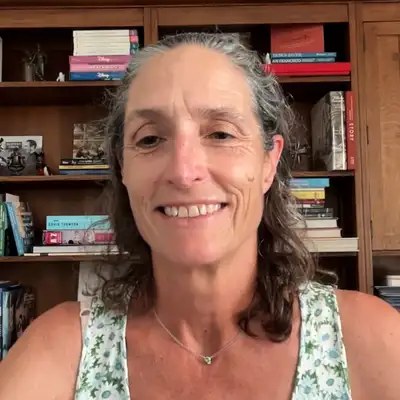
This is Kirsten Komoroske.
She's the executive director of the
Walt Disney Family Museum in San
Francisco, and she was hired in 2013
by one of Walt's daughters, Diane.
Diane's idea was to
have him tell his story.
So you hear his voice
throughout the museum.
It was a big day, the day I got on that
California Limited […] But I’d failed.
I think it’s important to have a
good, hard failure when you’re young.
She wanted to tell the truth
about all of the challenges,
the failures, the setbacks.
This museum is partly telling the
story you already know — Mickey
Mouse, Snow White, Disneyland — but
it's also about Walt's home life, his
hobbies, and the things he got wrong.
He testified in front of the House
Un-American Activities Committee.
The thing that I resent the most is
that they are able to get into these
unions and take them over… And I feel
that they really ought to be smoked out.
I think it was disarming for
people that Diane was willing to
tell the truth about her father.
This is Call 'Em Like Museum,
a podcast about how museums
work and why we love them.
I'm Eric Johnson.
Today on the podcast, how do you fit
Walt Disney's life into a single museum?
How does a single-subject museum like
this keep people coming back for more?
And why is there an old bench here
with a plaque telling you to sit down?
We'll hear from Kirsten
Komoroske right after this.
This episode is sponsored
by Transistor.fm.
If you are starting a podcast,
then you should use Transistor.
Upload your audio or video and
they'll publish your episodes to
Apple Podcasts, Spotify, YouTube,
Pocket Cast, Overcast, and
more.
Go to Transistor.fm for
a 14-day free trial.
When you sign up for the Call 'Em Like
Museum newsletter at likemuseum.com,
you'll get weekly updates on all of our
new episodes, and you're automatically
entered in our gift shop giveaway.
Our 12 prize packages include
items from the museums featured
on this season of the show.
It's free, it's easy, and
it only takes a few seconds.
Just head to likemuseum.com to sign up.
That's likemuseum.com.
Good luck.
First, I want to talk about what
museums mean to you generally.
What's your first memory
of going to a museum?
So my first profound memory was seeing
the King Tut exhibit at the de Young
because my aunt worked there, so
we got to have a behind-the-scenes
experience of that amazing exhibition.
My parents were big museum goers.
We spent a lot of time in museums, and
then I would take my son to museums.
The trick was to not spend too much
time because then he would associate
"museums" with "boring." And so really
the things that he was interested in
he'd focus on but blow by the other
things that … You don't have to
read every panel in every museum.
I think for children in
particular, that's important.
Right, right.
What do you remember of the King Tut
museum [show] , of the "Treasures of
Tutankhamun," I think it was called?
How did that make you feel at that age?
Well, just the profound history.
We're such a young country, and to
think about all these years ago and
that people like us existed at that
time and what they were facing and
what their lives were like, I thought
it was really interesting to have
that depth and actually to see things.
It's one thing to read about it, but to
actually see these artifacts and immerse
yourself in that experience, I think
that was really profound at that age.
Walt Disney's story is also
humbling, maybe not in quite
an ancient way, but still quite
impressive and varied in its scope.
I'm sure one question you get a lot
from people is whether or not the
museum is run by the Disney Company.
It's not, but I was wondering,
could you explain how that
relationship works between you
and the Walt Disney corporation?
Yeah, we have a very close and
collaborative relationship with
the Walt Disney Company, and
they lend us a lot of objects.
At times, we lend them some too — we
lent them our "Snow White and the
Seven Dwarfs" Oscar for the Academy
Awards festivities a couple of years
ago — but it is a separate nonprofit
that Diane Disney Miller established.
So that's how the museum is run: as a
separate nonprofit with a very strong
relationship with the Walt Disney Company.
Yes.
And correct me if I'm wrong, Diane Disney
Miller was one of Walt's daughters, and
her husband Ron Miller was CEO of the
company at some point after Walt passed.
Is that right?
That's right.
So Diane Disney Miller had
one sister, Sharon Lund.
Then Ron, after Ron and Diane got
married, Walt really took a liking to Ron.
He was playing in the NFL.
He was playing for the LA Rams, actually,
and Walt would come and watch his games.
At the end of the season, Walt said,
"What are you thinking of doing next
year?" And Ron said, "I think I'm
going to sign another contract." And
he said, "No, I'm tired of watching
you get your bell rung on the field.
You're going to come work for me."
So he gave him a job at the company.
And you're right, he was CEO until 1984.
And you also mentioned the "Seven
Dwarfs" Oscars, which are in the lobby
of the Walt Disney Family Museum.
Could you, for people who haven't
been, who haven't seen those Oscars,
could you explain what those are?
Sure.
So Walt has the record for the most
Oscars ever won by an individual.
We have over 30 Oscars in the lobby.
They rarely made unusual Oscars, but
they made the "Snow White and the Seven
Dwarfs" Oscar for Walt after the film
had … There wasn't a category of Oscars
to win at that point for animation,
so they later gave him sort of an
honorary Oscar and it is a fan favorite.
People love that Oscar.
The little Oscars are so cute.
And Shirley Temple gave [it to] him,
she was the one who presented it to him.
I was lucky enough to tour the
museum with your colleagues
Caroline Quinn and Chris Mullen.
I'll tell you what struck me on this
visit is that the Walt Disney Family
Museum is the closest thing San
Francisco has to a presidential library.
You are trying to encapsulate the impact
of one person on most of the 20th century.
The main difference between Walt
and a president is that he wasn't
limited to eight years in office.
He had an influence for such a long time.
I was wondering if you could talk
about that, about how as the executive
director of this museum, how do
you think about the scope of the
story that you're trying to tell?
Yeah, it's interesting that you had
that insight because that was the
other option Diane was thinking of is
style it as a presidential library.
In the end, Walt's life was so big
and so vast and covered so much, and
his international reach, how inspired
people are and devoted to him and
his legacy that she really felt
like a museum was much more fitting.
But you're right, there is that aspect.
I mean, it's a single-subject museum.
What's different about our museum is most
single-subject museums are established
long after the person has passed away,
so there aren't people that were directly
connected to that person necessarily.
His own daughter, who experienced him
throughout her whole life, was there
to provide input along with a lot
of the people that worked alongside
him, other family members, friends.
So there was a lot of very dynamic input
about who this man was, not just in
business, but his personal life and his
hobbies and how he was with his family.
It was really important to Diane.
You've noticed in each of the 10
galleries, in addition to all of
the other art and artifacts and
objects, there's a family wall.
So it shows Walt with his
family and friends — it's period
wallpaper — throughout his life.
And she really wanted to debunk these
myths that he was not a family man, not
committed to his friends and family.
And fortunately, because he had a
camera in his hand most of the time,
there are a lot of photographs, but
also footage of him and his family,
which really brings him to life.
We also have 20 hours of a interview
that Pete Martin did of Walt, and Diane's
idea was to have him tell his story.
So you hear his voice throughout
the museum, which I think is really
innovative because you hear it in
his own words, what he went through.
She wanted to tell the truth
about all of the challenges,
the failures, the setbacks.
It's interesting because when it first
opened in 2009, my son, who was a teenager
at the time, came here, and he came
home, he said, "Mom, you have to go to
this museum. Walt Disney failed." And
as a teenager to think he could become
this unbelievable international icon
having had major setbacks along the way.
So it is very inspirational and a
very honest depiction of who he was.
Yeah, it really seems like his
life was shaped by these failures.
When I was doing this tour with
Caroline and Chris, we were talking
about Oswald the Rabbit, which [was]
the first character he made, which
he lost the rights to in a contract
dispute with Universal, I think it was,
and how very quickly after that you
start to see the words "Walt Disney"
in much larger type on the posters.
He starts to really own the character of
Mickey Mouse and he starts to understand
the importance of making himself
central to the works that he is making.
Right.
And more than the failures, it was the
perseverance after the failures, because I
think a lot of people, you have a failure
and then you move off in some other
direction, and he just kept going forward.
That's when he created Mickey Mouse.
It's really an incredible story for
somebody who didn't go to college,
didn't really go to high school, and
had this incredible artistic talent
himself but quickly realized that his
talents, although he was artistic, were
better spent in the leadership roles,
the visionary roles, and inspiring
other people to push their limits.
Now, one of the things that Chris
mentioned to me is that sometimes,
especially later in life, he said
Walt's tales grew in the telling.
I was wondering if you could speak to
that, of how does that complicate things
for you as a museum if there's decades
removed from something happening and
maybe the story sounds a little bit
better if he tells it in a certain way.
Well, but that's the other interesting
thing that we had people around
who knew that the story was perhaps
embellished over time because how would
you know that if everybody's gone?
And so Diane would correct him a little
bit, "Well, it didn't exactly happen that
way." Or the animators at the studio.
So it's really such a treasure that
we had all of these people around.
And sadly, even since the opening of the
museum, we've lost a lot of those people.
So it was very important
to record those memories.
And we have video also of interviews.
Yeah.
So you've done original
interviews yourselves since the
museum opened, is that right?
Yeah.
The Walt Disney Family Foundation made
a film, "The Man Behind the Myth," and
in connection with that there were a
lot of people interviewed about Walt.
So there's what's in the movie,
but also a lot of B-roll.
That's extremely valuable to us.
So yeah, on the topic of legacy,
you were talking about some of the
failures and setbacks that Walt
went through throughout his career.
There's one in particular that I
really love the way that you show
it in the museum, which is, I think
the text on the wall is something to
the effect of, "This was the hardest
period of my life," and it's referring
to the animator strike in the '40s.
Could you set up for folks what
was happening in the '40s and
what caused this crisis for Walt?
Yeah.
So one thing people don't understand is
"Snow White" was mocked and ridiculed.
"Who's going to sit for an hour and
a half and watch a cartoon?" And the
banker really believed in Walt, thank
goodness, because it cost a fortune
back then, but it was a success.
But the movies that followed
— "Pinocchio," "Fantasia," "Bambi" even
— they were released when the war had broken
out in Europe, and that was a big market
for Disney, so they didn't do very well.
In fact, Walt had to do his first public
offering at that point to raise capital.
So it's very hard to make movies
because you need a lot of capital and
a lot of people for a discrete amount
of time, and then you have a lull.
There were people at the studio who
were paid very well, but then there were
some more junior people who weren't.
So they went on strike.
At the same time, the war was coming to
the U.S., and Walt had moved his parents
down from Oregon and bought them a house,
and something went wrong with the furnace.
And his mother passed away
actually, was asphyxiated, and
his father was impacted by it.
[He] was different after that
event, and it crushed Walt.
He felt personally responsible and could
never really talk about it, actually.
He blamed himself so much for that.
And then the strike comes along,
and he felt like this was his
family and couldn't understand
that they couldn't work this out.
The strike was a surprise to him.
So that was a very
difficult period for him.
And as you saw in the museum, he
ended up going on this goodwill
tour of South America with some
of his key artists and animators.
Roy, his brother who ran the company with
him, basically said, "Walt, you need to
get out of town for a while and I'll work
this out." So they settled the strike.
Yeah.
So I mean, back to the way it's depicted
in the museum, you're at a sort of a
T-junction where you could go down the
hallway and learn about the propaganda
films that he was working on during
the war, or you go straight ahead and
learn about the renaissance, the first
renaissance in the '50s with all the
movies that were coming out after the war.
But you're sort of confronted
by all of these protest signs.
They're framing a display in the
museum, all these angry protest
signs, I assume re-creations of
real ones that the animators had.
When you have this museum, which
is about one person, how much
negativity do you choose to emphasize?
This is very much something that I assume
that if Disney the company were making
this museum, they maybe would not want
to highlight this so much, but for you as
an educational institution, this is such
an important part of his life, right?
Right.
And that was Diane.
She's a truth teller and she wanted
everybody to know the full story.
The strike was a very difficult,
unhappy time for Walt.
And he testified in front of the
House Un-American Activities Committee
about the strike, and that audio is
actually available in the museum on
one of the handsets because Diane
wanted people to know the whole story.
They asked him if he thought the
Communists were behind the strike,
and he said he thought they were.
That's all there.
And I think her idea was we're all
human and we all go through different
phases in life and you can persevere and
you can learn and you can change too.
And I think that was all Diane.
She really wanted people to know that.
This being a museum about the family,
yes, but mainly focused on one person,
just on Walt, how do you respond
if someone comes into the museum
with a negative opinion of him?
I mean, testifying for
Joseph McCarthy, history
mostly looks positively on Walt's
work, but that's sort of a dark
moment for American history there.
So how do you respond if someone
comes in and they are not feeling
positive or they're not interested
in this idea of redemption?
It's interesting because we
don't get too much of that.
I think Diane's idea to put it
all out there was a smart one.
I remember there was a Spanish news
crew that came through years ago
and they wanted to interview me
about did I know about this Joseph
McCarthy hearing and why don't we
have anything about it in the museum?
And I said, "Oh, well actually let me
take you over here to gallery 6." So
I think it was disarming for people
that Diane was willing to tell the
truth about her father, and he had
his moments in time like we all do,
but we don't really get much of that
because it's sort of all out there.
She wasn't hiding anything.
Tell me if you disagree, but it
feels like part of your job at the
museum is just winnowing down how
much detail do you get into because
there's just so much ground to cover.
Oh yeah.
I mean, we have a huge collection.
About 10% of it is on display.
Wow.
But there are things like … He
was a chain smoker and we can't, as
you probably recognize, there aren't
any — well, there are a few that slip
through — but there aren't supposed
to be any images of Walt smoking.
Diane really talked to the company
about that because she wanted people
to know if you smoke, your dad died of
lung cancer and he had just turned 65.
And imagine if Walt had lived another 20,
30 years, what this world would be like.
So she wanted people to know
the harmful effects of smoking.
But what's interesting is Walt didn't
want children to see him smoking either.
He wanted his image to be that
he … That was not something … [It
was] a habit that he had picked up,
unfortunately, when he was a teenager.
Yeah.
Earlier this year I saw the
movie "Saving Mr. Banks" where
Tom Hanks plays Walt Disney.
And in that movie, you hear him hacking.
You hear this hacking smoker's
cough throughout the movie,
but you never see him smoke.
They kind of found a middle ground there
where they were depicting the effects of
the smoking but not actually showing it.
Oh, I forgot that.
Maybe I didn't pick that up in the movie.
That's interesting.
So I want to talk about your
career working at the museum.
You've been with them
since 2013, is that right?
That's right.
Before then, what was your personal
connection to both Disney the
company and Walt Disney the man?
I'm a lawyer by background, so I was in
law firms and I was in executive positions
as general counsel and VP of HR and worked
at large conglomerates and hedge funds.
But then I started my own practice
and as part of that, I would go
in and help companies find their
next executives, their CEO, their
VP of HR, their general counsel.
But I would tell everybody
who would listen, I want to
get into mission-driven work.
It was important.
I thought later, in retirement.
Well, I got a call from a law firm that
I used to work for and said, "Would
you help this museum find their next
executive director? Will you come in,
help and stabilize things, and then
work with them to identify their next
leader?" So I met Ron, we hit it off.
I met Diane, we had a great time.
So I came in, I was working with
them, working with the staff, and
after a few months, Diane came in
the office one day and said, "Would
you just take this job?" [laugh]
So I don't have … I
mean, I love museums.
My family are artists.
In the background, I was a very
serious violinist growing up,
loved museums, but I'm not a
museum professional by background.
And I, like everybody, I love Disney,
but I'm not one of these people that
has the annual pass or anything.
So it's really about
working with the family.
Diane had really brilliant focused ideas
about the museum and how she wanted
to share her father with the world.
Hey, if you're enjoying the episode,
then make sure to follow the podcast
in whatever app you're using right now.
It's free, and it makes sure that new
episodes will show up automatically.
If you're on YouTube, then
hit "subscribe" there too.
Thank you so much.
If you're a fan of this show,
then you probably love museums.
And if you love museums, then you
know that the best shop in the
world is the museum gift shop.
So we put together something just
for you, the gift shop giveaway.
To enter, sign up for our free
newsletter at likemuseum.com.
That's likemuseum.com.
Thanks for listening and thanks
for being part of this community.
One of the themes of this podcast
that I'm finding in interviews is the
gap between how we experience museums
as regular museum visitors and how
it is to work inside of the museums.
Just the amount of thought and care that
goes into designing these exhibits and
how do you curate the collection, all
of those things that happen behind the
scenes that for the average patron, they
probably don't think about those things.
So what's an example of something
that you either learned on the job or
that you wish you'd known before you
took over the executive director role?
You need good curators, and we have them.
Again, we have such a large
collection and just the rotation.
The story is there.
It's the 10 galleries, it's chronological
through his life, and it's Diane's
ideas about how to present it.
But we have a number of
different maquettes we can rotate
through or the "Snow White"
merchandise or Walt's miniatures.
There are things that … And keep
it interesting for the guests.
And then the special exhibitions
also are a major component.
When you consider repeat visitors, is that
a core group, a core part of the audience
for the museum is having people who
come back again and again to see rotated
exhibits or to see new things like the
Mary Blair exhibit that you did last year?
Yeah, it's both because we have our
members who come quite often, but then
we have people from out of town or that
come specifically because they are a
Mary Blair fan or love the movie that
we're featuring or things like that.
Right, because you also have
a movie theater where you
show classic Disney movies.
Talk about that and what goes
into programming that every month.
Yeah, so we have a
beautiful 120-seat theater.
It's "Fantasia" themed, a gorgeous little
refuge, and we have the film of the month.
We also do public programs in there and
have some really interesting guests.
We do some educational
programming in the theater too.
Education is a big part
of the museum's mission.
It was very important to Ron
and Diane and the family still.
What does that look like in practice, the
educational programming the museum does?
How do you apply the collection and
the exhibits of the family museum?
How do you introduce it to new generations
and what does that actually look like for
school groups and others coming through?
We have a wide variety of
educational programming.
So the school groups, they go through the
museum and then they have sessions on the
multiplaying camera or some component.
And then we have afterschool classes,
we have weekend classes and workshops.
We have the summer classes and camps.
We do virtual.
I think everybody during COVID
got very adept at virtual
programming and educational efforts.
And we go out to schools,
to mostly Title I schools.
We have partner schools where we have
a yearlong relationship with them, but
really focused on the craft of animation.
You mentioned earlier that
you currently only have 10%
of the collection on display.
I had heard that Diane collected
something like 30,000 objects related
to Walt's life before the museum opened.
Could you help me understand that 90%?
What are you not showing?
What are you not displaying in the museum?
The family, when Diane had the idea
for the museum, they really didn't
have many objects or much art.
Walt didn't bring art home from
the studio, so they had his
Oscars, his miniature collection.
I learned more about these miniatures
from the museum's marketing and
editorial specialist, Chris Mullen.
Walt started collecting them
after seeing the art of Narcissa
Thorne, whose miniature rooms
you might have seen at museums in
Phoenix, Knoxville, and Chicago.
He saw her exhibit and just
felt completely transported.
And so Walt started to collect miniatures
of his own — even create in some
instances — plates, utensils, tools from
various time periods, also miniature
books, volumes of Shakespeare, holy
books, a biography of Abraham Lincoln,
real working firearms, so I'm told.
He was collecting them just to have
them, but his interest in miniatures
did lead to what he thought could be a
traveling attraction of different little
American period vignettes that would
travel around the country by train.
And unfortunately, he priced it
out and figured that with the
limitations of capacity and the
transportation of it, that there
was no way to make it profitable.
But he did have a name for that
attraction, which he would keep for
a little later on: Disneylandia.
[Diane] embarked on a very serious effort
to acquire objects and art and artifacts.
So there is a huge miniature
collection, there's fine art,
there's maquettes, ephemera.
We have books that he had, the
original drawing of Mickey Mouse and
Minnie Mouse that they didn't realize
they had in a safety deposit box.
There's a lot.
We have furniture, we have the
apartment furniture that's on display.
We have more of that
also from the apartment.
So just a very wide variety.
Some of the museums I've talked to, their
ambition is to one day have a space big
enough to display the full collection.
It sounds like that's maybe not the
intent, you're not eyeing a warehouse for
this, but what are your future ambitions?
What have you not been able to do yet in
the 13 years you've been with the museum?
One thing we did do pre-COVID, we
had a film festival — animation film
festival — and we're planning to
relaunch that, actually, which is very
exciting because that was international.
In fact, I think the last person
who won it was from South Korea,
flew over with her parents.
So it was very, very dynamic, exciting,
but we want to relaunch that as
part of our educational programming.
This museum, Diane had originally
envisioned first an online
museum and then a little museum.
They had the collection stored in a
warehouse in the Presidio here, and she
was thinking just a little one, but like
all things Disney, it grew and grew.
So this is massive compared to the initial
concept for this museum, but the idea of
… She really curated it well, the story and
the objects, and it's so much that one
comment we do get is it's overwhelming.
There's so much in there.
You can't read everything.
I mean, some people say it takes two days
to go through, so I think there's plenty.
I want to do something maybe a little
silly, a little woo, but bear with me.
I want you to think about your personal
favorite room in the museum, just
picture in your head, and imagine
that we're walking into the room.
What do we see?
What do we hear as we
cross that threshold?
There's so much I like in the museum,
but the ribbon room, the one that you
mentioned, you can either go towards the
World War II propaganda and films or go
into the post-war movies, the package
films and "Alice in Wonderland" and
"Peter Pan" and "20,000 Leagues Under
the Sea." And it's a dimly lit room.
It's got these projectors projecting
the films up on this ribbon towards the
ceiling, and there's an oval ottoman
in the middle where many kids lie down.
But there's just something about the
feel in that that is very calming
and exciting at the same time.
You can hear songs from "Lady in
the Tramp," that video's playing.
And then there's also objects in the
cases, some of the concept art and
background art and cels, maquettes.
The company was, as Roy
describes it, a gaunt bear.
I mean, they had really been starving
through the war because they did
everything for the government at cost.
Some of the studios made a lot of money
during the war, but Walt committed to
just charging costs to the government,
so they weren't making money.
So they actually had money
tied up in Europe they couldn't
repatriate, and so they went
over to Europe to make the films.
So there's some information about
that too, but just how innovative
he was in creating these cameras
for "20,000 Leagues Under the Sea"
and the Nautilus model is in there.
So there's kind of an excitement,
even though the studio's not in
great shape, there's an excitement
about the future and then Walt
constantly pushing, pushing, pushing.
Now he's getting into live-action films
and starting to think about a theme park.
And so I find that room really kind
of calming, but also the future is
evident in that kind of excitement.
So you go from the ribbon room, you
pass by some of Walt's miniatures
that he collected, and you go down
this hallway [with] this beautiful
view of the Golden Gate Bridge.
You really take advantage of your location
in San Francisco's Presidio there.
Could you talk about the bench
at the end of the hallway?
Many, many, if not all museums have
benches someplace, but I think this
is the only time I've ever seen a
bench in a museum that has a plaque
encouraging you to sit on this bench.
So that bench is from
Griffith Park in Los Angeles.
Walt used to go there and sit on a bench,
maybe that bench, but a bench just like
that, and watch his daughters on the
carousel and ideate about a place where
families could go together where everyone
would enjoy the experience in a clean
park that would have exciting rides
and things for everybody to engage in.
So those were his initial thoughts
about what became Disneyland.
He initially was thinking that … Across
from the studio in Burbank, he
had designs for Mickey Mouse Park,
16 acres, but the city ultimately
didn't approve it, thank goodness.
And in fact, that's the site
where eventually the new
animation building was built.
So then he pressed on and then
started doing the site selection
for a bigger theme park.
And that's when he selected Anaheim.
I sat on the bench and I did not yet
have a trillion-dollar idea, but maybe
next time I'll sit on the bench again and
—
It'll come.
Yeah.
So we talked a bit about the
educational mission in the museum.
Could you speak to other visitors?
Who comes to the museum?
Who is the typical clientele of
the Walt Disney Family Museum?
Well, there are a lot of Disney
fans, but there are many who are
just interested in who the man was or
maybe something about the company or
learning about his family or his life.
So we get a pretty wide variety.
I would say most of the members
are high-affinity Disney, but
there are other people that are
just interested in Walt Disney.
Diane, when she was in third grade or
something, one of her classmates said, "Is
your father Walt Disney?" She said, "No,
no, no." And she said, "No, your father
is Walt Disney." And Diane thought about
it and she went home and she looked at
her father and she said, "You never told
me you were Walt Disney." So that's how
so much out of the … He was just this
humble father who drove her to school.
Oh, that's so funny.
What's the best thing you've
ever heard a visitor say?
Probably that when they say that they were
surprised to learn about his failures and
inspired by it, that's what Diane wanted
people to get out of it, to persevere and
to heed your own imagination and realize
that there's something in all of us.
And that's what he said.
He didn't make films
for children or adults.
He made films for the child in all of us.
I think that's what Diane really
wanted people to get from the museum.
Yeah.
Depicting the complexity of the
person and the depth of his ambition.
I think sometimes in the popular
imagination, when we talk about
actors, directors, whatever, we
can lose sight of the person.
It just becomes about the end result.
It becomes about the end product.
So it's really interesting.
It's really impressive that Diane
had the wherewithal to understand
that there was a story that needed
to be told here that wasn't going to
be told by just watching the movies.
Yeah.
And the other thing, Eric, is that
Walt, he was visionary, had these
unbelievable ideas, changed the world.
He wasn't interested in money.
He would even say money
is not for piling up.
Money is for paying forward
to entertain the public.
I think a lot of people when they
have that level of success, it's
hard not to be influenced by the
money and driven by the money.
And there are many times he could have
hung up his cleats and done really well,
but he spent that money on things like
"Snow White." He already had Mickey Mouse
when he produced "Snow White." He could
have just banked on the royalties from
that, but he wanted to spend that money.
He kept a theme park.
People thought he was crazy.
His good friend, Art Linkletter, said,
"I'm not investing in that. What do you
know about theme parks?" I mean, there
were people who, each time, each pivot
point he made, thinking he was crazy.
And he didn't care.
In fact, there's a story that not long
before he died, he drove by a Mercedes
dealership and thought, "Oh, I wish I
could buy one of those." And he thought,
"Oh, I finally can." But he did crazy
stuff like borrow against his life
insurance policy and sell any vacation
homes he had because it meant that
much to him to create these ideas — for
the public, if you think about it.
His ambition seems … When I was
doing this tour, you go past this
beautiful model of Disneyland — which
I'll come back to in a minute — but
you go past the model, there's a
section about the World's Fair, and
then there's also just the Olympics.
Oh, he's also casually consulting
on the Olympics in the '60s.
It's a lot happening
at that time, for sure.
Yeah, there's a funny story about
that because it was the Tahoe
Palisades — then the Squaw Valley
— Winter Olympics, and they asked
him to come and do the pageantry.
So they signed a contract to do that
and he got there and they said, "Well,
you know so much about crowd flow and
credentials and parks. Can you just
take the whole thing on?" And so they
sort of gave him the keys and then they
wanted to meet with him, the guy who
was running the Olympics, afterwards,
and they got into this meeting.
I know because Ron told me the story,
Ron was there because Ron and his
family were there during their first few
months on the lead-up to the Olympics.
And Ron said the guy looked so
nervous and he finally said, "Well,
Walt, you went way over budget."
And he said, "I'm Walt Disney.
What did you think was going to
happen?" And then left the meeting.
And Ron said he ran into that guy
years later and he said, "That's
the best meeting I ever went to."
Oh my gosh.
Well, yeah, so backtracking
a little bit in the timeline.
We were alluding to this model,
one of the centerpieces, I think,
of the museum is this extremely
detailed model of Disneyland.
And something that I was talking about
with Chris was the fact that it was a
model of a Disneyland that never existed.
Could you explain what it is
and what makes it that way?
So these are all attractions that Walt
had a hand on, whether they're still
there, they're not there anymore, or
they were in concept when he passed away.
So that's why it's not an accurate
depiction of Disneyland at any
given time because it's the
attractions that Walt had a hand in.
Chris probably told you, but Walt was
really motivated to create this park
because once films were made, they're
in the can, you can't change them.
And he would watch them and think,
"Oh, I would've done this differently."
But with the park, he could
change things and improve things.
When he didn't like
things, he could revamp it.
So he really … That appealed to him.
Absolutely.
Yeah.
Well, we are coming up on the
end of our time, but I have a
couple more questions for you.
The first is what is a small
detail that you love about the
museum but that most people miss?
I don't know if most people miss it,
but in the "Snow White" gallery, there's
a Cartier bracelet that I just love,
a "Snow White and the Seven Dwarfs"
Cartier bracelet with the charms.
I always say if that goes missing,
you know who the prime suspect is.
[laugh]
What's something that people
get wrong about the museum?
Well, our name is a little confusing:
The Walt Disney Family Museum.
It wasn't initially designed
for children as much.
We're trying to address that with some
in-gallery activities and make it more
interesting for children, but I think
that's a little confusing to people.
So it's the Walt Disney Family
[pause] Museum, not the Walt
Disney [pause] Family Museum.
So it's the Walt Disney family
that created it, but it wasn't
designed as a family museum.
Yeah, no, it's a really interesting
topic in museum design, which
is interactive exhibits.
You have one that's about synchronized
sound and you have others that are related
to the various parts of the artistry
and the robots at the theme parks.
So were those later additions to the
museum, then, those interactive elements?
Some were there from the
outset, but some were later.
And again, it's like the park.
There are things that work, there are
things that don't, and you kind of adjust.
But the family now would really like to
make it more interesting for younger kids.
So as you're thinking about the
future of the museum, what other
museums have inspired you or how
have you borrowed ideas from them?
It's interesting because it's a
very unusual museum, this museum.
Other single-subject museums and
presidential libraries, as you
mentioned, I think are interesting,
but the traditional art museums
just aren't totally aligned — except
for the special exhibition ideas.
But it really is all about Walt
Disney, which is very iconic.
There aren't many things like it,
especially such a recent — other
than the presidential libraries
— such a recent cultural icon.
So as you think about the museums you've
been to in your life — not including
the Walt Disney Family Museum, you're
not allowed to say this one — what is
either your favorite or the one that had
the greatest impact on you personally?
Well, you know what's funny?
I really like the exhibits outside
museums like the Rodin Sculpture
Garden at the Cantor Art Museum.
The Gates of Hell are phenomenal.
And then the work that Andy
Goldsworthy does outside some of
these museums like the Stone River
outside of the Cantor Museum.
I don't know if you've seen that, the
curved wall he made out of the rubble
from the 1906 and 1989 earthquakes,
which I think is phenomenal.
And then the fissure outside of the new
de Young that he did to kind of reflect
the seismic dynamicism of this area.
He has three works here in the Presidio,
the Woodline and then the Spire
up on Arguello, and then the Earth
Wall that's in the officer's club.
I find those, I don't know, maybe because
they're outside and unexpected, those
enhancements to museums, I really like.
Maybe because I'm an outdoors person.
I don't know.
[laugh]
Kirsten, I really appreciate all
the time you've given us today.
As we are speaking, you are about to
head to D23, which is your big annual
event, so I'm so grateful that you
made time to come on the podcast.
Thank you so much.
Oh, well, I'm grateful to you, Eric.
Thank you so much for all of your time.
Thanks again to Kirsten Komoroske
for coming on the podcast.
The Walt Disney Family Museum is in
the Presidio of San Francisco, and it's
open every Thursday through Sunday.
They have some really cool exclusive stuff
in the gift shop, including these pins.
This one is of Oswald the Lucky Rabbit,
Walt's first character, and this one is of
Mickey Mouse as he was originally drawn.
I'm giving these pins away to
one lucky subscriber of the Call
'Em Like Museum email newsletter.
To enter, just sign up for the
newsletter at likemuseum.com.
Call 'Em Like Museum is hosted
and edited by me, Eric Johnson.
It's produced out of my podcast agency
in San Francisco, Lightning Pod.
Our marketing specialist is Julia
Wilde, artwork by Rhe Civitello.
Special thanks this week to
Caroline Quinn and Chris Mullen.
And thank you for
listening to this episode.
I'll see you at the museum.
.JPG)

