Subscribe
Share
Share
Embed
The Risky Science Podcast features conversations with scientists, insurers, investors, portfolio managers, and others about the evolving science of predicting and modeling risk across both natural and man-made perils.
Hi. This is Chris Westfall, and I just wanted to start off by thanking you for listening to the Risky Science Podcast. We're planning some changes in the New Year, including hosting the podcast as a live webinar at least once a month where listeners can ask their own questions. The first podcast will take place on Thursday, January 8, just after the New Year at 01:00 eastern with doctor Morgan Herve Minucci of Coalition where we're gonna discuss cyber catastrophe risk and cyber modeling. So I invite you to join the podcast.
Chris Westfall:A link to register is in the episode show notes, or you can register on the Risk Market News website. Thanks very much. Hi. This is Chris Westfall, and this is the Risky Science Podcast. In the last episode of the podcast, we examined skepticism around climate condition catastrophe models with Roger Pilkey Jr, questioning how much weight long range climate assumptions should carry near term insurance and capital decisions.
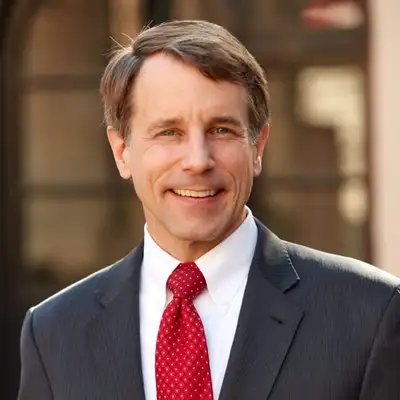
Chris Westfall:Today's discussion is a direct counterpoint to that. My guest is Dave Jones, former California insurance commissioner and now director of the Climate Risk Initiative at UC Berkeley Law. His recent article in the Yale Law Journal argues that insurance itself has become the clearest early warning signal of climate risk, describing property insurance as the canary in the coal mine and warning that the canary is already dying. In the discussion, examine California and Florida as live case studies, what mitigation and modeling can realistically achieve in the near term, and where the practical limits of insurance may already be coming into view. I hope you enjoy the conversation.
Chris Westfall:Dave, thanks so much for joining me today. I'm really looking forward to this conversation because you're right at the heart of a lot of what the audience thinks about and discusses in terms of risk and, and especially in an area of California. So maybe, Dave, if you could just go a little bit about your background, you're obviously an important figure in the market, and a little bit of background on what you're working on now.
Dave Jones:So I served eight years as California's insurance commissioner, regulating the largest insurance market in The United States and the fifth or sixth largest in the globe from 2011 through 2018. Spent about two and a half years at the Nature Conservancy working in partnership with insurers to demonstrate how nature based risk reduction approaches could be captured and accounted for in the models that insurers use for pricing and for underwriting. And more recently, I direct the climate risk initiative at the Center for Law, Energy and the Environment at UC Berkeley School of Law, where I'm focusing on climate risk and financial markets and financial institutions and what financial institutions, financial markets, and financial regulators ought to be doing about the risks that climate change poses.
Chris Westfall:Perfect, because that's exactly what we cover and we discuss on the podcasts. I obviously came across your piece in the Yale Law Journal. You know, basically, has a pretty in your face title about, you know, the markets and what's happening in. So maybe we can start off a little bit about that piece and what you were trying to say in it.
Dave Jones:So, I was privileged to be asked by the law journal to contribute an article looking at the impact of climate change and climate risk on property insurance. And your listeners are probably well aware of this, but what's been happening is that as global temperatures rise, they're causing more severe and frequent weather related natural catastrophes. And those are killing people, injuring people, destroying communities, damaging property. But they're also causing insurance companies to pay out ever larger amounts in claims. So just to put this in perspective, you know, last year, the insured global nat cat losses were depending on your data source about $147,000,000,000, which exceeds the rolling ten year average by about 29%.
Dave Jones:And similarly in The United States, the insured nat cat losses were about $114,000,000,000, which exceeds the rolling ten year average. So the trend is bad. Insurers are having to pay out ever larger sums. And what I discussed in the article was the impact of that on insurance markets in The United States. The increase in rates that insurers are demanding as well as the nonrenewals and not writing of new insurance, you know, decreasing their exposure, throughout The United States with different levels of acuity and severity depending upon how hard climate change driven natural catastrophes are landing.
Dave Jones:I looked in particular at California and Florida's response. I walked through several different policy proposals that could help continue to keep insurance available. But ultimately, it's my conclusion that unless we address the driving cause of this phenomenon, which is increased emissions. So unless we transition from our utilization of fossil fuels and other greenhouse gas emitting industries, and bend the curve with regard to emissions and bend the curve with regard to global temperature rise, in the long term, we're gonna have an uninsurable future. That all of the things that I know we're gonna have a chance to talk about in this podcast that one can and should do to help make things better are ultimately gonna be overrun by the rising background risk, growing losses, and inability of insurers to make profits writing insurance in the face of these ever growing losses.
Chris Westfall:I have to ask what you know, and I certainly understand everything you said. And I certainly found the research, paper in the article very interesting. What do you think about this moment in time, in terms of an audience for this? Because there seems to be less at the policy level, federal policy anyway, a focus on these sort of climate change ideas that you're of focusing on? What's your hope with this article in terms of advancing the dialogue?
Dave Jones:Well, my hope is to connect the dots. I mean, I think that Americans are experiencing in real time as our Europeans and Asians and South Americans and those that live in the Pacific Islands across the globe, the impacts of increasingly severe and more frequent weather related natural catastrophes. And so the dots that I'm trying to connect are that what's happening with regard to insurance pricing and availability is directly related to that. And that that hopefully will cause publics, businesses, communities, and policymakers to connect those dots as well and understand that while there are things we can do to make things better in the short and midterm, ultimately, we don't deal with the root cause, insurers are gonna have an increasing inability at any price to be able to provide property coverage. I mean, the the CEO of Swiss Re said this the other month and I'll paraphrase it.
Dave Jones:We may be reaching the limits of insurance, and he's not the first one to say that. There was a senior board member of Allianz, the major German insurer said the same thing about six months ago. So what I'm saying isn't, unprecedented. But I think in the in The US context, unfortunately, we continue to have a politicization of this issue, and federal leaders at this time, a federal administration, which denies that climate change is happening, denies that it's principally driven by, human behavior and activities, and is doing everything to essentially double down on the very industries whose emissions are a major driver. The good news is that states in The US federal system continue to retain a large degree of autonomy and authority to address this issue, and and many states are.
Dave Jones:And markets also are continuing their important function. And the fact that clean energy and the cost of clean energy has, in many cases, dropped below the cost of fossil fuel related energy is, I think, a positive sign and a development that's going to continue to drive change. And then there's technological change occurring too, regardless of what's happening at the federal government level. But as it relates to insurance, the dots that I'm trying to connect are that, this isn't just the weather, that something is behind the weather and that insurers ultimately are going to respond to these losses as rationally economic enterprises and raise price and rate less insurers. And that's what we're seeing across The United States.
Dave Jones:If we want to do something in the long run about that, we need to address the root cause. Now it is true too that part of their losses are also driven by our continued propensity for putting more people and businesses in harm's way. So as I pointed out in the paper, part of the solution set is either restricting or at least reducing new development in the areas of greatest risk. Part of one of the other drivers is the replacement cost of replacing property. That's also driving insurer losses also because remember what they're insuring is to replace properties that have been damaged or destroyed, by these events and the cost of doing that is going up.
Dave Jones:Now, you know, federal tariff policies undertaken by president Trump are also contributing to that phenomenon of increased cost too. But but more people in business harms way and increased cost of replacement wouldn't matter near as much if we didn't have more of these events and more extreme events landing in all of these areas. So I keep coming back to that as the major driver that needs to be addressed.
Chris Westfall:Yeah, and I think we're going to touch on all that. I want to start off, you know, with a focus on the article and some of the points you made. You know, one of the things that really caught me, especially when you look at sort of your viewpoint of looking at California and Florida, you know, know, it's pointed out, you know, that California really is in a lot of ways facing a market failure in terms of insurance. One of those statistics is, you know, there's, you know, 600,000 more than 600,000 more policyholders on the state's fair plan than there was in 2018. So my question is, like, the the given all the longer term climate issues, you know, what are the practical near term actions that should like state policymakers and regulators prioritize to sort of stabilize the market right now, the admitted market right now, and especially in like wildfire exposed zip codes?
Dave Jones:So one of the things that we need to have more of is more public and private investment in adaptation and resilience. And that means, more investment in helping people to harden existing homes and better building codes associated with rebuilding or building new homes. So the insurance industry through its, Institute of Business and Home Safety has done a lot of empirical work with regard to what sort of things one can do to harden your home against wildfire, wind, hail, and severe rain. And these are among the perils that are causing the greatest amount of damage and the greatest losses for property casualty insurers in The US. So we're going to need to see more public and private investment, and in particular, grant programs, state and federal, to help people retrofit their homes to meet these home hardening standards.
Dave Jones:In addition, there are community based resilience measures too that need to be invested in. And in the let's just pick the wildfire peril, for example, in California, fuel reduction within a community, particularly a community that has a lot of chaparral lands in or adjacent to it or forest lands in or adjacent to it can make a big difference. And then there are landscape scale mitigation measures. And in the wildfire peril context, that means managing the forest the way that nature used to manage forests in the West, where fire was a routine part of the forest ecology, would burn out the lower lying vegetation, burn out the smaller trees. You wouldn't have the ladder fuels and the huge volume of fuel that now exists that once there's an ignition causes these force to come, you know, sources for mega fire.
Dave Jones:So prescribed fire or controlled burns, thinning, not clear cutting, These are proven methodologies to reduce wildfire peril. And there are similar sorts of approaches for the other perils as well. It turns out that in the wake of Superstorm Sandy, there was a study done by the US Geological Survey that found that those communities along the Atlantic Coast that had intact salt marshes actually sustained substantially less losses from storm surge than those that didn't have intact salt marshes. Those with intact salt marshes avoided something on the order of about $600,000,000 in losses. River flooding.
Dave Jones:There are nature based approaches to river flooding, levee setbacks, bypasses, etcetera, etcetera. So investing in these things, I think is occurring, but we're gonna need to see more of that. And then we're gonna need insurers to take that into account in the models they use to decide whether to write, renew and price insurance. And it may surprise your listeners to learn that that is not occurring across the board with regard to admitted insurers. In California, for example, you could be a homeowner and you could meet the IBHS home hardening standard.
Dave Jones:You could adjacent to a forest in which there's landscape scale forest management going on. And yet, the model used by the insurer spits out a risk score. And the insurer decides because they're not taking into account home hardening and defensible space and the landscape scale force treatment that they're not going to renew your insurance. So Colorado got tired of waiting around for the insurers to do this voluntarily and actually enacted a bill this year, House Bill eleven eighty two, sponsored by Colorado Insurance Commissioner Mike Conway, which simply requires that the models used by insurers in Colorado to price and to underwrite, that is to write and renew property and casualty insurance, have to take into account property level, community level, and landscape scale mitigation. So investing in adaptation and resilience and making sure the insurers account for it is an important policy approach that can help keep insurance available in these challenged markets.
Chris Westfall:I guess two follow ups to that is, I certainly get your point in terms of mitigation and taking that into account. But if the, for example, the California market is in a crisis right now where like one another large wildfire could cripple it. Is there anything that you think they should focus on right now in order to it shore it up? And another aspect of it is, in terms of your mitigation plan is like, always ask the question, and this is a question I get all the time from, you know, interested executives is like, okay, how are going to do that? Right?
Chris Westfall:How are practically going to do this? What are the verifiable mitigation standards? What are they? And how are you going to confirm them and put them into place into the model? So I guess two questions follow-up.
Chris Westfall:Yeah. You know, what's the immediate issue that needs to be done in terms to shore up the market? And how do you put verifiable mitigation standards into these models and policies?
Dave Jones:So California did make some substantial regulatory changes in the last year, that were requested by the insurers. One was to allow forward looking probabilistic models for purposes of determining the catastrophe load of the rate. Now California has always allowed forward looking probabilistic models for what's called rate segmentation. That is to decide between home a and home b, what's the risk, and then how to allocate the rate. How much more should home A pay than home B because home A faces more risk?
Dave Jones:They've always been allowed, and they continue to be allowed to use probabilistic models for that. But for the catastrophe load of the base rate, they had not been allowed to do that. So those regulations were changed last year, effective this year, that allows forward looking probabilistic models for the catastrophe load. That was one thing the insurance asked for. The second thing that they asked for and obtained was a change in the rules with regard to how reinsurance costs would be treated.
Dave Jones:Historically, the California Department of Insurance took the view that because reinsurance pricing is not regulated, because the reinsurance market is an oligopoly, and because as a part of rate setting in California, carriers were able to get credit in their future rates for losses that were covered by reinsurance in the past, the view was that it would be double counting then to allow going forward, not only credit, if you will, for the losses covered by reinsurers, but also the costs paid by the insurer for the reinsurance. Well, that rule was changed. And now insurers can include in their rates in California reinsurance costs. The third thing that they asked for and got was a limit on their exposure to an insolvency. It's not really technically an insolvency because it can never really run out of money, but a shortfall in claims paying capacity in the California fare plan.
Dave Jones:So some 35 states have residual markets or fare plans. And they are set up by state law. They're not state agencies. They're not state taxpayer funded. They're state statutorily created private associations of the insurance companies in that market.
Dave Jones:And what the state laws provide with regard to these fair plans or residual markets is that they will write insurance for the exposures and risks that the private admitted market won't write. The states are saying, look, while private insurers have under state law the complete discretion to decide whether to write or renew insurance, and they're exercising it very aggressively throughout the country, there's got to be some place where people can go to get insurance. So the state laws say to the insurers, look, you've got to participate in this association, and it will write insurance for the risks and exposures you won't write. Well, most of those state laws also provide that those residual markets or fair plans are not required to have the same reserves as a private insurer because if they were, nobody could afford the fair plan residual market insurance. It's already covering the riskiest risk.
Dave Jones:It's gonna be expensive. It had to have the same reserves. No one could afford it. But instead, the state laws provide that if the fair plan or residual market, which is a private association runs out of money, then it will assess the member insurers based on their market share. Well, you can imagine how excited the insurers are about that in various parts of the country where that risk is going up.
Dave Jones:And so in California, they asked for and got a limitation on their exposure to $500,000,000. Above that, all policyholders in the state have to pay. So when they asked for these things and got them, the insurers said that they would start writing new insurance again. Now, it's also important to note they didn't leave the California market. I mean, one or two really small ones left.
Dave Jones:But other than that, they all stayed in the market. They all renewed substantially their book of business. They were selectively non renewing in the high risk wildfire areas, but 90%, 95% of their business they were renewing. And they made underwriting profits in 2019, 2020, 2021, 2022, 2023, and 2024. But in 2023, they said, we're not going to write new customers.
Dave Jones:Not that they weren't gonna not renew everyone, but we're just not gonna write if you're buying a house for the first time, moving from home A to home B, we're not gonna write you. So what they also said was if we're given these regulatory changes, they will start writing new customers. And several of them since the regulatory changes were in place, have announced they're gonna start writing new customers. Now, the bigger issue though is whether they're gonna write additional insurance in the high wildfire risk areas. Because that was a part of the regulatory change was that in exchange for being allowed to use reinsurance costs in their rates and in exchange for being allowed to use probabilistic models and the catastrophe load of the rate, they would need to write some more insurance in the high wildfire risk areas.
Dave Jones:But both the New York Times and the LA Times did an exhaustive review of the recent rate filings of the carriers and what they're actually committing to and measured that against the huge nonrenewals that occurred in 2023 and 2024 and 2025 and concluded that, in fact, we're gonna see very little, if any, additional insurance written in the high wildfire risk area. So it's mixed story. The point I make in the paper is, look, while these changes may help to get insurance written again in the short and midterm. And and the the carrier's announcement, some of them, that they're gonna be writing new insurance is after the LA wildfires where they lost 40 to $45,000,000,000. So, you know, it's good news that they're saying they're gonna write new insurance notwithstanding that.
Dave Jones:And so in the short or midterm, these changes may help keep insurance available in California. But in the long term, they're going to be overwhelmed by the rising risk of wildfire driven by ever climbing temperatures associated with emissions and climate change. And then there's a whole new set of problems to worry about. If you had asked an insurance professional, I don't know, 20, maybe as little as fifteen years ago, are you concerned about severe convective storms? They would have looked at you blankly.
Dave Jones:Like, what's a severe convective storm? Well, last year, about forty percent of the insured nat cat losses were from severe convective storms. What's that? Well, temperatures are going up, atmosphere holding more water vapor, climate patterns changing, these atmospheric rivers hover over geographies, and then you have heavy sustained rain, sometimes coupled with wind, sometimes manifest as hail, and that's causing an enormous amount of damage and a substantial share of the insurance company losses, both The United States and globally. And that's basically a new thing.
Dave Jones:And so the problem is that while you can do regulatory changes to help keep insurance available in the short or midterm, in the long run, if we don't deal with the underlying driver, which is the emissions, it's gonna continue to drive losses, essentially supercharge perils that really didn't matter like severe convective storms, and ultimately make it impossible for insurers to write insurance profitably in many parts of The United States. And you know, that was the conclusion of the Federal Reserve chair when he testified before Congress earlier this year. Jerome Powell said that in as little as ten years, there'll be parts of this country where you won't be able to get a mortgage because you can't get insurance. Cause remember to have a mortgage, you have to have insurance. If you can't get insurance, you can't afford insurance and you're not going to get a mortgage.
Dave Jones:So, my point is that the changes that California made may help in the short or midterm. It's not clear they're actually going to get, in an absolute sense, much additional insurance written in high welfare risk areas, but at least the insurers are not writing new insurance anymore. But in the long run, they're going to be overwhelmed by the growth and background risk. And then I look at Florida, which has taken a very different approach, which is essentially deregulation of its market, right? So Florida doesn't regulate rates.
Dave Jones:It set up two taxpayer funded reinsurance facilities to provide cheaper cost reinsurance to private insurers fifteen or twenty years ago, passed a law that said that the private insurers are not on the hook if Florida citizens, which is Florida's version of the fair plan runs out of money. And among other things, adopted laws the other year that make it substantially harder, if not impossible, for consumers to challenge claims denials and limited their ability to do so in court. And then finally, Florida has also essentially deregulated the conditions what needs to enter the market to sell insurance in Florida by virtue of allowing a less rigorous rating agency called Demotech to rate Florida insurers. Well, that's gone so well. Seven out of the last seven insurance insolvenants in Florida were Demotech rated insurance companies.
Dave Jones:But essentially, what Florida has done is said, look, we're going to lower the standards and allow a less rigorous rating agency to radar insurers and allow them to come into the market. And while there's been some short term uptick in the number of insurers selling in Florida, they're basically Florida or regionally based insurers. They're not national carriers. They're in all likelihood undercapitalized. And we're one hurricane away from that market being hit and hit hard and insurance again retreating in Florida.
Dave Jones:So my point of looking at Florida was to look at how well deregulation is working. And while there may have been some short term progress in Florida, the costs of that in terms of claimants getting their claims paid, insurers enter the market that don't have adequate capital, and the very high likelihood that when the next major climate driven hurricane hits, we'll see a bunch of insurance insolvencies leaving consumers in the worst possible place, which is you think you have insurance, you don't. It's not a long term solution.
Chris Westfall:Yeah, and I get that. But I think, you know, when I hear Florida regulators, or Florida policymakers talk about the changes, they're taking the W. I mean, they're saying this is a win. So is your honor that saying it's not sustainable? I mean, because their argument is going to be they're seeing policy premium stabilize or go down and capacity providers enter the market.
Chris Westfall:You know, to your point, you know, they not be mean it be highly rated, but it's capacity. I just is the argument that, you know, this difference between what's happening in Florida is that it's not sustainable?
Dave Jones:It's a temporary improvement, and one that will evaporate when the next major hurricane hits.
Chris Westfall:One thing I would ask is reinsurance costs. And if I understand it correctly, they've doubled since 2018 in California and California's new rules sort of like permit passing those costs into the rates. So does reinsurers, you know, that cost passing through ultimately improve the market participation? Or does it, like, simply shift the pricing down to the homeowner's risk? Or in fact, and is that a good thing?
Chris Westfall:Right? Is that just an efficient way of getting the prices to where they should be?
Dave Jones:So I think reinsurance is positive aspect of the market in the sense that it's a way of accessing global capital to help transfer some of the risks that direct writers of insurance are facing to a global reinsurer who then is transferring that risk to global capital markets. The problem is that climate change and climate risk is impacting reinsurers too. What they're seeing is that their global losses are going up. And they're rational economic actors and they're also an oligopoly. I mean, there's a handful of them.
Dave Jones:And so they're price centers, not price takers. And so they're, not surprisingly, substantially increasing, at least in the last eight years or so the cost of reinsurance. I mean, this year, the price increase is going to be less, maybe even level off. But if you look back over a relatively short period of time, the reinsurance pricing has gone up dramatically. And then beyond that, reinsurers have required that the direct rate of insurance retain more of the risk before they'll come in and cover.
Dave Jones:So they'll have higher attachment points. They're refusing to cover all of the risk of a particular insurer. So you have this phenomenon of tranches of reinsurance. One reinsurer will say, I'll cover between $1,000,000,000 and $1.5 but I'm not going above 1,000,000,000 point dollars And another insurer will well, I'll cover the billion and a half to 2,500,000,000.0. Right?
Dave Jones:All that comes at a price. So they're limiting the amount of coverage that they're providing in various ways and they're charging more for it. And then that has a direct impact on the direct writers pricing of insurance and including in those states that regulate rates. There's only 15 states in The US that regulate rates. The other 35 don't regulate rates.
Dave Jones:But either way, those reinsurance costs are driving rate increases. And the cost of that risk transfer is being paid for by American homeowners and American renters and American small businesses and American commercial property owners.
Chris Westfall:Do you think it's a fair I mean, covering this, there's a number of fair plans that, know, since they're perceived as the insurer of last resort, aren't passing those prices down to the policyholders as sort of just, you know, almost placing a bet that they'll be able to get through a season, whether it's a storm season or annual renewal without a loss, and then they'll go to, you know, almost like a state coffers as a backstop. Right? So is it is it do you think those reinsurance costs are being truly sent down to the policyholders? Or is the risk being absorbed by the states? Or does that question make sense to you?
Dave Jones:Well, I mean, think that either for private admitted carriers, for surplus lines writers that are buying reinsurance, and for residual markets or fare plans that are buying reinsurance, they're incorporating that into their price in varying degrees. So the 35 states that have residual markets or fair plans, the state law provides that the insurance is supposed to be risk priced. And I think by and large it is. In some states like California and Florida, arguably the fair plan or the residual market price was lower than or has been lower than what it should be to fully account for risk rating. But the fair plan in California is in for a, I don't know, 30% or 40% rate increase to make sure its rates reflect the latest probabilistic modeling with regard to potential loss.
Dave Jones:So fair plans and residual markets are not backed by the state treasury or by state taxpayers. Again, if they run out of money, they have the ability to assess the member insurance company. So essentially they're backed by the private insurers with a couple of states being exception, Florida, Louisiana, now California. There are one or two others that have shifted that burden to all policyholders. So I think it's the case that reinsurance costs by and large are being passed on, whether it's a residual market or fair plan buying the reinsurance or private admitted carrier buying the reinsurance or the surplus lines carrier buying the insurance, depending upon elasticity of supply and demand, they're being passed on.
Dave Jones:I guess the other point I'd like to make and one of the recommendations I make in the law journal article though is that I think there's a role for a federal reinsurance program to help fair plans in residual markets. Because remember, the homeowners and small business property owners buying from fair plans and from residual markets are there only because they can't find insurance in the private market. Right? They've been told you're too risky for us to insure, go to the fair plan or go to the residual market. And so they're going to be charged more because the fair plan and the residual market is ensuring the riskiest risks.
Dave Jones:And the fair plan and the residual market buys reinsurance. And the reinsurers know that they're reinsuring a fair plan or residual market that's ensuring the riskiest risk. So they're gonna charge a lot for it. So one way to help the fair plans and residual markets would be a federal nonprofit reinsurance program that would provide lower cost reinsurance to FairPlans and residual markets. And there would be some competition also with the private reinsurers who have oligopoly pricing power in addition to they're having to deal with the losses that they're facing.
Dave Jones:So I think that would be one way to help fair plans. I think another would be to many states have already done this, but some haven't would be to give the fair plans or the residual markets the ability to issue catastrophe bonds or other insurance linked securities as ways of raising capital to cover claims in lieu of reinsurance that also competes with reinsurance. I'll tell you a funny story. When I sat on the board of the California Earthquake Authority, which is a major purchaser of reinsurance, we decided that we needed to have a little competition. And so we set up a special purpose vehicle.
Dave Jones:I can't remember whether it was Bermuda or The Bahamas to issue cat bonds. And we agendized this item to actually set up the special purpose vehicle and took the action but didn't sell the cat bonds. I swear, literally that week, the reinsurers all called the California Earthquake Authority and said, hey, look, we see that you're about to issue a cat bond. Maybe we could talk to you about our price. Right.
Dave Jones:We might give it off you a better price. And they did. And so it worked perfectly. So I think that giving fair plans and residual markets, so they said they don't have it, the authority to go into capital markets using insurance linked securities like cat bonds as a way of hopefully competing, if you will, a little bit with the reinsurers and also giving them an additional access to capital is an important policy solution that I put forward in the paper.
Chris Westfall:Yeah, I can imagine, you know, any discussion with a whether it's an insurance company or a bank going direct and around them is automatically going to freak them out. So I would assume you get that reaction.
Dave Jones:Know, you say freak out, I say competition.
Chris Westfall:Yeah, I totally get it. So, you know, so one of the questions I had is when you're, I recall the idea of a federal reinsurance sort of mechanism. How do you avoid it? If I understand it correctly from sort of the trap of like flood insurance, NFIP because that's just a constant annual struggle in terms of like disentangling what it was supposed to be to what it is now. So I guess how do you get around a fair plan residual, reinsurance backstop without it becoming just like another NFIP?
Dave Jones:Well, I think for starters, the federal program needs to be risk rated. In other words, yes, it's nonprofit, but you shouldn't suppress its rate. And so it needs to charge for that risk. It doesn't have to charge to make a profit because it's federal reinsurance and it's not in the business of making profits. And it doesn't have to charge to pay federal or state taxes.
Dave Jones:So that's why it's less expensive. But it still should be risk weighted. The problem with the National Blood Insurance Program is that from the get go and until very recently, and even not very recently, the rates don't reflect the risk. And so since the program was created in the 60s for some fifty or sixty years now, the federal government's been selling flood insurance that's not priced based on risk and basically sending a signal that, hey, it's Okay to expand home development and small business development in areas we know are going to flood. And oh, by the way, we'll say this insurance.
Dave Jones:And if you place floods, we'll sell it to you again. And if place floods, we'll sell it to you again. And if place floods, we'll sell it you again. So I think the way to avoid that is by making sure that the federal reinsurance program is risk rated. And it's also not a direct insurance policy that's sending misaligned signal with regard to real estate development in the way that the flood insurance program is.
Dave Jones:Now having said that, in the paper, also talk about other proposals for a national all risk, all disaster insurance scheme that would basically supplant the private property casualty market. I go through the pros and cons of that approach. And my conclusion is that's not a good idea precisely because our experience with direct written federal insurance programs, whether it's the federal crop insurance program or the national flood insurance program, is that they tend not to reflect the actual risk in their pricing. They're heavily subsidized. They're hugely regressive.
Dave Jones:I mean, the 45% of Americans that are renters are paying through their federal income taxes for flood insurance for the 55% of Americans that are homeowners. So they're hugely regressive. Know, all Americans are paying for crop insurance for huge, you know, agricultural enterprises that are buying crop insurance. And the price of that crop insurance, you know, what's actually paid for by the farmer doesn't actually reflect the risk. So I don't I don't support an all risk, all disaster national direct insurance scheme.
Dave Jones:But I think a narrowly tailored February insurance program for those that are in the worst position, the fair plans in the residual markets, which are writing insurance for the exposures that can't find insurance on the private market, is different from an all risk all disaster direct insurance program and avoids the pitfalls of that sort of program.
Chris Westfall:You've been like super generous for the time and there's always going to be questions I want to ask them when we get to but there's one question I want to before we wrap up that I really want to get to and it's simply because that's the audience of the site and of podcasts is around catastrophe models. And and, you know, California, you know, now allows insurers to use like forward looking for looking catastrophe models when setting wildfire rates. So, you know, from your perspective as as the former commissioner and now in your research, what safeguards are necessary to ensure that the models reflect sort of scientifically credible wildfire scenarios without sort of like and there's always that black box criticism, but, like, the opaqueness of the models, making sure they're available. And and and so what are your thoughts around wildfire models in California and implementing that?
Dave Jones:So in the new regulation allowing probabilistic models for the catastrophe load of the rate, and remember again, insurers have always been and have used for some time probabilistic models for rate relativities, rate segmentation. But the new regulation is for the catastrophe load of the rate, allowing them to used there. It provides for the submission of those models and the review of those models by the department with some very limited public participation. And I think that's where that regulation falls short because the overarching rate regulatory approach in California has been one of transparency. The carriers have to file their rates.
Dave Jones:They're publicly available. The public can review. The public can intervene in the rate proceeding. If the rates are above 7%, they're entitled to a hearing. It's not a rate cap, by the way.
Dave Jones:This oftentimes gets misreported. There's no rate cap in California. But there is a transparency requirement that rates be publicly available, the filings be publicly available, and that there'll be an opportunity for the public to have input. Well, the carriers argued that and the model vendors, right, because most of these models are not proprietary to the carriers, they're actually third party owned and licensed. So really the model vendors and the carriers argued, look, we have so much IP in these models, we can't just make it public.
Dave Jones:Look, I mean, I think that by and large, each of the modeling firms knows what's in the model of its competitors. It's not like there's some secret sauce here, right? I mean, people are moving between these organizations. They're drawing in the same expertise, etcetera, etcetera. So I think that where that new regulation fell short was in public transparency.
Dave Jones:I think that that is going to be a problem because although consumer groups can participate in reviewing the models, it's very limited in terms of what they're permitted to look at. And I think falls short of the transparency needed to make sure that we don't end up with models that are seriously misaligned with what the best science is and the best modeling is with regard to the probability of loss. I think that another way to address this problem is by creating public catastrophe models. Florida has one, has had it for ten or fifteen years now, for wind. And I think it's worked reasonably well as sort of a check, against the proprietary models the private insurers are using for purposes of rates.
Dave Jones:Although in Florida, they're not regulating the rates anyways. But in California, legislation just passed directing the establishment of a public catastrophe model. It took a couple of years to do that. But I think other states should take a look at that as well as they try to contend with the utilization by insurers of very sophisticated, very hard to understand, now AI driven black box models. There's one other thing I'd like to talk about though before we go.
Dave Jones:And that is, there's another thing insurers can and should do to try to contribute to the sustainability of writing insurance in The United States. Really three things. One is insurers have over half $1,000,000,000,000 invested in the fossil fuel industry in The United States, which causes one to ask the following question. Why does it make sense for insurers to be invested over half $1,000,000,000,000 in the very industry whose emissions are the major driver of the climatic conditions that are causing the losses for the insurers causing insurers to say, look, we can't write insurance in your state any longer. So it makes no sense.
Dave Jones:And they're also writing insurance for the fossil fuel industry. So my view, and I set this forth in the article, is that states should enact laws requiring insurers over some reasonable time to transition out of their investments in writing insurance for the fossil fuel industry because it makes no sense for insurers to be financially supporting an industry whose emissions are contributing to its demise. And then in addition, insurers have a right called the right of subrogation. This requires a little explanation. But in every insurance contract, and also in common law and in many state statutory laws, the insurance company has a right to stand in the shoes of its policyholder and bring a lawsuit against third parties whose actions or inactions cause damage to the policyholder, which then cause the insurance company to pay out.
Dave Jones:So examples include health insurers suing big opioid and big tobacco to recover health insurance payments for medical treatment for opioid addiction and respiratory illness, respectively. Home insurers, suing utilities, electric utilities or gas utilities where their equipment started a fire and caused damage. The, most notorious example of that is Pacific Gas and Electric, the big Northern California electric and gas utilities equipment started the Camp Fire in 2018, which killed over ninety people and damaged some 16,000 structures and caused insurance companies to pay out $12,600,000,000 in losses. Well, the insurance companies used their right of subrogation standing in the shoes of their policyholders whose homes have been damaged or destroyed or their small business property policyholders whose businesses have been damaged and destroyed and brought a lawsuit against PG and E and recovered $11,000,000,000 through subrogation. So insurance companies should bring subrogation claims against the oil and gas companies for their emissions contribution to the severe and extreme weather related events that are causing insurance companies to have to pay out.
Dave Jones:They haven't done so. And so I suggest a number of, policy approaches the states can take to, get them to do so. But my view is that the answer shouldn't simply be we're going to jack up your rate and or we're not going to write you insurance. In addition to that, they have another tool, which is to bring lawsuits against those whose actions or inactions are causing their losses. And they've been very eager to do so in other contexts, not done so in this context, but they should.
Chris Westfall:I'm going to let you have the last word because I know if I talk to an insurance reinsurer, they'll go on for a couple hours regarding investment side and subrogation. Sort of hopefully at some point we can have a discussion back and forth about that. But you've been really generous with your time. I really want to say thanks. And this has been really an enlightening conversation.
Chris Westfall:Thanks very much.
Dave Jones:Well, enjoyed it. Thanks very much. Appreciate all you do for your listeners, and thanks for the opportunity to spend some time with it.