Subscribe
Share
Share
Embed

The World Cement podcast: a podcast series for professionals in the cement industry.
Hello everyone and welcome back to the World Cement Podcast with me, Senior Editor of World Cement, David Bizley. In this episode I'm joined by Professor Theodore Hanein, Chair of Construction Materials Science and Doctor. Wafaa Borja, Research Fellow at Leeds University's School of Civil Engineering. And our topic? BCSA cements and the work being done at Leeds University to transform them from a product reserved for nice applications into a more mainstream alternative to Portland cement that can play a role in decarbonizing the cement and construction sectors.
David Bizley:I just wanted to take a moment to remind you to register for World Cement. It's free of charge and gives you access to the latest issues of World Cement, both in print and online. Every issue comes packed full of regional analysis, technical articles, project case studies, and the latest industry news. Simply head over to worldcement.com, click the magazine tab, and register today. It's as simple as that.
David Bizley:Happy reading! So, as always, we'd like to begin with an introduction. So, Professor Hanein Dr. Borja, could you briefly tell us a bit about who you guys are and what it is you've been working on at the University of Leeds?
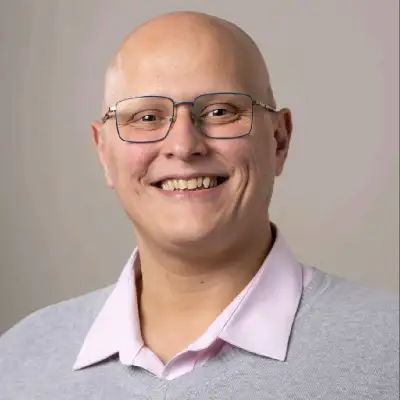
Prof. Theodore Hanein:Hi, I'm Professor Theodore Hanein, please call me Theo. First of all, I'm very happy to be here and grateful for the invite to take part in this recording. My role is I'm chairing construction materials science at the University of Leeds in the School of Civil Engineering. I'm also a UKRI Future Leaders Fellow and Vice President of the Board of the International Society for the Environmental and Technical Implications of Construction with Alternative Materials or a SPOA for less of a mouthful.
David Bizley:Thank you. And Doctor. Borja?
Dr. Wafaa Borja:Hi, my name is Wafaa Borja. Thank you so much for the invitation. I'm very pleased to be part of this podcast. I'm a research fellow at the University of Leith and I'm working with Professor Theodore Hanein on the FLF project. So I have a PhD as well in waste recycling and material science.
Dr. Wafaa Borja:So my expertise is mainly on creating value from waste and transforming industries to become more sustainable and greener.
David Bizley:Excellent, thank you. Well, to kick things off then Theodore, let's start with the basics. What is BCSA cement and how does it differ from ordinary Portland cement, the thing we're used to?
Prof. Theodore Hanein:BCSA cement is actually from the family of CSA cements, which is calcium sulfa aluminate based cements, and the B in BCSA stands for Beelite or Ballitic because that is the major phase if you would like instead of any of the other phases of species in the cement. Now these cements are not new they've been used for decades although in much less quantities than Portland cement, and tailored for very niche applications normally, such as for for things like shrinkage or expansion or other requirements. So the chemistry is different, but it's not new. The main phases in in in the BCSA, I won't go too much into the chemistry here, but are be light and yellow light. And to put that into perspective, the main phases in Portland cement are be light and ali.
Prof. Theodore Hanein:So we're basically just replacing, if you would like, the Alite with Yalamite between BCSA and Portland cement. Now Yalamite has a lot of advantages in that it's rapid set first of all and it gains burns very quickly so that's why we believe it's a good option to continue working on. BCSA offers rapid early strand gain making it particularly suited for precast components and EN 1.504 compliance repair where speed and performance are critical now the reason I mentioned the standards under which this can work is because EN 1.504 is performance based whereas for other applications, the structural applications, we have more, if you would like, chemistry based standards, which I think are changing, slowly but surely. So, BCSA in particular has been used mainly in The US and China, as I said since probably the sixties, and currently the price is 10 times the price of Portland cement in The US I think, or thereabouts, and this is mainly because of obviously economies of scale, but also in particular the raw material but still it's currently it's used in applications that require rapid setting basically so in airport runways where if you close the runway for certain hours of time you're paying tens of thousands of pounds per minute.
Prof. Theodore Hanein:It's used by the US army to quickly rebuild things that have been, for example, destroyed or infrastructure that's needed very quickly. It's used in road repairs in California, but that's also because most of the roads there are concrete but not only that in The US I think every state has its own different codes but in California for example it's specified in the code to be able to be used so I think it's already very clear that one of the limiting factors of using this is currently specifications, standards, codes. BCSA ceilings can also have very good performance in marine environments so marine defenses or even for the floaters wind turbines which we know are going to need to upscale a lot going forward, and we're going to need a lot of concrete. Actually, it's calculated in the concrete we're going to need per year just to produce the foundations, you would like, of these wind turbines of what is of what the goal is more concrete than we can produce currently in The UK, including Portland cement. So we need alternatives, we need obviously more manufacturing, and it's not a speculative innovation pathway.
Prof. Theodore Hanein:It presents a potential transitional material strategy capable of replacing one day general cement, but in the short term to start to enter the market through applications where it can be used as long as we reduce the price, which is what we're doing as part of our work here at Leeds.
David Bizley:What is it then about BCSA cement that makes it attractive from a decarbonization perspective?
Prof. Theodore Hanein:Okay, so the main culprit, if you would like, or CO2 emitter in cement is from the clinker, and this is because clinker is mainly produced using limestone rocks or calcium carbonate,
David Bizley:and
Prof. Theodore Hanein:when this calcium carbonate is calcined into a clinker, it emits that CO2. Now this represents most of the CO2 emissions from the cement industry, whereas the remaining part is from the energy needed for the fossil fuels used in these high temperature furnaces and then also some auxiliary electrical fuel like components, etc, and transportation within your plants or to where you're going. Now, what the first BCSA for important cement is that mainly it requires less calcium in the chemistry. So already from the start, instead of having 80% limestone in your raw meal feed into your kiln, it's around 50 or 55%. That's not the only advantage, there's also advantages because it's made at lower temperature, but the good thing is it can be made using existing infrastructure such as cement plants or even lime kilns, right?
Prof. Theodore Hanein:So there a lot of capital investments whether you want to take this up quickly that would be required or a lot of processing development that would be needed apart from treatment of the raw materials which Wafaa will talk to you later about. But overall I would say without before the studies with me to massively reduce CO2 emissions and the cost and the positive done. BCSA was roughly around 30% already less CO2 emissions than Portland cement.
David Bizley:Right. Okay.
Prof. Theodore Hanein:There are also in terms of decarbonization, there are also a lot of benefits. You know, although time is not a functional unit currently when when CO2 is being calculated, it's always being calculated by mass. But if you wanted to calculate the CO2 emissions of the time saved and the performance gain because you get better compressive and flexural strengths, mechanical properties, and you can tailor it for better durability properties then I think that number will increase exponentially.
David Bizley:Okay, interesting. So the University of Leeds has been carrying out some notable work on BCSA cements, you quickly run us through the highlights, what developments have you overseen?
Prof. Theodore Hanein:So here at the University of Leeds through my future leaders fellowship project on green circular and smart cement manufacture. We are leading a quite large project on this since it's been ongoing since 2021 and now has been granted extension all the way up until 2029. Now the idea behind this project was, look, this is a great cement, why don't we make it in The UK? Right? Because we we didn't produce it here.
Prof. Theodore Hanein:And the overarching aim of the project, if you would like, is to enable its manufacture in The UK by 2030. And we are already on the path, and they're like on time as well. So the main reason why it wasn't produced in The UK was because The UK does not have bauxite, which is the alumina source. Because I said earlier, it requires less calcium, but that means it requires more of something else, which is the alumina. Now what's different in our project is we use alternative raw materials such as waste crays and waste from other industries such as the water industry or the aluminum industry, which Wafaa will go into with you later about.
Prof. Theodore Hanein:But the achievements include, first of all, scoping out the raw materials and the quantities available. And I think we have found enough raw materials that can replace currently up to maybe 15% of UK cement. But I don't really think we need to replace any cement because we have more demand that we can produce so I would say we can produce at least 15% more of this cement currently with the raw materials that were scoped out we've done extensive lab testing to get the chemistry right basically and also the physical properties basically we've discovered all the underpinning fundamental properties that make it as good as it is and you know, will also allow us to tailor it for obviously, you know, the market everyone has an opinion, right? There's always going to be different needs so we're also developing all that technology where we can use the cement for different needs as well as in different climates. So we've come up with a recipe we're happy with, the first recipe I would say, and we've scaled this up and we actually made a few tons of this material in a rotary kiln, and we are currently doing the durability testing.
Prof. Theodore Hanein:And the next phase of the project now, which starts in August or 2026, we are gonna focus on a demonstrator. So obviously we're going to build something at the University of Leeds hopefully and actually build it and use it within six hours. Sorry, use it within six hours after building. Yeah, six hours doesn't degrade the building. But yeah, and then involving that also a lot of work is going to be done on incorporating it into specific standards and codes.
Prof. Theodore Hanein:This is because we can, you can make something great, but if the policy is not there and you aren't allowed to use it, you can't do it. So that's what a big part of my work over the next three years is gonna focus on. And I think I have the right project partners on board to help me do that. And then also to increase the TRL as much as possible up to the level where we can also sell the technology and IP to other countries or to basically achieve what research funding is for, which I believe at the end of the day a big part of it is to create jobs and clean economic growth.
David Bizley:Okay, excellent. Moving to you then, Wafaa, one of the things that we've touched on now is that you've been working on the use of locally available waste materials to produce BCSA. So how viable is the approach in terms of both the quality of the end product and I suppose the practicality of sourcing sufficient waste materials?
Dr. Wafaa Borja:From a sustainability point of view, using waste in cement manufacturing represents a highly promising strategy, both from environmental and economic perspectives. But from an industrial point of view, using waste and cement manufacturing comes up also with a lot of challenges and we need to see how these waste introduction or incorporation will affect the technological behaviour, the technical performances, the environmental impact and also the economic sustainability accounting for the balance between the cost and the benefits in terms of energy consumption, in terms of transportations and so on. So in the context of UK, huge waste or huge amount of waste such as the salt slag, waste clays and also the NMP, which is the non metallic products derived from the salt slag leaching process. So this waste we are talking here about huge amount of waste, approximately about 45,000 tonnes of aluminium slag per year only in The UK. So instead of just storing this waste within the industry or the landfill strategies or thinking about the management of these waste, we can reuse them in the production of BCSA cement.
Dr. Wafaa Borja:And this is the pool of our project. So we are using these ways in order to produce BCSA cements. But as I said in the beginning, this will comes with a lot of challenges and we overcome all of these challenges in the FLF projects in terms of materials nature, in terms of the effects of the impurities. And for that, we did like a careful characterization and mix optimizations. They were really essential to ensure consistent quality and performance as well.
Dr. Wafaa Borja:So our approach in general was technically viable and demonstrated a strong potential for sustainable cement production. And now we are still working on making it more better in terms of long term variability and also to support the large scale industrial implementation.
David Bizley:Okay, excellent. And I suppose following on from that point about viability and Theodore touched on this a bit, but how do BCSA cement compare to Portland cement in terms of things like strength development, durability and long term behaviors?
Dr. Wafaa Borja:The BCSA cements are now canstored, like technically viable for many applications, particularly where the rapid strand development and the lower embedded carbon are important. It is very known by its fast acting, so generally it will develop early age strands much faster than OPC, like within four hours. In terms of durability, BCSA can perform well in sulfate environments. It often exhibits lower shrinkage and lower heat of hydration and it may achieve like the chloride resistance and the corrosion performance comparable to OPC over times as the microstructure will densify with the time, but their early age durability can initially be weaker than the OPC and in this area, we cannot neglect that OPC benefits from over a century of failed data and highly mature standards. So BCSA systems, they have a much shortened service history.
Dr. Wafaa Borja:So we need to work on this more and more in order to earn the trust of the market as well. And this is the next phase of our project is to include these standards within the concrete standards and maybe why not use it in structural applications as well.
David Bizley:Okay, excellent. And what do you see as the most likely applications for these types of cements? Are we looking at niche use cases still or is there a scope for more mainstream construction applications down the line?
Dr. Wafaa Borja:The produced BCSA cements from waste generally, they have already like a technology readiness level between three to four. So this system, they have already demonstrated promising laboratory and pilot skill performance, but for our assessments, I think now we can use it as a retail application and in the future we can use it also in structural uses. One of the main hindrances to do that is, as I said previously, is that this vendor is not included yet in concrete standards and this is one of the main goals in our project is to collect more data and also to include this vendor in the list of concrete standards in the future.
David Bizley:Okay, now of course it's one thing to develop these new technologies and processes and then quite another to get them to market. So you touched on this a little bit, just heard just now. What do you see as the main obstacles to commercialization then? Is it standards, costs, raw material availability or a combination perhaps?
Dr. Wafaa Borja:Yes, I agree with you. Many laboratory fundings are not yet entered into industrial scale. And this transition from the lab scale to the market is usually called as the valley of death because many studies they fail to overcome this turning point. And the main problem is, I think it's a combination of standards, cause and also the heterogeneity of the waste. Because as I said in the beginning, we have to take into consideration how these waste will affect the chronological performances.
Dr. Wafaa Borja:And for this, there is many examples that we can highlight. For example, difficulty in batch design due to the presence of impurities, the release sometimes of harmful gases during firing, the formation of the alkali sulfate rings in the furnace that can sometimes stop the production, as well as the lack of evaluation standards. We can also talk about the market acceptance. So this finished product should respect the market needs and also respect the standards that have already in the market. And we need also, I think one of the main reasons for BCSA hindrances commercialization is, first of all, is the high price and the low availability of bauxite worldwide, because it's estimated that only 10 countries contain about 90% of the bauxite reserves, which justify the high number of research studies on BCSA production from locally available waste within UK and many other countries overseas.
Dr. Wafaa Borja:And the second challenge, I think it's the etheregicity of the waste as explained before. So we will definitely have supplementary steps in the process in order to energize these hazardous materials. We need also to optimize the mix design in order to obtain a well recipe that would have good performance in terms of mechanical strength, in terms also of durability. So I think it's a combination of all these factors together that sometimes stops the lab fundings to go to the market's level.
David Bizley:Okay, thank you. And Theodore, what's your take on this? What is your strategy for overcoming these challenges? Is there, for example, a greater role for government to play in enabling the adoption of these kinds of novel cement?
Prof. Theodore Hanein:Basically, my colleague Wafaa earlier mentioned, you know, the valley of death. So I guess the solution is to create the activation energy to cross that valley. Right. And that that obviously needs momentum. And where does this momentum come from?
Prof. Theodore Hanein:Obviously it's by, you you can't just do it by yourselves, you need to go out and talk to people and convince everyone, including governments, etc. Now, the way to do this is obviously to disseminate the research in a way people can understand. For example, Wafaa mentioned that one of the key or the key issue of manufacturing more BCSA around the world is the bauxite, and we've replaced that bauxite, right? With many ways, including the salt slag and the non metallic product, the NMP, that was mentioned earlier by Wafaa. So just as an example Yeah.
Prof. Theodore Hanein:A 150 cans of aluminum recycled can make you 10 kilograms of BCSA cement.
David Bizley:Oh, well.
Prof. Theodore Hanein:Okay. Obviously because you don't need to put that much in it, right? You put limestone trays and other things as well.
David Bizley:Sure.
Prof. Theodore Hanein:But that's the aluminosaurus, and it's a very good and pure aluminosaurus. And you can see how many cans you can find around that's an aluminum recycling is going go on for the foreseeable future we need aluminum it's one of the most abundant chemicals in the earth's crust before I go into policy supply chain management or confirmation. You know, if the cement industry of BCSA is gonna rely on this alumina source, which is available, but you still need those long term contracts in place. You still need to make sure that you have that supply chains, you know that you have long term contracts between these industries such that they can make viable business plan over fifty years rather than be worried that one day the supply will stop or something like that. Sure.
Prof. Theodore Hanein:We've been mentioning that the cement is rapid set, right? The labor force, the people who are going to use it on the field would either need to get some additional training on it. So this is where we have to go out and make short courses and do things to inform about the risks, first of all, but then also about how to use it in the way that, you know, because using a material well or badly also constitutes to the overall CO2 emissions, right? If you're not getting the most out of it, you always want to use the right material for the right application, but then if you're not using the material correctly or you're over designing, then that's not good. But then also under design is not good.
Prof. Theodore Hanein:So I guess what I would like to add is I think some of this BCSA is already sold in UK but obviously if it starts being manufactured a larger scale those manufacturers can either provide the service of the training obviously or reach out to train people and since it's a long term plan, I would suggest is to go out into schools, colleges, universities, you know, those people who are going to make the workforce of the future go out and give them some of this material, teach them how to use it, let them already start using it from now, Obviously, it's to make an exciting practical class in a school or college or university to try different materials and see what can be different. I've already used this approach for a different material in the past, and it's actually very much welcomed by schools and colleges and you say, okay, they've been using this one material, let's give them a slightly different one and see if they can manage to use it, you know? So now, obviously, we're gonna go into one of the main things, which is policy. So, obviously, you're gonna need to more experts in the field here who have, I would say, I wouldn't say a long arm or lobbying, but you if people aren't aware of this material, which we think is amazing, and we cannot take it to parliament or get it in the news or start getting those enablers in place, right, you know, like knowing who to talk to for, you know, starting from a local MP or local schools but definitely need to get the word out and then join those standards and specification boards which is what we plan to do as academics in the past you're always so just supposed to do science then somebody can take it onwards from there but now demands are high times are hard the return on investment required is much is required in a much faster time there's a different world out there where you have to go and get engaged with okay which applications can you use it in How do we influence the policy?
Prof. Theodore Hanein:If it's really that good and saves that much CO2 and money, how do we take it to parliament? And then who do we need to talk to? Get those specifications done so anybody who wants to buy it can say okay this house is used and obviously all the other documents that are required such as EPDs, environmental product preparations, etc.
David Bizley:Okay, excellent. And then looking to the future, where exactly are we in that process of getting BCSA cements into broader industry use? You know, and what kind of timeframe do you think we should be looking at for this process to happen?
Prof. Theodore Hanein:As I said, think, you know, science required will be done before 2030. Obviously, there's hope as anything is an end to knowledge, but at least enough to get started will be done and more will need to be done. Obviously, Ishu KRI has already funded a lot of money on this topic and our other partners as well, and that funding will need to continue. But I think by 2030, as I said, manufacturing capability will be there and supply chains will be there. And then we obviously depends how far and how quickly we get on with putting it in specifications and standards and reaching out to people and marketing.
Prof. Theodore Hanein:There's a huge world out there after knowing how to make it in the lab to then scaling it up and even now knowing how to scale it up. If you don't have sales, might as well turn off the furnace, right? There's a much bigger world out there, which I think requires, you know, people working on the topic that are not just that are very versatile, understanding the bigger picture and where to stop on improving on certain things, and breaking down those barriers that are still in place, which I've mentioned earlier, such as getting the world out there, making a demonstrator, and continue obviously pushing the narrative, probably not the right way to put it, but yes, disseminating our work well enough so that other people continue to work on this and take it forward as well.
David Bizley:Okay, excellent. Well, Professor Theodore Hanein and Doctor. Wafaa Borja, that looks like a good place to wrap things up. Thank you both so much for diving into the topic of novel cements with us today.
Dr. Wafaa Borja:Thank you for having us.
Prof. Theodore Hanein:Thanks for having us.
David Bizley:As always, if you enjoyed this episode, please do make sure to rate, review, and subscribe if you haven't already done so. And if you're new to the World Cement Podcast, please take a moment to check out some of our previous episodes too, where we've interviewed leading cement producers, industry associations, associations, and other stakeholders on some of the key issues facing the cement industry today. That's all from me. Goodbye for now. I just wanted to take a moment to remind you to register for World Cement.
David Bizley:It's free of charge and gives you access to the latest issues of World Cement, both in print and online. Every issue comes packed full of regional analysis, technical articles, project case studies, and the latest industry news. Simply head over to worldcement.com, click the Magazine tab, and register today. It's as simple as that. Happy reading!