Subscribe
Share
Share
Embed
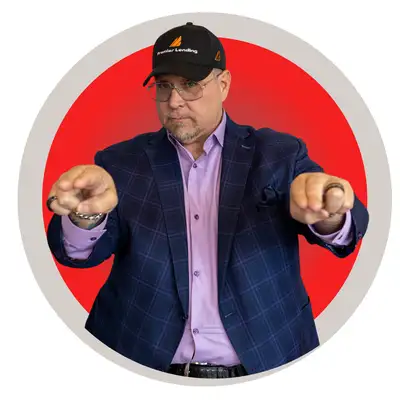

This isn’t another sales tips podcast.
This is Loan Officer Success Live - where mortgage and real estate pros come to master modern growth without the burnout.
Hosted by Devin Dubuc, Loan Officer Success Live is a deep dive into the psychology, strategy, and systems that build legacy-driven businesses in today’s market. Whether you're a high-performing loan officer, a rising agent, or an entrepreneur scaling fast, you’ll learn how to attract clients, grow income, and lead with brand, not brute force.
Real conversations. Tactical playbooks. No cold-call bro-hype. Just clarity, confidence, and creative firepower.
You don’t need a script. You need a strategy. Welcome to Loan Officer Success Live
Social Media Links:
Instagram: www.instagram.com/loanofficersuccesslive
Facebook: www.facebook.com/loanofficersuccess.live
YouTube: www.youtube.com/@loanofficersuccesslive
Premier Lending, Inc.
13850 Ballantyne Corporate Place Ste #380
Charlotte, NC 28277
NMLS #238143
Copyright © 2025 Premier Lending, Inc. All rights reserved. | AZ Lic# 1002240
For licensing information, please visit the website link:
www.nmlsconsumeraccess.org
Disclaimer: The information is intended to be viewed for informational purposes only. The content contained herein is not guaranteed or endorsed by the company, or any company mentioned, nor is this content meant to be an offer of credit. The information contained in this video may not be wholly or at all applicable to every situation or jurisdiction. You are strongly encouraged to consult your professional mortgage advisor before acting upon any information in this video. The information provided is for use as a training tool only. The information is not intended, nor should it be relied upon for any other purpose.
Welcome to Loan Officer Success Live, sponsored by Premier Lending, the show where the mortgage industry's top players pull back the curtain. Your host, Devin Dubuc, sits down with industry leaders, top producers, and game-changing mortgage tech innovators, all sharing their unfiltered strategies, bold ideas, and proven secrets for success. Get ready to take notes, think bigger, and play to win, because this is Loan Officer Success Live. All right. We got Laura back in the house. How are you, Laura? I'm good. How are you? I'm getting over being sick, so I'm doing my best. Well, I'm just excited to have you here, you know, because I'm pretty confident that even when you're worse for the wear, it's better than most people's grade. You're like, that's some tall shoes to fill. You know, I got to tell you, I might have to change the intro because I think you need to be in there. We're now on. Oh, okay. Sure. Yeah. part two of the podcast right so you know we brought you back a couple of different times it's just because you're out there doing amazing things and you know we want to share that out there with the world now um no no thank you and you know thank you for for coming back on the show um you know we just had you on the uh mlo live show a couple of weeks ago uh that was powerful had a lot of great feedback from the folks that were there and uh i think we've got a good topic today uh you and i met a couple weeks ago and then we did some traveling um and then you you had your anniversary and and now you're here um but uh where i think we're gonna start with this is um let's say that we have two different loan officers and they call a hundred of the same agents Why is it that one is going to walk away with, say, twenty relationships and the other one gets nothing? You're hitting you're hitting hard on the first question. We got to reel them in. We got to draw them in. Oh, my gosh. Let me think. Mindset and beliefs that support the mindset because they're the same. They're they work together. Yeah, and that's why I set you up for that question, because I know that's a lot of what we want to talk about today is mindset and how important that is, not just in sales, but just in life in general, right? And I know your backstory, and we can kind of touch base on that really quick, but I know that you, in your younger years, traveled from Florida across the country. And landed in Atlanta, Georgia, and jumped into NLP. And it changed everything for you. I did. I ended up in Georgia and Atlanta because I ran out of money to get home to Florida. So it was a good thing. See, everything. I always believe that good things come out of bad things. Always believe that. Life has shown me that. And ended up. doing NLP and Milton Erickson Ericksonian type hypnosis for language patterns, not necessarily hypnosis, like go to sleep, but more like to try to help improve myself and help improve others. So, yeah. Yeah. To retrain the mindset and train the brain. That's it. So you had said something, you know, when we spoke before and you said, it's not what you do, it's how you show up doing it. What does that mean for you? Yes, very much so. So this is coming from someone just to give you more, you know, point of reference here with me uh desperately needing to learn how to communicate i was so shy i mean really shy could barely ask the waitress for ketchup shy um and didn't know how to do sales didn't know how to get rapport with people i know that that's natural for some people that was never natural for me right so um so learning this skill of how i of how i wanted to show up in my everyday life, not just sales, but for my kids, for my family, for myself. But specifically talking about sales, I mean, that's important. Kind of losing the question here. I'm sorry. You're good. You're good. No, we, a hundred percent we can adjust. Right. And so I'm going to, I'm going to rephrase it and kind of go in a different direction. So what is happening in somebody's head right before they make a call that determines whether they're going to win or lose? I think the decision on what's going to happen. And I think it's not so much what's going to happen. It's how you're presenting yourself and how you're getting ready. And this is what we talked about for that call. And the difference between the person that is in the room and making calls and sitting next to the other person that's calling a hundred agents and somebody gets twenty or thirty or forty agents. and the other person gets one or two is what they're telling themselves and how they're preparing for that call. You know, we get ready, we talked about this, we get ready for a meeting. You know, we brush our hair, we shower, we put makeup on or don't put makeup on, but what do we do in our head to get ready? That's the point that I'm stating. And it's not so much, you know, this person's gonna use me, this person's gonna use me. I mean, that's kind of part of like the mantra. I mean, it's the belief that I'm the best choice. That I have the most knowledge, the most compassion, the most, you know, care about what's happening to this person. And it's not like about the sale. It's about the person in front of you and honoring them and what is it they want, whether it's an agent, a client, you know, that's also part of it. Yeah. Well, I think at the end of the day, you nailed it. You know, there's so many different things racing through your mind, you know, when you're doing any type of outreach through sales, especially if it's somebody that you've never spoken to before. And it's, I think what you're talking about is how you show up for yourself before you jump on that call is extremely important because it's, to me, it's around self-talk. You know, what am I telling myself? Yeah. To get prepared. Right. And I think you called it state, right. To get into the right state. So how important is self-talk and how do you, if you're not talking to yourself, right. How do you transition that? Right. Like, what does that look like? Yeah. Everything you, I mean, it's, it's extremely important. Everything that you say to yourself, you hear. I mean, you're listening, whether it's vocally or in your head. I mean, what you tell yourself is what you believe. So it's extremely important. And it's the mindset of... of who you are, and how you're going to show up on that call. And who you are in your business, like the purpose, the reason you're doing it, what you believe you can offer, you know, if, if you don't believe that you have something to offer that kind of stuff. I mean, that's extremely important. So the basis is the foundation for what you should be doing. It's what you should set up before I have a lot of shoulds, but it's true what you should set up before you even start calling and thinking about, you know, I'm going to call ten people or twenty or a hundred people today. How are you going to show up for that call for yourself and what you believe about yourself? Because those beliefs come through. It's like people say commission breath or a dog can smell fear or whatever that is. People can sense that, you know, they can sense what your beliefs are. And I mean, I think I believe I can do anything, whether it's true or not. It's a good belief to have. It's, you know, if we're going to believe something, I mean, what are beliefs anyways? They're just kind of, you know, we're being delusional. Oh, we believe this or that. Well, A negative belief is just as delusional as a positive belief. I can do anything or I can do nothing. They're both not real. Which one is going to serve you? Yeah, that's right. Well, it's the perception of your own reality, right? Exactly. And, you know, at the end of the day, you know, my original trainer, you know, when I first got into this trade, he always said something that just spoke with these. You bring about what you think about. right he told me this all the time he's like you bring about what you think about and you know he had to explain this to me he broke it down and what he said was if you think something sucks we'll just use the word sucks because people use that word often right uh your brain literally looks at what that means to you right and then it translates that and then that's what you're gonna see in that particular situation so you know effectively when you wake up in the morning and you're like today sucks right well naturally because of the fact that you've programmed your brain what sucks means to you, the rest of the day is probably not going to go so great for you because you've already woken up with that state of mind, right? Whereas what he would always say, Laura, is he would always say, it's a great day, isn't it? Right? It's a great day, isn't it? Well, it is. You're alive. You're breathing. Here's the thing that I had to get over and that I hear is, well, that's just not who I am. Well, guess what? Who you are right now if you haven't deliberately made changes or whatever or even if you have is is because of where you grew up who you grew up around who was around you all the beliefs that were given to you whether they were a gift or not you know the limiting beliefs or great beliefs whatever it is is a combination of how you grew up and what you grew up around and now you're an adult and now you can choose what you want to believe and if it's serving you or not when is the last time you've sat down with yourself and said okay what are my beliefs write them down is this serving me is this helping me what would be a better one to believe i mean it's it's something you can change and choose is it easy sometimes no it's not but you know how people say choose your heart i mean choose to fail or choose to succeed it's just as much energy i think Yeah. Well, and the result is the question, right? At the end of the day, it's going to be, it's either going to be hard to get what you actually want, right? Or it's going to be hard to live the way that you have to live because you're not doing the things that are necessary to get what you want, right? And I think if you take, you know, most successful people, you know, aside to some one hit wonder anomalies, right? Because it happens from time to time. And you look at the path at how they got there, it was a lot of hard work and a lot of dedication. And other people look at that same person and they go, oh, man, they got lucky. You know, they're so lucky to live this life, but they don't know what that looks like behind closed doors. Right. The discipline that it took to climb to the top to get to where you are. And by the way, the reason we're having Laura on today to have this conversation is because you want to talk about somebody that's climbed to the top, right? You know, Laura, you're a founder and loan officer at Highland Mortgage, but you have a production that is outstanding. It's just, you know, it's in the top one percent in this country, right? And so you know very much about what it takes to get where you're going. And we've talked about this on multiple occasions. It's the mindset that got you there, right? It is. It's the mindset. And when you, I mean, we're all human. We all have challenges. God, Lord knows I've had challenges. But when you're, the word congruent, congruence used a lot in NLP. When you're aligned and every part of you is aligned with what you're doing, your purpose, your reason, your beliefs, your mindset, That's where it looks lucky. It looks easy. Right. But it's not. I mean, it's something that you have to work towards. I have to work towards. But, you know, we the I'm jumping here, the book, The Secret, where, you know, it's like you think it and then it happens. Yeah, I believe. fully that that's real. Okay. Cause I've practiced sort of that. And that's, it's really cool stuff, but it's also that every part of you is working together and we all have different parts. You know, we all have different things and different thoughts, but that you're fully working a hundred percent towards the goal that you want and that you've kind of, you know, had a meeting of the minds of your own mind and, and, and installed what do that, whether it's NLP, hypnosis, whatever it's, way that you can do that to install the beliefs that you need to to get where you want to go uh last month i closed almost twenty million was right at twenty million last month yeah i wanted to see if i could do it so i set that goal to do that and a lot took place to get there to do that and we can unwrap that and talk about that even now or the next you know we're going to because i've got i've got a question i'm about to ask you somebody's popped on and asked yeah yeah But but that was that was the goal. And when and when you get to that point where you practice enough, because it's all about practice, too. It's like it's not there's no perfection. It's all practice. We're all just sort of doing the best we can to get there. But you but you can get that clarity of goals to where it's. You know, I make this goal and then I reach it because every part of you is agreeing to get there. Well, I'm sure there's a plan on how you get there, too, right? It's not just, yeah, we're going to do this. This is what we're going to do to make that happen. But I want to walk back that you said twenty million in one month. That's a production year for the average loan producer, for the average loan producer right now. Not the above average. Right. But but in the standard loan producer, twenty million a year is a great year for them. Right. And you were able to accomplish that in one month. Now, just to of course, there's a plan, but we're talking about what happens before the plan, because the plan is is very similar. You hear on a lot of podcasts or you hear on a lot of. you know, from sales people or coaches, make this many calls, do this many CE classes, do this, go to open houses, go to caravans. I feel like everybody's doing similar stuff. So what we're doing today, Devin, that we're talking about is what we talked about that, you know, a couple weeks ago before we went out of town was how do you show up and then prepare for the plan for the goal. That's right. Yeah, there's definitely a plan. I didn't just sit here and go, Poof. That would be amazing. Not I dream a genie folks. Preparation and work goes well. It's funny that you said that. And it's funny that you talked about planning because the question was literally, can Laura go over her daily structure and how she plans to pursue her new, her new business? Right. So there it is. And thanks Raphael for that question. That's a good question. Yes. So I have, um, time blocking that I do during the week. And part of that time blocking is to create new business, to keep creating new business. Because no matter what level you're on, you still have to go out there, right, to some degree. And you have to keep your name out there, market yourself. So we use, as far as like agents, if I wanted to get new agents, I look on social media, I'm kind of, i don't know if the word shopping for new agents trying to see who will fit my personality and i'll fit theirs and it's nice to work with people that are your people you know like sure you can work with anybody but it's nice to sort of see okay who do i like and then i'll use reader i love the reader program to see what their production is who they've been using and then i have some information about them and then i'll reach out with maybe some different programs maybe i'll see them talking on on social media about physician loans. Oh, great, we have that. I'll reach out to them, start a conversation. that's something that, that I do a lot is let's talk, you know, nope, there's no, there's not pressure. There's not me asking for business. Let's talk. How can I help you? I always have that mindset of how can I help you? I want to reach into that real quick. Cause you said, how can I help you? Right. And I think a lot of people in this industry, they struggle with how they can potentially help a real estate agent. So when you ask that question, what kind of answers do you get and how can you actually help them? Yeah. So we do a lot to support our agents a lot. We do caravans. Yesterday we just sponsored two with lunches, flyers. We put our signs out to help kind of drive business. We will post on social media and tag them. We'll keep kind of that going throughout the week if they have a new listing. We will help sponsor open houses. If they want to do a webinar on a specific topic, we'll do that. We do CE classes. We do lunch and learns. So much. I mean, there's so much that we do to help support and educate our agents. And I love our agents. Some of them are good friends. They're wonderful. I think agents just want direction. They want to know what the rates are doing. They want to know what programs are out there. It helps you, too, because it helps them send you people like, okay, you can do a one-year self-employed person. Here's a new program. So yeah, so it's good to get out new flyers. Like I think once a week, kind of follow up on the question from before, what do I do? I'll put out a program, whether it's new or old. How do you put that out? What does that look like for you? I post it on social media. I also have a database that I'll use. There's a few different databases that are targeted for different offices, whether it's a different broker, Keller Williams, whatever it is. and then i will make phone calls and text messages like every medium you could use using i get people messaging me on facebook instagram linkedin i mean just all all different types because i think people respond differently to different things always remember that some people like to be texted called i've had an agent say oh my god you called me no one calls anymore yeah well i think people like to communicate the way they want to communicate and you've mastered that and you know it's difficult because i know what the balancing act it is to manage multiple programs and i know you have a team behind you that helps you do that right uh to operate your level you have to uh but at the end of the day you have to think about that you know if your people showing up on linkedin be on linkedin if your people are showing up on facebook be on facebook They're showing up on Instagram, be on Instagram. If they like text, text them. If you like calls, call them. And if you don't like those things, then those aren't your agents. Focus on the platform that you love the most and do what Laura's talking about on that particular platform. So when you show up and you talk about promoting that product, what does that look like? You know, is it just a little pop-up that shows the program benefits or are you actually talking about it in some sort of a reel? Like, what does that look like when you... Yeah, I, I will tell you, I need to do better. And we just hired somebody to help us with video because I've not done enough. Like I do, I'll do reels of the agents caravans or the agents listings, but I, I need to do more programs. I would like as a personal goal to do more program reels or videos. I know a lot of people do those and they're successful. Um, but for me, that's reaching out, uh, a lot of email, um, and. messages, phone calls. I mean, it's just, I probably need to do more video and plan on doing that, so. Yeah. Well, and I guess what I was getting at is when you drop something on, because you mentioned you dropped something on social, is it just a, hey, new program alert and it has the guideline information or is it you talking about the new program and how you're serving? I think that for me, I try to talk about how it will benefit a specific person and connect that rather than here are the guidelines. I don't think that's a useful thing, you know, to really talk about guidelines. I don't think agents understand things as much And I'm not a big, like, let's do mortgage lingo with people outside of the mortgage field. So it's like, hey, do you have a borrower that just opened a new business? Here's a great, you know, new program. Or, hey, do you have a new physician that just, you know, came out of residency, just got a job, you know, that kind of thing for physician loans. I mean, I try to connect it to a story just to simplify things. Makes perfect sense. You talk about caravans and maybe I've been hiding in the dark somewhere. But when you say caravan, what do you mean by doing caravans with your agents? Yeah, I don't know if this is something that's a national thing, but in Atlanta, when somebody has when an agent has a new listing. They will have an agent caravan and they'll promote the house as well as see where it should be priced to give feedback to the seller. So this is like before the house is listed. It's a really big thing here and we probably do them on a weekly basis. Just an agent preview. Okay, Mark's on. An agent preview is another word. An open house for agents. Sorry, I'm losing my voice here. Yeah, an open house for agents. We do a lot of those. We also do a lot of CE classes. We are approved for... for CE, like we could personally teach it, but for years I wasn't. So I just piggybacked with an attorney or whoever was approved and just sponsored and co-sponsored with them. Those are great. And it really makes you like the expert when you're the one sort of in charge of the class and teaching information they need to know. Mark, who I know is on here now, has a playbook, our CE playbook that he's happy to share. with with everyone and i can get it to you devin and you can send it to me and then guys if you're listening in just dm me on any of the whatever channel you're on uh and we'll we'll send the the playbook over to you so yeah So I hope that answered the question. I know somebody had a question on how does. Yeah, no, it was just specifically just the daily structure and how you plan. And we didn't talk about the full daily structure and we can kind of backtrack and walk through some of that. But I do want to want to mention the CE thing, because I know that's been very powerful. I've talked to a lot of people that have had success with that. My question is, is what does that look like? So when you're doing these CE courses, is it, you know, a classroom of ten, a classroom of thirty, a classroom of a thousand? What does that typically look like? How are you getting people to that, to the CE? I know that agents have to do the continued education, but what's that process look like when you're inviting a group of agents there? Yeah, that is such a fantastic thing to do. I really enjoy them, too. So the CE class, let's say we Do one on condos because condos are such a big problem. lately. So I try to do it somewhere interesting. We just did it at an old movie theater, a historic movie theater, and we gave popcorn and candy and soda. That was really fun. I enjoyed that. So that was fun. And then we've done them at breweries and, you know, just coffee shops, just somewhere like kind of cool. And yeah, and people love that stuff. And then we'll usually feed them something that the condo at the movie theater was unique where we just did the candy usually there's lunch or breakfast involved and then we we bring somebody who's an expert so like the condo one we did we have the head of our condo desk talk about all the changes that have happened you know with Fannie Mae recently and we had we did it twice because we had two different groups so we had thirty to forty people each time we've had up to sixty seventy we did one on a historic areas of Atlanta and we had Seventy-something people. That was crazy. That was big. And then that time, in case anybody's wondering, we did a taco bar because it was cost-efficient and people were making their own bowls. We like tacos. Who doesn't like tacos? Come on. Tacos are great. And if you do, you shouldn't be there because you're not my friend. Right. Exactly. So I find those great. I love them. They're very useful because the agents need the classes they have to attend. Right. And then you're able to talk. I always talk for a few minutes about the market. and then introduce whoever is going to talk. And then I'm there during the whole time to be able to say, oh, yeah, this or that. Or we can talk about a situation we had with that change or that guideline and then connect everything. And then always after a CE class, I have agents call me and say, oh, I met you at the CE class. Can you help me with this or that? you know, as far as what you're teaching. Yeah. Well, you've become, you know, the local expert and they trust in you because not only are they seeking for education from you, but you've contributed to something that's going to help them be more successful in their industry. So how do we fill the room? What does that look like? So we have the idea. We want to do the CE. We find the location. You know, we know what the topic is. How do we get them there? What does that look like? I will tell you guys, like, honestly, we're all sort of in the same situation and boat, like sometimes ten people comes free. Like it just it you it's trial and error. Some some work, some are just terribly boring and like we're never doing that again. But I think, you know, the more you do, the more people trust you and the word gets out. So again, database, you know, clean your database for whatever you have time. That is slow. You should be. working on your database, your clients and agents, separating them and continuously staying in contact, but not so much to where you're annoying them, but we can talk about that. But yeah, send out an email and then we put it on stories on Instagram. I always have stories up on Instagram because it's good to reach out. And then I post it on social media, Instagram, Facebook. I'm not a TikTok person. I'm not on Twitter. I'm not on Any of that. That's not your people. That's my people. And then you can call your agents. You can text a picture, you know, whatever you make. We use Canva. We also use ChatGVT now to make like graphics and stuff for that. And then you can text whoever your agents are that, you know, pick your top twenty, top fifty agents. And if they're not yours yet, Pick them anyways. You know, you, you gotta be consistent and, and, and also kind of, and respectful, consistent and respectful. You don't want to be pushy. The point is it's the mindset of your, what can I do to help you going back to that? This is how I am. What can I do to help this person? Whether it's my client, my agent, my referral source, whoever it is, I'm always thinking what I can do for them. not what can they do for me oh they're gonna give me so much business i don't ever i don't think like that that's just not where my brain is well i think that ties back into what we started with which is you know when you're getting prepared for the phone call how do you get your mind in the right place and i think you just unlocked the key and scott hudspeth our buddy you know from mlo live show uh talks about this all the time you know one of the things he says which i love is leave people in a better place than where you found them yes um And I think that's important. And that's part of the mindset that you need to have when you're jumping on that call. But the other thing is, and this is huge, and you just said it, I have no expectations from that person. It's actually about what can I provide for them. And I think if you clear the mindset of what can I get from this person before you make the outreach call and transition it to what you're talking about, Laura, which is how can I improve this person's life? that's going to clear up some of those cobwebs up there that are causing for you to have the stress and struggles when you jump on the call. Yeah. Yeah. But you know, Yes. Everything you just said. And I love, and this is why, you know, we, Mark and I get along so well with you both because you have that mindset of what can I do to give you're a giver, you're a helper. That's the place that we come from that we, that we want to be at. And at the same time, you know, sometimes you gotta have, you gotta have balls in this business. I've said it. There you go. I had an agent that, um, when I guess this was maybe ten or fifteen years ago, just sort of moving into the area and I called them and I said, you know, I am in this area now and I do a lot of business and I would like to do as much as I did now. So I was sort of like, you know, kind of not bullshitting, but like, hey, I do a lot of business. We are eventually going to work together. So I wanted to introduce myself. Now, I didn't ask them for their business. I just assumed their business because you're in this area. I'm in this area. We're eventually going to work together. So I'm just introducing myself. And that was a different approach to them because they were like, well, I have lenders. OK, great. Now, you know, another one. I mean, you know how agents say that to you. Now, you know, another one. And I've gone as far as to say, I don't want to be your main one. Just put me on your list because eventually we're going to work together. I keep going back to that. I'm here. I'm not going anywhere. You do this much business. I'm here. We're going to work together. So it's just sort of an introduction. And again, sort of using the language of assuming at some point we're going to work together, whether or not that's true. It's better to believe that. It's funny you say that because I don't know if I got this from you and it could have been, it could have been our podcast last year because I've been training my loan officers. The ones that, you know, train under me this specific phrase. And I used it all the time when doing the introduction, it's very similar to what you just said. And it's, you know, Hey, you know, I looked you up and at the end of the day, I'm doing a lot of business in your area. I know we're going to come across each other on the other side of a contract one at some point in time. And I'd rather that you know who I am than not know who I am. Because when you see me on the other side of the contract, you know who I am. You go, oh, that's Devin. He's one of the good ones. I know I can trust this. Now, what did I do in that phrasing, right? Number one, I assume that we're going to come across each other on the playing field. Number two, I told you I was good at what I did. without actually having to prove to you that I'm good at what I do. Right. And so now all of a sudden we shift it from, I want something from you to, Hey, we're going to see each other out there and we should know each other because now when you do see me, you can trust me. And it takes away from, I already have another lender. Yeah. Yeah. And then this, I'm kind of going off here on a different direction now, but that reminds me of shoppers. We all have shoppers and it's like, oh my God, they're shopping me. When someone's shopping, I will say, that's great. Let's shop. We're going to shop together. You and I are going to shop for your loan. Now, whenever you find something, bring it back to me. So we can look at it together. So now it's not an I thing. It's not them against me. It's like us. We're going to go and find them the best deal. And then I'll say even so much as like I'll say and if it's better with someone else, I will tell you to use them. You know, like I'm really honest. So, you know, and that's happened a few times where I've said, OK, use that. I'm like, that's, you know, happened to all of us. Let me ask you this real quick before you move on. Has it happened where they've used somebody else, but they still referred somebody back to you? Yes, yes. And they wish I could have used you. Yeah, because I'm honest. I mean, it's all about them getting the best deal, and I'm honest about it. And then I'll go as far as to use the language pattern of, because after you shop, or as you're shopping, I want you to realize that I'm the best choice. So once you make a decision to use me, There you go. Right. You're getting it. Then you'll know that's the best decision that you've made because you've looked at the other choices. Right. So there's the whole neuro-linguistic programming, language patterns of assumption and sort of closing the deal using the language pattern of once you decide to use me now, kind of right. So I'm moving them along now with integrity. Right. Yeah. But with integrity that, you know, you've made the best choice. Boom. It's huge. It's huge. Yeah. Because you're programming their brain and you're telling them what's going to happen. And what it all leads back to is doing business with you. And, you know, in the event that they do find something better and you do encourage them to go that direction, they still remember you because of the way that you handle their scenario and how honest you were with the way that you do things, which comes into truth and lending, which is your handle on Instagram. And we did a whole program on truth and lending and what that means to you before that. so if you want to watch that podcast go back and look at youtube and look for our previous podcast where we talk about truth and lending and how that was uh the basis for what you built your business on um but the reason i mentioned that before was because i have had the exact same experience um with production where i've communicated with the client and told them that you know my we're there to find the best deal for them uh and at the end of the day if it was better i encourage them to go there and they've referred clients back right and that's because You've built trust. You've built that on an honest interaction. And at the end of the day, they want more people to have that same experience. They may not have liked the other person more than they liked you, but because you encouraged them that that was the better opportunity for them, they did go that direction. But it's not because they didn't want to work with you. Right. Correct. Yes. Well, I love where we went with this one because we kind of danced around what we came to talk about, which was how to use neuralistic programming to, A, program yourself so that you can have the right type of communication with your self-talk to get out there and create successes. But, B, how you can actually use the language to tie people into moving forward with you uh with confidence and i love that you threw that in right here at the end laura because that's the stuff that a lot of people miss um they just the the way to communicate with somebody in a level that makes them feel so comfortable and so confident uh that they're making the right choice but it starts with that positive self-talk so um i know we're here you know towards the end because i could talk with you literally for six hours what's something that we didn't leave the audience with today that, that you think is really important for, for somebody to walk away from. Okay. So something that I've used and, and you guys can Google it and maybe I can work on coming up with like a written form of this, but something that I used early on was circles of excellence, circles of excellence. And what that is is you are building a, a you of how you want to present yourself. And we talked about kind of closing the loop here where we started talking about the beliefs that you have. You're just sort of happened to fall into this belief or that belief. They're not necessarily ones that you choose or that you chose when you were little at five years old. I'm going to believe that I can do anything or I can't do anything. You know, you don't choose that. That just happens. But now you can. And circles of excellence is something that you can sort of take a piece of this person, a piece of that person. I like how they acted here. I like how they spoke to that person. I like what their beliefs are. And you're creating a belief system for you, for yourself. I don't know that we have enough time to go over exactly what this is, but I'll work on it for the next one. And just Google it. It's called Circles of Excellence. I use this to create the state that I wanted to be in when I was working. selling, working, presenting, and it's helped me my whole life. I mean, I've used it for so many things to get over phobias. There's people out there that know how to do things I don't know how to do. I've used it to learn things quicker. It's a great tool from NLP. Yeah. Well, I love that because what you're talking about is reprogramming your brain, right? You're reprogramming yourself to become the person that you want to be. And we all have that ability to do that. And that's where the belief systems come in. We don't have to be who our parents raised us to be. Sometimes that may be an amazing thing, but sometimes maybe it wasn't so good, right? And as you talked about earlier on in the podcast, limiting belief systems, you know, unfortunately, you know, from the people that raised us, we do sometimes get to these limiting belief systems that stunt us from being able to achieve our full potential. Right. And when you are able to stand up and realize that I can change and I can do these things that I want to do and I have that ability to reprogram the way that I think and the way that I communicate to become the person I want to become. basic things happen. And Laura, you and Mark, who I know is listening as well, you guys have done an amazing job here and you're changing lives. You're helping people. You're getting people into homes. And I know where it all came from. It came from truth in lending because you had had enough of lenders that were out there just doing loans to benefit themselves and not to actually help the consumers that they actually were serving. um thank you guys uh so much right thank you Laura for coming back on the show uh I'm sure that a lot of people uh you know learned a lot today you know just in that one phrase that you gave right on how to communicate um um you know the transitioning to getting to somebody to want to work with you I mean that that one alone right like that right that is pure gold that's worth the entire episode right there Thank you. Thanks, Devin. I appreciate it. And I, I love your show. I love coming on. Yeah. Well, I love having you and we'll keep bringing you back and maybe on the next one, we'll talk about the circle of excellence. That's a really, really important one that we can help people with. Right. And I think you said it best, you know, I know you and Mark are about this. Scott and I are both about this and that's giving back to people, you know, and, and at the end of the day, for all of our viewers, all the people that are out there listening, you know, this is what it's all about. You know, we want to help, Level you up. We want to help scale you up and get you in a position where you can have the best success for yourself. That way you can serve others better. And then we just make this amazing world go round and round and round with all these awesome people. So, Laura, thank you so much for jumping on today. I guess we'll see you on the next one, right? All right. Sounds good. Thank you. Thanks, everybody. You've been watching Loan Officer Success Live, where real strategies meet real success. Don't forget to subscribe now and share it with your teammates and keep leveling up because your next breakthrough starts here. If this fired you up, don't just watch success, go out there and build it.