Subscribe
Share
Share
Embed
One of the most essential ingredients to success in business and life is effective communication.
Join Matt Abrahams, best-selling author and Strategic Communication lecturer at Stanford Graduate School of Business, as he interviews experts to provide actionable insights that help you communicate with clarity, confidence, and impact. From handling impromptu questions to crafting compelling messages, Matt explores practical strategies for real-world communication challenges.
Whether you’re navigating a high-stakes presentation, perfecting your email tone, or speaking off the cuff, Think Fast, Talk Smart equips you with the tools, techniques, and best practices to express yourself effectively in any situation. Enhance your communication skills to elevate your career and build stronger professional relationships.
Tune in every Tuesday for new episodes. Subscribe now to unlock your potential as a thoughtful, impactful communicator. Learn more and sign up for our eNewsletter at fastersmarter.io.
Matt Abrahams: Swift trust can
help your communication and
your teams be more effective.
My name's Matt Abrahams, and I
teach Strategic Communication at
Stanford Graduate School of Business.
Welcome to Think Fast,
Talk Smart, the podcast.
Today, I look forward to
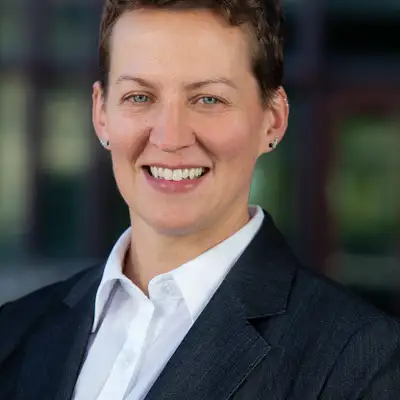
speaking with Melissa Valentine.
Melissa is an associate professor in
the Management Science and Engineering
Department at Stanford and a senior
fellow at the Stanford Institute for
Human-Centered Artificial Intelligence.
Her research focuses on how emerging
technologies, including artificial
intelligence and algorithms, are
fundamentally transforming work,
organizational design, and team dynamics.
Melissa, along with her co-author
Michael Bernstein, wrote the fascinating
book Flash Teams: Leading the Future
of AI-Enhanced, On-Demand Work.
Well, welcome, Melissa.
I'm really excited to have you join us.
Thank you.
Melissa Valentine: This show is
so fun, and I love the guests you
have, so I'm delighted to be here.
Matt Abrahams: Well, thank you,
and thanks for being one of them.
Shall we get started?
Melissa Valentine: Let's do it.
Matt Abrahams: Excellent.
I have to say, I really enjoyed
your book, Flash Teams, very much.
Really, really interesting.
Can you define for all of us what a
flash team is and explain what people,
processes, and infrastructure enable flash
teams to get aligned and execute quickly?
Melissa Valentine: Yeah.
So my PhD is in organization
science, basically.
So I got my PhD at a business school,
and then my collaborator is a computer
science professor, and he was doing
a lot of work on crowdsourcing.
So what's cool about crowdsourcing is
the crowd is, like, millions of people
online, and you can get things done
quickly 'cause you just put a task out,
and then there's millions of people who
are available to come work on the task.
But what he was seeing at the time
that he and I started working together
was crowdsourcing was stuck because
they were doing, like, really,
they called them micro tasks, but
just really, like, small tasks.
And then I had this toolkit, organization
science, and my dissertation had been
about how you can use team scaffolds or
lightweight team structures, and then you
populate the team structure with experts.
And the team structure and
the role structure helps them
know how to work together.
So we sort of were able to combine
the logic of both of these.
So you have these, like, lightweight
structures that allow people who are,
like, relative strangers to come together
and work together on really complex stuff.
So this system that we built with a
great team of a PhD student, Daniela
Ratelny, she organized this great lab at
the time we first did our flash teams.
So we built a platform that basically
took all the logic of organization
science and team science, and then
the speed and scale of crowdsourcing,
and then put them together.
So the way the system works, you have
this platform where I'm somebody who
wants to get something done, so I go
to the platform, I design the team,
and then the platform integrates
with something like, we used Upwork.
So there's like 10 million
freelancers who are on Upwork.
And then, so I'll say, "Here's the task
that I need done. Here's the role I
need filled." And then the platform can
integrate with Upwork, and then it's
open call to the 10 million freelancers.
Who's got the right expertise?
They join the team.
So you can just convene teams really fast.
And what we showed with this
research is that you can get
things done really quickly.
You can pull teams together.
They build really complex stuff.
And it was really inspiring.
I mean, it's even faster now with GenAI.
Matt Abrahams: So you set a framework
and expectations and then leverage a
tool that pulls people in, and then
the flash team is really the focused,
concerted effort that it's all about.
One of the essential elements
of any teaming or groups
coming together is trust.
What are some of the communication
skills or other skills that people
can deploy to establish trust quickly?
I'm assuming part of what flash teams
do, besides accomplish their work,
is they're able to coordinate action,
perhaps through building trust.
Melissa Valentine: Yeah, trust in flash
teams is essential and complex, right?
'Cause it is relative strangers.
You get together and you work
together really intensely,
and then you disassemble.
So I think that there's this idea in the
literature called swift trust, and there's
an assumption that you just assume trust.
You just meet somebody for the first
time, you assume they're competent, you
assume that they know how to do their
role, you assume you're both there for the
same reason, to work hard, get it done.
So that, yeah, the assumption
of swift trust is really useful.
It doesn't always work out,
but the sort of like offering
of swift trust is part of it.
And then paying attention to when it's
not going right and being willing and
able to repair quickly is also important.
Matt Abrahams: I love
this idea of swift trust.
So you approach from a place of trust,
assuming that you are trustworthy,
and I will trust you, and you will
do the same, can expedite things.
Because there's a lot of this testing that
goes into trust and time, and if you start
from that place, and obviously it might
fail or people could take advantage of it.
But the second part, what you said,
I think really is the helpful part,
is to have that meta-awareness and
watching for it, and then being willing
to speak up and try to repair it.
So I think it's not only swift
trust, being open to trust, but being
open to repair when it's not there.
I really like that idea of swift trust.
So much in my life I think would
be better if we just approached
everything with this notion of like,
Melissa Valentine: Oh, swift trust.
Yeah.
Yeah.
I mean, there is a real difference
'cause I think of the person I wrote
the book with, Michael, he and I
have worked together for 15 years
now, and that is a different kind
of trust than like swift trust.
But swift trust is a tool that's useful.
Matt Abrahams: Right.
It's, and it's a way to at least
initiate and then you can build
deeper, the trust and relationship.
That can only happen, I think,
after repeated exposure and time.
You talk about discursive diversity,
and I had to practice saying
that multiple times, by the way.
Can you share what you mean by
discursive diversity, and how can
teams recognize when they need to shift
their communication style from a more
open-ended brainstorming, ideating to
a very highly coordinated approach?
Melissa Valentine: Yeah.
So that is from the dissertation of one
of my really brilliant PhD students.
So her name is Katharina Lix,
and she invented that measure.
So what she was able to do, she
had all of the Slack transcripts of
different flash teams, and she was
able to, she did this NLP processing.
Matt Abrahams: And NLP is natural
language processing, I assume.
Melissa Valentine: Yeah, yeah.
Before it was cool, she learned
how to do it, and she was able to
create this measure where she was
looking at the similarity of the
language that people were using.
So you have all of the Slack
interactions, and you can basically
compare people talking on the team and
how similar are the words that they're
using, the sentence structure, right?
Are they using the same
adverbs, like adjectives?
Sense of urgency gets
encoded in all of that.
And what she was able to show is that the
similarity of the language that people
are using or the difference, so this is
where, let's see, discursive diversity.
Matt Abrahams: Discursive diversity.
Yeah.
Melissa Valentine: Yes.
Matt Abrahams: Different
types of words and language.
Melissa Valentine: Exactly.
Yeah.
So that sort of would predict the team
meeting a milestone in different ways.
So there were times when you really
want the language to diverge.
So this is a moment of
brainstorming, ideation, right?
You want a lot of creativity,
you want a lot of divergence.
But then as you get closer to
the deadline, you really, for the
team to meet the deadline, then
the language needs to converge.
Like, people need to start sounding more
like each other to hit the deadline.
Matt Abrahams: So one,
it's a measure really.
So you can look at, you know, if I'm a
manager or somebody looking back at doing
a postmortem or after the project is done,
and I can look at the communication, be
it Slack, Jira, whatever the tool is,
and I can actually see the, the language
might be a hint as to where we are.
And as you're trying to get closer to the
decision, more similar language is a sign.
What I'd be curious, and I don't know if
there's any research on this, is can you
actually use language to influence that?
So can I, as a manager, encourage
more diverse language through
ideation, but want us to start moving
towards a decision, encourage people
to start using similar language?
I wonder if you, if
it's causal in that way.
Melissa Valentine: I think
that's a great research question.
Matt Abrahams: Yeah.
I think that's really interesting.
So I encourage everybody listening to
think about the language you're using
for the different tasks you have and
start to notice what that looks like.
And maybe you can run your own
experiment and play with that.
I want to keep on flash teams, and then I
want to make a, have a broader question.
But when flash teams hit a snag, for
example, like a miscommunication, what
is the most effective way to fix that
so they don't fraction and deal with
too much friction in those situations?
Melissa Valentine: So I'm so
glad you asked this question.
I have an unpublished paper.
So we ran three really complex flash teams
one summer, and we had all of the DMs.
So we had all the Slack front stage and
then all of the Slack DMs, the backstage.
And the thing that was really interesting
in analyzing all of that data is a
lot of repairs happened backstage.
So something would happen in the
public Slack channel, and then a dyad
would go to the back channel, and
they'd be like, "What is this bug?"
And they would sort it out and then
come front stage with the solution.
So it created a lot of smooth operations.
Like the flash teams, they
all accomplished their goal.
There didn't seem to be a ton of conflict.
So this pattern of backstage repair
was really interesting to discover.
I think any human behavior,
it's got different sides to it.
So I think it did
support smooth operation.
But what I saw in the analysis that I
have not yet published is that the people
who are more involved in backstage repair
ended up with more influence over time.
So these are the workers and the
managers who were, like, really
helping make the decisions.
So it's something about access to where
the real problems get solved was, like,
creating a lot of influence for people.
Now, I don't totally know
what to do with that.
As someone who is interested in flash
teams going well, I would maybe say you
need like a postmortem on a flash team.
What were the problems?
Who helped solve them?
What do we learn about this together?
Matt Abrahams: It's really intriguing
that the people involved in that
repair or that dealing with those
problems end up being more influential.
Melissa Valentine: Yeah.
'Cause it's like they had the
realer story of what was going on.
And sometimes it was in the backstage
repair that decisions were made
and then presented as if they were
quite done, if that makes sense.
Matt Abrahams: That's really intriguing.
I'm putting on my manager hat and thinking
if I were in the midst of any team, be
it a flash team or a regular team, how
I could be aware that the folks who are
involved in helping fix, repair, dive
deep into problems, what that means
for them in terms of their currency and
how we interact on the public stage.
And I just think it's interesting that
we now have these two channels and ways
of communicating that can be measured.
I know you think about
storytelling and change.
How can everyday employees in an
organization use storytelling to drive
broader systemic change and build
coalitions to help achieve whatever
it is they're trying to achieve?
Melissa Valentine: Yeah.
So one of the studies that I did
when I first got to Stanford was
actually of an academic cancer center.
I saw stories be really
influential in this study.
So it feels a little different than what
we've been talking about with AI and
algorithms and so forth, but it still to
me is a study of organizational design,
which is what I'm really interested in.
What happened in this study, so I
was studying as this cancer center
was trying to do a transformation.
They were trying to decrease
the coordination burden on
patients and their families.
And during the study, there was a group of
patient advocates or activists who really
wanted the cancer center to understand how
much coordination they were having to do.
So the way that they made their case, this
is why I'm thinking of it, is they had an
initiative they called Patient Stories.
And so they went to great effort to
collect a lot of patient stories where
patients just talked about, like a family
member had to quit their job to become
the full-time coordinator for the patient.
So they came up with
dozens of patient stories.
And then in this paper that I have,
I analyze how they basically use
the stories to make the case and
to spread the movement, spread the
message across the cancer center.
And at the end of the study, they had
convinced the cancer center to take
on some of the coordination work.
So it ends up being this end-to-end
story of patient stories, patient
narratives actually changing
the organizational design, which
is why I'm thinking about it.
It was like a very powerful thing
that these patient activists did.
Matt Abrahams: Stories can really
resonate and motivate people.
Was there anything specific to the stories
that you think were really important?
Was it the fact that the stories accounted
for all the specific coordination events,
or was it the emotionality, or was it the
fact that these people just collected a
bunch of stories and the cancer center's
like, "Wow, there are all these stories.
We should probably do something"?
Melissa Valentine: I think a lot of us
interface with the healthcare system,
and we could just see ourselves.
So the patient stories were just
like, "This is us. This is you
and me." And then it illustrated
the problem really specifically.
So somebody's sitting in a wheelchair
in a hallway 'cause they had been
dropped or something like that.
And so it's like, wait, like, I think
the cancer center is so full of people
who care, and then hearing like the
specific instance in a really relatable
story, they were just like, "Oh,
that's a problem that I can help with."
Matt Abrahams: I think you hit on it.
It's relatable and real,
and we can connect.
Thank you.
Can you take what you've learned about
flash teams and give us any insight
that we can just apply to a normal team?
So I've got a team that's been around
for a while, and we meet regularly.
Is there any insight from your work
on flash teams that could perhaps
help my team be more efficient,
feel more connected, ideate better?
Melissa Valentine: One thing that Michael
and I used to say when we were writing the
book, we were trying to think of what's
the mindset here that any manager would
find empowering, and the phrase we came up
with is experts everywhere all the time.
So you've got your trusted team.
Great.
Keep working together, taking good
care of each other, working hard,
but really recognize that your
organization, the world, the internet,
the world is just full of experts who
can help, and people like helping and
bringing their expertise to something.
So it's just having a mindset of
recognizing how much collaboration
is available, how much expertise
is available, and maybe it,
like, invites you to think of the
boundaries of the team a little more.
Matt Abrahams: That's funny you said
that 'cause that was exactly the word I
was thinking is porous, is that it can
be very easy to insulate a team and say,
"This is the team," but being a little
more open and pulling in expertise.
When I was managing a team, I
ran a learning and development
group, and we had this very tricky
thing we had to train people on.
And it turned out that somebody in the
company who was an admin was using our
tool, and they actually knew how to do
things that we were trying to figure
out how to train people on better.
That person was an expert, and by
just dumb luck, we figured that out
and incorporated them into the team.
And I like that idea.
Melissa Valentine: I think that
there are a lot of tools that can
be very helpful to managers in terms
of how the team works together,
coordinates, and stuff like that.
The other thing we said in the book is
AI-driven team design, so just making
use of the tools to be very thoughtful
in how you're structuring your team.
Matt Abrahams: So AI can help us
structure the team and maybe even
identify who some of the experts
are that, that we might know.
I love that.
Melissa, this has been great.
Before we end, you know I like to ask
three questions one I make up just for
you and two I've been asking everybody.
Are you up for that?
Melissa Valentine: Yeah, let's do it.
Matt Abrahams: Beyond the academic
research you do, you're also a creator,
and you study the algorithms that
serve up information on social media.
What advice do you have for
others who are creators?
Melissa Valentine: Okay, so
I love Instagram and TikTok.
I don't, like, I have, I think
it's people have complicated
relationships with social media.
So the attention stuff is real.
My attention span is shot, but I have
learned so much from content creators.
I am such a fan.
My advice is keep going.
If you're an expert, put it out in
the world, like, people will find it.
Different life transitions I've gone
through, different, like, health
stuff, different fitness stuff,
different hobbies, like, I have
learned so much from the internet.
So thank you, content creators.
Matt Abrahams: You know, as a creator
myself, and it took me a while to
identify as a creator, but I think
many of us are motivated to help
people, and it's that motivation
that actually helps us get through.
It's hard to put out the content,
and the algorithm can sometimes
help you and sometimes not.
So it's that passion, desire to learn and
to help, I think, that really motivate.
And I can hear that in your
voice, and I see it in the
things that you post and create.
Question number two, who is a
communicator that you admire and why?
Melissa Valentine: So I'm at a
moment where I'm thinking a lot about
communication, where we really take
each other in in a really deep way.
So I have a friend who is
a therapist and a Buddhist.
She has a quality of listening and
expression that it, that allows
for, like, true communication.
So I would say I'm gonna,
I'm gonna nominate her.
It's, like, a fascinating thing about
being very aware of yourself that
allows you to be very aware of others
and just, yeah, like, it is a lot of
presence, as you're saying, like, a
lot of kind of presence and connection.
Matt Abrahams: Yeah, I like that,
self-awareness and other awareness.
Thank you.
And final question, what are the
first three ingredients that go into
a successful communication recipe?
Melissa Valentine: Something that I've
come to appreciate is how useful, like, a
deep awareness of your own experience is,
'cause then you're even more able to take
in another's in all of its complexity.
So yeah, self-awareness, other awareness,
and then working from there, I think
what's possible between you is, like, new.
It's like something that
neither of you would have done
without that kind of connection.
Matt Abrahams: I sort of bristle at
the word synergy, but in this case
that's exactly what you're talking
about, is it's the power of the two
is greater than either individually.
But that comes, as you said, from a
self-awareness and then other awareness.
Thank you for the three ingredients,
and thank you for the conversation.
Your work to me is really intriguing
because it focuses both on technology,
but the human aspect of people coming
together, and the fact that there are
structures that we can rely on to help
expedite and make things more efficient.
Melissa, this has been fantastic.
Thank you, and thank
you for the work you do.
Melissa Valentine: Totally.
Really fun for me too.
Thank you.
Matt Abrahams: Thank you for joining
us for another episode of Think
Fast, Talk Smart, the podcast.
To learn more about groups, listen in
to our episode 241 with Colin Fisher.
And to learn more about social
media algorithms, please check out
episode 268 with Angèle Christin.
This episode was produced by Katherine
Reed, Ryan Campos, and me, Matt Abrahams.
Our music is from Floyd Wonder, with
special thanks to Podium Podcast Company.
Please find us on YouTube and
wherever you get your podcasts.
Be sure to subscribe and rate us.
Also follow us on LinkedIn,
TikTok, and Instagram.
And check out fastersmarter.io for
deep dive videos, English language
learning content, and our newsletter.
Please join us for our Think Fast,
Talk Smart Learning Community
at fastersmarter.io/learning.
You'll find video lessons, learning
quests, discussion boards, an AI
coach, and book club opportunities.
Again, that's fastersmarter.io/learning
to become part of our Think Fast,
Talk Smart Learning Community