Subscribe
Share
Share
Embed
Margin of Thought is a podcast about the questions we don’t always make time for but should.
Hosted by Priten Soundar-Shah, the show features wide-ranging conversations with educators, civic leaders, technologists, academics, and students.
Each season centers on a key tension in modern life that affects how we raise and educate our children.
Learn more about Priten and his upcoming book, Ethical Ed Tech: How Educators Can Lead on AI & K-12 at priten.org and ethicaledtech.org.
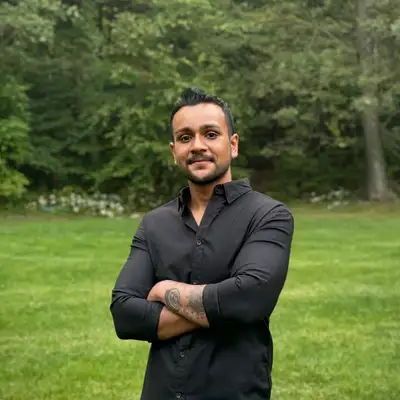
[00:00:05] Priten: Welcome to Margin of Thought, where we make space for the questions that matter. I'm your host, Priten, and together we'll explore questions that help us preserve what matters while navigating what's coming. For this episode, we take a break from ethical education technology to start our thread on the future of civics education. Our guest today is Nathan Goldberg, former classmate and co-founder and current board member for Academy for Social Civics. His work directly intersects with one of our focus areas, representative institutions. It's also broadly relevant to anyone thinking about how institutions make decisions and how they can change. Nathan is dedicated to using democracy as a force for good. Today we're talking about representative governance, who gets a voice in the institutions that shape our lives, including our schools. Our conversation connects everything from who is in the room when decisions are made to how we can make sure those decisions reflect the values and needs of students, teachers, and communities.
[00:01:06] Let's dive in.
Nathán: My name is Nathán Goldberg. I was born and raised in Mexico City, but I've lived in the US for most of my life now. To not get too far into the things that I do, I will say that I am someone who really believes in and has dedicated his career to leveraging the power of democracy and the power of soccer to make the world a better place.
Priten: Awesome. That's going to springboard a lot of our conversation. But I'd love to share with the audience both your educational background and what you've done in between your two educational journeys.
Nathán: Yeah. I did my undergrad at Harvard College. I was the university's first ever joint degree candidate in philosophy and statistics, so two ends of the liberal arts spectrum.
[00:02:00] After graduating college, I've had somewhat of a two-track career in soccer and in politics. On track one, I worked for the US Soccer Federation. I was the assistant to two US soccer presidents. I've done some independent soccer consulting. I've been a data analyst for a Major League soccer team. I've done operations for the senior men's national team in the Caribbean. I was the Chief Soccer officer for the professional women's team in New York before I became the vice president of the US Soccer Federation, the national governing body of soccer in the US. I'm currently in that position. On the political track, I used my statistics background to start volunteering and advising democratic campaigns on data strategy. From there I founded a nonprofit called Bluebonnet Data that is devoted to recruiting other people like me, people with data backgrounds, and training and deploying them to volunteer for Democratic campaigns up and down the ballot.
[00:03:05] Everything from US Senate races to city council and county commission. In the six or seven years where Bluebonnet has been active, we've proudly recruited, trained, and deployed more than 1,500 fellows to support over 750 campaigns across the country.
Priten: I'm very excited to talk a bit more about Bluebonnet, but also your journey through US Soccer, soccer in general, and the work you're doing there and how it intersects with your idea of representative institutions. But before we get into the details, what comes to mind when we say representative institutions? How do you define it? What does that mean to you?
Nathán: I think the first question to ask when you're talking about representative institutions is who is an institution meant to serve? What is the target audience, clientele, or the group of people impacted by the decisions that an organization is making?
[00:04:04] Once you have that answer, in my opinion it's very important to say, okay, if this organization or institution is making decisions that impact these people, these groups of people, these kinds of people, then it's probably important to have people from those groups who have those perspectives in the decision making rooms of the institution and the organization. That way the institution itself can be better equipped to fulfill its mission or purpose in serving these people. I know that's quite abstract, so let me land it with an example that impacts everyone in the US. Our government is meant to serve its people. There are a lot of different people who live in the United States with very different interests. To have a government that is working to the benefit of its people, it's important to have a representative cross sample of perspectives from those very people represented in the halls of government that are making decisions on our behalf.
[00:05:04] Then there are institutions more closely connected or at a ground level, like your school board, your local church. All those organizations that have an impact in your life, where people are making decisions on behalf of those organizations. You probably want the people who make those decisions to have some perspective of how you see things or how the other people impacted by those decisions see things. When I think about representative institutions, you have to think about who is an institution meant to serve. Then work backwards from there to make sure that the perspectives of the people meant to be served by an institution are represented and present in decision making discussions for the institution.
Priten: I'm curious. Sometimes when folks talk about representative institutions, they think about voting. They ask, is the person getting a chance to pick who is being part of the governance? Is there identity in some way being reflected in the representative body? Why is it important that there are actually folks from within the community who are the representatives themselves, rather than just giving the community a voice in voting?
[00:06:10] Nathán: When you are making decisions about things that will impact people very directly and viscerally, it's one thing to say all these people voted for me, so I get to make decisions on their behalf. It's another thing to say I can see how this decision might play out in practice because I have experience, or I have a group of people advising me who have direct experience with what happens if we cut Medicare. Someone who has not been on Medicare or Medicaid has less experience with how that program works. When legislating, they can benefit from the perspective of someone who actually has used those programs.
[00:07:00] If you take that view and expand it to all these things impacting people that the government is legislating on, it is helpful for Congress to have people who can share direct experiences of what this looks like in practice and how it's going to play out if we make the decision. If you get people from a lot of different perspectives, then hopefully in an ideal world, you can build some sort of consensus that is actually informed by how the real world works, not just by how one subset of people thinks the real world works.
Priten: The first time we talked about these ideas was in the context of Harvard, and you were very frustrated. I'd love for you to share the story of what got you interested in representation at Harvard and the projects that came out of that.
[00:08:00] Nathán: In the late 2010s, we were in a period at Harvard where for many years students and faculty, mostly with some alumni support, had been really pushing for Harvard to take more of a leadership stance in the fight against climate change. Central to that was a demand that Harvard should divest its endowment from fossil fuels. Harvard refused for a long time to even consider the question of divesting from fossil fuels. But it really set up a stark contrast. Students had overwhelmingly voted for divestment. Faculty had also overwhelmingly voted for divestment in some of their own referenda. Students, alumni, and faculty were all on the same side. Yet Harvard was on the other side of this discussion.
[00:09:04] It really made me think: who is Harvard if not the students, the faculty, and the alumni? Why is the institution of Harvard seen as a separate entity from all of the people that make it up? So I started digging into how Harvard is governed. Who makes these decisions if all these people that we think of as making up the university actually can all get shut down even if they're all on the same side of one issue? Harvard's governance actually has a very particular form. There are two governing boards full of very impressive people because you can imagine Harvard can draw on a large pool of very impressive alumni to help steer its governance. But one of the things it was not doing when looking at this very impressive pool of alumni was looking at alumni who were young and recently been students.
[00:10:04] When thinking about the role of someone charged with steering Harvard into the future, if that room doesn't include anyone who could speak to "you are all very smart, but none of you know what it's like to be a Harvard student in this century," that's a really important perspective that was missing for forming well-informed decisions and discussions. So I thought: okay, part of the reason why there's a big disconnect between Harvard and its students, faculty, and alumni is because the boards are missing this pretty big chunk of our body politic. We founded an effort called Harvard Forward to address that directly.
[00:11:02] We started an effort to try to address that directly called Harvard Forward.
Priten: Tell us a little bit about Harvard Forward. What did you set out to do? What was the process like? What did that teach you about representative institutions or institutions and their response to calls for representation?
Nathán: In researching how Harvard is governed, we discovered that one of these two governing boards, the Harvard Board of Overseers, has a very quirky characteristic. It is democratically elected by all Harvard alumni. Harvard alumni get to vote in an election every year to fill a handful of seats on the board of Overseers. That board is composed of only Harvard alumni. So it's elected by Harvard alumni and composed of Harvard alumni. Usually the way that process works is Harvard itself, or some subdivision of this large machine, carefully selects and vets candidates that it then puts forward to the alumni in this election. When you're voting for members of the Board of Overseers, you get a slate of eight people and then select five of these eight people that have already been pre-approved by the university.
[00:12:09] But there is another provision in the governance where any alum can stand for election so long as they demonstrate having broad support from the alumni community by gathering signatures from 1% or more of all living Harvard alumni. We saw this provision and said: Hey, this is actually a very grassroots democratic avenue to galvanize alumni around improving our governance and putting this question to the test. Is it really true, as I thought, that Harvard alumni by and large support the idea that Harvard should be more of a leader in the fight against the climate crisis? We found this provision and we said we're going to get people on the ballot who are young alumni, recent alumni who can speak to what it's like to be a student at Harvard in the 21st century. These people are going to run on a platform. They're going to have values and ideas that they stand for. Alumni then are going to have a natural choice. Do I vote for the candidates that support these ideas, or do I vote for the candidates that Harvard has already pre-approved?
[00:13:06] That was the vision. We would run candidates through this petition process and hopefully get them elected on a very open, transparent platform of climate action and inclusive representation. We weren't shy about what we were doing.
Priten: Tell us a little bit about the effort it took to make that nomination process happen. When I think back to it, it feels mythical. There's this fantasy element to it now. The fact that it was right before the pandemic makes it feel even more like a completely different world. Why don't you share with folks just how amazing that process is.
[00:14:05] Nathán: It turned out to be a pretty herculean task. What convinced us that we could pull this off was that this was the first year in Harvard's 380-year history that they would allow alumni to vote for this board online. Up until that point, every single year voting had always been conducted by mail or in person. We said, okay, if it switches online, then we'll be able to capture all of the more recent alumni who are online and might be inclined to vote and support this if it doesn't take them that much effort to just click a link and press a button. What we didn't anticipate is what we needed. About 3,000 signatures. One percent of all alumni around 300,000 eligible alumni. We didn't anticipate that Harvard's online process for gathering signatures was so archaic and arcane that it actually ended up being more difficult than gathering signatures on actual pen and paper.
[00:15:07] We thought, okay, we'll just send the link out to 3,000 people. They click it. We're on the ballot. No problem. Instead, we had to go fetch very large oversized parchment paper from the Harvard office of the governing boards. We couldn't even reproduce these forms. We had to go pick them all up in person and ship them all over the world. One of the key differences in a campaign when you're trying to run for Congress is that all of your voters are geographically contained. Your district has boundaries. All the voters that vote for you live within those boundaries. Even if you're running for US Senate, everyone lives inside the same state. That is not true of Harvard alumni. They live in every corner of the country, every corner of the world. We needed to find them one by one to get them to sign these papers.
[00:16:02] What we thought was going to be easy turned out to be really hard. But then what was really hard turned out to be the thing that was able to galvanize alumni to care and bring people together. This was late 2019, early 2020, before the pandemic hit. The deadline to submit these signatures on parchment paper was February 1st, 2020. The physicality of the parchment paper allowed people to participate in the campaign and come together, making this abstract idea—we need to push Harvard to be a leader in the fight against climate change—into a very concrete small step that you could take. Say, I need to sign this paper. If I sign this paper, then I'm doing my part to push Harvard one millimeter in the right direction. Some people who wanted to push Harvard 10 millimeters in the right direction said, well, mail me the forms and I will reach out to all the alumni in my zip code and go to their door and tell them what we're doing and get them to sign the petition forms.
[00:17:06] We were mailing forms from Singapore to Peru to Germany to a majority of US states to gather all these signatures. It was a way to bring people together into a community that wanted to make an effort to hold Harvard to its highest ideals. When all was said and done, we ended up submitting over 4,000 or 4,500 signatures to the office of the governing boards and massive milk crates full of parchment paper forms that had been signed by alumni from all over the world. That was enough to get all five of our candidates on the ballot for the 2020 election.
Priten: Some of my favorite memories from this are there was a Harvard alum, now a Professor Emeritus at Columbia, who I had read so much by during my South Asian studies minor classes. He reached out to us. He said I'm in the Upper West side, I would love to sign this. I took an Uber to his apartment. I was in his apartment and he's signing these six pages of paper. When we talk about represented institutions and getting recent alumni elected, it wasn't just recent alumni who were on board with the mission. That was another reassuring part of the whole process. We got broad support from alumni in general who recognize the need for recent alumni. Was that largely the case? I mean, you obviously got a chance to reach a lot more folks on this. But did that match your experience? Did we get broad support?
[00:19:03] Nathán: We had signatures from alumni from every decade, from the 1930s onward. We had Nobel Prize winners who were signing on to our petitions. We had high level government officials, not just in the US but in Mexico and in other countries. We had volunteers who were also alumni from the times of civil rights movements on campus, anti-apartheid movements on campus, who recognized in our generation the same values and drive to make the world a better place by focusing on the tiny corner of the world that we can actually have an influence on and make slightly better.
[00:20:04] The Crimson, the Harvard student newspaper, wrote an article about the cross-generational appeal of our campaign and how retired folks had a lot of time on their hands to go around their neighborhood and knock on doors and ask for signatures. So many retired alumni had jumped in and become part of the campaign because they believed that having a more representative body making decisions for Harvard would be good, not just for recent alumni, but for future alumni, all the generations that come after us. It really warmed my heart to see how many people recognize the importance of having recent alumni representation, even if they themselves were not recent alumni.
Priten: Skipping to the results, we got folks on the ballot. Folks successfully won. We got folks on the actual board. What was the process like? What was Harvard's reaction? What does that tell you about resistance to change or welcoming change?
[00:21:02] Nathán: Harvard's reaction was very funny. It really tracked with the first they ignore you, then they make fun of you. By the time they realized we were actually on track to win seats, it was probably too late. At first, I don't think anyone took us seriously. I emailed the office of the governing board asking for the rules. They would sometimes not respond. I had to show up in person on more than one occasion. Then at the point where we said okay, hey, we're going to start collecting petition signatures, they gave us what we needed.
[00:22:11] Then we got on the ballot. Harvard had assumed that the new requirements they'd changed to get on the ballot would mean no one would ever make it on the ballot again as a petition candidate. Once we cleared that hurdle, I think they said, okay, these kids are for real, but we don't have to worry about it too much. The next phase of resistance was they tried in very vague, indirect terms to educate alumni about what the role of Board of Overseers was. Even though this is usually a very sleepy affair where no one cares about the Board of Overseers, turnout is very low, maybe 10 to 12% of alumni even bother to vote. Once they said okay, there are these people running on actual values, they would start putting out in Harvard controlled media like the Harvard Gazette, the official university magazine. They would have interviews with the chair of the board saying, yes, the overseers are not supposed to have values or make noise or have independent thoughts. They're just supposed to be there.
[00:23:01] That was the next phase: just kind of throwing it out there. Then once voting started, once voting opened, there were people particularly in the alumni association who felt like the fact that any alum could gather support from their fellow alumni and run on a platform that fellow alumni supported was an insult to their years of donations to the university. We were cutting in line in front of the people who deserve to be on the board because they have been huge financial supporters. They took such offense to what we were doing that they started sending out letters through the channels they controlled as leaders of the alumni community, through shared interest groups and geographic alumni association groups, saying: Hey, there's this group running candidates for the board. They're really bad. Just trust us. Don't look up what they stand for. Don't look up what they're trying to do. Don't look up who they are. Just trust us. They're bad news and you should not vote.
[00:24:01] That was shocking. I did not expect that the people tasked with leading this large alumni community would straight up lie to attack us. They came at my integrity and reputation with very little factual basis. But you could tell that we had really rattled them. First they ignored us. Then they didn't take us seriously but said we just need to remind them what the board of overseers is. Then okay, these people are about to win seats, and the only way we can think of preventing it is to attack them directly. It didn't work. We ended up winning a majority of the seats that were up for election in 2020, which was a huge historic result. It was the first time petition candidates had won any seats since 1989 when anti-apartheid activists had elected Archbishop Desmond Tutu to the board. I believe it was the first time ever that petition candidates had won a majority of the seats on any given year.
[00:25:08] On the one hand, I felt really disappointed in Harvard's institutional response both from the university itself, which was kind of disapproving but muted, and definitely from the Alumni Association executive committee who came out swinging without ever reaching out to talk to us, just started making stuff up and sending it to everyone they could. At the end of the day, Harvard alumni were smart enough to see through that. They said: okay, these candidates have been very clear from the beginning about what they stand for and what they're trying to achieve. If you agree with them, you can vote for them. If you don't, you can vote against them. But there's no need to attack their character or make things up. At the end of the day, more alumni supported the vision we were putting forward. It was a positive vision, both because it was a better vision and because it was an actual vision as opposed to a lack of vision, which is what the executive committee was suggesting candidates should stand for. They were suggesting candidates should stand for nothing as opposed to for things.
[00:26:13] Priten: This was obviously the start of some of your work in this space, but it didn't get limited to Harvard. What was the vision beyond Harvard and how did that come about?
[00:27:07] Nathán: From the very beginning of the idea of Harvard Forward, we could tell that we had stumbled onto something that might be bigger than ourselves, bigger than Harvard Forward. We set it up deliberately in a legal structure that would allow for other campaigns, other schools that saw what we were doing and wanted to replicate it to also do that. We created in conjunction with Harvard Forward a parent entity called The Boarding School, a 501(c)(3) nonprofit with the specific mission of recruiting and training young people to serve on boards of organizations that impact their lives. That way we could have Harvard Forward under this umbrella of the Boarding School. As we were going through this experience and learning things about how Harvard works, how to run campaigns with very diffuse populations, we could aggregate that knowledge, keep it stored somewhere safe. If other people reached out, they could avail themselves of these resources, which is what ended up happening.
[00:28:10] People from Yale and Penn State reached out and said: Hey, our governance has some similar elements to what is going on at Harvard. We think that this type of grassroots driven campaign could also be successful in our universities. We said great. We can fit you into this umbrella structure where Harvard Forward and Yale Forward and Penn State Forward can all coexist and learn from each other, support each other while being led as individual efforts by people from those communities.
Priten: For folks who don't closely follow investment policies at major universities, did it make a difference? Like did any of these places change their policies just because you got some young and old minds on the board?
[00:29:02] Nathán: As a philosopher and statistician, I'm very careful about drawing causal inferences. But what I will say is that after a decade of Harvard saying no, we will not divest and we will never consider divesting—the very idea we can consider divesting is just so far out of the norm that we're not even going to entertain it—within a year after we elected our first round of candidates, Harvard divested. It was a culmination of a decade-long effort, mostly led by students and faculty who had been advocating for this. Sometimes through civil disobedience, sometimes through communication in the media, through every method they could think of for this outcome, for the better part of a decade.
[00:30:02] When this effort and movement reached its fever pitch, we figured out a way to say: Hey, students and faculty have already demonstrated what side they're on. What if alumni could do the same thing? Then you would have overwhelming pressure from these three groups toward Harvard. By leveraging the Board of Overseers avenue as a quasi-referendum because it's a vote that alumni can engage in, it also was an opportunity to place people on the inside. Whereas faculty and students were pushing for an outcome from the outside in, by getting people on the board, we could push for an outcome from the inside out. At some point you get people pushing from the outside in, people pushing from the inside out, and something's gotta give somewhere in the middle. That was a piece of the larger puzzle. Even in our most optimistic calculations, we had not anticipated that within a year of electing people for the first time, Harvard would divest.
Priten: What about Penn State?
[00:31:00] Nathán: Penn State Forward has gotten three people elected to their board of trustees over the course of three elections. They have not divested. But the politics of Penn State and the Overton window of what is possible in a public institution with different governance mechanisms is not fair to compare to Harvard. We elected a climate scientist to the board a couple years ago. Within a couple months, Penn State adopted new policies in certain parts of their investment strategy to make it more sustainable and green. Not only that, but in written newspaper articles on the record, there are other board members crediting the Penn State Forward elected board member with having pushed the board to adopt the policies and actually getting them on board with why this is good for the university.
[00:32:12] One person out of about 48 board members is able to make a real difference by saying I'm going to put forward this case. I don't have the power to institute this myself because I'm one of four votes. But I do have the power to speak up, and if I make a compelling enough case, I can change the course of the university's direction. That's what the theory behind electing people with this different perspective was from the beginning. It's been validated time and time again.
Priten: I think that the news articles that came out of that were some of my favorite on general because proving that it's not just about getting power and voting, but having a voice at the table makes such a big difference. That's a great lesson and great motivator to keep doing this work. You obviously hadn't thought about this just in the context of universities and education. You also think about this in terms of soccer. Tell me a little bit about how you viewed the importance of representation at soccer institutions and how it overlaps.
[00:33:01] Nathán: When I worked at US Soccer, I was staff at US Soccer. I could see how all the different membership-based councils of US Soccer work. US Soccer oversees all of soccer in the US from youth soccer, kids playing in the parks, to amateur adult soccer, friends going out with their coworkers playing a game on Sunday, all the way up to the professional leagues on the men's and women's side, first division to second and third division. Then at the very top, we directly oversee the national teams. If you're the best in the country in women's soccer and men's soccer, you play for national teams. We have a lot of other disciplines: disability disciplines like deaf men's and women's national teams, cerebral palsy men's and women's national teams, power chair, electric wheelchair, national team. We also have beach soccer and indoor soccer called Futsal.
[00:34:01] All of these people fall under the umbrella of who US Soccer is supposed to be looking out for and advocating for the interests of everyone. If you split it up by numbers, the youth group is by far the largest, by orders of magnitude. We have 4 million or so, just under 4 million, youth soccer players playing soccer. We do not have people who are youth soccer players also as decision making bodies of any level of US Soccer membership. You don't necessarily want someone who is a 13-year-old on the board of organizations, but I did think it was a missing perspective to have people who had been recently youth soccer players themselves and could see things from the perspective of youth soccer players in the same rooms where decisions were being made that impacted these 4 million youth soccer players.
[00:35:01] That was a thought I held in the back of my head for a while. While I was staff at US Soccer, in my own time and in my personal capacity, I was running the Harvard Forward campaign thinking about how to make universities more representative of the people they're meant to serve, who by and large are young. You don't have to be young to be a university student, but that is the big bend of the population. Soccer was similar. At some point, after doing some other jobs in the soccer world, I felt like I could bring that perspective to the US Soccer Board. Two years ago, almost exactly, I decided that I would run for an elected position on the US Soccer Board as vice president on a platform of generational change and being a new generation with a different perspective that could bring new vantage points and ideas to discussions at the highest levels of soccer governance in the US that had been missing until that point.
[00:36:00] Priten: There's the work on actual representation within the institutions. But you've also worked on grassroots campaigns in the political world. Tell me a little bit about Bluebonnet Data. How does that tie into your larger mission? What are some success stories there?
Nathán: This goes back to studying statistics. I see statistics and data analysis, data science as a really helpful tool in making better decisions in any field. When I got my American citizenship and I wanted to help democratic candidates against Republican candidates because they align more closely with my vision of how the government should work and what its priorities should be, I said the way I can be helpful to these campaigns is by crunching numbers. If I help campaigns make smarter decisions about how to run their campaigns, they're more likely to win. Once they win, hopefully they'll make better decisions about how to represent the people they represent.
[00:37:04] I reached out to Beto O'Rourke when he was running for US Senate in Texas against Ted Cruz. I said hey, I have a statistics degree and I want to volunteer for your campaign. What do I need to be doing? He responded to my cold LinkedIn message in two minutes. He said this is great. We don't have anyone doing data for us. Can you hop on a call with my campaign advisor in 10 minutes? Within 10 minutes I was on the phone with this campaign advisor, who was telling me all the ways they hadn't set up proper data analysis. They hadn't even thought about how data was going to come into play in their campaign.
[00:38:08] So I was looking at a more difficult task than I anticipated. I thought I was going to be interning for someone already running this, but in recruiting some of my friends and sending emails through the statistics and computer science departments, offering the opportunity to volunteer for this campaign, I got a lot more interest than I anticipated. So much so that instead of doing data science for the Beto O'Rourke campaign, very quickly I was managing a group of dozens of people who wanted to do data science for his campaign. We expanded our map and offered help to every congressional Democrat running in Texas in 2018. We said hey, we can offer you volunteer data help. We have a lot of people willing to provide it.
[00:39:01] I was overseeing this group that was now involved in eight or nine campaigns in the 2018 midterm cycle. By the end of the cycle, some of the people who had been most involved took a step back and said okay, we've obviously stumbled into a missing piece of the political campaign ecosystem. Campaigns, even the largest campaigns, didn't have data support. Beto O'Rourke went on to become the most expensive US Senate race at the time, raising $80 million, and he didn't have data support eight months before election day. On top of Beto, we were helping campaigns running below him. Congressional, city council, state government. There are all these campaigns that need this help. We found out there are a lot of people with that skillset who are willing to volunteer because they believe in the campaign, believe in the cause. The same way some people knock on doors or make phone calls or write postcards, we found people willing to do data analysis as volunteers for campaigns they believe in.
[00:40:01] We created Bluebonnet Data, a nonprofit devoted to bridging the gap between campaigns that need help and people willing to provide it. For the last seven years or so, we've been fulfilling this mission. We recruit and train people who have a background in data analytics on how to apply that background to the campaign world. Then we match them with campaigns where they can get to work, roll their sleeves, get their hands dirty, and actually do the real work of being part of a political campaign. We've been very proud that we've deployed over 1,500 fellows in our couple years of existence, closer to 1,600. They've helped campaigns in 45 states at every level of the ballot. There's a lot more work ahead of us, but people keep raising their hands because they want to apply their skillset to campaigns they believe are worth fighting for.
[00:41:08] Priten: How do you view the relationship between the work that you provide through Bluebonnet and your larger drive to make institutions more representative?
Nathán: One thing that some people miss when thinking about the model of Bluebonnet is that you guys are the data guys, the numbers people. You help run campaigns more intelligently by looking at numbers. We do do that, but we're not just the numbers people. We are the people. The most important asset we are providing to campaigns are smart, dedicated people who have data analysis skills in their toolkit. When we're bringing in these people into the campaign world, we might be diverting them from the Meta, Google, Amazon, pipeline and instead keeping their brains in the pro-democracy space and the progressive ecosystem.
[00:42:08] Once they volunteer through Bluebonnet, they say oh, that was fun. I'm going to keep working in the political space. They go on to work for political data groups as full-time workers. They work for political campaigns full-time. They work for members of Congress. How we are making our government more representative is by getting these smart, motivated young people and showing them how they can make an impact in the political system and the civics space so that they then devote their careers to that instead of to optimizing cost per click for Facebook or something like that.
Priten: The projects you're working on all intersect so deeply with some of the work that we care about at Academy for Social Civics. I'd love to wrap up with three quick questions. First, there's a lot of disillusionment about institutions, especially democratic institutions, not only nationally but globally. What gives you hope to keep trying to make democracy more democratic?
[00:43:03] Nathán: The only way out is through. If we give up, we can never get it back. What gives me hope is the candidates that are most clear-eyed about the size of the task ahead of us have been younger candidates. Those candidates, because they see how gargantuan the task is ahead of us, are better at connecting and explaining to everyday people: here's what we need to do to build a better society.
[00:44:09] Some of the exciting young candidates are AOC, a great communicator, very clear about her values. Even though not everyone shares her political construction and vision, no one can fault her for not standing by her values. That's a really great source of respect for people, even when you disagree politically. You can still respect someone for having core values and standing by them. Zohran Mamdani, who is the odds-on favorite to become the New York City mayor, is also a generational talent communicator. Do I agree with every single one of his policies? No. But he has created this wellspring of enthusiasm about the democratic process that you just don't see in other places.
[00:45:08] Once you bring people in by getting them excited about your campaign, he's actually leveraged that into deploying people to make New York City a better place even before he's won. So he's been able to tap into and harness this people power. That makes me more optimistic. If we find people who are able to do that, we can start to make the world a better place even before you win your election. That's such a clear sign that someone is in it for the right reasons and has their heart in the right place. They care about the place they want to represent. They love the place they want to represent, and they can talk about how they're going to make that place a better place to live in plain English in a way that people can understand and get excited about.
[00:46:03] Priten: If youth listening to this want to get involved and help make some of these things possible and real, what's your advice to them? How can they make institutions more representative?
Nathán: I would start by thinking really locally about what institution around you impacts you and how you can impact that institution in return. You can think about government: your city council, your city council district, your state legislative district, your state senate district. If you find someone in one of these government capacities fighting for the things you care about, reach out and join their campaign. Figure out how you can support them. If there aren't people fighting for the things you care about, raise your hand. Do it yourself. There is a great organization called Run for Something. The URL is runforsomething.net. You can get step-by-step instructions on how you want to fix a problem. Here's how you run for your county commission. Here's how you run for your school board. Here's how you run for state house.
[00:47:01] Instead of looking for someone else to save you or do the work, if you feel strongly, you don't even have to be perfect. You just need to have convictions about why you want to make this part of your life better. It can be government. It can be your local YMCA board. It can be any organization where you can have an impact in a small area of your life. Just go for it.
Priten: Thank you to Nathan for the conversation and for showing us how collective power can be used to change lives for the better. Nathan's work in representative institutions and grassroots movements like Harvard Forward shows us that change happens when people engage locally and demand accountability from the institutions that shape our lives. While Nathan and I spoke mainly about civics, his thoughts on institutional governance directly apply to better decision making in schools, including ethical technology.
[00:48:07] Stay tuned for more on Academy for Social Civics and our core focus areas in upcoming episodes. Thanks for listening to Margin of Thought. If this episode gave you something to think about, subscribe, rate, and review us. Also, share it with someone who might be asking similar questions. You can find the show notes, transcripts, and my newsletter at priten.org. Until next time, keep making space for the questions that matter.