Subscribe
Share
Share
Embed

Navigating Net Zero is a podcast featuring conversations with practitioners and experts who are working through the complex realities of corporate decarbonization and sustainability.
We demystify and highlight the challenges, opportunities, and real-world experiences faced by the people leading their institutions' net-zero journeys.
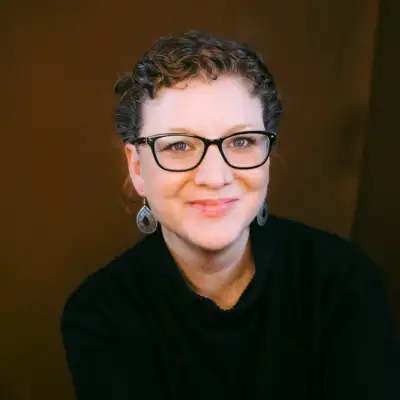
Hosted by internationally-renowned climate change expert Alexia Kelly and brought to you by the Carbon Policy & Markets at the High Tide Foundation, Navigating Net Zero hopes to inspire action from this generation of climate leaders and the next.
This transcript has been edited for brevity and clarity.
Alexia Kelly:
Good morning, good afternoon, and good evening. Welcome to another episode of Navigating Net Zero, the podcast where we talk about what's working, what's not, and what's next on our global transition to net zero.
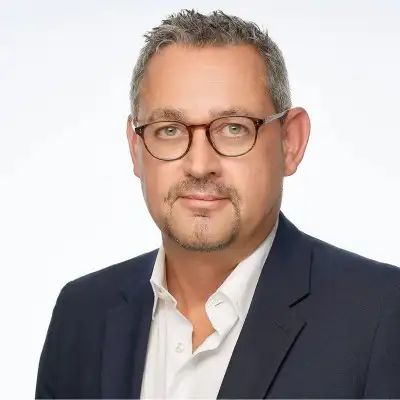
I'm your host, Alexia Kelly, and I'm delighted to be joined today by Dominic Waughray.
Dominic is Executive Vice President of the World Business Council for Sustainable Development (WBCSD), where he leads the organization's work on climate, nature, and equity. He also serves as Executive Co-Chair of the Greenhouse Gas Protocol, helping guide the evolution and governance of the world's most widely used greenhouse gas accounting standards.
Before joining WBCSD, Dominic spent more than 15 years at the World Economic Forum as Managing Director and a member of its Managing Board, where he helped launch many of the world's most influential sustainability initiatives and partnerships. These include the Tropical Forest Alliance, Friends of Ocean Action, the Nature Action Agenda, One Planet Business for Biodiversity, the Climate Leaders Alliance, and the Mission Possible Partnership.
During that time, he helped catalyze a remarkable program of public-private collaboration and raised more than $60 million in philanthropic and government support for this work. He's also a frequent speaker and someone many of us have crossed paths with over the years.
Dominic, thanks so much for joining me today.
Dominic Waughray:
That's a very generous introduction, Alexia. It's a pleasure to be here.
At the end of the day, we're all working toward the same objective. We each contribute through different organizations, platforms, and networks, and I'm sure many of your listeners are doing incredible work as well. It's a delight to spend a little time with you today.
Alexia Kelly:
Thanks so much.
As you know, we're in the middle of a mini-series exploring one topic from a variety of perspectives. Looking at your background, I think you can probably guess where we're headed.
Let's talk about greenhouse gas accounting.
Dominic Waughray:
Let's indeed.
Who doesn't want to talk about greenhouse gas accounting?
Alexia Kelly:
I often joke that I must be paying for some sin from a previous life, because I've now spent nearly twenty years arguing about greenhouse gas accounting in one role or another.
What continues to amaze me is just how much the field keeps evolving. The complexity, the importance, and the sheer depth of the issues never seem to stop expanding.
The World Business Council for Sustainable Development has played a central role in helping develop many of these standards and ensuring that both business and civil society perspectives are represented throughout the process.
Tell us a little about WBCSD, the work you do there, and the role the organization plays today.
Dominic Waughray:
Absolutely.
The World Business Council for Sustainable Development is a nonprofit, membership-based organization. Companies have to meet membership criteria—they need to demonstrate a genuine commitment to the transition and to science-based approaches on issues like climate.
Today we have roughly 230 international member companies representing about $11.6 trillion in annual revenue—roughly a quarter of the global corporate economy—and approximately 15 gigatons of greenhouse gas emissions, again roughly a quarter of global emissions, depending on how you measure it.
What's exciting is the diversity of those companies. They span every major geography—Europe, North America, Asia, Japan, China—and every point along the value chain.
You have upstream companies producing energy or raw materials, midstream manufacturers transforming those inputs into products, and downstream consumer-facing companies creating demand throughout the value chain.
There aren't many organizations that bring together that breadth of companies under one roof. That creates an opportunity to understand where progress is happening, where barriers remain, and how different pieces of the transition fit together.
When you think of WBCSD as a platform rather than simply a membership organization, it becomes a place where companies working on green demand, industrial decarbonization, low-carbon fertilizer, electrification, or any number of other challenges can learn from one another.
One of the most important of those shared challenges, of course, is greenhouse gas accounting.
During my four and a half years at WBCSD, it's been a real privilege to immerse myself in that work through the Greenhouse Gas Protocol.
I wouldn't describe myself as someone who spent an entire career in greenhouse gas accounting. In some ways, that's actually been an advantage because I ask what sometimes feel like fairly basic questions—and occasionally those questions produce surprisingly revealing conversations.
WBCSD co-hosts the Greenhouse Gas Protocol with the World Resources Institute, a partnership that's now been going for more than two decades.
An enormous amount of credit belongs to WRI and to people like Pankaj Bhatia, who really helped conceive and develop the Greenhouse Gas Protocol into what it is today. There are many outstanding people on both organizations' teams who continue to advance the work.
One aspect of the Greenhouse Gas Protocol that many people don't fully appreciate is its origin.
If you go back to the mid-1990s, around the time of the Kyoto Protocol, businesses understood they were going to have to become part of the climate solution. The problem was that there was no common way of measuring or organizing emissions.
Into that vacuum, a handful of companies—including Dow Chemical, General Motors, and BP—essentially said: "This is how we're thinking about measuring our emissions. We don't know if it's perfect, but perhaps it's a useful place to start."
That initial framework became what we now know as Scope 1, Scope 2, and Scope 3. Working alongside WRI's scientific expertise and a broad range of stakeholders, those ideas evolved into the accounting system we still use today.
It's a fascinating origin story because the framework emerged from collaboration between business and civil society rather than being imposed from above.
Alexia Kelly:
It really is.
Especially today, when there's so much discussion about the role nonprofit standard setters should play, how they interact with emerging regulatory systems, and how much influence companies should have over standards that ultimately govern their own behavior.
People sometimes forget that the Greenhouse Gas Protocol has always been built through an active dialogue among companies, nonprofit organizations, academics, and civil society. That's how good standards get developed.
Could you talk a little more about that process and why you think that multi-stakeholder approach has been so important?
Dominic Waughray:
It's a great question.
One thing I've learned is that we all like clarity. Many people imagine that if only we had one perfect set of rules—or if only everything were heavily regulated—then all these problems would simply disappear.
But that's not how the real world works.
Climate sits within an incredibly complex system involving scientists, businesses of every size, civil society organizations, investors, governments, regulators, and very different political systems around the world. The challenge isn't simply determining what the technically perfect answer is. The challenge is figuring out how all of those actors move in roughly the same direction.
You see exactly the same dynamic in trade policy, artificial intelligence, financial regulation, and many other global issues. Greenhouse gas accounting isn't unique in that respect.
Over the past two decades, the Greenhouse Gas Protocol has evolved through exactly that kind of process.
Scientists have contributed technical rigor. Businesses have tested what is practical to implement. Financial professionals have helped determine what information is decision-useful. Civil society organizations have ensured transparency, accountability, and fairness—including making sure the framework works not only for developed economies but also for emerging markets.
Remarkably, all of this happened voluntarily. No one required companies to adopt the Greenhouse Gas Protocol.
Yet over time, more and more organizations chose to use it because it worked. It allowed companies to explain their emissions consistently. It allowed investors, regulators, and other stakeholders to compare companies over time. It enabled meaningful "apples-to-apples" comparisons.
Today, about 97% of the S&P 500 and roughly 90% of the FTSE 100 report using the Greenhouse Gas Protocol. That's an extraordinary achievement for something that began as an entirely voluntary initiative.
And because so many companies now use it, policymakers increasingly have confidence building regulation on top of it rather than starting from scratch.
That's really the journey we've been on. The Greenhouse Gas Protocol grew organically as a voluntary, de facto standard. Now, increasingly, it's becoming part of the formal regulatory architecture.
Alexia Kelly:
I completely agree.
One of the dynamics that's been especially important in the climate space is this iterative relationship between voluntary action and regulation. Voluntary standards often move first, helping companies understand their emissions, build reporting systems, and begin developing transition plans. Regulators can then build on that foundation rather than starting from scratch.
There's an old saying that you can't manage what you don't measure, and I think that's been remarkably true here.
Dominic Waughray:
Absolutely.
For anyone listening who works inside a company on carbon accounting or sustainability reporting, I think it's important to recognize something.
If you've participated in technical working groups, submitted comments, challenged draft guidance, or wrestled with implementation inside your own organization—you've helped build this system.
The Greenhouse Gas Protocol didn't emerge because a handful of people sat in a room and designed it perfectly from the outset. It evolved because thousands of practitioners around the world continuously tested it, challenged it, and improved it.
That's something people should feel genuinely proud of.
As human beings, we've taken an extraordinarily complicated problem, argued over it, pulled it apart, rebuilt it, and gradually constructed something that's now becoming the foundation for climate policy around the world.
Someday, when someone writes the history of major public-private collaborations that successfully addressed global challenges, I think the Greenhouse Gas Protocol deserves to be one of those stories.
Alexia Kelly:
I think that's absolutely right.
And especially for those of us in the United States right now, it's important to recognize the progress we've made.
I remember when greenhouse gas reporting itself was controversial. Companies would say, "You want us to measure our emissions? If I tell you how much I emit, won't that mean I'm responsible for it?" That was a genuine concern.
Today, annual greenhouse gas reporting has become standard business practice. Companies simply expect to produce inventories every year. That's a remarkable shift.
And it's worth remembering that those inventories don't happen automatically. Companies have had to build entirely new data systems, new reporting processes, and new internal capabilities. None of that infrastructure existed twenty years ago.
Dominic Waughray:
That's exactly right.
At the same time, we shouldn't mistake the journey for the destination. The destination is clear: we need to remain within the scientific limits that avoid dangerous climate tipping points.
But the path to get there is necessarily iterative. We'll always discover new technologies. We'll always learn more science. We'll always encounter new circumstances that require us to adapt.
Take data centers, for example. The rapid growth of AI and cloud computing has dramatically changed conversations around electricity demand and Scope 2 accounting. That's a challenge that barely existed when the Scope 2 guidance was originally developed.
Or consider the changing role of different economies. China today has very different capabilities around industrial data and digital infrastructure than it did even a decade ago. Governments around the world have different political systems, different regulatory traditions, and different approaches to implementation. All of that changes how these standards need to function.
Then there's artificial intelligence itself. The opportunity to combine multiple data streams, automate reporting, simulate future scenarios, and optimize decision-making is extraordinary.
Ten years ago many organizations were still building these inventories in spreadsheets. Today we can begin imagining systems that automatically process enormous amounts of information, identify opportunities, and model different investment pathways.
Eventually, I think much of the burden that currently falls on sustainability professionals will become dramatically easier. Boards and executives will have far more useful information for making strategic decisions.
In many ways, even as the Greenhouse Gas Protocol becomes more embedded in regulation, it still feels like a startup. There is still so much opportunity to improve the system. That's what makes it such an exciting space to work in.
Whenever we advertise positions, the level of interest is incredible. People midway through their careers want to apply their expertise here. Young professionals are eager to begin their careers here. When you think about where carbon accounting was fifteen or twenty years ago, that's quite remarkable.
Alexia Kelly:
I always joke that, for years, there were about fifty of us around the world arguing with one another about greenhouse gas accounting while nobody else paid much attention.
Over the last five years, though, those conversations have moved squarely into the mainstream. That's encouraging—but it's also exposed some of the weaknesses in the current system.
One of the biggest challenges today is simply the proliferation of standards. Companies are trying to understand which frameworks they should follow, how they relate to one another, and how everything fits together.
And just to be absolutely clear: nobody believes voluntary action alone is sufficient. Voluntary action was never supposed to be Plan A. In fact, we joke sometimes that we're now somewhere around Plan D.
How is it 2026 and we're still struggling in some jurisdictions simply to require companies to disclose their greenhouse gas emissions?
We've made tremendous progress. At the same time, many parts of the world—including, frankly, much of the United States—still lack the institutional frameworks needed to drive the transition at the speed and scale required.
That brings us to another area where WBCSD has been doing important work. Beyond the Greenhouse Gas Protocol, you've also helped develop the Partnership for Carbon Transparency—PACT—as well as guidance on avoided emissions accounting.
I'd love to hear about both of those initiatives, why WBCSD chose to pursue them, and how you see them fitting into the broader landscape of climate accounting standards.
Dominic Waughray:
I'd be delighted to.
But before we get into those, I'd like to build on something you just said because I think it's important.
As the Greenhouse Gas Protocol moves from being primarily a voluntary framework toward becoming part of formal regulatory systems, the organization itself has had to evolve. Different audiences now rely on it.
Twenty years ago, greenhouse gas accounting was largely the domain of sustainability professionals and life-cycle assessment practitioners. Today, CFOs, chief risk officers, investors, regulators, and policymakers all depend on these standards.
That changes the expectations. The Greenhouse Gas Protocol has to provide decision-useful information for entirely new audiences. And that means the institution itself has had to mature.
One simple example illustrates this.
For more than twenty years, despite becoming the world's dominant greenhouse gas accounting framework, the Greenhouse Gas Protocol was essentially a collaborative project jointly hosted by WRI and WBCSD. It worked extraordinarily well.
But that kind of informal governance isn't sufficient when jurisdictions like California—or potentially China, the European Commission, or other governments—begin relying on your standards as part of regulation. They need confidence in the institution itself.
That means stronger governance. Greater transparency. Clear accountability. Independent oversight.
In many ways, the organization has had to grow up because the world around it has changed.
Alexia Kelly:
Before we move on to PACT, I'd love to stay on that point for a moment because I think it's incredibly important.
You mentioned that the Greenhouse Gas Protocol needs to "grow up" institutionally—to become an organization that's capable of serving regulators, CFOs, CEOs, and other decision-makers. For listeners who aren't immersed in this world every day, what does that actually mean in practice? Why is that evolution so important?
Dominic Waughray:
It's a great question.
For more than twenty years, the Greenhouse Gas Protocol was essentially a collaborative project between WRI and WBCSD. It succeeded because there was tremendous trust between the organizations and the people involved.
Like many nonprofit initiatives, it grew organically. You secured funding, hired talented people, built technical working groups, and continuously improved the work. That model served us incredibly well.
But once governments begin relying on your standards, it's no longer enough. California, for example, or the European Commission, or governments elsewhere in the world, need confidence that they're relying on an institution with robust governance—not simply a successful collaboration between two organizations.
That's why we've spent the last several years strengthening the institutional foundations of the Greenhouse Gas Protocol.
One of the first things we established was an independent Steering Committee. Geraldine Matchett—former Co-CEO and CFO of DSM and now a director on several multinational corporate boards—chairs that committee.
We also brought in people like Ovais Sarmad, who served for many years as Deputy Executive Secretary of the UN Framework Convention on Climate Change. He brings decades of experience navigating international policy processes.
The Steering Committee includes leaders from business, finance, NGOs, and other stakeholder groups. Its role is to provide independent strategic guidance—not simply leave WRI and WBCSD deciding these questions on their own.
The second major step was creating an independent Standards Board. Again, that sounds obvious in retrospect, but it's an essential piece of institutional maturity.
You need experienced standard setters—people who understand regulatory processes and know what credible standards look like—to oversee the development process itself. They can evaluate whether the technical work is ready, whether due process has been followed, whether stakeholder engagement has been sufficient, and whether the resulting standards meet the expectations of regulators.
That's exactly what governments expect from organizations whose work they're going to rely upon.
The third piece was executive leadership. Historically, WRI and WBCSD each provided leadership from their respective organizations. Craig Hansen at WRI and I have co-chaired the effort, alongside outstanding technical leaders like Pankaj Bhatia and Maja Kutnar.
But increasingly, the Greenhouse Gas Protocol needs someone whose full-time responsibility is representing the organization globally—someone who can engage with governments, regulators, businesses, civil society, and financial markets.
That's why we're delighted that Tim Mohin has joined as CEO. Tim brings exactly the combination of experience we need. Before joining the Greenhouse Gas Protocol, he led the Global Reporting Initiative and most recently was a partner at Boston Consulting Group. Earlier in his career he held leadership positions in major technology companies.
He understands sustainability, regulation, business, and governance. That's increasingly what this role requires.
Taken together, these governance reforms represent the maturation of an institution that has become globally important. And we're not finished yet. This is an ongoing process.
Another significant milestone came with our alignment with the International Organization for Standardization—ISO. At COP30, we announced a formal collaboration between the Greenhouse Gas Protocol and ISO after more than a year of joint work.
That's incredibly significant because ISO represents 174 countries. When you begin working at that level, your own institutional governance has to meet corresponding standards.
That's exactly the journey we're on.
Alexia Kelly:
I think that's one of the most encouraging developments we've seen across nonprofit standard setting over the past several years.
Organizations that stepped in to fill gaps while governments weren't yet acting are now deliberately evolving into institutions that look and behave much more like formal standard setters. That means transparent governance, independent oversight, clear notice-and-comment procedures, and predictable decision-making.
We went through something very similar in the voluntary carbon market with the creation of the Integrity Council for the Voluntary Carbon Market. There, too, nonprofit organizations had stepped into the breach, developed standards where regulation didn't yet exist, and eventually recognized that those governance structures needed to evolve.
I think we're now seeing that same maturation across much of the climate standards landscape. It's exciting—but it's also difficult. Some organizations will ultimately merge, some will hand off responsibilities, and some may disappear altogether. That's not always easy for the people who've devoted years—even decades—to building them.
But if the objective is creating durable institutions that markets and governments can rely on, it's the right evolution.
One thing that has become increasingly problematic is unpredictability. When standards change in ways that feel abrupt or inconsistent, companies lose confidence. If a company invests billions of dollars based on one set of rules, only to discover two years later that those rules have fundamentally changed, that's incredibly damaging.
Private investment depends on stability. We need governance systems that provide regular updates, transparency about why changes are being made, and confidence that those changes are grounded in sound process rather than shifting opinions.
That's one reason I think the work you're doing is so important.
Let me connect that back to the broader standards landscape. Today we have greenhouse gas inventories, product carbon footprints, CBAM methodologies, avoided emissions guidance, and countless reporting standards emerging around the world.
From WBCSD's perspective, how do all of these pieces eventually fit together? What's the long-term vision?
Dominic Waughray:
I couldn't agree more with what you've just described.
One thing I really admire about both WRI and WBCSD is that we've recognized this evolution ourselves. It would have been easy to cling tightly to ownership of the Greenhouse Gas Protocol. After all, many people have devoted enormous portions of their careers to building it.
But ultimately, that's not the point. The point is creating an institution capable of serving the world over the coming decades. Sometimes that means stepping back. It means becoming a steward rather than an owner. That's not always comfortable, but it's necessary. Otherwise we risk everyone defending their own organizations rather than advancing the larger system.
You simply can't have both. If we're serious about building durable international institutions, we have to be willing to evolve ourselves. That's very much the journey we're on.
The World Business Council itself was created following the 1992 Rio Earth Summit because leaders recognized that business needed an organized voice in sustainable development. The world looks very different today than it did thirty years ago. But one thing hasn't changed: business remains absolutely central to the climate transition.
No one seriously disputes that. Companies drive innovation, make investments, build supply chains, manufacture products, and deploy capital at enormous scale. Those capabilities are essential if we're going to decarbonize the global economy.
Within WBCSD, our members generally represent companies that are already committed to leading that transition. If you imagine a bell curve of corporate ambition, we're probably working with organizations on the leading half of that curve.
Importantly, though, WBCSD doesn't invent these ideas in isolation. Many of our initiatives emerge because member companies come to us with common challenges.
That's exactly how PACT began.
Alexia Kelly:
Let's talk about PACT—the Partnership for Carbon Transparency. I'd also love to discuss the avoided emissions guidance you've developed and how both fit into the broader accounting landscape.
Dominic Waughray:
I'd be delighted to.
As I mentioned earlier, over the past four or five years we've seen greenhouse gas accounting move from being the domain of sustainability professionals to something that CFOs, chief risk officers, investors, and regulators increasingly rely upon.
That shift changes the kinds of questions organizations are asking. A few years ago, most companies wanted to know, "How do I measure my emissions?" Today they're asking much more sophisticated questions: How do I communicate this to my board? How does this influence investment decisions? How do I make this information useful to finance and risk teams?
That means greenhouse gas accounting itself has to evolve. The data needs to become more decision-useful—not only for sustainability professionals but for business leaders.
That's one reason WBCSD began working on product carbon footprints through the Partnership for Carbon Transparency, or PACT.
About six years ago, a group of member companies—including Unilever, Fujitsu, Dow, BASF, and several others—came to us with a common challenge. They said, "Corporate emissions inventories are important, but ultimately we manufacture products. If we're trying to decarbonize the economy, we also need consistent ways to understand the emissions associated with those products."
That's where PACT began.
The key word is transparency. Rather quickly, what began as a small collaboration grew into a network involving roughly sixty major companies and thousands of suppliers across multiple tiers of global supply chains.
Several important things emerged.
The first finding surprised many people. Simply by creating a consistent methodology for exchanging product carbon footprint information across supply chains, companies improved the accuracy of upstream Scope 3 reporting by roughly 30 percent on average. That's remarkable.
Previously, companies often relied on generic industry averages because they simply didn't have better information. Now they could identify which suppliers genuinely had lower emissions. They could distinguish between two products that previously appeared identical. Instead of assuming one ingredient represented the greatest emissions hotspot, they might discover it was another entirely.
That transparency allows better decisions. It also creates market signals. Companies can choose lower-carbon suppliers, suppliers gain incentives to improve, and investors and policymakers can see where support might be needed. Transparency becomes the foundation for competition and innovation.
The second major lesson was scalability. Once the methodology existed, technology companies like SAP, Salesforce, and others recognized they could embed these capabilities directly into their enterprise software.
At that point, WBCSD no longer needed to manage every transaction. The infrastructure itself became scalable. Suddenly, thousands of companies could exchange standardized product carbon footprint data through systems they were already using. That dramatically expanded the reach of the initiative.
The third lesson was perhaps the most important. Many people assume the objective is creating one perfect product carbon footprint methodology that everyone in the world uses forever. I don't think that's realistic.
Different countries will develop different methodologies, industries will have different requirements, and technologies will continue evolving.
Instead, what we really need is something analogous to SWIFT in the financial system. Banks around the world don't all operate identically, currencies differ, and national regulations differ. But SWIFT allows financial information to move seamlessly across those different systems.
That's what PACT is trying to accomplish for product carbon data. Rather than insisting every jurisdiction calculate emissions identically, we're building the infrastructure that allows different systems to exchange information consistently and transparently.
Last year alone, more than four million product carbon footprints moved through that infrastructure across over 5,000 companies. That's tremendously exciting because it creates a foundation for all kinds of future applications.
Some companies simply want better supplier information. Others need product-level data to support regulatory compliance. Others need information suitable for financial assurance. The underlying data infrastructure can support all of those use cases.
That's really what PACT is designed to enable.
Alexia Kelly:
I think that's such an important distinction.
This isn't simply another accounting methodology. It's really about interoperability.
Today companies maintain corporate greenhouse gas inventories, they're increasingly calculating product carbon footprints, and governments are developing methodologies for mechanisms like Europe's Carbon Border Adjustment Mechanism, or CBAM.
All of these systems serve different purposes. The challenge is that they don't communicate with one another particularly well. As regulation expands around the world, those previously separate systems are beginning to overlap, creating a much more complicated landscape.
Ultimately, though, they're all trying to accomplish the same thing: reduce emissions and create meaningful carbon price signals. It's easy to get lost in the mechanics of accounting, but the real objective is ensuring these systems work together well enough to drive decarbonization.
I love your analogy to SWIFT because it focuses on translation rather than uniformity.
What would it look like if we applied that philosophy more broadly across climate accounting? How do we begin connecting all of these different systems?
Dominic Waughray:
That's exactly the opportunity.
For anyone considering a career in this field, I genuinely think this is one of the most exciting areas to work.
The goal is not to build some giant centralized system where every country follows identical rules. That wouldn't work. Innovation would stall, and different markets have different needs.
Instead, we need systems that preserve environmental integrity while still allowing innovation and competition. Transparency is what makes that possible.
As computing power grows—and particularly as artificial intelligence matures—we'll be able to connect increasingly sophisticated datasets. We'll be able to model different policy scenarios, compare border adjustment mechanisms, carbon pricing systems, investment incentives, procurement policies, and many other approaches.
The key is having reliable underlying data that can move between systems. That's why the infrastructure matters so much.
Just as we're unlikely ever to have a single global currency, we're also unlikely to have one universal carbon accounting methodology. But we can absolutely build the equivalent of a currency converter—the equivalent of SWIFT—to translate information accurately between different methodologies while preserving comparability.
That's where I think enormous opportunity lies, and it's one of the reasons I'm so optimistic about where this work is headed.
Alexia Kelly:
That actually brings us to another important piece of WBCSD's work: avoided emissions.
It's an area that receives a lot less attention than corporate greenhouse gas inventories, but I think it's going to become increasingly important as companies make long-term investment decisions.
Can you explain what avoided emissions accounting is, why WBCSD developed guidance for it, and how you see it fitting alongside the rest of the accounting ecosystem?
Dominic Waughray:
I'd be happy to.
Avoided emissions—sometimes called consequential accounting or intervention accounting—is really about innovation.
Imagine you're a company that recognizes regulation is coming, or that sees a major market opportunity in developing lower-carbon products. You may decide to fundamentally change your business model—investing in electrification, new materials, low-carbon technologies, or entirely different product lines.
The challenge is explaining those investments to investors. You can certainly show your current emissions inventory—that tells people where you are today—but it doesn't capture the value of changing your business model tomorrow.
Suppose you invest in a new technology that, over the next ten years, enables your customers to avoid millions of tons of greenhouse gas emissions. How do you communicate that future impact in a credible, standardized way?
Until recently, there really wasn't consistent guidance for doing that. Companies had no common methodology for explaining the climate benefits of future investments.
Several of our member companies—particularly Panasonic, Hitachi, Fujitsu, Veolia, and Schneider Electric—recognized that gap and asked whether we could develop standardized guidance.
The goal wasn't to replace greenhouse gas inventories. Inventories remain essential because they tell us where emissions are today. Avoided emissions answer a different question: "If we invest in this technology or product, what additional emissions could society avoid in the future?"
Developing that guidance took several years because we had to address one obvious concern: greenwashing. We needed to ensure companies couldn't simply invent optimistic scenarios or claim speculative benefits without appropriate rigor.
One important safeguard is that avoided emissions are not added to a company's greenhouse gas inventory. They're reported separately. The inventory remains backward-looking; avoided emissions are explicitly forward-looking. Those two accounting exercises answer different questions.
Once we established that distinction, the work gained significant momentum. In 2023, during Japan's G7 presidency, the guidance received endorsement from the G7 Energy, Climate, and Environment Ministers. That was an important milestone because it signaled growing international recognition of the need for standardized approaches in this area.
Increasingly, investors are also paying attention. They want better tools for evaluating companies that are making long-term investments in low-carbon technologies. That's ultimately what avoided emissions guidance is intended to support—it helps capital markets understand the future climate impact of business innovation.
Alexia Kelly:
I think that's such an important point.
Sometimes I'll hear people argue that avoided emissions shouldn't exist at all because they're inherently uncertain. After all, you're comparing reality against a hypothetical future that hasn't happened yet. How can you ever prove what would have happened otherwise?
That's a fair question. But the reality is that companies make forward-looking investment decisions every single day. If you're deciding where to allocate capital, whether to build a new manufacturing facility, or whether to invest in an entirely different technology, you're already making assumptions about the future.
Those decisions require forward-looking analysis. That's true whether you're talking about financial returns, operational performance, or climate impacts.
In that sense, avoided emissions aren't optional. They're an essential part of understanding how today's investment decisions influence tomorrow's emissions.
The challenge is making those projections as rigorous and transparent as possible. That's why standardized methodologies matter. They help reduce opportunities for greenwashing, improve consistency, and allow investors and other stakeholders to evaluate different approaches using common assumptions.
This isn't entirely new territory, either. In many ways, it's analogous to how avoided emissions are assessed in carbon markets—except applied at the enterprise level rather than the project level.
Dominic Waughray:
That's a very fair way of describing it.
More broadly, there are useful parallels in other fields as well. Think about public health. Governments regularly estimate the future benefits of policies like taxes on tobacco or sugar, or researchers estimate the health benefits of introducing new medicines. Those are all forward-looking analyses based on carefully constructed baselines and scenarios. They're not perfect predictions, but structured methodologies for evaluating likely outcomes.
Avoided emissions follow much the same logic, grounded in established approaches that other disciplines have used successfully for many years.
Ultimately, it's about helping markets recognize and reward innovation. If companies are going to make major investments in lower-carbon technologies, they need credible ways of demonstrating the value those investments create. Otherwise, it's much harder to attract the capital required to accelerate the transition.
Alexia Kelly:
Exactly. And that's why this work matters so much.
If we want companies to invest in technologies that may cost more today but deliver substantial emissions reductions over the coming decades, we need accounting systems that recognize those benefits. Otherwise, we're asking businesses to make investments that financial markets have no reliable way of valuing.
Getting those incentives right is absolutely essential.
Thank you—and thank you to your team—for taking on such a difficult but important challenge.
Dominic Waughray:
Thank you.
At its heart, this is really about innovation. How do we encourage companies to move faster? How do we ensure capital flows toward lower-carbon technologies? And how do we create standardized approaches that give investors confidence in those decisions?
Those are exactly the questions we're trying to answer.
Alexia Kelly:
Dominic, I've kept you quite late this evening, so thank you very much for your time, for joining us today, and for all the work you're doing.
I also want to thank you personally for helping guide the Greenhouse Gas Protocol through what I think is a critically important period of institutional evolution. I know that's been a tremendous undertaking.
Dominic Waughray:
There was a lot more dark hair when I started.
Alexia Kelly:
I think many of us can relate to that.
I always like to close by asking guests the same question.
What gives you optimism? What's getting you out of bed in the morning and keeping you motivated to work on these incredibly complex—and sometimes frustrating—challenges?
Dominic Waughray:
It's a good question.
It would be very easy, particularly at this moment, to become discouraged—to look at everything happening in the world and conclude that progress has stalled or that the challenges are simply too great.
I don't really see it that way.
My wife and I have a nineteen-year-old son who's in his second year at university. He's studying China, international relations, and geopolitics. Listening to him talk about the world reminds me that his generation doesn't see today's changes as the end of something. They see them as the beginning of something different.
The geopolitical landscape they're inheriting isn't the same one many of us grew up with. It's more multipolar, more competitive, and more technologically dynamic. Mark Carney has described it as a new geopolitical chessboard, and I think that's a useful way of thinking about it.
Within all of that change, though, I see enormous opportunity. What excites me most is innovation.
I'm incredibly optimistic about the potential for artificial intelligence, advanced computing, and digital technologies to transform how we approach climate action.
Imagine combining AI with engineering, manufacturing, and operations to optimize entire value chains in real time. Imagine being able to evaluate thousands of investment options simultaneously and identify those that deliver the greatest emissions reductions alongside the strongest business returns.
Those capabilities could fundamentally change the way companies make decisions. They could dramatically reduce the burden of reporting. Instead of sustainability teams spending months assembling data manually, executives could have dynamic tools that help them understand trade-offs, simulate future scenarios, and make smarter investment decisions.
I think we're standing right on the edge of that transformation. The question is whether we choose to embrace it.
If we spend our energy mourning the loss of the institutions or assumptions that shaped the past thirty years, we'll miss the opportunity that's emerging in front of us. But if we're willing to adapt—to build new institutions, adopt new technologies, and rethink how we solve problems—I think we have an extraordinary opportunity.
There's a quotation I come back to often from a British politician. She said: "The art of leadership is to turn a corner into a curve."
I love that idea. Sometimes it feels as though we've reached a dead end, but perhaps we're not approaching a wall at all. Perhaps we're simply entering a bend in the road.
If we can recognize that—and lean into it rather than resist it—we can build something even stronger than what came before.
That's what keeps me optimistic.
Alexia Kelly:
I love that.
Dominic, thank you so much—not only for joining us today, but for your leadership, your insights, and everything you're doing to help strengthen the institutions that underpin climate action around the world.
I know this conversation is one we'll continue.
Thanks again for spending the time with us.
Dominic Waughray:
Thank you, Alexia.
And thank you for everything you're doing through this podcast and through your broader work to help people navigate these issues.
It's been a real pleasure to spend this time together.