Subscribe
Share
Share
Embed

Welcome to Skinside Out, where science meets beauty, the ultimate dermatology podcast! Dive deep into the fascinating world of skin health with expert insights, evidence-based discussions, and myth-busting truths. Each episode explores the medical, cosmetic, and surgical aspects of dermatology, while keeping you informed about trending skincare topics. Whether you’re a skincare enthusiast, medical professional, or just curious about how to achieve your best skin, Skinside Out is your go-to resource for staying informed and inspired.
28 Skinside Out - Medical Grade
===
[00:00:00]
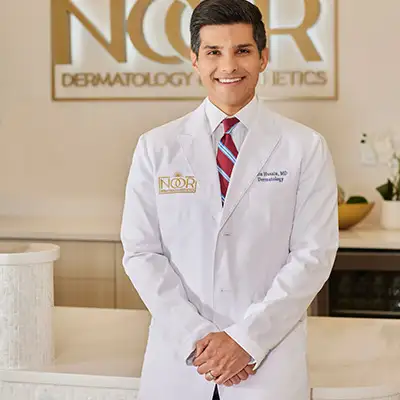
Dr. Zain: Welcome to Skin Side Out where Science Meets Beauty. I'm your host, Dr. Zane with aesthetician, Courtney. So today we're gonna be talking about medical grade skincare versus drugstore skincare. So let's dive right in. So Courtney, what are your definitions?
Courtney: So, you know, medical grade skincare is such a hot topic and I see people all the time on like social media definitely dissing that term.
And to be fair, it's not a true term. Other than when I think of like a cosmeceutical or a [00:01:00] medical grade skincare, I just associate that with brands that you can find only in a dermatology office or, um, some kind of like, uh, aesthetics, med spa, aesthetic plastic surgeon. Yeah, and for me, I like the term. In a sense just to differentiate, um, because I do think there are some differences, um, that we'll talk about later.
Um, but essentially, obviously drugstore, skincare, that's something that you can find at any, you know, Walgreens, CVS target. , And these cosmeceuticals are, um, you know, things that you can find at mm-hmm. Mostly, offices. So we'll kind of get into what. That entails. Um, but I think it's a hot topic and I'm not mm-hmm.
Totally anti-US the term. Maybe that's a unpopular take, but that's just me.
Dr. Zain: So let's kind of dive into medical grade skincare itself. So typically these products. Have active ingredients at a higher concentration. Mm-hmm. [00:02:00] Or more advanced, um, ingredients. Mm-hmm. And they typically have some studies. Mm-hmm.
Behind them, there's usually some clinical data, patents, patents. But still not exactly like FDA regulated, like a prescription medication. Mm-hmm. Um, and we do see that these products are at a higher price point. Yeah. In general. Mm-hmm. Um, so my first question is, does the price that the product really equal the efficacy?
Courtney: No. You know, I always, I always reference that brand La Mer, and, and people love that moisturizer. I cannot justify ever spending 400 bucks on a moisturizer, $400 and it's like a small jar. You know
Dr. Zain: how Costco used
Courtney: to sell it? Really? That doesn't surprise me. Um, yeah, I just, um, you know, I think as a. Price conscious world that we live in.
Um, I definitely, and you know what's funny about you saying that they're typically more [00:03:00] expensive, the medical grade, because some of these products in the drugstores now are getting to that price point. Mm-hmm. Um, some of that drunk elephant, some of, you know, um, some of the, uh, products that I've seen over the counter are at that same price point.
That being said, it's, it's funny 'cause just because it's more expensive does not always mean that it's better.
Dr. Zain: Yeah. However, some of these ingredients are more expensive mm-hmm. To develop and there's also studies that also incur costs, right? Mm-hmm. So these companies aren't just blindly, you know, trying to have a higher price point.
They do believe that their product is superior and they have, you know, studies to kind of back it up.
Courtney: Mm-hmm.
Dr. Zain: So there are some products that I do definitely feel, um. Deserve a higher price point. Mm-hmm. Because they are more expensive to develop.
Courtney: Mm-hmm.
Dr. Zain: Um, the research is there. Mm-hmm. And we clearly see results.
Courtney: Yeah.
Dr. Zain: Um, and if not used properly by the masses, it can cause issues.
Courtney: Yeah.
Dr. Zain: Right.
Courtney: [00:04:00] Yeah. And I think, you know, again, going back to just being. Conscious, I am a really big believer of in certain areas, being able to save, you know? Mm-hmm. I, if I have a patient who's coming to see me who says, you know, I really wanna address, um, sun damage or whatever.
Yeah. You know, anti-aging. Okay. What does your budget look like? Mm-hmm. And where do we need to spend kind of the maximum? And it's always, for me, going to go back to a good vitamin CI think you should not cheapen out on the vitamin C. a good retinol, a retinoid, um, those really, I mean, moisturizers we can work with.
Mm-hmm. We can use our, our bay, our cleansers, we can use again, laroche, I love laroche. Um, but there are ingredients and that I think you really do need to spend the money on because half the time you're spending the money anyways. Yes. And then it's not working. Yeah.
Dr. Zain: And you know, like for instance with vitamin C, there are stable forms mm-hmm.
And unstable forms. The unstable forms, which I find in a lot of [00:05:00] these drugstore brands mm-hmm. They don't work, they oxidize really easily. Mm-hmm. And you're essentially buying a relatively expensive product without the efficacy. Um, and it does require a lot of chemistry and a lot of research and development to produce like a stable form of vitamin C.
So, um, you know, like, you know, we always knock on, you know, SkinCeuticals. Mm-hmm. I mean, they were the. You know, the king of vitamin Cs, um, in terms of serums and, you know, they have a really good, stable molecule. Mm-hmm. And that's kind of been the gold standard, but it probably cost a lot of money to produce that product.
And also, um, you know, they have tons of studies. Mm-hmm. Tons of studies that have shown its efficacy.
Courtney: Yeah. And you know, I, I think back to revision, which is one of my favorite brands. Mm-hmm. Um, even their vitamin CI mean, they're using, um, the THD, which is the tetra heyl hydrate, like the, um, plant derived vitamin C.
Mm-hmm. It's a lot more stable than your [00:06:00] scopic acid. And, you know, for them to be able to obtain, um, that costs them a lot of money. So of course they are going to have to mark up their prices. But that being said. The efficacy is so much, um, superior I think to, you know, a lot of the, the common vitamin Cs out there
Dr. Zain: Yeah.
And the retinols out there, there is a huge range mm-hmm. Of products out there. Some, which I feel like do absolutely nothing.
Courtney: Yeah.
Dr. Zain: Um, and there're just very, um. They're marketed as very tolerable retinols, but I don't think they do anything
Courtney: how I feel about, like the CVE one, um, you know, the purple one. I, but I, I, I do, I get a lot of patients who come in who are saying, oh, I've been using this for the past few months, and like, I don't know if I'm seeing much of a difference.
And if. I'm just like, all right, well, let's get you on something like maybe a little stronger because it is a very, like, abstract, um, term. I feel like, you know, um, and yeah, they can vary so much. And then you have the opposite where sometimes they're [00:07:00] really irritating for patients. Yeah. Um, and you don't want that either.
So I mean, I like, I love, um, like skin betters brand a lot. Yes. I absolutely
Dr. Zain: love that stuff.
Courtney: Yeah. Love, love it. Sponsor me the alpha, the alpha
Dr. Zain: ret of the night cream. I love that entire line because it conjugates the retinol with glycolic acid. So for enhanced penetration, higher efficacy, but without the irritation.
Mm-hmm. Um, I love that one.
Courtney: Yeah. Some of these brands that we sell in office, like where, where. The difference comes from is number one, definitely the studies, and number two, um, sometimes like niche ingredients or niche ways of them, um, formulating their product. So for example, like with the skin better, um, their alpha rat is a retinol, or it's essentially equivalent to a prescription strength.
Mm-hmm. Tretinoin 0.025, but. And it's also got glycolic, which ally I know. And if you've ever used, because this has happened to me, if you've ever used glycolic separately mm-hmm. And with your retinoid, [00:08:00] you can induce your own peel. I've done it. That and that. That'll tear
Dr. Zain: up your skin.
Courtney: It'll tear up your skin.
Um, talk about being dry, flaky. Yeah. So, you know, they've essentially con created this to Yeah. Almost, you can think of it as like a time release, like a delayed release. Mm-hmm. For tolerability, so I think that's where sometimes some of these products do shine.
Dr. Zain: Oh yeah. I mean it's all about the development interplay of these molecules.
And same thing with compounded medications, like they're formulated together to get you this result. Mm-hmm. Increased tolerability. Some of my patients, you know, they don't wanna pay for a compound, I'm like, go for it. Um, and then they want the individual ingredients and you kind of use them together.
Courtney: Mm-hmm.
Dr. Zain: And it does not produce the same effect and it can cause a lot of irritation. So there is a lot of chemistry involved. So I give a lot of props to those scientists who develop these great formulations.
Courtney: Yeah. And you know, I think back to revision too and other lines too, but, um, they have a lot of like, even like [00:09:00] just newer like.
Ingredient, like, you know, sometimes you'll see like, just ran like licorice root or mm-hmm. You know, some of these more like plant derived. Yeah. Um, and I do think the future of skincare lies a lot in so many of these like plants and marine life that we haven't studied yet. Mm-hmm. I mean, that's where all of our medicine, you know, comes from.
So it's really interesting to, to see, um, what they're utilizing and kind of the studies behind it and how they're working and then how well they work. So, yeah. So
Dr. Zain: Vitamin Cs, retinols, I feel like sunscreen. Uh, good quality sunscreen is important.
Courtney: Mm-hmm.
Dr. Zain: And I don't think you have to pay a ton for it.
Mm-hmm. Because those can also range in price. But if you use a good mineral-based sunscreen, um, s pf 30 or higher, and it feels and looks good on your skin, you'll be using it. I feel like that's a place where you can save and be price conscious. Mm-hmm. But still protect your skin.
Courtney: Yeah.
Dr. Zain: Um, I mean, at the end of the day, zinc oxide, um, is zinc [00:10:00] oxide.
Yeah. It's not anything crazy in terms of the formulation, um, that needs stabilization, like the retinoids or like the vitamin C. So just find a good one that you like and that's cosmetically elegant and you'll use
Courtney: Yeah. That's how I feel, you know, with, um, even cleansers and moisturizers. Mm-hmm. Again, like when, you know, if I'm doing a consult and if someone really is trying to be cognizant of how much they're spending, um, we're gonna help them find mm-hmm.
Ways to maximize their routine. Um, but also not, you know, drop like. One K. So moisturizers, especially, like, I love the LAROCHE line. Mm-hmm. I love CeraVe. Um, you know, I think that both of them have great moisturizers. Mm-hmm. I think LAROCHE has a ton of great cleansers. Um, and that's at an affordable, great, you know?
Dr. Zain: Yeah. I think that they're really elegant, non-expensive. Uh, inexpensive forms, um, of moisturizers that contain really good ingredients and will help to improve whatever [00:11:00] skincare regimen that you're on.
Courtney: Yeah. Some products, you know, like I said, I mentioned the vitamin C and the retinol. Glycolic acid is another one of those that I just feel like.
Magic. I don't, well, and I don't, I don't like an over the counter glycolic. Okay. I really DI think the pH can vary so much on those. Mm-hmm. Um, so I get a little picky with my glycolic too. Yeah.
Dr. Zain: I mean, I like reputable brands. Yeah. I'm a big fan of Glytone. I, yeah. I like Glytone. I like their Glycolics and a few other brands out there.
Courtney: Yeah.
Dr. Zain: Um, and you know, the combination of alpha and beta hydroxy acids, it's a nice balance. So you get both the benefits.
Courtney: Yeah. Yeah. I just, I feel like anyone. Like a lot of glycolics, it's either like way too irritating or like it's not doing anything. Yeah. So it's hard to find that middle ground with them.
Dr. Zain: Yeah. Um, let's talk about peptides and growth factors. Yeah. So what are your thoughts on that?
Courtney: Love, love, love, love. Um, yeah, I think. As we shift into this world that we are looking at more kind of restorative treatments more. Mm-hmm. I [00:12:00] don't wanna say natural, but, um, just utilizing our body's own functions, I guess, more.
Mm-hmm. Um, you know, peptides have been around for both growth factors and peptides have been around for a long time, but we're just seeing this, um, new kind of resurgence essentially. Um, and I love, I love peptides. I, I think. You know, sometimes in the back of my, I'm like, what is a peptide? All of these brands now love to use that word, and it's, again, it's like that abstract term.
Mm-hmm. Um, but that's why I like, um, you know, neo keas for example, I love their growth factor serum. Mm-hmm. Um, I, I think. With peptides and growth factors, you want a more concentrated version, you know? Mm-hmm. I think it's worth spending the money on something more concentrated. Yeah.
Dr. Zain: Another one I really like the og, um, TNS.
Yeah. From SkinMedica. Mm-hmm. Um, it is human derived, like growth factors in a bottle. Like you fly that topical serum on and. I feel like I see some great results with that one as well. And, you know, we carry a neocutis. Um, I really like that, uh, [00:13:00] line. And there's just more and more lines incorporating, um, these growth factors and peptides to stimulate your own cells to produce various proteins such as collagen, elastin, and all that good stuff.
Courtney: Yeah, I haven't seen many like growth factors like. Drugstore, like growth factors. Yeah. I've definitely seen peptides being more and more incorporated. Mm-hmm. Um, even I think like in CeraVe, um, and I think like even like Eucerin or c you know, it's funny 'cause some of these brands, like I look at Eucerin and they used to just be like a eczema line.
Mm-hmm. Like a body moisturizer, eczema line. But now they're coming out with their like mm-hmm. The pigment and the pigment line. Yeah. And so it's interesting, I think all of them are kind of starting to like dabble and try to get their horizons broadened.
Dr. Zain: Yeah. Um, another popular one, hyaluronic acid.
Mm-hmm. So I think that, you know, using a good pure hyaluronic acid is. An added bonus. I don't think it's essential. Mm-hmm. A lot of the moisturizers now incorporate Yeah. Ha. In them. So I don't know if you necessarily have to [00:14:00] splurge too much on that unless you really like the ha Um, I just find a good moisturizer that has ha and if I need a little extra hydration Yeah.
I'll use a an HA serum.
Courtney: Yeah. That's what I'll do, especially in the winter. Sometimes I'll add a little ha to whatever moisturizer I'm using or mix it with my, um, retinoid just to help me tolerate it in the winter. 'cause I do get drier. Yeah. Um, as. As we all do. But I agree. I think there's so many, um, options out there.
Again, like I love the LAROCHE Poe one, um, and I think that's at a great price point. Mm-hmm. Yeah. Yeah.
Dr. Zain: Um, niacinamide.
Courtney: Mm-hmm. Yeah. I, you know what? And I don't even care. I'm saying it. I love, I love the ordinary niacin. Okay. Yeah.
Dr. Zain: There's nothing wrong with cheap as long as it works, right?
Courtney: Yeah.
Dr. Zain: So, yeah. I mean, I think Niacinamide is one of those great.
Antioxidants, um, that has a lot of benefits and it is incorporated in a lot of skincare, right? A lot of sunscreens have 'em, mm-hmm. Moisturizers, um, you know, other compounds. So I do think [00:15:00] that Niacinamide does play a nice role. It also has some like nice brightening properties too. So I think that. If you're looking for something, you know, on the more natural side, ize like a vitamin derivative and it does a really nice job with helping with your skin.
Courtney: I think a lot of like the medical grades, skincare, like cosmeceuticals I do, it's, they'll use a lot of, um. Like multifaceted products, right? So they'll have like, again, like the niacinamide in there kind of already with whatever other ingredients they're using.
And I think that's sometimes where they shine is being able to have multiple pro multiple ingredients in the product. Mm-hmm. But also multiple concentrated ingredients, so it's a little bit more bang for your buck, in my opinion, if you're able to combine instead of having to buy separately anyways.
So. Makes sense.
Dr. Zain: Cool. What's your take on K Beauty?
Courtney: Um, you know, I haven't really used K Beauty. Okay. Um,
Dr. Zain: fair.
Courtney: I, I think a lot of people love it. [00:16:00] Um, and if it works for my patients, that's like phenomenal. Yeah. I'm not gonna steer them. I think that the products are, from what I've seen, good. Mm-hmm. Um, it's just hard.
To get into when you have like your Yeah. I mean you already
Dr. Zain: have, um, access to all these great products and you know, a lot of these K beauty lines, they kind of incorporate multiple products, multiple steps. They're pretty extensive.
Courtney: Yeah.
Dr. Zain: Um, so I don't really necessarily think that it's for everyone.
Yeah. Um, practical, me being like, I would. I'd rather have less products and keep it simple. Mm-hmm. But you know, some people really like that self care portion of it. They really are into, you know, it's almost like a ritual for them.
Courtney: Yeah.
Dr. Zain: So,
Courtney: yeah, I mean,
Dr. Zain: go, you know, if it works for you, like go for it. I mean, there's no problem with it.
Courtney: Mm-hmm.
Dr. Zain: But yeah, it's just not me. I've used products, I've been. Pretty impressed with a lot of them. Some of them I don't really find too different than what we have here.
Courtney: Yeah.
Dr. Zain: But [00:17:00] um, yeah, I do really like the interest that it's brought into skincare. Um, it's brought in a whole new element. Yeah. And we have a lot of people more, um, excited about skincare because of the whole K beauty influence.
Yeah.
Courtney: Yeah. Yeah. Um, mask and exfoliators, um, you know, I've seen a lot. Over the counter. Um, there was the original and you know, we talked about last time like the St. Ives Apricot, um, that one not great. Um, so there are, you know, I think about like some of the brands like, um, you know, Zoe having the, um, exfoliating polish mm-hmm.
Or things like that. And I will say a lot of the over the counter exfoliating agents. I don't wanna generalize, but I do see a lot of patients who use over the counter and they'll get irritated from them. Mm-hmm. Um, so I think you've just gotta be careful about what product, if you are using something, um, you know, over the counter, like I see a lot of like the [00:18:00] ordinary, the A-H-A-H-A-B-H-A Yeah.
Uh, peel mask or whatever. Mm-hmm. And so again, I just think some of them can be a little too irritating. Um. Rather than, you know, some of the brands like the skin better and things like that.
Dr. Zain: Got it. Any other comments about medical grade skincare versus drug store skincare?
Courtney: Yeah, you know, I think, I think also.
There's a little bit more support sometimes with things that are bought in the office. Mm-hmm. Um, I think the brands are a little bit more apt to take, um, you know, your concerns seriously. So if you did have some kind of reaction to their product Yeah. Typically, you know, they'll, um, want to investigate that further.
Yeah. And you know, I think sometimes the drugstore brands, if you message, if you have a reaction to like a, let's say, say CeraVe or Cefi or whatever. You could message and be like, I had this reaction. I dunno that you'll hear back. I don't think they, um, have sometimes the [00:19:00] same customer service. Yeah.
Dr. Zain: And I think you bring a good point.
Um, when you have medical grade skincare that is dispensed in the office. You are often getting recommended those products mm-hmm. By your dermatologist, for instance. Mm-hmm. And they understand skin on a different level than say, a TikTok influencer mm-hmm. Or some other social media avenue where they're getting their information.
So. When your dermatologist is curating this regimen for you, um, they kind of have more knowledge, more experience on how this is going to help you with reaching your skincare goals. Mm-hmm. And I think that's really where the value is. And we know that these products work, otherwise we wouldn't be selling them.
Courtney: Yeah. True.
Dr. Zain: Right. So we stand by them, we trust them.
Courtney: Mm-hmm.
Dr. Zain: Um, and we also get that support from the companies as well. Mm-hmm. And we get the latest in research. Um, and that's why we. Want this to be accessible to our patients. Mm-hmm. And also provide 'em that guidance. So I think that that also leads [00:20:00] to better outcomes.
Courtney: Yeah, I agree. Yeah. And we're able to help patients through that if they are experiencing, you know, maybe a little irritation with the retinol upfront or things like that. Whereas if you're just buying from drugstore and you don't have anyone to kind of fall back on Yeah. If something happens, you're like, oh.
Like,
Dr. Zain: well, they think, oh, I have an allergy. I'm like, no you don't. Yeah. Um, and I am not opposed to recommending over the counter inexpensive skincare that will work with your regimen. Mm-hmm. You know, I am all about being affordable. Um, you know. Spending and splurging where it's necessary. Mm-hmm. And saving where it's possible.
Yeah. So that it can meet your budget. But there are some ingredients that I really will not compromise on because I don't think you're gonna get any benefit from these over the counter drugstore branded. Skincare. Yeah. So there are some times where, you know, either I need to recommend medical grade skincare or even a prescription if, uh, we really wanna see results.
Courtney: [00:21:00] Yeah. I think to basically sum it up, you know, there are amazing products that you can find at drug stores. Mm-hmm. Yep. There's also products that are not so great. There's amazing products you can get through medical grade skincare and there also are products in medical grade skincare. Mm-hmm. Different lines that, you know, we might not feel like are that great and are kind of a waste of money.
Yeah. So I think that's why it's so important, just, yeah. Doing your research, having a trusted professional to kind of work with and, um, seeing what's right for your skin.
Dr. Zain: Yeah, absolutely. And you know, when you are. Stumped. We are here to help you. Mm-hmm. You're board certified dermatologists, you're aestheticians, we understand skin and we can help you craft your regimen.
'cause it is complex. Yeah. It can be confusing. There's so much data out there. So we can help distill it and make it easier for you to comply and get great results. Yeah. So I think that's the key message we wanna bring out today. Yeah. All right, so I think that, you know, this is a relevant topic. We get asked by this by many patients, and a lot of people have these same questions.
So medical [00:22:00] grade skincare, drug store skincare, they can both be great options for your skincare regimen. But sometimes, you know, you just need. A professional to help you, uh, pick and choose and craft your regimen. Mm-hmm. So, I mean, I think this was a great discussion. So if you like this episode, please follow, subscribe.
Um, otherwise skin side out out
[00:23:00]